
SBA Loans: Complete Guide for Small Businesses and Real Estate Investors
Most people hear "SBA loan" and think the government is handing out cheap money. Not quite. SBA loans are powerful, but they come with paperwork, timelines, eligibility rules, and gaps that can trip up even experienced borrowers. This guide breaks down how SBA loans actually work, which loan program fits your situation, and what to do when the SBA covers most of your deal but not all of it — and SBA financing is one of the core solutions Gap Funded connects you with.
What Is an SBA Loan?
SBA loans are issued by private lenders, not the government itself. The Small Business Administration (SBA) partially guarantees each loan, covering between 50% and 90% of the balance. That government guarantee exists to reduce lender risk in case the borrower defaults, which makes financial institutions more willing to approve deals they'd otherwise pass on.
The SBA does not directly lend money to borrowers. A third party lender (bank, credit union, or approved non bank lender) underwrites and funds the loan. The SBA guarantee just cushions the lender's downside.
Key benefits:
- Lower down payments compared to conventional loans (not zero, but more reasonable)
- Longer repayment terms, up to 25 years for real estate
- Competitive interest rates relative to most conventional business loans or hard money
- Access for qualified small businesses with limited collateral or thinner credit files
To be clear: SBA loans are not grants or "free money." They're fully amortising business debt. You repay principal plus interest over the life of the loan, and owners with 20% or more equity must sign a personal guarantee, putting personal assets on the line.
A couple of real world examples to make this tangible:
A restaurant owner borrows $750,000 under a 7(a) loan to build out a commercial kitchen, putting down roughly 10 to 20%, refinancing some high interest vendor debt, and repaying equipment over 10 years. Or a medical clinic buys its own $1.8 million building through a 504 loan, with a bank covering about half, a Certified Development Company handling roughly 40%, and the borrower injecting about 10% as a down payment. The real estate portion amortises over 25 years at a fixed rate.
Key SBA Loan Programs and What They're Best For
The SBA offers several primary loan options for small businesses, each suited for different needs. Here's the short version of the main SBA programs:
7(a) Loan: The flagship. Up to $5 million. Covers working capital, equipment purchases, debt refinancing, business acquisitions, and owner occupied commercial real estate. Most flexible. Most commonly used.
504 / CDC Program: Designed for major fixed assets like commercial real estate and heavy equipment. Structured as a partnership between a bank, a Certified Development Company, and the borrower. Long term, fixed rate financing on the SBA portion.
SBA Microloans: Up to $50,000 (average around $13,000). Aimed at startups, microbusinesses, and underserved communities. Cannot be used for real estate purchases.
Express Loans: A faster subset of 7(a). Up to $500,000 with streamlined approvals. Good for time sensitive needs.
Disaster / EIDL Loans: Only available in declared disaster zones. Economic Injury Disaster Loans can provide up to $2 million and are made directly by the SBA, not through approved lenders.
For most business financing needs, the 7(a) loan program is the default starting point. If you're buying a building or big equipment, 504 is your go to. Microloans fill in the edges for smaller startup inputs.

SBA 7(a) Loans: The Primary SBA Loan Program
The SBA 7(a) is the broadest and most flexible SBA loan program, and it's where the majority of SBA lending volume lives. In FY 2025, the SBA approved 78,078 7(a) loans totalling about $37.3 billion, with a median loan size around $167,000.
The maximum loan amount is $5 million. Lenders often set their own minimums, typically in the $50,000 to $150,000 range depending on the institution.
Eligible uses include:
- Working capital and inventory
- Equipment purchases
- Debt refinancing of higher cost existing debt
- Owner occupied commercial real estate
- Business acquisitions and partner buyouts
Repayment terms run up to 10 years for working capital and equipment, and up to 25 years when real estate is the primary collateral. That longer term keeps monthly payments manageable, which matters for cash flow.
7(a) loans usually feature variable interest rates tied to a base rate like Prime or SOFR, plus a capped spread. The SBA sets maximum spreads based on loan amount:
- $50,000 or less: base + 6.5%
- $50,001 to $250,000: base + 6.0%
- $250,001 to $350,000: base + 4.5%
- Over $350,000: base + 3.0%
Smaller loans carry slightly higher spreads. That's worth factoring in when deciding your SBA loan amount.
SBA 504 Loans: Long-Term Commercial Real Estate and Fixed Assets
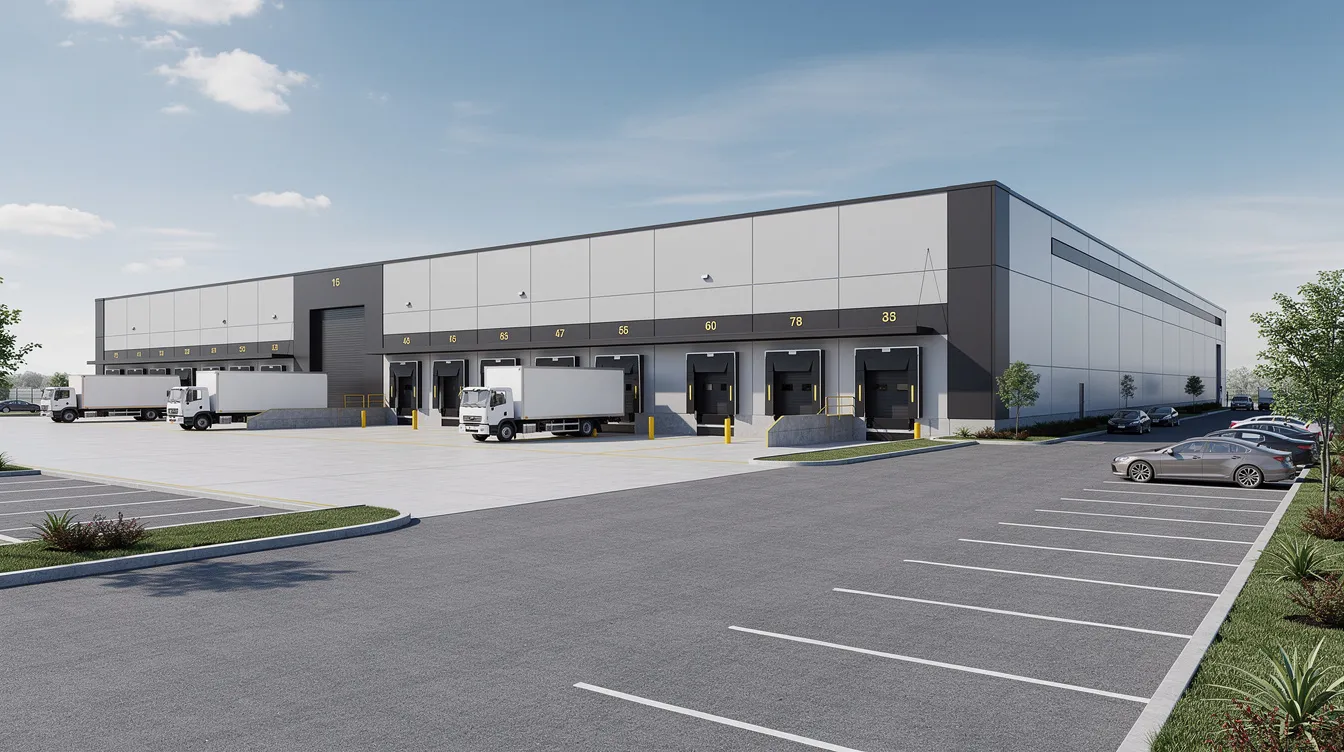
If you're buying a $2.5 million warehouse or owner occupied office building, the 504 program is built for you. SBA 504 loans finance fixed assets, particularly commercial real estate and large equipment, with long term fixed rate financing that's hard to match elsewhere.
The typical structure is 50/40/10:
- Bank: covers roughly 50% (first lien)
- CDC (SBA debenture): covers roughly 40% (second lien)
- Borrower: contributes roughly 10% equity injection
The SBA portion can reach $5 to $5.5 million, with total project sizes often exceeding $10 million when the bank's share is included.
Repayment on the CDC portion runs 10, 20, or 25 years depending on asset type. The CDC portion carries a fixed interest rate tied to long term Treasury bond rates, with effective rates currently ranging between roughly 5% and 7%. The bank's portion may be fixed or variable, depending on your SBA lender.
For FY 2026, the SBA has waived certain guarantee and servicing fees on 504 loans for manufacturers (NAICS sectors 31 to 33), which is worth checking if you're in that space.
Other SBA Loan Programs (Microloans, Express, and Disaster Loans)
Not every business needs a million dollar facility. Some needs are smaller, faster, or more specialised.
SBA Microloans top out at $50,000, with the average around $13,000. They're delivered through intermediary nonprofit lenders and aimed at startups and microbusinesses needing inventory, supplies, or basic equipment. You cannot use SBA microloans for real estate. Repayment terms max out at 7 years, with interest rates typically between 8% and 13%.
SBA Express Loans offer faster processing for loans up to $500,000, with a 50% SBA guarantee. If you have a time sensitive opportunity and the loan amount is under half a million, Express is worth exploring. An SBA preferred lender with preferred lender status can make credit decisions internally, speeding things up further.
Disaster and EIDL loans are a different beast entirely. They're only available in declared disaster areas for specific time windows. Unlike standard 7(a) and 504 loans that go through private lenders, some SBA disaster loans are made directly by the SBA itself.
Eligibility Requirements for SBA Loans
Qualifying for an SBA loan means meeting both SBA guidelines and the lender's own credit standards. Those two layers trip people up more often than you'd expect.
Core SBA criteria:
- Must be a for profit business operating in the U.S. (businesses must operate for profit to qualify)
- Must meet SBA size standards for your industry
- Must demonstrate a legitimate business purpose for the funds
- Applicants must demonstrate repayment ability through cash flow, financial projections, or existing revenue
- Applicants should have invested their own time or resources into the business
Credit expectations vary by lender, but most SBA lenders prefer a personal credit score of 620 or higher for approval. Realistically, many SBA approved lender institutions target mid 600s to 700+ FICO, a clean recent credit history with no unresolved bankruptcies, and stable cash flow.
A comprehensive business plan is crucial for startup loan approval, because startups often face higher qualification standards due to lack of operating history. Without two or three years of financials, your strong business plan and personal financial profile carry most of the weight.
Owners with 20% or more equity must provide a personal guarantee. SBA loans require a personal guarantee, full stop. Some deals also require collateral such as real estate, equipment, or other business assets.
SBA loans have more flexible qualification requirements than conventional lending in many respects, but they're not a free pass. If you can't meet traditional lending criteria at a bank, SBA widens the door, but you still need to walk through it.
One major policy change to flag: as of March 1, 2026, all direct and indirect owners and guarantors must be U.S. citizens or nationals. Legal Permanent Residents no longer qualify, and passive ownership counts. If your business structure includes non citizen ownership, this affects you.
How to Apply for an SBA Loan (Step by Step)
This is the practical "how to apply for an SBA" section. Preparation matters more than most people reckon.
- Clarify loan purpose and amount. Be specific about what you need: acquisition, rehab, equipment, working capital. Separate necessary from nice to have.
- Draft or refine your business plan. Revenue model, financial projections, detailed use of funds. Lenders want confidence you'll generate the cash flow to repay.
- Prepare financial statements and tax returns. Two to three years of business and personal returns, year to date P&L, balance sheet, and cash flow forecasts.
- Choose an SBA approved lender. Using the SBA Lender Match tool can help connect businesses with appropriate lenders. Banks, credit unions, and CDCs with active SBA portfolios are your main options. SBA Preferred Lenders can make credit decisions internally to speed up loan processing.
- Complete SBA forms and lender paperwork. Every SBA form requested, plus lender specific documentation. For real estate deals, add appraisals, environmental reports, and surveys.
Be responsive during underwriting. Lenders will ask for missing documents, follow ups on projections, clarifications. Every delay on your end extends the timeline.
Realistic timing: SBA microloans or small 7(a) loans can sometimes close in a few weeks. Approval timelines can range from days to over 30 days. Larger, real estate heavy 7(a) or 504 projects often take 30 to 60+ days, sometimes longer depending on local permitting or appraisal backlogs.
Documentation and Financial Statements You'll Need
SBA loans require detailed financial documentation for applications. That's part of why the terms are better than most alternatives. The trade off for competitive rates and longer terms is proving you deserve them.
Core documents:
- 2 to 3 years of business and personal tax returns
- Year to date profit and loss statement
- Balance sheet
- Cash flow projections for 1 to 3 years ahead
Supporting items:
- Business debt schedule (all existing debt obligations)
- Accounts receivable / payable aging (if applicable)
- Recent bank statements
- Personal financial statements for each major owner
- Business credit history documentation
- Ownership and legal documents (LLC/Corp filings)
For real estate deals, add property appraisals, environmental reports, and occupancy projections. For business acquisitions, you'll need buy/sell agreements and valuation reports. For rehab or construction, contractor bids, scope of work, and cost estimates.
Common required documents include tax returns and financial statements, and SBA loans typically require a clear business purpose for funding.
Startups will lean heavily on the strength of their business plan, projections, and personal financial profile. Create a digital folder with clearly named PDFs before your first lender meeting. It saves everyone time, including yours.
How SBA Loan Interest Rates and Repayment Terms Work
The SBA does not set a single interest rate. It sets caps and rules, and lenders price loans within those boundaries. Your actual rate depends on the SBA lender, your credit profile, and the loan amount.
For 7(a) variable rate loans, the base rate (Prime or SOFR) plus a spread is standard. Loans over $350,000 typically get a tighter spread (base + 3.0%), while smaller loans pay more (up to base + 6.5% for loans under $50,000). SBA loans offer competitive interest rates compared to most conventional business loans, and dramatically better than hard money or merchant cash advances.
For 504 loans, the CDC portion carries fixed interest rates tied to long term Treasury securities, giving you predictable monthly payments for 20 or 25 years.
SBA loans can have repayment terms up to 25 years for real estate and up to 10 years for working capital and equipment. Longer terms reduce your monthly payments, which is a lifesaver for cash flow in the early years of an existing business. The trade off is more total interest paid over the life of the loan.
SBA loans offer competitive interest rates and longer repayment terms compared to most alternatives. That combination is the core reason SBA financing is worth the paperwork.
What Can SBA Loans Be Used For (and What They Can't)?
Loan purpose must align with SBA rules and the specific loan program chosen. Lenders will ask for a detailed breakdown of how every dollar of the SBA loan amount will be deployed.
Eligible uses:
- Buying or constructing owner occupied commercial real estate
- Equipment purchases and machinery
- Inventory and working capital
- Business acquisitions or change of ownership
- Eligible debt refinancing of high rate existing business loans
- Leasehold improvements, furniture, and fixtures
- Franchise build outs (generally allowed under 7(a))
Ineligible or restricted uses:
- Passive real estate investing (rental properties without owner occupancy)
- Fix and flip speculation
- Reimbursing owners for equity already invested
- Paying delinquent taxes
- Illegal activities
SBA loans can be used for working capital, equipment, and real estate, but only when the use fits SBA rules. A restaurant owner building out their own location? That works. An investor buying a rental property with no business occupancy? That's a hard no under 7(a) or 504.
Common SBA Loan Challenges: Down Payments, Timing, and Documentation
Even when you ultimately get approved, the road has friction points worth knowing about upfront.
Down payments. SBA loans require lower down payments than conventional loans, but "lower" doesn't mean zero. For real estate purchases or business acquisitions, expect 10% to 20% equity injection. That's often a major obstacle for new investors and small business owners who have the income to carry the loan but not the lump sum to close.
Timeline risk. Appraisals, environmental reports, and underwriting reviews can stretch closings past tight contract deadlines. If your letter of intent expires in three weeks but the SBA process takes six, the deal dies.
Documentation burden. The volume of business plan detail, financial statements, personal and business tax returns, and legal documents overwhelms some applicants, especially first timers. Missing or mismatched documents can stall or kill an SBA loan application.
These challenges are real, and they're exactly why many borrowers need supplemental funding alongside their SBA financing — which is where Gap Funded comes in.
Where SBA Loans Leave a Funding Gap for Investors and New Businesses
Even with an SBA loan approval in hand, you rarely get 100% financing. There's almost always a "capital stack" gap that must be filled before you can close.
Typical gaps include:
- Down payment and equity injection (10% to 20% of deal value)
- Closing costs, broker fees, and legal expenses
- Rehab or tenant improvement overages
- Working capital during the ramp up period
- Earnest money deposits (EMD) needed before loan approval
- Equipment or inventory shortfalls
- Contingency reserves
Specific scenarios where this bites: fix and flip deals can't use SBA at all but still need non dilutive capital. BRRRR strategy investors who qualify for a bank loan on the main property can't cover rehab draws. Entrepreneurs buying a franchise are approved for 80% but short on the last 10% to 20% cash.
Startups often qualify on paper for an SBA microloan or small 7(a) loan amount, yet still need extra working capital to survive the first 6 to 12 months before revenues stabilise.
That gap is where Gap Funded complements, not replaces, SBA financing.
How Gap Funded Connects You With SBA Loans
SBA financing is one of the capital solutions Gap Funded offers. We connect entrepreneurs and business buyers with SBA-approved and preferred lenders who handle 7(a), 504, Express, and microloan transactions, and we layer it with our other financing tools to build a complete capital stack that actually closes.
Here's how it fits with the rest of what we do — and why the down payment source matters:
- SBA 7(a) & 504 financing: Long-term, low-cost capital for acquisitions, owner-occupied real estate, equipment, and working capital — sourced through vetted SBA lenders we connect you with.
- HELOC down payment funding: A home equity line of credit on a property you already own is one of the few sources the SBA accepts for your 10%–20% equity injection — no cash drained from savings, and it keeps the deal property lien-free.
- 401(k) business financing (ROBS): Roll eligible retirement funds into the acquisition tax- and penalty-free to fund the down payment — the other SBA-accepted equity source that lets you invest your own retirement capital into the business.
- Unsecured gap funding: Personal term loans for business use that cover closing costs, EMD, and reserves the SBA won't finance — no collateral or liens on the deal property.
- 0% credit card stacking: Business credit card stacking at 0% introductory APR to cover working capital, inventory, and build-out costs alongside your SBA loan.
Typical clients have FICO scores around 650 or above, verifiable income or business revenue, or usable equity in a home or investment property. The point isn't to talk you out of SBA financing — it's to make sure the SBA loan closes by filling every gap it leaves behind, so you keep maximum control and minimum risk.
If you're considering an SBA loan, start with a quick, no-obligation review through Gap Funded. We'll show you what you qualify for across every tool — SBA and non-SBA alike — so you can choose with the full picture in front of you.
Gap Funding Tools That Work Alongside SBA Loans
No single tool fits every deal. We use a mix of unsecured and asset based funding to close gaps left by SBA or bank lenders.
SBA-accepted down payment sources (for the 10%–20% equity injection):
- HELOC — a home equity line of credit on property you already own is one of the few equity sources the SBA will accept for your down payment.
- 401(k) business financing (ROBS) — roll eligible retirement funds into the acquisition tax- and penalty-free; the other SBA-accepted way to fund the equity injection.
Unsecured gap funding (for the rest of the gap):
- Gap funding — unsecured term loans for closing costs, EMD, and reserves the SBA won't finance.
- Credit card stacking with 0% intro APR business cards for working capital and smaller immediate needs.
- Debt consolidation to reshape your personal credit profile and improve your business credit history before applying for an SBA loan.
Asset based capital for SBA adjacent projects:
- Hard money and bridge financing when SBA timing or property type doesn't fit
- DSCR loans for rental and BRRRR properties that aren't eligible for SBA programs
Revenue based options:
- Business lines of credit or term loans for businesses with sufficient monthly revenue
The goal is to assemble a complete capital stack: SBA for long term, low cost financing; a HELOC or 401(k) for the required equity injection; then unsecured and credit-based tools for closing costs, EMD, and working capital. Use the SBA-accepted down payment sources first, then layer in unsecured and asset-based capital for the rest of the gap.
When an SBA Loan Is Not the Right Tool (and What to Use Instead)
Some situations are a poor fit for SBA loans. Forcing an SBA loan application in these cases wastes months of your time.
Poor fit scenarios and better alternatives:
| Scenario | Why SBA Won't Work | Better Alternative |
|---|---|---|
| Fix and flip | Speculative, not owner occupied | Hard money loan |
| Pure rental investment | No business occupancy | DSCR loan |
| Closing in under 2 weeks | SBA processing takes 30 to 60+ days | Bridge loan or unsecured gap funding |
| FICO below mid 600s | Most SBA lenders won't approve | Unsecured term loans or credit stacking |
| Wholesale / assignment deals | Not a qualifying SBA use | Gator lending or transactional funding |
We'll be candid about the trade offs: these non SBA tools are faster and more flexible, but they cost more in interest and fees, often carry shorter repayment terms, and sometimes require liens. SBA loans typically offer competitive rates and longer terms that hard money can't touch. But if SBA can't or won't approve your specific deal, speed and certainty of close often matter more than saving a couple of percentage points.
An honest assessment up front saves you from months of applying for an SBA program that was never going to work for your deal — and we'll help you make that call.
How to Decide: SBA Loan, Gap Funding, or a Hybrid Strategy?
Rather than a sales pitch, here's a simple decision framework. Ask yourself three questions:
- Is the project primarily owner occupied business use or investment real estate? If it's owner occupied, SBA is likely your best long term option. If it's pure investment, SBA won't participate. Look at DSCR, hard money, or gap funding.
- How quickly must you close? If you have 60+ days, SBA is viable. If you need to close in two to three weeks, you need faster capital.
- How strong is your documented income, credit, and collateral? If you can meet traditional lending criteria at a bank and SBA guidelines, a hybrid stack often gives you the best of both worlds.
The ideal scenario for many investors and business owners is a hybrid: SBA or bank financing for the long term piece, Gap Funded for upfront cash needs and reserves. Readers with FICO 650+ and either verifiable income or property equity are strong candidates for this approach.
Before committing, talk to both an SBA lender and our team. Get real numbers side by side. Compare total cost of capital across the complete stack, not just the headline rate on one piece.
Next Steps: Prepare Your Package and See Your Funding Options
SBA loans can provide large, affordable loan amounts for commercial real estate, equipment, and long term working capital, backed by competitive rates and terms that promote economic development across industries. But they rarely cover every dollar you need to close.
Start assembling your package now:
- Draft or update your business plan
- Gather recent financial statements and two to three years of tax returns
- Outline your use of funds by category (acquisition, rehab, working capital, inventory, contingency)
Then see what non dilutive gap funding options are available to fill the rest. Our initial review uses a soft credit pull with no impact to your credit score. It's designed to show you exactly how SBA or bank financing can be combined with Gap Funded tools to fully finance your deal.
Check your gap funding options here →
Don't walk away from a bank approved opportunity because you're short on cash to close. Solve the funding gap and get the deal done.