
How to Finance a Rental Property in 2026 (Even If You're Short on Cash)


How to Finance a Rental Property in 2026 (Even If You're Short on Cash)
Most people who miss out on a rental property deal in 2026 don't lose because they picked the wrong suburb or offered too low. They lose because they couldn't get their funding together fast enough. Rates are still elevated, lenders have tightened the screws on investment property underwriting, and the days of easy approvals with minimal documentation are well behind us.
Financing a rental property means accounting for every dollar the deal will actually cost you: the purchase price, the down payment (often 20 to 25% on a conventional mortgage), closing costs (typically 2 to 5% of the loan amount), any rehab or improvement budget, and the cash reserves your lender will insist you hold. Effective financing strategies differ based on the investor's profile and investment goals, and a comprehensive financing strategy for rental properties should evaluate the total costs of ownership, not just the loan terms.
Here is the belief I want to challenge right now: you do not need to have 25% of the purchase price sitting in a savings account to buy a rental home. You can combine multiple tools to close sooner. This article will walk you through:
- The main types of rental property loans (conventional loans, DSCR, hard money loans)
- How to use home equity (home equity loan, home equity line of credit, cash out refinance) to fund deals
- How Gap Funded helps cover the funding gap for down payment, rehab, and reserves
Key Takeaways on Financing a Rental Property
- A typical 2026 rental purchase with a conventional loan requires 20 to 25% down plus 3 to 5% in closing costs. Many lenders want a credit score of 680 to 700+ and proof the property generates positive cash flow.
- You can often use a home equity loan, home equity line, or cash out refinance on your primary residence to create the down payment for buying rental property.
- You can buy rental properties with no money down in specific situations (VA loans, certain house hacking paths, or seller financing), but most strategies still require some liquid capital.
- Hard money loans and DSCR loans work when traditional income verification fails, but they frequently leave a funding gap for renovation, reserves, or earnest money.
- Gap Funded specialises in filling that gap using unsecured term loans, 0% business credit card stacking, and other tools, without taking equity or placing a lien on the deal property.
- Effective rental property financing requires balancing leverage, cash flow, and risk. Stack your capital in the right order and you can close deals most investors walk away from.
Understanding Rental Property Loans vs. Primary Home Loans
If you have bought a home to live in, forget most of what you learned about that process before shopping for an investment or rental property. Lenders view investment properties as higher risk than primary residences, and they price accordingly. In 2026, interest rates on investment property loans typically run half a point to a full point above what you would pay on an owner occupied home.
Lenders categorise properties into three buckets: primary residence, second home, or investment property. Each bucket has different down payment, rate, and reserve rules. Here is what that looks like for rentals:
- Rental and investment property loans typically require a higher down payment (often 20 to 25% minimum) and carry higher interest rates.
- Conventional investment property loans require down payments typically ranging from 15% to 25%, depending on your financial profile and the property type.
- Conventional loans require personal income verification and debt to income ratio assessments, usually capped around 43 to 45%.
- Lenders focus on projected cash flow, your total debt load, and reserves (often 3 to 6 months of mortgage payments per property).
- Loan options for rentals include conventional loans, DSCR loans, hard money loans, and sometimes portfolio loans. Portfolio loans are issued by lenders who retain the loan on their books rather than selling it, which can offer more flexible underwriting for borrowers with unconventional profiles.
Conventional Loans for Rental Properties
Conventional loans remain the backbone for long term rental financing, especially for 1 to 4 unit properties under conforming loan limits. If you are buying a single family home or a multi unit property and you have the income documentation to prove it, this is usually the cheapest long term capital available.
Here is how a conventional mortgage works on an investment property in 2026:
- Down payment: typically 20 to 25%. Conventional loans require a 20% to 30% down payment depending on property type, number of financed properties, and your credit profile.
- Term: usually a 30 year fixed, fully amortising, with fixed monthly payments.
- Conforming loan limit: for most U.S. counties, the 2026 one unit limit sits around $832,750, higher in designated high cost areas.
- Underwriting: minimum credit score around 680 to 720+, max DTI around 43 to 45%, and 6 to 12 months of reserves on larger portfolios. Documentation of rental income via a lease or appraiser's market rent is standard.
The main advantage? Lower long term interest rates compared with a hard money loan, predictable loan payments, and stable financing for a buy and hold or BRRrr refinance exit. The main limitation? A conventional bank loan covers the purchase price minus your down payment. It typically will not cover rehab, furnishings for short term rentals, or all your closing costs. That is where gap funding enters the picture.
Cash purchases eliminate mortgage payments but require substantial capital upfront, which rules them out for most investors looking to scale. And if you want to hold multiple properties, conventional investment loans cap out at 10 financed properties per borrower through Fannie Mae.
FHA, VA, and House Hacking Paths Into Your First Rental
You generally cannot use an FHA loan or VA loan to buy a pure investment property. But you can use them to get into real estate investing through house hacking, and that is a legitimate path many investors take to earn passive income from their very first purchase.
House hacking allows you to live in one unit and rent others. Buy a duplex, triplex, or fourplex, occupy one unit as your primary residence, and rent the remaining units. The rental income from those units helps cover expenses and builds cash flow from day one.
Here is how the numbers break down:
- FHA loan: as low as 3.5% down on a 2 to 4 unit property, mandatory occupancy for at least one year, private mortgage insurance premiums required, and you can use projected rental income to help qualify. That is a dramatically lower down payment compared to a conventional mortgage on an investment property.
- VA loan: eligible veterans can potentially get zero money down on a multi unit property if they occupy one unit. Favourable interest rates, no ongoing mortgage insurance, and one of the strongest loan options available for a first rental.
- Using a co borrower can reduce down payment requirements on some programmes, broadening access for investors who have a partner or spouse with strong credit.
The downside? You must live on site for a period, follow strict occupancy rules, and you are limited in how quickly you can scale. But it is an outstanding way to enter the market with a lower down payment.
Even with low down payment programmes, borrowers still need cash for closing costs, minor repairs, and reserves. Gap Funded can help cover this shortfall using unsecured gap funding options.
One more path worth mentioning: seller financing allows buyers to pay the seller directly, bypassing traditional banks entirely. It can be an option when traditional loans are unavailable, and seller financing often involves flexible repayment terms. The seller can regain ownership if payments are missed, so both parties need clear legal documentation. Seller financing can allow for zero down payment options in some cases, and assuming a seller's mortgage can bypass traditional down payments altogether. This financing method works best when the seller owns the property outright or has a small remaining balance.
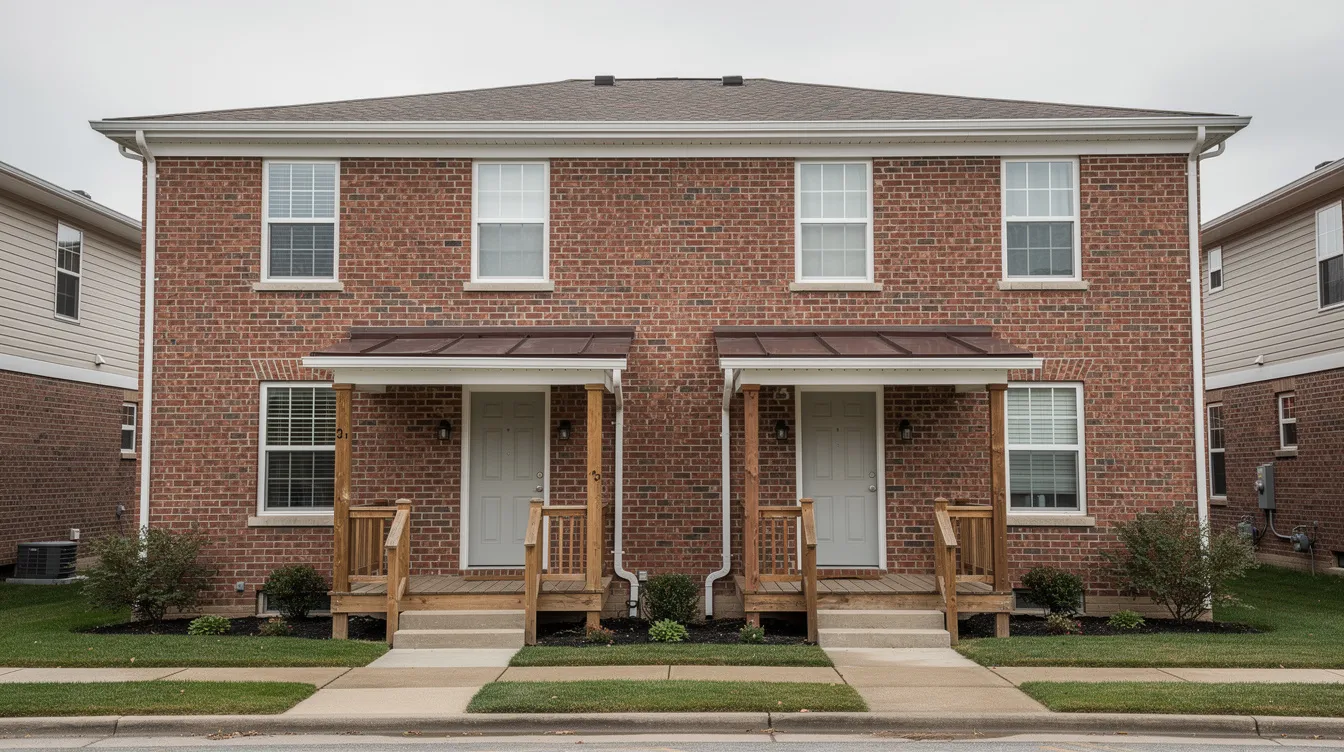
Using Home Equity to Finance a Rental Property
Many real estate investors in 2026 do not save up a full cash down payment for their next property. Instead, they tap the equity sitting in a property they already own.
Home equity is straightforward: if your primary residence appraises at $500,000 and the remaining balance on your existing mortgage is $300,000, you have $200,000 in home equity before lender imposed limits.
Home Equity Lines of Credit (HELOC) allow investors to tap into the equity of their primary residence for capital, and home equity loans allow borrowing against property value. You can borrow up to 80% of home equity for investments through most programmes. Cash out refinancing can provide cash up to 80% of home value as well.
There are three main ways to access that equity:
- Home equity loan: a lump sum with fixed monthly payments, secured against your property.
- Home equity line of credit (HELOC): a revolving equity line of credit you can draw from and repay, with variable rates. HELOCs offer a flexible credit line based on home equity.
- Cash out refinance: replace your current mortgage with a new mortgage at a higher loan amount, pocketing the difference in cash.
Many lenders allow borrowing up to about 75 to 80% combined loan to value on primary residences. Limits are often lower when the equity comes from an existing investment or rental property.
The key risk? Tapping home equity increases your monthly obligations and can create pressure on cash flow if rents soften or vacancies rise. You can explore current HELOC rates and alternatives to compare your options, or run numbers with a HELOC calculator.
Home Equity Loan vs. Home Equity Line for Buying Rentals
Choosing between a home equity loan and a HELOC comes down to how you plan to use the money and how much predictability you need.
A home equity loan gives you a fixed interest rate and a lump sum disbursement with fully amortising payments. Home equity loans typically have fixed monthly payments, which makes budgeting straightforward. In 2026, average fixed home equity loan rates sit around 8.6 to 8.7% for 5 to 15 year terms. This is ideal when you know the exact down payment, rehab, or purchase amount you need. Home equity loans can be used for property renovations that boost rent and property value.
A home equity line (HELOC) is a revolving credit line secured by home equity, with a variable interest rate. HELOC rates in many states currently run around 6.5 to 7.5% APR. It is better suited for phased rehab, covering multiple smaller deals, or providing short term liquidity to cover expenses across a portfolio.
A quick note on taxes: interest on these products may only be deductible when used to buy, build, or substantially improve the property securing the loan. Check with your CPA rather than relying on general advice.
Investment properties are considered riskier for home equity loans, and higher interest rates may apply for home equity loans on rentals compared to owner occupied properties. Investors who want predictability tend to favour a home equity loan. Active BRRRR or fix and flip investors often prefer a HELOC for flexibility and the ability to withdraw funds as needed.
Cash Out Refinance to Fund a Rental Property
A cash out refinance replaces your existing mortgage with a larger one and turns built up equity into cash you can deploy toward buying rental property or funding rehab on your next deal.
Here is a concrete 2026 example: say you owe $250,000 on a home worth $450,000. You refinance up to 80% LTV ($360,000), receiving roughly $110,000 before closing costs. That cash becomes your down payment, rehab budget, or reserve fund for a new rental.
Nationally, 30 year fixed cash out refinance rates average around 7.65% as of late 2026, with the premium over a rate and term refinance typically running only 0.125 to 0.50 percentage points for strong borrowers.
A cash out refinance makes sense when:
- Your original mortgage rate is not drastically lower than today's rates (so you are not giving up a great deal)
- You need a larger lump sum than a HELOC provides
- You are planning a long term hold on the property you are refinancing
The downsides: you restart a new 30 year clock, your monthly payment increases, and closing costs (typically 2 to 5%) cut into the available cash. Your new mortgage replaces the current mortgage entirely.
For investors with a higher credit score (often 680 to 700+), pairing a cash out refinance with a new conventional loan on the rental creates a powerful income stream for building a portfolio. Gap Funded can complement a cash out refinance by adding unsecured gap funding to cover any remaining shortfall in down payment, rehab budget, reserves, or earnest money deposit.

Hard Money Loans and Short Term Financing for Rentals
Hard money loans are famous in fix and flip circles, but they also serve as bridge financing for buying rental property that needs work or a fast closing. Investors can use private money loans from individuals rather than traditional lenders, and hard money fills a similar role through specialised lending firms.
A hard money loan is asset based, short term (often 6 to 18 months), and underwritten primarily on the property's after repair value rather than your full financial profile. Fix and flip loans focus on the property's after repair value for qualification, and lenders focus on the property's after repair value when making approvals decisions. Fix and flip loans can be approved in a matter of days, which is why they dominate auction and distressed property deals.
Hard money loans are short term loans often used for distressed properties. Fix and flip loans are short term financing options, with the loan term typically less than one year. These loans often have higher interest rates than conventional loans, typically ranging from 9% to 15% in 2026 plus 1.5 to 4 points in origination fees.
When do hard money loans shine?
- Heavy rehab projects where a traditional mortgage will not underwrite the property in its current condition
- Auctions or distressed sales with tight closing timelines
- Bridge scenarios in a BRRRR strategy before refinancing to a DSCR loan or conventional loan
The catch: even with a hard money loan covering 80 to 90% of purchase and rehab, investors typically must bring 10 to 20% of total project costs plus closing costs in cash. That is a common funding gap that Gap Funded helps fill without touching the deal property's title.
Managing Cash Flow and Reserves on a Rental Property
Securing the loan is only half the battle. Long term success with investment and rental properties depends entirely on cash flow management and having enough liquidity to handle the unexpected.
Real cash flow means net monthly income after mortgage payments, property taxes, insurance, maintenance, utilities (if owner paid), management fees, and a vacancy allowance. In 2026, I reckon targeting a minimum of $200 to $300 per door in positive cash flow gives you enough buffer for rising insurance and tax bills.
Maintaining liquidity by reserving cash for unexpected expenses is essential in rental property investing. Financial institutions often require six to twelve months of principal, interest, taxes, and insurance in cash reserves per property. At a minimum, investors should maintain cash reserves typically equivalent to three to six months of property related expenses.
Strategies to build reserves:
- Open a separate property operating account and treat reserves as non negotiable
- Underwrite conservatively: do not count speculative rent increases in your projections
- Build a steady income buffer before acquiring your next property
Gap Funded's tools can help investors establish and maintain reserve cushions, especially during aggressive acquisition phases. But use them with a clear repayment plan to protect long term cash flow. Nobody wins by stacking capital they cannot service.
Where Most Investors Hit a Funding Gap (and What They Miss)
Here is the scenario I see constantly: a lender approves the primary loan on a rental property. The investor celebrates. Then they sit down and add up the total capital required and realise they are $15,000 to $40,000 short.
Typical funding gap categories include:
- Down payment shortfall: the difference between what you have saved and the minimum down payment required
- Closing costs: title, appraisal, legal fees, lender fees
- Rehab and value add improvements: kitchens, bathrooms, flooring, permits
- Earnest money deposits: needed up front just to write an offer
- Contingency and reserve funds: to cover expenses during lease up or vacancy periods
A 2026 example: purchasing a $350,000 single family home with a 20% down conventional loan means you need $70,000 for the down payment, plus roughly $12,000 to $15,000 for closing costs, initial repairs, and reserves. If you only have $60,000 saved, there is a gap.
Many investors try to plug this with personal savings or high interest consumer credit cards, which strains personal finances and tanks credit utilisation ratios. Investors can utilise multiple financial tools such as unsecured term loans and business credit stacks to finance properties more strategically. That is exactly what Gap Funded is built for.

How Gap Funded Helps You Finance a Rental Property
Gap Funded does not replace your primary lender. We are not a conventional bank loan provider, a hard money lender, or a DSCR lender. We sit behind the primary loan and supply the missing capital so you can actually close.
Here are the key tools we use, in the order that matters:
- Debt consolidation: clean up existing high interest debt to improve your DTI before you apply for a rental loan.
- Rapid gap funding: unsecured personal term loans that cover down payment shortfalls, closing costs, or reserves without any lien on your deal property.
- 0% credit stacking: business credit cards at 0% introductory rates, stacked strategically to fund rehab, furnishings, or working capital.
- HELOC for business use: if you have equity in a home or investment property, we can help you access it through a HELOC.
- Business line of credit: for investors with established businesses generating revenue.
The sequencing matters. Applying out of order can knock out later approvals on most tools.
Typical qualification: FICO often 650+ (the stronger the better), verifiable income or revenue, and responsible existing credit usage. Applications start with a soft credit pull at gapfunded.com/apply that will not hurt your credit score.
Debt Service Coverage Ratio (DSCR) loans allow qualification based on projected rental income, with the debt service coverage ratio calculated by dividing the property's rental income by its debt obligations. DSCR loans typically require down payments between 20% and 30%, and many lenders want a minimum DSCR of 1.0 to 1.25+. Gap Funded is ideal for covering that 20 to 30% down payment or the reserve requirement your DSCR lender demands.
We never take equity in your deals. We never place liens on the rental property being financed. And we can execute fast enough to meet earnest money and closing deadlines.
Building a Smart Capital Stack for Your Next Rental Deal
A capital stack is simply the combination of funding sources you layer together to finance a deal. Getting the order right is the difference between a profitable rental and a cash flow nightmare.
For most buy and hold or BRRRR investors in 2026, here is the recommended order:
- Primary mortgage (conventional loan or DSCR loan): cheapest, longest term capital at the base. Covers 75 to 80% of the purchase price.
- Home equity or cash out refinance (if available): flexible asset based capital in the middle. Covers 10 to 15% of total deal cost.
- Gap Funded unsecured capital: nimble gap funding at the top to fill remaining shortfalls in down payment, rehab budget, or reserves.
Sample deal structure:
| Layer | Source | Amount | Purpose |
|---|---|---|---|
| Base | DSCR loan (75% LTV) | $300,000 | Purchase of $400,000 SFR |
| Middle | Home equity line | $50,000 | Down payment + closing |
| Top | Gap Funded unsecured | $30,000 | Rehab + reserves |
| Total | $380,000 |
This order matters because you want the cheapest capital bearing the most weight. Stacking expensive capital at the base is how investors get crushed by monthly payments.
Some investors skip home equity if they want to keep their primary residence unencumbered. In that case, Gap Funded can pair directly with a primary rental loan or a hard money loan to complete the stack.
My advice: map out your capital stack for your next rental before you even write an offer. Know your financing options, your loan options, and your gap before you commit. If you want help running those numbers, start with a no obligation application at gapfunded.com/apply.
Next Steps: Get Your Rental Property Financing Plan in Place
Financing a rental property in 2026 comes down to understanding your investment loans (conventional loans, FHA and VA house hacking, hard money loans, DSCR), tapping home equity wisely (home equity loan, home equity line, cash out refinance), and filling the remaining funding gap intelligently. Your financial journeys as investors will look different from one deal to the next, and that is exactly why stacking your capital in the right order matters.
Before your next deal, gather three things: your current credit score range, your approximate income, and any available home equity. Then map out a simple plan for your next one to two rental purchases using the concepts from this article. That alone puts you ahead of most investors still waiting to "save up enough."
- Apply for a personalised funding review with Gap Funded at gapfunded.com/apply to see how much capital you can access for down payment, rehab, closing costs, reserves, or working capital.
- Explore related resources on gap funding services, hard money, DSCR loans, and debt consolidation to compare scenarios and choose the capital stack that fits your risk tolerance and passive income goals.
The deal is out there, mate. The only question is whether your capital stack is ready for it.
Related Reading
This article is for educational purposes only and isn't financial, legal, tax, or investment advice. Credit and financing outcomes depend on your own situation. Talk to a licensed financial professional before making funding decisions for your business.