
Residential Hard Money: Fast Funding for Real Estate Investors

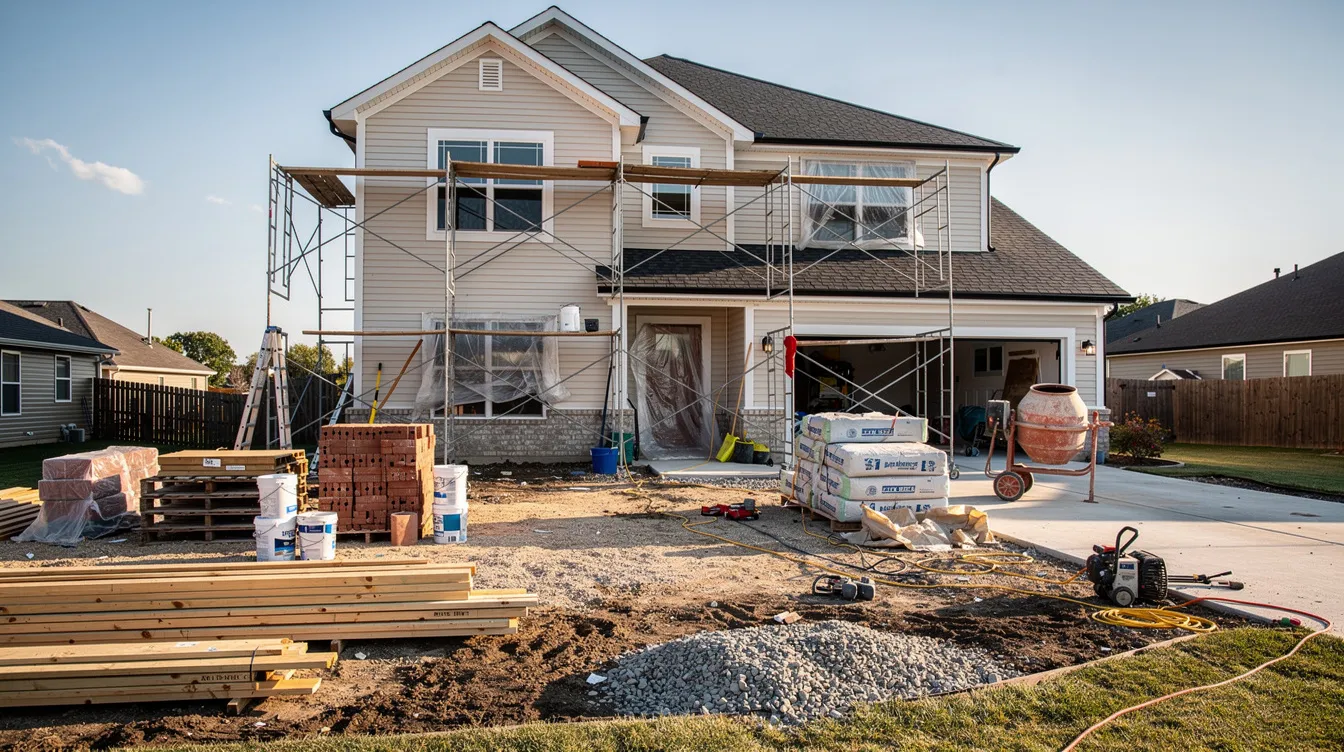
Residential Hard Money: Fast Funding for Real Estate Investors
Most real estate investors don't lose deals because they can't find them. They lose deals because they can't fund them fast enough. Residential hard money lending exists to solve exactly that problem, and if you're buying 1 to 4 unit investment properties, understanding how it works is the difference between closing and watching someone else close.
Introduction to Residential Hard Money Lending
This guide is built for real estate investors doing fix and flip projects, BRRRR strategies, short term rentals, or bridge plays on residential properties. I'll walk you through how residential hard money actually works in the current market, what it costs, when it makes sense, and just as importantly, when it doesn't.
Here's what we'll cover:
- What a residential hard money loan is and how hard money lending differs from bank financing
- The step by step loan process from application to funding
- Hard money loan requirements, rates, points, and real closing costs
- Which property types and strategies are the best fit
- The funding gap most investors don't plan for (and how Gap Funded fills it)
What Is a Residential Hard Money Loan?
A residential hard money loan is a short term, real estate secured loan for 1 to 4 unit investment properties. These loans are typically funded by private investors or private lending companies, not banks.
- Hard money loans are primarily used for short term investment projects rather than long term financing. Common uses include fix and flip projects, wholetail deals, bridge financing into DSCR or conventional loans, and acquiring distressed properties that traditional lenders won't touch.
- Hard money loans typically range from $50,000 to $2 million, with repayment terms of 6 to 24 months depending on the scope of work and lender.
- Hard money loans are often secured by real estate, not credit history. Hard money lenders focus on the property's value, not credit scores. That's the core difference between this and a traditional mortgage.
- These loans are often used by investors purchasing distressed properties that cannot qualify for traditional financing because of condition, title, or code issues.
Think of it this way: banks care about you. Hard money lenders care about the deal.
How Residential Hard Money Lending Works Step by Step
Understanding how hard money loans work saves you time and stops you from fumbling the process when speed matters. Here's the typical flow:
- Find a deal. You locate a residential property with upside, whether that's a foreclosure, off market deals from wholesalers, or an auction.
- Estimate ARV and rehab. Run your own comparable market analysis and build a detailed rehab budget.
- Approach a hard money lender. Submit your deal summary, purchase contract, and scope of work.
- Receive a term sheet. Approval for hard money loans can occur within days. Experienced borrowers often get term sheets in 24 to 48 hours.
- Property appraisal and inspection. The lender orders an ARV review or appraisal. Approval focuses heavily on the property's after repair value.
- Underwriting and closing. Hard money loans can close in as little as 5 to 10 days once documentation is complete. Hard money loans close in days, unlike traditional loans that take weeks.
- Rehab draws. Financing typically includes both the purchase price and renovation costs, but rehab funds are released in draws after inspections at each milestone.
Lenders usually advance only 60% to 75% of the property's current value, or up to 70 to 75% of ARV, whichever is the binding constraint. Most hard money loans are structured as interest only payments with a balloon payment at maturity.
Residential Hard Money vs. Traditional Bank and DSCR Loans
Not all real estate loans are created equal. Here's how residential hard money stacks up:
| Factor | Hard Money | Traditional Bank Loan | DSCR Loan |
|---|---|---|---|
| Speed to close | 5 to 10 days | 30 to 45 days | 21 to 35 days |
| Interest rates | 8% to 15% | 6% to 7.5% | 7% to 9% |
| Underwriting focus | Property value, ARV, exit plan | W2 income, tax returns, credit score | Rental income, DSCR ratio |
| Term length | 6 to 24 months | 15 to 30 years | 5 to 30 years |
| Down payment | 10% to 25%+ | Traditional loans often require down payments as low as 3% | 15% to 25% |
| Property condition | Distressed OK | Must be habitable | Must be rentable |
Unlike traditional bank loans, hard money lenders may offer more flexible underwriting compared to traditional banks. Traditional lenders and conventional lenders need heaps of documentation. Banks want your financial statements, two years of tax returns, and a borrower's credit history that looks like a straight line up. Hard money lenders want to know the deal works.
Investors often use hard money as bridge financing to acquire and rehab a property quickly, then refinance into a DSCR loan or traditional financing for long term rental holds. That's the BRRRR strategy in a nutshell.
Residential Hard Money Loan Requirements and Qualification
Hard money loan requirements are simpler than bank requirements, but "simpler" doesn't mean "none." Here's what most lenders want:
- Down payment and equity. Borrowers typically need a down payment of at least 20%. Some lenders accept 10% from experienced investors, but hard money loans often require substantial cash down payments, typically 20% to 35% for newer borrowers or riskier deals.
- Credit score. Many hard money lenders still check credit. Minimum is usually 620 to 660, with better loan terms available at 680+. Lower credit scores don't automatically disqualify you, but they increase cost and reduce leverage.
- A clear exit strategy. A clear exit strategy is essential before taking out a hard money loan. Whether that's a flip sale, DSCR refinance, or wholesale assignment, your exit must be concrete with a timeline and supporting comps.
- Required documents. Required documents include a property purchase agreement and renovation budget. You'll also need a scope of work, timeline, before photos, proof of insurance, and basic financials. Borrowers may need to present a detailed renovation plan before approval.
- Experience. Not always required, but a proven track record of 2 to 5 completed flips materially improves terms. First time flippers face stricter leverage and higher reserve requirements.
- Entity structure. Most lenders prefer an LLC with an operating agreement and EIN. Personal guarantee is usually still required.
Prepare a detailed project plan to improve loan approval chances. Borrowers can negotiate flexible terms with hard money lenders when they come to the table organised and prepared.
Costs of Residential Hard Money: Rates, Points, and Closing Costs
Let's talk numbers, because this is where deals live or die.
- Interest rates. Interest rates for hard money loans typically range from 8% to 15%. Most borrowers in the current market land between 9% and 13%. Hard money loans typically have interest rates of 10 to 15% for higher risk profiles or newer investors.
- Origination fees. Expect 1.5 to 3 origination points upfront. High costs can arise from origination fees of 2 to 4% on hard money loans depending on lender and deal complexity.
- Closing costs. Title, escrow, appraisal or ARV review ($500 to $1,000), recording fees, insurance, and draw inspection fees ($150 to $250 per draw). Total closing costs often run 2% to 5% of the loan amount.
Worked example: You take a $300,000 hard money loan for a 12 month fix and flip. At 11% interest with interest only payments, you're paying roughly $2,750 per month in carrying costs. Add 2 origination points ($6,000) and 3% in closing costs ($9,000), and your total financing cost before you even pick up a hammer is around $48,000.
That's a fair whack of money. But if you bought the property at 65% of ARV and the deal math works, those costs are the price of speed and access to properties that conventional lenders reject.
Some costs can be rolled into the loan amount depending on LTV and lender policy. Down payment, points, insurance, and reserves are rarely financed. Stronger track records sometimes allow more to be rolled in.

When a Residential Hard Money Loan Makes Sense (and When It Doesn't)
Good fits:
- Time sensitive purchases: foreclosure deadlines, tax sale auctions, competitive market situations where a 45 day bank close means losing the deal
- Bank ineligible properties with foundation issues, missing kitchens, severe deferred maintenance, or title complications
- Fix and flip projects and heavy value add real estate projects where you're banking on ARV
- BRRRR strategy plays where you plan to refinance into a DSCR loan once the property is stabilised and rented
- Hard money lenders often finance properties that conventional lenders reject due to poor condition
Bad fits:
- Long term holds with no planned refinance. Carrying 11% interest for years will eat you alive.
- Thin profit margins where high interest rates and origination fees consume the spread
- Borrowers with no clear plan, no exit strategy, and no reserves
- Short term projects where the numbers only work if everything goes perfectly. They won't.
Conservative deal analysis in the current market means buying at 65 to 70% of ARV minus repairs. If you can't hit that, the deal probably doesn't support hard money carrying costs.
Residential Property Types and Strategies Suited for Hard Money
Qualifying property types for residential hard money include:
- Single family homes (the bread and butter of flipping houses)
- Small multifamily (2 to 4 units)
- Townhomes and condos (non owner occupied)
- Some short term rentals, provided local licensing and market fundamentals support it
Common strategies:
- Fix and flip. Buy distressed, renovate, resell. Hard money covers acquisition and rehab phases.
- BRRRR. Buy, rehab, rent, refinance, repeat. Use hard money for the front end, then exit into a long term DSCR loan.
- Wholetail. Light cosmetic rehab, fast turnaround, lower risk.
- Short term rental conversion. Using bridge financing to acquire or reposition a property for STR income.
Hard money lenders evaluate distressed properties differently than banks. They focus on ARV, local comps, and the rehab budget rather than current condition. That's why these real estate loans exist.
The Real Funding Gap in Residential Hard Money Deals
Here's what most real estate investing guides skip: even when a hard money lender covers 80 to 90% of purchase and rehab, you still need a stack of cash to actually close.
The typical funding gap includes:
- Down payment shortage. 10 to 20% of total project cost in cash or equity
- Closing costs. Title, escrow, appraisal, recording, insurance
- Earnest money deposits. Required to lock up the contract
- Rehab overruns. Change orders, permits, surprises behind walls
- Carrying costs. Monthly payments on interest, utilities, taxes, insurance during renovation
- Reserves. Lenders increasingly require liquidity documentation
Example: On a $250,000 purchase with $60,000 in rehab (total cost $310,000), a lender offering 75% of a $400,000 ARV will loan up to $300,000. That still leaves roughly $10,000 in project cost gap plus $9,000 to $15,000 in closing costs, plus earnest money, reserves, and contingency. Total cash required: $40,000 to $70,000 or more.
That's a real number. And it's where most investors get stuck, not because the deal is bad, but because the cash flow to close it isn't there.
How Gap Funded Complements Residential Hard Money Lenders
Gap Funded is not a hard money lender. We don't compete with your lender, we complement them. We specialise in unsecured and asset based gap funding that works alongside hard money lenders, DSCR lenders, and banks to cover the capital your primary lender doesn't.
Here's the order we recommend, and the order matters because applying out of sequence can knock out later approvals:
- Unsecured term loans and 0% credit stacking. No lien on the deal property. Soft pull to check options. Covers down payment, closing costs, materials, and holding costs.
- HELOC or home equity loan on a primary residence or separate investment property. Taps existing equity without selling ownership in your deal.
- Business lines of credit and term loans. For investors with established deal flow, 6 to 24 months of business revenue history, and at least $20K per month revenue.
Realistic qualification: most unsecured programs work best for FICO 650 to 700+ with verifiable income. HELOCs depend on equity in a property you already own. Revenue based tools need operating history. For a deeper look at how capital stacking works in practice, that guide breaks it down.

Gap Funding Tools for Residential Hard Money Projects (Detailed)
- Unsecured gap funding. Personal term loans and credit card stacking at 0% APR can cover down payment, closing costs, materials, and holding costs without touching the property's title. These are the fastest to deploy and don't create liens that complicate your hard money lender's position. Best for investors with 680+ credit and verifiable income.
- Asset based capital. A HELOC on your primary residence or an investment property lets you pull equity to fund multiple residential projects. Rates are typically lower than unsecured options, and the line is reusable across deals.
- Revenue based capital. Business lines of credit and business term loans work for investors with established property management companies or consistent deal flow. You'll need at least two years in business and $20K per month in revenue to qualify for most business funding options.
- Debt consolidation. If you've stacked high interest debt from earlier projects, consolidation can free up cash flow and improve your borrower's creditworthiness for the next deal.
Realistic Scenarios: Stacking Residential Hard Money with Gap Funded Capital
Scenario 1: New investor, first flip. A borrower with a 685 credit score finds a $190,000 distressed single family home needing $50,000 in rehab with a $320,000 ARV. A hard money lender offers 75% of ARV ($240,000), covering purchase plus most rehab. The investor still needs roughly $20,000 for closing costs, down payment gap, and reserves. Gap Funded provides an unsecured term loan and 0% business credit cards to cover that gap. No equity split. No lien on the deal property.
Scenario 2: Experienced BRRRR investor. A seasoned investor with multiple investors in her portfolio uses hard money for acquisition and rehab on a duplex. She plans to refinance into a DSCR loan once the property is rented and stabilised. She funds her $35,000 gap using a HELOC on her primary residence through Gap Funded, keeping the subject property's title clean for the DSCR refinance. The rental income from the duplex supports the DSCR ratio needed for the long term loan.
Scenario 3: STR conversion. A small landlord is converting a long term rental into a short term rental. The property needs furnishing, marketing setup, and working capital during the transition. He uses a business line of credit through Gap Funded for $25,000 in furnishing and setup costs while a hard money bridge loan covers the short term financing gap. Once the STR generates revenue, the line of credit is paid down from cash flow.
Each scenario has a clear plan, a concrete exit strategy, and realistic numbers. That's the standard.
Risks, Pitfalls, and How to Use Residential Hard Money Responsibly
I'd be doing you a disservice if I only talked about the upside. The risks involved with hard money are real.
- The primary risk of hard money loans is the risk of foreclosure due to tight timelines and high costs. Borrowers risk foreclosure if they default on hard money loans. If your rehab runs long and the loan matures without an extension, you're in trouble.
- Overleveraging. Stacking a hard money loan with additional unsecured funding increases your total debt load. If the deal falls apart, you're holding multiple repayment schedules with no asset to show for it.
- Underestimating rehab costs. Permits, code surprises, contractor delays, and material cost volatility can blow through your budget. Build in 15 to 20% contingency.
- Market shifts. If the housing market softens during your 6 to 12 month repayment period, your ARV assumptions may no longer hold. Conservative market analysis protects you here.
- Vague exit strategy. If your exit depends on a refinance into a DSCR loan, make sure the property will meet DSCR requirements (occupancy, lease documentation, seasoning) before you start.
Who should avoid aggressive stacking: investors with sub 650 credit scores, no income, no reserves, and no realistic exit plan. Slow down, build credit and capital first, then come back when the financial situation supports it. We'd rather tell you that now than watch you lose a property later.
How to Get Started: Working With a Residential Hard Money Lender and Gap Funded
Here's the play:
- Line up your hard money lender first. Research local lenders by checking reviews and asking for referrals. Talk to multiple lenders and compare loan terms, rates, and draw schedules. Look for real estate professionals who specialise in your property type and strategy. Whether you're in Texas or California, the right lender makes a measurable difference.
- Map your funding gap. Once you have a term sheet, calculate exactly how much you need beyond what the lender covers: down payment, closing costs, reserves, and contingency.
- Apply with Gap Funded. Complete the quick application at gapfunded.com/apply. You'll get a soft pull funding review with no impact to your credit score, and we'll walk you through which tools fit your deal.
- If you're a hard money broker, wholesaler, or connector, our referral partner programme is built for you.
In conclusion, hard money lending gives real estate investors speed and access to deals that traditional financing can't touch. But speed without capital to close is just a fast way to lose a deal. Know your numbers, secure financing for the gap before you need it, and stack your capital in the right order.
Apply for a funding review here before you lock in your next hard money loan, so you know exactly how you'll cover every dollar.
Related Reading
This article is for educational purposes only and isn't financial, legal, tax, or investment advice. Credit and financing outcomes depend on your own situation. Talk to a licensed financial professional before making funding decisions for your business.