
Refinance Hard Money: How to Exit Expensive Short Term Loans Into Smarter Long Term Financing

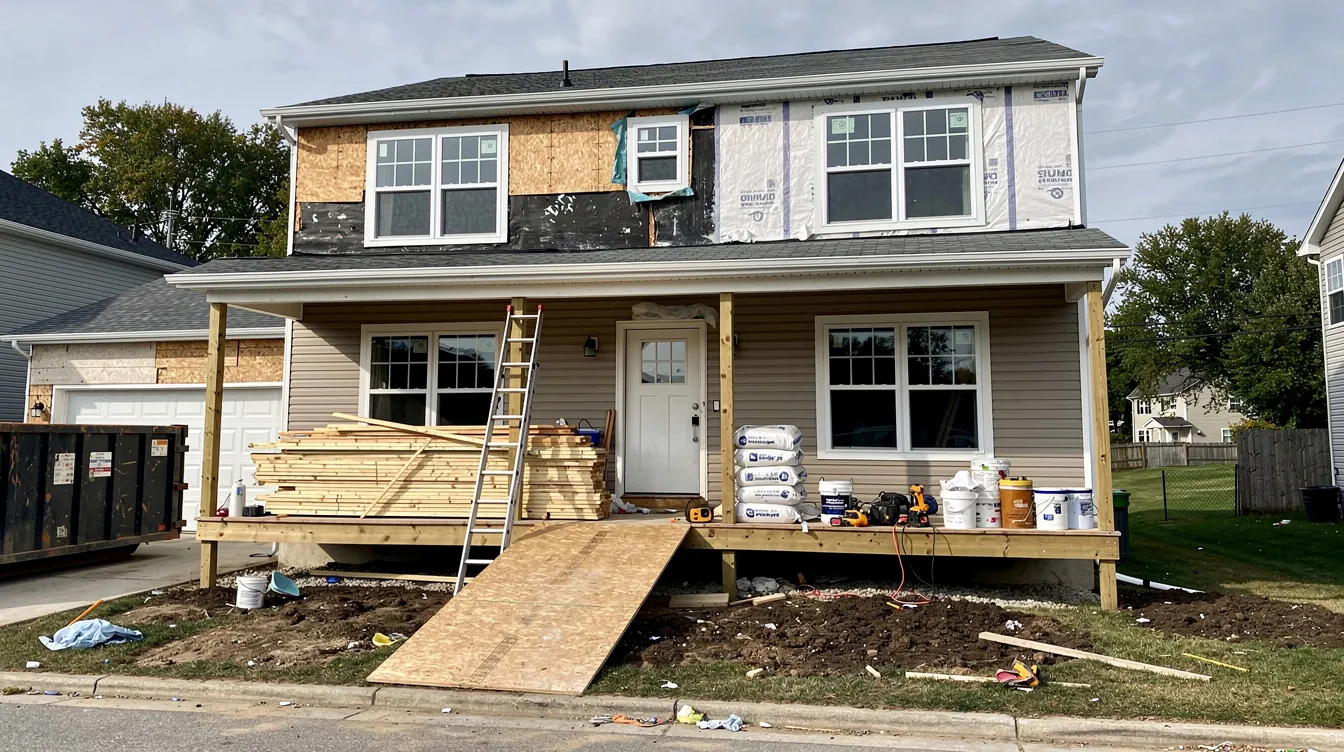
Refinance Hard Money: How to Exit Expensive Short Term Loans Into Smarter Long Term Financing
Your hard money loan bought you speed. Now it's buying you stress. That balloon payment is circling, the interest is bleeding your margins, and you need a plan that doesn't involve panic selling at a discount. This guide walks through every realistic way to refinance hard money, when each path makes sense, and how to fill the funding gaps that trip up even experienced real estate investors.
Quick Answer: Is It Hard to Refinance a Hard Money Loan?
No, but it takes preparation. Refinancing a hard money loan is very doable if you plan ahead on credit, equity, income, and property condition. Most hard money loans on investment property run 6 to 18 months with interest only payments and a balloon payment due at maturity. That clock is always ticking.
Your main refinance paths are:
- Conventional loan into your personal name (lowest rates, most paperwork)
- DSCR loan for rental properties (underwritten on property cash flow, not your tax returns)
- New hard money refinance or bridge loans when you need more time and the first two aren't ready yet
What lenders look at when you refinance hard money: property value or ARV, completed rehab, seasoning period, credit score (typically 660 to 700+ for best terms), current market rent, and a clear exit strategy.
Refinancing a hard money loan usually replaces short term financing with long term solutions, resulting in lower interest rates and extended repayment terms. It also helps eliminate balloon payments, and it's often the planned exit strategy once a property is rent ready or stabilised.
Gap Funded is not the hard money lender. We provide gap funding and capital stacking that helps you qualify for and close your refinance by covering down payments, rehab, closing costs, and reserves.
What Is a Hard Money Loan and Why Investors Use It First
A hard money loan is a short term, asset based loan from private hard money lenders or funds. It's designed primarily for investment properties, not owner occupied properties. Think fix and flip projects, BRRRR deals, auction buys, and distressed properties that don't yet qualify for a conventional loan.
- Hard money loans can close in as little as 7 days. Some bridge loans can also close in 21 to 25 days with hard money lenders, depending on complexity.
- Fix and flip projects often use hard money loans for quick funding. Hard money loans are often used for fix and flip projects because traditional financing simply can't keep up with time sensitive opportunities.
- Hard money loans have high interest rates ranging from 8% to 15%, with typical ranges sitting between 9% and 13% in 2025 to 2026. Add 1 to 3 points in origination fees on top.
- Terms run 6 to 18 months, interest only payments, balloon payment at the end.
- Approval for hard money loans focuses on property value, not credit score. Private lenders typically have fewer underwriting requirements than banks. Hard money loans often require less documentation than traditional loans.
- Hard money loans provide up to 100% of rehab costs for investors in some loan programs, though purchase LTV usually caps around 65% to 85%.
- Traditional lenders evaluate credit scores and income more strictly than hard money lenders, which is exactly why hard money loans are ideal for short term investment needs.
Example: a $250,000 fix and flip loan in 2025 at 12% interest, 2.5 points, 12 month term. Your carrying cost in interest and fees alone could hit $30,000 before you sell or refinance. Every hard money loan should start with a clear exit plan: sell the property or refinance into long term financing.
What Is a Hard Money Refinance?
A hard money refinance means replacing an existing loan (often an expiring hard money or bridge loan) with a new hard money loan secured by the investment property. This is not the same as refinancing into a traditional 20 or 30 year mortgage. It's another short term money loan, used when you need more time or more cash.
- Typical use cases: project ran over schedule, rehab not fully complete, a DSCR or conventional lender declined you, or you want a cash out refinance before selling or before seasoning requirements are met.
- Hard money refinancing can close in as little as 7 to 14 days. This refinancing type is secured by property value, not credit scores, with lenders typically offering up to 65% to 75% of current value.
- Hard money refinancing is ideal for time sensitive real estate projects. Investors can pull cash out through hard money refinancing if sufficient equity exists.
- Hard money refinance is often used for fix and flip projects where the original timeline has slipped.
- Investors often use this as a bridge to a DSCR or conventional loan once the property is leased up and stabilised.
Hard Money Refinance vs. Refinancing Into Long Term Loans
Real estate investors usually move in stages: purchase and rehab with hard money, then refinance hard money into a DSCR or conventional loan, then hold or sell. Here's how the options compare:
| Factor | Hard Money Refinance | DSCR Loan | Conventional Loan |
|---|---|---|---|
| Term | 6 to 24 months | 30 year fixed common | 15 to 30 year amortisation |
| Interest rates | 9% to 14% | High 6s to low 8s | Similar range, full doc |
| Payments | Interest only payments | Amortising (some IO periods) | Fully amortising mortgage payments |
| Underwriting | Property based, fast | DSCR 1.0 to 1.25+, property cash flow focused | Full income, tax returns, credit |
| Closing speed | 7 to 14 days | 2 to 4 weeks | 30 to 45+ days |
| LTV (rate and term) | 65% to 75% | 70% to 80% | 70% to 80% |
| LTV (cash out) | Varies | 65% to 75% | 65% to 75% |
Traditional refinancing can take weeks or even months to close, which is why a hard money refinance exists as a bridge. Investors can receive up to 85% loan to value on hard money loans in some markets, though cash out refinance loan amounts are typically more conservative.
DSCR loans are the popular middle ground for rental properties: no W2 requirement, rates between hard money and conventional mortgages, and approval based on whether the property's rent covers the debt service. Many DSCR and conventional lenders want 3 to 6 months of seasoning from purchase or rehab completion before approving a cash out refinance, though some allow immediate rate and term refinances based on current appraised value.
How a Hard Money Refinance Works Step by Step
A typical hard money refinance on an investment property takes 7 to 14 business days from application to closing. Here's the sequence:
- Application and property evaluation: Investor submits a short application, existing loan payoff statement, rehab status, rent roll or projected market rent, and property photos. The new lender focuses on as is value (or ARV if rehab remains) plus exit strategy.
- Valuation: An appraisal or broker price opinion is ordered. Investors typically have to demonstrate a property's current appraised value during refinancing. The lender sets max LTV, often 65% to 70% of market value. Photos and contractor bids help substantiate completed work.
- Loan terms and approval: The underwriter issues a term sheet with loan amount, interest rate, points, term (commonly 12 months), and any required reserves. Many hard money refinance loans structure interest only with a balloon payment at maturity. The refinancing process requires property stabilisation or completion before approval in most cases.
- Closing and payoff: A closing attorney or title company handles payoff of the current loan, pays any arrears, and wires any cash out proceeds. Refinancing triggers new closing costs, including appraisal and origination fees. Title, insurance, and entity docs (LLC, operating agreement) must be in order to avoid delays.
When a Hard Money Refinance Makes Sense (and When It Doesn't)
A hard money refinance is a tool, not always the right one. Use it when it protects equity or keeps a profitable project alive.
When it makes sense:
- Your current hard money loan matures in 30 to 60 days, you're 70% to 90% done with rehab, but you're not ready for a DSCR or conventional loan yet.
- You have a profitable flip listed for sale but need an extra 3 to 6 months to get your target price instead of accepting a low offer under pressure. A cash out refinance allows investors to access built up equity from a property to cover carrying costs during that hold.
- You have 30% to 40%+ equity and can do a small cash out to finish rehab, pay contractors, or cover costs until lease up. Successful refinancing improves monthly cash flow for rental properties once stabilised.
When it probably doesn't:
- The project is badly upside down on ARV vs. total cost, and more debt just deepens the loss.
- Your exit strategy is unclear or depends on unrealistic price assumptions or rent projections. More debt won't fix a bad deal.
- Your credit profile and deal metrics already qualify you for a DSCR loan or conventional loan at a lower interest rate. No point paying double digit rates if you don't have to.
Many lenders enforce a seasoning period before refinancing can occur. Refinancing typically involves minimising exit fees and costs from the original hard money loan. Model multiple outcomes (sell, refi into DSCR, hold) over 6 to 24 months before agreeing to another short term, high interest loan.

Financing the Gap: Down Payments, Rehab, and Seasoning While You Refinance
Here's the part nobody talks about enough. Hard money lenders and DSCR lenders rarely finance 100% of purchase, rehab, and soft costs. That leaves investors short on:
- Down payment: 20% to 30% required to refinance into a conventional loan or DSCR loan
- Rehab overages: contractor change orders, material price increases, scope creep
- Seasoning carry costs: you must hold the property 3 to 6 months before a cash out refinance, but you still owe interest only payments and insurance
- Lender required reserves: often 3 to 6 months of PITIA to qualify for rental refis on 1 to 4 unit and multi family properties
Gap Funded helps real estate investors bridge this gap with unsecured term loans and personal lines of credit for down payment, closing costs, or final rehab draws when the hard money lender won't advance more. We also offer business credit card stacking at 0% intro APR to float materials, contractor invoices, and carrying costs during seasoning or while waiting on an appraisal.
Our tools work best for investors with roughly 650+ FICO, verifiable income, or existing business revenue. We use soft credit pulls so checking your options doesn't hurt your scores.
How Gap Funded Helps You Exit Hard Money Loans
Gap Funded doesn't replace your primary hard money lender or your DSCR or conventional lender. We stack additional capital so your refinance actually closes on time. I reckon most deal blow ups aren't from the primary loan falling through. They're from the $15,000 to $40,000 gap nobody planned for.
Here's how the tools work, in the order that matters:
- Debt Consolidation and Unsecured Gap Funding: Clean up existing high interest cards or MCAs first. Then use rapid gap funding (unsecured term loans up to $200,000) to cover rate buydowns, closing costs, and final rehab draws so the property appraises high enough for long term financing.
- Credit Card Stacking at 0% APR: Float materials, labour, utilities, and staging costs during the last 3 to 6 months before a refinance or sale. This frees cash to show stronger reserves and DSCR to your long term lender.
- Asset Based and Revenue Based Capital: For investors with equity in a home or other residential properties, a HELOC provides flexible, reusable capital. For active businesses with $20,000+ monthly revenue, a business line of credit adds revolving funds for multiple projects.
Why does order matter? First, stabilise the project and complete rehab so it qualifies for maximum ARV and best long term loan terms. Second, solve for immediate shortfalls so the DSCR or conventional loan can actually close. Third, if long term refi truly isn't ready, only then consider a hard money refinance with a clear exit and backup plan. For long term holds, investors can pair our gap funding with a DSCR lender (see our DSCR loans overview) to lock in 30 year fixed rental financing after seasoning.
Most approvals go to individual investors with 650 to 700+ FICO, reasonable utilisation, and either W2 income, 1099 income, or verifiable business revenue. Good credit opens better loan amounts and terms across every tool. Asset strength (equity in a home or investment property) can help in some cases even when income documentation is thinner.
Want to see what you qualify for? Complete the quick, no impact application at gapfunded.com/apply and we'll map your gap funding options alongside your refinance.
Planning Your Exit: From Acquisition to Refinance and Beyond
The best time to plan your refinance is before you close on the deal. Not when the balloon payment notice lands. Here's what a typical capital stacking sequence looks like for a BRRRR in 2025 to 2026:
- Month 0 to 1: Close with a hard money loan to acquire a distressed property at a discount. Use gap funding for the down payment shortfall.
- Month 1 to 6: Complete rehab using hard money rehab draws and 0% credit stacking for overages or delays. Costs vary depending on scope, market, and contractor reliability.
- Month 6 to 9: List for rent, stabilise income, prepare documents for a DSCR or conventional loan refinance. Property types and local demand will determine how quickly you can fill multi family units or single family rentals.
- Month 9 to 12: Refinance hard money into long term financing. If delays occur, consider a short hard money refinance while final issues are resolved.
For a pure fix and flip: buy with hard money, use Gap Funded tools to quickly finance overruns and staging, and if the property hasn't sold by the time the balloon payment looms, use a hard money refinance as a bridge instead of panic selling at a discount. Off market deals and commercial properties can follow similar logic with adjusted timelines.
Every deal should have a mapped capital stack before you sign the first set of docs: your new lender for long term financing, your private money lender or hard money lenders for acquisition, and your gap funding plan for everything in between. A private money loan, a private lender, or private money loan programs can all play a role, but none of them solve the gap on their own. Non QM loans and non QM mortgage lender options are worth exploring for borrowers whose income profile doesn't fit traditional lenders or a traditional mortgage, but lengthy processing times can be a risk when your existing loan is maturing.
A loan officer at a conventional bank will tell you to bring more cash. A traditional loan underwriter will ask for six more months of documents. Neither of those solve the problem when you need to close your next deal this month.

Map your plan. Stack your capital. Exit on your terms. Apply for a free funding review at gapfunded.com/apply, no impact to your credit, and let's figure out how to get you out of that hard money loan and into something that actually builds wealth. Client satisfaction starts with having the right tools lined up before you need them.
Related Reading
This article is for educational purposes only and isn't financial, legal, tax, or investment advice. Credit and financing outcomes depend on your own situation. Talk to a licensed financial professional before making funding decisions for your business.