
Raising Capital for Real Estate: Practical Strategies and Gap Funding Solutions

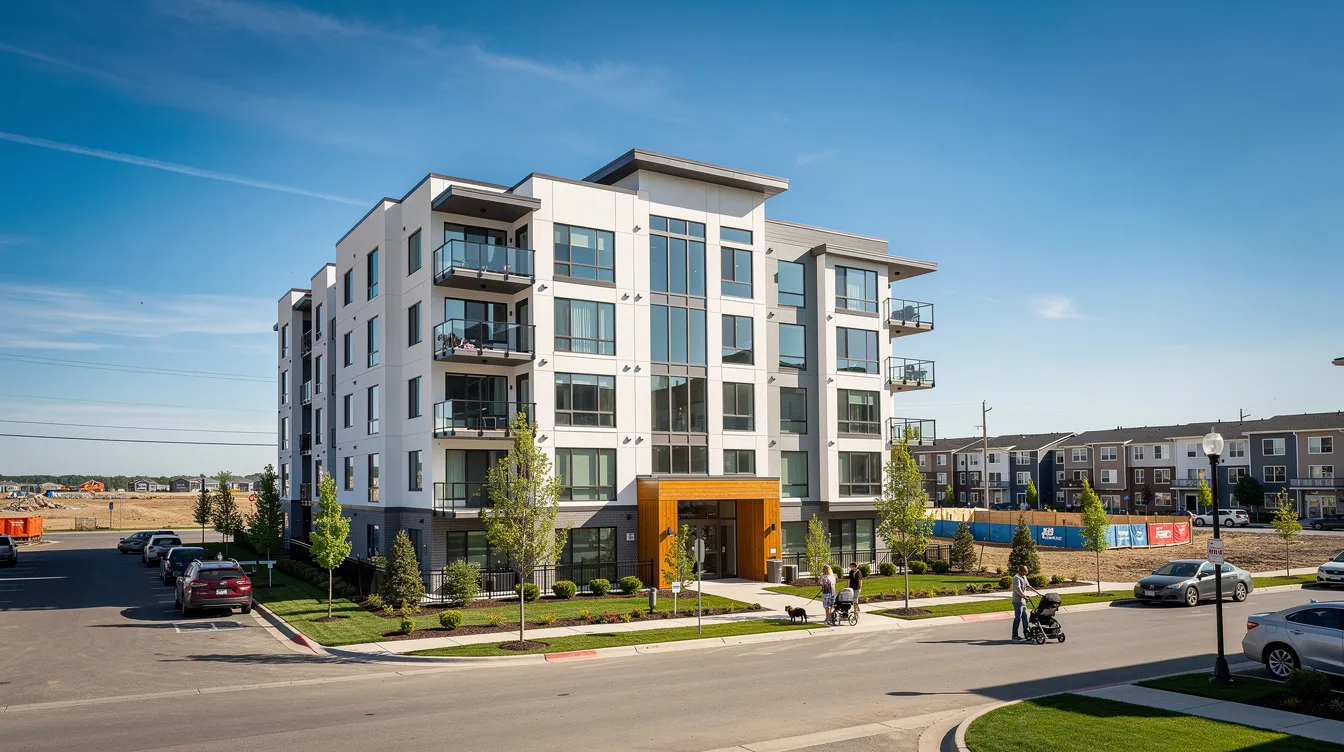
Raising Capital for Real Estate: Practical Strategies and Gap Funding Solutions
Most real estate deals don't fall apart because the property was bad. They fall apart because the investor ran out of cash before closing. And in 2024 to 2026, that problem has gotten sharper. Banks have pulled back, interest rates have climbed, and lenders are pickier about who gets funded and how much they'll cover. If you're trying to raise capital for a real estate deal right now, you already know the friction is real.
But here's the other side: deal flow in multifamily properties, short term rentals, and small commercial real estate is still strong. Properties are trading. Investors are closing. The difference between the ones who close and the ones who don't usually comes down to how well they've planned their capital stack, not whether the deal itself was any good.
This article covers the core strategies for raising capital in real estate, where the funding gaps actually show up (down payment, closing costs, rehab, EMD, working capital), and how non-dilutive tools from Gap Funded can help you close those gaps without handing over equity. Whether you're funding a flip, a BRRRR, or a small apartment building, the goal is the same: get your money right before you go under contract.
Understanding the Real Estate Capital Stack (Debt, Equity, and Private Capital)
The capital stack is just a fancy way of describing where your money comes from, layered by risk and priority. On a $1,000,000 commercial real estate purchase, it might look like this: a bank or DSCR lender provides 65% as senior debt ($650,000), and the remaining 35% ($350,000) comes from equity, whether that's your own capital, a partner's money, or a combination. Hybrid financing structures like mezzanine debt or preferred equity can sit between senior debt and common equity, adding flexibility but also complexity.
Debt is the foundation of most real estate acquisitions. Traditional lenders (banks, credit unions, agency lenders) typically finance 60% to 80% of purchase price, depending on property type and borrower profile. They focus on metrics like DSCR and LTV, and they rarely cover everything. CBRE's Q2 2026 data shows average commercial LTV at just 59.6%, and multifamily LTV around 63.3%. That means you're bringing 25% to 40% from somewhere else.
Equity investors fill that gap: friends and family, private capital sources, private equity funds, family offices, or joint venture partners. They expect higher returns because they carry more risk, and they often want a share of ownership and control. Most multifamily deals use a combination of debt and equity to get across the line.
So where does "gap funding" fit? It covers the shortfall between what your primary lender will fund and the total cash you need for down payment, closing costs, rehab, carrying costs, and contingency. Even experienced capital raisers still need solutions for that last 10% to 25% of the stack.
Choosing the Right Type of Financing for Real Estate (Equity vs. Debt)
Equity financing involves selling ownership shares in exchange for capital. Debt financing involves borrowing money that must be repaid with interest. Both have a place, but the trade-offs are different. Equity capital is generally more expensive than debt financing because equity investors expect higher returns due to increased risk, and they typically want an equity stake plus some decision-making power. Debt has fixed repayment terms and debt obligations, but you keep full ownership.
Consider two deals. A $500,000 fix and flip is time sensitive, you want 100% of the upside, and the hold period is 6 to 12 months. Debt makes sense here. A $2.5 million multifamily acquisition with heavy value add work and a 5-year hold? That's where raising equity from a joint venture partner or private investors starts to look practical, because the capital requirement is larger and the risk is shared.
Bringing in equity investors or joint venture partners makes sense for large commercial real estate development, ground-up construction, or when your personal balance sheet is too thin for bank underwriting. But for single family flips, BRRRR strategy rentals, short term rentals, and small multifamily properties under 50 units where you want long term cash flow and full ownership, non-dilutive debt-based solutions are often the smarter play. That's where Gap Funded specialises: keeping your equity intact on smaller and mid-sized deals so you don't give away profits just to cover a down payment.
Core Strategies for Raising Capital in Real Estate Deals
Most deals use multiple capital raising strategies in combination. Rarely does one source cover everything. Core strategies for capital raising in real estate include building a targeted investor network, clearly articulating value propositions to attract investors, and partnering with experienced general partners or sponsors to enhance fundraising efforts. An active digital presence is also crucial for attracting passive investors.
Here are the main approaches:
- Conventional and DSCR loans: Your bread and butter for stabilised rentals and small multifamily. DSCR rental loan rates in mid-2026 sit around 5.75% to 10.5% depending on file strength. Check sizes range from $100K to several million. Timeframes: 14 to 60 days. Trade-off: stricter underwriting, lower leverage, often recourse.
- Hard money and bridge loans: Built for speed. Fix and flip rates run 9.5% to 13% plus 1.5 to 3 points. Terms of 6 to 24 months. Great for rehabs and distressed properties, but expensive and short lived. You need an exit strategy.
- Private lenders and equity investors: Friends, family, local professionals providing capital. Check sizes vary wildly. Fast if you know the person, but relationships can get complicated. Equity investors expect higher returns due to increased risk.
- Joint ventures: One party provides expertise while the other provides capital. Common in multifamily. Splits often run 70/30 or 80/20. Good for deals too large for one investor but complex to structure.
- Online crowdfunding and Regulation Crowdfunding: Raise up to $5 million per year from accredited and non-accredited investors through SEC registered platforms. Powerful for scaling but slow and legal-heavy.
- Institutional investors: Pension funds, insurance companies, private equity firms. Real estate private equity firms manage funds averaging $500 million to $1 billion. For most readers, this is a future play, not a first deal solution.
Real estate syndication pools capital from multiple passive investors to acquire larger properties. Seller financing allows buyers to pay purchase prices in instalments directly to the seller, which can be another creative financing option. Newer investors often underestimate how much capital they actually need, especially working capital, interest carry, and reserves. Having a gap funding plan ready before going under contract is the difference between closing and scrambling.
Using Regulation Crowdfunding and Online Platforms to Raise Capital
Regulation Crowdfunding allows raising capital from various investors through SEC registered platforms. Since 2021, sponsors can raise up to $5 million online per year, and the rules include both accredited and non-accredited investors, subject to contribution limits based on income and net worth.
Online platforms like Fundrise facilitate real estate crowdfunding, alongside others like RealtyMogul and CrowdStreet. Crowdfunding democratises investment opportunities for real estate developers by opening access to many small equity investments rather than relying on a few large cheques.
A strong campaign page needs a clear business plan, project photos, a realistic timeline, financial projections, risk factors, team bios, and an exit strategy. Developers must ensure compliance with SEC regulations when crowdfunding, including Form C disclosures, reporting, investor limits, and marketing restrictions.
Crowdfunding is powerful for scaling, but it's slow and legally heavy. Many smaller investors still need faster private capital or gap funding solutions to close time-sensitive deals.
Building a Compelling Business Plan and Investor Pitch
Sophisticated equity investors and institutional investors expect detailed information before committing funds. Building a detailed business plan is essential for securing investor funding. No one writes a cheque based on "trust me, it's a good deal."
Key components:
- Property description, location, and physical condition
- Market analysis and comps
- Value add or development strategy with timeline
- Detailed renovation or construction budget (including soft costs)
- Lease-up or sale strategy
- Projected returns: IRR, cash on cash, equity multiple, and sensitivity analysis
- Downside or "Day 2" scenarios showing what happens if things go sideways
When pitching potential investors, communicate terms clearly: preferred returns (often 8% to 10% before profit splits), promote structure, expected hold period, and reporting cadence. Investors prefer clear, structured deals that benefit both sides. Trust is fostered through clear and honest communication about risks and returns.
Developers should highlight past successes to attract investors. If you're a beginner, lean on relevant professional experience, mentors, and strong market research. A strong track record builds credibility with potential investors.
Private Capital, Joint Ventures, and Institutional Investors
Beyond friends and family, serious capital raising often involves private capital sources like family offices, private equity funds, and institutional investors. Here's how they break down:
- Small private lenders: Doctors, business owners, high net worth individuals looking to invest passively in local deals. Flexible but expectations vary.
- Family offices and private investment firms: Target larger deals (above $3M to $5M). Expect clean sponsor track records, professional reporting, and co-investment alignment.
- Institutional investors: Pension funds, insurance companies, and private equity firms often raise funds from institutional investors. A typical real estate private equity fund raises $500 million to $1 billion, and raising capital for a new fund typically takes 24 to 36 months. These investors want stabilised assets or large development with strong pre-leasing.
Joint ventures involve partnerships where one party provides expertise while the other provides capital. In a typical multifamily JV, the operator might contribute 20% equity plus deal sourcing and management, while the capital partner contributes 80% and receives a preferred return before any profit split.
I'll be candid: institutional investors are rarely accessible to first-time sponsors. If you're building your track record, you're better off using smaller private investors plus non-dilutive gap funding to deliver results on early deals before approaching the big money. Fund managers at institutions want proof, not promises.

Where the Real Funding Gaps Appear in Real Estate Deals
Even after securing a primary loan, real estate investors usually face funding gaps that can kill the deal. Lenders typically require a down payment of 20% to 25%. That's just the start.
Here are the concrete gap categories:
- Down payment: 25% on a $400,000 rental is $100,000. On a $1.2M small apartment building, you're looking at $300,000 or more.
- Closing costs and lender fees: Title, escrow, appraisal, origination points. Usually 2% to 5% of purchase price.
- Rehab draws and contractor deposits: Materials cost more than budgeted. Draw schedules lag. Cash flow stress hits fast.
- Earnest Money Deposits (EMD): Competitive deals demand $5,000 to $50,000 up front just to hold a contract.
- Carrying costs: Interest, taxes, insurance, utilities during renovation or lease-up. A 6-month flip can eat $15,000+ in carry alone.
- Contingency reserves: Permit delays, structural surprises, cost inflation. Budget 10% to 20% of rehab cost as a buffer.
Investors prefer transparency about project challenges, and being transparent with yourself about these numbers is step one. Inexperienced capital raisers often scramble for high-cost last-minute money like gator lending or expensive merchant cash advances because they didn't plan these gaps early.
How Gap Funded Helps You Raise Capital Without Giving Up Equity
Gap Funded is a funding intermediary that specialises in bridging the gap between what your primary lender will finance and the actual cash you need to close and execute your business plan. We're not a hard money lender or a DSCR lender. We fill the space those lenders leave open.
The core problems we solve: covering down payments, closing costs, rehab budgets, reserves, working capital, and EMD so you don't have to give equity away in your deals. Building strong investor relationships is crucial for capital raising, but sometimes you just need cash, not a partner.
Our main non-dilutive tools: unsecured term loans, business credit card stacking at 0% promotional interest, HELOCs on investment property, business lines of credit, and working capital products. No liens on the deal property.
Typical borrowers have FICO scores around 650 to 780+, verifiable income or business revenue, or tappable equity in a home or investment property. Checking your options uses a soft credit pull with no impact to your credit.
Building investor relationships enhances trust and confidence, and regular communication with investors maintains their trust. Engaging investors through updates can strengthen relationships. We reckon the same applies to working with us: transparent process, clear terms, no surprises.
Ready to see what you qualify for? Start a quick application at gapfunded.com/apply.
Unsecured Gap Funding Tools: Term Loans and Credit Card Stacking
Unsecured gap funding relies on your creditworthiness, not a lien on the subject property. That makes it fast and flexible for raising capital on smaller to mid-sized real estate projects.
Unsecured term loans offer fixed terms (typically 3 to 7 years), fixed monthly payments, and work well for down payment assistance, closing costs, or consolidating high-interest debts so your overall cost of capital drops. These are available as personal or business term loans depending on your situation.
Business credit card stacking at 0% APR involves obtaining multiple business cards together to build a pool of interest free capital for 6 to 18 months. This is ideal for rehab materials, staging, and EMD. It's popular with fix-and-flip and BRRRR investors because the 0% window aligns with typical project timelines. Learn more about credit card stacking and how it works.
Pros: speed (often days, not months), no equity splits, no liens on the deal property, flexibility across multiple projects.
Cons: payments start immediately on term loans. Poor planning on 0% promotional periods can lead to higher rates later. You need a clear exit or refinance strategy. These tools aren't free money. They're structured capital that requires a plan.
Asset-Based and Revenue-Based Capital to Support Larger Real Estate Raises
As investors scale into larger deals or portfolios, asset-based and revenue-based products can provide more capital than unsecured tools alone.
HELOCs and home equity loans let you tap equity in your primary residence or investment properties. Average rates for home equity lines in mid-2026 hover around 8%, depending on LTV and credit. These are great for down payments, contractor draws, or emergency costs when you've got equity sitting idle. Check out our HELOC alternatives guide for options.
Hard money and DSCR loans serve as primary financing for investment properties. Hard money is powerful for value add deals but often leaves gaps for down payment and soft costs. They're tools, not competitors, and we help you fill what they don't cover.
Revenue-based tools suit established businesses with 2+ years of operations and at least $20,000 per month in revenue: business lines of credit and business term loans provide working capital for operations and growth.
Why order matters: use unsecured and HELOC-type products for down payments and rehab first, hard money or DSCR for primary financing, and reserve revenue-based tools for working capital. Applying out of order can knock out later approvals. Sequencing is how you protect your access to more capital for your next deal.
Practical Scenarios: Funding a Flip, BRRRR, Multifamily, and a New Business
Theory is nice. Here's how it actually plays out.
Example 1: $250,000 Fix and Flip Hard money loan covers 85% of purchase and 100% of rehab. Investor still needs roughly $40,000 for down payment, closing costs, and carrying costs. Solution: $20,000 unsecured term loan for the down payment, plus 0% credit card stacking for materials and EMD. Exit via resale in 6 to 12 months. Investor keeps 100% of the profit.
Example 2: BRRRR Strategy on a $350,000 Duplex DSCR lender provides 80% LTC on acquisition. Investor is short $30,000 for rehab, soft costs, and reserves. Solution: HELOC on investor's primary residence for the rehab cash, plus a business line of credit for consulting and permit costs. After rent stabilisation, refinance into a long term DSCR loan and repeat.
Example 3: 12-Unit Multifamily Acquisition Senior debt via an agency loan covers the purchase. A small private equity investor contributes 30% equity as a joint venture partner. But there's still a gap for closing costs and initial tenant improvements. Gap Funded unsecured capital covers those soft costs so the operator doesn't dilute their equity stake further.
Example 4: Starting a Property Management Business A new business owner wants to launch a property management company to support their real estate investment portfolio. They don't have 2 years of revenue yet, so business term loans aren't an option. Unsecured term loans and 0% credit card stacking cover initial equipment, payroll, and marketing until the business hits revenue thresholds for more capital.

Next Steps: Plan Your Capital Stack and Close Your Funding Gap
Here's what separates investors who close deals from those who watch them slip away:
- Map your total capital needed before making an offer. Include purchase, rehab, closing costs, carry, reserves, and contingency.
- Identify your primary lender terms early. Know your LTV, DSCR requirements, and what they won't cover.
- Calculate the exact funding gap in dollars. Be specific, not optimistic.
- Decide which non-dilutive tools fit your credit profile and deal size. Building long-term relationships with lenders and capital providers can ease future capital raises.
Gap Funded doesn't replace your primary lender or institutional investors. We plug the gap that often stops deals from closing, without requiring equity splits or liens on the deal property. The benefit is simple: you keep your ownership, your control, and your profits.
If you want to know how much capital you can access, what tools fit your situation, and how to stack them properly, the process starts with a quick application and soft-pull funding review. No impact to your credit just to check.
Apply now at gapfunded.com/apply and be ready for your next deal, mate.
Related Reading
This article is for educational purposes only and isn't financial, legal, tax, or investment advice. Credit and financing outcomes depend on your own situation. Talk to a licensed financial professional before making funding decisions for your business.