
Quick Hard Money Loan: How To Get Fast Real Estate Funding (And Cover The Down Payment)

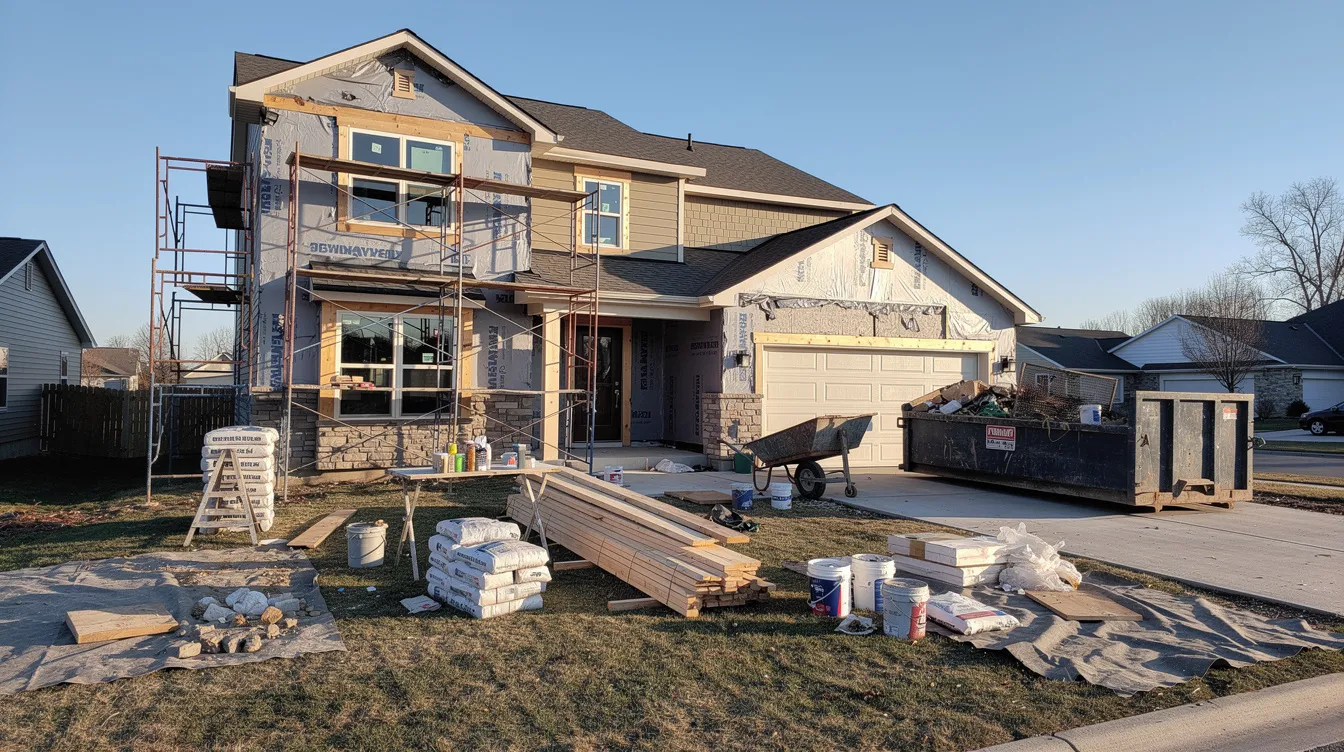
Quick Hard Money Loan: How To Get Fast Real Estate Funding (And Cover The Down Payment)
Most real estate deals don't die because the opportunity was bad. They die because the investor couldn't close fast enough or couldn't scrape together the cash to get across the line. If you're staring at a property under contract and wondering how to fund it before the seller moves on, this guide breaks down exactly how a quick hard money loan works, what it actually costs, and how to cover the down payment and closing costs that hard money lenders won't touch.
Quick answer: How to get a quick hard money loan in 3 steps
Here's the short version. A quick hard money loan is a suitable option for real estate investment opportunities that require fast funding, and the process is more straightforward than most people expect. Hard money loans can close in 5 to 15 business days if you come prepared. Funding can typically occur in days rather than weeks, which is the whole point of using this tool over a conventional loan.
Most hard money lenders will move fast when the borrower has a signed purchase contract, a realistic rehab budget, a clear exit strategy, and verified cash (or gap funding) ready for the down payment and closing costs. Borrowers should prepare documentation to streamline the hard money loan application process, because the number one delay I see is investors scrambling for paperwork after a term sheet lands.
The three core steps:
- Submit your deal and property details to a hard money lender: address, purchase contract, rehab scope and budget, timeline, ARV comps, and your exit plan.
- Pass asset based underwriting: the lender reviews the loan to value ratio, after repair value, title, and your borrower profile. This is not the same mountain of paperwork a traditional bank demands.
- Bring verified funds to close: down payment, closing costs, earnest money deposit, and reserves. This is where most investors hit a wall.
Gap Funded doesn't replace hard money loans. We help cover the funding gap: down payment, rehab draws, EMD, holding costs. We do this with unsecured term loans and 0% business credit card stacking for qualified borrowers, typically those with a 650 or higher FICO.
If you're actively chasing a deal and need fast gap funding to pair with your hard money loan, start your application here. Soft credit pull, no impact to your score just to see your options.
What is a hard money loan?
A hard money loan is a short term, asset based loan made by private hard money lenders (not banks) and typically used for fix and flip projects, BRRRR strategy rentals, and small commercial property deals. Hard money loans are short-term, asset-based loans designed to move fast and fund properties that traditional lenders won't touch.
Approval for hard money loans focuses on property value, not credit alone. Lenders typically assess the after repair value (ARV) of properties when offering loans, alongside the current as is condition. No income verification is needed for hard money loans in the traditional sense; the property and your exit plan do the heavy lifting. That said, most hard money lenders will still run a credit review and want to see you can handle the deal.
Hard money loans are often used for purchasing investment properties that need work: distressed single family homes, small multifamily, mixed use buildings, or commercial real estate where speed or property condition blocks conventional financing. Loan terms typically run 6 to 24 months with interest only payments and a balloon payoff when you sell or refinance.
Gap Funded is not a hard money lender. We specialise in gap funding that works alongside hard money loans, filling the cash shortfall that sits between what your lender funds and what you actually need to close.
How hard money loans work from application to payoff
Understanding how hard money loans work in practice keeps you from getting surprised mid deal. Here's the lifecycle, step by step:
- Deal submission: you send your hard money lender the property address, purchase contract, rehab scope and budget, timeline, ARV comps, and your exit strategy. An appraisal is required to determine property value, and some lenders accept a broker price opinion instead.
- Underwriting: the lender reviews the ARV, loan to value, loan to cost, title, and your borrower profile. Hard money loans focus on the property's value for approval, so expect questions about the asset, not your tax returns.
- Term sheet: many lenders issue this in 24 to 48 hours if your documentation is solid.
- Closing: once title clears and the appraisal is accepted, you sign loan docs and close. Hard money loans typically close in 5 to 15 days.
- Rehab draws: lenders hold back rehab funds and release them in stages after inspections. You draw funds only after completing agreed milestones. This means you'll need cash or gap funding upfront for contractor mobilisation and initial materials.
- Exit: you sell the property or refinance into long term financing. The entire loan balance (principal plus any remaining fees) is due at this point.
The importance of having funds ready for down payment, closing costs, and first rehab phases cannot be overstated. This is where investors often need gap funding to keep things moving.
Hard money vs. traditional mortgages
A hard money loan is a speed and flexibility tool. Traditional mortgages are low cost, long term tools. Different jobs, different price tags.
Here are the key differences:
| Feature | Hard Money Loan | Traditional Mortgage |
|---|---|---|
| Underwriting focus | Property value, ARV, exit strategy | Full review of income and credit history |
| Closing speed | 5 to 15 days | Traditional mortgages typically take 30 to 60 days to close |
| Loan term | 6 to 24 months (short repayment periods) | 15 to 30 years |
| Interest rates | 8% to 15%+ | 6% to 8% (investment property, mid 2026) |
| Payments | Interest only payments | Fully amortising |
| Use case | Investment property, rehab, bridge | Primary residence, stabilised rentals |
Traditional loans require a full review of income and credit history, which is why conventional lenders move slowly and reject properties in poor condition. Traditional lenders and conventional lenders simply won't fund a house with no kitchen or a leaking roof.
Many buy and hold investors use hard money only as a bridge, then refinance into a DSCR loan or conventional mortgage once the property is stabilised and leased. Gap Funded often covers the cash to close piece so the investor can combine a hard money purchase now with a longer term refi later as the exit strategy.
Key hard money loan terms you must understand
Hard money loan terms vary by lender, but the same core concepts appear on every term sheet. If you don't understand these before signing, you'll likely get stung.
- Interest rate: annual percentage, almost always interest only. Hard money loan interest rates range from 8% to 15% depending on deal risk, borrower experience, and region.
- Points: origination fees charged at closing. Lenders typically charge 2% to 5% in points at closing, though 2 to 3 points is the most common range for competitive deals.
- Loan term: hard money loans often have short repayment terms of 6 to 24 months, with extension options at additional cost.
- Prepayment penalties and extension fees: some lenders charge extra if you pay off early or need more time. Ask upfront.
- Repayment schedule: most hard money loans are structured as interest only payments with the principal due at exit.
Common leverage metrics you'll see:
- LTV (loan to value): hard money lenders cap LTV at 60% to 80% for loans, depending on property type and borrower profile.
- LTC (loan to cost): covers purchase plus rehab. Some lenders offer up to 85% of purchase price and 100% of rehab, subject to ARV caps.
- ARV leverage cap: total debt must not exceed roughly 70% to 75% of after repair value. This is usually the binding constraint.
The loan-to-value (LTV) ratio influences how much a lender will finance, and hard money loans almost never cover 100% of all costs. Always ask for a written fee sheet and amortisation example before signing. Misunderstanding terms is one of the most common beginner mistakes in real estate investing.
Hard money loan costs: interest, points, and down payment
Higher costs are associated with the convenience and speed of hard money loans. Here's how those hard money loan costs actually break down:
Interest
Hard money loan interest rates range from 8% to 15%. On a $200,000 loan at 11%, you'd pay interest of roughly $1,833 per month. Over a 9 month hold, that's about $16,500 in interest alone. These rates are acceptable for short holds if your profit margins are solid. They'll eat you alive on a thin deal.
Points and fees
A $300,000 hard money loan at 3 points means $9,000 in upfront fees before you've touched a hammer. Add appraisal fees, title and escrow costs, draw inspection fees, and underwriting charges. Total loan costs can surprise first time borrowers.
Down payment
A down payment of 20% to 40% is usually required. With most hard money lenders capping leverage at 70% to 80% of value, investors typically bring 20% to 30% down plus closing costs and initial rehab capital. Some deals require even more if the ARV cap binds tightly.
This large down payment and closing stack is exactly where tools like unsecured term loans and credit card stacking from Gap Funded can help qualified investors close without draining every dollar of personal savings.

How much down payment do hard money lenders really require?
Let's kill the "no money down" fantasy. Most hard money lenders expect the borrower to have skin in the game, and a 30% down payment is typically required for purchases in many lending programs.
Realistic ranges: many hard money lenders lend up to 80% to 90% of purchase price for strong borrowers with a proven track record, but still require 10% to 20% down on the purchase alone. Others target 70% to 75% of ARV, which can translate to 20% to 35% cash to close once rehab and loan costs are included. Hard money loans require larger down payments of 20% to 40% compared to traditional bank loans, and this catches a lot of new investors off guard.
Example deal:
| Component | Amount |
|---|---|
| Purchase price | $200,000 |
| Rehab budget | $60,000 |
| Expected ARV | $340,000 |
| Hard money loan (70% ARV cap) | $238,000 |
| Investor's gap (purchase + rehab + costs minus loan) | ~$42,000 to $60,000 |
That $42,000 to $60,000 covers down payment, closing costs, contractor mobilisation, and reserves. First time investors often get slightly lower leverage than experienced operators, which increases their cash requirement even further.
Gap Funded can often cover part or all of that gap for borrowers with good credit and verifiable income, without touching the property's title or equity. No liens on the deal property, no equity splits.
Common uses for quick hard money loans
Speed matters in real estate transactions, and here's where a quick hard money loan earns its keep:
- Fix and flip projects: real estate investors use hard money loans for house flipping, buying distressed or uninhabitable properties, completing renovation costs in 3 to 9 months, then selling. Traditional bank loans won't fund a property missing a roof.
- BRRRR and buy and hold investors: acquiring under market rentals, rehabbing, leasing up, then refinancing into DSCR or conventional financing. Hard money loans are used to buy investment properties that need work before they produce a property's cash flow.
- Bridge financing: hard money loans can serve as bridge financing for new purchases. Closing on a new property before an existing one sells, or bridging the gap while a long term commercial loan is in process. Bridge loans fill that timing mismatch.
- Commercial property: small retail, mixed use, warehouse, or office buildings needing repositioning or lease up. They are suitable for purchasing commercial real estate where traditional financing options move too slowly.
- Time sensitive opportunities: auction purchases, short sale deadlines, or wholesaler deals that require 7 to 10 day closings. Sometimes in just a few days, hard money lending speed is the only way to compete with cash buyers in real estate.
Hard money loans are also commonly used for renovating distressed properties that need significant work before they can qualify for any conventional loan.
Pros and cons of quick hard money loans
Hard money financing is a powerful tool when used correctly. It's expensive and risky when it's not. Here's the honest breakdown.
Pros:
- Speed: hard money loans can close in 5 to 15 days, sometimes faster
- Flexible underwriting without stringent credit requirements; even borrowers with poor credit can sometimes qualify if the deal is strong
- Ability to fund properties that banks won't touch due to condition
- Interest only payments that help cash flow during rehab
- Ability to close in business entities like LLCs
- No income verification required in the traditional sense
Cons:
- Higher interest rates and upfront fees versus traditional loans
- Short repayment periods create pressure to execute on time
- Larger down payment requirements strain personal liquidity
- Borrowers risk foreclosure if they default on hard money loans; if a borrower defaults, the lender takes the property
- Failure to repay a hard money loan can lead to significant financial loss
- Hard money loan payments during rehab add to holding costs
Hard money loans work best for investors who have clear numbers and a documented exit strategy, not for buyers hoping the market will bail out a thin deal. Gap Funded's role is to reduce the cash hurdle, not to change the underlying economics. You still need deals that work after accounting for hard money loan costs and our gap funding payments.
When a quick hard money loan makes sense (and when it doesn't)
Before you rush into any hard money lending relationship, run through this mental checklist.
Good fit scenarios:
- Strong equity or significant discount on purchase price
- Clear rehab scope with reliable contractor bids
- Conservative ARV comps (not best case fantasies)
- Pre planned exit strategy: sale, DSCR refi, or conventional investment refi
- Purchasing investment property quickly in competitive markets
Bad fit scenarios:
- Marginal deals with thin spreads where hard money loan costs erase profits
- Speculative appreciation plays with no rehab value add
- Owner occupied homes (consumer lending regulations apply, and most private lenders won't touch these)
- Borrowers without any realistic exit plan or debt obligations they can't service
If you have access to cheaper capital through a home equity line or private investors, compare the long term total cost before defaulting to hard money just because it's fast. Family and friends can provide flexible financing options too, though I reckon mixing money and Christmas dinners is its own kind of risk.
Sometimes a mix works best: use a HELOC or business line of credit for part of the down payment and a quick hard money loan for the rest of the capital stack, supplemented by Gap Funded's unsecured options if needed.
Exit strategy: how you actually get out of a hard money loan
A hard money loan is only as safe as your exit strategy. Every reliable hard money lender will ask "how are you paying us off?" during underwriting, and if you don't have a convincing answer, you won't get funding. Hard money loans typically require a sensible exit strategy, full stop.
Common exit strategies:
- Fix and flip sale: sell within 6 to 12 months of purchase. Exit strategies are crucial for the repayment of hard money loans, and this is the most straightforward path.
- BRRRR refinance: once rehab is complete and rents are seasoned, refinance into a DSCR loan or conventional investment loan. DSCR loans qualify based on rental income, not personal income, making them ideal for investors scaling a rental property portfolio.
- Sale of another asset: pay off the hard money with proceeds from selling a different property or business asset.
- Long term financing: roll into a conventional loan or commercial mortgage once the property is stabilised.
Timing matters enormously. Most hard money loans run 9 to 12 months with extension options at extra cost. Plan to list or start your refi process 60 to 90 days before maturity, not at the last minute.
Stress test your deals: what if the property sells for 5% to 10% less than projected, or the refi appraisal comes in low? Build buffers into both the deal math and the capital stack.

The real funding gap: down payment, closing costs, rehab, and working capital
Here's the problem most real estate investors hit: the hard money lender will fund most of the purchase and a portion of rehab, but not 100% of everything. That leaves a funding gap that can kill an otherwise strong deal.
Specific gap items include:
- Down payment (the lender's equity requirement)
- Closing costs (title, escrow, recording fees, appraisal)
- Earnest money deposit (EMD) to secure the contract
- Contractor mobilisation funds before the first draw
- Carrying costs: hard money loan payments, taxes, utilities, insurance during rehab
- Contingency for renovation costs overruns and surprises
Many strong deals die because investors have the credit and personal income to support more capital but not the liquid cash to meet the lender's requirements. A personal loan can be used for down payments on investment properties, but most investors don't realise they can access unsecured capital specifically designed for this purpose.
Gap Funded specialises in filling this gap with unsecured capital. No new liens on the subject property, no equity splits, no interference with the hard money lender's first position mortgage. Check our full range of gap funding services to see what fits.
This approach is especially useful for investors scaling from 1 to 2 deals per year to multiple concurrent projects without bringing on expensive equity partners or giving up ownership.
How Gap Funded closes the gap around your hard money loan
Gap Funded works as an independent funding intermediary that stacks different tools around your primary hard money loan. We're not private money lenders competing with your hard money lender. We sit alongside them in the capital stack.
Here's how, in order (and the order matters because applying out of sequence can knock out later approvals):
- Unsecured term loans: fixed rate, fixed payment loans used for down payments, rehab, or reserves. Think of it as a personal loan purpose built for real estate deals. Qualified borrowers typically have 650 or higher FICO and verifiable income. Loan amounts often range from $20,000 to $120,000. Details on our gap funding page.
- 0% credit card stacking: multiple 0% intro APR business credit cards (often 6 to 18 months promotional periods) used for materials, light rehab, and carrying costs. Requires disciplined payoff before promo periods end. More on credit card stacking here.
- HELOC or home equity options: HELOCs provide lower rates secured by your primary home or an investment property you already own. Asset based capital for experienced investors with equity. Explore our HELOC options or run numbers on the HELOC calculator.
Our process uses soft credit pulls initially (no impact to your credit to see options), fast underwriting, and no equity splits or liens on the deal property. This makes it compatible with nearly all reputable hard money lenders, because their first lien position stays untouched.
Unsecured and revenue based tools that pair well with hard money loans
Many investors blend unsecured and revenue based financing with hard money loans to fund multiple projects or cover working capital. Here are the tools worth knowing about:
Debt consolidation: consolidating high interest consumer or business debt into a lower payment structure frees up cash flow for deal capital. If you're carrying a fair whack of personal debt, this step alone can change your borrowing capacity. More at our debt consolidation page.
Business lines of credit: for established investors with revenue, business lines of credit allow borrowing only what you need. Flexible revolving capital that can cover materials, labour, or EMD on short notice. See our business line of credit options.
Business term loans and merchant cash advance: options for experienced small business owners with strong revenue who need fast, revenue based capital for larger rehab or working capital needs. These sit in the revenue based capital category and suit investors with established business entities generating at least $20,000 per month.
A word of caution: do not overextend. Map your total monthly debt obligations (hard money interest plus Gap Funded payments plus other debts) against realistic cash flow and project timelines. The maths needs to work even if your project runs 60 days longer than planned.
Who qualifies for Gap Funded support alongside a hard money loan?
Gap Funded is fast and flexible, but it's not "no questions asked" financing. Here's what realistic qualification looks like:
- Credit: usually 650 or higher FICO for unsecured term and credit stacking products. Better credit unlocks better terms and higher loan amounts.
- Income: stable verifiable income, whether W2, 1099, or business revenue. Self employed investors qualify if documentation is solid.
- Debt load: reasonable existing debt obligations. You can't be maxed out on every card and expect approval.
- Deal plan: a clear purchase contract, rehab plan, and exit strategy that shows how both the hard money and gap funding get repaid.
Brand new businesses with no revenue can still potentially qualify via personal credit based programs (term loans and credit card stacking) if the individual has good credit history and income. Experienced investors with a proven track record and multiple projects may qualify for higher total approvals.
We work with investors across fix and flip, BRRRR, short term rentals, and small commercial property as long as the deals are structured responsibly. Private lenders and hard money lenders care about their first lien. We care about making sure you can actually close.
How to choose a hard money lender (and make them comfortable with gap funding)
Not all hard money lenders are equal. Speed, transparency, and flexibility vary widely across the hard money lending space, and the wrong lender can cost you a deal even if you have your capital sorted.
Criteria for selecting a reliable hard money lender:
- Reputation and reviews from other real estate investors (ask around, not just Google)
- Clarity on fees and draw process (no hidden charges after loan approval)
- Realistic leverage that matches market data, not "too good to be true" 100% LTC promises
- Responsiveness during due diligence, because delays in credit review or appraisal kill timelines
- Experience funding your property type and market
Ask directly whether the lender allows down payment funds from third party unsecured sources like Gap Funded. Most do, as long as they maintain first lien position. Get multiple quotes on hard money loan terms (rates, points, leverage, loan term) and then decide which combination of lender plus gap funding produces the safest, most profitable structure.
Gap Funded works as a neutral capital stack advisor, not as a competing lender. That actually helps you negotiate from a stronger position, because you're showing up to closing with verified funds ready to go.

Next steps: structure your quick hard money loan and close the gap
Here's your action plan:
- Validate your deal numbers: ARV comps, rehab budget, profit margin, and worst case scenarios. If the deal doesn't work on paper, hard money won't fix it.
- Line up a reputable hard money lender: get term sheets, compare rates and leverage. Ask about draw schedules and whether they accept third party gap funding for down payment.
- Identify your funding gap: down payment, closing costs, rehab mobilisation, working capital. Be honest about the number.
- Use Gap Funded to close that gap quickly: we start with a soft credit pull, and many investors see potential approval ranges within 24 to 48 hours, often in time to firm up offers or EMD deadlines.
If you're actively pursuing a quick hard money loan for fix and flip, BRRRR rentals, short term rentals, or small commercial property, start your Gap Funded application now.
Smart use of hard money plus responsible gap funding can help you scale your portfolio without equity partners, as long as you respect the costs, build in a realistic exit strategy, and run your numbers like they matter. Because, mate, they do.
Related Reading
This article is for educational purposes only and isn't financial, legal, tax, or investment advice. Credit and financing outcomes depend on your own situation. Talk to a licensed financial professional before making funding decisions for your business.