
Private Housing Loan: How Investors Use Private Financing To Close More Deals

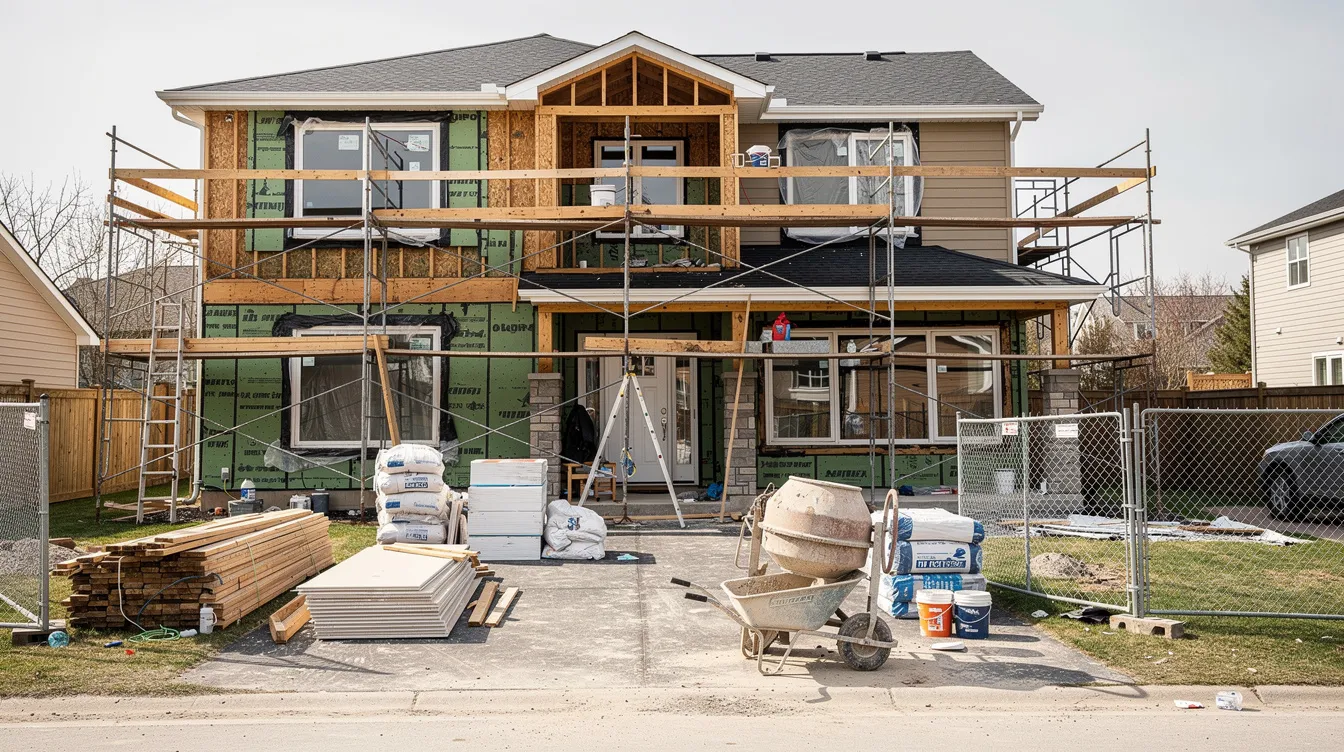
Private Housing Loan: How Investors Use Private Financing To Close More Deals
Most real estate investors don't lose deals because they can't find them. They lose deals because they can't fund them fast enough, or they can't cover the gap between what a bank will lend and what the deal actually costs. A private housing loan exists to solve that exact problem, and if you're an investor, contractor, or business owner trying to scale, understanding how these loans work is half the battle.
What Is A Private Housing Loan And Who Is It For?
Private housing loan: Funding provided by private lenders (individuals, private funds, or specialty finance companies) for purchasing, renovating, or bridging residential and mixed use properties. These loans are secured by the property and structured around the project's exit strategy rather than a 30 year personal budget.
Private housing loans are not bank products. They are provided by private lenders, not banks, and approval for private housing loans can be completed in days rather than the weeks or months a conventional mortgage requires. The lender cares more about the property value and the deal's numbers than your W-2 history.
Private housing loans can provide funding for a variety of property types including investment properties, mixed use buildings, and distressed residential properties that banks won't touch. They can also help buyers who do not meet traditional lender requirements, whether that's because of self employment, a recent credit score dip, or thin documentation.
Who benefits most from a private housing loan:
- Real estate investors running fix and flip or BRRRR strategies
- Short term rental (Airbnb) operators purchasing in competitive markets
- First time homebuyers with strong income but tight closing timelines
- Self employed borrowers whose tax returns don't reflect actual earnings
- Contractors who need capital for acquisition and rehab before revenue qualifies them for bank financing
The core trade off is simple: you get a faster approval process and flexible eligibility requirements. In exchange, you pay higher interest rates and accept shorter loan terms compared to FHA loans or conventional fixed rate mortgages.
How Private Housing Loans Differ From Traditional Home Loans
Banks, credit unions, and lenders underwriting FHA loans to Fannie Mae and Freddie Mac standards focus on W-2 income, debt to income ratio, credit history, and high credit scores. Private lenders flip the priority. They focus on property value rather than credit scores, looking at the deal's after repair value (ARV), your exit strategy, and overall deal strength.
Private housing loans offer faster approval times, often within days. Traditional loans may take weeks or months for approval. Private lenders may allow for alternative documentation to verify income, like bank statements or pro forma rental schedules, instead of two years of tax returns.
| Category | Bank / Conventional | Private Housing Loan |
|---|---|---|
| Interest rate | ~7.3% to 7.5% fixed (Bankrate, Oct 2026) | 9% to 12% interest only (Slingshot Investments) |
| Documentation | Full income verification, tax returns, W-2s | Flexible: bank statements, stated income, pro forma |
| Minimum credit score | 700 to 740+ for best pricing | 650+ for many programs |
| Approval timeline | 30 to 45 days | 7 to 14 business days or less |
| Property condition | Must meet appraisal standards | Distressed, heavy rehab accepted |
Private housing loans complement traditional home loans rather than replace them. They fill the funding gap (down payment, rehab budget, reserves) that banks won't cover. Gap Funded does not originate owner occupied 30 year fixed mortgages; we help borrowers stack additional funding around their primary mortgage loan so they can close.
Common Types Of Housing Loans: Conventional, FHA, And Private
Understanding major loan types helps borrowers compare payment options before deciding how much private capital they actually need.
Conventional loans are conforming fixed rate mortgages and adjustable rate mortgages backed by Fannie Mae and Freddie Mac. They come in 15 and 30 year loan terms, require tight underwriting, and suit borrowers with a 700+ credit score and documented income. Conventional mortgages typically require 5% to 20% down. Private mortgage insurance (PMI) applies below 20% equity, but PMI can be canceled once the equity reaches 20%.
FHA loans are backed by the Federal Housing Administration and designed for first time homebuyers and middle income borrowers. They require a minimum down payment of 3.5% with a 580+ credit score, offer more flexible debt to income ratios, and carry mandatory mortgage insurance premiums for the life of the loan. Government backed loans often have more forgiving credit requirements than private loans and offer low down payment options, but FHA does not cover heavy rehab budgets or large renovation scopes.
Private housing loans sit beside these with shorter terms (usually 6 to 36 months for flips, up to 30 years for DSCR rentals), higher interest rates, and much greater flexibility on income documentation, property condition, and use of funds. Private housing loans often require down payments of 20% to 30%, though the overall capital stack can accommodate lower down payments when layered with gap funding. Private housing loans often have stricter qualification criteria than government backed loans on the collateral side, but looser requirements on borrower income.
| Feature | Conventional | FHA | Private Housing Loan |
|---|---|---|---|
| Minimum down payment | 5% to 20% | 3.5% | 10% to 30% (varies by lender) |
| LTV/LTC range | Up to 95% LTV | Up to 96.5% LTV | 65% to 75% ARV; up to 90% LTC |
| Interest rate range | 7% to 7.5% | ~7.2% (FHA 30 yr) | 8% to 15% |
| Distressed property? | No | Limited (203k only) | Yes |
| Heavy rehab? | No | No | Yes |
Loan Terms And Interest Rate Structures In Private Housing Loans
In private lending, the loan term and interest rate structure are designed around the project's exit strategy. A flipper planning to sell in eight months doesn't need a 30 year amortisation schedule. They need 12 months of interest only payments and then they're out.
Private loans typically have shorter terms of 1 to 5 years. Most fix and flip private loans run 6 to 18 months. DSCR loans for stabilised rentals can stretch to 30 years with fixed or adjustable rates. Traditional loans often have terms of 15 to 30 years.
Interest rates for private housing loans range from 8% to 15%, depending on deal structure, borrower experience, and loan to value ratio. Traditional mortgages usually have interest rates between 4% and 7%. Interest rates for private loans are generally higher than for conventional mortgages, but the total cost over a short hold period can still make sense when the deal's profit margin is healthy.
Sample comparison:
A flipper borrows $250,000 via a 12 month private loan at 11% interest only. Monthly payment: roughly $2,292. Total interest over 12 months: about $27,500. A 30 year conventional mortgage at 7.5% on the same amount produces a lower monthly mortgage payment (~$1,748), but the bank won't fund a distressed property, won't cover rehab, and takes 30 to 45 days to close. The flipper accepts the higher rate because the property sells in month nine, netting a profit after all costs.
Most short term private housing loans use simple fixed rates. Some long term investment property loans offer 5/1 or 7/1 adjustable rate mortgages for a lower starting rate, which can reduce higher monthly payments during the initial period.
Key Factors To Evaluate Before Taking A Private Housing Loan
Private housing loans are tools. Used correctly, they accelerate portfolio growth. Used without a plan, they eat your margins for breakfast.
What to evaluate:
- Total cost of capital: Interest rate plus origination points (typically 1.5 to 3 points), draw fees, inspection fees, extension fees, and any prepayment penalties. Private loans may include high upfront fees and closing costs compared to conventional loans.
- Exit plan realism: Are you selling, refinancing into a DSCR or FHA loan, or holding long term? Stress test your timeline.
- Cash flow impact: For rentals, confirm net operating income covers the monthly payment plus operating expenses, property taxes, and vacancy.
Private housing loans require property related documents like appraisals and scope of work. Prepare personal financial records, including bank statements for lenders. Identity verification documents must be submitted for loan applications. Proof of down payment source is necessary for private loan applications. Private lenders may request minimal credit or income details during applications, but they want to see the deal's numbers cold.
Borrowers can negotiate terms for private housing loans directly with the lender. That's one advantage over bank bureaucracy, where the rate sheet is the rate sheet.
5 questions to ask any private housing lender before you sign: > 1. What is the total cost including points, fees, and extension charges? > 2. Is there a prepayment penalty? > 3. What happens if I need a 90 day extension? > 4. What are the draw inspection requirements and fees? > 5. What credit score and reserve requirements apply?
Where The Real Funding Gap Happens: Down Payment, Rehab, And Reserves
Even when investors or first time homebuyers qualify for a conventional or FHA mortgage, the bank rarely funds 100% of the deal. Consider a $300,000 purchase with a conventional or DSCR loan at 80% LTV. The bank funds $240,000. That leaves $60,000 for the down payment, plus roughly $15,000 in closing costs and holding expenses, plus $40,000 in rehab. That's over $115,000 the borrower needs in cash.
Most investors meet credit score and income tests but don't have six figures in liquid cash, especially when scaling multiple deals. Private loans are commonly used as a short term solution before securing a traditional mortgage, but the gap between primary financing and total deal cost is where deals die.
The specific categories: down payment money, earnest money deposits (EMD), closing costs, rehab and construction draws, working capital during renovations, and reserves required by lenders on rental properties.
Gap Funded specialises in stacking multiple private funding tools around your primary mortgage or hard money loan to close this exact gap, without equity splits or putting liens on the subject property.
How Gap Funded Closes The Gap Around Your Private Or Bank Housing Loan
We don't replace your primary mortgage. We add secondary, unsecured, or separate asset backed funding layers so you can complete the full capital stack. The tool sequence matters because applying out of order can knock out later approvals.
First: Unsecured gap funding. Personal term loans and 0% credit card stacking for 6 to 18 months to cover down payment, closing costs, and EMD. Qualification starts at FICO 650+. This works well for borrowers with unique financial situations, including self employed borrowers and those with non traditional income. See our full gap funding options.
Second: Asset based capital. HELOC on your home or investment property for repeat down payments or rehab draws. Hard money or DSCR loans for the main acquisition and rehab. Asset based options can work for lower credit scores if equity is strong.
Third: Revenue based capital. Business lines of credit or business term loans for operators with at least $20,000 per month revenue and 2+ years in business.
All Gap Funded options use soft credit pulls for initial review and will not impact your credit score just to see what you qualify for.
Apply for a free funding review
Private Housing Loans For Investors: Fix and Flip, BRRRR, And Short Term Rentals
Fix and flip: An investor uses a 12 month hard money loan at 12% for purchase and rehab. Gap Funded provides unsecured term loans and 0% business credit card stacking to cover the down payment, closing, and initial rehab draws. When the property sells, all layers get paid off. Private loans provide flexible repayment terms tailored to borrower needs, and approval focuses on property value, not just credit scores.
BRRRR strategy: Purchase a distressed property with a private loan, complete rehab with stacked cards and personal term loans, stabilise with a tenant, then refinance into a 30 year DSCR or conventional loan. The refinance pays back the short term private capital. On a $325,000 total cost deal (purchase plus rehab), a private loan covers up to 80% LTC (~$260,000), leaving ~$65,000 plus closing and reserves for Gap Funded tools to fill.
Short term rentals: Private loans can be used for urgent transactions like auction buys in competitive markets where speed decides the winner. Gap Funded covers furnishing, marketing, and early operating costs until the property generates cash flow. Interest rates on private loans are competitive compared to hard money loans from less established lenders.
National gross return on fix and flip fell to 25.1% in Q2 2025, the lowest since 2008, yet 71% of active flippers planned to purchase more properties in 2026 (Baseline Software). Volume, not margin, is driving scale, and stacking capital makes volume possible.
Comparing Private Housing Loans, HELOCs, And Business Credit Lines
Not all private financing is the same. Knowing when each tool fits saves you money and headaches.
HELOC on investment property or primary residence: A revolving line tied to home equity with variable interest rates. Good for repeat down payments or rehab costs. Check current HELOC rates and qualifications or explore HELOC alternatives if your equity is limited.
Unsecured personal term loans and credit card stacking: 0% promotional interest rate periods on stacked business cards work as a short term tool for deal costs and working capital. Discipline is required: high utilisation can hurt your credit score, and interest spikes after the promo period. Debt consolidation can clean up the balance after a deal closes.
Business line of credit vs. merchant cash advance vs. business term loans: Business lines offer flexible terms and revolving access. Merchant cash advances carry high factor rates and should be used cautiously. Business term loans offer predictable repayment.
Quick decision guide:
- Substantial equity but limited cash? HELOC plus private housing loan.
- Strong credit score but limited equity? Unsecured gap funding first.
- Revenue producing business with $20K+ per month? Layer in a business line of credit for ongoing working capital.
Step By Step: Applying For A Private Housing Loan With A Solid Capital StackStep By Step: Applying For A Private Housing Loan With A Solid Capital Stack
The strongest applications show the lender you control the whole capital stack. Here's the process:
- Clarify your target deal. Purchase price range, rehab cost, exit plan, preferred loan term, and comparable sales for the loan type you're pursuing.
- Get pre qualified for primary financing. Conventional, FHA (for Veterans Affairs backed options too, including surviving spouses), DSCR, or hard money. Obtain a loan estimate showing expected interest rate and fees.
- Apply at Gap Funded. See what down payment, closing, and rehab capital you can access via a free funding review. Gather 3 to 6 months of bank statements, ID, credit report authorisation, purchase contract or pro forma, and basic income verification. Additional documentation may be required depending on the loan amount.
- Compare offers. Total cost across all layers of the stack: interest, points, repayment timing, and what happens if your hold extends by 90 days.
Private loans may require a higher credit score than government backed loans, so knowing your score before applying to multiple lenders prevents wasted pulls. Many private lenders issue conditional approvals in 24 to 72 hours if documents are ready.
Pro tip: Avoid lenders with large balloon payments and no clear extension terms, aggressive prepayment penalties, or undisclosed junk fees. If a lender won't give you a written loan estimate before you commit, walk.
Risks, Exit Strategies, And When Private Housing Loans Are Not The Best Fit
Private housing loans are not always the right mortgage for every situation.
Key risks: Higher interest rates on shorter terms force refinance or sale decisions. Market softening can delay exits. Over leveraging via too many stacked products creates a debt service burden that erodes profit. Always define your exit strategy before you borrow: sell within 6 to 12 months, refinance into a 30 year DSCR or conventional loan, or repay with business cash flow.
When a standard loan is better: Owner occupants planning to stay 10+ years benefit from lower interest rates on fixed rate mortgages. First time homebuyers with cash for a minimum down payment and no renovation plans should look at FHA or conventional loans first. In declining markets, quick flips carry real risk and shorter loan terms become a liability instead of a feature. Borrowers purchasing a primary residence with clear financial goals and stable income will almost always pay less through a conventional or FHA home loan.
Gap Funded helps borrowers stress test deals before committing: running scenarios for longer hold times, higher fees, and lower resale prices. If the maths doesn't work, we'll tell you. I reckon that's more useful than a lender who just says yes to collect the origination fee.
How To Get Started With Gap Funded
A private housing loan paired with the right gap funding tools lets you close deals that would otherwise sit on the shelf. We offer a no obligation funding review: soft credit pull, quick assessment of personal term loans, business credit card stacking, HELOC, and business line of credit options, plus guidance on how to layer them around your primary financing for real estate or a new business.
Apply now for a free funding review
Quick answers:
- Minimum recommended credit score: 650+ for most unsecured tools
- Typical time to funding: 7 to 21 days for unsecured gap funding tools
- Equity splits or liens on the deal property: No. Never.
The goal isn't to borrow more money. It's to close more deals profitably and build long term wealth through real estate and business ownership, using private housing loans and gap funding as the tools they are: precise, temporary, and purposeful.
Related Reading
This article is for educational purposes only and isn't financial, legal, tax, or investment advice. Credit and financing outcomes depend on your own situation. Talk to a licensed financial professional before making funding decisions for your business.