
Private Hard Money Lender: How Real Estate Investors Really Use Hard Money (And How to Fund the Down Payment)

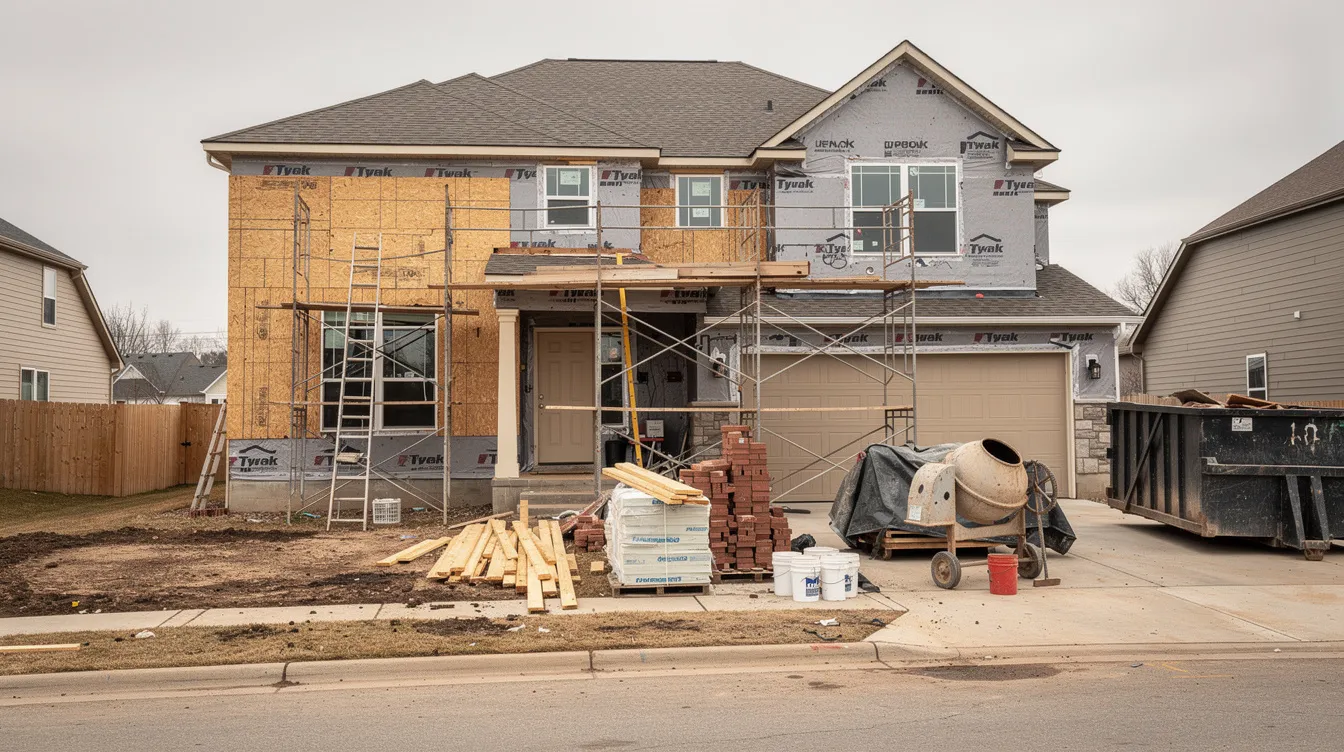
Private Hard Money Lender: How Real Estate Investors Really Use Hard Money (And How to Fund the Down Payment)
What a Private Hard Money Lender Actually Does
Most real estate investors hit the same wall. You find a deal, the numbers stack up, you line up a private hard money lender who can close in a week, and then someone asks, "Right, but where's your down payment coming from?" That question kills more deals than bad contractors.
Private hard money lenders are non-bank entities that make short term loans secured by real estate. They care about the property, the deal, and your exit strategy far more than your tax returns or debt service coverage ratio. They close fast, often in 5 to 15 business days, sometimes quicker. The tradeoff? Hard money loan interest rates range from 8% to 15%, lenders typically charge 2% to 5% in points at closing, and you'll need to bring a down payment of 20% to 40% to the table. Those are higher upfront costs than traditional loans, full stop.
That gap between what a hard money lender funds and what the deal actually costs is where Gap Funded comes in. We stack non-dilutive capital, think unsecured term loans, 0% credit cards, HELOCs, and business lines of credit, behind your primary hard money loan so you can actually close. No equity splits. No lien on the subject property.
Here's what this article covers so you can get straight to the section you need:
- What private hard money lenders are and how they differ from banks and private money lenders
- How hard money loans work step by step, including rates, terms, and draw schedules
- The real funding gap most investors face and how to fill it without giving up equity
- How Gap Funded's tools sit behind hard money to cover down payment, closing costs, rehab, and reserves
- When hard money makes sense and when it doesn't
What Is a Private Hard Money Lender?
A private hard money lender is any non-bank entity, whether an individual, a private capital fund, or a dedicated private lending company, that issues short term loans secured by real estate. Hard money lending is an asset based loan model. Approval for hard money loans focuses on property value, not credit scores or personal income documentation.
- Hard money lenders are direct private lenders that evaluate the deal first: purchase price, after repair value, rehab scope, and your exit strategy. Your W-2 is secondary.
- Private money lenders is a broader label that includes wealthy individuals lending their own capital for real estate investment. A direct private lender based on their own balance sheet keeps loans on their books, which is why you'll also hear the term balance sheet lender. That distinction matters because balance sheet lenders often have more flexibility in customized loan terms than lenders who securitise and sell.
- Private hard money lenders provide short-term loans secured by real estate. Typical use cases: distressed properties that won't qualify for conventional financing, fix and flip projects needing fast closes, bridge financing before a DSCR or conventional loan is ready, and commercial properties requiring stabilisation.
- Hard money loans are primarily asset based loans. The hard asset, meaning the property itself, is the collateral that drives the deal structure.
How a Hard Money Loan Works Step by Step
Hard money loans are typically short term, lasting 6 to 24 months. Here's how a deal moves from "I found a property" to borrowed funds in hand:
- You submit the purchase contract, rehab budget, contractor bids, a timeline, and your exit strategy. The application requires property details and borrower information. Approval can happen on the same day as application submission, though conditional approval typically takes 24 to 72 hours.
- The lender runs a valuation, either a formal appraisal or an internal analysis using comparable sales, to determine the market value and projected after repair value.
- You receive a term sheet outlining the loan term, interest rate, origination fees, loan to value or loan to cost limits, and the draw schedule for rehab funds. Payments are often interest only during the term with a balloon payment due at maturity.
- Hard money loans can close in as little as 5 days. More commonly, closings take 5 to 15 business days depending on title work and appraisal turnaround. Hard money loans can close in 3 to 5 business days when title is clean and documentation is ready.
- Rehab funds are released in stages as renovation phases are completed. The lender inspects progress before each disbursement. These draws are tied to after repair value caps and loan to cost limits.
- At the end of the loan term, you execute your exit strategy: sell the property or refinance into longer term financing. That exit has to be planned before you close, not after.

Private Hard Money vs. Traditional Bank Financing
Hard money loans differ from traditional bank loans in nearly every way that matters to an active investor:
- Underwriting focus: traditional lenders want W-2 income, two years of tax returns, personal income verification, and strong credit history. Private lenders care about loan to value, ARV, borrower experience, and exit strategy. Hard money lenders prioritize ARV over borrower credit scores.
- Speed: conventional lenders and banks often take 30 to 60 days or longer. A private hard money lender can close in 5 to 15 days. The speed of funding for hard money loans is much quicker than traditional banks, often within days. Hard money loans are often used in competitive buying situations where speed is crucial.
- Cost: hard money loan costs are genuinely higher. Interest rates for hard money loans range from 8% to 15%, plus 2 to 4 origination points. HMDA data for 2025 showed a median non-bank investor short term loan rate of about 10.25%. Compare that to conventional investment mortgages or DSCR loans, which often land in the 6% to 8% range. Hard money loans often have higher upfront costs than traditional loans, and that's the trade for speed and flexibility.
- Property condition: a traditional mortgage or credit union loan typically requires the property to be habitable and financeable. Hard money lenders can provide funding for properties needing significant repairs that conventional lenders won't finance. That includes uninhabitable stock, heavy structural rehab, and ground up construction in some cases.
- Flexibility in loan terms is common among hard money lenders compared to traditional lenders. But while banks are cheaper for long term holds, hard money shines as bridge financing to acquire, rehab, and then refinance or sell. Hard money loans are not typically suited for long-term housing purchases or a primary residence.
Key Terms: LTV, ARV, LTC and Why They Matter to Investors
Before you sign a term sheet, you need to speak the language. These three metrics determine how much money loans you'll actually receive.
- Loan to value is the ratio of loan amount to property value. LTV is typically calculated on the property's as is value. Example: you're purchasing investment property for $250,000. At 70% LTV, the lender funds $175,000. You bring $75,000 plus closing costs. LTV for hard money loans is usually capped at 60% to 80%.
- After repair value is the estimated market value after renovations. Hard money lenders use ARV to size loans on fix and flip deals. Lenders cap loans at 70% to 75% of ARV. So on a property with a $300,000 ARV, maximum total loan is $210,000 to $225,000, regardless of purchase price or rehab budget.
- Loan to cost includes the purchase price plus rehab budget. A lender might offer 85% to 90% LTC, but that's still capped by the ARV ceiling. If your total project cost is $250,000 and the ARV is $300,000, the lender's 70% ARV cap means $210,000 max, even if 90% LTC would have been $225,000.
- Hard money lenders cap loan amounts based on whichever metric is more conservative, LTV or ARV percentage. That means most private hard money lenders will not fund 100% of the deal. The borrower's equity, whether cash, gap funding, or other capital, fills the rest.
Typical Private Hard Money Loan Programs
Private hard money lenders generally offer construction loans, bridge products, and acquisition financing across several categories. Here's what you'll actually see in the market:
- Fix and flip loans cover acquisition plus rehab based on ARV. Terms run 6 to 12 months. Rehab draws are released after inspections. Fix and flip loans help investors purchase and renovate properties, especially cosmetic to medium renovation costs.
- Bridge loans provide short-term funding while waiting for property sales, a DSCR refinance, or conventional lending approval. Many lenders offer construction loans alongside pure bridge products for heavier projects.
- Small commercial hard money loans cover office, retail, mixed use, and light industrial commercial properties that need stabilisation before bank or SBA take out financing. Some lenders also handle land loans, though those tend to carry even more conservative terms.
- Rescue purchase loans assist buyers when funding sources fail, say a conventional loan falls through days before settlement. Commercial hard money loans finance various commercial real estate property types. Probate loans help settle estates or purchase inherited properties.
- Many lenders also refer borrowers to DSCR lenders for longer term rental property take out financing, or they offer their own longer term rental bridge loans as a stepping stone.
Private Hard Money for Fix and Flip Investors
Real estate investors doing fix and flip projects in 2024 to 2026 rely on hard money for three reasons: speed, ability to finance distressed stock, and flexible terms that match project timelines.
- Walk through a sample deal: purchase price $200,000, rehab budget $50,000, ARV $300,000. A lender offers 70% ARV, so max loan is $210,000. They fund $160,000 toward purchase and $50,000 in rehab draws. You bring roughly $40,000 in down payment plus closing. After hard money loan costs (interest, points, holding, selling costs), your target profit might be $30,000 to $40,000 if everything runs to plan. Hard money loans are typically used for fix and flip projects or rental acquisitions.
- Experience matters. Some hard money lenders prefer borrowers with at least 1 to 3 completed flips. Beginners often face higher rates, lower leverage, and larger reserve requirements. Hard money loans typically require a down payment of 20% to 40%.
- A realistic rehab scope, contingency funds of at least 10% to 20% above your contractor bids, and a clear exit strategy are non-negotiable. Investor partnerships with lenders can significantly influence the outcome of real estate deals.
- Even experienced investors running multiple simultaneous projects frequently need help with down payment and holding costs. That's the gap we'll address shortly.
Private Hard Money for Rental and BRRRR Strategies
The BRRRR method (Buy, Rehab, Rent, Refinance, Repeat) uses hard money as a short term tool, not a permanent fixture.
- Typical play: use a 12 month hard money loan to acquire a rental property and complete rehab. Once the property is leased up and stabilised, refinance into a DSCR loan based on the property's cash flow and debt service coverage ratio, not your personal income.
- The hard money lender sizes the initial loan based on after repair value and your rehab plan. The DSCR lender sizes the refinance based on stabilised rent projections and appraised value post rehab.
- Renovation draw processes are common in hard money loans, requiring inspections before fund disbursement. Budget your timeline so you're not scrambling for draw funds between inspections.
- Risk you must plan for: if the refinance appraisal comes in lower than your ARV projection, or interest rates move up between acquisition and refinance, you may need extra cash to pay down the hard money balance before the take out lender will close. That's a real scenario, not a hypothetical, and it's another reason having gap funding lined up ahead of time matters.
How Private Hard Money Lenders Evaluate You and Your Deal
Although hard money lending is asset based, many lenders still want to know who they're lending to. A strong personal credit profile can improve loan terms. Here's what most private lenders review:
- Credit score: most look for 620 to 680 or higher. Weaker profiles can still be approved if the deal is very strong, but expect lower leverage, higher rates, and more origination fees. Lenders evaluate the property value rather than personal credit scores as the primary driver, but credit still moves the needle on pricing and competitive terms.
- Submission checklist: purchase contract, detailed rehab scope with contractor bids, project timeline, estimated ARV with comparable sales, and a narrative covering your exit strategy. Documentation and clear terms are vital for securing a hard money loan.
- Underwriters analyse ARV comps, local days on market, and your track record. If you've done three successful flips, you'll see better terms than someone on their first deal.
- Reserves: many lenders require 3 to 6 months of interest payments in cash after closing. That's money sitting in your account, not in the deal.
- Borrowers need a clear exit strategy for loan approval. Sale, traditional refinancing, or DSCR refinance, it has to be mapped out before you submit.
- Borrowers should vet lenders thoroughly to assess reliability and funding capabilities. Not every lender who quotes you will actually fund on time.
The Real Funding Gap: Down Payment, Closing Costs, and Rehab Money
Here's the core problem most real estate investors face: hard money lenders cap at 60% to 80% of purchase or ARV, leaving a 20% to 30% gap that includes down payment, closing costs, rehab overages, and holding costs. That gap can be a fair whack of capital.
- Concrete example: $300,000 ARV fix and flip. Lender offers 70% ARV, so $210,000. Total project cost (purchase plus rehab plus closing plus interest reserves) comes to $260,000. That's a $50,000 plus gap the investor must cover. Hard money loans require a down payment of 20% to 40% depending on the deal.
- Common gap needs: earnest money deposit to lock the contract, the down payment to close, contractor draws before reimbursement by the lender, materials and utilities during rehab, insurance, property taxes, and reserves for delays.
- This gap stops newer investors cold, even when the deal is profitable on paper. It also stretches experienced investors thin when they're running multiple deals and their cash is tied up in other projects.
- Funds are released in stages as renovation phases are completed, which means you might be fronting $10,000 to $15,000 in materials and labour before you see the first draw cheque.
- This is exactly where Gap Funded comes in: a gap funding partner that stacks additional capital on top of existing hard money loans without taking equity in your deal or putting a lien on the subject property.

How Gap Funded Works Alongside Private Hard Money Lenders
Gap Funded provides unsecured gap funding and capital stacking solutions that sit behind a primary hard money loan. We cover the down payment, closing costs, rehab overages, and working capital that your hard money lender won't.
- We don't replace hard money lenders. We complement them. Your private hard money lender brings the speed and the bulk of the borrowed funds. We bring the rest so you can close deals your cash alone wouldn't support.
- The tools we use, in priority order:
- Why that order matters: you start with the lowest cost, longest term, or 0% options first. If you apply out of sequence, approvals for later tools can be knocked out. Sequencing protects your financing options.
- Realistic qualification: typically 650 plus credit score, verifiable income or business revenue, and reasonable existing debt levels. We run a soft credit pull that won't impact your score. No surprises.
Gap Funding Tools: Credit Card Stacking, Term Loans, and HELOCs
Here's how the individual tools work in practice, and how they can collectively fill a $40,000 funding gap on a fix and flip without bringing in an equity partner:
- Credit card stacking: multiple business credit cards with introductory 0% APR periods, often 6 to 12 months or longer. Use them for materials, labour, and carrying costs. This isn't one card maxed out; it's a structured stack across several issuers.
- Unsecured personal term loans: fixed rate, fixed monthly payment loans that can fund your down payment or reserves. No lien on the project property. If your existing debts are weighing down your qualifying ratios, debt consolidation can improve your position before you apply.
- Home equity line of credit: if you have equity in a primary residence or separate investment property, a HELOC creates a flexible pool of capital you can draw on across multiple deals. Use the HELOC calculator to estimate what you might access.
- Business lines of credit and revenue based working capital: best for established investors with 2 plus years in business and at least $20,000 per month in revenue. These fill the cash flow gaps that appear mid-project.
- Example scenario: $15,000 from a 0% business credit card stack for materials. $15,000 unsecured term loan for the down payment shortfall. $10,000 HELOC draw for closing costs and reserves. Total: $40,000 gap covered. No equity partner. No gator lender. No lien on the deal.
Private Hard Money Lenders vs. Gator Lending and Equity Partners
Gator lending, transactional funding, and equity partners all offer ways to cover your capital shortfall. I reckon it's worth being honest about all of them.
- Gator lending and equity partners can provide fast capital for down payment or earnest money deposits, sometimes with purely deal based approvals. That speed can save a deal.
- The cons: very high effective costs, profit splits that can eat 30% to 50% of your upside, possible complications at exit, and pressure on your deal timeline. You're risk losing a chunk of profit you worked hard to create.
- Gap Funded's approach is non-dilutive: no equity splits, no liens on the deal property, soft credit pulls to check options, and structured repayment over time rather than out of a single closing. Private money stays private.
- That said, I'll be candid: equity partners may still be the right choice in very high risk or very large projects where even stacked debt would be too aggressive. If the deal needs $200,000 in gap capital and your credit can support $50,000, an equity partner fills the rest. Know your limits.
When a Private Hard Money Lender Makes Sense (And When It Doesn't)
Hard money financing is a tool, not a religion. Use it where it fits.
- Ideal scenarios: quick close on a discounted property, heavy rehab or uninhabitable housing, short term bridge financing on commercial real estate, competitive buying situations, or deals where conventional lenders have already declined. Hard money lending handles financing options that simply don't exist in the traditional loans world.
- Poor fit: owner-occupied primary residence purchases, very long term holds without a refinance plan, thin margin deals that can't absorb 10% plus interest and 2 to 4 points, or situations where traditional financing is available and cheaper. Hard money loans are not typically suited for long-term housing purchases.
- Hard money lenders may also have restrictions or penalties for early loan payoffs, including prepayment penalties and extension fees. Read the term sheet carefully.
- Borrowers should stress-test their financials against various scenarios before committing to loans. Model what happens if rehab takes two months longer, if ARV drops 10%, or if your next deal's closing overlaps with this one's maturity.
- If you have stable W-2 income, good credit scores, and a turnkey rental property in mind, at least get quotes on DSCR or a conventional loan before defaulting to hard money. Sometimes the boring option is the right one.
How to Prepare Before Approaching a Private Hard Money Lender
Preparation separates investors who close from investors who scramble. Here's your checklist:
- Assemble your deal package before you call anyone: purchase agreement, detailed rehab scope and budget, contractor bids, project timeline, estimated ARV with recent comps, and a simple spreadsheet showing total costs versus projected profit.
- Pull your own credit report and know your mid FICO score. A credit score of 650 or higher is the common threshold for best gap funding options at Gap Funded. If you're below that, work on it before you stack debt.
- Build a track record. Even wholesaling a few deals, partnering with experienced operators, or starting with smaller rehabs gives you credibility. Lenders price experience, and so does every private money lender you'll ever meet.
- Keep skin in the game. Even when using gap funding, maintain cash reserves for overruns and delays. Nobody, not your hard money lender, not Gap Funded, not your mate, wants to see you stuck mid-rehab with no contingency.
- Apply with Gap Funded before submitting to multiple private hard money lenders. A soft pull, no obligation review tells you exactly how much additional capital you can bring to the table, so you can shop for hard money with confidence.
How to Work With Gap Funded and a Private Hard Money Lender on Your Next Deal
Here's the roadmap. Five steps. No fluff.
- Step 1: Analyse your target deal. Estimate total project cost, ARV, and map your exit strategy (resale, DSCR refinance, or conventional cash out).
- Step 2: Get a quote from your primary private hard money lender. If you don't have one yet, compare at least two or three. Look at rate, points, LTV, draw schedule, and loan amounts alongside any extension fees or prepayment penalties.
- Step 3: Apply with Gap Funded for a soft pull, no obligation review of your gap funding options. We'll tell you what tools you qualify for and how much capital you can stack.
- Step 4: We sequence and deploy the right tools: term loans, credit card stacking, HELOC, or business lines of credit behind your hard money loan to fully cover down payment, closing, rehab, and reserves. Order matters; we handle the sequencing.
- Step 5: Execute the project, track expenses carefully, and prepare for your refinance or sale 60 to 90 days before loan maturity. Don't wait until the last fortnight.
No equity splits. No lien on the subject property. Soft credit pulls. Fast execution that keeps pace with hard money timelines.
Whether you're closing your first fix and flip or your fifteenth, whether you're scaling a BRRRR portfolio or picking up a small commercial deal, Gap Funded works as a repeat capital partner. The hard money lender brings the speed. You bring the deal. We bring the rest.
Ready to find out what you qualify for on your next deal? Start your free funding review here, or explore all our gap funding services to see how the pieces fit together.
Related Reading
This article is for educational purposes only and isn't financial, legal, tax, or investment advice. Credit and financing outcomes depend on your own situation. Talk to a licensed financial professional before making funding decisions for your business.