
No Money Down Hard Money Lender: How 100% Financing Really Works (And How Gap Funded Fills the Cash to Close Gap)

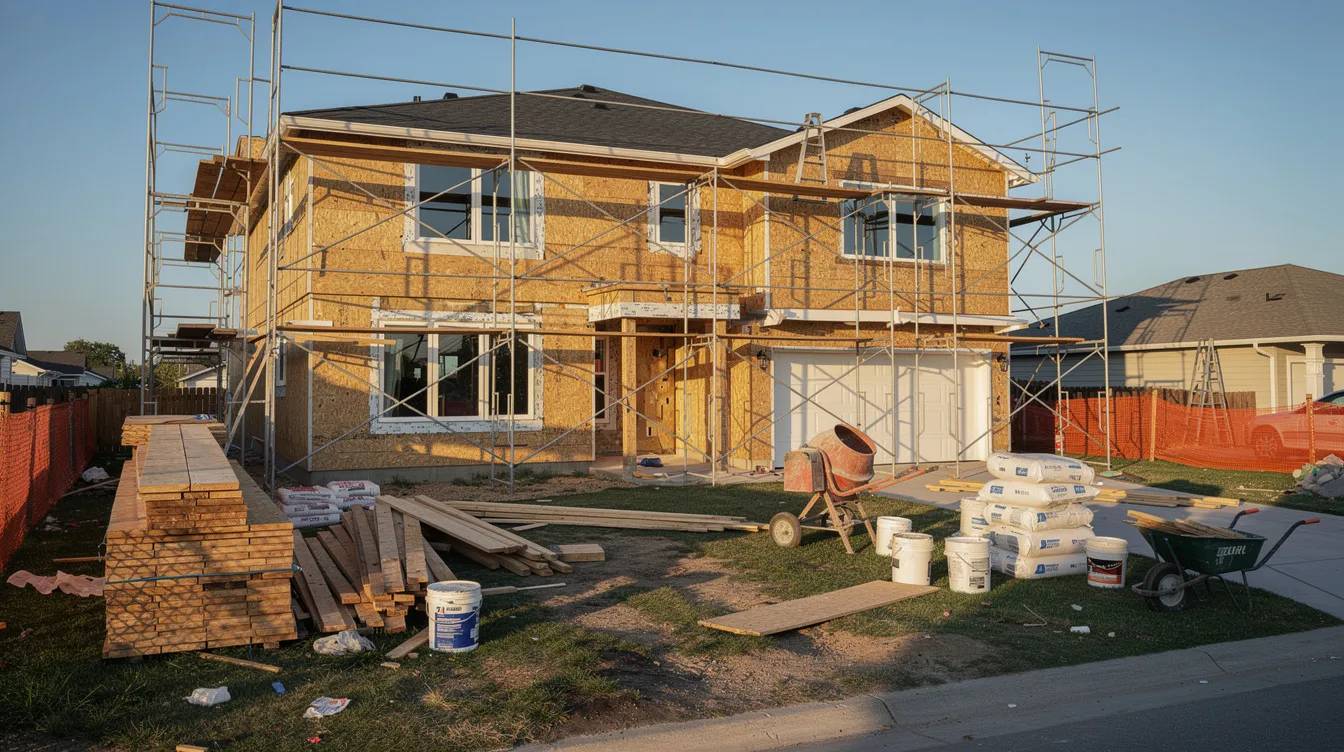
No Money Down Hard Money Lender: How 100% Financing Really Works (And How Gap Funded Fills the Cash to Close Gap)
Most real estate investors have seen the ads: "No money down hard money loans! 100% financing!" Then they apply, get approved for 80% of purchase price, and realise they still need $30,000 to actually close. Here's how no money down hard money lending actually works in 2026, where the gaps hide, and how to fill them without draining your savings or giving up equity.
Fast Answer: Can You Really Get a No Money Down Hard Money Loan?
Yes, but only if the numbers and structure are right. Strict underwriting criteria apply for hard money loans, particularly for zero down options, and most hard money lenders cap their total exposure at 70% to 75% of after repair value. That's the ceiling, not the floor.
Here's what "no money down" actually looks like in practice:
- True 100 financing from a single hard money lender is rare in 2026. It typically requires a deeply discounted purchase price, strong ARV supported by comparable sales, and sometimes cross collateralization or secondary gap funding.
- No money down offers may exclude closing costs, lender points, and renovation expenses. The headline sounds great. The settlement statement tells a different story.
- Many real estate investors with a borrower's credit score of 650 or above, verifiable income, or existing equity in another property can use capital stacking to layer hard money with unsecured term loans, a line of credit, and business credit cards to get into a fix and flip or rental BRRRR deal with little or none of their own cash.
- Gap Funded is not a hard money lender. We connect investors with primary lenders and then fill the cash gap those lenders leave, using unsecured funding, HELOCs, and business lines of credit.
This article walks through how hard money lending works, the 70% ARV rule, how hard money loans differ from a traditional mortgage, and how Gap Funded structures true no money down deals using multiple tools.
What Is a Hard Money Loan (vs. a Traditional Mortgage)?
A hard money loan is short term, asset based financing from private lenders. Hard money loans typically last six to 24 months and are used mainly for purchasing investment property, fix and flip projects, or bridge deals. Asset based financing prioritises property value over personal income or credit history, which is why approval for hard money loans is based on property value, not credit history alone.
Here's how hard money loans differ from traditional mortgage products:
- Underwriting centres on the property's current value or ARV, the rehab plan, and comparable sales. You won't hand over two years of tax returns or prove a strict debt to income ratio.
- Interest rates for hard money loans range from 8% to 15%, compared to roughly half that for a conventional loan or traditional mortgage. Origination fees run 2 to 4 points (each point equals 1% of the loan amount).
- Hard money loans can close in as little as five days. Traditional mortgage approval typically takes 30 to 60 days. When you're chasing a distressed property at auction, that speed matters.
- Payment structure is usually interest only payments with a balloon payment at maturity. Traditional bank loans amortise principal and interest over 15 to 30 years.
- Hard money loans require some "skin in the game" as a down payment or equity position unless deal pricing or added collateral fully covers the lender's loan to value and risk constraints.
- Hard money loans are secured by real estate collateral. The property itself is the lender's safety net.
Hard money loans are often used for fix and flip strategies among real estate investors, and the lender's return on investment includes interest and fees assessed on the loan. Higher costs and fees are associated with hard money loans due to increased risk for lenders, which is why your deal economics need to be tight.
Key Leverage Metrics: LTV, ARV, and Loan to Cost
Understanding leverage math is the real key to building no money down structures with any hard money lender. Three numbers control everything.
Loan to Value (LTV): Loan amount divided by the current property value. Lenders often cap hard money loans at 60% to 80% of the property's value on an "as is" basis. A higher loan to value ratio means more leverage and less cash needed.
After Repair Value (ARV): ARV is the estimated market value after renovations. ARV is determined using comparable renovated properties, typically 3 to 5 recent sales within a tight radius. ARV is crucial for hard money loan underwriting because many fix and flip loan programs lend off ARV, not current value. For example, a property worth $150,000 can have an ARV of $300,000 after $40,000 in repairs, which creates a massive spread for financing.
Loan to Cost (LTC): Loan amount divided by total project cost (purchase price plus rehab costs plus closing costs plus fees). When investors say "no money down," what they really mean is 100% LTC: every dollar covered by financing.
Here's why a deal can be 70% ARV yet still feel maxed out on cash:
- 70% of a $300,000 ARV = $210,000 maximum loan amount
- If your all in costs (purchase plus rehab plus closing plus fees) total $230,000, you still need $20,000 from somewhere
- That "somewhere" is either your bank account or gap funding
Most high leverage hard money lenders cap their total exposure around 70% to 75% of ARV and 85% to 90% of purchase price. That's why a funding gap usually remains even on good deals.
The 70% ARV Rule: When 100% Financing Is Actually Possible
Most lenders cap loans at 70% to 75% of ARV. This isn't arbitrary. It's the equity cushion that protects the lender if the deal goes sideways. But when your all in cost sits comfortably below that ceiling, true 100% financing becomes possible.
The rule is straightforward: your total cost (purchase plus rehab plus closing plus lender fees plus reserves) must come in under 70% to 75% of the property's after repair value. 100% financing typically covers purchase and rehab costs when the spread is there.
Here's how the maths plays out on a real deal:
Property ARV: $320,000 Lender cap: 70% of ARV Maximum loan amount: $224,000
Scenario A (qualifies): Purchase price: $155,000 Rehab costs: $45,000 Closing costs and fees: $18,000 Total all in cost: $218,000 Gap: $224,000 minus $218,000 = $6,000 cushion. Lender can cover everything.
Scenario B (does not qualify): Purchase price: $185,000 Rehab costs: $45,000 Closing costs and fees: $22,000 Total all in cost: $252,000 Gap: $224,000 minus $252,000 = negative $28,000. You need $28,000 in cash or gap funding.
Finding properties cheap enough to qualify is the hard part. Distressed, off market, estate, pre foreclosure, or auction properties are where these spreads live. In stable or rising markets, properties are priced so the margin barely exists.

How No Money Down Hard Money Lenders Structure These Deals
"No money down" almost never means "no equity." The lender's equity requirement is satisfied through below market pricing, cross collateralization, or external cash sources. Lenders often scrutinise the deal's profitability and equity cushion during the underwriting process, and they want comfort that the total exposure sits safely below ARV.
The structure of a no money down deal might include a combination of hard money and other funding sources. Typical setups look like this:
- 100% of purchase plus 100% of rehab within 70% to 75% of ARV, with the investor covering closing and origination out of pocket or via gap funding.
- 90% of purchase price plus 100% of rehab, where the investor covers closing costs, points, and the remaining 10% of purchase.
- 100% of purchase price only, with rehab funded separately via credit cards, a personal loan, or a business line of credit.
Rehab funds are almost always disbursed in draws: you complete a portion of work, an inspector verifies it, then the lender reimburses. That means you need some working capital up front for materials and contractors before draw completion.
Some lenders in 2025 to 2026 allow interest and origination fees to be rolled into the loan, but this reduces effective LTV capacity and can push deals over the 70% to 75% ARV cap. Model both scenarios before you commit.
First time investors often cannot access full 100% LTC with a single lender. That's where capital stacking with partners like Gap Funded becomes essential.
Cross Collateralization: Using Another Property Instead of a Down Payment
Cross collateralization means pledging equity in an existing property to eliminate or reduce the cash down payment on a new hard money deal. Cross collateralization can help secure 100% financing when structured correctly.
Here's how it works:
- The lender records a lien on both the new fix and flip property and your existing rental property or residence. They combine the values to stay within a total LTV limit, usually 65% to 70% across multiple properties.
- Example: You own a rental property worth $300,000 with a $180,000 loan (60% LTV). The lender allows up to 70% combined LTV across both properties. The unused equity from your rental (roughly $30,000 in headroom) can cover the down payment shortfall on a new $200,000 purchase.
- This works best for experienced investors with a proven track record, strong equity positions, and low cash, particularly those with 3 or more closed deals.
The risk is real, though. If one bad project forces a default, both properties are exposed. One deal going wrong can jeopardise a performing rental income stream you depend on. Think carefully before tying up equity across deals.
Typical Terms, Costs, and Origination Fees in 2025 to 2026
Hard money financing costs more than a traditional loan, but it remains the workhorse for flips, BRRRR, and bridge deals nationwide. Here's what hard money loan costs look like right now:
- Loan term: 6 to 12 months standard for a fix and flip loan, up to 18 to 24 months for ground up construction or heavy rehab. Interest only with a balloon payment at maturity.
- Interest rate: hard money loans typically have interest rates between 8% and 15%. The national average as of late 2026 sits around 10.35%. Rates vary by state, deal quality, and borrower experience.
- Origination fees: 2 to 4 points up front. Third party costs (appraisal, title, legal) stack on top.
Here's a total cost example to make the numbers tangible:
$240,000 loan at 12% for 9 months with 3 points Interest paid: roughly $21,600 (12% times 0.75 years times $240,000) Origination: $7,200 (3% of $240,000) Combined financing cost: approximately $28,800
If your projected gross profit on the flip is $60,000, that financing cost cuts your take home to roughly $31,200 before other out of pocket expenses. Margin compression is real.
100% financing deals often carry the higher end of rate and points ranges because the lender is taking more risk. Strong credit and a proven track record push borrowers toward the lower band.
How Hard Money Loans Differ from HELOCs, DSCR Loans, and Business Loans
In practice, many real estate investors rarely rely on one product. They stack hard money with a home equity line of credit, a DSCR loan, or a business loan to reach true 100% financing.
- HELOC: A revolving line secured by home equity, typically at a variable rate (prime plus a margin). A HELOC can provide lower rates than hard money loans and is useful for covering down payments and rehab on smaller deals. Draw periods often run 10 years with 20 year repayment. Check the HELOC calculator to see what your equity might unlock.
- DSCR Loans: These are 30 year rental loans where qualification is based on the property's cash flow, not your personal income. Rental property investors use them as an exit, refinancing out of hard money once the property stabilises. Gap Funded can help you explore DSCR loans as part of your long term financing strategy.
- Business Loan or Business Line of Credit: Revenue based underwriting, revolving access to cash for working capital or rehab. For established operators with at least $20,000 per month in revenue and 2 plus years in business, a business line of credit or business term loan can fill gaps that unsecured personal credit cannot.
Gap Funded specialises in bridging the space between these products and what the primary hard money lender will finance, especially for investors who don't yet qualify for large bank credit facilities.
Funding Gaps Hard Money Rarely Covers (Where Investors Get Stuck)
Even with an aggressive no money down hard money lender, most investors still need cash to cover something. Here's where the gaps typically hide:
- 10% to 20% of the purchase price as a down payment
- 2% to 4% in origination fees and closing costs
- First 1 to 2 rehab draws before the lender reimburses (you pay contractors, then wait for inspection)
- 3 to 6 months of interest, insurance, and utilities as cash reserves
- Earnest money deposit to lock the contract
Common scenario: lender funds 85% to 90% of purchase and 100% of rehab, but you still need $25,000 to $40,000 in out of pocket costs to close a modest $250,000 to $300,000 flip. Traditional financing products and cash out refis can help some investors, but newer operators or those under 2 years in business often don't qualify yet.
This is precisely where Gap Funded steps in.
How Gap Funded Creates "No Money Down" Structures with Capital Stacking
Gap Funded is a funding intermediary that stacks multiple financing tools on top of hard money loans to eliminate or dramatically reduce out of pocket cash. We don't take a lien on your deal property. We don't take equity splits. We fill the gap.
Here are the core tools, in the order we typically deploy them (sequencing matters because applying out of order can knock out later approvals):
- Rapid Gap Funding: Unsecured term loans with fast underwriting, no liens on the subject property, covering down payment and closing costs.
- 0% Credit Card Stacking: Multiple 0% APR business credit cards layered to create $50,000 to $150,000 of revolving capacity for 9 to 18 months, used for closing costs or rehab timed with draws. Business credit cards can offer 0% intro APR for 12 months, which gives you breathing room on carrying costs.
- Personal term loans for smaller amounts. Personal loans typically take 1 to 7 days for approval, making them useful for fast moving deals.
- HELOC: For investors with home or investment property equity but not cash, we coordinate HELOC solutions to cover larger down payments on bigger deals.
- Business Line of Credit: For established operators bridging rehab draws or running multiple properties simultaneously.
Realistic scenario: Hard money covers 85% of the purchase price plus 100% of rehab. Gap Funded layers $60,000 in unsecured gap funding for the remaining down payment, closing costs, and first rehab draw. The investor enters the project with $0 to $5,000 of their own cash. Zero personal capital outlay allows investors to use funds for other investment opportunities.

Investor Profiles Who Can Actually Make "No Money Down" Work
While the internet makes 100% financing sound universal, certain profiles fit this strategy much better than others. I reckon honesty here saves more deals than hype ever will.
- Experienced flippers: At least 2 to 3 successful fix and flip projects in the last 24 to 36 months, documented HUDs, and a clear strategy. These investors qualify for higher ARV caps and more unsecured credit. Lenders may require lengthy experience in real estate for zero down options, and this profile delivers.
- W-2 or strong 1099 earners: 650 to 700 plus credit score and low revolving utilisation. Ideal candidates for business credit card stacking and unsecured term loans, even on a first or second flip.
- Equity rich, cash poor investors: Significant equity in a primary residence or rentals but limited liquidity. Pair a HELOC or cross collateral structure with hard money and gap funding to eliminate upfront capital needs.
- Brand new investors: Minimal credit depth, bad credit scores under 640, or unstable income. 100% financing is much harder here. The safer path is smaller deals with some of their own cash or a partner who brings capital.
Gap Funded conducts a soft credit pull (no impact to your score) and a quick funding review to determine how much unsecured capital is realistic before you put a property under contract.
Risks and When You Should Avoid 100% Financing
No money down is attractive. It also amplifies risk because you're borrowing against every part of the deal, and sometimes against future income. Hard money loans are riskier due to higher costs and shorter terms. Short repayment timelines create pressure to quickly sell or refinance investment properties.
Key risk areas:
- Thin profit margins: if projected net profit is under $25,000, one surprise wipes you out. A $40,000 projected profit on paper becomes $5,000 or negative once holding periods extend from 6 months to 10 months and carrying costs stack up.
- Aggressive default penalties exist for failing to repay a 100% financed loan. Miss a few payments and you lose the property and potentially your cross collateral too.
- Investors may need cash to cover unexpected costs even in no money down scenarios. Plumbing surprises, permit delays, and contractor no shows don't care about your spreadsheet.
- If ARV is uncertain, if you don't have a backup exit (BRRRR into a DSCR loan, wholetail, or wholesale assignment), or if your personal budget cannot tolerate 3 to 6 months of interest payments without a sale, do not attempt this.
I'll be straight with you: we sometimes advise clients not to over leverage a borderline deal, even if they technically qualify. Closing one risky project at the expense of your investing future isn't worth it.
Alternatives If You Don't Qualify for 100% Financing Yet
Many readers won't qualify immediately for full no money down structures in 2026, and that's completely normal. Here are paths that still get you moving:
- Partnerships: Team up with a cash investor who covers the down payment and rehab while you manage the project. Less margin, but you're building experience and a proven track record.
- Seller financing: Negotiate that the seller holds a portion of the purchase price via a private money loan, reducing the hard money you need. Some sellers, especially in estate or pre foreclosure situations, are open to carryback notes.
- Family and friends: Family and friends can provide low interest loans for investments. Document everything properly with promissory notes.
- 401(k) loans: 401(k) loans allow borrowing up to 50% of your vested balance. Not my favourite option, but it exists for a reason.
- Start smaller: A cosmetic flip requiring $15,000 in rehab is far easier to fund than a full gut renovation. Build your track record first.
- Debt consolidation: If high interest personal debt is dragging your credit down, consolidating first can improve your profile for future projects.
- BRRRR strategy: Use hard money and modest gap funding to acquire and rehab, then refinance into long term financing once the property stabilises, tunnelling equity into future deals.
Treat your first 1 to 2 deals as proof of concept. Build experience and cash reserves rather than chasing absolute zero cash in, which can be dangerous early in your real estate investing career.
How to Prepare a No Money Down Friendly Deal Package
Lenders and gap funders reward organisation. A tight package improves both loan approval odds and terms. Here's what to have ready:
For the property:
- Signed purchase contract with the purchase price clearly stated
- Photos of current condition
- Detailed rehab scope of work with itemised contractor bids
- Realistic ARV analysis with 3 to 5 comparable sales from the last 6 to 9 months
For you personally:
- Two forms of ID
- Recent credit report or permission for a soft pull (your credit score matters for unsecured tools)
- 2 to 3 months of bank statements
- Simple personal financial statement showing assets, liabilities, and existing lines of credit
- Credit history documentation and evidence of past deals if applicable
For the plan:
- A clear exit strategy is crucial for 100% financing approval. Flip or BRRRR? Target sale or refinance date? Backup exit if the market shifts?
- Simple timeline from closing to listing or refinance
You can submit this package once at Gap Funded, and we match you with appropriate primary lenders and gap funding tools instead of you shopping each piece separately.
Gap Funded's Core Tools for Filling the Down Payment and Rehab Gap
Gap Funded exists to solve the "I have a great hard money approval but not enough cash to close" problem. Here's what we bring to the table:
- Unsecured gap funding: Personal and business term loans with fast underwriting (as fast as 7 to 14 days), no liens on the subject property, and loan amounts from roughly $20,000 to low six figures for qualified borrowers.
- Business credit card stacking: Multiple 0% APR business cards layered for $50,000 to $150,000 of revolving capacity over 9 to 18 months. Soft pull pre qualification. No such loans carry liens on your deal property.
- Asset based capital: Coordinating HELOC or hard money options when you have equity but not cash. A HELOC on an investment property or primary residence can cover larger amounts at lower rates.
- Revenue based capital: For established operators, a merchant cash advance or business line of credit can bridge rehab draws or fund multiple properties simultaneously.
Borrowers must maintain a solid credit profile for 100% financing. Good credit opens more tools at better pricing.
Realistic Qualification: Credit, Income, and Experience Expectations
Let's set expectations so you know where you stand before spending time on applications.
- Credit score: 650 to 680 is the practical floor for most of Gap Funded's best unsecured term loan and 0% credit card programs. 700 plus often receives higher limits and better terms. 620 to 649 may still have some options but at reduced limits and higher loan costs. Investors with bad credit scores below 620 will find this path quite narrow.
- Income and revenue: W-2 or stable 1099 income sufficient to support new debt payments. For business funding, at least $20,000 per month in revenue and preferably 2 plus years in business for larger business lines of credit. Traditional financing standards don't apply here, but you still need to show the ability to pay interest on short term loans.
- Experience: While unsecured funding is based more on credit and income than flip history, many lenders look favourably on documented real estate investment activity. Even 1 to 2 completed projects help.
Our initial review uses a soft pull and quick application, giving you a realistic funding range before you invest time in deep underwriting with a specific hard money or private money lender.
Step by Step: From Deal Found to Fully Funded with Minimal CashStep by Step: From Deal Found to Fully Funded with Minimal Cash
Here's the sequence that turns a lead into a closed deal with stacked capital:
Step 1: Pre qualify for unsecured gap funding and lines of credit with Gap Funded first. Know your buying power before you lock up a deal. Start your funding review here.
Step 2: Source a property with enough spread. All in costs should sit below 70% to 75% of ARV. Get a purchase contract signed with reasonable inspection and financing contingencies.
Step 3: Submit the deal details to both a hard money or flip loan lender and Gap Funded simultaneously. This allows parallel underwriting of both the primary loan and the gap funding, saving you weeks.
Step 4: Review the combined capital stack: hard money terms (LTV, ARV, rate, points) plus unsecured and HELOC tools. Adjust scope of work or negotiate the purchase price if needed to keep the numbers safe. The maximum loan amount should leave enough room for profit after all financing costs.
Step 5: Close on the property. Manage draws and rehab using your stacked funding (cards, lines, term loans). Execute your exit, whether that's a sale or refinance into a DSCR or other long term financing product, with enough margin left after all hard money loan costs.

How Referral Partners and Brokers Use Gap Funded for Their Own Clients
If you're a hard money broker, wholesaler, agent, or business loan broker, this section is for you. Many of our referral partners use Gap Funded as a plug in solution to increase their own conversion rates when clients are short on the down payment or rehab liquidity.
- Partners send clients to a referral link where those clients get screened for unsecured term loans, business credit cards, HELOCs, and working capital. The primary lender relationship stays yours.
- This is especially useful for hard money lenders and DSCR lenders whose underwriters will not allow borrowed down payment on their own balance sheet, but who are comfortable with third party unsecured funding that places no lien on the commercial real estate or residential deal property.
- Successful partners typically specialise in fix and flip, BRRRR, short term rentals, or small business acquisitions and want a reliable way to turn more pre approvals into closed transactions.
Learn more about the partner programme here.
Next Steps: Is a No Money Down Hard Money Strategy Right for You?
No money down with a hard money lender is possible. But it only works when deal metrics, investor profile, and capital stack line up correctly. Hard money loans work best when the numbers leave room for error.
Quick self checklist:
- Your estimated after repair value and all in costs are conservative, leaving at least $30,000 to $40,000 in projected net profit
- Your credit is at or above the mid 600s
- You have or can build access to multiple funding tools: hard money, unsecured gap funding, a HELOC, or a line of credit
- You have a clear exit strategy and a backup plan
If you're unsure, starting with a partially funded deal (say, 10% to 15% of your own cash) is safer than pushing for 100% leverage on your first project. Real estate investing rewards patience and preparation over aggression.
Ready to find out what you actually qualify for? Complete a quick funding review at Gap Funded. Soft pull only. No upfront fees. We'll build a custom capital stack recommendation, pairing the right hard money or private lenders with the gap funding tools that get you to closing day, without unnecessary equity splits or giving up control of your deal.
Related Reading
This article is for educational purposes only and isn't financial, legal, tax, or investment advice. Credit and financing outcomes depend on your own situation. Talk to a licensed financial professional before making funding decisions for your business.