
Merchant Cash Advance in Texas: Fast Cash From Future Credit Card Sales


Merchant Cash Advance in Texas: Fast Cash From Future Credit Card Sales
How Merchant Cash Advances Work For Texas Businesses
A merchant cash advance is one of the fastest ways a Texas business can get a lump sum of working capital. No committee meetings at the bank. No 90 day wait. Just revenue, statements, and a wire.
Here is the trade off: an MCA provider buys a slice of your future sales and collects that slice from your business bank account every day or every week until they have collected every cent they are owed. The advance amount is typically sized at 100% to 150% of monthly revenue, so a business doing $30,000 a month in credit card transactions and deposits might see offers between $30,000 and $45,000. Larger operations can pull $250,000 or more.
Texas House Bill 700 was signed into law in 2025, adding new rules for what the state calls "commercial sales based financing." Those rules took effect on September 1, 2025, and they changed the disclosure and registration requirements for every MCA provider doing business with Texas businesses. Before you sign an MCA agreement, you need to understand the cost, the contract language, and the legal ground under your feet. This article covers all of it, including what to do if MCA debt is already draining your cash flow.
What Is A Merchant Cash Advance?
A merchant cash advance is not a traditional loan. It is a purchase of your future receivables. The MCA funder gives you a lump sum of merchant cash upfront, and in return you agree to hand over a contractually fixed portion of your future credit card sales or total revenue until the purchased amount is collected in full.
Unlike traditional loans, the MCA contract does not show a traditional interest rate. Instead the cost is expressed as a factor rate, which is a flat multiplier applied to the advance amount. A factor rate of 1.35 on $50,000 means you owe $67,500 total, regardless of how fast or slow you pay it back.
Repayment is usually taken automatically. Some MCA companies pull a percentage of daily credit card sales straight from the card processor. Others set up fixed ACH debits from your bank account each business day or week. Either way, the money leaves before you can spend it on payroll or suppliers. Merchant cash advances are based on future sales rather than personal collateral, which is why approval can happen with a FICO as low as 500. MCAs are not federally regulated at the federal level, which historically left room for predatory practices. Texas law now fills part of that gap.
How A Texas Merchant Cash Advance Works In Practice
Numbers make this clearer than theory. Say a Houston restaurant averaging $40,000 per month in card and ACH sales receives a $40,000 lump sum on 15 March 2026, at a 1.35 factor rate. Total repayment is $54,000, so the fixed fee is $14,000.
The MCA provider sets a 12% daily holdback from the restaurant's future credit card sales. On a day the restaurant does $1,600 in sales, the provider takes $192. On a slow Monday with $900, the pull is $108. At average daily revenue of about $1,333, the 12% holdback sends roughly $160 per day to the funder, which means the $54,000 total repayment is collected in about 338 business days, or roughly 15 to 16 months.
Some Texas MCA providers skip the percentage model entirely and pull a fixed amount from the bank account every business day. That fixed payment structure does not flex when sales volume drops. If the restaurant has a dead week, the same amount still leaves the account. Repayment periods for MCAs can range from 90 days to 18 months depending on the structure, the holdback rate, and how strong sales are. The MCA contract will spell out the factor rate, total repayment, payment amounts, and how the withdrawals are triggered.
Who Uses MCAs In Texas And When They Make Sense
Common industries that utilise MCAs include retail, restaurants, and service businesses. In Texas specifically, the list runs deep:
- Restaurants and bars across Dallas, Austin, Houston and San Antonio
- Convenience stores and gas stations along the I 35 and I 10 corridors
- Trucking and oilfield service companies with irregular invoice cycles
- Dental and medical practices billing insurance but needing cash now
- E commerce sellers scaling inventory for seasonal demand
An MCA can be a rational choice when a business needs to cover urgent equipment repairs, seize a time sensitive inventory discount, bridge a payroll gap while a large invoice clears, or fund a short term marketing push. MCAs are most defensible for businesses with strong, stable revenue that can clear the balance quickly. The longer the advance drags on, the more expensive it becomes.
MCAs are often easy to qualify for, even with poor credit or a thin file, which is why owners who cannot get a traditional bank loan turn here first. That should be a short bridge, not a long term funding strategy.

Texas Merchant Cash Advance Eligibility And Requirements
Flexibility in credit score is common for MCA approvals, usually accepting scores of 500 or higher. Beyond that, here is what most MCA lenders in Texas look for:
- Monthly sales: consistent monthly revenue around $10,000 to $15,000 is often required, with stronger offers kicking in at $20,000 and above. Most lenders require at least $10,000 in monthly sales.
- Time in business: usually 6 to 12 months of operating history with a clear pattern of deposits. MCA qualification often includes 3 to 6 months of business operation and revenue history, depending on the provider.
- Bank statements: 3 to 6 months of business bank account statements showing steady deposits, no chronic overdrafts, and no unexplained gaps.
- Credit profile: a personal FICO in the mid 500s or higher is often enough, though better credit scores can bring the factor rate down.
- Texas specific: once HB 700's registration deadline passes (31 December 2026), any MCA provider or broker offering merchant cash advance funding to a Texas business must be registered with the Office of Consumer Credit Commissioner.
MCA applications can be completed online, and approval for an MCA can take hours to days. MCA funding can be received as soon as the same day in some cases.
Rates, Factor Rates And Interest Rate Confusion
In an MCA contract, the cost is expressed as a factor rate, not a traditional interest rate. This confuses many business owners who try to compare an MCA to a traditional business loan or business line of credit.
Factor rates for MCAs typically range from 1.1 to 1.5. Here is what that looks like in dollar terms:
| Advance Amount | Factor Rate | Total Repayment | Total Cost (Fee) |
|---|---|---|---|
| $30,000 | 1.20 | $36,000 | $6,000 |
| $60,000 | 1.45 | $87,000 | $27,000 |
| $100,000 | 1.35 | $135,000 | $35,000 |
Even though the MCA contract does not show an interest rate, the effective APR tells you the real annual cost. Effective APRs on MCAs can exceed 100% in Texas. Merchant cash advances can have APRs from 40% to 350%, depending on how quickly the balance is collected. A $100,000 advance at a 1.35 factor rate repaid over 6 months works out to roughly 70% APR. The same deal repaid over 3 months? About 140% APR. (Holland & Knight analysis)
Early payoff often does not reduce the total fee under a standard MCA contract. Interest charged on a term loan stops accruing when you pay it off early. With an MCA, you typically owe the same amount whether you clear it in 60 days or 180. That is a critical difference.
Pros Of Merchant Cash Advances For Texas Businesses
There are real reasons MCAs exist and real situations where they fit:
- Fast funding: online applications, light documentation, and funding often in 1 to 3 business days. Some providers fund the same day.
- Flexible qualification: approval is determined based on revenue and bank deposits rather than credit history alone. Bad credit does not automatically disqualify you.
- Payments tied to sales: when structured as a percentage of daily credit card sales, payments fall when sales slow and rise when sales are strong, which can soften the hit to cash flow.
- No hard collateral: most businesses do not need to pledge specific equipment or real estate, though many MCA funders file a blanket UCC lien on business assets.
- Open use of funds: inventory, payroll, marketing, small remodels, or catching up on short term obligations.
For a small business that needs $20,000 this week and has $25,000 a month in card revenue, those pros can look pretty good compared to the 60 to 90 day wait for an SBA loan.
Cons And Risks Of Merchant Cash Advances In Texas
Texas business owners need to weigh these drawbacks before signing, not after.
High cost. MCAs are one of the most expensive types of business financing available. The total cost on a $60,000 advance at a 1.45 factor rate is $27,000 in fees. A traditional loan for the same amount at 12% APR over 12 months costs roughly $4,000 in interest. That is not a rounding error.
Frequent withdrawals. Daily or weekly pulls from the bank account can crush cash flow if sales dip. MCA fees can impact cash flow due to frequent repayments, especially when the provider uses fixed payments instead of a true percentage holdback.
Stacking risk. Many owners under pressure take multiple MCAs from several MCA companies. Each one adds a separate daily or weekly debit. When three funders are pulling from the same account every morning, the maths gets ugly fast.
Confusing contracts. Confusing contracts can make it hard to understand MCA costs, especially when the factor rate, fees, and total repayment are buried in dense contract language.
Legal exposure. Personal guarantees, UCC liens, and aggressive collection clauses create personal liability and put both business and owner assets at risk. A valid judgment from a Texas court or out of state court can reach personal assets if you signed a guarantee.
Are Merchant Cash Advances Legal In Texas After HB 700?
Merchant cash advances are legal in Texas. They have always been legal in Texas. What changed is the regulatory framework around them.
Texas House Bill 700 provides new MCA protections effective September 1, 2025. The bill added Chapter 398 to the Texas Finance Code, covering "commercial sales based financing," which includes most MCAs offered to Texas businesses even when the MCA provider has no office in the state. HB 700 provides protections against predatory MCA contracts through four core requirements:
- Registration: MCA providers in Texas must register with the Office of Consumer Credit Commissioner by 31 December 2026.
- Disclosures: for deals under $1 million, providers must disclose the advance amount, disbursement amount, finance charge, total repayment, payment schedule, payment amounts, and all fees before funding.
- No confessions of judgment: confession of judgment clauses in MCA contracts are void under HB 700. Any judgment voids based on a confession of judgment clause is unenforceable under Texas merchant cash advance law. Texas House Bill 700 provides defenses against MCA collections that rely on these clauses.
- Debit restrictions: automatic debits from a business bank account require a perfected first priority security interest. Providers cannot just help themselves to your deposits without proper lien position.
Texas does not establish maximum annual percentage rates for commercial sales based financing. There is no rate cap. But here is the lever: MCA agreements with fixed payments may be recharacterised as loans. If a Texas court determines that an MCA is actually a disguised loan (an absolute obligation to repay a fixed amount regardless of sales volume), then Texas usury law and its rate ceilings kick in. That recharacterisation can void the contract or force the interest charged down to legal limits under the Texas commerce code. (CFPB small business lending FAQ)
This section is general information, not legal advice. Talk to a Texas licensed attorney or law firm for contract questions or disputes.
Bank Account Debits, UCC Liens And Personal Guarantees
Most MCA funders secure performance three ways: automatic debits from your business bank account, a UCC 1 financing statement filed against your business, and a personal guarantee signed by you.
Under Texas Finance Code Chapter 398 and the implementing rules adopted in mid 2026, Texas MCA regulations prevent automatic debits without a valid lien. Providers cannot automatically debit a Texas business's deposit account unless they hold a perfected first priority security interest in the accounts or receivables described in the MCA contract. That security interest must comply with Chapter 9 of the Texas Business and Commerce Code.
A UCC lien is a public filing that shows the funder's claim on your receivables, equipment, or sometimes "all business assets." It affects your lien position with other lenders. If you apply for a business line of credit or business term loans later, the existing UCC filing from the MCA funder can block approval or push you into worse terms. Texas law allows businesses to challenge UCC liens filed by MCA funders if those filings are overbroad or filed without proper authorisation.
Most MCA contracts also carry a personal guarantee that extends personal liability beyond the business bank account to the owner's personal funds. Emergency injunctive relief can stop unauthorised MCA collections, and Texas businesses can seek emergency relief against unauthorised MCA debits through a Texas court.
Read the automatic debit language, UCC collateral description, and guarantee before you sign. If the contract language is unclear, have a lawyer review it. The few hundred dollars for a review is cheap insurance against a six figure problem.

Alternatives To A Merchant Cash Advance For Texas Business Financing
Before taking or stacking another MCA, check whether you qualify for something less expensive.
Business line of credit. Established businesses with at least 2 years of operating history and $20,000 or more in monthly revenue may qualify for a business line of credit. Interest only on what you draw. Payments are predictable. Cost is a fraction of an MCA.
Business term loans. Lump sum funding sized at 100% to 150% of monthly revenue, with fixed monthly payments and rates that look nothing like a 1.45 factor rate. Business term loans work for established businesses that need capital without the daily drain.
SBA backed loans. Great for acquisitions, real estate, or larger expansions. The process runs 90 to 120 days and requires stronger documentation and credit, but the rates are built for long term health, not short term extraction.
Rapid Gap Funding and 0% credit card stacking. For owners with a 650 to 700 plus FICO and enough personal income, unsecured personal term loans or 0% intro rate business cards can replace an MCA without daily pulls from your bank account. These are personal profile based tools, not revenue based, so they work differently.
HELOC on a separate property. Some Texas owners unlock a home equity line of credit on a primary home or investment property to cover working capital at rates well below what any MCA funder would charge. Unlike traditional loans, a HELOC gives you a revolving draw period, so you only pay on what you use.
When MCA Debt Becomes A Problem
Here is the pattern I see over and over. A Texas business owner takes one MCA to cover a gap. Sales slow. They take a second. Then a third. Now three MCA creditors are pulling from the same bank account every single business day. The business is profitable on paper, but there is nothing left in the account by Wednesday.
MCA debt is not the same as credit card debt. Normal personal consolidation loans cannot make the MCA contract vanish. But there are structured ways to get control.
MCA debt consolidation is a specialised form of business debt restructuring. It takes several MCAs and rolls them into one structure with a lower weekly or monthly remittance instead of multiple daily hits. The total repayment may still be substantial, but the breathing room can be the difference between keeping the lights on and closing up.
Consolidating MCA balances first can be the setup step that lets a Texas business later qualify for a proper business line of credit or business term loan that relies on consistent cash flow instead of squeezing it. This is not about stopping payments or escaping legal obligations. It is about restructuring the timing so the business can function. A reconciliation request to review and verify outstanding balances with each MCA provider is usually the first step.
How Gap Funded Helps Texas Businesses With MCA And Working Capital
Gap Funded is not a lender, not a hard money company, and not an MCA funder. We do not take a lien on your deal property. What we do is arrange the capital structure so the pieces fit.
For operating businesses already carrying one or more MCAs, the focus is on MCA debt consolidation first, then layering in revenue based capital once cash flow stabilises. The sequence matters. Stacking a new business line of credit on top of three active MCAs is like pouring water into a bucket full of holes.
Qualification ranges for the main tools:
- MCA debt consolidation: at least 1 year in business, $10,000 or more in monthly revenue
- Business line of credit: FICO around 600 or higher, 2 years in business, $20,000 or more in monthly revenue
- Business term loans: lump sum funding for established businesses, typically sized at 100% to 150% of monthly revenue
For owners whose personal credit card balances are dragging down approvals, credit card debt consolidation can drop utilisation below 30%, lift scores 40 to 80 points in one reporting cycle, and open up better funding options.
Texas business owners arriving without a primary lender can have Gap Funded organise the main business financing and gap capital in one plan, aiming for up to 100% financing on qualified deals, always disclosed to the primary lender and subject to the lender's rules. You can see all gap funding services on our overview page.
Worked Example: Replacing Texas MCA Stacks With A Healthier Structure
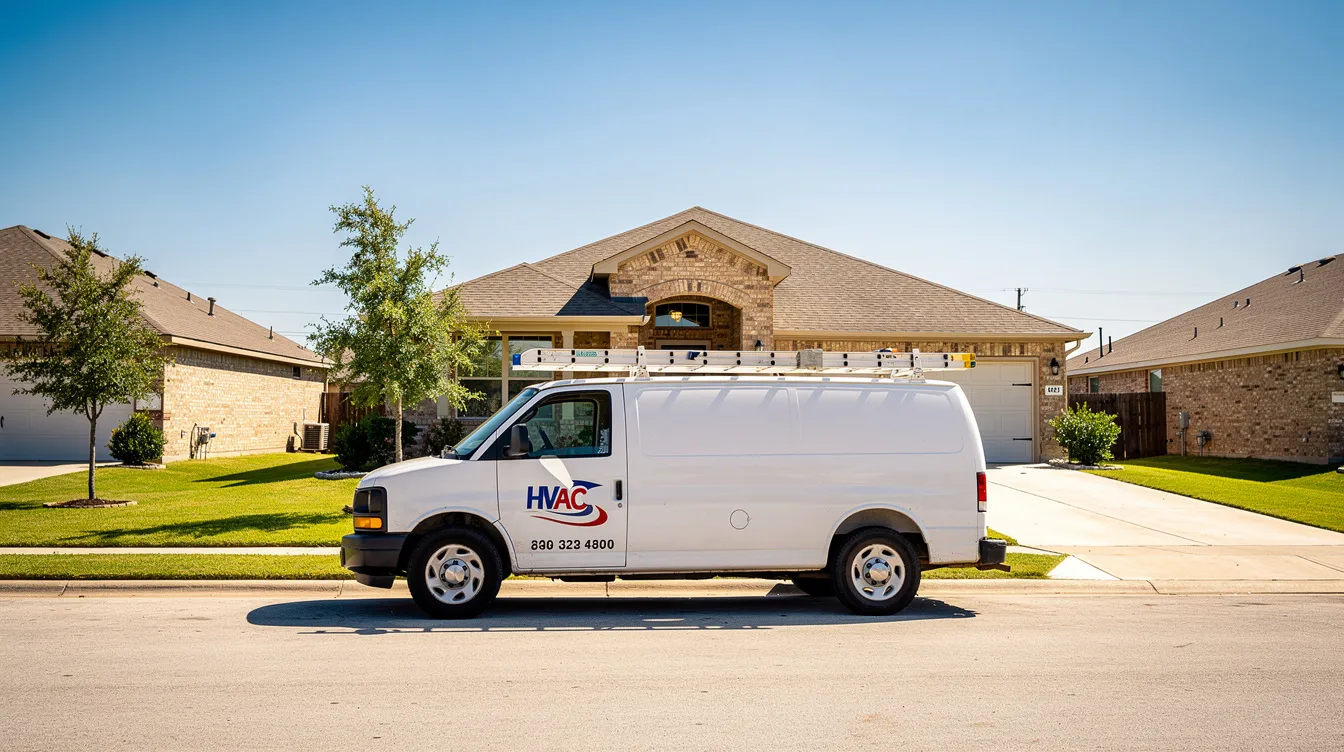
Consider a fictional San Antonio HVAC company doing $120,000 per month in revenue. The owner took three MCAs over the past year totalling $150,000 in outstanding purchased receivables. Combined, the three MCA funders are pulling $1,800 per business day from the company's bank account.
That is roughly $36,000 per month leaving the account before the owner pays a single supplier, covers payroll, or buys parts. On $120,000 in monthly sales, the MCA obligations alone consume 30% of gross revenue. The business is profitable on paper, but cash flow is underwater.
Consolidating those three positions into one structure with a $6,000 weekly payment (roughly $24,000 per month) drops the MCA related outflow by about $12,000 per month. That is enough to cover a full payroll cycle. Once the consolidated balance is paid down and 6 to 8 months of clean bank statements are in place, the business becomes a candidate for a business term loan at a fraction of the cost.
Qualification touchpoints for this scenario: 1 year plus in business, FICO in the 600 range, monthly revenue well above the $20,000 threshold, and MCA related payment amounts kept to a manageable share of average monthly sales.
How To Decide If A Merchant Cash Advance Is Right For Your Texas Business
Before you sign, run through this checklist. It takes 2 to 3 minutes and could save you a fair whack of money.
- Is the need truly urgent and short term? If you need capital for 6 months or longer, a business term loan, SBA backed loan, or business line of credit will almost always cost less than a Texas merchant cash advance.
- What is the total repayment? List the advance amount and the total repayment on any MCA offer. Subtract one from the other. That is the total cost. Then approximate the implied interest rate so you can compare with other funding options.
- How much is already leaving your account? Total every MCA and loan payment that hits your bank account each week. Compare that number to average weekly revenue. If more than 15% to 20% of your future sales are already spoken for, another MCA is a risk you probably cannot afford.
- Are you stacking? If you already have one or more MCAs and you are considering another, stop. That is how most businesses end up needing MCA debt consolidation. Consider restructuring before taking advantage of another fast funding offer.
- Have you checked the merchant cash advance contract for a personal guarantee, UCC lien, and automatic debit terms? Under New York law (where many MCA contracts are governed, per a York law or New York law choice of law clause) and the Uniform Enforcement of Foreign Judgments Act, a valid judgment from another state can be enforced in a Texas court. Make sure you know what you are agreeing to in every commercial financing agreement.
Look, I reckon most businesses that end up in MCA trouble did not start with a bad plan. They started with a cash gap and took the fastest option available. The problem is not the first MCA. It is the second and third, stacked on top, with no plan to get out.
If your bank account is getting hit from three directions every morning before you have had your coffee, that is not a sustainable business financing strategy. Gap Funded can help you map out what you owe, consolidate MCA debt into a structure your cash flow can handle, and build toward better capital.
Request a quick funding review at Gap Funded. The initial review is a soft pull with no impact to your credit. Gap Funded is not a CPA, attorney, lender or financial advisor. Legal or tax questions should go to licensed professionals.
Related Reading
This article is for educational purposes only and isn't financial, legal, tax, or investment advice. Credit and financing outcomes depend on your own situation. Talk to a licensed financial professional before making funding decisions for your business.