
How Much Would It Cost to Flip a House? (Full Cost Breakdown + Funding Strategy)

How Much Would It Cost to Flip a House? (Full Cost Breakdown + Funding Strategy)
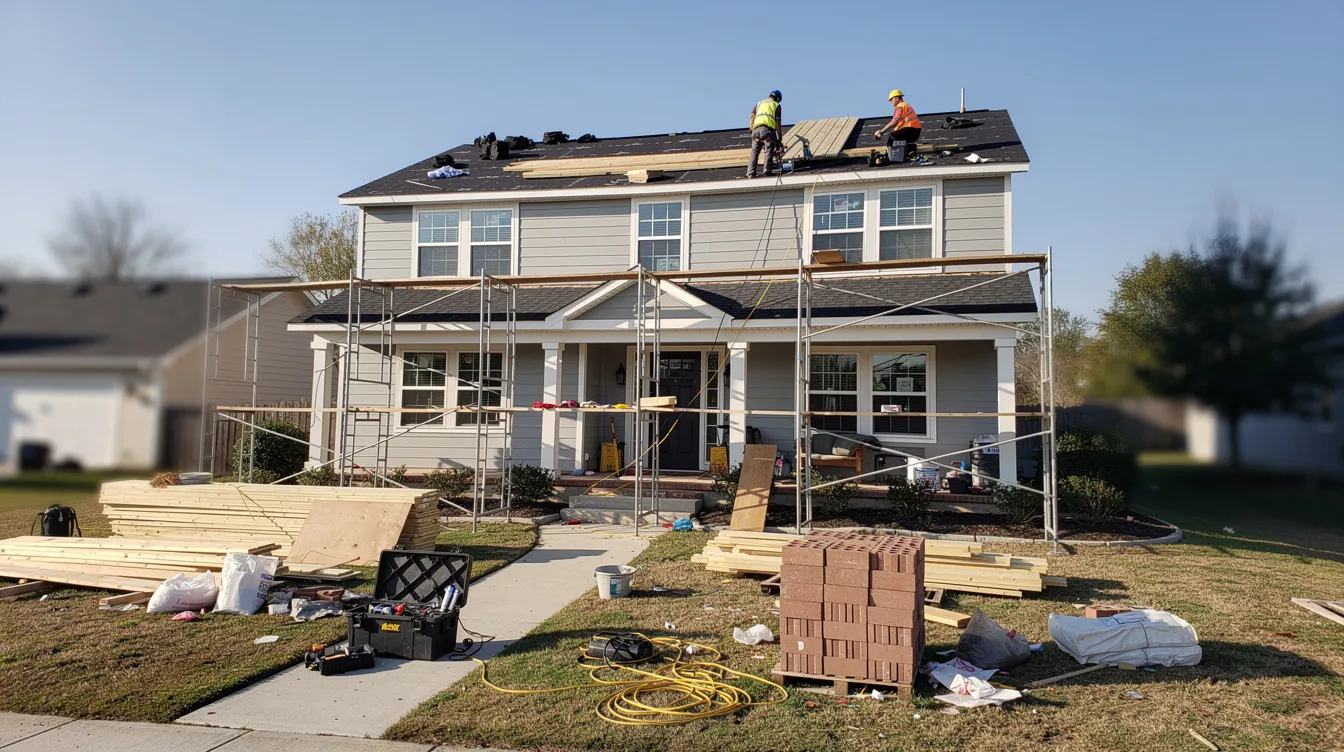
If you've ever searched "how much would it cost to flip a house," you've probably found answers that only mention renovation. That's a problem. The true cost of a flip includes costs beyond just purchase price and renovation, incorporating all expenses from earnest money to the final closing table. This guide breaks down every dollar you need to budget, shows you where most investors lose money, and explains how to stack your capital so you can reach up to 100% financing on your deal.
Quick Answer: Typical Cost to Flip a House in 2025
Most U.S. house flips in 2025 cost roughly $40,000–$90,000 in rehab plus 10–15% of ARV in other costs. The average cost to flip a house is $20,000 to $70,000 in renovation alone, but the real number depends on your local real estate market, the property condition, and the scope of work.
- Light "lipstick" flips (paint, flooring, minor updates) commonly run $15,000–$35,000 on a small 1,200 sq ft home in secondary markets like Indianapolis or Birmingham. A fresh coat of paint, luxury vinyl plank flooring, and updated fixtures can transform a dated property at roughly $12–$30 per square foot installed.
- Full cosmetic + system updates for a 1,500–1,800 sq ft home in mid-priced metros like Phoenix or Tampa typically run $50,000–$90,000 in renovation costs, plus closing costs, holding costs, and selling costs that push total project spend higher. Renovation budgets typically range from $50,000 to $80,000 for average-sized homes in these markets.
- Heavy rehabs or structural flips in high-cost markets such as Los Angeles or Boston can easily exceed $120,000–$200,000 in total project costs once you factor in elevated labor rates, materials, permits, and longer timelines.
- The complete picture: a typical total cost to flip a house includes the purchase price plus an extra $70,000 to $110,000 in expenses. Flipping a house involves four primary cost categories: purchase acquisition, renovation, holding, and selling expenses. The average gross profit from flipping a house was $66,000 in 2023, and in Q2 2024, average gross profit increased to $73,500 with an average ROI around 30.4%. Flippers can earn an average of $72,000 per flip when the numbers are modeled correctly.
- Gap Funded can cover your down payment, closing costs, working capital, and contingency so you can get up to 100% of deal costs covered without equity splits or liens on the flip property.
Understanding the Full Cost to Flip a House (Not Just Renovation)
Underestimating costs is the reason many flips lose money. Every cost from your earnest money deposit to the final seller-side title fee needs to appear in your model. If you skip a line item, that money comes straight out of your net profit.
Major Cost Buckets
- Purchase price
- Acquisition closing costs
- Renovation
- Permits
- Inspections
- Holding costs
- Financing costs
- Marketing and selling
- Taxes
Flipping calculations should include acquisition, renovation, holding, and selling costs along with contingencies.
Building a Line-Item Budget
- Most "average flipper" rules of thumb ($20,000–$70,000 rehab) ignore local labor and material inflation, lender points, interest carry, and resale commissions. Renovation costs range from $10,000 to $80,000 depending on scope, which is a wide band that proves why detailed estimates matter.
- Build a line-item budget in a spreadsheet before making an offer. Update it after inspections and contractor bids so you have a living document, not a guess.
- A conservative resale estimate should account for potential unforeseen costs and delays during the flip process. Accurate cost modeling is part of due diligence and should be completed before non-refundable deposits or hard money draws are committed.
Using the 70% Rule to Set Your Maximum All‑In Cost
Experienced flippers use the 70% rule as a first filter, then refine with detailed cost analysis. The 70% rule suggests paying no more than 70% of ARV—which stands for after-repair value—(ARV stands for after-repair value of a property) to leave room for profit.
- Formula: Max Total Investment (purchase + repairs + closing + financing + holding) ≈ 70% of ARV. To apply the 70% rule, subtract estimated repair costs from 70% of ARV to find your maximum purchase price.
- Example: ARV is $350,000 for a suburban Atlanta flip. 70% of ARV is $245,000. If rehab and soft costs total $85,000, the purchase price must stay at or below about $160,000. Another example: if ARV is $250,000 and repairs are $50,000, pay $125,000 max.
- The 70% rule helps avoid overpaying for distressed properties. In hot markets with tight inventory, some investors stretch to 72–75% of ARV, but that compresses margin and leaves less room for unexpected expenses.
- Financing costs and holding costs must be included in the 70% calculation, especially when using hard money loans or high-interest credit.
- Conservative investors in 2025's uncertain rate environment treat 65% of ARV as a safer threshold. Market fluctuations can shift the property's ARV between the time you buy and the time you sell.
Purchase Price and Acquisition Costs
Overpaying on day one is the single most common mistake in house flipping. Your purchase price determines your profit ceiling, and no amount of careful planning during renovation can fix a bad buy.
- Estimate ARV using 3–5 comparable sales from the last 3–6 months within 0.5–1 mile, adjusting for bed/bath count and square footage. Ask your real estate agent for a CMA or pull comps yourself.
- Distressed 3-bed homes in markets like Cleveland or St. Louis often acquire at $80,000–$150,000, while similar projects in Denver or Seattle may start at $350,000–$500,000.
- Acquisition-related costs ride along with the purchase price: earnest money deposit, home inspection fees, appraisals if financed, and assignment fees if buying from a wholesaler. Purchase closing costs typically run 1% to 3% of the purchase price including various fees. Closing costs typically range from $2,000 to $5,000 on the buy side.
- Budget 1–2% of purchase price for these upfront acquisition extras. Many first-time house flippers under-budget here and scramble for cash before they even start demo.
- Earnest money deposit financing can help bridge large earnest deposits or option fees when a primary lender is not yet in place, preventing missed deals on time-sensitive opportunities.
Closing Costs on the Buy and Sell Sides
Closing costs hit twice—once when you buy, again when you sell—and can cumulatively eat 8–12% of the ARV. This is a significant cost that many investors overlook.
- Buyer-side: title insurance, escrow fees, lender fees, recording and transfer taxes, attorney fees in attorney states, and prepaid property taxes and insurance. For a $250,000 purchase, expect $5,000–$9,000; in higher-tax states like New York or New Jersey, closing can exceed $10,000.
- Seller-side: real estate agent commissions are around 5–6% of the selling price, plus seller-paid closing credits, transfer taxes, and title fees. Selling costs can include staging, photography, marketing, and potential buyer concessions.
- Example: selling a $350,000 flip may cost $21,000 in real estate agent commissions plus $3,000–$6,000 in other costs—roughly $24,000–$27,000 total on the sell side alone.
- Gap Funded can cover closing costs on the purchase via gap financing so you don't deplete liquid reserves needed for rehab and contingencies.
Renovation and Repair Costs by Scope
Renovation is often 40–60% of the house flip budget and the most mis-estimated line item. Getting the renovation budget wrong by even 25% can turn a profitable venture into a loss.
Renovation Cost Examples
For a 1,500 sq ft house in 2025, renovation scopes typically fall into these categories:
- Light cosmetic: $15,000–$30,000 (paint, flooring, fixtures)
- Medium rehab: $35,000–$70,000 (kitchen remodel, bathroom updates, some systems)
- Heavy/full gut: $80,000–$150,000+ (structural issues, new roof, new windows, full systems)
- Sample 2025 line items: roof replacement $9,000–$18,000, full kitchen $18,000–$35,000, full bath $8,000–$18,000, LVP flooring $4–$7/sq ft installed. Material costs continue rising above headline CPI in many regions.
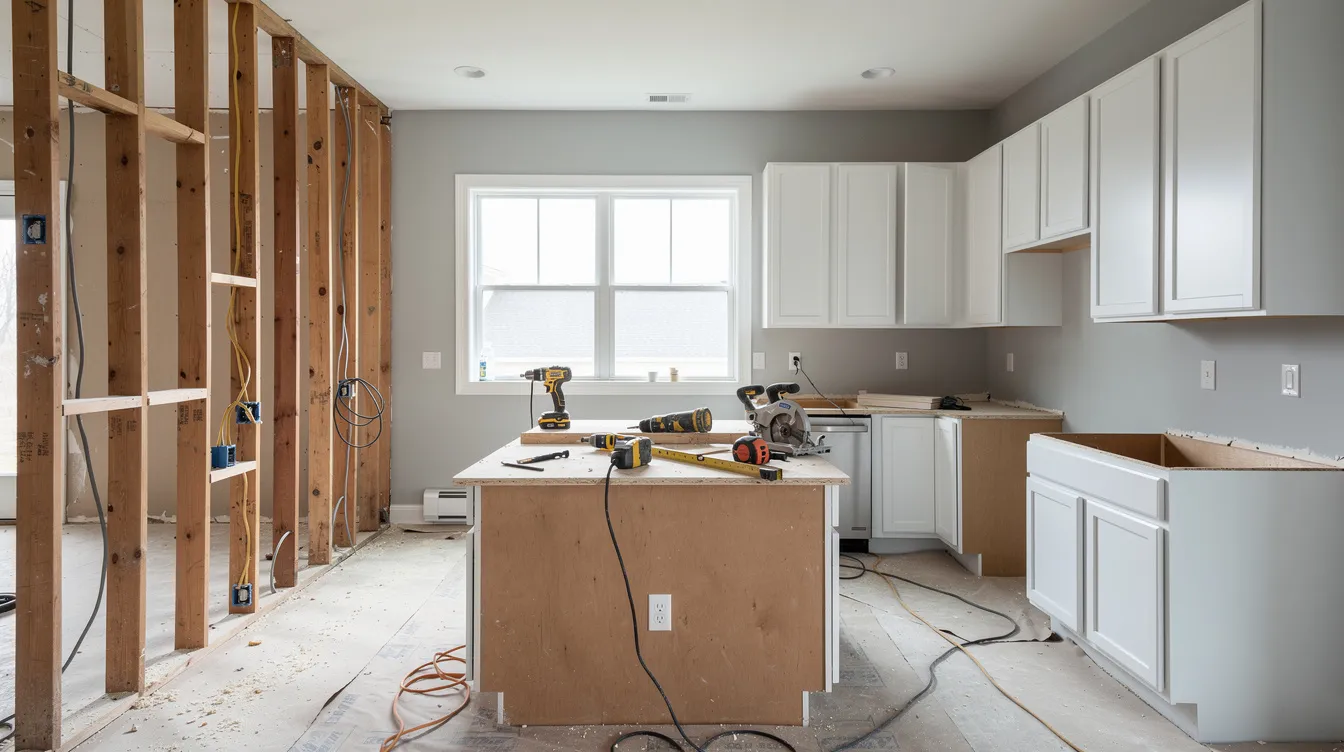
- Don't forget demolition, dumpsters, framing repairs, insulation, drywall, trim, paint, doors, hardware, and final cleaning. These "invisible" items add up fast.
- Get at least one licensed general contractor bid with line-item estimates, plus a separate "labor only" bid so you can decide what to DIY versus outsource without compromising code or safety. Work only with reliable contractors who can hold timelines.
- Investors should budget a 10% to 20% contingency fund for unexpected repairs during renovations, especially for pre-1980 homes where electrical, plumbing, and lead or asbestos issues are more likely. Renovations typically cost $1,000 per day on average—a $15,000 renovation budget results in roughly a 15-day timeline, and scope creep extends both schedule and cost.
Permits, Inspections, and Compliance Costs
Skipping permits can kill profit when a home inspector flags unpermitted work during the buyer's due diligence, leading to price cuts or last-minute necessary repairs at closing.
- Common permits include structural, electrical, plumbing, HVAC, roofing, and window changes. Combined permit costs for a moderate rehab typically run $1,000–$4,000 depending on jurisdiction.
- Additional compliance costs may include engineer reports, zoning or variance applications, and HOA architectural approvals where applicable.
- Typical 2025 inspection fees: a thorough home inspection runs $400–$700; specialized inspections (sewer scope, mold, foundation) add $200–$600 each.
- Permits and inspections add both direct costs and time. Every week of delay during the renovation process translates into higher holding costs, which must be reflected in your cost-to-flip calculation.
Holding Costs: The Clock That Eats Your Profit
The average time to flip a house is 166 days as of 2024. Every month the property sits—in rehab or on market—carrying costs accumulate. Holding costs include property taxes, insurance, and utilities, and they average $1,000 to $2,000 monthly in many markets.
- Common holding costs: mortgage payments or hard money interest, property taxes, hazard or builder's risk insurance, utilities, lawn care, snow removal, HOA dues, and security monitoring.
- Numeric example: on a $300,000 hard-money-financed house at 11% interest, the monthly interest alone is about $2,750. Add $250 in taxes, $200 in insurance, $150 in utilities, and miscellaneous costs, and the monthly nut is $3,400+. Over six months that's over $20,000.
- Delays in renovation increase holding costs by $1,000 to $2,000 monthly. Budget a minimum of 6 months of holding costs even if the project is planned for 3–4 months, to protect against contractor delays, permit backlogs, and slow sales.
- Think of the "$1,000 per day rule" mindset: every extra week on market or in rehab materially reduces your final profit. Stay organized, track timelines weekly, and adjust your plan the moment you see slippage.
- Gap Funded can provide working capital to comfortably cover holding costs and prevent forced, lowball sales when cash runs short mid-flip.
Financing Costs: Points, Interest, and Credit Utilization
Financing costs can add 3–10% of ARV to the total cost of flipping a house and must be modeled line by line. The money you pay to borrow money is a real expense, not a rounding error.
- Hard money loans have interest rates between 10% and 15%, with 1–3 points upfront and 6–12 month terms. Example: a $250,000 loan at 11% with 2 points means $5,000 in origination fees plus roughly $13,750 in interest over 6 months. Add draw inspection fees and potential extension fees and the financing costs alone can exceed $20,000.
- Other financing tools: home equity loans allow borrowing against the equity in another property, and HELOC loans for real estate investors provide flexible, low-cost capital secured by existing equity. Conventional mortgages typically have interest rates from 3% to 5% but are harder to use for distressed acquisitions. Private money lenders offer flexible financing options for house flippers. About 30% of house flippers use personal savings for financing, though this limits how many houses you can flip simultaneously.
- Business credit cards at 0% introductory APR can cover materials and smaller rehab invoices, but watch utilization ratios and expiration dates. If the promo period lapses before you sell, you could face 20%+ APR.
- Primary funding vs. gap funding: primary lenders (hard money, DSCR) cover the bulk of acquisition and rehab. Gap funding fills the shortfall—down payment, closing costs, reserves, and contingency—without equity splits or liens on the flip property.
Marketing, Selling, and Transaction Costs
The sale side can cost 6–10% of the final price and must be baked into every house flipping cost breakdown before you buy.
- Major resale costs: agent commissions (5–6%), seller concessions, title and escrow fees, transfer taxes, and local government recording fees.
- Marketing expenses include professional photography ($250–$500), videography, 3D tours, staging or partial staging ($1,500–$3,000), yard cleanup, and signage. These attract potential buyers and reduce days on market.
- Example: on a $400,000 resale, 6% commission is $24,000. Add staging at $2,000, photography at $350, and closing fees of $3,000, and you're at roughly $29,000+ before any buyer concessions.
- Partner with a listing real estate agent who understands flipped properties and can price aggressively yet realistically for a 2025 buyer pool sensitive to mortgage rates and market trends.
- Faster, well-marketed sales reduce holding costs and increase overall ROI. Every week shaved off time-on-market saves money on the carrying side and improves your potential profit.
Taxes, Accounting, and the "Forgotten" Costs
Taxes and nickel-and-dime renovation expenses are often omitted from flip budgets but they materially affect net profit. Average profit margins for house flipping are 10–20%, so even small leaks matter.
Tax Implications
- Tax implications: profits realized from a flip completed within 12 months are taxed at ordinary income rates (capital gains taxes at short-term rates). Active flippers may also owe self-employment tax. State taxes apply where relevant.
- Set aside 20–30% of expected profit for federal and state taxes, depending on your income bracket and location. Failing to plan for taxes can turn a $30,000 profit into a $20,000 surprise.
Common Forgotten Costs
- Forgotten costs: lawn care, cleaning crews, lock changes, minor handyman visits, pest control, extra insurance riders, HOA move-in/move-out fees, and mail forwarding. These items individually seem small but collectively represent a significant amount.
- Work with a real estate-savvy CPA to track deductible expenses and optimize your house flipping business structure (LLC, S-corp, etc.). Keep a detailed record of every receipt and invoice.
- Gap Funded's working capital solutions can help cover these forgotten but very real other costs so they don't derail your project mid-flip.
Due Diligence: How to Nail the Numbers Before You Buy
Strong due diligence is what separates experienced flippers who profit consistently from beginners who lose money on their first deal. The time you invest before signing a contract directly determines how accurate your cost estimates will be.
Practical Due Diligence Checklist
- Detailed walkthrough with a general contractor
- Full home inspection by a licensed home inspector
- Sewer scope in older neighborhoods
- Roof evaluation
- Permit history search
- Request 2–3 contractor bids with line-item estimates. Build your master renovation budget from the most realistic bid, not the cheapest. Factor in the renovations needed for both code compliance and market appeal.
- Use conservative assumptions: assume higher repair costs, longer days on market, and a slightly lower property's ARV to protect profit margins against market fluctuations and opportunity cost.
- Run best-case, base-case, and worst-case cost scenarios. Your final decision to buy should only happen when even the worst-case scenario still delivers acceptable profit after all financing costs and holding costs.
- Strong due diligence is essential when using leverage and gap funding, because additional borrowing magnifies both profit and potential losses. Understanding gap funding requirements and what you actually need to qualify helps you structure safer deals. A better idea is always to know your numbers cold before you commit a single dollar.
How Much Cash Do You Actually Need to Flip a House?
"How much does it cost" and "how much cash do I need" are different questions, because financing and gap funding change the upfront requirement dramatically.
- Example: $300,000 ARV flip. Purchase $180,000, rehab $55,000, total project cost ~ $265,000. With 80–90% financing, the investor might only need $40,000–$60,000 in cash to cover the down payment, buyer-side closing costs, initial rehab payments before the first draw, reserves for holding costs, and a contingency fund.
- Many house flippers today bridge the gap between what hard money or DSCR lenders cover and the real total cost using unsecured loans, HELOCs, or stacked business credit cards. This capital stacking approach to funding a fix and flip with no money out of pocket lets you save money on upfront costs while preserving liquidity.
- Gap Funded's model provides up to 100% of the deal (purchase + rehab + closing + holding + contingency) through capital stacking, so investors with 650+ credit can start or scale their real estate investing faster.
- Think in terms of "total capital stack" for each home flip rather than fixating only on the primary loan amount. Your plan should map every dollar to a source before you write an offer.

Working With Gap Funded to Cover Your House Flip Costs
Gap Funded helps real estate investors cover every cost item discussed in this article—from down payment to contingency—so you never have to choose between underfunding a deal and giving up equity.
- Key services: unsecured personal term loans, 0% intro business credit card stacking, HELOC support, and business lines of credit used as rapid gap funding for flips, BRRRR strategies, and short-term rentals.
- Gap Funded specializes in filling the shortfall between what hard money or DSCR lenders finance and the true total deal cost. That means down payment, closing costs, rehab draws, reserves, and contingencies are all covered.
- Advantages: no equity splits, no lien on the flip property, soft credit pulls for initial review (no impact to your credit to check options), and fast execution so you can meet tight closing timelines.
- Example: an investor in Dallas identifies a $260,000 ARV deal. The primary lender covers 85% of purchase and 100% of rehab. Gap Funded provides $45,000 for down payment, closing costs, holding costs, and a 10% contingency—giving the investor effectively 100% financing on the deal.
- Next step: complete a quick online funding application and review with Gap Funded before writing offers. Knowing exactly how much capital you can deploy on each flip gives you the confidence to move fast in a competitive real estate market.
Putting It All Together: Calculating Your Cost to Flip a House
Every profitable flip starts with a complete budget. Here's a step-by-step checklist for flipping homes without leaving money on the table.
Recap of all cost categories:
| Cost Category | Typical Range | Notes |
|---|---|---|
| Purchase price | Varies by market | Use comps, stay within 70% rule |
| Acquisition closing costs | 1–3% of purchase | Title, escrow, inspections |
| Renovation / repair costs | $15,000–$150,000+ | Scope-dependent |
| Permits & inspections | $1,000–$5,000 | Jurisdiction-dependent |
| Holding costs | $1,000–$3,500/month | Budget 6 months minimum |
| Financing costs | 3–10% of ARV | Points, interest, fees |
| Marketing & selling | 6–10% of sale price | Commissions, staging, photography |
| Taxes & accounting | 20–30% of profit | Short-term capital gains |
| Contingency fund | 10–20% of rehab budget | Non-negotiable |
Worked example—a $325,000 ARV home flip:
- Purchase: $195,000
- Acquisition closing: $4,000
- Renovation: $65,000
- Permits: $2,500
- Holding (6 months): $16,000
- Financing (points + interest): $14,000
- Selling costs (commissions + closing): $23,000
- Contingency (15% of rehab): $9,750
- Total cost: ~$329,250
- Gross sale: $325,000
- This deal is underwater. Either negotiate the purchase price down to $170,000 or reduce rehab scope. That's why you run the numbers first.
Double-check every deal against the 70% rule and conservative assumptions before committing deposit money or signing hard money loan docs. Revisit and refine your cost model on every future deal—accuracy compounds into long-term profitability when flipping houses. For more insights into deal structuring, consider running several factors through best-case and worst-case scenarios before your final decision.
Having reliable gap funding in place with Gap Funded before you make offers lets you act quickly on good deals and avoid undercapitalized, high-stress flips. Apply for your free funding review today so you know exactly how much capital you can bring to your next house flip.
Related Reading
This article is for educational purposes only and isn't financial, legal, tax, or investment advice. Credit and financing outcomes depend on your own situation. Talk to a licensed financial professional before making funding decisions for your business.