
How Does Hard Money Work? A Practical Guide for Real Estate Investors

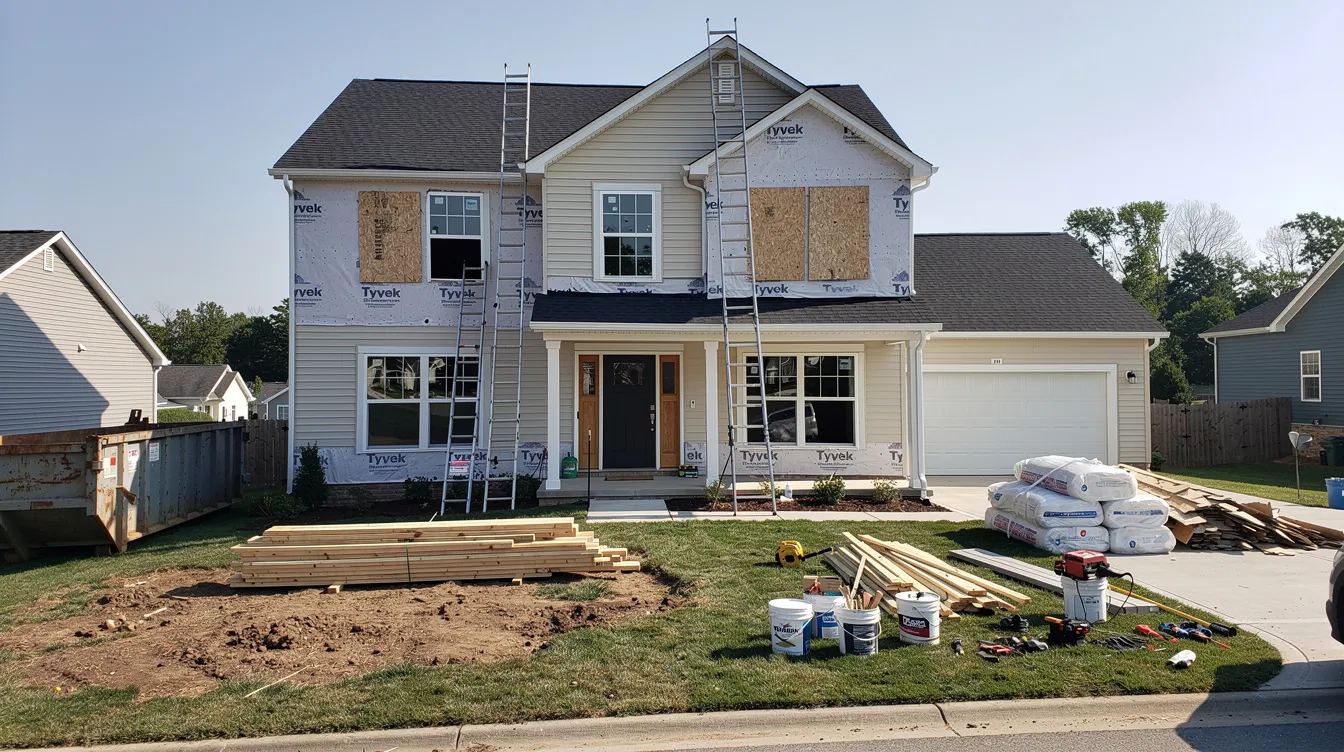
How Does Hard Money Work? A Practical Guide for Real Estate Investors
Most real estate investors don't lose deals because they picked the wrong property. They lose them because they couldn't close fast enough, couldn't come up with the cash to cover the gap, or didn't fully understand the loan they were signing. Hard money is one of the most powerful tools in a real estate investor's toolkit, but only if you know how it actually works, what it costs, and where the shortfalls show up.
This guide breaks down exactly how a hard money loan works, what hard money lenders actually look at, and where the funding gaps hide that can stall your next real estate investment.
1. Quick Overview: How Does a Hard Money Loan Work?
A hard money loan is a short term loan secured by real estate. It's provided by private investors or fund backed lenders (not banks) and underwritten primarily on the property's value rather than your income or borrower's creditworthiness. Hard money loans are short term, asset backed financing solutions used mostly by real estate investors for time sensitive real estate transactions like flips, bridge deals, and construction projects.
Here's the basic flow of how a hard money loan work: you find a property, sign a purchase contract, and submit an inquiry to a lender with the purchase price, rehab budget, ARV estimate, and photos. If the numbers stack up, the lender issues a term sheet. Underwriting focuses on the collateral, your exit strategy, and proof you can carry the deal. Hard money lenders typically close loans within five to twelve days, and in competitive situations, hard money loans can close in as few as three to five days. Approval for hard money loans can occur within days.
The typical structure: 6 to 24 month term, interest only payments each month, and a balloon payment of the full principal at maturity. Interest rates for hard money loans range from 8% to 15%, with origination points charged at closing. Hard money loans are often used for fix and flip projects, BRRRR deals, bridge loans on commercial properties, construction loans, and land loans on properties that traditional banks won't touch.
At Gap Funded, we don't replace your hard money lender. We specialise in gap funding that covers down payments, rehab costs, reserves, earnest money, and working capital alongside hard money lending.
2. What Is Hard Money Lending in Real Estate?
Hard money lending is private, asset based lending where the lender's decision hinges on the property value and your exit strategy more than your personal income, credit history, or tax returns. Unlike traditional loans from banks, hard money lenders care most about the collateral and whether you can execute the deal.
Here's what sets it apart:
- Hard money loans are secured by real estate collateral. The property itself is the lender's safety net.
- Approval for hard money loans depends primarily on the value of the real estate property used as collateral, not your W2 or borrower's credit history.
- Typical loan sizes range from roughly $75,000 to several million for residential and commercial properties, depending on market and lender.
- Hard money loans are almost always business purpose, non owner occupied. This is real estate investing territory, not consumer home purchases.
- Private lenders and fund backed hard money lenders can move faster and accept more complex deals than traditional financial institutions because they set their own underwriting criteria, aren't buried in regulatory hoops, and actually want to lend on value add properties.
Hard money loans can be ideal for properties that traditional banks would reject due to their condition. That's the whole point. If the deal makes sense on paper and the collateral supports the loan amount, most hard money lenders will consider it.
3. How Does a Hard Money Loan Work Step by Step?
Deal Sourcing and Contract
It starts with finding a property. Maybe you spot a distressed single family at auction, grab a wholesale assignment, or find a listing on the MLS with a tight close deadline. You sign a purchase agreement, often with a 10 to 21 day close window that would make a traditional bank laugh.
Initial Inquiry
You contact a hard money lender and provide the basics: purchase price, repair budget, ARV comps, property photos, and a quick snapshot of your borrower profile. Many lenders can give you a same day quote. This is the hard money loan application in its simplest form.
Underwriting
Here's where hard money differs from a traditional mortgage. The lender underwrites the property (as is value, ARV, location, condition) and the deal economics far more than your W2 income. They verify your down payment funds, check your exit strategy, and may review your experience. The underwriting criteria for hard money loans are more lenient regarding past credit issues compared to traditional loans. Borrowers with poor credit may still qualify for hard money loans if the deal and collateral are strong.
Pre Closing
The lender orders an appraisal or BPO, runs a title search, collects your entity docs and insurance, and sets up any escrow or draw schedule for rehab funds.
Funding and Execution
Once everything clears, the loan funds to title. You close, start your rehab or business plan, make monthly payments (usually interest only), and execute your exit. Borrowers must have a clear exit strategy before the loan's term expires, such as selling or refinancing. The borrower pays interest monthly, then either sells the property, refinances into permanent financing, or pays off with other capital. That balloon payment hits at the end of the term, so your exit better be sorted.
4. Typical Hard Money Loan Terms, Rates, and Payment Structures
Hard money loans typically last 12 to 24 months, with some lenders offering 6 to 36 month options for ground up construction loans or complex commercial properties. According to HMDA data analysed by CrowdfundedWealth, the median note rate on short term business purpose investor loans was roughly 9.99% in 2025, with roughly 68,319 such loans originated. The national average among 468 lenders tracked by Hard Money Scout sits around 10.35%.
Here's the breakdown of what to expect:
| Term | Typical Range |
|---|---|
| Loan term | 6 to 24 months (occasionally 36) |
| Interest rates | 8% to 15% annually |
| Origination points | 1% to 5% of the loan amount |
| LTV (as is value) | 60% to 75% |
| LTV (based on ARV) | 65% to 80% |
| Down payment | 20% to 40% |
| Close time | 3 to 12 business days |
| Payment structure | Interest only with balloon payment |
Hard money lenders charge upfront origination fees, commonly referred to as "points," often from 1% to 5% of the loan amount. Repayment often includes interest only payments with a balloon payment of the entire principal due at maturity. The median loan amount across these deals was roughly $265,000, with about 68% carrying 12 month terms and over 90% using interest only monthly payments.
Some lenders will roll interest or fees into the loan for fix and flip projects if the ARV supports the higher leverage. That reduces your cash out of pocket at closing but raises your total debt. Certain hard money lenders impose prepayment penalties for paying off the loan early, so read the loan agreement carefully before signing.
Loan to value ratios for hard money loans should not exceed 75% in most standard deals. Lenders rarely finance 100% of the purchase price for hard money loans; they typically cap at 60% to 80% of the property's value or After Repair Value (ARV).
5. Hard Money Loan Requirements: What Lenders Actually Look At
"Easy approval" is a myth that gets repeated on social media by people who've never actually applied. Yes, hard money is more flexible than traditional financing. No, they don't hand you a cheque just because you found a property. Here are the core hard money loan requirements:
- Property as collateral: The lender takes a first position lien on the investment property. They underwrite based on as is value and, for value add deals, ARV. Borrowers must provide sufficient collateral to secure the loan. Hard money lenders prioritise property value over borrower credit history.
- Down payment: Most hard money lenders require a down payment of 20% to 40%. Down payments for hard money loans usually exceed 20%. Borrowers need significant cash for down payments when obtaining hard money loans due to low Loan to Value ratios. Plus closing costs and rehab reserves if those aren't financed.
- Exit strategy: Lenders want a detailed, plausible plan. Fix and flip in 6 months with retail sale comps? BRRRR refinance into a DSCR loan within 9 to 12 months? Sale of another asset? You need to spell it out.
- Financial health: Many lenders still pull a credit report and check your FICO. Most hard money lenders require a minimum credit score of 600, though 620 to 650+ gets you better terms. They'll also want bank statements and proof you can handle monthly payments and holding costs. Your borrower's personal credit matters, just less than it would at a bank or credit unions.
- Experience: A track record in real estate investing helps. Prior successful flips or stabilisations can improve your hard money loan rates, approval odds, and leverage. If you're new, expect stricter terms, but partnering with an experienced GC or mentor can offset that.
6. When Does a Hard Money Loan Make Sense for Real Estate Investors?
Hard money isn't for every deal. It's specifically designed for situations where speed, flexibility, or property condition rules out traditional bank loans. Here's where real estate investors use hard money loans:
- Fix and flip projects: Hard money loans are commonly used for fix and flip projects. Short terms, quick closings, and ARV based lending make them ideal for house flippers buying distressed houses, renovating, and reselling within 6 to 12 months. Hard money loans are often used for fix and flip projects because flipping houses requires speed and certainty of close.
- BRRRR and rental strategies: Buy with hard money, rehab, stabilise rents, then refinance into a DSCR loan or conventional mortgage to hold the rental property long term. This is how rental property investors build a rental portfolio without tying up all their capital.
- Bridge and construction loans: Investors use hard money loans for bridge financing between sales, or for ground up construction loans where traditional lenders won't finance until the project is complete or stabilised.
- Distressed and unique real estate transactions: Hard money loans help acquire distressed or foreclosed properties quickly. Purchasing distressed properties at auction or short sales, dealing with title or occupancy issues that traditional lenders won't touch. These loans are also used for land purchases and new construction.
- Quick rental acquisitions: Hard money loans provide quick funding for rental property acquisitions, especially rental properties in competitive markets where speed wins deals.

7. Pros and Cons: How Hard Money Compares to Bank, DSCR, and Private Funding
Here's a balanced look at how hard money stacks up against the alternatives:
| Factor | Hard Money | Bank / Conventional Loans | DSCR Loans | Private Money (Friends / Partners) |
|---|---|---|---|---|
| Speed to close | 3 to 12 days | 30 to 60 days | 21 to 45 days | Varies widely |
| Interest rates | 8% to 15% | 5% to 8% | 7% to 9% | Negotiable |
| Term length | 6 to 24 months | 15 to 30 years | 30 years | Deal specific |
| Credit focus | Low (property driven) | High (income, credit score) | Moderate (rent coverage) | Relationship based |
| Property condition | Flexible | Must be habitable | Must be stabilised | Flexible |
| Equity required | None given to lender | None | None | Often profit splits |
Advantages of hard money: Very fast closings, flexible underwriting, collateral focused approvals, willingness to fund heavy rehab and construction, and ability to lend on complex commercial properties.
Disadvantages: Higher interest rates and points, shorter terms creating balloon payment risk, larger required down payments, and the risk of losing the property through foreclosure is higher with hard money loans due to their short repayment periods.
Private money from friends or private money lenders can sometimes be cheaper, but it often requires equity splits or strained personal relationships. Hard money lending is professionalised and standardised.
One way to offset hard money's high cash requirements is by layering gap funding tools for your down payment, rehab, and reserves rather than giving up equity to partners or using gator lending arrangements that take large profit shares.
8. Understanding Hard Money Risks, Balloon Payments, and Exit Strategy
Let's be straight about the risks. Hard money isn't free money, and the clock starts ticking the moment you close.
- Monthly payments and carrying costs: Interest only monthly payments might sound easy, but add property taxes, insurance, utilities, and storage on top and your monthly burn rate climbs fast. Stress test your holding costs against a realistic timeline, not the best case one.
- Balloon payment risk: The entire principal is due at the end of the term. If your flip doesn't sell or your refinance gets delayed, you're stuck with a massive balloon payment and no good options. Defaulting on a hard money loan can result in rapid foreclosure proceedings, and the risk of losing the property through foreclosure is higher with hard money loans due to their short repayment periods.
- Timeline risk: Permitting delays, dodgy contractors, and market shifts happen more often than investors like to admit. Build time buffers into your loan term and negotiate extension options upfront.
- Exit strategy design: Solid exit plans look like: flip and sell within 6 months with comps supporting your ARV, refinance into a DSCR loan within 9 to 12 months, or sell to another investor if the market softens. Have a Plan B.
- Contingency capital: I always reckon it's worth keeping contingency reserves or supplemental funding (like a business line of credit or 0% business credit card stacking) to cover cost overruns and avoid default.
9. Finding the Right Hard Money Lender (and How Gap Funding Fits In)
Choosing the right hard money lender matters as much as finding the right deal. Here's what to look for:
- Track record: Do they have experience with real estate investors in your market and asset type? Research local lenders through real estate investment meetings in your area.
- Transparency: Clear loan agreement, published fees, straightforward draw process, and no surprises at the closing table.
- Responsiveness: If they take a week to return your call during underwriting, imagine what happens when you need a draw approved mid rehab.
- Reputation: Evaluate lender reputation by reading borrower reviews and feedback. Ask other investors who they've closed with.
- Questions to ask: Max LTV/LTC, rehab draw schedule, minimum credit score required, prepayment penalties, extension policy, and whether they report to credit bureaus.
Here's the thing most people miss: even the best hard money lender rarely finances 100% of purchase plus rehab plus closing costs. That leaves a funding gap for your down payment, EMD, rehab reserves, and working capital.
That's where we come in. Gap Funded specialises in providing unsecured and asset based capital that stacks on top of your primary hard money loan so you can meet cash to close without bringing in equity partners. No lien on the deal property. No equity split.
10. The Funding Gap in Hard Money Deals: Down Payments, Rehab, and Working Capital
Let me walk through where hard money leaves you short, because this is where most deals get stuck:
- Down payment and equity gap: Your hard money lender funds 75% of purchase and maybe 100% of rehab. That still leaves 25% down plus closing costs. Hard money loans typically require a down payment of 20% to 40%. On a $300,000 purchase, that's $60,000 to $120,000 in cash you need at closing. Many real estate investors simply don't have that sitting around.
- Closing costs and fees: Origination points, appraisal, title, recording, and reserves can add 3% to 6% of the loan amount, and they're almost never financed.
- Rehab and contingency: Some lenders reimburse rehab after work is complete through draws, meaning you front materials and labour. Smart investors build in a 10% to 20% contingency for overruns because there's always something behind the walls you didn't expect.
- Working capital and EMD: Earnest money deposits lock up cash. Utilities, marketing, travel, and business overhead all continue during the project. You need liquidity beyond just the deal itself.
Check out our gap funding overview to see how investors cover these shortfalls without cross collateralising more properties or giving up equity.
11. How Gap Funded Stacks Capital With Hard Money Loans
Gap Funded is not a replacement for your primary hard money or DSCR lender. We're a capital stacking partner. Here are the tools we use, and the order matters because applying out of sequence can knock out later approvals:
- Unsecured term loans: Personal term loans provide lump sum cash upfront for your down payment, closing costs, or rehab. These work best for borrowers with roughly 650+ FICO and strong verifiable income. No lien on your deal property. Learn more about rapid gap funding.
- 0% business credit card stacking: Stacking multiple introductory rate business credit cards can fund materials, labour, and marketing at zero interest for the intro period. When managed properly, this is one of the cheapest short term financing tools available. See how credit card stacking works.
- Business lines of credit and revenue based capital: For investors with existing business revenue (usually 2+ years in business and $20k+ per month), revolving business lines of credit and merchant style advances cover operating and rehab cash flow gaps.
- HELOC and asset based capital: A HELOC on a primary or investment property supplies flexible, reusable funding that pairs well with hard money. Draw what you need, pay it back, draw again on the next deal.
Why this order? Unsecured tools and 0% credit stacking are fastest and don't require additional collateral. They're ideal for down payments and rehab on small to mid size deals. HELOCs and business lines of credit give larger, reusable capital for repeat investors scaling portfolios and purchasing investment properties through BRRRR or short term rental strategies.
12. Real World Scenarios: How Hard Money and Gap Funding Work Together
Fix and Flip Example
An investor finds a distressed single family home listed at $200,000. ARV is $310,000. The hard money lender offers 80% of purchase ($160,000) and 100% of the $40,000 rehab budget, totalling $200,000 in financing. That leaves $40,000 for the down payment plus roughly $8,000 in closing costs. Gap Funded provides an unsecured term loan for $30,000 and 0% business cards covering $18,000 in materials and carrying costs. The investor flips the property in 7 months, pays off everything, and keeps all the profit.
BRRRR / Rental Example
An investor acquires a small duplex for $180,000 with a 12 month hard money bridge loan. Gap Funded's credit card stacking covers $15,000 in renovation materials, and a HELOC on the investor's primary home supplies $25,000 for the down payment and reserves. After rehab, rents stabilise, and the investor refinances into a DSCR loan at 7.5%, paying off both the hard money and gap funding. The duplex goes into their rental portfolio with no equity given away.
Commercial Property Example
A small mixed use building needs $400,000 in acquisition plus $80,000 in tenant improvements. Traditional financing is unavailable until the building is stabilised. Hard money funds the acquisition and partial rehab. Gap Funded capital handles tenant improvements, reserves, and operating shortfalls until rents come online. Once stabilised, permanent financing replaces the short term loan.

Most Gap Funded programs work best for borrowers with roughly 650+ FICO, low recent derogatories, and verifiable income or business revenue. Asset based options like HELOCs rely more on equity than credit. Done correctly, stacking capital lets you purchase real estate, keep full equity in the deal, and avoid bringing in partners or gator lenders who take large profit shares from your hard work.
13. Applying for Hard Money and Gap Funding: Documentation and Next Steps
What Your Hard Money Lender Needs
- Purchase contract
- Rehab scope and budget
- Comps and ARV analysis
- Entity docs (LLC operating agreement, EIN)
- Government issued ID
- Proof of funds and recent bank statements
What Gap Funded Needs
- Consent for a soft credit pull (no impact to your credit score)
- Proof of income or business revenue
- List of current debts for possible debt consolidation
- Your overall funding goals and cash to close number
The Smart Sequence
Secure a term sheet from your primary hard money or DSCR lender first. Then work with us to fill the down payment, rehab, and working capital gap based on the exact cash to close number. This way, you know the precise shortfall before we build your capital stack.
Gap Funded can also help restructure high interest personal loans or business debt through consolidation to improve cash flow before you take on your next real estate investment.
If you're planning fix and flip projects, BRRRR deals, short term rentals, ground up construction, or business acquisitions, here's the move: complete a quick, no impact prequalification at gapfunded.com/apply to see how much gap funding you can stack alongside your hard money loan. No equity splits, no liens on your deal property, and a soft pull that won't ding your credit report. Fair dinkum.
Related Reading
This article is for educational purposes only and isn't financial, legal, tax, or investment advice. Credit and financing outcomes depend on your own situation. Talk to a licensed financial professional before making funding decisions for your business.