
House Flipping Loan: How Real Estate Investors Fund Fix and Flip Projects (and Where Gap Funding Fits)

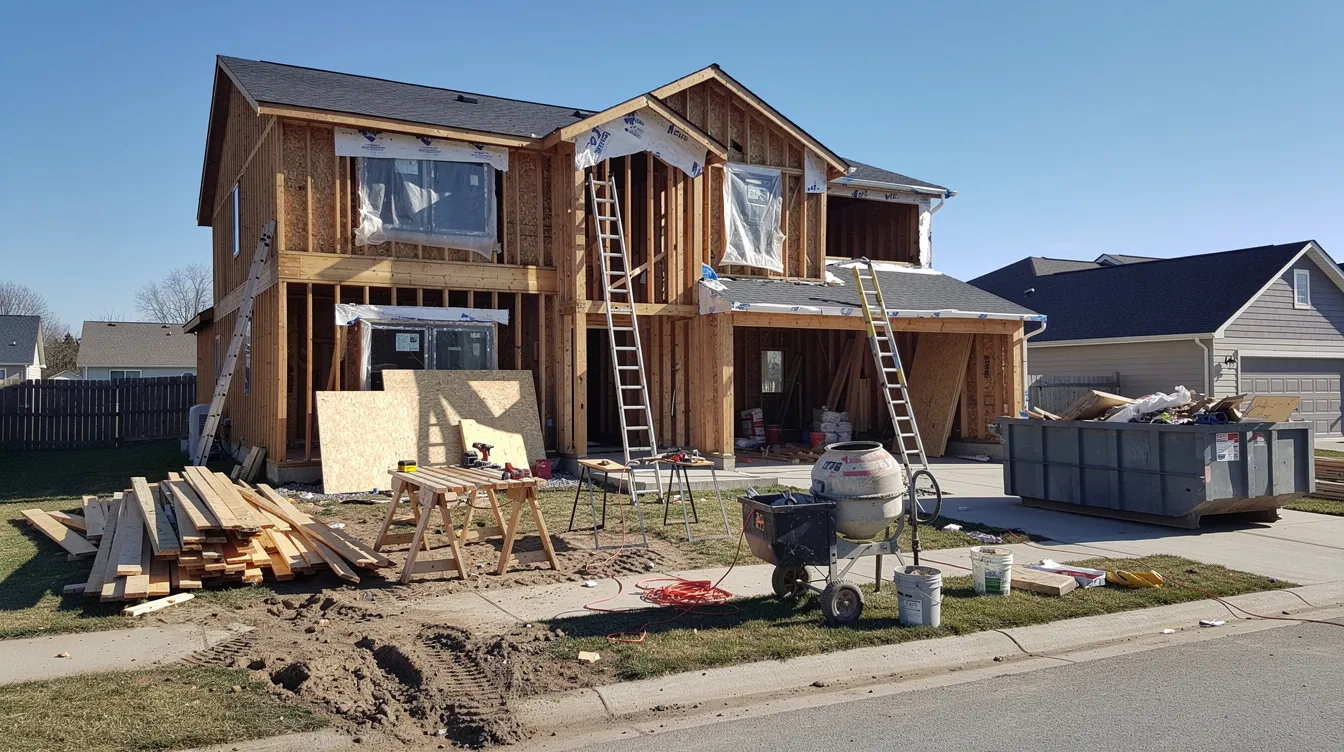
House Flipping Loan: How Real Estate Investors Fund Fix and Flip Projects (and Where Gap Funding Fits)
Introduction: How House Flipping Loans Actually Work in 2026
Financing a house flipping project requires short-term asset-based capital tailored to quick property acquisition and renovation. Most real estate investors avoid using all cash because tying up $300,000 in a single flip limits how many deals they can run at once. Using loans can help investors scale from 2 to 9 flips per year, but every dollar of financing carries interest, points, and fees that eat into profit.
Fix and flip financing is short-term capital used to acquire, renovate, and resell a property, typically within 6 to 18 months. Even with a strong fix and flip loan covering 85% or 90% of project costs, investors still need cash for the down payment, closing costs, renovation overruns, and reserves. Gap Funded's capital stack fills that shortfall using unsecured term loans, 0% business credit cards, and HELOCs.
This article is written for investors operating in 2024 to 2026 market conditions: higher interest rates, tighter credit, and rising construction costs. Here is what we cover:
- Types of house flipping loans (hard money, rehab, HELOCs, unsecured) and how their structure affects deal economics
- A breakdown of every real cost, from purchase to sale, and where primary lenders leave gaps
- How to compare lenders beyond rate alone
- How Gap Funded's gap funding stack covers the down payment, closing costs, working capital between draws, and contingency cash reserves
What Is a House Flipping Loan (Fix and Flip Loan)?
A fix and flip loan is a short-term, investment-only loan designed to cover the purchase price and renovation costs of a property you plan to sell for profit after repair. Fix-and-flip loan terms commonly range from 6 to 24 months. Unlike a traditional bank loan or conventional mortgages with 30-year amortization, these loans are interest-only, underwritten on the deal rather than the borrower's personal income, and require a clear exit strategy (sale or refinance).
Lenders evaluate a house flipping deal's profit potential and ARV rather than personal income. For example: an investor buys a distressed home for $220,000, estimates $60,000 in renovation costs, and projects an after repair value of $360,000. A lender capping at 75% of ARV would offer up to $270,000, leaving a gap against the $280,000 total cost before closing, carry, and reserves.
Core traits of house flipping loans:
- Term length: 6 to 18 months, interest-only payments
- Leverage metrics: loan-to-cost (LTC), loan-to-value (LTV), ARV caps (65% to 80%)
- Rates and fees: 9% to 15% interest, 1 to 4 origination points
- Exit strategy: sale or refinance required at term end
- Cash required: investors typically pay 20% to 25% down on flips, plus closing costs and reserves
Smart investors stack a primary fix and flip lender with gap funding in real estate (unsecured term loans, 0% business credit cards, HELOCs) to cover 100% of total costs and maintain cash reserves.
Real Costs of Flipping a House: What Your Loan Won't Fully Cover
Most investors underestimate total project costs. The purchase price is crucial for house flipping, but it is only one line item. Renovation costs impact the profitability of flips just as much, and material costs rose roughly 16% to 17% cumulatively from 2020 to 2022, with further increases in 2024 and 2025.
Here is a cost breakdown using a $275,000 distressed property in Tampa, FL, with $65,000 in rehab and $440,000 ARV:
- Purchase and down payment: Hard money lenders finance up to 90% of purchase and renovation costs. At 85% financing on $275,000, the investor brings $41,250 in own cash.
- Renovation costs: Labor, materials, permits, inspections. A $65,000 budget in 2025 can easily run $5,000 over due to material delays or supply issues. Construction costs keep climbing.
- Typical carrying costs: Interest payments, property taxes, insurance, utilities, HOA dues. If a project stretches to 9 months instead of 6 at $2,400 per month, that is $21,600 in carry alone.
- Selling costs: Agent commissions (selling costs typically include a 6% commission on the sale price), title and escrow fees, staging, photography, and seller concessions. On a $440,000 sale, commissions run about $26,400.
- Closing costs and reserves: Loan closing costs range from $6,000 to $14,000. Liquid cash reserves are typically required for unexpected construction delays or budget overruns; plan for 5% to 10% of the rehab budget ($3,250 to $6,500).
The cash gap is the difference between what your primary loan covers and your full project budget. On this Tampa deal, the gap could exceed $80,000 once you add down payment, closing, carry, and reserves.
Core Types of Loans for Flipping Houses
There is no single best loan to flip a house. Each type trades off speed, leverage, cost, and documentation. Financing options for house flipping include hard money loans, HELOCs, and private money loans. Traditional investment property loans are often less suited for flips due to slow underwriting; conventional renovation financing takes longer to process than hard money or fix-and-flip loans.
Here is a preview of the loan options covered in detail below:
- Hard money / fix and flip loans: Primary purchase and rehab financing; quick closings
- Home equity loans and HELOCs: Secured by existing property; lower rates
- Cash-out refinance: Tap equity from a property you already own
- Personal loans and unsecured credit: No collateral; fast and flexible
- Business lines of credit: Revolving line for repeat borrowers running multiple projects
- Bridge loans: Short-term financing for property transitions between purchase and exit
- Private lenders and partners: Relationship-based capital from private investors or family members
Experienced real estate investors often blend two or three of these on a single deal to preserve liquidity and cover the full total cost.
Hard Money & Dedicated Fix and Flip Loans
Hard money lenders specialize in asset-based lending for fix and flip projects. Hard money loans can be funded in as little as 5 days, making them the go-to for competitive deals and auctions. They are secured by the property being financed, and approval for hard money loans focuses on the property deal rather than personal income.
Interest rates for hard money loans typically range from 9% to 15%, plus 1.5 to 3 origination fees upfront. Strong borrowers with a track record of completed flips and good credit can push toward 8% to 9.5%. Hard money loans can provide up to 90% financing, and fix-and-flip loans can provide up to 100% LTC funding on deals with strong margins, though borrowers still need cash for closing and reserves.
Draw schedules are often used in fix-and-flip loans to fund renovations as milestones are completed. After a contractor finishes a phase, the lender sends an inspector before releasing funds; inspection fees run $150 to $350 per draw. The draw process adds days between when you pay contractors and when the lender reimburses.
What hard money rarely covers: 100% of the total loan plus closing costs, reserves, and carrying. Investors typically bring 10% to 20% in cash plus contingency. Gap Funded fills this shortfall with unsecured term loans, 0% intro APR business credit cards, and HELOCs so the investor can meet hard money closing deadlines without stalling the fix and flip project.
- Pros: Speed (5 days to fund), higher leverage, deal-focused underwriting, flexible on property condition
- Cons: Typically higher rates and points than bank products, short terms, cash required for down payment and reserves
- Gap funding fit: Covers the missing 10% to 25% of capital via unsecured stack, keeping the investor's own cash intact
Using Home Equity: HELOCs, Home Equity Loans, and Cash-Out Refinance
Borrowing against existing equity in a property can secure lower cost financing than hard money options. Many flippers tap their primary residence or existing rentals.
Home equity loans provide a lump sum at a fixed rate, with 5 to 30 year terms and predictable payments. Home equity loans typically offer interest rates as low as 7%. A home equity line of credit (HELOC) works like a credit card: a revolving line secured by home equity. HELOCs allow borrowing against home equity as needed during a 5 to 10 year draw period at a variable rate. HELOCs provide lower interest rates compared to hard money loans, making them useful for covering down payments, renovation draws, and short-term gaps.
Cash-out refinancing allows tapping into existing property equity for investment funding. Cash-out refinance loans require at least 6 months of title ownership; Fannie Mae requires a borrower to be on title for 6 months before refinancing on best terms.
Using home equity as collateral risks foreclosure if you default. Stress-test your exit plan before borrowing against your primary residence.
Numeric example: A $100,000 HELOC at 8% APR, with $60,000 drawn for a down payment and carry costs over a 9-month flip, costs about $3,600 in interest ($60,000 x 8% x 9/12).
For investors who lack enough home equity or want to run multiple deals at once, Gap Funded combines smaller HELOC loans for real estate investors with unsecured gap funding and 0% credit card stacking to fully fund flip projects without over-leveraging a single property.
Unsecured Funding: Personal Loans, 0% Business Credit Cards, and Working Capital
Unsecured funding does not require property collateral. That makes it faster to access and keeps liens off the flip property, though rates after promotional periods are typically higher.
- Personal term loans: Fixed rate, fixed term (3 to 7 years). Personal loans can provide up to $100,000 for good credit borrowers. Best used for down payments, closing costs, and rehab overages rather than primary purchase financing.
- 0% intro APR business credit card stacking: Borrowers apply for multiple cards offering 0% APR for 12 to 18 months, then use them for materials, contractor payments, and holding costs. Credit card stacking requires strong credit (typically 700+) and disciplined paydown before promo periods end.
- Working capital and unsecured lines: These bridge delays in rehab draws or slow sales, preventing fire-sales under pressure.
Gap Funded specializes in aggregating these unsecured tools into a capital stack that fills the gap between what fix and flip lenders offer and what the project needs, providing gap funding solutions for real estate projects that can be deployed quickly without equity dilution. Key advantages: soft credit pulls for initial review, quick approvals, no liens on the investment property, and no equity splits.

Business Lines of Credit, Bridge Loans, and Private Money
Experienced flippers running multiple deals often mix institutional and relationship-based capital to keep projects moving.
- Business lines of credit: A revolving line from a bank or fintech lender, typically requiring 2+ years in business and $20,000+ in monthly revenue. Ideal for investors managing several ongoing flip projects with proven real estate expertise.
- Bridge loans: A short term loan covering timing gaps between purchase and sale or refinance. Terms run 6 to 12 months with higher interest; appropriate when you have a clear exit within months.
- Private money: Private money loans are sourced from individual investors rather than traditional banks. Friends, family members, or local investors can provide fast, flexible capital, and some investors use Gator lending strategies for real estate when they need highly time-sensitive deal funding. Document every arrangement with promissory notes and recorded liens; have a real estate attorney draft the agreements. Relationship and regulatory risks are real.
For new investors who are not yet eligible for business lines of credit (less than 2 years in business, under $20,000/month revenue), Gap Funded can step in with personal-based funding. Borrowers can qualify for personal loans up to $100,000, and stacked 0% business credit cards add more capacity on top.
How to Compare Lenders and Loan Terms for Your Flip Projects
Choosing the cheapest rate alone is a mistake. When you compare lenders, evaluate this full checklist:
- Interest rate and points: Rate plus origination fees determine your real cost of capital
- LTC and LTV caps: Determine how much cash you bring to the closing table
- ARV limits: Cap on market value after repair that constrains total loan amount
- Draw schedule and inspection fees: How fast you get rehab funds released
- Minimum experience: Some lenders require 3+ completed flips; first time flippers may need other lenders with less restrictive credit profile requirements
- Closing speed: 5 to 10 days (hard money) vs. 21 to 45 days (banks, credit unions)
- Prepayment penalties and extension fees: Read the fine print on loan terms; extension fees of 0.5% to 1% per quarter add up
Comparison example: Lender A offers 10% interest, 2 points, 90% LTC. Lender B offers 9% interest, 3 points, 80% LTC. On a $300,000 total cost deal, Lender A loans $270,000 (requiring $30,000 cash, $6,000 in points). Lender B loans $240,000 (requiring $60,000 cash, $7,200 in points). The $30,000 difference in cash-to-close changes your gap funding needs and whether the deal pencils.
Gap Funded is lender-agnostic. Real estate investors work with any hard money or fix and flip lender they want, then layer Gap Funded's capital stack to solve for the remaining down payment, closing costs, working capital between draws, and contingency reserves.
Funding the "Gap": How Gap Funded Complements Any House Flipping Loan
Gap funding bridges the shortfall between what primary lenders finance and total deal costs. Regardless of which house flipping loan you choose, Gap Funded covers:
- Down payment funding
- Closing costs
- Working capital between rehab draws
- Contingency cash reserves so the project is not derailed by surprises
Gap Funded's capital stack includes unsecured term loans, stacked 0% business credit cards, and HELOC support. There are no equity splits, no liens on the deal property, and no need to give up profit to gator lenders or partners.
Benefits:
- Soft credit pulls for initial qualification; no impact to credit to see your loan options
- Fast execution so investors can meet hard money closing deadlines and auction timelines
- Works alongside any primary lender for fix and flip, BRRRR, or short-term rental deals
Numeric example: A $300,000 flip ($240,000 purchase + $60,000 rehab). The hard money lender covers 85% of total cost ($255,000 total loan). The gap is $45,000. Add $10,000 for reserves. Gap Funded supplies $30,000 via an unsecured term loan, $15,000 via stacked 0% business credit cards, and $10,000 via a HELOC. The investor closes without equity partners and keeps cash reserves for the next deal.
Typical borrower profile: 650+ credit score, verifiable income or business revenue, new or experienced investors.
Step-by-Step: Structuring and Funding Your Next Fix and Flip DealStep-by-Step: Structuring and Funding Your Next Fix and Flip Deal
Here is a practical roadmap for first-time or scaling investors to structure deal analysis and financing solutions for a fix and flip project:
- Find and analyze a deal using the 70% rule: the 70% rule is used to cap purchase and rehabilitation costs in house flipping. Purchase price plus rehab should not exceed 70% of ARV. On a $400,000 ARV, that means $280,000 maximum total cost.
- Build a full budget covering purchase price, renovation costs, typical carrying costs, and selling costs. Use conservative timelines with a 10% to 20% buffer on time and cost.
- Get pre-approved with a primary lender. Understand LTC, ARV caps, draw process, and loan amount limits. Ask about extension fees and prepayment penalties.
- Identify the funding gap. Subtract the loan amount from total budget. Include down payment, closing costs, reserves, and any underfunded rehab.
- Apply with Gap Funded for a soft-pull funding review. See unsecured term loan, 0% business credit card stacking, and HELOC-based options.
- Lock in both primary and gap funding before removing contingencies or bidding at auction, and secure earnest money deposit financing for real estate investors so deposits do not tie up all your available capital.
- Execute the rehab using lender draws plus gap funding to smooth timing issues and cost overruns.
- Exit via sale or refinance into a long-term DSCR or conventional loan to hold as a next investment property.
Risk management: keep 5% to 10% of rehab budget as cash reserves. If your lender gives you 6 months, plan for 9. Always have a backup exit (refinance if the sale stalls). Ordinary income tax treatment on flip profits means your margins need to clear all financing costs and still leave 15% to 20% net.
When Does Flipping Houses With Loans Make Sense, and When Doesn't It?
Using higher leverage increases ROI only when the deal has enough margin. A house flipping loan plus gap funding makes sense when:
- You are buying under 70% of ARV including all costs
- You have a proven contractor team with a track record of on-budget work
- There is clear local demand at the after repair price point
- You have the bandwidth and systems to manage the project
Be cautious when:
- Margins are razor-thin after including interest, points, and closing costs
- The market is volatile with falling prices and weak comps
- Contractors are untested or the budget does not account for structural unknowns
High interest rates on hard money (9% to 13%) and short loan terms are tools, not traps, when matched to deal strength and timeline. Run every deal analysis with conservative ARV (use comps 60 to 90 days old), realistic cost overages, and at least one backup exit strategy. Avoid any flip where profit disappears once financing and contingency costs are included.
Key Takeaways
- Every house flipping loan leaves a cash gap. Hard money covers most of purchase and rehab, but not all closing costs, carry, and reserves.
- Financing options vary depending on experience, credit profile, and deal size. Blend sources for the best results.
- Gap Funded fills the shortfall with unsecured term loans, 0% credit card stacking, and HELOCs. No equity splits. No liens on the flip property. Soft credit pull to check options.
- Run conservative numbers. If the deal works after accounting for all financing costs and a 10% to 20% buffer, move forward. If it does not, walk.
With the right primary loan and a gap funding partner like Gap Funded covering the down payment, closing costs, working capital, and reserves, real estate investors can flip houses, scale across multiple deals, and preserve cash without bringing in equity partners. Apply for a soft-pull funding review to see your options.
Related Reading
This article is for educational purposes only and isn't financial, legal, tax, or investment advice. Credit and financing outcomes depend on your own situation. Talk to a licensed financial professional before making funding decisions for your business.