
Hard Money Loans Tampa: Local Investor Guide from Gap Funded

Hard Money Loans Tampa: Local Investor Guide from Gap Funded
Most real estate investors in Tampa don't struggle to find a hard money lender. There are heaps of them. The real problem is scraping together the cash that hard money lenders don't cover. This guide breaks down how hard money loans work in Tampa FL, what they actually cost, and how to fill the gap between what a lender funds and what your deal truly needs.
Fast Answer: How to Get a Hard Money Loan in Tampa Right Now
Hard money loans in Tampa are short term loans secured by real property as collateral, built for investors who need fast funding on fix and flip, BRRRR, rental, or construction deals. They close in 7 to 12 days on average, which is why they dominate competitive markets.
But here's the part nobody puts on their homepage: the funding gap.
Say you're buying a 3 bed block home in Seminole Heights for $260,000 with an ARV of $380,000. Your hard money lender offers 80% of total cost, covering purchase and most of the rehab. Sounds great until you tally up the down payment, closing costs, initial rehab budget draws, reserves, and earnest money. You're still short $45,000 to $60,000 in cash.
That's where we come in. Gap Funded specialises in filling that shortfall alongside Tampa hard money lenders using unsecured term loans, 0% business credit card stacking, HELOCs, and business lines of credit. No equity splits. No lien on your deal property.
Ready to see what you qualify for? Apply at gapfunded.com/apply. It starts with a soft credit pull, no impact to your score, and works best for borrowers with a FICO of 650 to 680 or above.
What Is a Hard Money Loan? (Tampa Investor Edition)
A hard money loan is a short term, asset based loan secured by real property, funded by private money lenders or private hard money lender firms instead of banks. Hard money lenders focus on the value of the asset, not credit scores. In fact, many hard money loans do not require traditional credit score checks at all. Approval depends primarily on the property's value and the investor's exit strategy.
Common uses in Tampa include fix and flip loans on distressed single family homes, bridge loans while awaiting a DSCR refinance, construction loans on infill lots, and quick closings on off market or wholesale deals.
Typical terms locally: a 6 to 24 month loan term, interest only payments, interest rates commonly 9% to 12% in Florida with 1 to 3 points upfront. Most hard money agreements require interest only payments with a balloon payment at the end of the term. Approval for hard money loans can occur within 24 to 48 hours, which is a world away from banks.
Quick comparison: a traditional bank loan on a South Tampa townhouse might take 30 to 45 days with mountains of paperwork. A trusted hard money lender can close in 5 to 10 days if title is clean and your numbers work.
Gap Funded is not a hard money lender in Tampa. We work with hard money lenders by supplying the additional capital investors still need to complete their capital stack. For more context on how hard money fits the bigger picture, see our hard money overview.
Why Tampa Is a Prime Market for Hard Money Loans
Tampa Bay keeps pulling in population, jobs, and investor capital. The median sold price in Hillsborough County sits around $424,000 with median rents near $2,100 per month. Add in no state income tax, a diverse economy spanning healthcare, defence, finance, and tech, and you get a market that consistently ranks among the top real estate investment metros in the country.
Key submarkets where hard money lending is active:
- Seminole Heights and Tampa Heights for flip margins and walkable character
- Ybor City for historic rehab potential
- West Tampa for lower entry cost near downtown
- East Tampa for volume of distressed inventory
- Pinellas County, including St. Petersburg and Clearwater, for rental yields
Hard money loans are commonly used in competitive real estate markets due to their speed. In Tampa, sellers and wholesalers favour cash and hard money offers that can close in 7 to 12 days. Conventional lenders can't match that pace.
Compared to South Florida markets like Miami Dade County and Broward County, Tampa often offers better entry prices and stronger rent to price ratios. Your capital stretches further here, which is exactly why the volume of real estate investments keeps climbing.
Hard Money Loans vs. Bank Financing for Tampa Investors
Most Tampa investors eventually use both: hard money for acquisition and rehab, then bank or DSCR financing for the long term hold. They serve different jobs.
Hard money loans:
- Close as fast as 5 to 10 days
- Flexible on property condition, perfect for auctions, REOs, and heavy rehab
- Higher interest rates but short term by design
- Secured by real property as collateral
Traditional loans from banks:
- Lower rates, full amortisation available
- Strict underwriting on credit, DTI, and employment
- Often won't lend on vacant, fire damaged, or code violated properties
- Conventional lenders typically take 30 to 60 days to close
Example: a fire damaged duplex in Tampa Heights that a bank flat out refuses to touch. A private hard money lender may fund at 70% of the after repair value based on a solid rehab plan. Once the property is stabilised and tenanted, the investor refinances into a DSCR loan for the long hold.
The gap neither hard money nor banks fully cover includes the 10% to 25% down payment, closing costs, and rehab overruns. That's where Gap Funded slots in.
Types of Hard Money Loans in Tampa (Fix and Flip, Construction & More)
Tampa hard money lenders typically offer multiple investor loans under their hard money loan program, not just one product.
- Fix and flip loans: Short term loans for property renovation, covering both the purchase and rehab on distressed single family or small multifamily. Common structure: 85% to 90% of purchase, 100% of rehab, capped at 65% to 70% of ARV. Fix and flip loans are the bread and butter of Tampa private lending.
- Construction loans: Ground up builds on infill Tampa lots. Lenders focus heavily on lot value, detailed plans, permits, and contractor experience. Higher risk means more oversight and often lower initial leverage.
- Bridge loans: Typically taken for 2 weeks to 3 years, used to close quickly and refinance later into permanent financing. Common for repositioning small multifamily or mixed use buildings. These are commercial bridge loans in function, even on residential property.
- Rental and DSCR bridge: Buying occupied rentals needing light rehab before refinancing. Underwriting is based on stabilised rents and debt service coverage. Rental loans provide long term financing for investment properties once the bridge phase ends.
- Land loans: Short term loans secured by land, used for acquisition of buildable lots before construction begins.
Even the most flexible Tampa programs rarely cover 100% of all costs. Hard money loans are secured by real property, but they still leave the borrower responsible for down payment, closing, early draws, and holding costs. That gap is where unsecured loans, 0% credit cards, and HELOCs on existing property come in.
Typical Terms & Costs for Tampa Hard Money Investors
Exact terms vary by lender, borrower experience, and deal quality. But Florida data gives us clear ranges.
Interest rates: The average interest rate for Tampa hard money loans is 9.89%. Florida hard money loans averaged 9.65% in Q3 2026, and interest rates for hard money loans in Florida can reach 10.70% on riskier deals. Broadly, interest rates for hard money loans generally range from 8% to 15% nationwide.
Points and fees: Hard money lenders in Florida charge an average of 2.1% points. Lenders may charge upfront fees known as origination points, typically ranging from 1 to 5 points depending on deal risk and borrower profile. Additional costs include underwriting, document prep, and sometimes appraisal or valuation fees. Some lenders waive appraisals on lower loan to value deals.
Leverage: Lenders typically cap financing at 65% to 75% of the property's purchase price or after repair value. On the cost side, you might see 70% to 80% of purchase price plus 100% of rehab, but always subject to that ARV ceiling.
Loan amounts: Loan amounts for hard money loans range from $30,000 to $800,000. The average loan amount for Tampa hard money loans is $548,523.
Loan term: Hard money loans typically have repayment terms ranging from 6 to 36 months, with most hard money loans having terms between 6 to 24 months. Fix and flip terms usually sit at 6 to 12 months, while construction or bridge deals can stretch to 24 to 36 months. Extension fees apply if you run over.
The total capital stack includes your down payment, closing costs, rehab budget, reserves, and interest carry. This total runs 15% to 30% higher than what the primary hard money loan provides. That precise shortfall is the funding gap we solve at Gap Funded.

How to Qualify for a Hard Money Loan in Tampa
Qualification leans heavily on the property and your real estate project plan, but your borrower profile still matters.
Property criteria: Tampa or broader Florida location, clear title and clean public records, realistic ARV with solid comps within a half mile to one mile radius, and a scope of work aligned with local property value expectations. If the residential property is in a flood zone, factor in insurance costs.
Borrower criteria: Prior deals help, but many lenders accept first time investors with a strong team. Minimum FICO is often 620 to 650 or above, though borrowers with imperfect credit may still secure hard money loans based on property value alone. Investors can secure funding despite lacking liquid assets if the deal fundamentals are strong. Hard money lenders focus on the value of the asset, not credit scores, which separates private money lending from traditional bank underwriting.
Documentation: Purchase contract, rehab budget, timeline, construction bids, and hard money loans typically require two months of bank statements. Add ID and LLC docs if using an entity. That's it. No tax returns in most cases. Lenders prepare loan documents quickly because the paperwork load is light compared to FHA and VA loans or other traditional loans.
Exit strategy: Hard money lenders in Tampa want clear exits. The exit strategy for hard money loans often includes selling the property or refinancing into a DSCR loan or conventional mortgage after stabilisation.
Even when investors qualify easily for the loan itself, they frequently fall short on required cash to close. That's where unsecured personal term loans and business credit card stacking from Gap Funded can bridge the difference for borrowers with roughly 650 or above FICO and verifiable income.
Where Hard Money Loans Fall Short: The Real Funding Gap
This is the reality check most Tampa investors hit after getting a term sheet.
Your hard money lender approved the deal. The loan amount looks solid. Then you add up everything else:
- 10% to 25% down payment (hard money loans typically require larger down payments due to lower loan to value restrictions)
- 2% to 4% in closing costs
- Initial rehab draws before the lender reimburses (contractors want cash upfront)
- Carrying costs: insurance, taxes, utilities, interest payments while the property sits vacant
- Emergency contingencies for permit delays, overruns, or surprises behind the walls
Hard money loans carry a higher risk of foreclosure due to tight repayment timelines, so being undercapitalised is genuinely dangerous.
Concrete example: a Tampa investor gets approved for a $280,000 hard money loan on a $350,000 purchase with $60,000 in rehab. Total cash needed at closing and first two draws comes to roughly $90,000. Most investors don't have that sitting in a savings account.
Common workarounds include bringing on equity partners (giving up 30% to 50% of profit), expensive gator lending arrangements, or high interest merchant cash advances. These can eat most of your margin.
Gap Funded's approach is non-dilutive, no equity split capital that doesn't put a lien on the deal property. You keep 100% of your upside. We're designed to stack on top of Tampa hard money loans, not replace them, solving exactly the parts that private money lenders and banks usually won't finance.
How Gap Funded Complements Tampa Hard Money Lenders
Gap Funded is a funding intermediary, not a competing private lender. We work with Tampa hard money lenders, DSCR lenders, and banks to complete your capital stack. No public records liens on your deal property. No equity splits.
Here are the primary tools, in the order we typically layer them:
- Unsecured personal term loans: For borrowers with roughly 680 or above FICO and solid income, covering large chunks of down payment or closing costs. Fixed term, predictable payments.
- 0% business credit card stacking: Intro APR promotions for 6 to 18 months, ideal for rehab materials, holding costs, and supplies. Flexible and low cost in the early months.
- Business lines of credit or business term loans: For investors with existing business revenue, covering working capital or contingency needs.
- HELOCs on primary or investment property: For experienced investors with equity in an existing home or non owner occupied investment property. Second mortgages can be secured by owner occupied homes for this purpose.
Why this order matters: start with fixed cost, predictable tools to reduce risk. Then add flexible revolving credit. Finally tap real estate equity only if needed and available. This sequencing also protects your approvals, since applying out of order can knock out later options.
Checking your options starts with a soft credit pull, no impact to your score, and funding decisions come fast enough to stay within your Tampa hard money lender's 7 to 12 day closing window.
Example stack: $280,000 hard money loan plus $40,000 Gap Funded personal term loan plus $35,000 in 0% business cards to fully finance a fix and flip in West Tampa. No partner. No equity split.
Ready to map your gap? Apply here for a quick funding review before you lock in a contract or wire earnest money.
Case Study Style Example: Tampa Fix and Flip with Gap Funding
Here's a realistic scenario. No real client names, but the numbers reflect what we see in the Tampa market.
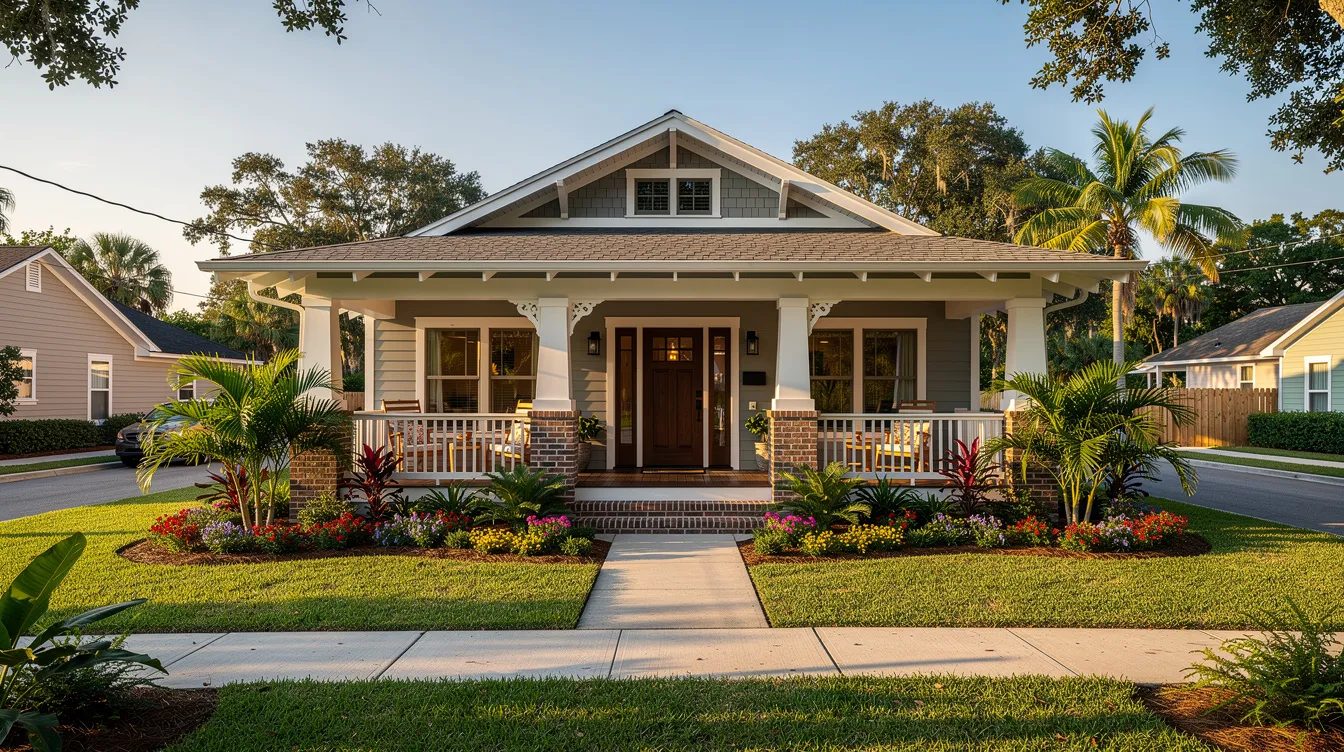
The deal: Old Seminole Heights craftsman bungalow. Purchase price $260,000. Rehab budget $55,000. ARV $380,000. The term after repair value is critical in hard money loan underwriting, and this one checks out with strong comps.
Hard money terms: 80% of cost, capped at 70% of ARV. Primary loan comes in around $266,000. Twelve month term, interest only.
The funding gap:
- Down payment: ~$52,000
- Closing costs: ~$8,000
- Initial rehab cash before first draw: ~$12,000
- Reserves and contingency: ~$10,000
- Total gap: ~$82,000
How Gap Funded fills it:
- $50,000 unsecured term loan for down payment and closing
- $25,000 in 0% business credit cards for rehab materials and holding costs
- Investor's own cash of $7,000 as a buffer
Outcome: Rehab completed in 4 months. Property sold near ARV in 7 months. Hard money loan paid off at sale. Gap Funded tools paid down on schedule. Investor keeps full equity and profit instead of handing 30% to 50% to a capital partner.
Tampa Hard Money Loans for BRRRR, Rentals & Short Term Rentals
Many Tampa real estate investors use hard money not just for fix and flip but for the BRRRR strategy and short term rentals. The playbook is the same at the front end: hard money covers the buy and rehab phase.
For BRRRR, after rehab and tenanting, the investor exits into a DSCR loan or conventional refinance. Rental loans provide long term financing for investment properties once the property is stabilised. The key is having enough capital to carry the property through rehab, tenant placement, and the refinance timeline.
For short term rentals in neighbourhoods like Channelside, Downtown Tampa, South Tampa, and nearby markets in St. Pete, Clearwater Beach, Winter Park, and even Fort Myers, speed is everything. Competitive offers on prime STR properties require fast closings, and hard money delivers that.
The funding gaps are more pronounced for BRRRR and STR investors: furnishing costs, extended holding before listings go live, appraisals coming in below expectations, and licensing fees. Our credit card stacking at 0% and term loans are particularly useful for furnishing, marketing, and managing cash flow until the property goes cash flow positive.
I reckon the biggest mistake I see is investors planning their hard money loan in detail but treating the gap capital as an afterthought. Plan your total capital stack from the start.
How to Choose a Tampa Hard Money Lender (and When to Call Gap Funded)
There are plenty of hard money lenders serving Tampa, Palm Beach County, Orange County, Broward County, Miami Dade County, and the rest of Florida. Industry experts and private money lenders are everywhere. Choosing the right one matters more than choosing the cheapest.
Key criteria:
- Proven track record with recent deals in the Tampa Bay market and your specific neighbourhood
- Transparent terms: rates, points, draw schedules, extension fees, prepayment penalties. Ask them to prepare loan documents in advance so you can review the origination fee and all costs
- Speed to close and in house underwriting vs. broker only models. Fast funding matters when you're competing with cash buyers
- Comfort with your specific real estate project type: fix and flip, construction, multifamily, mixed use, or rental properties
Ask lenders specifically about max leverage, rehab draw schedules, and whether they can fund within your contract timeline. Some advertise flexible terms but slow down on execution.
Once you have indicative terms from a hard money lender, that's the best point to talk to us about filling the remaining gap. Here's a simple sequence:
- Get your deal under contract with a realistic closing date
- Secure a term sheet from your Tampa hard money lender
- Share the numbers with Gap Funded via gapfunded.com/apply to stack additional capital intelligently
This combined approach often lets investors do more deals at once without bringing in equity partners or giving up a fair whack of their profit.
Next Steps: Apply for Gap Funding on Your Tampa Hard Money Deal
Here's the short version:
- Hard money loans in Tampa solve speed and flexibility. Gap Funded solves the capital shortfall: down payment, closing costs, rehab, reserves, working capital, and earnest money.
- Key qualifications: typically 650 to 680 or above FICO, verifiable income or business revenue, and a clear plan tied to real estate development, a business acquisition, or a new business launch.
Your step by step:
- Review your Tampa hard money term sheet. Check the loan amount, rate, points, and ARV cap.
- List total project costs vs. what the lender will fund. Include everything: purchase price, rehab, closing, holding, and contingency.
- Submit a quick application at gapfunded.com/apply to see your gap funding options with a soft credit pull.
We also support investors across South Florida, including Miami Dade County and Broward County, as well as those working with foreign nationals or on deals in other Florida counties. But the examples in this guide are built around Tampa Bay because that's where the opportunity is stacking up.
Get pre-qualified before placing aggressive offers or wiring earnest money deposits. Know exactly how much additional funds and cash you can bring to the table before you need it.
Hard money gets you in the door. Gap Funded makes sure you can afford to walk through it. No equity splits, no lien on your deal, and no surprises mid-rehab. Apply now and stack your next Tampa deal properly.
Related Reading
This article is for educational purposes only and isn't financial, legal, tax, or investment advice. Credit and financing outcomes depend on your own situation. Talk to a licensed financial professional before making funding decisions for your business.