
Florida Hard Money Loans: Investor Guide + How Gap Funding Bridges Your Cash Shortfall

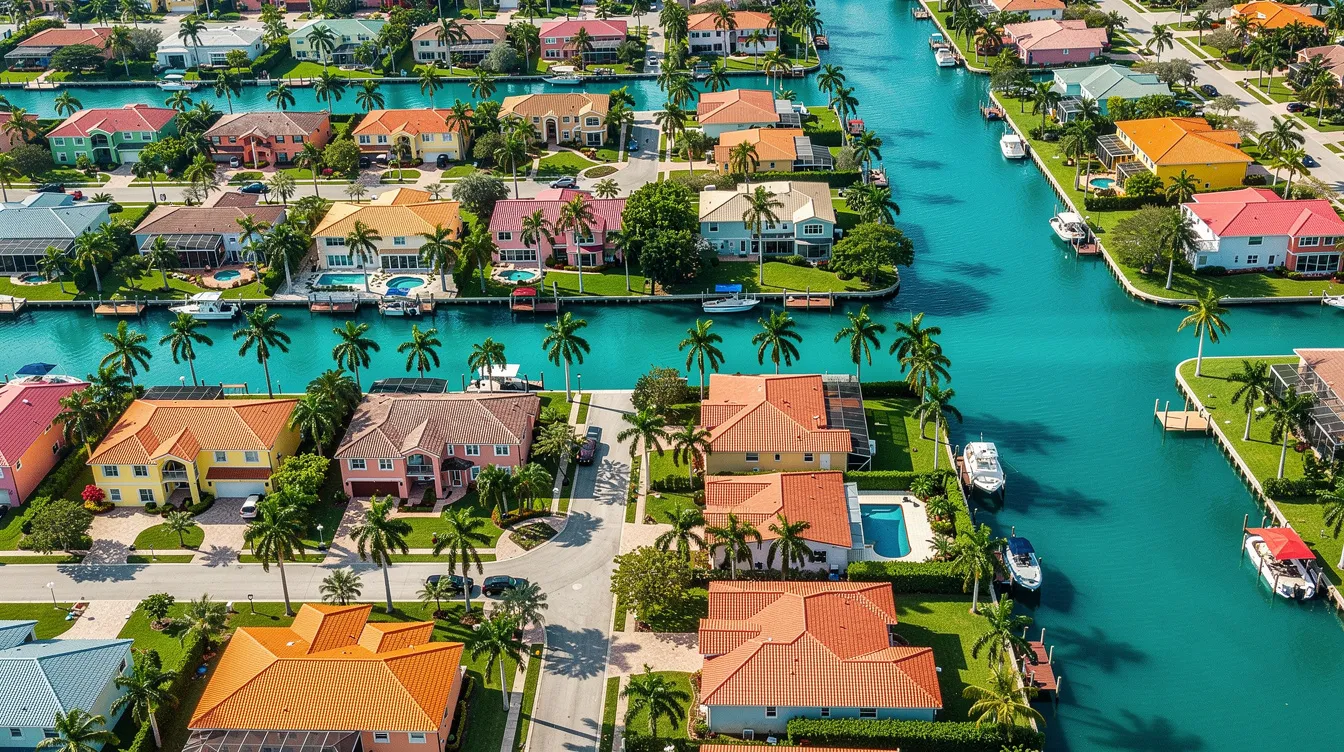
Florida Hard Money Loans: Investor Guide + How Gap Funding Bridges Your Cash Shortfall
How Florida Hard Money Loans Really Work in 2026
Here is the thing most real estate investors in Florida get wrong about hard money: they assume the lender will fund 100% of their deal. Purchase, rehab, closing costs, the lot. In practice, that almost never happens. There is always a funding gap, and if you do not plan for it, you will lose deals.
Florida hard money loans are short term, asset based loans secured against real estate property. They are built for speed and flexibility, not for borrowers who want to sit on a 30 year mortgage. Investors across Miami, Fort Lauderdale, Orlando, Tampa, and Jacksonville use them daily for fix and flip projects, BRRRR rentals, short term rentals, ground up construction, and commercial properties.
This guide covers:
- What Florida hard money loans actually are and when they beat bank financing
- Current 2025 to 2026 rates, leverage, and market trends by metro region
- Realistic cash to close math so you know exactly what you need to bring
- How Gap Funded fills the gap between what hard money lenders provide and what you actually need, using unsecured and asset based capital with no lien on your deal property
I am writing this from Gap Funded's perspective. We are not a hard money lender. We are a funding intermediary that stacks capital around your primary loan so you can close. If you have a 650+ FICO, there is a good chance you can access more than you think.
What Is a Florida Hard Money Loan? (And When It Beats a Bank Loan)
A hard money loan is a short term, asset based loan where approval relies primarily on the property's value rather than personal credit, tax returns, or employment history. The lender cares most about the collateral, your exit strategy, and whether the numbers on the deal work. Hard money loans can fund properties that need major repairs or are in poor condition, which is exactly the type of deal banks run from.
In Florida, private lenders are regulated under specific state mortgage lending laws, but the underwriting process is dramatically faster and more flexible than conventional lenders. Here is how they differ from bank loans:
- Speed: hard money loans can close in as little as 3 to 15 days. Banks take 30 to 60.
- Documentation: lighter. No full income verification in most cases.
- Property focus: investment properties only. Single family rentals, townhomes, small multifamily (2 to 20 units), non owner occupied condos, small retail plazas, mixed use buildings, and infill lots for ground up construction.
- Cost: higher interest rates (typically 8% to 15%) and origination points (1 to 4%), but you are paying for speed and access.
Most hard money lender programs avoid owner occupied homes due to consumer lending regulations. When they do lend on them, it is structured as business purpose.
Many Florida real estate investors combine a primary hard money loan with a separate gap funding solution to cover what the lender will not. That is where we come in.
Current Florida Hard Money Market Snapshot (Rates, Points, Regions)
Florida has a robust market for hard money lending driven by real estate investment, migration, and limited housing supply. Even as traditional bank lending has tightened, hard money volume has stayed strong.
The average interest rate for Florida hard money loans was 9.65% in Q3 2026, though this varies by metro and loan type. According to federal HMDA data, the 2025 median note rate across 5,691 loans was approximately 10.45%, with the middle 50% falling between 9.75% and 11.20%. Rates have trended slightly lower into 2026 as competition among lenders increases.
Here is how it breaks down by region in Q3 2026:
- Southeast Florida (Miami, Fort Lauderdale, Palm Beach): average rate 9.66%, with larger loan sizes often exceeding $1M
- Southwest Florida (Fort Myers area): average rate 9.80%
- Central Florida (Orlando, Orange County): average rate 9.83%
- Northeast Florida (Jacksonville): average rate 9.46%, the lowest in the state
- Northwest Florida: average rate 10.70%, the highest
Fix and flip and bridge loans on stabilised properties generally price lower than ground up construction or heavy rehab projects, which carry higher risk premiums. Origination points typically run 2 to 3% of the loan amount. Keep in mind that aggregator data often excludes smaller private money loans, so treat these averages as directional, not guaranteed.
Core Types of Florida Hard Money Loans Investors Use
Not all hard money loan programs are created equal. Here are the main loan types Florida real estate investors use:
- Fix and flip loans: Short term loans for purchasing and renovating properties, typically 6 to 18 months. Loan amounts for fix and flip loans can range from $30,000 to $800,000. Structures often cover up to 85 to 90% of purchase and 100% of rehab, capped around 65 to 75% of ARV. Fix and flip loans help increase property market value for resale. Speed matters, especially in competitive Broward County and Miami Dade County markets. A draw schedule is often used for rehabilitation projects in Florida.
- Bridge loans: Typically short term, lasting 2 weeks to 3 years. Used when acquiring a tenant occupied rental property, refinancing out of a balloon, or holding while waiting for a DSCR or conventional refinance. Lower risk, so somewhat better rates.
- Ground up construction loans: For building single family infill or small multifamily in markets like Fort Lauderdale or Tampa. Higher down payment requirements, draw schedules tied to inspections, and permitting can stretch timelines. Expect more equity out of pocket.
- Commercial hard money: Commercial hard money loans offer quick funding for various property types, including small office buildings, retail strips, warehouses, and mixed use commercial properties. Lenders underwrite on purchase price and exit strategy. LTV is typically more conservative (60 to 70%).
- Foreign nationals loans: For non U.S. citizens without deep U.S. credit history. Lenders require larger down payments, more conservative leverage, and emphasis on global assets or income. Rates tend to run higher.
- Rental property loans: These focus on asset based financing for investors. Average interest rates for rental loans can be around 9% to 10%, with loan amounts from $30,000 to $800,000. Minimum FICO score for rental loans is often 640. Rental loans can offer flexible terms and quick funding.
Typical Terms: LTV, Loan Amounts, Documents, and Timelines
While each reliable hard money lender in Florida sets its own criteria, most share similar ranges.
Loan amounts generally range from $30,000 to $800,000, with smaller minimums for single family flips and higher caps for commercial real estate projects. Some lenders go well above that for well located assets.
LTV and LTC: Lenders typically lend up to 65% to 75% of the property's value or ARV. The average loan to value ratio across Florida is approximately 62%. For strong deals with experienced borrowers, purchase LTV can stretch to 80 to 90% of combined purchase plus rehab cost, but that is the exception, not the rule.
Credit and income: Hard money lenders often require a minimum FICO score of 640, and many prefer 650 or higher. While underwriting is asset based, lenders still want to see proof you can carry payments: bank statements, reserves, rehab budgets, and sometimes a track record of completed projects.
Documentation is critical when securing a hard money loan in Florida. The usual package includes purchase contract, rehab scope of work, entity documents (if using an LLC), bank statements, photo ID, and sometimes an appraisal or broker price opinion.
Timelines and fast closing: Approval for most programs can occur within 24 to 48 hours, with average closing time of 7 to 12 days. Hard money loans generally have short repayment terms lasting 6 to 24 months, with 12 months being the most common for flips. But "fast closing" still requires you to have your cash to close sorted and title work ready. That is where people trip up.
Where Most Investors Get Stuck: The Real Cash to Close Gap
The problem is rarely getting a Florida hard money term sheet. It is coming up with everything the lender will not cover.
Hard money lenders often require a down payment of 20% to 40%. On top of that, you are responsible for origination points, closing costs, earnest money, early rehab draws, interest reserves, insurance, and contingency. That adds up to a fair whack of cash.
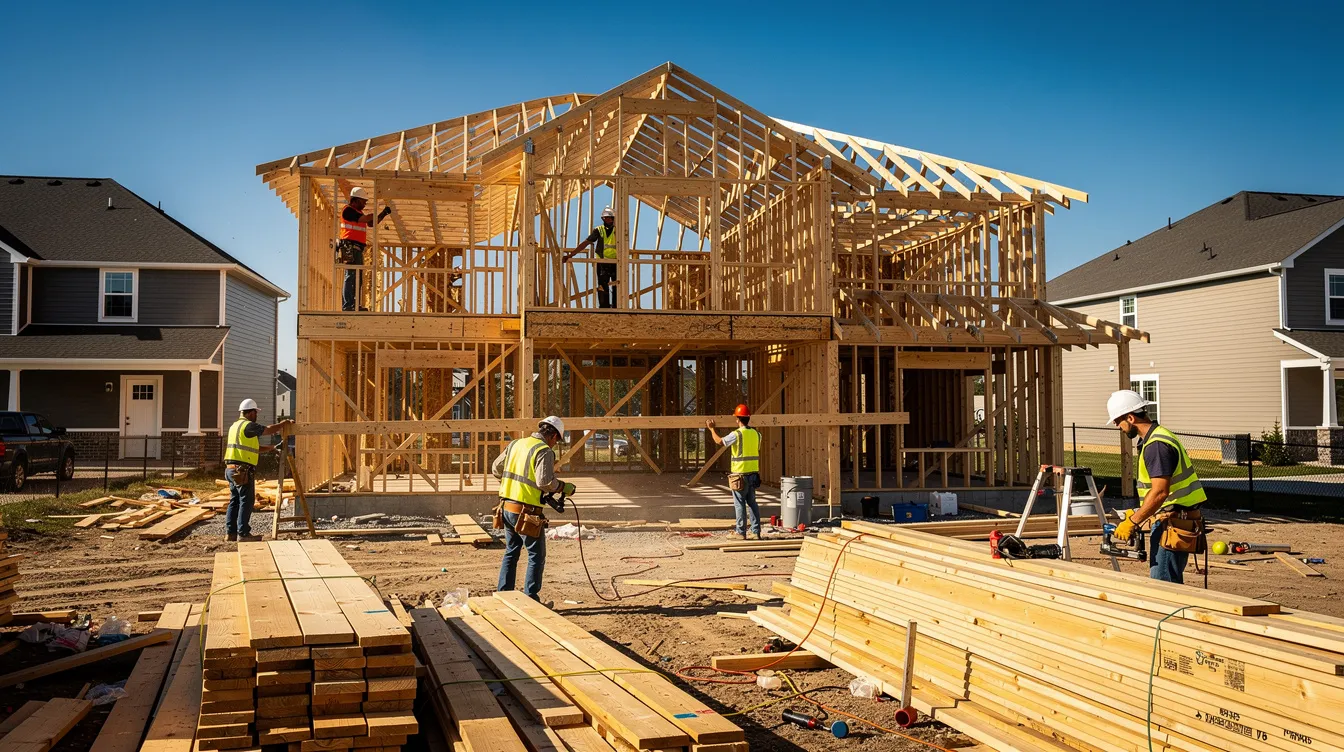
Here is a concrete example. Say you find a fix and flip in Fort Lauderdale: purchase price $300,000, rehab cost $70,000, projected ARV $500,000. Your lender offers 70% of ARV, which is $350,000. That covers the purchase but only leaves $50,000 toward rehab. You still need to bring roughly $60,000 to $90,000 for the down payment gap, closing costs, points, interest reserves, and holding costs.
Even when a lender is generous (85 to 90% of purchase, 100% of rehab), investors are often short $30,000 to $120,000 depending on project size and reserve requirements. This gap is especially painful for scaling investors juggling multiple deals at once.
Gap Funded exists precisely for this. We do not replace your hard money lender. We stack additional funding sources around the primary loan to bridge that shortfall, without equity splits or liens on the subject property.
How Gap Funded Works Alongside Florida Hard Money Lenders
Gap Funded partners with Florida real estate investors who already have (or are pursuing) a hard money approval and need additional non dilutive capital to close. An exit strategy is typically required when taking a hard money loan, and we help you plan the full stack before you sign.
Our soft pull pre qualification lets you see stacking options before committing to a term sheet. No impact to your credit score. We do not place a lien on the investment property being financed by your hard money lender, which keeps them in first lien position and makes approvals smoother.
We also work with hard money brokers, wholesalers, and real estate agents through our partner programme. If you are a lending partner or wholesaler with deals stuck on cash shortfalls, we can help get them across the line.
The goal is a complete capital stack: primary hard money loan plus unsecured term loans, 0% credit card stacking, HELOCs, and lines of credit to cover down payments, construction overages, and working capital. Start your funding review here with a soft credit pull.
Gap Funding Tools That Pair Best with Florida Hard Money Loans
The right combination depends on your credit score (ideally 650+), income, existing equity, and how quickly you need funds. Order matters because applying out of sequence can knock out later approvals.
- Unsecured gap funding (Priority 1): Personal term loans and 0% business credit card stacking cover down payments, closing costs, EMD, and early rehab expenses. No lien on the subject property. Speed is the advantage. Best for investors with good credit who need $20K to $120K fast. See rapid gap funding options.
- Asset based capital (Priority 2): A HELOC on an existing property you already own, whether your primary residence or another rental. Taps equity elsewhere without touching the deal property. Use this when unsecured funding maxes out or you need lower cost capital.
- DSCR loans for exit strategy (Priority 3): Once your property is stabilised and generating rental income, a DSCR loan lets you refinance out of the hard money debt into long term financing based on cash flow, not personal income.
- Revenue based capital (Priority 4): For contractors or investors with existing business revenue, a business line of credit or business term loan can smooth cash flow between rehab draws.
- Debt consolidation (Optional): Consolidating high interest debt frees up monthly bandwidth and can improve your qualifying ratios for the tools above.
Use Cases: Fix and Flip, BRRRR, Ground Up Construction, and Commercial Deals
Fix and flip in Broward County: You lock up a single family home in Fort Lauderdale for $350,000 with $80,000 rehab, ARV $600,000. Your hard money lender covers 85% of purchase and 100% of rehab. You still need roughly $52,500 for the 15% down plus closing costs, points, and contractor deposits. Unsecured gap funding and credit card stacking handle it. You sell, repay everything, and keep the profit. No equity splits.
BRRRR in Orlando: You buy a light rehab property for $250,000 plus $50,000 in improvements. Hard money covers 70% ARV. Once stabilised with a tenant, you refinance into a DSCR loan, pay off the hard money and gap debt, and hold for cash flow. A HELOC on your next project covers the original gap.
Ground up construction in Tampa: You buy land for $200,000 and build four units at $300,000. Your lender funds 60% of land plus builder draws. You need to cover 30 to 40% equity on land plus soft costs like permits. Stacked unsecured term loans handle the soft costs; a HELOC covers the land equity injection.
Commercial properties in Miami: Acquiring a small mixed use building for $800,000 with $100,000 in tenant improvements. A commercial hard money bridge loan covers 65% of as is value. HELOC plus credit card stacking plugs the six figure gap for TI and leasing reserves.
Foreign nationals investing in Florida: A non U.S. citizen buys an SFR flip in Orlando. The lender wants 40 to 50% down at competitive rates around 12 to 14%. If they have established U.S. equity or business revenue, gap funding tools can supplement the down payment.
Qualifying Realistically: Credit, Income, and Risk Management
While some Florida hard money marketing suggests "no credit required," in practice borrowers with a mid 600s FICO and verifiable income or rental history are in a far stronger position. For Gap Funded's unsecured and credit stacking programmes, you will typically need a minimum FICO in the mid 600s. Stronger scores (700+) can access larger limits and better 0% APR terms.
I reckon the biggest risk I see is over leveraging. Before stacking multiple tools, map your monthly obligations against realistic timelines. If your flip takes two months longer than expected, can you still carry the payments? Always have a clear exit strategy: specific DSCR refinance targets, comps based ARVs, or pre identified buyers.
We run a funding review to align tools with your risk tolerance and project timing. We are not here to maximise your total credit. We are here to help you close deals that make sense.
Working with Gap Funded: Application, Review, and Timeline
The process is straightforward. Start at gapfunded.com/apply. The initial review uses soft credit pulls and does not affect your FICO.
- Same day or 24 to 48 hour feedback on potential gap funding limits
- 3 to 10 business days to fully stack and deploy unsecured term loans or credit cards, running parallel with your hard money lender's underwriting
- Prepare your recent credit snapshot, basic income documentation, details of your hard money term sheet, purchase contract, rehab budget, and exit strategy
If you are a wholesaler, hard money broker, or real estate agent who wants deals in your pipeline to close reliably, check out our partner programme.
Start your gap funding review early. Do not wait until the week before closing to figure out how you are funding the shortfall.
Build a Repeatable Florida Investment Strategy with Complete Capital Stacks
Florida hard money loans are exceptional tools for real estate investors in markets like Fort Lauderdale, Miami, Orlando, Tampa, Jacksonville, Palm Beach County, and Fort Myers. But they rarely cover everything. There is almost always a funding gap for down payment, rehab, and working capital. Planning your entire capital stack upfront, rather than scrambling for last minute cash, is what separates investors who close consistently from those who keep losing deals.
Gap Funded's mix of unsecured gap funding, credit card stacking, HELOCs, and DSCR exit loans helps you close more deals without equity splits or liens on the deal property. A fantastic team of funding specialists and a streamlined process mean you can access capital in record time for your next project.
- Ready to see what you qualify for? Start a no obligation funding review at gapfunded.com/apply. Soft pull. No commitment. Just clarity on how much additional capital you can stack alongside your Florida hard money loans.
Related Reading
This article is for educational purposes only and isn't financial, legal, tax, or investment advice. Credit and financing outcomes depend on your own situation. Talk to a licensed financial professional before making funding decisions for your business.