
Hard Money Loan Michigan: Fast Funding, Real Rates, and Gap Financing Options

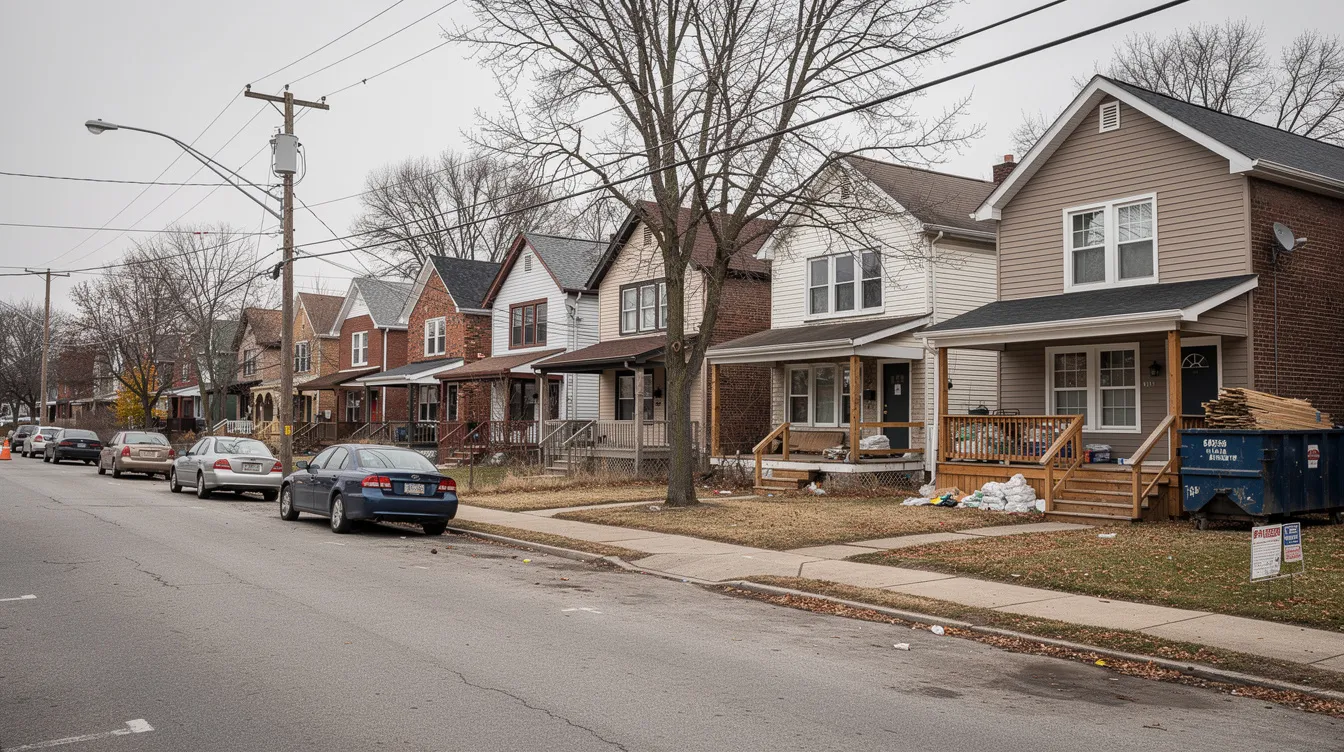
Hard Money Loan Michigan: Fast Funding, Real Rates, and Gap Financing Options
Most Michigan real estate investors already know the deal: you find a distressed property, run the numbers, line up a hard money lender, and then realise you still need a fair whack of cash to actually close. Here is how hard money lending works in Michigan today, what it really costs, and how to fill the gap between what your lender funds and what the deal actually requires.
Quick Answer: How Hard Money Loans Work in Michigan Today
Hard money loans in Michigan are short term, asset based loans made by private or non bank lenders. They are secured by real estate and underwritten primarily on the property value, not your tax returns or debt to income ratio. Fix and flip investors, BRRRR operators, and rental buyers across Detroit, Grand Rapids, and Ann Arbor use them because speed matters. Properties at auction or in foreclosure don't wait for a conventional mortgage to crawl through underwriting.
A few definitions worth nailing down:
- Hard money loan: A short term money loan (6 to 24 months) where the property itself is the collateral. Lenders focus on the property's value, not the borrower's credit score.
- Hard money lender: A private individual, company, or non bank entity that makes these loans. Michigan hard money lenders range from local shops to national brands.
- Asset based lending: Underwriting centred on the collateral (both as is value and after repair value, or ARV) rather than personal financials.
Current typical Michigan ranges: interest rates for hard money loans range from 8% to 15%, with the average interest rate for hard money loans in Michigan sitting around 8.80%. Origination fees average 3.9%. Loan terms run six to 24 months, and LTV ratios for hard money loans typically range from 60% to 75% of the property's value.
Gap Funded does not replace your hard money lender. We stack capital alongside them, covering down payment, closing costs, rehab overruns, and working capital so you bring less cash to the table with no equity splits and no liens on the deal property.
Before locking in any Michigan hard money loan, start with a soft pull funding review at gapfunded.com/apply to see the full picture.
What Is a Hard Money Lender in Michigan?
Michigan hard money lenders are private or non bank entities offering short term, asset based financing. They are most active in markets with distressed or value add inventory: Michigan Detroit neighbourhoods, Flint, Lansing, Ann Arbor, Kalamazoo, and lakeshore areas where traditional lenders slow down or decline outright. Hard money lenders provide funding for properties that traditional lenders may reject. In Michigan, hard money lenders must comply with state mortgage lending regulations.
Flexibility in negotiation is a key characteristic of hard money lenders compared to traditional banks. Underwriting focuses on the investment property's current value and ARV, not strict income verification. Typical loan programs for flippers and landlords include interest only payments with a balloon due at 6 to 18 months, and rehab budgets held in draws.
Common loan types from lenders in Michigan include fix and flip loans, bridge loans, new construction, and DSCR rental loans for long term holds. You will see regional and national brands active in Michigan real estate. Lima One Capital has closed over 29,000 loans since 2011. Premium Hard Money has funded over 2,500 loans since 1995. MINO Lending Solutions offers funding from $50,000 to $75 million. Top hard money lenders in Michigan funded over 10,000 loans in 2026. But this article is not about picking one lender. It is about using any hard money lender effectively while filling the funding gap.
How Does a Hard Money Loan Work for Michigan Real Estate Deals?
Picture this: you find a distressed single family home in Detroit listed at $90,000. Rehab budget is $45,000. ARV sits at $200,000. You approach a hard money lender, and they underwrite based on 70% ARV. Hard money loans in Michigan average $185,400 in loan amount.
The step by step process looks like this:
- Deal analysis and ARV estimate using local comps
- Short application with basic borrower profile, purchase contract, and scope of work
- Appraisal or broker price opinion to confirm ARV
- Term sheet outlining rate, LTV, loan term, and fees
- Closing and purchase funding wired at settlement
- Rehab draw process where draws for renovations are often released as project milestones are completed (roof, mechanicals, finishes)
- Exit via sale, refinance into a DSCR or conventional loan, or BRRRR strategy (the BRRRR strategy involves buying, renovating, renting, refinancing, and repeating)
Borrowers must have a clear exit strategy to repay hard money loans. Contrast this with bank financing: quick approvals and fast closings in 5 to 10 business days versus 30 to 60 for a conventional mortgage. The efficient process comes at a higher cost and shorter loan term. Minimum FICO is often 620 to 660+, though asset strength of the investment property can offset a limited track record.
What Are Hard Money Loans Used For in Michigan?
Michigan hard money loans are tools for speed and reliable financing when traditional banks say no or move too slowly. Hard money loans are often used for house flipping in Michigan, and they serve several other purposes:
- Fix and flip projects in Detroit, Grand Rapids, and emerging suburbs
- Flip loans and rehab loans for cosmetic work on single family homes and small multifamily
- Bridge loans for Michigan investors moving 1031 funds or buying before selling another rental property
- DSCR rental loans as take out financing after a BRRRR or stabilisation
- Acquiring and stabilising small apartment buildings and commercial properties in Ann Arbor and Ypsilanti
A common scenario: a Grand Rapids investor uses hard money to purchase a dated duplex, completes a rehab, stabilises rental income, and then refinances into a long term loan via DSCR. Most hard money loans require substantial upfront cash for down payments and closing costs, which is why investors combine hard money with additional capital for reserves, carrying costs, and overruns.
Real Costs and Terms of Hard Money Loans in Michigan
Hard money loans often come with higher upfront costs compared to traditional loans. That is the trade off for quick funding and competitive terms on deals banks won't touch. Here is what Michigan investors should budget for in 2025 to 2026:
| Cost Component | Typical Range |
|---|---|
| Interest rates | 8.5% to 13% fixed (avg 8.80%) |
| Origination fee | 2 to 4 points (avg 3.9%) |
| Loan term | 6 to 24 months |
| LTV cap | ~70% of ARV (avg 61%) |
| Purchase financing | ~85% to 90% of purchase price |
Hard money loans often require origination fees and closing costs on top of the interest. LTV ratios for hard money loans in Michigan average 61%. On a $200,000 ARV property with a 70% ARV cap, that is a $140,000 loan. If your all in cost is $135,000 (purchase plus rehab), you might still need $20,000 to $30,000 in cash for down payment, closing costs, and initial rehab before draws fund. Hard money loans typically have repayment periods of six to 24 months. Interest only payments, property taxes, insurance, and utilities all add up. I reckon most investors underestimate carry costs by at least 10%.
Alternatives and Complements to Michigan Hard Money Loans
Many Michigan investors pair hard money with other capital. Alternatives include conventional loans (slower but cheaper), a HELOC on a primary residence or existing investment property, cash out refinance on appreciated rentals, or partnerships. A HELOC offers lower interest but exposes your house, can be slower to set up, and may not cover the full project stack. For most real estate transactions, the ideal structure is a hard money lender covering purchase and rehab, plus a second source of fast capital for everything else. That is exactly where Gap Funded fits, working alongside your lender rather than competing. No financial advisor needed to see the logic there.
Closing the Funding Gap in Michigan: How Gap Funded Works With Your Hard Money Lender
Even when a hard money lender finances 85% to 90% of purchase and rehab, Michigan investors still face a funding gap: down payment, closing costs, rehab draws timing, earnest money, and reserves. Hard money loans are secured by real estate assets, but they rarely cover every dollar you need. We provide gap funding and capital stacking solutions alongside Michigan hard money loans without equity splits or liens on the deal property.
Here are the tools we use, in recommended order:
- Unsecured term loans for investors with 650+ FICO and verifiable income. Ideal for down payment, closing costs, initial rehab.
- 0% intro APR credit card stacking for materials, labour, and carrying costs on your next deal.
- HELOC options on existing equity for larger projects. Use the HELOC calculator to see what is available.
- DSCR rental loans as a long term exit strategy once the property is cash flowing, paying off the hard money lender and any gap funding.
- Debt consolidation for repeat investors carrying high interest cards or MCAs, freeing up cash flow before the next deal.
Competitors like Lima One or other traditional hard money lenders may offer competitive rates and higher leverage, but they rarely fund 100% of total project cost. Gap Funded focuses on bridging that remaining gap. No equity taken. No lien on the deal.
Complete the quick, soft pull application at gapfunded.com/apply for a personalised Michigan funding stack review before you make your next offer.
Related Reading
This article is for educational purposes only and isn't financial, legal, tax, or investment advice. Credit and financing outcomes depend on your own situation. Talk to a licensed financial professional before making funding decisions for your business.