
Hard Money Lenders for Poor Credit: How Real Estate Investors Actually Get Funded

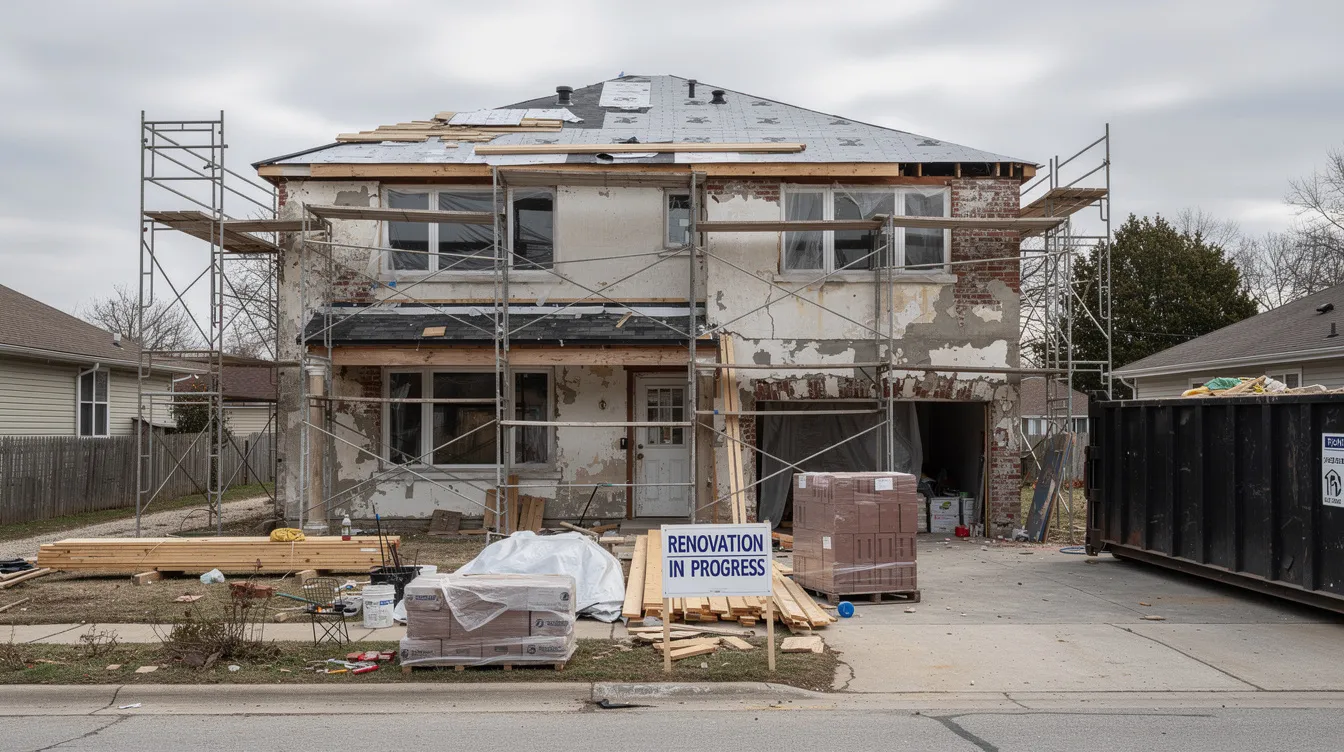
Hard Money Lenders for Poor Credit: How Real Estate Investors Actually Get Funded
Most banks will slam the door the moment they see a credit score under 620. That doesn't mean the deal is dead. Real estate investors with poor credit close hard money loans every single day, and the ones who do it well aren't waiting around for their FICO to recover.
Here's how it actually works, what lenders care about, and where the funding gap shows up.
Hard Money Loans for Poor Credit: The Basics
Let me cut straight to it. Hard money loans are short term, asset based loans secured by real estate. The property is the collateral, and the property is what the hard money lender cares about most. This is a completely different animal from conventional financing, where traditional banks obsess over your credit history, debt to income ratios, tax returns, and two years of pay stubs.
Hard money lending exists because deals move fast and real estate investors need capital that keeps up. Hard money loans can close in as little as 48 hours, while a traditional mortgage takes 30 to 45 days. That speed comes from a simpler underwriting process.
Here's what you need to know upfront:
- Hard money loans are friendly to individuals with poor credit. Many hard money lenders have no minimum credit score requirement, though they'll still do a light credit check.
- Approval is usually driven by property value, loan to value ratio, equity, and your exit strategy, not by your FICO score.
- Many hard money lenders will work with bad credit, but "no credit check" almost never means zero review. They're looking for open bankruptcies, foreclosure activity, or unresolved liens.
- Hard money lenders focus on property value, not credit scores. A strong deal with margin and a clear plan will open doors a bank would never touch.
- Hard money loans typically require fewer personal financial documents than conventional lenders demand.
How Hard Money Loans Work When You Have Poor Credit
The process is straightforward: you find a deal, submit property details and rehab scope, the lender reviews the asset and your exit plan, terms are negotiated, and funds hit at closing. Rehab money comes in draws as work gets completed and inspected. You repay when you sell or refinance.
Most lenders underwrite by looking at the purchase price, rehab budget, after repair value (ARV), and whether your exit strategy actually holds water. Hard money lenders typically review the property's condition and marketability before anything else. They might order an appraisal or Broker Price Opinion, or they might skip formal appraisals to speed up processing, depending on the lender and the deal.
The credit check is usually soft or limited. They're scanning for recent bankruptcies, judgments, or major delinquencies rather than running you through the same gauntlet as traditional lenders.
Here's how things shift when your credit is poor:
- Lenders often require a higher down payment from borrowers with low credit scores, sometimes 25 to 35% of purchase price instead of 15 to 20%.
- Higher interest rates are typical for borrowers with poor credit in hard money loans, often 10 to 14% versus 8 to 10% for stronger profiles.
- Lenders prefer lower loan to value ratios to reduce risk, capping at 60 to 65% of ARV instead of 70 to 75%.
- Expect 2 to 4 origination points and interest only payments through the loan term.
Credit Score vs Deal Quality: What Hard Money Lenders Actually Care About
Many borrowers assume their credit score is the main obstacle. I reckon it's rarely the actual problem. The real question most lenders are asking is: "If this borrower stops paying, can I get my money back from the property?"
Here's what direct hard money lenders actually prioritise:
- Property value today and projected ARV based on recent comparable sales.
- Total project cost versus ARV. The wider the margin, the more comfortable the lender.
- Down payment or existing equity. Skin in the game matters. Lenders assess available equity to evaluate deal quality.
- Exit strategy. Whether you plan to refinance into a DSCR loan, sell, or hold.
- Hard money lenders look closely at experience and track record of borrowers. Repeat investors with documented flips get better terms.
Consider two borrowers. Borrower A has a 560 credit score but 30% equity, a clear refinance exit, and two prior successful flips. Borrower B has a 700 score, 5% equity, no exit plan, and no experience. Most money lenders will fund Borrower A and pass on Borrower B. The deal quality and risk profile outweigh the raw score every time. Private lenders may evaluate a borrower's overall financial health instead of just credit scores.
Can You Get a Hard Money Loan With Bad Credit? (Score Ranges and Edge Cases)
Yes. Even a 500 credit score may still qualify for hard money loans. But your terms, leverage, and lender options will vary based on where you fall:
- 680+ score: Best tier. Highest leverage, lowest rates, broadest lender selection.
- 620 to 679: Many hard money lenders are comfortable here if the deal is solid. Slightly higher cost, slightly lower LTV.
- 550 to 619: Still possible. Expect 65% max ARV, rates toward 12 to 14%, and more cash required upfront.
- Below 550: Niche territory. Often requires very strong collateral, cross collateralisation, or a partner with better credit.
Lenders typically cap financing at 50% to 70% of the property's after repair value, depending on your profile and the deal.
A recent bankruptcy or foreclosure won't automatically disqualify you, but it will reduce leverage and increase pricing. Most lenders want to see some seasoning, usually 12 to 24 months, since major credit issues.
And those "no minimum credit score" lenders? They still pull credit. They're just not using a hard cutoff. They want to confirm there are no open legal disasters that could complicate the deal or the collateral.
What Matters More Than Credit: Property Value, Equity, and Exit Strategy
This is the real approval engine for investors with credit issues. If your deal is right, the credit becomes a pricing conversation, not a yes or no conversation.
- Property value and LTV: Lenders verify current and projected value through appraisals or BPOs. For poor credit borrowers, many lenders tighten max LTV to around 60 to 65% of ARV. Properties with substantial existing equity attract hard money loans more readily.
- Down payment and equity: Purchasing a $200,000 distressed property with $40,000 down gives you 20% equity at purchase. If ARV is $280,000, the lender sits at roughly 57% of ARV. That cushion matters. Documentation of sufficient cash reserves can strengthen a loan application significantly.
- Exit strategy: A strong exit strategy can improve approval odds significantly. Define it clearly: refinance with a DSCR or conventional loan, or sell for profit. Lenders want to see rental comps, refinance timelines, or buyer demand data.
- Experience: Repeat investors often get better leverage and pricing, even with a few credit dings. First time investors face more scrutiny but aren't locked out.
- Budget and timeline: Realistic contractor bids, contingency built in, and a clear scope of work show the lender you've done your homework.
Common Hard Money Loan Structures for Investors With Poor Credit
Loan structure shifts based on both the deal and your credit profile. Here's what poor credit borrowers typically see:
- Fix and flip: 12 month interest only term, 10 to 13% rate, 2 to 4 points, up to 65 to 70% of ARV including rehab draws. Hard money loans are often used for fixer upper properties, and investors often use hard money loans for fixer uppers that need significant work. These loans finance properties needing significant work, from cosmetic updates to full gut rehabs.
- BRRRR: 9 to 18 months, conservative LTV so the refinance exit pencils out. More documentation around rental income and refinance qualification. Capital stacking strategies become especially relevant here.
- Bridge on rental or hold: 6 to 24 months, lower LTV, less emphasis on rehab draws, more focus on cash flow and payment ability.
- Commercial and construction: Hard money loans can fund commercial real estate projects and are suitable for ground up construction projects, though expect even more equity and stronger experience requirements.
Watch out for extension fees if your rehab runs long, prepayment penalties if you exit early, and default interest that kicks in if you miss a payment. These costs erode profit fast.
Where the Funding Gap Shows Up for Bad Credit Investors (And How Gap Funded Helps)
Even when the hard money lender says yes, they rarely fund 100% of the deal. That gap is where many borrowers with poor credit get stuck.
The most common gaps include:
- Down payment (often 10 to 30% of purchase price)
- Closing costs, origination points, insurance, and reserves
- Rehab costs before reimbursement draws arrive
- Earnest money deposits to lock up deals
- Working capital for materials, labour, holding costs, and contingencies
Traditional business lines of credit or bank loans are usually unavailable to investors with bruised credit or thin business history. Peer to peer lending offers more flexible criteria than conventional banks, and seller financing allows property owners to act as banks for purchasers, but neither scales reliably.
This is where Gap Funded fits. We act as a funding intermediary, stacking multiple tools behind your primary hard money loan to cover the shortfall. No equity splits. No liens on the deal property. We start with a soft credit pull, so there's no impact to your score just to check your options. Our tools typically suit borrowers with FICO 650+, though we serve plenty of investors with bruised credit from high utilisation or recent lates rather than deep defaults.
Tools We Use to Close the Gap Behind Hard Money Loans (In Priority Order)
We sequence tools in a specific order to minimise cost and protect your deal. Order matters because applying out of sequence can knock out later approvals.
- Unsecured Term Loans: Fixed term, no collateral loans used to cover down payments, points, and rehab. First choice for speed and simplicity when you can document income and have FICO typically 650+.
- Business Credit Card Stacking at 0%: We stack multiple 0% introductory rate business cards to create $50,000 to $150,000+ in usable credit for 9 to 18 months. Investors use this for materials, labour, and holding costs while the property is being renovated.
- Gap Funding and Working Capital Lines: Dedicated revolving lines that bridge shortfalls between what the hard money lender funds and total project cost. Especially useful for repeat investors scaling multiple projects.
- HELOC on Home or Investment Property: If you've got equity in a property you already own, a HELOC can provide relatively low cost capital to support your hard money deal, even if your credit has older blemishes.
- Debt Consolidation: Sometimes we first consolidate high interest consumer or MCA debt into a structured term loan to improve your cash flow and free up own capital before stacking new funding.
Unsecured tools come first for speed and flexibility. Asset based capital comes next if equity is available. Revenue based capital like merchant cash advances is a last resort due to cost.

If you're looking at a hard money deal but the funding gap is holding you back, apply for a free, no obligation funding review. Soft pull only. Takes about two minutes.
How to Improve Your Hard Money Approval Odds With Poor Credit
You can't fix years of credit damage in a week. But you can make your application dramatically stronger in 30 to 60 days by focusing on what lenders actually care about.
- Strengthen the deal: Buy at deeper discounts so your margin is wider. Lock in solid contractor bids. Use conservative ARV estimates backed by comps from the last 90 days.
- Lower utilisation: Use paydowns or consolidation to bring revolving credit utilisation under 50% before applying. This alone can shift how lenders view your risk.
- Prepare documentation: Rehab budget, timeline, scope of work, contractor quotes, and a one page exit strategy showing refinance or sale assumptions. Talk to your lender like a business partner, not someone begging for a loan.
- Line up partners: Consider adding a stronger credit co borrower, or use cross collateral from another property with equity to give the lender more security.
We help investors sequence funding tools so that credit pulls and approvals happen in the smartest order, limiting score impact and keeping lending options open.
Here's the thing many borrowers don't hear often enough: heaps of successful real estate investors started with damaged credit. What moved the needle was consistently finding good deals, managing exits on time, and building a track record that spoke louder than a FICO number.
If you've got a deal that works on paper and you need help closing the gap, start with a quick funding review here. No pressure, no impact to your score, and you'll know exactly where you stand.
Related Reading
This article is for educational purposes only and isn't financial, legal, tax, or investment advice. Credit and financing outcomes depend on your own situation. Talk to a licensed financial professional before making funding decisions for your business.