
Hard Money Lenders Online: Fast Capital for Real Estate Investors (and How Gap Funding Fills the Shortfall)


Hard Money Lenders Online: Fast Capital for Real Estate Investors (and How Gap Funding Fills the Shortfall)
Why Real Estate Investors Search for Hard Money Lenders Online First
You found a deal. The numbers work. But your bank wants 45 days, three years of tax returns, and a property that doesn't need a single broken window fixed. Meanwhile, someone else is writing a cash offer this afternoon.
That's why real estate investors turn to hard money lenders online first. Speed and flexibility beat paperwork and waiting. Online hard money lenders provide rapid asset based financing while skipping traditional banking requirements, which is exactly what fix and flip projects, BRRRR deals, and short term rental conversions demand.
But here's the part most articles skip: getting approved for a hard money loan is only half the battle. You still need cash for everything the lender won't cover. Down payment, closing costs, points, carrying costs, earnest money, rehab gaps. That shortfall kills more deals than bad comps ever will.
This article covers what online hard money loans are, how they compare to a traditional mortgage, what terms look like in 2025 and 2026, and then shows you how Gap Funded helps you close the funding gap so you can actually get to the closing table. If you want to check your options right now with a soft credit pull and zero obligation, you can do that at gapfunded.com/apply.
What Is a Hard Money Loan (and What Makes an "Online" Hard Money Lender Different)?
Hard money loans are short term, asset based money loans secured by real estate. Loan terms typically last from 6 to 36 months. Instead of digging into your tax returns and debt to income ratio, hard money lenders focus on the property's current value and renovation potential.
What makes an "online" hard money lender different isn't the loan itself. It's the delivery. Digital applications, upload portals for scope of work docs, automated valuation models (AVMs), and e-signing all compress the timeline. You can go from first contact to a term sheet without leaving your desk.
Hard money lending has existed for decades through private money lenders and local funds. But since the mid 2010s, nonbank institutional lenders have scaled up online platforms, bringing more transparency and competition to the market. In 2025, roughly 68,319 short term business purpose investor loans totalling ~$34 billion were reported under HMDA, with nonbank lenders making about 83.8% of those.
Common use cases for online hard money include:
- Fix and flip loans for distressed residential or commercial property
- BRRRR strategy acquisitions and rehabs
- Land loans and tear down projects
- Bridge loans between the sale of one property and purchase of another
- Small commercial property and mixed use deals
- Short term rental and Airbnb conversions
Hard money loans can finance residential properties, and commercial properties can also be financed with hard money loans, including uninhabitable properties needing renovation that traditional lenders won't touch.
How Hard Money Loans Work for Real Estate Investors in Practice
Here's the basic flow when you apply with an online hard money lender:
- You submit a prequalification form online with the deal basics: property address, purchase price, rehab estimate, and your experience level
- The lender evaluates the property using current as is value and the projected after repair value (ARV). Lenders evaluate the property's current value and renovation potential in hard money lending
- You receive a loan offer outlining rate, points, leverage, term, and draw schedule for rehab
- Once you accept and submit full docs (purchase contract, rehab scope, entity documents, proof of funds for your down payment), underwriting reviews and issues conditional approval
- Closing happens through title, and funds are wired. Rehab draws are released as work is completed and inspected
The asset based focus is the key difference. Hard money loans are asset based, focusing on property value rather than your personal income or employment history. No income verification is needed for hard money loans in many cases, and credit scores are less important for hard money loan approval than they are with a conventional lender. That said, a decent credit score (650 plus) still helps you get better rates and higher leverage.
Hard money lenders often require a sensible exit strategy. If you can't show a clear path to selling or refinancing within the loan term, most lenders won't fund the deal.
Hard money loans are often structured as business purpose loans issued to LLCs or corporations, not as consumer mortgages. Personal guarantees are common, especially for smaller residential deals.
Typical Hard Money Loan Terms You'll See Online
Here's what the numbers look like in 2025 and 2026 for most hard money loans:
| Term | Typical Range |
|---|---|
| Interest rates | 8% to 15% (up to 18% for higher risk deals) |
| Origination points | 2% to 5% of loan amount at closing |
| Loan term | 6 to 24 months (sometimes up to 36) |
| LTV (as is) | 60% to 80% |
| LTV based on ARV | 65% to 75% |
| Down payment | 20% to 40% of purchase price |
| Payment structure | Interest only, balloon at maturity |
Hard money loans usually feature interest rates ranging from 8% to 18%, with competitive deals for experienced flippers landing in the 9% to 11% range. Hard money loans often come with significant upfront fees, known as origination points, typically lenders charge 2% to 5% in points at closing.
A down payment of 20% to 40% is usually required. Typical loan to value ratios for hard money loans are 60% to 80%, and LTV ratios for hard money loans are usually capped at that range. Hard money loans typically feature shorter repayment timelines than conventional loans, with hard money loans often having shorter repayment periods of 6 to 24 months.
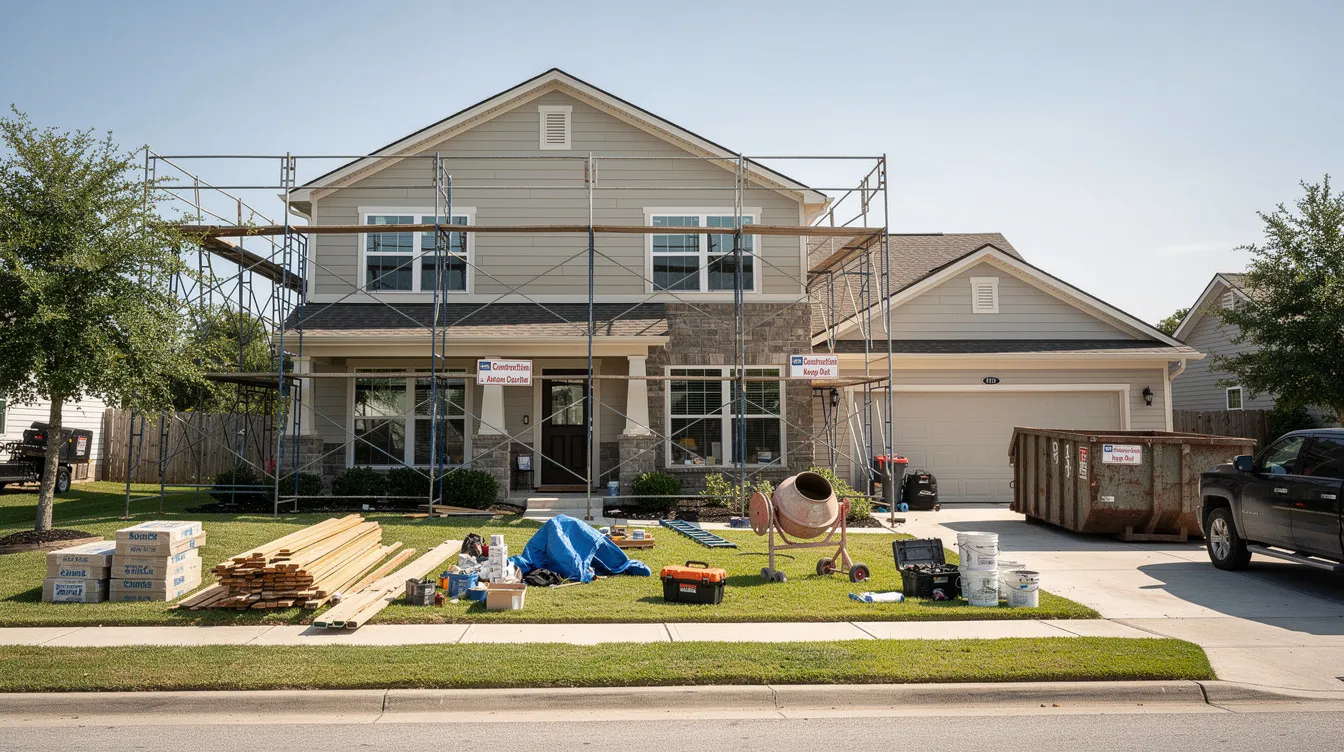
Example scenario: You want to buy a property for $300,000, rehab it for $75,000, and target an ARV of $450,000. A typical online lender might offer 80% of purchase price ($240,000) plus full rehab budget held in escrow ($75,000), capped at 70% of ARV ($315,000). Total loan: $315,000. You need to bring roughly $60,000 in equity plus closing costs (say $9,500) and a few months of carrying reserves. That's $70,000 or more out of pocket before you swing a hammer.
Online Hard Money Loan Approval and Funding Timelines
Speed is the whole point. Approval for hard money loans is faster than traditional mortgages, and here's what realistic timelines look like:
- Pre qualification: often within 24 hours if your application is complete
- Full underwriting: 1 to 3 business days once docs, appraisal, and title are in
- Closing and funding: 2 to 3 days after conditions are cleared
Hard money loans can close in 5 to 15 business days. Most hard money loans close within 7 to 10 days when everything lines up. Compare that to traditional mortgages, which take 30 to 60 days to close.
Some lenders push even faster. Easy Street Capital can fund loans in as little as 48 hours. Kiavi claims to close loans in as little as 7 days. California Hard Money Lenders like California Hard Money Direct can approve loans in minutes, though actual funding still depends on title and closing logistics.
What slows things down: appraisal delays (5 to 10 days for a full third party appraisal), title issues, slow document submission from the borrower, or property condition surprises. Fast funding doesn't mean fewer legal protections. Read your note, personal guarantee, and loan docs before you sign. The "speed tax" shows up in higher interest and fees, not in corners cut on paperwork.
Key factors that speed up loan approval:
- Clean purchase contract ready to go
- Detailed rehab scope with realistic budget and timeline
- Entity docs (LLC operating agreement, articles) prepared
- Proof of funds for down payment and reserves
- Photos or inspection reports of the property
What Hard Money Loans Are Used For in 2024 to 2026
Online hard money lenders focus almost entirely on real estate investors and business purpose deals. If you're looking for an owner occupied consumer mortgage, this isn't your product.
Typical uses of hard money loans include fix and flip projects and temporary financing gaps. Here's where they fit:
- Fix and flip projects: the classic use case. Buy under market value, rehab, sell. A 12 month flip in Atlanta or Phoenix is bread and butter for most online lenders
- BRRRR strategy: acquire and rehab with hard money, then rent the property and refinance into a long term product like a DSCR loan
- Short term rentals and Airbnb conversions: rehab plus furnishing plus permitting, often with cash flow that needs a ramp up period
- Investors use hard money loans for purchasing rental properties, especially when speed matters or the property needs work
- Bridge loans: temporary financing between the sale of one investment property and acquisition of the next
- Small multifamily and light commercial real estate plays
- Land loans and tear down projects (expect lower LTVs and higher rates here)
Most investors aim to refinance into a longer term product or sell the property quickly. Hard money is rarely ideal for long term holds.
Comparing Hard Money Lending vs. Traditional Mortgages
Real estate investors regularly compare hard money financing to bank or agency mortgages. Neither is universally better. It depends on your deal.
- Underwriting focus: hard money centres on asset value and exit strategy. A traditional loan requires full income verification, credit history, debt to income ratio, and a property that meets condition standards
- Cost: hard money loans carry higher interest rates, higher points, and short term structures. A traditional mortgage or conventional loan offers lower rates, longer amortisation, but slower approval and stricter rules
- Property eligibility: traditional lenders typically won't fund heavy rehab, uninhabitable properties, or complex title situations. Hard money will
- Speed: a conventional lender might take 30 to 60 days. Hard money can close in just a few days in ideal conditions
- DSCR loans sit in between: they focus on property income rather than personal credit, making them a solid exit for rental investors once a property is stabilised. If you're planning a BRRRR exit, DSCR loans for rental properties are worth understanding early
- Loan amounts and flexibility: hard money handles a wider range of deal sizes and property types, including commercial real estate that traditional banks won't consider for short term financing
Pick the tool that matches the deal, not the one with the lowest headline rate.
Pros and Cons of Using Hard Money Lenders Online
Online platforms make comparing money lenders easier, but they don't change the core trade offs of hard money.
Pros:
- Fast loan approval and closing, often in just a few days
- Flexible property types accepted, including distressed and value add properties
- Lighter documentation: no income verification required in many cases
- Works well for competitive, time sensitive deals where you need to secure funding quickly
- Online applications, digital uploads, and e-signing streamline the entire process
Cons:
- Higher interest rates and loan costs compared to conventional financing
- A larger down payment (20% to 40%) plus cash reserves required
- Short repayment timelines create pressure to execute your exit strategy on time
- Prepayment penalties and extension fees can add up if your project runs long
- Significant risk: if rehab or sale timelines slip, you risk losing the property to foreclosure
One thing worth saying plainly: "online" doesn't guarantee cheaper. You still need to compare total cost of capital across lenders, not just speed or advertised rate. A lender with 9% interest and 4 points might cost more than one at 11% with 2 points depending on your hold period.
Common Gaps Online Hard Money Lenders Won't Cover
Even the best hard money lenders online typically won't finance 100% of your total project cost. That leaves you with a funding gap, and it's often bigger than people expect.
Here's what hard money loans usually don't cover:
- Down payment: even with strong leverage, you're bringing 20% to 30% of the purchase price or more
- Closing costs and origination points: these are due at signing, out of your pocket
- Rehab draws before work is completed: most lenders reimburse after inspections, so you front materials and labour costs
- Earnest money deposits (EMD): needed to lock up the purchase contract, and your hard money loan doesn't cover it
- Carrying costs: monthly interest payments, property taxes, insurance, and utilities during rehab
- Contingency funds: cost overruns, unexpected repairs, permit delays
- Soft costs: architecture, design, legal fees, marketing to lease or sell
For land loans and commercial property deals, required equity injections can be even higher, creating larger cash gaps.
New real estate investors and small business owners often lose deals because they can't cover these gaps even after securing hard money loan approval. The loan is approved, but the bank account says no.
How Gap Funded Works Alongside Online Hard Money Lenders
Gap Funded is not a hard money lender. We don't compete with your lender. We complement them.
Gap Funded is a funding intermediary that helps real estate investors and small business owners finance the shortfall between what the primary lender funds and what you actually need to close. That means down payments, closing costs, rehab carry, reserves, working capital, and business startup costs.
How it works:
- We stack non dilutive capital on top of your primary hard money loan. No equity splits, no JV partners, no liens on the deal property
- Gap funding tools include unsecured term loans, 0% credit card stacking, HELOCs, and business lines of credit
- Typical client profile: 650 plus FICO, verifiable income or business revenue, or existing equity in a home or investment property
- Checking your options uses a soft credit pull with no impact to your credit score
- The entire process is online, which pairs well with investors already working with hard money lenders online
- Utilising multiple funding sources can help bridge the financial gap in real estate deals without diluting your ownership
The Core Tools Gap Funded Uses to Close Your Hard Money Funding Gap
Gap Funded prioritises flexible, non dilutive capital in a specific order. That order matters because applying out of sequence can knock out later approvals.
1. Unsecured personal term loans (rapid gap funding) For qualified borrowers, these cover down payments, closing costs, or rehab shortfalls. No collateral required. Unsecured term loans can be used for quick funding without collateral. This is your first move because it preserves your borrowing capacity for everything else. Learn about gap funding here.
2. Credit card stacking at 0% intro rates Stack business credit cards with 0% introductory periods (typically 6 to 18 months) to cover rolling rehab costs, materials, and short term working capital. Interest cost can be near zero if you repay within the intro window. See how credit card stacking works.
3. HELOC on primary or investment property If you have significant equity in another property, a home equity line of credit provides lower cost capital for down payments, EMDs, or soft costs. Use our HELOC calculator to estimate what you might qualify for, or explore HELOC options here.
4. Revenue based tools For more established investors or small business owners (generally 2 plus years in business, $20K plus monthly revenue), business lines of credit offer flexible funding options for investors. Business lines of credit and business term loans add another layer to your capital stack.
Why this order: start with unsecured options that don't tie up assets or trigger liens. Then tap equity via HELOC. Then layer revenue based capital. This sequence preserves your flexibility and maximises total borrowing capacity across all tools.

Example Capital Stacks: Pairing an Online Hard Money Loan with Gap Funding
Numbers make this real. Here are three scenarios showing how a capital stack works in practice.
Scenario 1: Fix and Flip
- Purchase: $300,000 | Rehab: $75,000 | ARV: $450,000
- Hard money loan: 80% of purchase ($240,000) plus full rehab draws ($75,000) = $315,000 total (capped at 70% ARV)
- Gap to fill: ~$60,000 down payment + $9,500 closing costs + $5,000 carrying reserves = ~$74,500
- Gap Funded stack: $50,000 unsecured term loan for down payment and closing costs. $15,000 in 0% credit card stacking for early rehab materials and carrying costs. Remaining from savings or a small HELOC draw
Scenario 2: BRRRR Rental
- Purchase: $250,000 | Rehab: $50,000 | ARV: $375,000
- Hard money loan: 70% ARV cap = $262,500
- Gap to fill: ~$38,000 equity injection + carrying costs + furnishing for rental
- Gap Funded stack: business line of credit for carrying costs. Unsecured gap funding for equity portion. Exit via DSCR loan or conventional refinance once stabilised
Scenario 3: Small Commercial or Mixed Use
- Purchase: $800,000 | Rehab: $200,000 | ARV: $1,300,000
- Hard money loan: 65% ARV = $845,000
- Gap to fill: ~$155,000 equity + closing costs + permits + insurance
- Gap Funded stack: HELOC from existing investment property for a portion. Unsecured term loan for closing and permit costs. Business term loan if the commercial entity has revenue history
Each scenario keeps the investor in full ownership. No equity splits, no JV partners. That's the capital stacking approach in practice.
How to Evaluate the "Best Hard Money Lender" Online for Your Strategy
"Best" depends on your project type and market, not the lowest advertised rate. Here's your checklist:
- Closing speed: what are their published timelines? Do they use AVMs or require full appraisals? How does this match your deal timeline?
- Asset class experience: a lender great at single family flip loans might be average at small multifamily or commercial real estate
- Maximum leverage: what are the LTV, ARV, and LTC caps for your experience level? First timers often get lower leverage and higher rates
- Rehab draw structure: are funds held in escrow with draws per inspection? How many draws are allowed? What documentation is required?
- Fee transparency: get a full breakdown of origination points, underwriting fees, title and escrow fees, property appraisal costs, and extension fees
- Compatibility with gap funding: does the lender allow you to use secondary unsecured capital in your stack? Do they require all down payment funds to be seasoned liquid cash? Some lenders are flexible; others are not
- Reputation and geography: do they actively lend in your state? Check directories like Tracts.ai for verified lender activity by state. Ask for references
- Responsiveness: how fast do they answer underwriting questions, process draw requests, or negotiate extensions if your project runs long?
A real estate professional I reckon would test at least two to three lenders before committing. Competitive rates mean nothing if the lender ghosts you during underwriting.
Investment Strategies That Work Well with Online Hard Money Loans Plus Gap Funding
Not every deal needs the hard money plus gap funding combo. But here's where it creates the most leverage:
Fix and flip in competitive markets: when you need a cash like offer and a 2 to 3 week closing to beat out other buyers, gap funding lets you scale from one project a year to multiple concurrent fix and flip projects without draining your savings
BRRRR with value add properties: hard money funds the acquisition and rehab. Gap funding covers the down payment and reserves you carry until a DSCR or traditional refinance is in place. Various investment strategies work here, from single family to small multifamily
Short term rentals: an Airbnb conversion needs more than just rehab money. You need capital for furnishings, design, initial marketing, and cash flow runway until bookings ramp up. Gap funding covers those soft costs that hard money won't
New real estate business or business acquisition: if you're starting a new investment entity or acquiring an operating small business that owns property, gap funding tools help meet EMD requirements, equipment costs, inventory, and working capital. A small business line of credit or unsecured term loan fills the gaps before you qualify for traditional business funding
The key: you need clear deal math and a credible exit timeline before stacking any additional capital. More tools is not the same as more safety. It's more capability, but only if the deal works.
Alternatives to Hard Money Lenders Online (and When They Might Be Better)
I'd be doing you a disservice if I said hard money is always the answer. Sometimes slower, cheaper capital is the right move.
- Traditional mortgages and bank portfolio loans: for stabilised, turnkey rentals or properties in good condition, a conventional loan or traditional financing from traditional banks offers lower rates and longer repayment periods. Property owners with strong credit history and income documentation will find these cheaper overall
- Home equity lines of credit: if you have significant equity in another property and your timeline allows 3 to 6 weeks, a HELOC or home equity loan can provide capital at much lower interest rates. Debt consolidation loans can also provide lower interest rates than hard money loans. Explore HELOC options for real estate investors here
- DSCR rental loans: for long term financing on cash flowing rentals, DSCR loans focus on property income rather than personal credit. They're the natural exit from a hard money bridge. A cash out refinance via DSCR can also pull equity from a stabilised property for your next deal
- Seller financing: sometimes the seller will carry a note, giving you flexible terms and lower upfront costs. The trade off is that not every seller will agree, and terms vary wildly
- Private lenders (friends, family, partners): these can work, but equity splits and relationship risk are real. Compare that with Gap Funded's non dilutive model where you keep full ownership and nobody's Thanksgiving gets awkward
Each alternative has its place. The trick is matching the right tool to your specific investment project and timeline.

How to Get Started: Pair Your Preferred Hard Money Lender Online with Gap Funded
Here's the step by step path:
- Define your investment strategy and run your deal math: purchase price, rehab budget, ARV, hold timeline, and exit plan
- Get quotes from 2 to 3 online hard money lenders. Compare total cost of capital, not just rate
- Identify your remaining funding gap: down payment, closing costs, carrying costs, rehab draws, EMD, contingency
- Apply with Gap Funded to structure the additional capital stack that fills those gaps
What to bring: your FICO range, recent credit review details, income or revenue documentation, current real estate holdings, and specifics of the deal (purchase contract, rehab budget, timeline).
Checking your options with Gap Funded uses a soft credit pull and won't impact your credit score. No obligation, no pressure. Just clarity on what's available so you can move with confidence when the right deal shows up.
Ready to see what you qualify for? Submit a quick application at gapfunded.com/apply and we'll walk through your options.
Related Reading
This article is for educational purposes only and isn't financial, legal, tax, or investment advice. Credit and financing outcomes depend on your own situation. Talk to a licensed financial professional before making funding decisions for your business.