
Hard Money Lenders for Beginners: 2026 Guide to Your First Real Estate Investment Loan

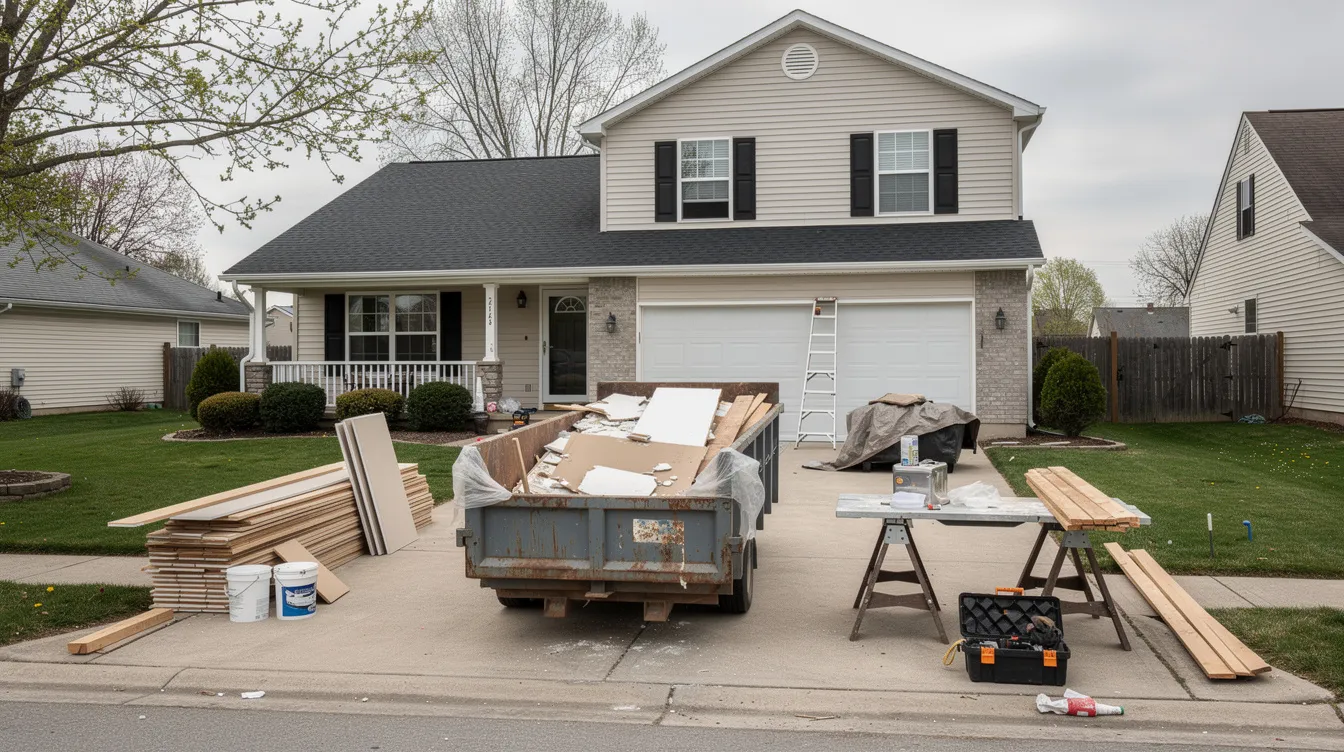
Hard Money Lenders for Beginners: 2026 Guide to Your First Real Estate Investment Loan
Most first time real estate investors don't lose deals because of bad properties. They lose them because they run out of cash before closing day. This guide covers exactly how hard money loans work, what they cost in 2026, how beginners qualify, and where the real funding gaps hide.
Hard Money Loans for Beginners: Quick Answer First
A hard money loan is a short term, asset based loan used to buy and renovate investment property. It is not a mortgage on your home. Private lenders fund these loans (not banks), and they care far more about the deal itself than your W2 income or debt to income ratio.
Hard money lenders focus on the property's value, the after repair value, and your exit plan. If the numbers work, most hard money lenders will consider your application even if traditional lenders have already said no.
Here is why beginners use hard money in 2026:
- Hard money lenders can close loans in 5 to 15 business days, sometimes faster
- They will fund distressed or uninhabitable properties that banks won't touch
- They provide quick access to funds for distressed properties and auction deals
- Hard money loans are often used for bridge financing between property sales
- They finance renovation costs through structured draws, so you're not fronting all the rehab cash yourself
If you're considering your first deal, here is your starting checklist:
- Analyse the after repair value and renovation costs conservatively
- Decide your exit strategy: flip and sell, or BRRRR into a long term rental
- Line up both a hard money lender and gap funding for down payment, reserves, and closing costs
That third step is where we come in. Gap Funded does not replace your hard money lender. We stack additional capital on top, using tools like 0% business credit cards, unsecured term loans, and HELOCs, so beginners can actually close deals instead of watching them slip away.
What Is a Hard Money Loan and How Does It Work?
Hard money loans are short term real estate investment loans, typically running 6 to 24 months, funded by private money lenders rather than traditional banks. They are almost always for non owner occupied properties: flips, rentals, small multifamily, or commercial property projects.
The underwriting is driven by asset based underwriting. Lenders look at the property's value (both as is and after repair value), your renovation budget, and your exit plan. They review credit history, but they are not digging through three years of tax returns the way a conventional lender would with traditional mortgages.
Common use cases include fix and flip projects, BRRRR strategy rentals, small multifamily loans, and bridge financing while waiting for a DSCR or conventional refinance.
Here is a concrete example. Say you find a 3 bedroom house listed at $180,000 purchase price. You budget $40,000 in renovation costs. Comparable sales suggest an ARV of $300,000. A hard money lender looks at purchase plus rehab ($220,000) against that projected ARV and decides whether there is enough margin to protect their capital.
Hard money loans are interest only payments with a balloon payment at maturity. Treat them as a tool for fast, time bound projects, not long term financing.
Hard Money Loans vs Traditional Mortgages
Traditional mortgages are built for long term homeownership. Hard money is built for fast, opportunistic real estate investment. They solve different problems.
Key differences:
- Approval speed: hard money closes in 5 to 15 business days versus 30 to 60 days for conventional mortgages
- Documentation: hard money is light on income verification, heavy on deal metrics (ARV, rehab budget, exit plan). Traditional loans require full doc packages with tax returns and employment history
- Credit importance: traditional lenders want a strong credit history, stable job, and low debt to income ratio. Hard money lenders tolerate more credit blemishes if the deal math is solid
- Property condition: hard money funds distressed properties and uninhabitable homes. Conventional financing requires move in ready condition
- Loan terms: hard money runs 6 to 18 months with a balloon. Traditional loans amortise over 15 to 30 years
- Renovation funding: many hard money loan programs finance a dedicated rehab budget tied to draws as construction progresses. Traditional mortgages rarely cover heavy renovation costs up front
Beginners often use hard money first to acquire and rehab a property, then refinance into DSCR loans or other long term financing once the rental property is stabilised. It is a two step process, not a one and done.
Why Hard Money Loans Work for Beginner Real Estate Investors
Many first time real estate investors can't meet bank requirements. Maybe your income is irregular, or the property needs $50,000 in work before any bank would consider it. Hard money solves this.
Reasons hard money is beginner friendly:
- Speed to close lets you compete on auction and off market deals
- Willingness to fund distressed properties that conventional financing rejects outright
- Focus on after repair value instead of current condition means your profit potential matters more than the property's current state
- Flexible terms for short projects, including interest only payments that keep carry costs manageable
- Some lenders offer financing up to 90% of the purchase price for beginners with good credit, according to Ridge Street Capital's beginner programs
For a new investor, a strong deal (solid ARV, conservative renovation costs, clear exit) can offset lack of experience more easily with hard money lenders than with traditional banks.
But beginners still must bring skin in the game. Down payment, upfront fees, and reserves are required. Most hard money loans require a down payment of 10% to 40%. That is where gap funding solutions become critical, and I will get to that shortly.
Many reputable lenders now publish first time investor programs with slightly lower leverage but clearer guidelines. These loan programs are no longer rare in 2026.
Key Hard Money Loan Terms and Deal Math (LTV, ARV, Maximum Loan)
Understanding the math is non negotiable. Skip this, and you will lose money on your first deal.
Core terms every beginner must know:
- Loan to Value (LTV): the loan amount as a percentage of the property's current market value
- Loan to Cost (LTC): the loan amount as a percentage of total project cost (purchase plus rehab)
- After Repair Value (ARV): what the property will be worth after renovations, based on comparable sales
- Maximum Loan Amount: lenders cap loans at 60% to 80% of ARV, with 65% to 75% being typical for beginners
Many lenders structure it as 85% to 90% of purchase price plus 100% of renovation costs, as long as the total stays under the ARV cap. Hard money loans can finance up to 75% of a property's ARV in many cases.
Here is a worked example. You find a deal with a $250,000 ARV. The lender caps at 70% ARV, so the maximum loan is $175,000. Your purchase price is $120,000 and rehab is $40,000 (total cost: $160,000). The lender funds $160,000, leaving you $15,000 under the cap. But you still need cash for closing costs, points, reserves, and contingency, often another $15,000 to $25,000.
Conservative ARV estimates are critical. Overestimating ARV or underestimating renovation costs can wipe out profits and make it impossible to refinance or sell on time.

Typical Hard Money Loan Terms, Rates, and Upfront Fees in 2026
Hard money is intentionally more expensive than bank money. You are paying for speed, flexibility, and access to deals traditional lenders won't fund.
Here is what typical pricing looks like in 2026:
- Hard money loan interest rates range from 8% to 15%, with the national average sitting around 10.35% according to Hard Money Scout's 2026 data
- Lenders typically charge 2% to 5% in points at closing (each point equals 1% of the loan amount). Hard money loans often have origination fees of 1% to 5%
- Additional fees can include document prep and appraisal costs, underwriting, title, and escrow
- Standard loan terms run 6 to 18 months for flip loans, up to 24 months for new construction or commercial property
- Interest only payments with a balloon payoff at maturity
- A hard money loan requires a down payment of 20% to 40% in many programs, though some beginner programs start at 10%
Borrowers often face high upfront costs for hard money loans. I reckon the single biggest mistake beginners make is modelling only the interest rate and ignoring the points, fees, and carrying costs. Model the total cost of capital, every dollar, into your profit calculations before signing any term sheet. Short repayment periods mean those costs stack up quickly.
How to Qualify for Your First Hard Money Loan
Even beginners can qualify if they present a strong, well documented deal and basic financial stability. Hard money lenders are not charities, but they are more flexible than you might expect.
What most hard money lenders look for:
- Strong credit scores of 660 or higher are preferred, though many hard money lenders prefer borrowers with credit scores of 650 or higher for starter programs. The borrower's credit score matters, but less than the deal itself
- Proof of funds for down payment and reserves (typically 3 to 6 months of interest carry)
- A realistic scope of work with a licensed contractor, especially for beginners
- Approval is based primarily on the property's value and projected ARV
Documents to prepare before approaching a lender:
- Purchase contract and inspection reports
- Itemised rehab budget with contractor bids
- Photos of the property's current condition
- A simple deal analysis showing ARV, projected profit margin, and exit timeline
For first time investors with limited liquidity, gap funding solutions like unsecured term loans and business credit card stacking can help meet down payment and reserves requirements without giving away equity to a partner.
Proper due diligence is essential to avoid common hard money lending mistakes. Be honest about credit issues, income, and experience level. Lenders hate surprises during underwriting far more than they hate a borrower who says "this is my first deal."
Exit Strategies: How You Actually Pay Off a Hard Money Loan
A clear exit strategy is crucial for hard money loans. It is often the single most important question a hard money lender will ask, and the answer determines whether you get loan approval.
Primary exits for beginners:
- Fix and sell: complete renovations, list the property, sell at or near ARV. This is the classic flip
- BRRRR strategy: rehab, lease up, then refinance into DSCR loans or a cash out refinance for long term rental property holding
- Bridge to sale: hold briefly via bridge financing while marketing a commercial property or mixed use asset
Timing matters. Align your renovation schedule, listing or leasing timeline, and refinance approvals within the hard money loan terms to avoid costly extensions. Most prepayment penalties are minimal or nonexistent, but extension fees can be painful.
Lenders want to see conservative assumptions in rent projections, days on market, and refinance appraisals, not best case scenarios. Run "Plan B" and "Plan C" scenarios. What happens if ARV comes in 10% lower? What if rehab takes two months longer? If the deal still works under those conditions, you have a real investment project.
Pros and Cons of Hard Money for Beginners
Hard money financing is a powerful tool. It is not a magic fix. Here is a balanced view.
Pros:
- Fast closings, often 7 to 14 days, with some money lenders closing even faster
- Ability to buy distressed properties and auction deals that conventional financing cannot touch
- Asset based underwriting focuses on the deal, not your tax returns
- Funds heavy renovations through draw schedules
- Hard money loans are best suited for quick property acquisitions and renovations
Cons:
- Higher interest rates and upfront fees than traditional loans
- Larger required down payment and reserves
- Short loan terms increase pressure to execute on budget and on time
- Real financial risk including foreclosure if the project goes sideways
- Choosing a hard money lender should consider total borrowing costs, not just interest rates
Hard money should rarely be used for owner occupied homes or long term holding without a solid refinance plan. The carry costs will eat your profit. Compare hard money with alternatives like DSCR loans, HELOCs, and conventional investment mortgages for deals that don't require extreme speed or flexibility.
Where Beginners Struggle: The Real "Funding Gap" in Hard Money Deals
Here is the truth most guides skip: beginners don't get stuck finding a hard money lender. They get stuck on everything the hard money lender doesn't cover.
What is typically unfunded:
- 10% to 20% down payment (many hard money lenders require a down payment of 20% to 35%)
- 5% to 10% in reserves for interest carry and holding costs
- Closing costs, points, and all those upfront fees
- Utilities, insurance, and taxes during rehab
- Contingency for surprise renovation costs (lenders often want a 10% buffer)
If a hard money lender covers 85% to 90% of purchase and 100% of rehab up to 70% ARV, the investor may still need $30,000 to $70,000 in cash to close and keep the project safe. Hard money loans typically fund 60% to 80% of ARV, meaning that gap is real and consistent.
Many promising real estate investment deals die not because they're bad deals, but because beginners can't bridge this "last mile" of capital without giving away equity. Gap funding can assist in covering the shortfall between primary lenders and total project costs, and that is exactly what we built Gap Funded to do.
How Gap Funded Complements Hard Money Lenders for Beginners
Gap Funded is a funding intermediary that stacks different types of capital around a core hard money or DSCR loan. We are not your primary lender. We are the mate who helps you actually get to the closing table.
For beginners with a good credit score (typically 650+), we use these tools in order:
- Unsecured personal term loans for fast, no collateral gap capital
- 0% credit card stacking to cover short term expenses before refinance or sale
- HELOCs on primary or investment property for lower rate capital
- Business lines of credit or working capital lines for those with business revenue
Because our gap funding uses soft credit pulls and no liens on the deal property, it plays nicely with most hard money lenders' guidelines and doesn't interfere with title. The lender stays in first position. Everyone is comfortable.
Total available gap funding often ranges from mid five figures to low six figures depending on FICO, income, and existing debt. For a first or second deal, that is often enough to fund deals without bringing on equity partners or giving away profit.
I will be candid: we don't promise 100% financing. We help beginners reach the realistic cash requirements so profitable deals don't fall apart at closing.
Other Funding Tools Beyond Hard Money: DSCR Loans, HELOCs, and More
Smart real estate investors stack tools. Hard money for acquisition and rehab. DSCR loans for long term holds. HELOCs and credit cards for flexible working capital.
- DSCR loans qualify based on the property's cash flow, not your personal income. They are the ideal take out financing after rehab and lease up, converting a short term hard money deal into a stable long term rental. Private lenders and traditional banks both offer versions
- HELOCs on investment property or your primary residence provide lower rate, asset based capital for down payments and renovation costs across multiple deals. We help homeowners access and size these lines properly
- Unsecured gap funding (term loans, credit stacking, working capital lines) fills the gaps that even HELOCs can't cover. These beat merchant cash advance products on cost for most flip deals. MCAs carry much higher overall cost of capital and are best reserved for very small, very short term needs
- New business loans may require at least two years of business operation and monthly revenue of $20,000 or more, so newer investors typically start with unsecured personal tools first
Think about your capital stack as a whole instead of hunting for a single lending partner to do everything. Bridge loans, hard money, DSCR, and unsecured funding each serve a different moment in your deal timeline.
Step by Step: How a Beginner Uses Hard Money Plus Gap Funding on a First DealStep by Step: How a Beginner Uses Hard Money Plus Gap Funding on a First Deal
Here is how a first deal actually flows from start to finish.
You source a deal: a distressed 3 bedroom house with a $200,000 purchase price, $35,000 in renovation costs, and comps supporting a $310,000 ARV. You get contractor bids, run your numbers, and confirm there is enough margin after all costs.
Next, you get soft quotes from two or three hard money lenders. The best hard money lenders offer you 85% of purchase ($170,000) plus 100% of rehab ($35,000) for a total loan of $205,000, capped at 70% of ARV ($217,000). You are under the cap. Approval and funding for hard money loans can occur in days to weeks.
Simultaneously, you apply at Gap Funded for pre approval. With a 680 FICO and verifiable income, you qualify for $45,000 in unsecured gap funding. This covers your $30,000 down payment on purchase, $8,000 in closing costs and points, and $7,000 in reserves for interest carry during rehab.
You close. Hard money lenders frequently release funds in draws as construction progresses, so your contractor gets paid as milestones are hit. You manage the rehab, stay on budget, and list the property.
It sells at $295,000 (slightly below ARV, because conservative projections save your sanity). After repaying the hard money loan, gap funding, carry costs, and selling expenses, you clear roughly $25,000 to $30,000 in profit.
The real win: you now have a completed deal, a lender relationship, and a repeatable process. Secure financing on deal two and three gets easier with every completion. Real estate investing is a system, not a single bet.
How to Evaluate Hard Money Lenders (Beginner Checklist)
Not all money lenders are equal. Some are experienced partners. Others are brokers adding cost. A few are flat out predatory.
Evaluation criteria:
- Transparency on all loan terms: written term sheets with every fee spelled out
- Realistic funding timelines with a track record of fast funding
- Experience working with beginners in your state
- Clear communication around draws, rehab inspections, and extension policies
- Willingness to discuss your deal in detail before you commit
Red flags to watch for:
- Large non refundable upfront fees before underwriting begins
- Vague or shifting maximum loan numbers
- Pressure to sign quickly without time to review credit or compare offers
- No published information on licensing or company history
It's important to verify a hard money lender's credibility and licensing before borrowing. Real estate investor associations are useful for finding hard money lenders with solid reputations. Seek reviews and references from other real estate investors who have closed with that lender.
Gather at least two to three written quotes for the same deal and compare not just the interest rate but total cost: points, fees, term length, and extension penalties. That is how you find the best hard money lenders for your situation, not by chasing the lowest advertised rate.
Getting Started: Apply for Hard Money Friendly Gap Funding with Gap Funded
If you already have a deal in mind, or you're getting close to writing your first offer, the smartest move is to know your funding capacity before you need it. Negotiating from a position of "I can close" beats scrambling after your offer is accepted.
Here is what happens when you apply at Gap Funded:
- Soft credit pull with no impact to your credit score
- Quick assessment of your total funding capacity across all tools
- A structured plan for stacking gap funding around your hard money or DSCR loan
Realistic qualification ranges: often 650+ FICO with verifiable income or strong existing assets. If you already work with a hard money or DSCR lender, bring those quotes into a Gap Funded funding review so we can help fill the shortfall on down payment, closing costs, rehab reserves, or working capital.
The difference between a beginner who closes and one who doesn't is rarely the deal. It is the capital stack behind it.
Apply at gapfunded.com/apply before your next offer, so you can walk in knowing exactly what you can fund.
Related Reading
This article is for educational purposes only and isn't financial, legal, tax, or investment advice. Credit and financing outcomes depend on your own situation. Talk to a licensed financial professional before making funding decisions for your business.