
Hard Money Loans: How They Work, When to Use Them, and Smarter Funding Alternatives


Hard Money Loans: How They Work, When to Use Them, and Smarter Funding Alternatives
Introduction: Hard Money Loans in 2026 Real Estate Investing
A hard money loan is a short term, asset based real estate loan that closes fast, underwrites on collateral instead of tax returns, and expires before most banks finish reviewing your application. Real estate investors still use hard money in 2026 for one reason: speed wins deals.
But speed has a price. And that price leaves gaps in your capital stack that can kill a project just as fast as losing the deal altogether.
This article covers:
- What a hard money loan actually is and how hard money loans work from application to payoff
- The real costs, including interest rates, points, and down payment requirements
- Hard money vs traditional mortgages and DSCR loans
- Honest pros and cons of hard money lenders
- Alternatives to hard money, including HELOCs, cash out refinance, and unsecured funding
- Where the funding gap appears and how Gap Funded closes it with tools like 0% credit card stacking, unsecured term loans, and HELOCs (no equity splits, soft credit pull to check your options)
If you're a fix and flip investor, BRRRR operator, short term rental buyer, or small business owner eyeing a commercial property, this one's for you.
What Is a Hard Money Loan?
Hard money loans are short term, asset based loans secured by investment property, whether residential or commercial. They are not designed for owner occupied homes. Here's what separates them from everything else:
- Hard money lenders are private investors, private funds, or specialty financing companies. They are not traditional banks or credit unions, and they operate with fewer consumer protections and less regulation.
- Approval for hard money loans focuses on property value and exit strategy, not on full income documentation or perfect credit history. That said, most lenders still prefer a FICO above roughly 620 to 640.
- Common use cases include fix and flip projects, BRRRR acquisitions before a DSCR refinance, bridge financing between purchases and sales, and buying distressed or uninhabitable properties that traditional lenders won't touch.
- The loan term is short. You borrow money, execute your plan, and repay the loan through sale or refinance. There's no 30 year amortisation here.
Think of hard money as the espresso shot of real estate finance: intense, effective, and not something you want to sip on for years.
How Hard Money Loans Work (LTV, ARV, Terms, and Costs)
Understanding how hard money loans work is straightforward once you break the structure into pieces.
- Secured by the property. The hard money lender records a lien on the investment property. If the borrower defaults, the lender can foreclose. This is an asset based loan in every sense.
- Loan to value. LTV ratios for hard money loans are usually capped at 60% to 80%, based on purchase price or after repair value (ARV). That means a down payment of 20% to 40% is typically required.
- Interest rates. Hard money loan interest rates typically range from 8% to 15%, with lenders charging 2% to 5% in points at closing. The loan amounts and risk profile determine where you land in that range.
- Repayment terms. Most hard money loans carry repayment terms of 6 to 24 months. Payments are usually interest only with a balloon payment at maturity.
- Rehab draws. For renovation projects, the lender may release renovation funds in draws after work is completed and inspected by a third party. You don't get all the rehab cash upfront.
- Speed. Hard money loans can close in as little as 5 to 15 days when title and appraisal are ready. That faster approval process is why investors use hard money for time sensitive deals and auction purchases.
- Extra costs. Beyond rate and points, expect closing costs, inspection fees, title charges, and extension fees if you miss the payoff deadline.
According to 2025 HMDA data, there were over 68,000 investor short term loans totalling roughly $33.9 billion, with a median note rate of about 9.99%.
Hard Money Loans vs. Traditional Mortgages and DSCR Loans
The comparison between hard money, traditional loans, and DSCR loan programs comes down to three variables: speed, cost, and documentation.
- Traditional mortgages from a traditional bank require W2 income, tax returns, extensive credit review, and debt to income ratios. The approval process can take 30 to 60 days. Rates are lower, but conventional and FHA loans rarely fund flips, heavy rehabs, or properties that aren't habitable. Traditional lenders focus on primary residences or already stabilised rental property.
- DSCR loans underwrite based on property cash flow (rental income vs. mortgage payment) rather than personal income. They suit rental and BRRRR investors once a property is leased and stabilised. In 2026, DSCR benchmarks show median LTV around 70%, average borrower credit score near 744, and median DSCR of about 1.158. These are long term financing options with 30 year terms and rates well below hard money.
- Hard money trades low documentation and fast funding for higher rates and short repayment periods. It's short term financing designed to bridge a gap, not to hold forever.
The common path: Use a hard money loan to acquire and rehab fast, then refinance into a DSCR loan or conventional mortgage once the property produces rent. This keeps you out of expensive money loans long term.
Typical Uses of Hard Money Loans in 2026
Here's where hard money lending earns its keep in real estate investing:
- Fix and flip projects. Hard money loans are used for flipping residential homes. Buy a distressed property at a discount, fund repairs through rehab draws, sell within 6 to 12 months to repay the loan. House flipping remains one of the most common use cases.
- BRRRR strategy. Investors use hard money loans to purchase investment properties quickly, rehab them, rent them out, then refinance into long term financing. The hard money piece is just the first chapter.
- Bridge financing. Hard money loans serve as bridge financing between property sales or when a slower bank loan or SBA approval is still pending. Bridge loans let you act on a deal without waiting for the other shoe to drop.
- Commercial property. Hard money loans can finance commercial property purchases, including small office, retail, or mixed use buildings where traditional financing isn't available for heavy value add work.
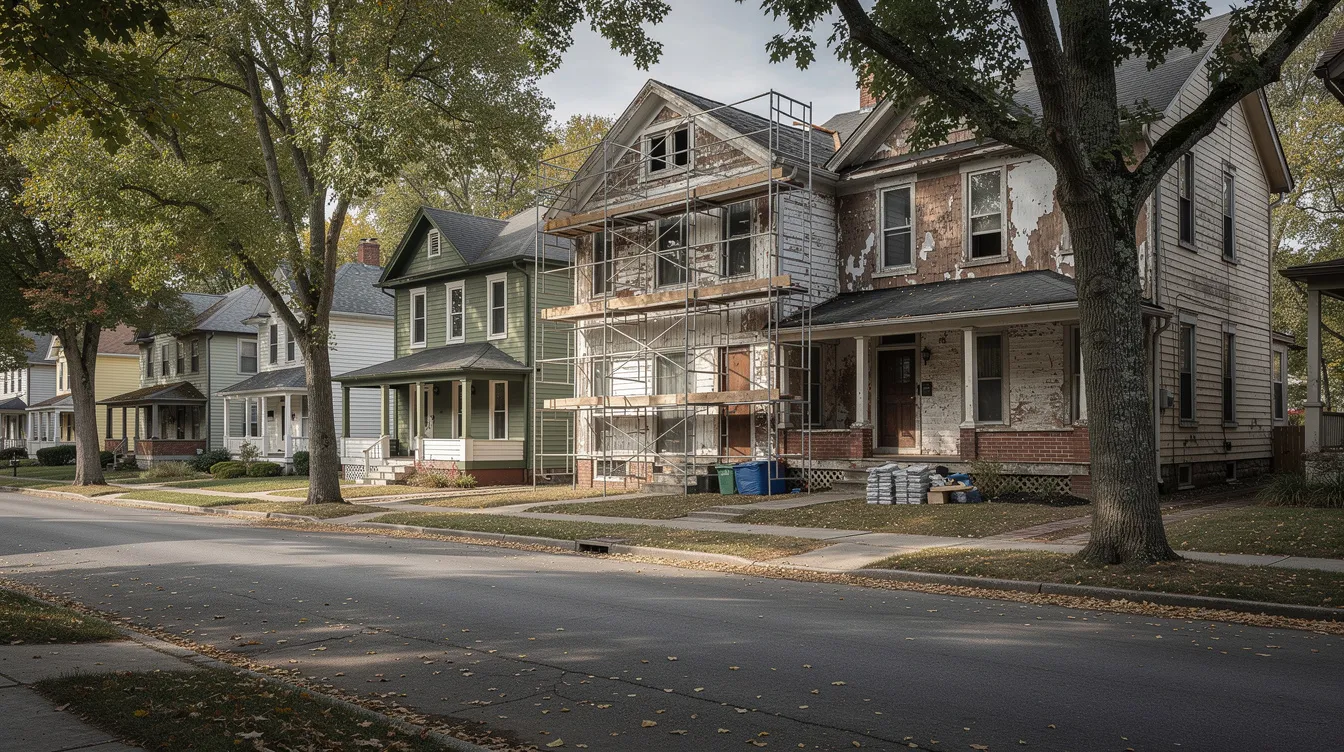
- Uninhabitable and distressed properties. Hard money loans can fund uninhabitable properties needing renovation, including code violated homes, deferred maintenance nightmares, and auction pickups with title issues that need sorting before the property qualifies for traditional financing.
Pros of Hard Money Loans for Real Estate Investors
I'll be straight with you: hard money isn't cheap. But it solves specific problems that cheaper money can't.
- Speed. Hard money loans can close in as little as 5 to 15 days, letting you compete with cash buyers and lock up time sensitive deals before someone else does.
- Flexible underwriting. The approval process puts less emphasis on personal income documentation. Approval for hard money loans is based on the value of the property, your exit strategy, and your experience. Loan approval doesn't hinge on your current mortgage payment or tax returns.
- Deal access. You can fund properties in a financial situation that most lenders would run from: no kitchen, structural damage, code violations. These are short term projects that banks won't finance but that create real equity.
- Rehab built in. Some hard money lenders will roll closing costs and part of rehab into the loan if there is enough equity in the deal, reducing your immediate cash outlay. Though fair warning, it doesn't eliminate the need for a down payment.
Cons of Hard Money: Costs, Risk, and Short Terms
Now for the cons of hard money, and there are a fair whack of them.
- Expensive. Higher interest rates and upfront fees make hard money loans more expensive than traditional financing. Hard money loan interest rates range from 8% to 15%, and lenders charge 2% to 5% in points. On a $300,000 loan, that's $6,000 to $15,000 in points alone before you pay a cent of interest.
- Foreclosure risk. If the borrower defaults on a hard money loan, the lender forecloses. Fast. There are fewer consumer protections compared to traditional loans, and your down payment, rehab funds, and time are gone.
- Short repayment periods. With repayment terms of 6 to 24 months, you need a defined exit strategy: sell the property, complete a cash out refinance, or pay off the balance. Hard money loans may carry extension fees that eat into margins if your exit is delayed. Borrowers may face pressure to complete renovation projects on time due to short loan terms.
- You still need cash. Hard money loans often require substantial down payments, usually between 20% and 35%. A down payment of 20% to 40% is typical depending on the property and your track record. Even with a higher down payment covered, you'll need reserves for holding costs, soft costs, and rehab draws that lag behind your spending.
For newer investors or anyone scaling quickly, that cash requirement creates the real bottleneck, which brings us to the next section.
Alternatives to Hard Money Loans (And When They Work Better)
This isn't an anti hard money section. It's a pro smart capital stacking section. Here are the alternatives to hard money worth knowing:
- Home equity line of credit (HELOC). Home equity lines of credit offer lower interest rates than hard money and let you tap existing equity in a primary or investment property for down payments or rehab. If you have significant equity and good credit, a HELOC can be a more cost effective first move.
- Cash out refinance. Cash out refinancing allows borrowing against home equity on a primary residence or stabilised rental. Lower rate, longer loan term, but slower to close and heavier on documentation.
- DSCR and conventional investment property loans. Better fits for long term holds and stabilised rentals. Longer repayment terms, lower rates, but stricter credit and income requirements.
- Unsecured options. A personal loan, stacked 0% business credit cards, or a small business line of credit can cover soft costs, reserves, and smaller rehab expenses. Small business lines of credit provide flexible borrowing options without tying up property equity.
- Peer to peer lending. Peer to peer lending can offer quicker funding than hard money loans in some cases, though loan offers vary widely by platform and borrower profile.
Each of these financing options has a place. The question is which ones stack well together for your specific deal.
Where the Real Funding Gap Appears: Down Payments, Rehab, and Working Capital
Even when you secure a hard money loan covering 60% to 80% of purchase or ARV, you're still on the hook for:
- Down payment: 20% to 40% of purchase price, which on a $300,000 property means $60,000 to $120,000 out of pocket
- Points and closing costs: 2% to 5% of loan amounts, plus title, insurance, and inspection fees
- Initial rehab expenses before draws are reimbursed (you spend first, then the lender reimburses after inspection)
- Holding costs: utilities, insurance, property taxes, and loan interest while the project is underway
- Earnest money deposits to lock up the deal, rarely covered by the hard money lender
This is where real estate investments stall. Strong deal, solid cash flow projections, defined exit strategy, but not enough liquid capital to get from contract to closing. Some investors bring on equity partners or resort to expensive merchant cash advances to bridge these gaps, both of which add cost or dilute returns. There's a better way to stack your capital.
How Gap Funded Complements (Not Replaces) Hard Money Lenders
Gap Funded is not a hard money lender. We don't offer hard money loans, and we're not competing with private lenders or private investors who do. We fill the holes in your capital stack so you can actually close the deal your hard money lender already approved.
Here's what we bring, in the order that matters:
- 0% business credit card stacking for covering earnest money, soft costs, and smaller rehab expenses at the lowest possible cost. Learn more about credit card stacking here.
- Unsecured term loans (personal or business) for moderate gap amounts where credit or revenue supports repayment, without placing liens on the deal property.
- HELOCs and home equity loans on primary or investment properties when you have existing equity to put to work. These are asset backed but secured against property you already own, not the deal itself. Check the HELOC page for details.
- Business lines of credit for ongoing working capital tied to revenue.
That order matters because applying out of sequence can knock out later approvals. I reckon most people don't realise that, and it costs them options.
Qualification: Typically 650+ FICO, verifiable income or business revenue, and responsible existing credit usage. We use soft credit pulls initially, so checking your options doesn't hit your score. Learn more on our gap funding overview or hard money info page.
Practical Scenarios: Combining Hard Money Loans and Gap Funding
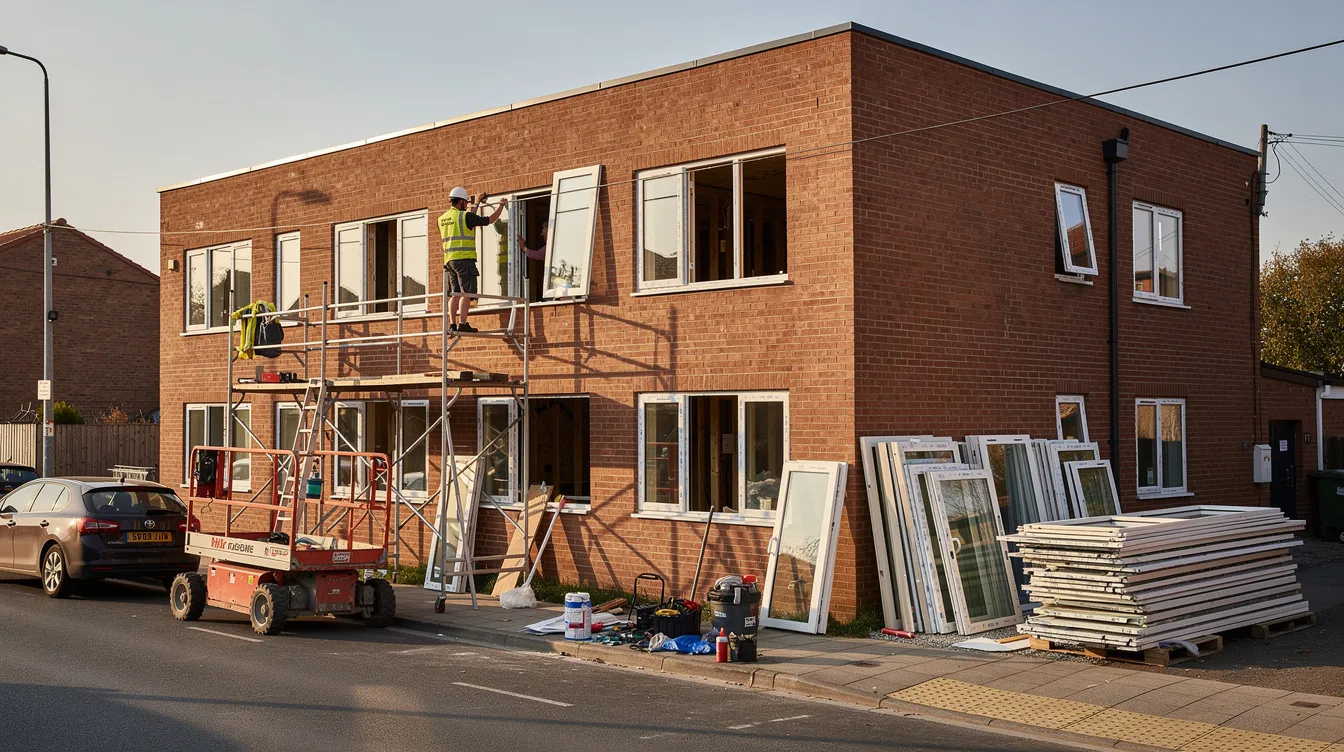
- Fix and flip, $300K distressed property. A hard money lender covers 80% of the $300,000 purchase ($240,000) plus the full $60,000 rehab budget. The investor still needs roughly $60,000 for the higher down payment, closing costs, and reserves. Gap Funded stacks 0% business credit cards for soft costs and earnest money, adds an unsecured term loan for the bulk of the down payment, and the investor closes without giving up equity or scrambling for a private money partner. Total cost of gap capital is a fraction of what a profit split would have been.
- BRRRR rental, small multifamily. An investor buys a $400,000 fourplex using hard money for acquisition and $100,000 in rehab draws. The funding gap: down payment, early rehab cash before draws reimburse, and reserves for holding costs. Gap Funded structures unsecured capital and a home equity loan on the investor's primary residence to fill the gap. Once the property is rented and stabilised, a DSCR refinance pays off the hard money. The investor keeps full ownership and moves to the next deal.
- Commercial mixed use, business owner. A business owner wants to acquire a mixed use building with retail on the ground floor and short term rental units upstairs. A hard money bridge loan covers acquisition and renovation. Gap Funded provides working capital through a business line of credit and 0% credit stacking for build out and equipment. Later, long term financing or an SBA backed loan replaces the hard money. The business model stays intact because no equity was traded away.
Is a Hard Money Loan Right for You? Key Questions to Ask
Before you commit, run through this checklist:
- Do you have a credible exit strategy (sale, DSCR refinance, or cash out refinance) within 6 to 18 months? If not, costs compound fast.
- Have you budgeted the all in cost: interest rates, points, extension fees, holding costs, and rehab overages?
- What happens if rehab runs over budget, permitting delays, or the market value of the property's current comparable sales soften?
- Is your financial situation strong enough to absorb a worst case timeline, or would a delay put you at foreclosure risk?
- Have you compared the hard money option to a HELOC, DSCR loan, or unsecured gap funding? Sometimes a slightly slower loan quickly saves tens of thousands.
- Could you secure better long term financing directly if you have strong W2 income and good credit, and use Gap Funded only for short term capital to avoid draining personal savings?
Hard money is a short term solution. The real strategy is what you stack around it.
Next Steps: Explore Your Funding Options with Gap Funded
Hard money loans can open doors to real estate deals that traditional financing won't touch. But they're expensive, short term, and they almost always leave a funding gap. The investors who consistently close are the ones who pair hard money with the right mix of lower cost capital.
- See your options without risk. Complete a quick, no obligation application at gapfunded.com/apply. We use a soft credit pull, so checking your financing options won't impact your score.
- Keep your equity. Gap Funded does not take ownership in your deals and does not place liens on the subject property when using unsecured products. Your upside stays yours.
- For brokers and wholesalers: If you're a hard money broker, wholesaler, or connector who wants to help your clients close more deals by filling funding gaps, check out our partner program.
The deal you lose isn't the one with bad numbers. It's the one where you had the right numbers but not enough cash at the table.
Related Reading
This article is for educational purposes only and isn't financial, legal, tax, or investment advice. Credit and financing outcomes depend on your own situation. Talk to a licensed financial professional before making funding decisions for your business.