
Hard Money Lenders for First-Time Investors: How to Use Them (and How Gap Funding Fills the Rest)


Hard Money Lenders for First-Time Investors: How to Use Them (and How Gap Funding Fills the Rest)
Introduction: How First-Time Investors Actually Use Hard Money
Here's a scene I see all the time: a first time investor finds a $250,000 fixer in a solid neighbourhood, runs the numbers, gets excited, and then spends six weeks waiting for a bank to maybe say yes. By week three, the property is gone. Sold to someone who could close fast.
If you're a first time investor in 2025, that story probably hits close to home. Down payments, renovation costs, carrying costs, and slow traditional lenders all conspire to keep you on the sidelines while other real estate investors snap up deals.
Hard money loans are often pitched as the solution. And they can be, but there's a catch most beginners don't hear about until it's too late: hard money rarely covers 100% of your total project costs. Even deals advertised as "no money down" still leave you scrambling for cash to cover closing costs, initial rehab, reserves, and more.
This article will explain how hard money loans work in plain English, show when they genuinely help first time investors, and then walk you through how Gap Funded fills that remaining funding gap with unsecured capital, credit stacking, and HELOCs so you can actually close.
I'm writing this from Gap Funded's perspective. We're not a hard money lender. We're the team that helps you cover everything the hard money lender doesn't.
What Is a Hard Money Loan, Really?
Hard money loans are short term, asset based financing options secured by real estate collateral. They're funded by private money lenders and specialised funds instead of traditional banks. Repayment terms usually last 6 months to 3 years, though most fall in the 6 to 24 month range.
The key difference from a standard mortgage: hard money lending is deal based. The approval process centres on the property value, the after repair value (ARV), and your exit strategy rather than your W-2s, tax returns, or perfect credit history.
Common uses for real estate investors include:
- Fix and flip: buy distressed, renovate, sell at ARV
- BRRRR deals: buy, rehab, rent, refinance into a long term loan, repeat
- Bridge loans: fast closings for auctions, wholesale assignments, or off market purchases
- Short term rental conversions: properties needing rehab before they qualify for DSCR loans or traditional mortgages
Hard money loans typically have interest rates between 8% and 15%. HMDA data for 2025 shows the median note rate at roughly 9.99% across nearly 68,000 short term investor loans nationwide. On top of that, expect origination fees of 1 to 4 points of the loan amount. High fees can accompany hard money loans, so investors should calculate total costs when evaluating them, not just the headline interest rate.
One thing to be clear about: hard money is not for owner occupied properties. It's strictly for non owner occupied investment property types like single family homes, small multifamily, and sometimes commercial property.
Hard Money vs. Traditional Financing: Why Beginners Even Consider It
If hard money is more expensive, why would anyone use it? Because traditional bank loans often can't do what you need them to do when you need them to do it.
- Underwriting focus: hard money lenders focus on property value, ARV, scope of work, and exit strategy. Traditional loans require strong credit scores, stable income, low DTI ratios, and the property to be in liveable condition. Private money lenders similarly focus on property equity, not credit scores.
- Speed: hard money loans can be approved and funded within days, often closing in 5 to 15 business days. Traditional loans often require a lengthy application process, stretching 30 to 60 days or longer. For auction deals or wholesale assignments, that speed difference is the whole ballgame.
- Term structure: hard money is short term (6 to 24 months, interest only, balloon payment at the end). Traditional mortgages amortise over 15 to 30 years with lower monthly payments.
- Property condition: hard money lenders will finance distressed residential properties needing major repairs. Most traditional lenders and credit unions won't touch a house that needs a new roof, plumbing, or structural work.
- Paperwork: less paperwork is required compared to traditional loans. No stacks of tax returns, no employer verification letters, no weeks of back and forth with underwriters.
- Cost trade off: interest rates for traditional loans range from 3% to 6%, while hard money loans typically sit between 8% to 15%. That's a significant premium. But if the alternative is losing the deal entirely, the cheaper loan you never closed on isn't saving you anything.
Why Hard Money Appeals to First-Time Real Estate Investors
For beginners specifically, hard money solves a few problems that no other financing options can touch:
- Competitive speed: being able to make offers with 7 to 14 day closes lets you compete with cash buyers and win deals from wholesalers before other investors even get pre approved
- Flexible terms: interest only payments during renovation, potential extensions, and the ability to finance renovation budgets through staged draws. Flexible terms allow for customised repayment schedules that match the rhythm of a rehab project
- Lower barrier to entry: a newer investor with a 650 to 700 credit score and a solid deal can get funded by most hard money lenders even when a traditional bank says no. Hard money lenders prioritise property value over credit scores, though less than perfect credit may mean higher rates
- Beginner friendly (sometimes): note that new investors may face stricter terms or higher rates when using hard money loans. Many lenders want to see at least a competent contractor bid, a clear scope of work, and realistic ARV comps even if you've never flipped before. Some accept equivalent experience like project management or construction backgrounds
- Learning runway: hard money is a tool to learn and scale. It's not meant to be permanent. Once you have a track record, you transition to cheaper long term financing like DSCR loans or conventional rental loans
How Hard Money Lenders Actually Structure Deals
Let's use real numbers. This is how hard money loans work on a typical first deal.
Example deal:
- Purchase price: $200,000
- Renovation costs: $60,000
- Projected ARV: $350,000
- Total acquisition plus rehab: $260,000
Lenders usually finance 65% to 75% of the property's ARV. At 70% ARV, that's $245,000 as your maximum loan amount.
That $245,000 might be structured as 85 to 90% of purchase price plus staged rehab draws. Renovation draws are released in incremental stages based on construction milestones, meaning the lender inspects completed work before releasing the next tranche. You front some renovation costs out of pocket between draws.
Standard loan terms on this deal:
- Interest rate: 9 to 13% annually
- Points: 2 to 4% upfront (on a $245,000 loan, that's $4,900 to $9,800)
- Term: 6 to 12 months
- Hard money loans often require monthly interest only payments with a balloon payment at the end
- First lien position on the investment property
That last point matters. Most hard money lenders insist on first lien position, which means another loan can't sit behind theirs on the same property. This is why gap funding needs to come from unsecured sources or separate collateral.

Reality Check: The Funding Gap First-Time Investors Run Into
Here's where the fairy tale ends. You get your term sheet from the hard money lender, feel great about the deal, and then start adding up what you actually need in cash:
- Down payment (if lender covers 85 to 90% of purchase, not 100%): $20,000 to $30,000
- Earnest money deposit: $5,000
- Closing costs (title, escrow, lender fees, inspections): $6,000 to $10,000
- Insurance, permits, initial rehab before first draw: $5,000 to $10,000
- Carrying costs (taxes, utilities, interest payments during rehab): $5,000+
- Reserves for contingency: $5,000 to $10,000
Even on our "$245,000 loan" example, the borrower pays $30,000 to $40,000 or more out of pocket. That's the funding gap.
This is the point where many promising first deals die. Not because the deal is bad, but because the investor can't bridge the gap between what the hard money loan covers and what the project actually costs.
The solution is deliberate capital stacking: combining hard money (first lien) with unsecured term loans, 0% business credit cards, and HELOCs to cover gaps without bringing in equity partners or giving up a share of your profits.
Gap Funded specialises in solving exactly this problem for real estate investors and new business owners.
How Gap Funded Complements Hard Money Lenders for First-Timers
Gap Funded is not a hard money lender. We're a funding intermediary that works alongside your hard money lender to cover everything they don't: down payment, closing costs, initial renovation costs, and working capital.
The core concept is simple. Your hard money lender takes first lien position on the property. We provide capital through channels that don't interfere with that lien.
Here are the tools we use, and the order matters (applying out of sequence can knock out later approvals):
- Debt consolidation: reduce existing monthly obligations first to maximise what you qualify for
- Unsecured gap funding: personal term loans to cover your largest upfront gaps like down payment and closing costs
- 0% credit card stacking: business credit cards with 0% promotional periods (6 to 18 months) for materials, permits, tools, and smaller rehab expenses
- HELOC: if you own a primary residence or another rental property with equity, a home equity line adds reserves and contingency capital
- Business line of credit: for investors with existing business revenue, this covers ongoing expenses or supply chain delays
Realistic qualification: many of our best unsecured programs work for borrowers with 650+ FICO, verifiable income or revenue, and manageable existing debt. We do a soft credit pull with no impact to your credit report to check your options.
We don't take equity in your deal. We don't place a lien on the subject property. And we move fast enough that you can still meet your hard money lender's closing deadline.
If you're considering your first deal, start with a quick application at gapfunded.com/apply for a free funding review before you lock up your next property.
Step-by-Step: Using Hard Money Loans on Your First DealStep-by-Step: Using Hard Money Loans on Your First Deal
Here's the chronological roadmap. No fluff, just the sequence that works.
- Get pre qualified on both sides. Talk to one or more hard money lenders to understand their lender requirements: rate, points, LTV, LTC, required down payment, and lead time. Simultaneously, apply with Gap Funded so you know your gap funding limits. This tells you your full capital stack before you write a single offer. Comparing multiple hard money lenders is essential before proceeding with a loan.
- Source your deal. Look for distressed or value add property types through wholesalers, off market channels, auctions, or local REIAs. Only pursue deals with enough spread between ARV and total costs (including hard money interest, gap funding costs, holding costs, and sales expenses) to leave real profit.
- Run conservative numbers. Get ARV comps, contractor bids with detailed scope, and estimate every cost: monthly interest, taxes, insurance, utilities, permits, and your exit plan. A solid exit strategy is crucial when taking hard money loans. Know whether you're flipping or refinancing into a DSCR or conventional mortgage.
- Lock your term sheet and gap plan. Once you have a hard money term sheet, quantify exactly what cash you need. Then confirm your Gap Funded approval covers that shortfall.
- Communicate with your lender. Let the hard money lender know your down payment and rehab gap will be covered by unsecured funding or a HELOC on a separate property, not another lien on the deal property. Transparency here avoids title and lien position issues at closing.
- Close, rehab, exit. Use draws to fund renovation milestones, manage carrying costs, and execute your exit. Then repeat with stronger financials and better terms on your next deal.

Loan Terms and Fine Print First-Time Investors Must Watch
Think of this as your checklist before signing anything on a hard money loan application:
- Interest rate and points: what's the annual rate? How many points upfront? What additional fees exist beyond origination (processing, doc prep, underwriting, legal)?
- Term length and extensions: is it 6, 9, or 12 months? Can you extend? What does an extension cost? Is there a higher rate after extension?
- Prepayment penalties: some lenders impose prepayment penalties on hard money loans. If your flip sells in month four, will you owe minimum interest for the full term? This can eat into profits on a fast turnaround.
- LTV and LTC covenants: what happens if the appraised value comes in lower than projected ARV? Does the lender reduce draws or require additional capital? These scenarios are more common than you'd think.
- Allowed property types: confirm whether the lender does single family homes, small multifamily, mixed use, or short term rentals. Not all hard money loan programs cover every asset class.
- Payment requirements: understand whether the borrower pays monthly interest only or if some lenders require reserves upfront.
- Compare apples to apples: online platforms can help compare hard money lenders' terms and rates. Don't just chase the lowest interest rate. A lender with 10% and 4 points costs more than one at 11% and 1 point on a short hold.
Risk Management: Protecting New Investors from Hard Money Pitfalls
Hard money financing may come with greater financial risks and higher costs than traditional loans. That's worth saying plainly, because I reckon too many articles gloss over this part.
Key risks for first time investors:
- Overestimating ARV: if comps don't support your number, your profit margin evaporates. Always use conservative comparables.
- Underestimating renovation costs: hidden damage, permitting delays, contractor no shows, and scope creep. Industry best practice is a 10 to 20% contingency on your rehab budget.
- Short repayment periods: if you can't sell or refinance before the loan matures, you face expensive extensions or, in the worst case, borrowers may face foreclosure if they default on hard money loans. When a borrower defaults, the lender takes the property. That's the reality of a short term loan secured by real estate.
- Carrying cost overruns: every extra month means more interest payments, property taxes, insurance, and utilities eating into profit.
- Over leveraging gap tools: using unsecured debt, credit cards, and HELOCs adds risk. Build gap funding into your budget as a cost, not as free money.
My advice: start with smaller, simpler renovation projects like a cosmetic single family rehab rather than ground up construction. Stress test your deals. What happens if it takes 90 extra days to sell? What if you refinance into a DSCR loan at a higher interest rate than planned?
Use Gap Funded tools to create real reserves and working capital, not just to barely scrape together the down payment on your first real estate purchase.
Alternatives and Complements to Hard Money Loans for First Deals
Hard money is one tool. Here's where the others fit:
- DSCR loans: ideal for rental property acquisitions and BRRRR refinances. They look at property cash flow instead of personal income. Great exit strategy after rehabbing with hard money. Not designed for the purchase and rehab phase itself.
- Traditional mortgages: work when the property condition is good, the borrower has strong W-2 income, and there's no rush. Interest rates for traditional loans range from 3% to 6%. But they're too slow and restrictive for most real estate projects involving distressed properties.
- Private investors or friends and family: private lenders can offer favourable terms, but relationship risk is real. Informal structures, lack of documentation, and disputes over control can turn ugly. A private money loan from a mate feels great until it doesn't.
- Unsecured gap funding alone: for smaller deals, like furnishing a short term rental or finishing cosmetic work on a property you already own, credit card stacking or personal term loans might be enough without hard money at all.
- Crowdfunding platforms: these pool money from multiple investors for real estate projects. They can work but often come with profit sharing, loss of control, and slower timelines.
- Merchant cash advances: possibly useful for business operations with existing revenue, but usually a poor fit for long real estate investments due to high cost and short repayment windows.
Qualification Basics: What First-Time Investors Need Before They Apply
This isn't legal or lending advice, but here's what hard money lenders and Gap Funded typically want to see. Consider it your pre flight checklist.
- Credit score: most hard money lenders work with borrowers in the mid 600s FICO range if the deal is strong. Gap Funded's best unsecured programs usually start around 650 to 680+. Poor credit or less than perfect credit doesn't automatically disqualify you, but expect higher rates and tighter terms from money lenders.
- Income and documentation: even though hard money underwriting focuses on the deal, lenders still want basic proof you can make interest payments. Gap Funded may use pay stubs, bank statements, or business revenue to size your funding limits. No credit report impact for initial qualification.
- Deal readiness: a signed purchase contract, preliminary scope of work, contractor bid, estimated ARV comps, and a clear exit strategy. This applies whether you're working with hard money lenders or applying for gap funding.
- Clean credit history: avoiding recent bankruptcies, judgments, and major derogatory marks makes both hard money loan approval and unsecured gap funding significantly easier.
- Networking: local real estate investment associations can provide referrals to lenders, and networking with other investors can yield insights on reliable lenders in your market.
Get pre qualified with Gap Funded before you write offers so you know your realistic capital stack and can move quickly when a good deal hits.
Bringing It Together: A Sample First-Time Flip Capital Stack
Let's put all the pieces together with one complete example.
Deal (Midwest market, 2025):
- Purchase price: $200,000
- Renovation budget: $60,000
- Closing costs, insurance, permits: $10,000
- Carrying costs (6 months of taxes, utilities, interest): $15,000
- Total project cost: $285,000
- Projected ARV: $350,000
Hard money contribution: A lender offers 70% of ARV = $245,000, covering the bulk of purchase and rehab. That leaves a cash gap of roughly $40,000.
Gap Funded stack (in order):
- Unsecured gap funding (term loans): $20,000 covering down payment and closing costs
- 0% credit card stacking: $10,000 for materials, permits, and tools during rehab
- HELOC on primary residence: $10,000 for reserves, contingency, and carrying cost buffer
Timeline:
- Month 1: close with hard money plus gap funding, begin demo and structural work
- Months 2 to 5: renovation milestones, draw requests to hard money lender after inspections
- Month 6: list for sale or place tenant and begin DSCR refinance
- Month 7 to 8: sell or refinance, pay off hard money loan, repay gap funding, pocket profit
Cost snapshot:
- Hard money interest (10.5% on $245,000 for 7 months): roughly $15,000
- Points (2%): $4,900
- Gap funding costs (varies by source): $2,000 to $4,000
- Total financing cost: roughly $22,000 to $24,000
- Gross profit at ARV: $350,000 minus $285,000 minus $24,000 minus selling costs (~$21,000 at 6%) = roughly $20,000 net
Not life changing on deal one. But you now have experience, a track record, contractor relationships, and a diversified portfolio of real estate financing options. Deal two gets easier. Deal five gets significantly cheaper.
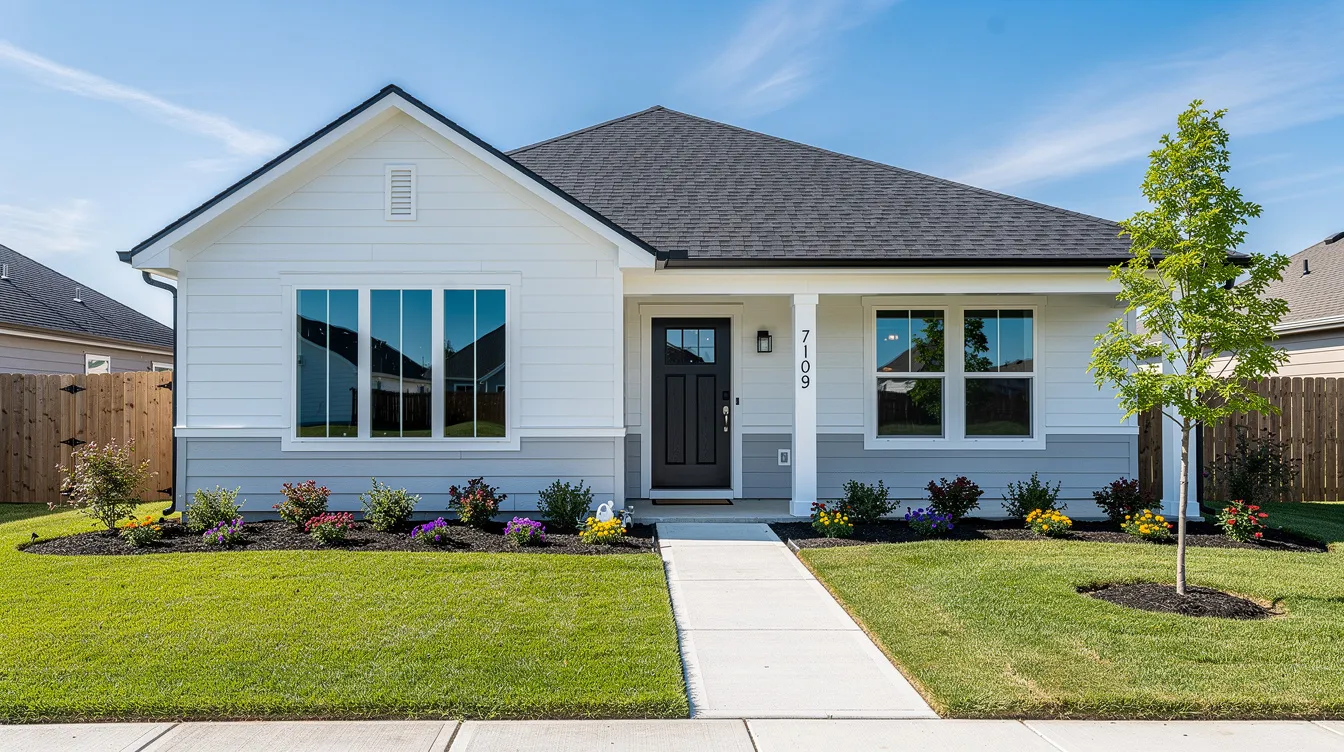
Your first deal doesn't need to be perfect. It needs to be funded, executed, and finished. Hard money gets you in the door. Gap funding makes sure you can walk through it.
If you're ready to see exactly how much gap funding you qualify for before talking to hard money lenders, start with a free funding review at gapfunded.com/apply. Soft pull, no impact to your credit, and you'll know your real numbers in days, not weeks.
Related Reading
This article is for educational purposes only and isn't financial, legal, tax, or investment advice. Credit and financing outcomes depend on your own situation. Talk to a licensed financial professional before making funding decisions for your business.