
Hard Money Direct Lender: Fast Private Loans for Real Estate Investors

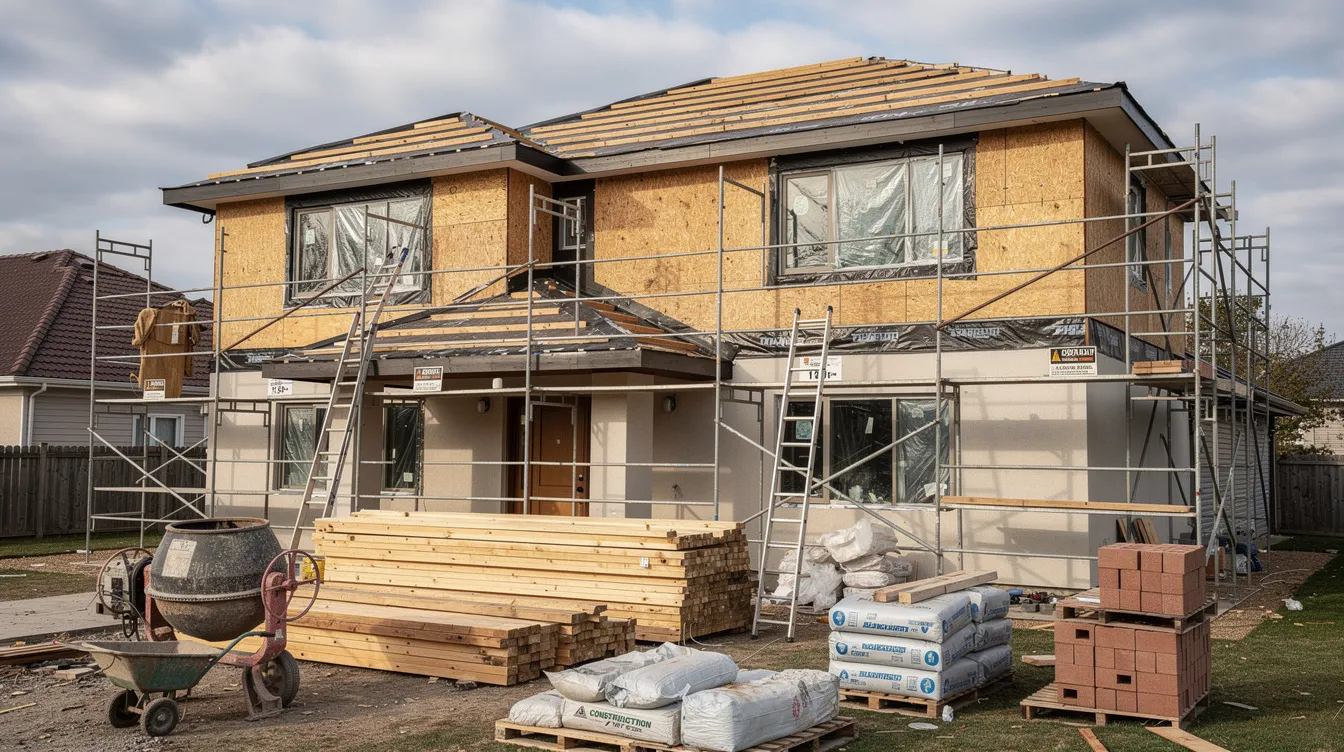
Hard Money Direct Lender: Fast Private Loans for Real Estate Investors
Most real estate deals don't die because the numbers are bad. They die because the investor runs out of cash before closing day. A hard money direct lender solves half of that problem by funding fast. Gap Funded solves the other half by filling everything the lender won't cover.
Fast Hard Money Loans Direct to Real Estate Investors
If you've ever lost a deal because your financing took six weeks and the seller moved on, you already know why hard money exists. Hard money direct lenders use their own capital to fund short term loans secured by real estate, and they move fast enough to keep pace with competitive markets.
Gap Funded helps real estate investors access hard money financing by pairing them with direct lenders and then closing the funding gap with our own capital tools. That gap is usually the down payment, rehab overage, closing costs, or earnest money deposit that the lender expects you to bring out of pocket.
We are not the primary hard money lender. We work alongside hard money direct lenders to complete the capital stack so your deal actually closes. Think of us as the missing piece between "approved" and "funded."
- Hard money loans can close in as little as 5 to 15 business days
- Soft credit pull to check Gap Funded options, no impact to your FICO
- Loan programs available for fix and flip, rental property, commercial property, and construction loans
- No upfront junk fees or equity splits from Gap Funded
Ready to see what you qualify for? Start with a quick application at gapfunded.com/apply.
What Is a Hard Money Direct Lender?
A hard money direct lender is a private individual or company that lends its own capital on short term, asset based hard money loans secured by real estate property. Direct lenders use their own capital rather than acting as brokers, which means working with them eliminates broker fees and reduces communication delays.
Hard money loans differ from traditional mortgages in one fundamental way: approval is based on the property's value, not credit score. Underwriting decisions focus primarily on the after repair value (ARV) of the subject property, the loan to value ratio, and your exit strategy. Tax returns and debt to income ratios take a back seat. Hard money loans often have more flexible qualification criteria than traditional banks, and they require minimal paperwork compared to traditional loans.
Typical borrowers include:
- House flippers running fix and flip projects
- BRRRR strategy investors buying, rehabbing, renting, refinancing, and repeating
- Small multifamily and short term rental (Airbnb) operators
- Commercial bridge deal investors
- Foreign nationals with US property but limited credit history
Standard loan terms range from 6 to 24 months with interest only payments and LTV ratios that usually cap at 60% to 80% of purchase price or ARV. A 30% down payment is typically required for hard money loans, though this varies by lender, deal, and borrower experience.
Gap Funded works with investors who already have or are seeking a hard money loan approval, and then supplies the extra cash so they don't miss the deal.
How Hard Money Loans Work for Real Estate Investors
Here's how hard money loans work from your perspective as an investor:
You find a property, get it under contract, and run your deal analysis. You approach a hard money direct lender with a project package that includes the purchase price, rehab budget, projected ARV, and your exit strategy. The lender evaluates the collateral, not your personal income or borrower's credit history in the traditional sense, and issues a term sheet.
The process breaks down into four steps:
- Deal analysis and ARV projection. You estimate what the property will be worth after repair and calculate your margins.
- Term sheet from lender. The lender commits to a loan amount, rate, points, and draw schedule based on collateral value. An appraisal is required to determine property value for the loan.
- Purchase and rehab draws. The lender funds the purchase. Rehab funds are released in stages after inspections. Direct lenders typically fund both the property purchase and the renovation budget.
- Exit. You sell the property, refinance into a DSCR loan, or convert to a conventional loan. Your entire loan balance is paid off at exit.
The property is the primary security. Most lenders require a personal guarantee, and if the borrower defaults, the consequences are severe: fast foreclosure, loss of equity, and potential personal liability. Borrowers risk foreclosure if they cannot repay hard money loans.
Concrete example: A 2026 fix and flip in Atlanta. Purchase price is $210,000, rehab budget is $50,000, projected ARV is $320,000. The lender offers 70% of ARV, which equals $224,000. That covers most of the purchase and rehab, but the investor still needs roughly $36,000 or more for the down payment gap, closing costs, and points. That's where Gap Funded steps in.
Hard money loans can finance residential properties, commercial properties, and even uninhabitable properties needing renovation. Investors use hard money loans for purchasing rental properties, fix and flip projects, and ground up construction.
Hard Money Loans vs. Traditional Mortgages
Both are money loans secured by real estate, but they serve very different purposes and timelines.
- Speed: Hard money direct lenders provide significantly faster funding compared to conventional banks. Direct lenders can close loans in a matter of days rather than weeks or months. Most hard money loans close in 5 to 15 business days. A traditional mortgage in 2025 to 2026 typically takes 30 to 60 days or more.
- Underwriting: Hard money lending is asset based. A conventional lender wants W2s, tax returns, and a strong FICO. A hard money lender wants to know what the property is worth and how you plan to exit. Approval for hard money loans focuses on property value, not credit scores.
- Use cases: Hard money is the right tool for distressed properties, heavy rehab, auction purchases, and situations where personal income or credit check results block traditional loans. Traditional mortgages work for stabilised owner occupied homes and long term rental holds.
- Cost: Hard money loans typically have interest rates between 8% and 15% with 2 to 4 points at closing. A conventional 30 year fixed rate sits around 6% to 7% as of mid 2026. Higher loan costs are the trade off for speed and flexibility.
Where does Gap Funded fit? We help investors who are approved for hard money but short on cash. We also support long term refi readiness through debt consolidation and credit optimisation when needed.
Types of Hard Money Loan Programs Direct Lenders Offer
Not all hard money loan programs are built the same. Here's what most direct lenders offer and who each loan program is best for:
- Fix and flip loans: Short term financing for purchase plus rehab, often up to 65% to 75% of ARV. Ideal for investors planning a sale in under 12 months. Fix and flip loans help investors buy and renovate properties quickly.
- Bridge loans: Used for quick acquisitions of rental or commercial property while arranging permanent financing. Bridge loans provide short term financing until permanent financing is secured. Terms typically run 6 to 24 months.
- New construction loans: Ground up construction or major additions. Funds released in draws tied to milestones. Higher scrutiny on plans, permits, and builder experience.
- DSCR and rental hard money: Loan solutions designed around cash flow coverage for rental property investment loans. These help acquire properties for rental income with minimal income documentation.
- Commercial hard money loans: For small office, mixed use, warehouse, or hospitality projects. Commercial hard money loans finance investment in commercial properties, usually on 12 to 36 month terms.
Gap Funded's role is to cover what those loan programs don't finance: down payment, closing costs, earnest money deposits, and working capital through credit card stacking, personal term loans, HELOCs, or business lines of credit.
Typical Hard Money Loan Terms, Rates, and Upfront Fees
Knowing the real numbers helps you budget properly and avoid surprises. Here's what 2024 to 2026 hard money deals actually look like:
- Term lengths: 6, 9, or 12 months for most fix and flip loans. 12 to 24 months for bridge and construction. Some DSCR hard money at 30 year amortisation with prepayment penalties.
- Interest rates: 8% to 15% annually depending on experience, leverage, and property type. The higher end applies to heavy rehab, ground up construction, or borrowers with a low credit score. Many loans sit in the 9% to 13% range for experienced investors with good credit.
- Upfront fees: 2 to 5 points (each point is 1% of total loan amount) plus third party costs like appraisal, title, and legal. Points are paid at closing and directly affect your project ROI.
- Payment structure: Interest only monthly payments with a lump sum principal payoff when the property sells or is refinanced.
- Extensions: If a project runs long, expect extension fees of 1 to 2 extra points for 3 to 6 months of added loan term. Build these contingencies into your budget from day one.
- Down payments: Hard money loans often require down payments of 20% to 40%, depending on LTV, property condition, and borrower track record. A larger down payment typically gets you competitive terms.
Gap Funded does not charge upfront junk fees or equity splits. Checking your funding options is done with a soft credit pull only, no impact to your FICO.
Who Uses Hard Money Direct Lenders (and When It Makes Sense)
Hard money lending is a tool for real estate investors and small business owners, not typically for owner occupied homes.
Common profiles include:
- Full time and part time real estate investors doing fix and flip or BRRRR
- Contractors wanting to become developers
- Short term rental and Airbnb operators
- Small business owners buying their first commercial property or investment property
- Foreign nationals who lack US credit history but want to purchase property in the US. Many direct lenders have specific foreign national loan programs with a larger down payment (30% to 40%) and slightly higher rates.
Hard money shines in specific scenarios: auction purchases with 7 to 10 day closings, heavy rehab where properties fail conventional loan guidelines, and situations where tax returns or recent job changes block a traditional mortgage. Many direct lenders specialise in financing distressed properties that need substantial repairs. Hard money loans can be used for purchasing uninhabitable properties that no traditional lender would touch.
Direct lenders can offer creative terms tailored to specific investment strategies, making them ideal for short term problems: acquiring the deal, stabilising the property, and then refinancing or selling.
Gap Funded is ideal for investors who have a solid deal and a hard money approval but are short on the last 10% to 30% of the capital stack.
Key Risks of Hard Money Lending for Investors
I reckon the worst thing I can do is pretend hard money is all upside. A direct, honest look at risk protects you and builds long term success.
- Cost risk: High interest rates (8% to 15%), sizable upfront fees, and short repayment periods mean the total cost of carry adds up fast. If your project takes longer than planned, holding costs eat your margins.
- Exit strategy risk: Most hard money loans rely on selling or refinancing. If the market value softens, your appraisal comes in low, or financing dries up, your exit gets delayed or reduced. That's when you risk losing your equity or triggering default.
- Operational risk: Contractor delays, permit issues, inspection problems, or surprise repair costs can stall a fix and flip or construction project. These are not hypothetical. They happen on a fair whack of deals.
- Market risk: In 2024 to 2026, rising interest rates and price softening in some markets squeezed profit margins for flippers who assumed constant appreciation. Conservative ARV projections protect you.
- Underfunding risk: Most hard money loans do not fund 100% of rehab or holding costs. Mid project cash crunches are common when investors underestimate how much capital they actually need.
- Unstructured debt risk: Using credit cards randomly to fill gaps creates expensive, unstructured debt. Contrast this with structured gap funding that plans 0% promotional periods and a clear repayment strategy.
Stress test every deal with two scenarios: exit by sale and exit by refinance. Have multiple exit strategies before signing a note or personal guarantee. Borrowers should verify the lender's licensing and capital before signing any agreements.
Hard Money Loan Alternatives and Complements
Hard money isn't the only option, and sometimes it's not the best one either. Here are realistic alternatives and complements:
- DSCR loans: Once a rental property is stabilised, a DSCR loan offers longer terms and lower rates. Basic qualification is a debt service coverage ratio of 1.0 to 1.25 or higher. Great for the refi leg of a BRRRR strategy.
- HELOCs: A home equity line of credit on a primary residence or investment property can supplement or replace hard money for down payment and rehab. Lower interest than hard money, though rates have climbed in recent years.
- Unsecured personal term loans and 0% credit stacking: For investors with strong FICO scores who need flexible working capital or earnest money deposits, these are powerful short term tools.
- Conventional mortgages and portfolio loans: After the property is fixed, leased up, and stabilised, a conventional loan or portfolio loan offers the best long term rates.
- Equity investors or profit sharing: Partners can replace hard money in some cases, but they usually require equity splits that cost more than interest over time. Gap Funded's approach is non dilutive: no equity splits, no liens on the deal property.
Be candid with yourself about which tool fits each phase of the deal. Hard money for acquisition and rehab. Gap funding for the capital shortfall. Long term financing for the hold.
Where Hard Money Direct Lenders Stop and the Funding Gap Begins
Here's the part nobody tells you in the marketing brochure: most hard money lenders will not finance 100% of a deal. They expect you to bring real cash to the table.
The typical gaps include:
- Down payment (often 10% to 30% of purchase price or ARV)
- Closing costs and lender points
- Rehab overages beyond the approved budget
- Reserves demanded by the lender
- Working capital for materials and contractors
- Earnest money deposit (EMD), often $5,000 to $20,000 non refundable within 2 to 3 days of contract acceptance
Example: A $400,000 purchase with an $80,000 rehab in 2026. The lender funds 80% of purchase ($320,000) and 100% of planned rehab ($80,000). But you still need roughly $80,000 to $100,000 for the down payment, points, closing costs, and contingency reserves.
This capital gap is the main reason many approved hard money loans never actually close or fund, even when the deal numbers are solid. The loan application gets approved, the term sheet looks good, and then the investor can't come up with the last piece.
Gap Funded specialises in solving these exact shortfalls so viable deals aren't lost over a missing 10% to 20% of capital.
How Gap Funded Complements Hard Money Direct Lenders
Gap Funded is a capital stacking expert that works alongside hard money and DSCR lenders, not against them. We complete the financing so your deal actually closes.
Investors typically come to us with one of three issues:
- Approved for a hard money loan but short on down payment or points
- Strong deal but declined by the hard money lender due to insufficient liquidity
- Able to qualify but needing working capital during the rehab
The core tools we use, in the order we normally stack them:
- Unsecured personal term loans for immediate cash needs
- 0% business credit card stacking for short horizon project expenses
- HELOCs for larger sums at lower interest
- Business lines of credit or revenue based products for experienced operators with established businesses
Realistic qualification: many of our unsecured options work best for credit scores of about 650 to 680 and above with verifiable income. HELOCs depend on property equity. Revenue based loans require at least 2 years in business and roughly $20,000 per month in revenue.
Benefits: no equity splits, no liens on the subject property, soft credit pulls to view options, and fast execution that matches hard money lender timelines. Direct lenders are often better for repeat financing relationships due to streamlined processes, and Gap Funded fits right into that rhythm.
Review your gap funding options and apply here.
Gap Funding Tools: Filling Down Payment, Rehab, and Working Capital Needs
Here's a practical breakdown of each Gap Funded instrument and which part of the capital stack it covers:
- Unsecured personal term loans: Fixed rate, fixed payment loans used for down payments, points, and closing costs. Ideal for new investors without established business revenue. These are your rapid gap funding workhorses.
- Business credit card stacking: Building a portfolio of 0% APR business cards with high limits to cover materials, contractor draws, and short term project expenses. Match the card's promotional period to the project timeline. Learn more about credit card stacking.
- HELOCs: A lower interest source for larger down payments and rehab reserves when you have equity in a primary or investment property. Use the HELOC calculator to estimate what you might access.
- Business lines of credit and revenue based products: For established operators who need recurring working capital across multiple projects. Requires business history and revenue. Details on business lines of credit and business term loans.
- Debt consolidation: If you're already over leveraged on high interest cards, reorganising that debt before your next deal frees up cash flow and improves your borrowing position. Debt consolidation can reset your financing needs for the next project.
The aim is always to match the life of the funding tool with the life of the cost. Short term 0% cards for rehab materials. Longer term loans for equity injections. That alignment is what separates structured gap funding from throwing money at a wall.
Case Style Scenarios: Hard Money + Gap Funded in Action
Phoenix, AZ, 2025: A fix and flip investor gets hard money approval at 80% of purchase plus rehab but is $45,000 short on down payment and closing costs. Gap Funded stacks a personal term loan and 0% business cards to cover the gap. The deal closes in 10 days. Without the gap funding, this investor walks away from a profitable flip because of a cash shortfall that has nothing to do with the deal quality.
Ohio, early 2026: A BRRRR investor purchases a 4 unit rental property using a hard money bridge loan. Gap Funded covers rehab draws and working capital during stabilisation. Once all units are leased and the property is generating income, the investor refinances into a DSCR loan. The hard money loan and gap funding are both paid off, and the investor holds a cash flowing asset with long term financing.
Florida, 2026: A foreign national wants to buy a small commercial real estate property. The direct lender requires 35% down. Gap Funded helps access a HELOC on an existing US owned property plus unsecured capital to meet the down payment, points, and closing costs. No equity split required, and the timeline matches the lender's closing window.
In each scenario, the combination of a hard money direct lender and Gap Funded's capital tools prevents the deal from falling apart over a funding gap.

How to Choose the Right Hard Money Direct Lender (and Work With Gap Funded)
Lender choice should match the deal's strategy, not just the lowest rate. A cheap loan that can't close on time is worthless.
Criteria for selecting a direct lender:
- Experience with your property type (fix and flip, construction, rental, commercial)
- Speed to close and actual performance history. Liquidity and speed of funding are essential criteria when evaluating direct hard money lenders. For reference, California Hard Money Direct can close loans in as little as 5 to 10 days, HouseMax Funding claims to fund loans in 10 days or less, and Easy Street Capital can fund loans in as little as 48 hours.
- Flexibility on rehab draws and inspection schedules
- Clarity on all upfront fees, extension fees, and prepayment penalties
- Whether they work with first time real estate investors and foreign nationals
Ask about minimum FICO expectations, loan to cost versus loan to value limits, and whether they fund 100% of rehab or require cash first. Many loans from private lenders have different structures, so compare carefully. A credit union or traditional lender might seem cheaper on paper but won't touch your distressed deal.
How to integrate Gap Funded: apply as soon as you have a deal under contract or a hard money term sheet. Share your projected closing date, and our team structures supplemental funding to match lender timelines. Treat us as your capital architect, especially if you plan multiple deals per year and want a repeatable, scalable funding playbook. Real estate investing at scale requires systems, not scrambling for cash on every deal.
Next Steps: Get Your Deal and Funding Reviewed
- Gather a basic deal package: purchase contract, rehab estimate or construction budget, estimated ARV or appraised value, and your current hard money term sheet if you have one.
- Complete Gap Funded's quick application at gapfunded.com/apply for a soft pull, no obligation review of gap funding options that align with your hard money loan program.
- Whether you're doing a first fix and flip, scaling a rental property portfolio, or tackling a commercial property project, the combination of a hard money direct lender and Gap Funded's capital tools can bridge the funding gap without equity splits or liens on the subject property.
Good deals die from funding gaps, not bad numbers. Don't let yours be one of them.
Related Reading
This article is for educational purposes only and isn't financial, legal, tax, or investment advice. Credit and financing outcomes depend on your own situation. Talk to a licensed financial professional before making funding decisions for your business.