
Hard Money Construction Lenders: How They Work, When to Use Them, and How Gap Funding Fills the Capital Stack

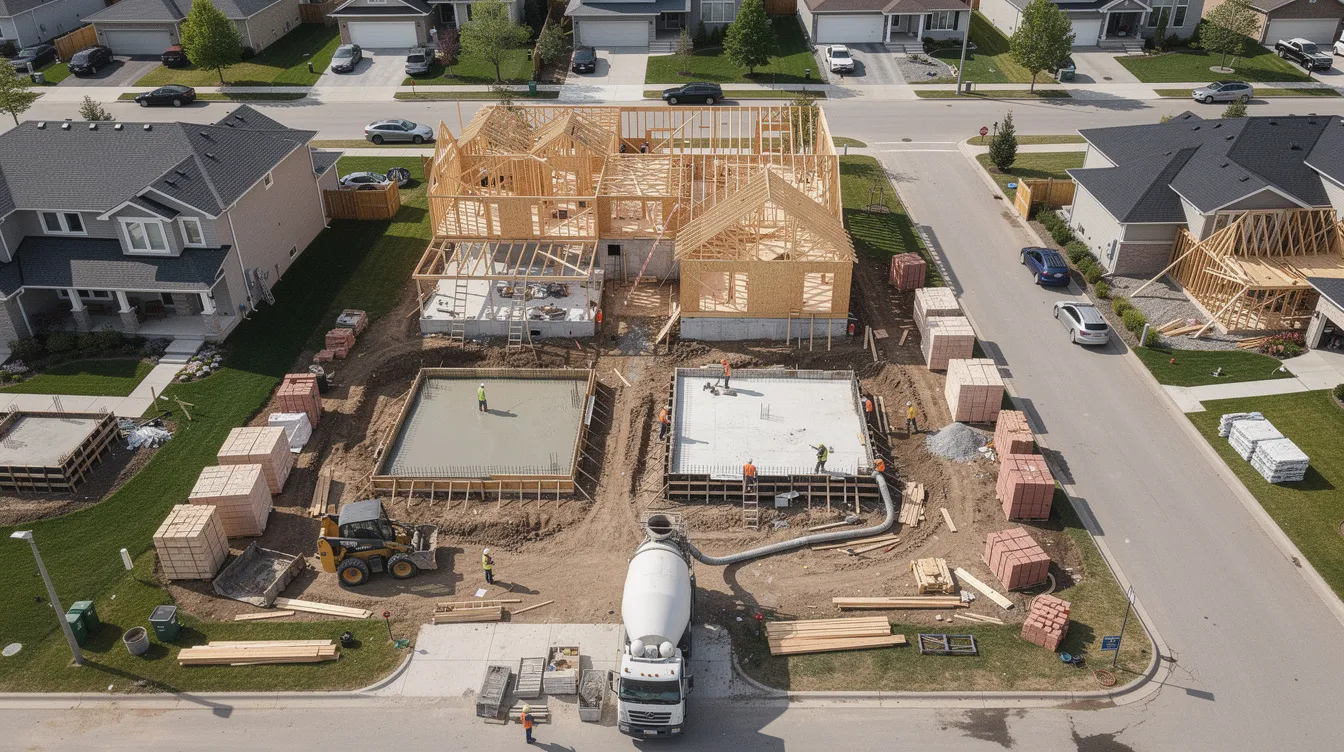
Hard Money Construction Lenders: How They Work, When to Use Them, and How Gap Funding Fills the Capital Stack
Most real estate investors don't lose deals because they picked the wrong lender. They lose deals because they ran out of cash between what the lender funded and what the project actually cost. If you're looking at ground up construction or a spec build and wondering how to piece the money together, this one's for you.
Fast Answer: When Does a Hard Money Construction Lender Make Sense?
Hard money construction lenders are private lenders or debt funds that provide short term, asset based financing for construction projects. These are hard money loans secured by real estate, where approval focuses on property value and the project's potential rather than your personal income history or a stack of tax returns. They're built for speed in competitive U.S. markets like Dallas, Phoenix, Atlanta, Charlotte, and most of Florida and Texas.
Hard money construction loans are the go to for time sensitive new construction projects, ground up construction loans, infill builds, and heavy value add deals where traditional bank loans are either too slow or too rigid. If you need construction financing that moves at the speed of the deal rather than the speed of a bank committee, this is the lane.
Here are the situations where a hard money construction loan typically fits:
- You're in a bidding war on a lot and need to close in days, not months. Hard money loans can be funded in as little as 7 days.
- Your closing deadline is tight and a bank simply can't turn around underwriting fast enough.
- You have credit issues, complex income (business income, multiple LLCs), or limited credit history that makes conventional construction financing a non starter.
- The property type is unconventional: infill lots, teardowns, mixed use builds, or nonstandard designs that traditional lenders won't touch.
- You're building spec homes or doing ground up construction where the after repair value is strong, but you don't tick every box on a bank's checklist.
- You're running multiple construction projects at once and need hard money loans that allow funding for multiple projects simultaneously.
Even when a hard money construction lender says yes, the loan rarely covers everything. Down payment on the dirt, closing costs, soft costs like architects and permits, reserves, and overages all fall on you. That's the funding gap, and that's exactly where Gap Funded steps in to complete the capital stack.
Overview: What Is a Hard Money Construction Lender?
A hard money construction lender is a private lender or fund that issues short term construction loans based primarily on the property's projected value and the viability of the project, not on full tax return underwriting. Hard money lenders prioritise the project's potential value over strict financial documentation, which is why real estate investors with unconventional income or credit situations find them so useful.
The key difference between hard money construction loans and generic hard money loans is the structure. Construction loans use draws, where funds are released in stages as work is verified by inspections. There's a detailed construction budget, a draw schedule tied to milestones (foundation, framing, finishes), and usually permit requirements. A standard bridge loan hands you a lump sum. A construction loan is more like a drip feed, which keeps both you and the lender honest.
Typical borrowers in 2024 to 2026 include:
- Small spec home builders in high growth markets (Texas, Florida, Carolinas, Georgia)
- Fix and flip investors stepping into new construction for the first time
- Build to rent operators constructing rental properties for long term hold
Standard collateral types are infill residential lots, small subdivisions, teardowns being replaced with new construction, and small mixed use projects. Hard money loans typically have terms ranging from 6 months to 3 years, depending on project scope.
How Hard Money Construction Loans Work from Lot to Final Draw
Here's the entire process from start to finish, in plain language:
- Term sheet: You present the deal (purchase contract, build plans, projected ARV). The lender sends back a conditional term sheet with rate, leverage, points, and draw schedule.
- Underwriting and appraisal: The lender orders an "as completed" appraisal and reviews your construction budget line by line. They'll look at your contractor's credentials, licensing, insurance, and track record.
- Budget and draw schedule approval: Hard costs, soft costs, contingency, and inspection milestones are mapped. Draws are tied to construction phases.
- Closing on land: The lender funds a portion of land acquisition at closing. You bring the equity requirement. Title, escrow, and lender fees are settled.
- Construction draws: As each phase completes (foundation, framing, rough ins, finishes), inspections are done and the lender releases construction funds for that stage. The draw process with hard money loans can be less bureaucratic than that of traditional lenders, which helps keep the construction process moving.
- Interest only payments: You pay interest only on drawn funds during the build. No principal payments until exit.
- Exit: At maturity (commonly 12 to 18 months), you either sell the completed property on the MLS, refinance into a DSCR loan for rental hold, or repay from other capital.
Example timeline for a spec home started in Q1 2025:
- January: Close on lot with hard money lender funding 70% of land cost. You bring 30%.
- February to March: Permits finalised, architectural plans locked.
- April: Break ground. First draw (foundation).
- May to July: Framing, rough ins, mechanical. Second through fourth draws.
- August to September: Finishes, final inspections, punch list. Fifth draw.
- October: List for sale or begin lease up for DSCR refinance. Balloon payment at sale or refi closing.
Typical Loan Terms: Rates, Leverage and Loan to Value
Let's define the metrics that matter before looking at numbers:
- Loan to value (LTV): Percentage of the completed property's value the lender will fund. If the ARV is $500,000 and LTV is 70%, maximum loan is $350,000.
- Loan to cost (LTC): Percentage of total project cost (land plus build plus soft costs) the lender will finance.
- After repair value (ARV): What the property should be worth once construction is finished.
Realistic 2024 to 2026 ranges for hard money construction loans:
| Metric | Typical Range |
|---|---|
| Interest rates | 8% to 15% (most solid deals land at 9% to 13%) |
| Origination fees | 2 to 4 points |
| Term length | 6 months to 3 years (12 to 18 months most common) |
| LTV on completed value | 60% to 75% |
| LTC on total project cost | 70% to 85% |
Lenders typically finance 60% to 75% of the after repair value. Higher closing costs and origination fees are common in hard money loans compared to conventional loans, which usually offer lower interest rates between 6% and 8%.
Sample term sheet for a $500,000 ground up construction loan:
- Land cost: $150,000
- Build plus soft costs: $300,000
- Total project cost: $450,000
- ARV: $600,000
- Lender offers 70% of ARV = $420,000 (capped at 80% LTC = $360,000)
- Borrower cash needed: roughly $90,000 (down payment, soft costs, closing costs)
- Rate: 11.5% interest only
- Points: 3 origination
- Term: 12 to 18 months
Higher leverage means less cash out of pocket at closing, but it increases monthly carrying costs and financing costs if the project runs long. That trade off is real.
Advantages of Hard Money Construction Loans for New Construction Projects
Between 2020 and 2026, conventional construction financing from banks tightened. Regulatory pressure, rising rates, supply chain chaos, and labour shortages all made banks pickier. Meanwhile, housing supply stayed short, especially in Sun Belt metros, and competition for land got fierce. Private lenders filled the void because they could move faster and say yes to deals banks wouldn't touch.
Here's where hard money construction loans genuinely shine:
- Speed. Approval for hard money loans can occur within 24 to 48 hours. Funding for hard money loans can be secured in as little as 7 to 14 days. Traditional loans often take weeks or months to close.
- Flexible underwriting. Hard money loans appeal to borrowers with unconventional income or credit situations. Less stringent qualification criteria make hard money loans accessible to LLC owners, self employed investors, and borrowers without W2 income documentation.
- Unique deal types. Private lenders focus on project viability, not property condition. Hard money funds can support properties that traditional banks may reject due to distress, unusual zoning, or nonstandard designs.
- Faster draws. Quick draws and streamlined inspections keep your construction project on schedule. Less red tape during the build means fewer construction delays waiting on bank approvals.
- New investor friendly. If your deal fundamentals are solid and you have an experienced general contractor, many lenders will work with first time builders.
- Capital stacking. Hard money can be layered with investor equity, gap funding, and future DSCR loan takeouts to build a full capital stack.
Hard money financing can be beneficial for time sensitive real estate opportunities where every week of delay costs you money or loses the deal entirely.
Disadvantages and Risks Investors Must Plan For
I'm not going to sugarcoat this. Hard money construction loans are expensive, and the risks are real.
- Cost. Hard money lenders usually charge significantly higher interest rates than traditional lenders. You're paying 8% to 15% instead of 6% to 8%, plus 2 to 4 points upfront. That adds up fast on a 12 to 18 month build.
- Short maturities. Loan terms for hard money loans usually range from 6 months to 3 years. Miss your deadline to finish, sell, or refinance, and you're looking at extension fees or worse.
- Carrying cost risk. Construction delays can lead to increased interest payments on loans. Permit holdups, labour shortages, or material price spikes (ask anyone who built in 2021 to 2023) can eat your profit margin before you finish framing.
- Foreclosure risk. Borrowers may face foreclosure risk if projects stall. If your exit financing falls through or the real estate market softens, you could lose the property.
- Personal guarantees. Most lenders require personal guarantees. Some use cross collateralisation against other properties you own. Default puts everything at risk.
- Exit strategy pressure. Hard money loans often require a clear exit strategy for repayment. If you can't sell or refinance by maturity, you're in trouble.
Conservative underwriting on your end is not optional. Realistic ARV estimates, a detailed scope of work, reliable contractor bids, and a contingency budget of 10% to 15% are baseline requirements. First time builders especially need strong cash reserves or supplemental capital like gap funding alongside the construction loan itself.

Hard Money Construction Loans vs. Conventional Construction Loans
Here's the straight comparison:
| Aspect | Hard Money Construction Lender | Conventional Lender (Bank / Credit Union) |
|---|---|---|
| Approval speed | 24 to 48 hours soft quote; 7 to 14 day close | 30 to 60 days typical |
| Documentation | Budget, ARV comps, contractor plan, permits | Full tax returns, W2s, income history, DTI ratios |
| Credit score | Many work with 620 to 660+ if the deal is strong | Usually 700+ minimum |
| Interest rates | 8% to 15% | 6% to 8% |
| Loan terms | 6 months to 3 years; interest only; balloon | 12 to 24 month construction plus 30 year permanent |
| Leverage | 60% to 75% LTV; 70% to 85% LTC | Often more conservative, 60% to 70% |
| Flexibility | High; LLCs, complex income, unconventional property | Rigid; strict appraisal, income, and property standards |
Flexibility in terms and conditions is often higher with hard money lenders than traditional banks. Conventional loans shine for owner occupied custom homes, long term holds with strong borrower's credit score and income documentation, and situations where you can afford to wait. Hard money construction lenders are better for investment property deals, ground up projects with tight deadlines, or borrowers with complex financials who can't meet traditional financing requirements.
The application process for hard money loans is typically faster than traditional loans. That speed has a price, but for many real estate investors, missing the deal entirely costs more than a few extra points.
Key Underwriting Criteria Private Lenders Actually Care About
While a hard money construction lender is more flexible than a bank, they're not handing out money blindly. Here's what they actually underwrite:
- Purchase price vs comps. Is the land priced fairly relative to the neighbourhood and the completed value?
- ARV of the completed build. Backed by comparable sales, not wishful thinking. After repair value is the number that makes or breaks the deal.
- Detailed construction budget. Hard costs, soft costs, permit fees, engineering, architecture, site prep, and contingency. Lenders stress test loan to value and loan to cost ratios to confirm they can be made whole in a worst case scenario.
- Contractor track record. Licensed, insured, with a portfolio of similar completed builds. An experienced general contractor is worth more to underwriting than a high credit score.
- Permits. Status of entitlements, building permits, municipal approvals. Delays here kill schedules and budgets.
- Exit strategy. Is the plan to sell, refinance into a DSCR loan, or hold as a rental? Hard money lenders want to see a clear, realistic path to payoff.
- Borrower experience. Previous projects, financial reserves, and track record. Not a dealbreaker for first timers, but matters.
Typical documentation requests include project plans, architectural drawings, detailed budgets, permit documents, recent bank statements, LLC docs, and sometimes personal tax returns.
Clean, organised documentation can shave days off the approval process and often leads to better loan terms. If your budget is a mess and your contractor can't produce a licence number, expect delays or a decline.
Common Use Cases: Ground Up Construction, Infill Builds and Small Development
Hard money construction lenders regularly finance these deal types:
- Single family spec homes: buy the lot, build, sell on completion
- Duplex and triplex builds, especially infill lots in urban neighbourhoods
- Scattered infill lots and teardown rebuilds
- Small townhouse clusters or rowhouse projects
- Build to rent new construction, followed by refinance into a DSCR loan once leased up
Sample scenario: 2025 infill new construction in Charlotte
- Lot cost: $200,000
- Build plus soft costs: $300,000
- Total project cost: $500,000
- Projected ARV: $700,000
- Hard money lender offers 70% ARV = $490,000 (capped at 80% LTC = $400,000)
- Borrower covers roughly $100,000 to $110,000 (land equity, soft costs, reserves)
- Expected profit margin on budget and on time: 15% to 20% after fees, interest, and closing costs
Even experienced fix and flip investors entering ground up builds should expect higher soft costs (architects, engineers, impact fees) that are not always fully financed by the construction loan. Hard money loans offer flexible terms tailored to project needs, but "flexible" doesn't mean "covers everything."
I've seen investors running three or four new construction projects at once across different metros, using multiple private lenders for the primary debt and outside gap funding to cover the equity contributions on each. It works, but only if every deal has margin and every exit strategy is solid.

The Approval Process: From Application to Closing with a Private Lender
Here's the approval process broken into steps:
- Initial call or submission. You present the deal: purchase contract, basic budget, ARV comps, and exit strategy.
- Preliminary quote. Most lenders can issue a soft quote within 24 to 48 hours if the deal is clean. Fast funding is a primary advantage of hard money loans compared to traditional loans.
- Full application. Detailed budget, architectural plans, permits or permit timeline, contractor quote, entity docs, personal or business financials.
- Appraisal. As completed value appraisal, typically 5 to 7 business days.
- Budget review and draw schedule. Lender reviews each line item, confirms contractor reliability, sets inspection milestones.
- Term sheet and legal docs. Final rate, term, points, collateral, guarantees.
- Closing. Title, land acquisition, closing costs, first draw. Typical timeline: 7 to 21 days depending on title and entity setup.
Common conditions that slow investors down: missing entity docs, incomplete budgets, unclear exit strategy, and permit delays. Prepare these before you apply and you'll move faster than 90% of borrowers.
Gap Funded can often start reviewing parallel gap funding options while the primary construction loan is being underwritten, which compresses total time to close.
Where the Funding Gap Appears in Real World Construction Deals
Even with an 80% to 85% LTC hard money construction loan, you're still responsible for a meaningful cash contribution. Here's where the gap shows up:
- Down payment on the lot or teardown property
- Closing costs and lender fees (origination fees, title, escrow)
- Initial soft costs: plans, permits, engineering, architecture (often due before any draws)
- Reserves required by the lender: insurance, property taxes, utilities
- Change orders and unexpected expenses during the build
- Carrying costs: interest payments, taxes, utilities, insurance during construction
Numeric example: On a $700,000 total project cost, a lender funding 85% LTC still leaves $105,000 or more for the investor to cover out of pocket. If you're running two or three projects, that's $200,000 to $300,000 in liquid cash tied up.
Many builders and real estate investors are rich in deals but tight on liquid cash. This is especially true if you're also starting a new business or scaling a portfolio. Personal savings only stretch so far.
Gap Funded exists to solve this exact problem. We're not competing with your hard money construction lender. We're completing the capital stack so you can actually close and build.

How Gap Funded Complements Hard Money Construction Lenders
Gap Funded is not replacing the main construction loan. We're stacking additional, non dilutive capital on top to cover what the primary lender doesn't. No equity splits. No liens on the deal property.
Key use cases where Gap Funded fills the gap:
- Funding part of the down payment on land acquisition
- Covering earnest money deposits and closing costs
- Paying early soft costs (permits, architecture, engineering) before draws begin
- Providing working capital during the build for unexpected expenses, insurance, and carrying costs
- Building a contingency buffer so one change order doesn't derail the project
Most Gap Funded programs are unsecured or separately secured (for example, a HELOC on an existing investment property), which keeps clean title for the hard money lender. Realistic credit profile: most programs favour investors with a credit score of 650 or higher and verifiable income or strong coborrowers.
You can check your options with a soft credit pull and no impact to your score at gapfunded.com/apply.
Gap Funding Tools That Work Best with Construction Loans
Here are the Gap Funded tools that real estate investors layer most often with a hard money construction lender, in the order that matters:
1. Unsecured personal term loans and credit card stacking Used for down payments, closing costs, and initial soft costs like plans and permits. Rapid gap funding and 0% credit card stacking are the fastest to access and don't require collateral.
2. HELOCs and asset based financing For investors with equity in a residence or investment property, a HELOC pulls lower cost secured capital for construction reserves or larger gap amounts. This is asset based financing that complements the primary hard money loan without adding a lien on the subject property.
3. Revenue based options Business lines of credit or term loans for contractors or investors with existing business revenue (generally 2 or more years in business with at least $20,000 per month revenue).
Why this order matters: start with flexible unsecured funding for speed and accessibility. Add secured or revenue based capital as the portfolio grows. Then transition completed rentals into long term DSCR financing to recycle capital.
Financing New Construction Rentals: Linking Hard Money to a DSCR Loan Exit
A lot of real estate investors in 2024 to 2026 are building new construction rentals, stabilising them with leases, and then refinancing from a hard money construction loan into a DSCR loan. It's essentially the BRRRR strategy applied to ground up construction.
What a DSCR loan is:
- Qualification based on property cash flow, not personal income
- Common DSCR thresholds: 1.10 to 1.25 minimum
- 30 year fixed or hybrid ARM terms
- Great for real estate investing at scale because your personal DTI doesn't limit how many properties you hold
Step by step timeline:
- Acquire land and build with hard money construction loan (12 to 18 months)
- Complete build, lease up units, season rents (3 to 6 months)
- Refinance into DSCR loan at 70% to 75% LTV, paying off the construction lender and repaying any short term gap funding
- Recycle capital into the next project
Example: Build a duplex rental for $400,000 total cost. ARV at $550,000. After stabilising, DSCR lender comes in at 75% LTV = $412,500. That pays off the hard money balance, repays gap funding, and returns most of your initial equity. Capital recycled, ready for the next deal.
Aligning construction loan maturity with realistic DSCR refi timing is critical. If construction delays push the refinance beyond the original loan term, Gap Funded capital can bridge that tight spot while you wait for lease up.
Strategies to Reduce Risk and Total Cost of Capital
Tactical ways to keep a construction project financeable and profitable, even with higher cost capital:
- Shop multiple private lenders. Even a difference of 1 to 2 points in origination fees or half a percent on rate saves thousands. A reliable hard money lender in a competitive market will offer better terms than one operating in a thin market.
- Negotiate holdbacks and interest reserves. Understand what the lender retains and plan your draw schedule around it.
- Lock your design early. Avoid unnecessary change orders. Fixed price contracts with your contractor keep costs predictable and reduce unexpected expenses.
- Maintain 10% to 15% contingency in the construction budget plus separate working capital from Gap Funded. Don't count on every draw covering all real world costs.
- Pre underwrite the DSCR refinance early. Use current DSCR guidelines and rate assumptions to confirm the exit strategy makes sense before breaking ground. Nothing worse than building a property that doesn't cash flow enough to refinance.
- Use short term Gap Funded products for targeted purposes (like an earnest money deposit or a specific overrun) and plan repayment from refinance or sale proceeds to limit total interest expense.
Is a Hard Money Construction Lender Right for Your Construction Project?
You should strongly consider a hard money construction lender when you have a tight timeline, a strong land opportunity, complex income documentation, or when banks have already declined you. For real estate professionals doing new construction projects in competitive markets, private construction loans are often the only realistic path to getting a deal done.
Red flags where a hard money construction loan may be dangerous:
- Razor thin margin between total project cost and ARV (less than 20% to 25% buffer after all financing costs)
- Inexperienced contractor with no completed builds in that market
- Reliance on optimistic future appraisals in a softening real estate market
- No clear business plan or exit strategy beyond "I reckon it'll work out"
Quick checklist:
- ✅ ARV margin sufficient (20%+ after all costs)?
- ✅ Experienced general contractor with track record?
- ✅ Borrower's credit score 650 or higher?
- ✅ Access to cash reserves or flexible funding for the gap?
- ✅ Clear exit plan (sale or DSCR loan refinance)?
For many small and mid sized investors, the combination of a reliable hard money construction lender plus Gap Funded's stacked capital is more realistic than chasing a perfect bank construction loan they can't actually qualify for. Conventional lender requirements around income documentation, personal income verification, and credit history are simply too high a bar for most active investors.
You don't have to guess whether the numbers work. We can review your deal and show you exactly how to complete the capital stack.
How to Get Started with Gap Funded for Your Next Construction Deal
Here's how to move forward:
- Submit a short application at gapfunded.com/apply with basic info about yourself, your project, and the funding gap you need to fill.
- Share details on the construction project and primary lender. Include your purchase contract or land details, construction budget, projected ARV, and any existing loan terms from your hard money lender or mortgage broker.
- Receive a personalised capital stack plan. We'll show you how much gap funding you qualify for, which tools fit, and in what order to apply.
Checking your options uses a soft credit pull in most cases, so you can explore reliable financing without hurting your FICO score. Have these ready: recent credit estimate, project plans, contractor credentials, and your business plan for the build.
Gap Funded works with first time builders who have solid contractors and experienced developers who want to reduce the cash locked in each deal so they can scale. Whether you're building one spec home or five rentals across three metros, the funding gap is the same problem. We just solve it without taking equity or putting a lien on your deal.
Share this with your hard money broker, direct lender, realtor, or contractor so your full team knows how the gap gets covered. Apply at gapfunded.com/apply and let's get your project funded.
Related Reading
This article is for educational purposes only and isn't financial, legal, tax, or investment advice. Credit and financing outcomes depend on your own situation. Talk to a licensed financial professional before making funding decisions for your business.