
DSCR Multifamily Loan: How Multi Family Investors Finance Apartment Buildings in 2026

DSCR Multifamily Loan: How Multi Family Investors Finance Apartment Buildings in 2026
Most real estate investors chasing apartment buildings hit the same wall: the property cash flow is solid, the deal makes sense on paper, but the lender wants to see two years of personal tax returns and a debt to income ratio that doesn't exist when you own six other rentals. That's where the DSCR multifamily loan enters the picture.
Quick Overview: What Is a DSCR Multifamily Loan?
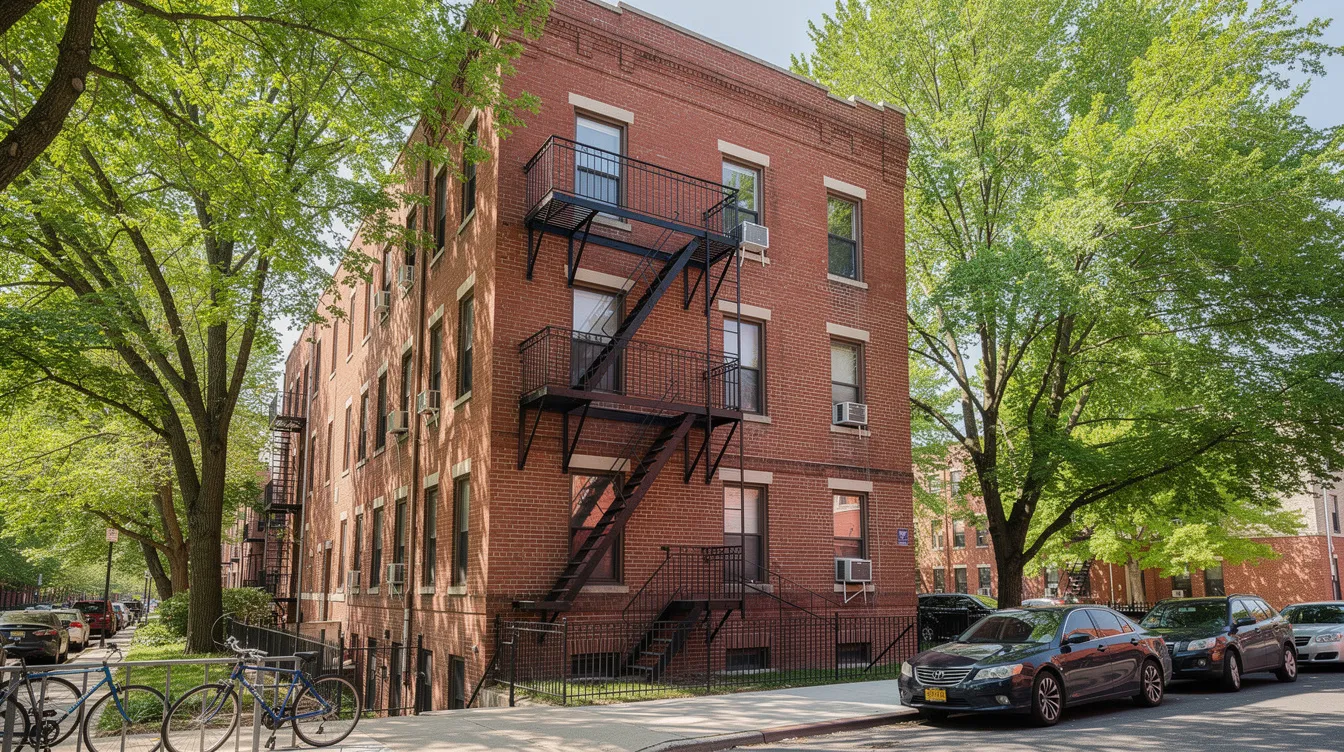
A DSCR loan is used to purchase or refinance multifamily properties, from duplexes up to 30 unit apartment buildings. Instead of basing approval on your personal income or W-2, the lender focuses on the property's income. If the building's rental income covers the debt payments with room to spare, you qualify. Your personal tax returns often don't even enter the conversation.
DSCR stands for debt service coverage ratio. The formula is straightforward: DSCR = net operating income divided by annual debt service. If a building produces $150,000 in NOI per year and the annual debt service (principal, interest, taxes insurance, and sometimes association dues) totals $120,000, the DSCR is 1.25x. That means the property's income covers 125% of what the lender needs each month.
In 2025 and 2026, DSCR loans are common for small apartment buildings, mixed use properties, and rental portfolios where cash flow drives the underwriting. DSCR loans also allow investors to close loans under an LLC for better asset protection, which matters once you're holding multiple properties. Gap Funded does not originate DSCR loans directly; we help investors cover the funding gap (down payment, closing costs, rehab, reserves) so they can approach DSCR lenders with the liquidity those lenders demand.
How DSCR Loans Work on Multifamily Properties
A conventional financing approval starts with your personal income, then works backward to see what you can afford. DSCR loans work the opposite way. Lenders focus on what the income producing property generates, not what you earn at your day job.
The core metric is net operating income. To calculate NOI, start with gross rent from all residential units, add ancillary income (parking, laundry, pet fees, storage), then subtract operating expenses: property management fees, maintenance, utilities for common areas, property taxes, insurance, turnover costs, and replacement reserves. What remains is your NOI.
Debt service includes principal and interest on the mortgage, plus escrow items like taxes insurance and association dues for condo apartment buildings. Many DSCR programs for apartment buildings use annual stabilised NOI to determine the maximum loan amount, not just gross rent figures pulled from a listing sheet.
Lenders calculate DSCR at the closing rate, and some apply a "stress rate" (current rate plus 1 to 2 percentage points) to verify the property can handle higher future debt obligations. If your deal only works at today's rate and falls apart with a modest increase, most lenders will either shrink the loan or pass entirely.
Eligible Multifamily Properties and DSCR Programs
Not every multifamily property fits a DSCR loan program. Here's what typically qualifies:
- Eligible properties include 2 to 10 unit residential buildings. Duplexes, triplexes, and fourplexes are underwritten using residential style DSCR formulas. Five or more units are classified as commercial multifamily real estate with different underwriting.
- Most DSCR programs require non-owner-occupied unit properties only. You and your immediate family generally cannot live in any unit.
- Mixed use properties with residential units may qualify for DSCR loans, provided the residential income is the primary source (typically above 50% of total income). These require specialised DSCR programs from commercial lenders.
- DSCR loans typically require properties to be stabilised and leased, with a documented operating history and current rent roll.
Common exclusions: properties running hotel style operations, fractured condo conversions, condotels, and very rural apartment buildings without reliable rental comparables or comparable sales data. If a lender can't verify rental demand with market comps, the deal stalls.
How Lenders Calculate DSCR on Apartment Buildings
Underwriting for 5 to 10 unit properties differs from 1 to 4 unit properties, and confusing the two is one of the fastest ways to blow up a deal.
2 to 4 unit properties use a residential style formula. DSCR equals eligible gross monthly rent divided by monthly PITIA (principal, interest, taxes, insurance, association dues). Lenders often skip a full expense line item underwrite on these smaller buildings.
5+ unit apartment buildings use the commercial approach. DSCR equals stabilised annual NOI divided by annual debt service. Operating expenses are deducted before calculating NOI, and those expenses include property management, maintenance, utilities, turnover, and capital expenditures reserves. DSCR is calculated using stabilised annual NOI, not best case projections.
A DSCR of 1.0 means the property generates exactly enough income to cover debt payments. Anything below 1.0 means the property loses money every month. Most lenders require a minimum DSCR of 1.25x before they'll approve the deal.
Here's a quick numeric example for a 10 unit building:
| Line Item | Annual Amount |
|---|---|
| Gross rent (10 units × $1,200/mo) | $144,000 |
| Other income (laundry, pet fees) | $6,000 |
| Vacancy and credit loss (5%) | -$7,500 |
| Effective gross income | $142,500 |
| Operating expenses (management, maintenance, utilities, taxes, insurance, reserves) | -$50,500 |
| Net operating income | $92,000 |
| Annual debt service (at 7.25%, 30 yr amort, ~$920K loan) | -$75,200 |
| DSCR | 1.22x |
That 1.22x sits just below the 1.25x minimum DSCR that many lenders prefer for multifamily properties. The investor would need to either reduce the loan amount, negotiate a lower purchase price, or demonstrate that rents can increase to push NOI higher.
Typical DSCR Requirements, Loan Terms, and LTV for Multifamily
DSCR directly controls how much leverage you get, what interest rate you pay, and what loan terms are available. Higher DSCR ratios lead to better loan terms and rates across the board.
DSCR thresholds: Most lenders prefer a minimum DSCR of 1.20 to 1.25 for multifamily properties. A DSCR of 1.0 to 1.2x is common for apartment buildings in competitive market conditions, though these often come with pricing penalties or require compensating factors. Some lenders may consider DSCRs as low as 1.0 on a case by case basis. Properties with a DSCR above 1.5x often receive favourable terms, including lower rates and higher LTV.
Loan terms: Amortisation of 25 to 30 years is standard. Fixed rate periods of 5, 7, or 10 years are common, with interest only options available for higher DSCR or lower LTV deals.
LTV: For purchases and rate and term refinances, 75 to 80% LTV is typical on stabilised assets. Cash out refinance deals usually cap at 70 to 75% LTV. Higher down payments of 20% to 35% are typical for DSCR loans due to lower personal income verification.
Rates: Interest rates for DSCR loans are generally 1% to 2% higher than conventional loans, landing in the 6 to 10% range depending on property performance, credit scores (680 to 740+), and reserves. Stronger DSCR, better credit, and deep reserves can reduce rates by 25 to 75 basis points.
Using DSCR Loans for Purchases, Rate and Term, and Cash Out Refinance
Three main use cases drive DSCR multifamily loan volume: purchase, rate and term refinance, and cash out refinance.
Purchases: DSCR lenders size the loan based on projected stabilised rents, signed leases, and market rent comps from the rent roll and appraisal. Properties must generate enough income to cover debt obligations at the requested loan amount. The investor still needs a fair whack of cash for the down payment, closing costs, and lender required reserves.
Rate and term refinance: Investors use this to move from short term hard money or bridge loans into long term permanent financing option with lower interest rates and longer amortisation. The stabilised building must show trailing 12 months of operating statements and consistent property performance. DSCR loans often do not require tax returns for approval, which makes the refinance process faster than conventional financing.
Cash out refinance: This is where multi family investors pull equity from a stabilised building to fund capital expenditures, repay partners, or buy additional assets. Lenders tighten the minimum DSCR and reduce LTV on cash out deals.
A practical example: an investor buys a 12 unit building in 2021 for $1.4M using a bridge loan. Over three years, they stabilise rents, reduce vacancy, and push NOI from $85,000 to $120,000. In 2025, they refinance into a DSCR loan at 75% LTV on the new appraised value of $1.7M, pulling out roughly $160,000 in cash to fund the down payment on their next apartment building acquisition.
Documentation Checklist for a Multifamily DSCR Loan
DSCR loans streamline approvals, reducing paperwork compared to conventional mortgages. But lenders still need documentation to verify property cash flow and condition. DSCR loans often do not require personal tax returns, though personal credit checks and reserves are still required even without personal income verification.
Property income documents:
- Current rent roll with unit by unit detail (unit mix, lease dates, rents, occupancy)
- Signed leases for all occupied units
- 12 to 24 months of operating statements (T-12 or T-24)
- Schedule of other income: parking, laundry, storage fees
Expense documentation:
- Trailing 12 month P&L
- Property tax bills and insurance declarations
- Utility statements for master metered services
- HOA or association dues statements where applicable
Borrower and entity documents:
- LLC operating agreement and articles of organisation
- EIN letter
- Organisational chart for entities with multiple members
- Personal credit report (soft pull initially, hard pull at application)
- Proof of reserves and liquidity for post closing requirements
Property condition:
- Inspection reports and photos
- List of recent capital improvements
- Notes on deferred maintenance items

Where DSCR Multifamily Deals Commonly Break Down
Many multifamily DSCR loans fall apart not because the asset is bad, but because of documentation gaps or unrealistic expectations. I reckon half the deals that die on the vine could have closed with better prep.
Overstated pro forma rents. Projecting rents 20% above current leases without market data to back it up will get your NOI haircut by the underwriter. If DSCR underwriting focuses on actual performance and you hand over a fantasy spreadsheet, expect a smaller loan amount or a decline.
Missing or inconsistent documentation. Unsigned leases, a rent roll that doesn't match bank deposits, or operating history with unexplained gaps force lenders to inflate expenses and reduce NOI. Incomplete operating statements are a deal killer.
Property condition problems. Deferred maintenance (roofs, boilers, electrical panels) can push a deal from permanent DSCR financing into a bridge or construction loan structure with higher rates and shorter loan terms. If the property condition requires major rehab, it's not a DSCR deal yet.
Practical steps before applying: Verify the seller's numbers independently. Reconcile the rent roll with actual deposit records. Build a DSCR pro forma that includes realistic vacancy (5 to 10%), collection loss, and replacement reserves. Model your debt payments at a stress rate, not just the quoted rate.
Example: DSCR Multifamily Loan on a 10 Unit Apartment Building
Here's a concrete scenario based on 2026 market conditions.
The property: A 10 unit apartment building in a secondary Midwest market (think Dayton, Ohio or Grand Rapids, Michigan). Purchase price: $1,100,000. Unit count: 10 units, all 2 bed / 1 bath. Average rent per unit: $1,100 per month.
| Item | Amount |
|---|---|
| Gross rent (10 × $1,100 × 12) | $132,000 |
| Other income | $5,000 |
| Vacancy (5%) | -$6,850 |
| Effective gross income | $130,150 |
| Operating expenses | -$46,000 |
| Net operating income | $84,150 |
| Loan amount (75% LTV) | $825,000 |
| Annual debt service (7.5%, 30 yr) | $69,240 |
| DSCR | 1.22x |
At 1.22x, this deal sits in a competitive market range. Many lenders will approve it, though not at the best pricing. The investor needs roughly $275,000 for the down payment, plus another $40,000 to $55,000 for closing costs, reserves, and minor rehab. That's $315,000 to $330,000 in cash required.
The post closing plan: modest rent increases of $50 to $75 per unit over 18 months, light value add work on common areas, and a potential cash out refinance in 24 to 36 months once NOI climbs and DSCR improves above 1.30x. Higher DSCRs can lead to better loan terms at that future refinance.
Identifying the "Funding Gap" in a DSCR Multifamily Deal
For many multi family investors, the hardest part isn't DSCR qualification. It's coming up with all the cash required to close. DSCR loans focus on property income, not personal income or personal finances, but that doesn't mean you walk in empty handed.
Typical funding gaps on a DSCR multifamily deal:
- 20 to 30% down payment on the apartment building
- 3 to 5% of purchase price in closing costs
- 6+ months of mortgage payments held as lender required reserves
- Upfront rehab or capital expenditures
- Earnest money Deposit (EMD) due at contract signing
- Working capital for property management and operations until cash flow stabilises
Private lenders and DSCR lenders rarely finance 100% of project costs. Even when DSCR looks strong, investors must show liquidity and reserves or the deal will be resized or declined. This gap often blocks otherwise strong deals, especially for investors with good credit (680 to 740 FICO) but most of their money tied up in other properties.
How Gap Funded Helps Multifamily Investors Close DSCR Loans
Gap Funded is not a DSCR lender. We're a funding intermediary that stacks capital around your DSCR loan so you can actually close the deal. No equity splits, no liens on the subject property.
Unsecured gap funding comes first because it's fastest and doesn't touch the apartment building. Personal term loans and 0% business credit card stacking can cover down payment shortfalls, closing costs, or reserves. Gap funding solutions also bridge earnest money deposits, inspection costs, and pre-closing due diligence expenses without equity splits or gator style lending.
Asset based capital is next. A HELOC on an investment property or primary residence lets you access equity quickly for a multifamily down payment. This capital sits on a separate asset, so it doesn't conflict with the DSCR lender's first mortgage on the new building.
Revenue based capital is the third layer. For investors who also run a business generating at least $20,000 per month, a business line of credit or business term loan can fund working capital, renovations, or reserves that support long term property performance. These require 2+ years in business.
Prioritising Funding Tools: The Smart Capital Stack for DSCR Deals
Order matters when stacking capital around a DSCR loan. Applying in the wrong sequence can knock out later approvals and leave you short at the closing table.
The recommended sequence:
- Unsecured gap funding and credit stacking for flexible, short term needs (down payment, EMD, closing costs). No lien on any property. Soft credit pull to check options.
- HELOCs or asset based loans secured against a separate property you already own. Covers larger amounts when unsecured limits aren't enough.
- Revenue based capital only where strong business cash flow exists and the borrower meets minimum requirements (2 years in business, $20K+ monthly revenue).
Avoid placing additional liens on the subject apartment building. Most DSCR lenders require borrowers to keep the first lien position clean, and a second lien on the same property will trigger a decline or renegotiation.
Realistic qualification: most Gap Funded clients need a 650 to 680+ FICO, verifiable income or business revenue, and responsible credit history to access larger unsecured limits. No impact to your credit to check what you qualify for.
Putting It All Together: DSCR Strategy for Growing a Multifamily Portfolio
DSCR multifamily loans let real estate investors scale from a single duplex into multiple apartment buildings using property cash flow instead of personal income verification. The loan program is built for investors holding multiple properties across entities, not for owner occupants trying to stretch a salary.
The practical checklist before going under contract:
- Model your DSCR before making offers. Stress test rents, operating expenses, and interest rates.
- Prepare complete documentation: rent roll, operating statements, signed leases, and expense records.
- Identify your funding gap early. Know exactly how much cash you need beyond what the DSCR lender provides.
- Line up your capital stack in the right order so each tool supports the next without creating conflicts.
DSCR loans focus on property income, not personal income. If the building's cash flow supports the debt service and your loan structure passes underwriting, the deal closes. Pairing a strong DSCR loan with the right mix of gap funding lets you move on the next deal without waiting years to rebuild liquidity.
If you've got a multifamily deal in the pipeline and need to fill the gap between what the lender covers and what you need to close, start with a quick funding review at gapfunded.com/apply. Soft pull, no impact to your credit, and you'll know what you qualify for before you go under contract.
Related Reading
This article is for educational purposes only and isn't financial, legal, tax, or investment advice. Credit and financing outcomes depend on your own situation. Talk to a licensed financial professional before making funding decisions for your business.