
Illinois DSCR Loans: Investor Guide and How Gap Funding Completes Your Capital Stack

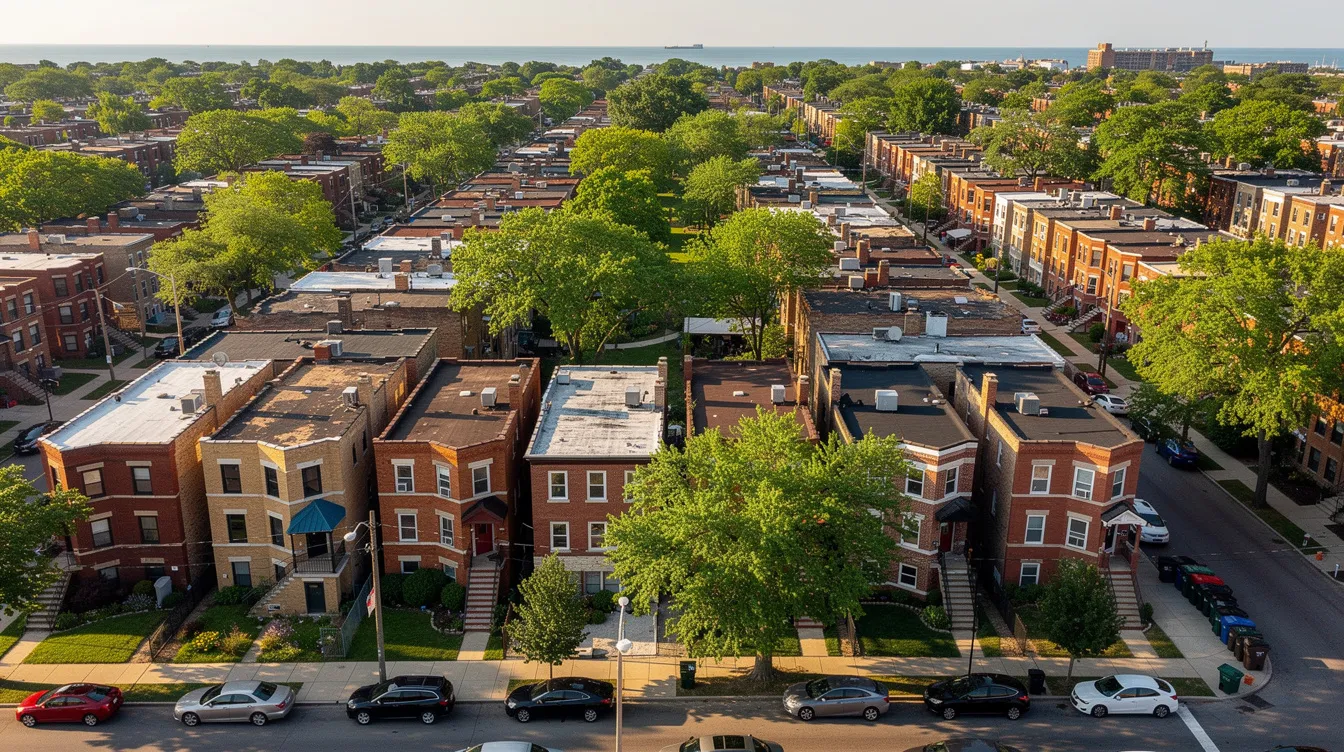
Illinois DSCR Loans: Investor Guide and How Gap Funding Completes Your Capital Stack
Most Illinois real estate investors can get approved for a DSCR loan. The part that trips them up is everything the lender won't cover. Here's the full picture: what DSCR loans actually look like in Illinois, how to run the numbers properly (especially with those brutal property taxes), and how to fill the capital gap so you can actually close.
Fast Answer: How DSCR Loans Work in Illinois (and Where Most Investors Get Stuck)
A DSCR loan is a business purpose mortgage that qualifies based on income from the investment property, not the borrower's personal income. DSCR loans allow financing based on rental income only, which is why they're popular with Illinois real estate investors in Chicago, Rockford, Springfield, Aurora, and the collar counties who want to buy or refinance non-owner-occupied rentals without handing over tax returns or W-2s.
Most DSCR loans in Illinois finance single family homes, 2 to 4 unit buildings, condos, townhomes, and short term rentals. You'll typically see 30 year fixed terms, max LTV around 75% to 80% for purchases, and a minimum credit score in the 620 to 660 range depending on the lender. The debt service coverage ratio compares gross rent to PITIA (principal, interest, taxes, insurance, and association dues), and because Illinois carries some of the highest effective property tax rates in the U.S., that "T" in PITIA can make or break your deal.
Here's where many real estate investors get stuck:
- The DSCR loan covers 75% to 80% of the purchase price. The remaining 20% to 25% down payment, plus closing costs, rehab budgets, reserves, and earnest money deposits, come out of your pocket.
- Lenders usually require cash reserves of 3 to 6 months of PITIA payments for DSCR loans. In Chicago for 2 to 4 unit properties, some lenders want 9 months.
Gap Funded does not replace your DSCR lender. We stack unsecured term loans, 0% business credit cards, HELOCs, and business lines of credit on top of your DSCR loan to close that gap. Soft credit pulls, no liens on the deal property, and typical qualifying FICO of 650 or higher.
Ready to pair gap funding with your Illinois DSCR loan? Apply for a quick funding review at Gap Funded.
What Is a DSCR Loan? (Debt Service Coverage Ratio Explained for Illinois Investors)
A Debt Service Coverage Ratio loan is a business purpose mortgage underwritten primarily on the property's rental income rather than your personal income, employment history, or tax returns. DSCR loans can finance properties without personal income verification, which makes them a favourite for self employed investors or anyone with heavy write-offs who looks broke on paper but owns solid rental property.
The core formula is simple: DSCR = Gross Rental Income divided by PITIA. PITIA includes principal, interest, taxes, insurance, and association dues. A DSCR ratio of 1.0 or higher is preferred by lenders, meaning the rent covers your total monthly housing obligation exactly. Many lenders prefer a DSCR ratio of 1.25 or higher for more favourable loan terms and better pricing.
What you need to know for Illinois:
- A DSCR loan allows investors to expand their rental portfolios without solely relying on personal income. No income verification, no DTI calculations.
- Eligible properties for DSCR loans typically include single family rentals and small multifamily properties (2 to 4 units), condos, townhomes, and some vacation rentals.
- DSCR loans are often used for purchasing or refinancing non-owner-occupied investment properties. Owner occupied deals don't qualify.
- DSCR loans can be beneficial for self-employed investors looking to avoid traditional qualification concerns that tank their conventional financing applications.
- A Rockford SFR renting at $1,400 per month with PITIA of $1,120 has a DSCR of 1.25. That's a comfortable spot. A Chicago two-flat with $3,200 combined rent and $3,400 PITIA? That's 0.94, and you'll pay for it in rate and LTV restrictions.
Compared to conventional financing through Fannie or Freddie, DSCR loans skip the DTI headache entirely and focus on whether the property's income supports the payment.
Why Illinois Is a Prime Market for DSCR Loans
Illinois offers a diverse mix of rental markets. Chicago's metro area is dense with two-flats, three-flats, and greystones. The collar counties deliver stable suburban renters. Mid-sized cities like Rockford, Peoria, Springfield, and Champaign Urbana bring lower entry prices with steady rental demand driven by universities, medical centres, and government employers.
The numbers support it:
- Illinois's median home price reached $315,000 in March 2026, with Chicago's median climbing to roughly $425,000 by mid 2026.
- Chicago has a majority renter population of 54.2%, creating deep and consistent rental demand across various property types.
- Chicago averages $2,000 per month in rent across all property types, while downstate markets offer strong rent to price ratios at lower entry points.
- Illinois DSCR loans have no caps on financed properties, so investors can scale well beyond the 4 to 10 property limits that conventional financing imposes.
The catch? Illinois property taxes. The average effective tax rate runs around 2.05% to 2.10% of assessed value, well above the national average. That inflated tax bill pumps up your PITIA denominator and compresses your DSCR. Investors who underwrite with a 1.5% assumption from another state get a rude surprise when Cook County bills arrive.
Gap Funded works statewide with investors using local DSCR lenders, hard money providers, and national non-QM lenders. Our role is providing the additional capital they don't cover.
Key Features of Illinois DSCR Loans
Terms vary by lender, but most Illinois DSCR loans share common structures. Here's what to expect:
- Illinois DSCR loan rates start at 6.0%, with an average DSCR loan interest rate in Illinois of 7.39%. Rates can reach up to 8.25% for lower credit scores, weaker DSCR ratios, or cash out refinances. The DSCR can affect the loan terms and interest rates available to investors significantly.
- Standard terms are 30 year fixed, though some lenders offer 5/6 ARMs at lower initial rates.
- LTV caps sit at 80% for purchases with strong credit, dropping to 70% to 75% for cash out refinance scenarios.
- DSCR loans in Illinois can range from $55,000 to $2,500,000, and they can finance properties from $100,000 to $3 million depending on the lender.
- DSCR loans support financing for short term vacation rentals, provided local ordinances are met. Chicago's Shared Housing Ordinance is one Illinois investors need to verify before underwriting.
- Underwriting is light doc: no tax returns, no W-2s. Lenders use a lease, rent roll, or market rent schedule (Form 1007) plus an appraisal to size the loan.
- Non-owner-occupied only. Personal use is limited, and lenders will flag any deal that looks like a primary residence.
How to Qualify for a DSCR Loan in Illinois
DSCR qualification centres on whether the property cash flow supports the payment, plus basic borrower criteria.
- Common eligibility requirements for DSCR loans include a minimum credit score typically between 620 and 680. A credit score of 700 or higher unlocks more favourable loan terms, higher LTV, and better cash out options.
- Most lenders want a minimum DSCR of 1.00 to 1.10. At 1.20 to 1.25 and above, you get meaningfully better pricing and higher leverage.
- Lenders usually require cash reserves of 3 to 6 months of PITIA payments. For Chicago 2 to 4 unit deals, budget for up to 9 months.
- Documentation is straightforward: rent rolls or executed leases for existing rentals, market rent estimates for vacant or newly renovated properties, and standard appraisal forms (1007 for single family, 1025 for small multifamily).
- Investors using a DSCR loan can often structure the financing under an LLC for liability protection, with a personal guarantee required.
- Many Illinois investors fail DSCR qualification not because rents are low, but because they underestimated property taxes, insurance, or HOA dues. Always pull the actual tax bill and get real insurance quotes before you make an offer. I reckon this single step saves more deals than any clever financing trick.
Illinois DSCR Loan Process: From Offer to Closing
The process typically runs 21 to 35 days from complete file to close. Approval for DSCR loans can occur within 24 to 48 hours on the initial pre-qualification, but the full timeline depends on appraisal turnaround and how quickly you get documents in.
Here's the general sequence:
- Pre-qualification or soft quote based on property details, estimated rent, and credit score.
- Full loan application and credit pull once you have a property under contract.
- Appraisal ordered and DSCR calculation verified against actual or market rents.
- Underwriting review, conditions issued (expect questions about tax verification, insurance, and sometimes rental licensing in Chicago).
- Clear to close and signing.
- Funding, usually within days of signing.
For Illinois specifically: verify county level property taxes early, factor in Chicago transfer taxes for city deals, and have any rental licensing documentation ready if your lender asks. Cash out refinances can take slightly longer due to title work and payoff statements.
How to Calculate DSCR for Illinois Rental Properties
The formula again: DSCR = Gross Monthly Rent divided by monthly PITIA. The DSCR is calculated by dividing the property's Net Operating Income by its total debt service. A 1.0 DSCR means rent covers PITIA exactly. Anything above 1.0 means positive property cash flow.
Here's a worked example for a Rockford SFR:
- Purchase price: $145,000
- Loan amount (80% LTV): $116,000
- Monthly principal and interest (30 year at 7.39%): $808
- Monthly property taxes (Winnebago County, ~2.1%): $254
- Monthly insurance: $95
- Monthly HOA: $0
- Total PITIA: $1,157
- Monthly rent: $1,400
- DSCR: $1,400 / $1,157 = 1.21
That's a deal most lenders will fund without issue. Now shift to suburban Cook County where the effective tax rate might be 2.5% or higher. On the same property value, taxes jump to $302 per month, PITIA climbs to $1,205, and your DSCR drops to 1.16. Still workable, but the margin is thinner.

Illinois property taxes can vary wildly from Cook County to Winnebago to Sangamon. A property that looks like it cash flows beautifully on a national rule of thumb can fail DSCR once you plug in the real tax bill. Run the numbers with actual data before making offers.
For short term rentals in markets like Chicago, Galena, or college towns, some lenders use a blended or AirDNA style income figure. Others cap rental income potential at long term rental market rent, which dramatically changes the DSCR and your financing options.
Best Illinois Markets and Property Types for DSCR Loans
Illinois is a two-track opportunity: appreciation plus rent growth in Chicago and inner suburbs, or higher yield cash flow in secondary Illinois rental markets.
- Chicago: Two-flats, three-flats, and greystones dominate. Chicago averages $2,000 per month in rent, and the 54.2% renter majority means deep rental demand. Higher median home price means bigger loan amounts but also bigger down payments.
- Rockford: Entry prices often sit below $165,000 for SFRs, with rents of $1,000 to $1,500 per month. Rockford's job growth rate has steadily increased, supporting an affordable housing market with strong DSCR potential (often 1.20 to 1.50).
- Aurora and Kane County: Typical SFR purchases run $245,000 to $385,000 with rents of $1,950 to $2,650. Solid household incomes and suburban stability.
- Springfield: Government and healthcare job base, with Springfield's cost of living 26% lower than the national average. Long term rental deals here can produce healthy DSCR with lower capital requirements.
- Champaign Urbana: University markets with consistent tenant turnover and demand. Naperville, on the higher end, has a median household income of $150,937, attracting renters who can pay premium rents for quality single family and townhome rentals.
Property types that perform well: Chicago 2 to 4 unit buildings (multiple rental streams in one building), single family homes in collar counties, small multifamily in downstate cities, and selected short term rentals where regulations permit. For Chicago STRs, lenders may want you to provide proof of compliance with the Shared Housing Ordinance before they'll fund.
Many Gap Funded clients use DSCR loans to refinance BRRRR projects and scale portfolios in these target markets, with gap funding covering rehab, seasoning, and holding costs between a hard money exit and the DSCR take-out loan.
Common Funding Gaps with Illinois DSCR Loans (Down Payment, Rehab, and Reserves)
Even when an Illinois DSCR loan is approved, most lenders will not cover 100% of the total deal cost. That's the capital stack gap that stops many real estate investors from closing.
The most common gaps:
- Most DSCR loans require a down payment of 20% to 25% of the purchase price
- Closing costs, lender points (often 1 to 3 points), prepaids, and escrow deposits
- Reserve requirements: 3 to 6 months of PITIA sitting in the bank at closing
- Rehab budgets for value-add plays (kitchens, baths, roofing, HVAC) to boost rents and DSCR
- Earnest money deposits in competitive Chicago deals, often $5,000 to $20,000
On a $300,000 Chicago two-flat at 80% LTV, you'd need roughly $60,000 down, plus $10,000 to $15,000 in closing costs and reserves. The DSCR loan covers $240,000. You're on the hook for the rest.
Conventional "solutions" like bringing in a money partner or adding a hard money second mean equity splits, additional liens, or repayment timelines that don't align with a 30 year hold. That's where capital stacking becomes the smarter play.
How Gap Funded Completes the Capital Stack for Illinois DSCR Investors
Gap Funded is a funding intermediary that stacks additional capital on top of DSCR loans, hard money, and other senior financing so Illinois investors can close without equity splits or liens on the subject property.
The recommended funding stack order for an Illinois DSCR borrower:
- Unsecured gap funding first: Personal term loans and 0% business credit card stacking through rapid gap funding. Fastest to deploy, keeps the deal property clean.
- Asset based capital second: HELOCs on a primary or existing investment property tap equity you already have without touching the new deal.
- Revenue based capital third: Business lines of credit or business term loans for investors with operating businesses generating at least $20,000 per month in revenue.
This order matters. Unsecured products don't add liens and preserve your financial situation for later approvals. HELOCs tap existing ones efficiently. Revenue based capital solves working capital and scaling needs once the portfolio throws off stable income.
How Illinois investors typically use gap funding:
- Covering the 20% to 25% down payment on DSCR purchases
- Paying closing costs, points, and escrowed taxes and insurance
- Funding rehab to improve DSCR so refi values and rental income support stronger ratios
- Providing earnest money deposits for competitive offers in Chicago
Realistic qualification: FICO 650 or higher, verifiable income or business revenue, and some existing revolving credit history for aggressive 0% credit stacking.
Apply for a soft pull funding review to pair with your Illinois DSCR loan.

Comparing DSCR Loans to Other Financing Options for Illinois Investors
DSCR loans are one tool among many, and honest comparisons matter.
- DSCR vs conventional agency: Conventional financing often has lower interest rates but requires personal income verification, caps you at 4 to 10 financed properties, and punishes heavy write-offs. DSCR uses the property's income, allows unlimited financed properties, but costs more in rate.
- DSCR vs hard money: Hard money is better for heavy rehab and short term flips, then refinanced into a DSCR loan for the long hold. DSCR financing is cheaper and longer term, but won't fund a gut renovation.
- DSCR vs private money or equity partners: DSCR preserves full ownership and control. Private equity often requires profit splits or shared decision-making. For many Illinois investors building a portfolio, keeping 100% ownership matters.
Where DSCR loans fall short alone: they rarely provide 100% of deal costs, they won't fund heavy rehab, and they can be constrained when Illinois property taxes are high or rents are capped by local market conditions. Traditional mortgages may still win for an owner-occupied house hack in Chicago.
A practical example: a BRRRR investor in Springfield uses hard money to purchase and rehab an SFR, then takes out a DSCR loan for the long term hold. Gap Funded covers the hard money down payment and carrying costs across both loans with unsecured capital. No equity split, no lien on the deal property, and the investor keeps full control.
FAQs About DSCR Loans in Illinois
What is the minimum credit score for a DSCR loan in Illinois? The minimum credit score for a DSCR loan is 620, though many lenders set their floor at 660 to 680. A score of 700 or above gets you meaningfully better rates and leverage. Most DSCR loans go to borrowers in the 680 to 740 range.
How much down payment do I need on an Illinois DSCR loan? Most DSCR loans require a down payment of 20% to 25%. Some lenders may allow 15% down for strong borrowers with high DSCR ratios and excellent credit. Cash out refinances typically require 25% to 30% equity.
Can I use a DSCR loan for short term rentals in Chicago or other Illinois cities? Yes. DSCR loans support short term rentals, but you must follow local ordinances. Chicago's Shared Housing Ordinance requires registration and compliance. Some lenders adjust underwriting for STR income or cap it at long term market rent.
How do Illinois property taxes affect my DSCR qualification? Illinois has one of the highest effective property tax rates in the U.S. Higher taxes increase your PITIA, which lowers your DSCR. Always use the actual tax bill, not an estimate from another state's rule of thumb.
Can I close a DSCR loan in Illinois through an LLC? Yes. Most lenders allow LLC vesting with a personal guarantee. This is common for asset protection among estate investors in Illinois.
Are there limits on how many DSCR loans I can have in Illinois? No. Unlike conventional financing, Illinois DSCR loans have no caps on financed properties. That's why many real estate investors use DSCR as their primary scaling tool.
How do I combine an Illinois DSCR loan with Gap Funded capital? Start by getting a DSCR quote from your lender. Then apply at Gap Funded for a soft pull review. We'll map out how much unsecured funding, credit stacking, or HELOC capital you need to cover the gap between what the lender funds and what the deal actually costs. No impact to your credit score just to check your options.
Related Reading
This article is for educational purposes only and isn't financial, legal, tax, or investment advice. Credit and financing outcomes depend on your own situation. Talk to a licensed financial professional before making funding decisions for your business.