
DSCR Loans Hawaii: Investor Guide and How Gap Funding Fills Your Down Payment Gap


DSCR Loans Hawaii: Investor Guide and How Gap Funding Fills Your Down Payment Gap
Hawaii real estate is one of those markets where the numbers look gorgeous on a postcard but get complicated fast on a spreadsheet. Property values are among the highest in the US, gross rental yields hover around 4%, and a 20% down payment on a median priced property means writing a cheque for well over $140,000. That's before closing costs, reserves, and furnishing a vacation rental.
This guide covers how Hawaii DSCR loans actually work in 2026, what makes or breaks a deal, and how Gap Funded helps investors close the capital gap without giving up equity or putting liens on the investment property.
Quick Answer: How DSCR Loans Work in Hawaii Right Now
A DSCR loan qualifies you based on the property's cash flow, not your personal income. The debt service coverage ratio measures whether a rental property generates enough income to cover its mortgage payments, property taxes, insurance, and HOA dues. No tax returns. No pay stubs. No W2s.
DSCR loans focus on property income, not personal income. Borrowers can qualify without personal income documentation, which makes DSCR loans attractive for self employed investors, business owners who write off aggressively, and international investors.
Here is what typical Hawaii DSCR loan guidelines look like in 2026:
- Minimum DSCR ratio: 1.00 to 1.10 for standard programmes; some lenders accept a DSCR as low as 0.75 with higher down payment requirements
- Credit score floor: minimum credit score of 620, though 680+ gets you better pricing
- Down payment: most DSCR loans require a down payment of 20% to 25%, with some programmes accepting 15% on strong files
- A DSCR of 1.0 indicates break even income for debt obligations; a DSCR greater than 1.0 signifies positive cash flow
- No personal income documentation is required for DSCR loans
Many solid Hawaii deals fall apart not because the DSCR calculation doesn't work, but because the investor can't cover the full down payment, closing costs, reserves, or rehab. That's the gap we'll address.
Why Hawaii Is a Prime Market for DSCR Loans
Hawaii's rental market is driven by strong tourism demand, a large military tenant base on Oahu, and the simple fact that you can't build more islands. Capped land supply across Oahu, Maui, Kauai, and Hawaii Island has historically supported both price appreciation and rental demand.
Hawaii's property values are among the highest in the US, with a statewide median listing price around $736,000 as of late 2026. Meanwhile, Hawaii has the lowest property tax rates in the nation, which actually helps the DSCR calculation compared to high tax mainland states.
Hawaii's real estate market is expected to remain strong post 2024 and into 2026 and beyond, supported by tourism (nearly 10 million visitors annually in recent years) and military housing demand in areas like Kapolei, Ewa Beach, and Kaneohe. For many real estate investors, these fundamentals make Hawaii property investment worth the higher entry cost.
DSCR Basics: Debt Service Coverage Ratio Explained
The formula is straightforward. Lenders calculate the DSCR by dividing gross rental income by total monthly debt obligations. Those debt obligations include principal, interest, taxes, insurance, and any HOA or association dues (PITIA).
DSCR ratios are calculated based on monthly qualifying rental income against monthly debt obligations. Here's a concrete Hawaii example:
Honolulu Condo Purchase:
- Purchase price: $750,000
- Down payment (25%): $187,500
- Loan amount: $562,500
- Estimated monthly PITIA: ~$4,500
- Market rent (long term or legal STR): ~$6,000/month
- DSCR = $6,000 ÷ $4,500 = 1.33
That 1.33 is solid. Most lenders view a DSCR of 1.25 or above as strong, qualifying you for more favorable loan terms and potentially lower rates. Around 1.00 to 1.10 is borderline but often financeable. Below 1.00 typically means the property doesn't generate income sufficient to cover debt payments, so lenders require lower LTV or charge higher rates.
Investors can use rental income documentation such as lease agreements or historical performance data for DSCR loans. For short term rentals, lenders often want 12 to 24 months of actual Airbnb statements or bank statements rather than speculative projections.
What catches Hawaii investors off guard is how high HOA dues, flood or hurricane insurance, and association fees on condotel units can eat into the property's rental income and push DSCR below workable thresholds.
How Hawaii DSCR Loans Differ from Conventional Financing
DSCR loans are business purpose, non QM products built for investment properties. Conventional loans are designed for owner occupied homes. Here's why that matters:
| Feature | DSCR Loans | Conventional Loans |
|---|---|---|
| Income verification | No tax returns, no income verification | Full W2, tax return, DTI underwriting |
| Property limits | Finance multiple properties without caps | Typically capped at 10 financed properties |
| LLC ownership | Properties can be owned by LLCs for DSCR loans | Usually requires personal name |
| STR income | Short term rental income accepted with documentation | Often harder to count |
| Foreign buyers | DSCR loans allow foreign nationals to invest in Hawaii real estate | Requires US income and credit history |
| Rates | Typically 6.125% to 7.5% (2026) | Generally lower for primary residence |
| Prepayment penalties | Common (e.g. 5/4/3/2/1 structures) | Less common |
DSCR loans streamline approval with no extensive income verification required, which makes DSCR loans ideal for Hawaii real estate investors who write off heavily, own rental portfolios across multiple properties, or operate short term vacation rentals where tax returns understate real cash flow.
Foreign investors can qualify without US income or tax returns, and DSCR loans streamline the process for foreign property buyers. DSCR loans generally allow for closing under an LLC or corporation for liability protection.
The trade off? Higher interest rates and prepayment penalties compared to conventional financing. But the flexible underwriting and ability to scale across income generating properties without traditional loans make it worthwhile for serious investors.
Typical Hawaii DSCR Loan Requirements: Credit Score, DSCR Ratio and Property Types
Requirements vary by lender, but most DSCR loans cluster around similar guidelines. Here's what to expect:
- Credit score: credit scores generally start around 620 to 660 for Hawaii DSCR loans. A score of 700 to 740+ gets you the lowest rates and sometimes lower down payment. Lenders will pull a credit report and review your credit history
- DSCR thresholds: most lenders want 1.00+ DSCR. DSCR loans can be approved with a minimum ratio of 0.75 in special programmes with reduced LTV
- Down payment: down payment requirements for Hawaii DSCR loans typically range from 15% to 30%, with 20% to 25% being the most common range
- Reserves: liquid asset reserves covering 3 to 6 months of PITIA are typically required for DSCR loans. Larger portfolios or lower DSCR may require up to 12 months
- Loan size: typical loan amounts for DSCR loans range from $100,000 to $3 million. DSCR loans in Hawaii can finance properties up to $3 million
- Property types: single family homes, 2 to 4 units, condos, condotels, and short term rentals. DSCR loans can finance properties in LLCs or trusts
- Speed: DSCR loans can close in as little as 5 to 30 days depending on the lender and complexity
- Portfolio scaling: investors can finance multiple properties without caps using DSCR loans

Best Hawaii Markets and Strategies for DSCR Investors
The "best" market depends on whether you're chasing appreciation, yield, or a mix. Here's a rough island by island view:
- Oahu (Honolulu, Kapolei, Ewa Beach, Kaneohe): strong military tenant base, stable long term rental demand, median prices ~$680,000, gross yields around 4.2%. Harder to hit DSCR 1.25+ without larger down payment
- Maui (Kihei, Wailea): STR demand is strong but regulation is tightening (Maui County's "Bill 9" and similar). Properties can pencil well above 1.25 DSCR in legal STR zones but carry regulatory risk
- Kauai (Princeville, Poipu): luxury vacation market, high price per unit, gross yields ~4.4%. STR income can be significant but seasonal
- Big Island (Hilo, Kona): best yields in the state at roughly 5.1% gross. Hilo especially offers lower entry prices and more achievable DSCR ratios for long term rentals
A Hilo duplex at $550,000 with long term tenants paying $3,750/month against ~$3,400/month PITIA gives you a DSCR of about 1.10. Workable for most lenders if your credit score and reserves are solid.
Note that Hawaii's rental income is subject to state income tax and general excise tax obligations, which affects your net operating expenses and overall investment strategy.
Short Term Rentals, Regulations, and DSCR in Hawaii
Hawaii counties each have their own STR rules, and getting this wrong can kill a deal. Local regulations can dictate property eligibility for DSCR loans based on zoning and rental permits.
Key concepts to verify before you run your DSCR calculation:
- Resort zones vs residential neighbourhoods: most legal STRs operate in resort zoned areas. Running an Airbnb in residential neighbourhoods without proper permits is a fast way to lose your income stream
- Minimum stay rules: some Oahu areas enforce 30 or 90 day minimums, which changes your rental income projections entirely
- Lender underwriting for STRs: lenders utilise 12 to 24 months of actual rental history (Airbnb statements, 1099s, bank statements) rather than speculative projections. They may apply haircuts to averages for seasonal locations
Hawaii has high property values and regulations affecting short term rentals. Investors can use DSCR loans for short term rental properties, and DSCR loans may facilitate the financing of vacation rentals in Hawaii under specific conditions, but only where zoning and permits are confirmed.
Before counting short term rental income in your DSCR calculation, check county zoning maps, verify permit status, and talk to an experienced Hawaii property manager. Lease terms, management fees, and seasonal variation all affect whether a property generates income consistently enough to satisfy lenders.
Using DSCR Loans in Hawaii for Purchases, Cash Out Refinance and Portfolio Growth
DSCR loans connect to several core investor strategies:
- Purchases: acquiring your first or next property in Hawaii, whether a long term rental near a military base or a legal STR condo in a resort zone
- Cash out refinance: tapping equity on appreciated investment properties to fund new down payments or debt consolidation. Most lenders cap cash out refinance LTV at 70% to 75% on investment property with 6+ months seasoning
- BRRRR strategy: buy, rehab, rent, refinance, repeat. Use hard money or bridge financing to acquire and renovate, then refinance into a DSCR loan once the property is stabilised and generating rental income
- Portfolio scaling: DSCR loans allow financing for multiple properties without caps, so Hawaii investors (and mainland buyers) can stack multiple Hawaii DSCR loans as long as each property's ability to service debt remains strong
This flexibility is what makes DSCR loans attractive for building rental portfolios across islands without hitting the property count walls that conventional loans impose.
Where Most Hawaii DSCR Deals Break: The Funding Gap
Here's where I reckon most investors get stuck. You can qualify on DSCR and credit score, find a property that pencils, get pre approved by a lender, and still lose the deal because you're short on cash.
On a $700,000 Hawaii investment property at 75% LTV, the capital stack looks roughly like this:
- DSCR loan covers: $525,000 (75%)
- You need to bring: $175,000+ down payment, plus closing costs ($10,000 to $20,000+), plus reserves (3 to 6 months PITIA, often $15,000 to $30,000), plus furnishings for STRs ($15,000 to $40,000), plus earnest money deposit upfront
That's a fair whack of capital. And hard money or DSCR lenders generally won't fund the down payment, closing costs, or furnishing budget. Bringing in equity partners means giving up a share of the cash flow generated by the property and any future appreciation.
This is where non dilutive capital stacking comes in.
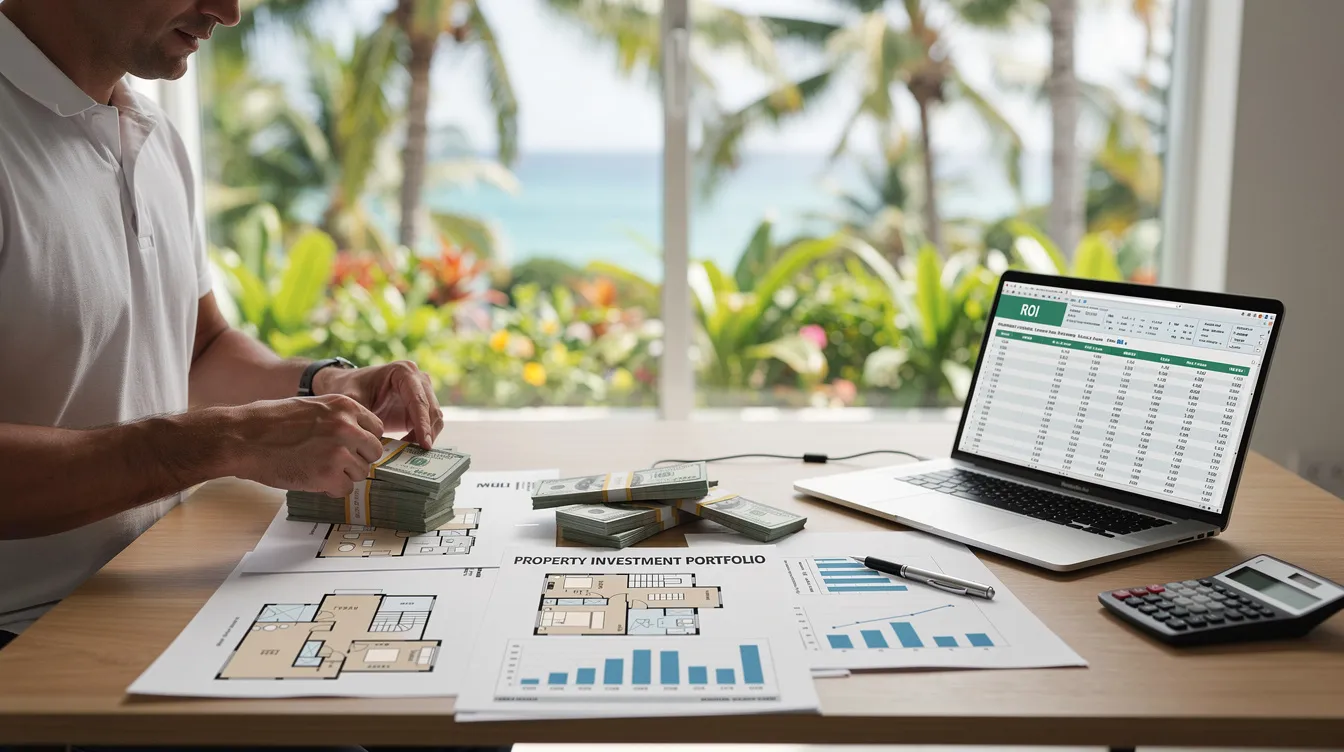
How Gap Funded Helps Hawaii DSCR Investors Close the Capital Stack
Gap Funded is not a DSCR lender. We're a funding intermediary that helps Hawaii investors and out of state buyers stack non dilutive capital on top of their DSCR loan. No equity splits. No liens on the subject property. DSCR loans are based on property income, not personal income, and our tools fill the pieces that DSCR lenders won't touch.
We solve for: down payment shortfalls, closing costs, earnest money deposits, rehab and BRRRR budgets, STR furnishings, reserves, and working capital for new or growing portfolios.
Our typical client is a real estate investor with a credit score of roughly 650+, verifiable income or strong credit, needing $25,000 to $400,000+ in additional capital to close a DSCR financed Hawaii deal. Checking options uses soft credit pulls with no impact to your credit score.
Compared to taking on equity partners or high fee gator lenders, our solutions are debt based, non dilutive, and structured to keep long term cash flow and upside with you.
Gap Funding Tools That Pair Well with Hawaii DSCR Loans (and Why the Order Matters)
Here are the tools that complement DSCR financing, listed in the order we typically recommend:
- Debt Consolidation: cleaning up existing high interest debt can boost your credit score and free up monthly cash flow, which can improve your DSCR loan approval and pricing. This step often gets overlooked but can save thousands in rate differences over a 30 year loan
- Rapid Gap Funding (unsecured term loans): covers part of the down payment, closing costs, earnest money, or rehab. No lien on the deal property. Available for investors with good credit and verifiable income
- 0% Credit Card Stacking: stacked business cards at promotional 0% APR for 6 to 18 months work brilliantly for furnishing vacation rentals, purchasing appliances, covering travel costs, and managing variable STR operating expenses
For investors who already own property with equity (even outside Hawaii), a HELOC or hard money loan on an existing asset can provide additional capital without touching the new Hawaii property.
Why sequence matters: (1) secure DSCR pre approval, (2) identify the exact cash gap, (3) layer in unsecured gap funding and card stacking to the required amount, (4) finalise DSCR terms and close. Applying out of order can knock out later approvals, so get the sequencing right before signing contracts or making earnest money deposits.
Qualifying for Gap Funding Alongside a Hawaii DSCR Loan
DSCR lender guidelines and Gap Funded guidelines are different but complementary. You can often qualify for both simultaneously.
Realistic Gap Funded criteria:
- Personal credit score generally 650+ (stronger at 680+)
- Clean or manageable credit history
- Verifiable income or cash flow for unsecured term loans
- Reasonable overall leverage relative to assets
Checking eligibility at gapfunded.com/apply uses soft credit pulls and won't affect your ability to pursue a DSCR loan or any other financing options.
What to have ready: recent credit report, rough DSCR pro forma on your target property, purchase contract or target price range, and a simple rehab or furnishing budget if applicable.
Practical Steps: From Idea to Funded Hawaii DSCR Deal with Gap Funded
Here's the roadmap, mate:
- Run a rough DSCR calculation on the target Hawaii property. Divide expected monthly rent by estimated PITIA. If you're above 1.00, you're in the conversation
- Talk to a DSCR lender or broker to understand rate, LTV, and DSCR requirements for your specific deal
- Identify total cash needed: down payment + closing costs + reserves + rehab or furnishing budget
- Apply with Gap Funded at gapfunded.com/apply for the gap amount. Do this early, not when you're scrambling before a deadline
- Coordinate timing so DSCR approval and gap funding line up before earnest money and contingency deadlines
- Close, then execute your rehab or STR setup
Timeline reality: DSCR closings typically run 30 to 45 days. Gap Funded can usually arrange unsecured funding faster than that, which is why applying early gives you the competitive edge to secure financing based on solid preparation rather than last minute scrambling.
You don't need to know every product detail. Know your deal numbers and we can help engineer the capital stack to fit the DSCR lender's requirements.
Frequently Asked Questions About Hawaii DSCR Loans and Gap Funding
What is the minimum credit score for a Hawaii DSCR loan? Most lenders require a minimum credit score of 620, though 680+ will get you better rates and more favorable loan terms. A stronger credit score also helps if you're applying for gap funding simultaneously.
How much down payment do I need for a Hawaii DSCR loan? A typical down payment for DSCR loans is 20% to 25%. Some programmes allow 15% down on strong files with high DSCR and excellent credit. On Hawaii's median priced properties, that's a substantial amount of capital.
Can I use gap funding for my DSCR down payment? Yes. Gap Funded provides unsecured capital that can be used toward down payment, closing costs, reserves, and other deal expenses. No lien is placed on the investment property.
Can DSCR loans finance Hawaii short term vacation rentals? DSCR loans can be used for short term vacation rentals in Hawaii where the property has proper zoning and permits. Lenders will verify legal STR status before counting short term rental income in the DSCR calculation.
How does a cash out refinance work with a DSCR loan in Hawaii? You refinance an existing investment property based on the property's ability to cover loan repayments from rental income. LTV is typically capped at 70% to 75% on cash out. This can free up capital for your next property or consolidate higher interest debt obligations.
Will applying with Gap Funded hurt my credit? No. We use soft credit pulls only. No impact to your credit score or credit report.
What's the fastest way to see if my Hawaii deal works with DSCR plus gap funding? Complete a short funding review at gapfunded.com/apply. We'll look at your numbers and help you map out the full capital stack.
Get Your Hawaii DSCR Deal Fully Funded
Hawaii DSCR loans are a powerful tool for real estate investors, but they rarely cover 100% of what's needed to close and operate a rental or vacation property. The down payment, closing costs, reserves, and furnishing budget still need to come from somewhere.
Gap Funded helps Hawaii investors and international buyers solve for that shortfall with non dilutive capital. No equity splits. No liens on the deal property. Just the funding you need to close.
Complete a short funding review at gapfunded.com/apply to see your DSCR plus gap funding options with no hard credit pull. Whether you're a local investor eyeing your next property on the Big Island or a mainland buyer chasing Maui STR income, the deal doesn't have to die because of a cash gap. Get your capital stack sorted before the next listing hits the market.
Related Reading
This article is for educational purposes only and isn't financial, legal, tax, or investment advice. Credit and financing outcomes depend on your own situation. Talk to a licensed financial professional before making funding decisions for your business.