
DSCR Loan Rates in 2026: How Real Estate Investors Actually Get the Best Pricing

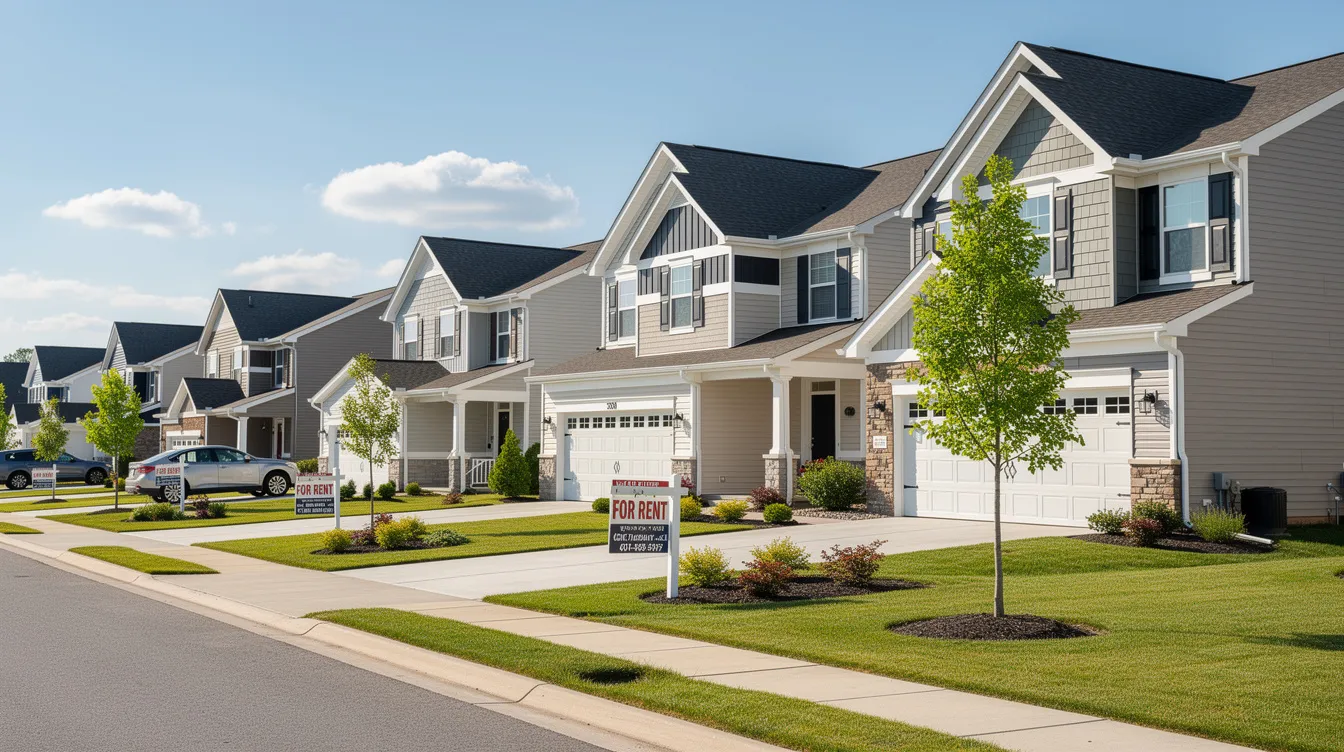
DSCR Loan Rates in 2026: How Real Estate Investors Actually Get the Best Pricing
Most real estate investors shopping for a DSCR loan right now have one question before anything else: what rate am I actually going to get? Fair enough. Let me walk you through the current numbers, what moves them, and how to make sure you land on the better end of the range.
Current DSCR Loan Rates in 2026 (Answer First)
As of October 2026, current DSCR loan rates for residential investment properties typically range from about 6.62% to 8.00% for well qualified files, with the broader market spanning 6% to over 10% depending on credit score, DSCR ratio, loan to value, and property type. The average sits somewhere between 7.5% and 7.8% for a standard single family rental deal.
DSCR loan rates are typically 0.5% to 1.5% higher than conventional mortgage rates on comparable investment properties. That comparison matters. You're not benchmarking against owner occupied home loans; you're comparing to conventional investor loans, which already carry a premium.
Here's a rough breakdown of DSCR loan rates for residential investment properties by credit tier and LTV:
| Credit Score | 65 to 70% LTV | 75% LTV | 80% LTV |
|---|---|---|---|
| 720+ | 6.5% to 7.25% | 7.0% to 7.75% | 7.5% to 8.50% |
| 680 to 719 | 6.75% to 7.75% | 7.25% to 8.25% | 8.0% to 9.25% |
| 660 to 679 | 7.0% to 8.5% | 8.0% to 9.0% | 8.75% to 9.50% |
These are general ranges. Your actual quote will shift based on DSCR ratio, property type, loan size, prepayment penalties, and which lender you talk to. Always request a live quote because DSCR pricing changes daily with bond markets and lender appetites.
Quick note: Gap Funded does not set DSCR rates. We connect investors to DSCR lenders and provide gap funding for down payment, closing costs, and cash reserves so you can qualify for the better tiers on that table.
What Is a DSCR Loan and Why Its Rates Are Different
A DSCR loan qualifies real estate investors based on the property's rental income and cash flow, not personal income or tax returns. No W2s. No pay stubs. No bank statements showing your personal deposits. Qualifying metrics focus strictly on the property's financial health rather than personal finances.
The debt service coverage ratio (DSCR) itself is straightforward: take the property's gross rental income and divide it by the total debt obligations, which includes principal, interest, taxes, insurance, and HOA fees. A DSCR of 1.0 means rental income covers debt payments exactly. A DSCR ratio above 1.25 is viewed favourably by lenders. Below 1.0 means the property loses money on paper, and you'll pay a visible rate premium for that.
Why do DSCR loan rates run higher than conventional? Because lenders skip income verification and rely more heavily on the asset. That means more risk on their side. The trade off is flexibility: most DSCR loans can be closed in an LLC or corporate name without personal name requirements, and they allow multiple properties without the cap conventional programs impose. DSCR loans allow investors to scale their rental portfolios more easily, which is exactly why portfolio builders favour them despite slightly higher rates.
How DSCR Loan Rates Are Calculated (Base Rate + Risk Pricing)
DSCR lenders start with a base index, typically the 2 Year or 5 Year US Treasury yield, sometimes SOFR, plus a margin. That base rate updates daily and sometimes multiple times a day. Interest rates on DSCR loans are influenced by overall market conditions and lender risk assumptions.
From there, lenders layer adjustments (often called LLPAs). Several factors affect DSCR loan interest rates including the DSCR ratio, credit score, and loan to value ratio. Property type, loan amount, prepayment structure, and loan purpose all add or subtract basis points too.
Walk through example: a strong file with 720+ credit, 1.25 DSCR, 70% LTV on a long term rental might land a par rate around 7.0% to 7.25%. Push that same deal to 80% LTV with a 1.05 DSCR, and the adjustments can add 0.50% to 1.0%, pushing you to 7.875% or beyond. Lenders may give small discounts for higher loan amounts or lower LTV because these improve the risk profile.
Each DSCR lender's pricing matrix differs. Two lenders can quote very different rates on the same rental property financing scenario, which is why shopping multiple lenders matters.
Key Factors That Move DSCR Rates Up or Down
Here are the main levers you can actually control as an investor:
- DSCR ratio: higher DSCR ratios (1.25+) get better dscr pricing. Ratios near 1.00 cost more. Below 1.00 costs a fair whack more.
- Credit score: credit scores above 720 can secure better DSCR loan rates. Most DSCR lenders set a minimum credit score of 620 to 660.
- Loan to value: higher loan to value ratios typically lead to higher interest rates. A larger down payment moves you into lower risk grid cells.
- Property type: single family homes with stable cash flow are baseline risk. Short term rentals often have higher DSCR rates due to income variability.
- Rental income stability: stable rental income from long term leases helps secure better loan terms. Seasonal or month to month leases add risk.
- Prepayment penalties: accepting prepayment penalties can lower your interest rate, but limits your flexibility to refi or sell.
The next section unpacks the four biggest drivers in a bit more detail.
DSCR, LTV, Credit & Property Type: The Big Four Pricing Drivers
These four elements are the primary knobs you can turn to improve your DSCR loan pricing.
DSCR Ratio DSCR is calculated as gross rental income divided by debt obligations (principal, interest, taxes, insurance, and HOA). A property generating $2,600 in monthly rent with $2,000 in total PITIA has a DSCR of 1.30. That's strong. A DSCR ratio of 1.25 or higher is favourable. Drop to 1.05 on the same deal, and you might see your interest rate jump 0.50% or more. DSCR helps lenders assess a property's cash flow risk, and stronger cash flow gets rewarded.
Loan to Value Dropping from 80% LTV to 70% to 75% can cut rate tiers meaningfully, sometimes saving 0.25% to 0.75%. Lower loan to value ratios typically result in lower rates because you have more skin in the game. Cash out refinances usually cap at lower LTV with higher pricing.
Credit Score Common breakpoints sit around 660, 680, 700, and 720. Higher credit scores can lead to better DSCR loan rates. Moving from 680 to 720 can reduce your rate by roughly 0.50%. Each band up may also unlock higher max LTV and lower reserve requirements.
Property Type Single family long term rentals are the lowest risk baseline. Small multifamily (2 to 4 units) sees moderate rate premiums. Short term rental properties carry the highest dscr loan rates higher pricing because of seasonality, vacancy risk, and more conservative income underwriting.

DSCR Loan Rates vs. Conventional Investment Property Rates
The comparison needs to be apples to apples. In mid 2026, conventional investment property loans for 1 to 4 units average roughly 6.4% to 6.8% for strong borrowers. DSCR loans on similar properties range about 7.0% to 8.2%, sometimes wider depending on leverage and credit. DSCR loan rates for residential investment properties typically range from 6.5% to 8.75%.
Conventional loans require personal income verification, full tax returns, and low debt to income ratios. They also cap how many mortgage loan obligations you can carry. DSCR loans qualify based on property rental income, skip the personal income documentation, and don't limit how many investment properties you finance.
DSCR wins when you're scaling a rental portfolio, carrying heavy write offs that crush your reported income, or when you're self employed with irregular revenue. Conventional wins if you have a clean W2, low debt to income, and just want the absolute lowest rate on your first or second rental.
I reckon most investors beyond their third or fourth property end up in DSCR territory whether they planned to or not. Evaluate the overall loan structure, documentation burden, and long term investment strategy rather than chasing the lowest possible headline interest rate.
How Often DSCR Loan Rates Change and Market Trends in Late 2026
DSCR loan rates are tied to the broader mortgage bond market and can be updated daily, sometimes multiple times in volatile sessions. Market conditions drive the base; lender appetite drives the spread.
Recent context: inflation has cooled through 2025 and 2026 but stayed stickier than forecasters hoped. The Fed has held rates higher for longer, and 5 Year Treasury yields continue serving as the anchor for fixed rate DSCR products. When Treasuries move, dscr rates follow within days.
Lenders also adjust for their own funding costs and portfolio performance, so dscr pricing might tighten even if Treasuries stay flat. The reverse is also true during risk off periods.
My advice: underwrite every deal with a realistic rate cushion of at least 0.25% to 0.50% above your quoted rate. That protects against surprise repricing before your rate lock. And pair your purchase loans with a refinance plan: buy at today's workable rate, then refi if markets improve.
How Real Estate Investors Can Qualify for Better DSCR Rates
You have more control over your DSCR loan rate than you probably think. Preparation is where the savings happen.
Practical levers:
- Improve your credit score before applying. Pay down revolving debt, correct errors, avoid new inquiries. Even moving one band can cut rate premiums by 0.25% to 0.75%.
- Increase your down payment. Every few percentage points of extra equity shifts you into a more competitive pricing tier.
- Target properties with stronger property cash flow. Long term rentals with proven track record tenants and reliable monthly rent beat seasonal vacation properties every time.
- Avoid weak DSCR deals below 1.00 unless the upside justifies the cost.
- Shop multiple lenders. Two quotes is a start; three or more is better.
Example: an investor moving from 80% LTV with a 1.00 DSCR to 75% LTV with a 1.20 DSCR could save 0.50% to 1.00% in interest and create meaningfully better long term cash flow. That shift might require an extra $15K to $25K in capital, which is exactly where gap funding comes in.
Understanding DSCR Loan Structure, Terms, and Total Cost
The "best dscr rates" headline means nothing without understanding the full loan structure. Points, lender fees, prepayment penalties, and amortisation schedules all factor into your true cost of capital.
Common loan terms for most DSCR loans in 2026:
- 30 year fixed rate (most popular)
- 5/6 or 7/6 ARM hybrids (lower initial rate, adjusts after fixed period)
- Interest only periods of 1 to 5 years (only interest payments, lower monthly payment, higher total cost)
- Prepayment penalty schedules: 3 year or 5 year step downs (e.g., 5 4 3 2 1)
- Discount points to buy down the rate at closing
Lenders may require a prepayment penalty which can lower the initial interest rate. That's a real trade off for BRRRR investors who plan to refinance within 12 to 18 months. If your hold period is short, negotiate the prepay structure before locking.
Taking a slightly higher rate with zero points versus buying down the rate with upfront costs only makes sense if you're holding long enough for the monthly payment savings to offset those upfront costs. Calculate true total cost, not just the rate, especially when stacking DSCR financing with gap funding for down payments and reserves.
Common DSCR Loan Rate Scenarios Across Property Types
Let me walk through three realistic scenarios so you can see how dscr loan pricing shifts across deal types.
Scenario 1: Single Family Long Term Rental Credit 720+, 70% LTV, DSCR 1.30 with a stable long term lease. Expected rate: mid 7% range, roughly 7.0% to 7.5%. This is near the best tier for competitive interest rates. The property's rental income is steady, vacancy risk is low, and the file checks every box.
Scenario 2: Short Term Rental (Airbnb) Credit 700, 75% LTV, DSCR conservatively underwritten at 1.10 using averaged seasonal income. Short term rental DSCR loans usually have higher rates due to income variability, so expect 0.5% to 1.0% above a comparable long term rental: roughly 8.0% to 9.25%. Higher cash reserves (often 9 to 12 months) are typically required, adding to upfront costs.
Scenario 3: Small Multifamily (4 Plex) Credit 680, 75% LTV, DSCR 1.25 with mixed leases (some month to month). Rate might land around 7.75% to 8.50%. Slightly higher than a prime single family deal, but still attractive if the property delivers stronger cash flow across multiple units.
Each example reinforces the same principle: DSCR, LTV, credit, rental income stability, and property type work together to drive the final rate.
The Real Funding Gap: Down Payment, Closing Costs, Rehab & Reserves
Most DSCR lenders expect 20% to 25% down payment, plus closing costs, prepaid items, and often 6 to 12 months of cash reserves for rental properties. That's where many real estate investments stall.
Typical funding gaps for investors:
- Down payment shortfall (especially at 25% on higher priced properties)
- Closing costs and lender fees (1% to 3% of loan amount)
- Rehab and furnishing for short term rental properties
- Earnest money deposits to secure deals under contract
- Working capital while stabilising rents on a new acquisition
Even if a DSCR lender offers attractive loan rates and favourable loan terms, you can't access them without enough capital to hit the required LTV and reserve thresholds. Here's the part most people miss: lower LTV and higher reserves not only get the deal approved but often move you into a more competitive interest rates tier, improving cash flow and long term returns. The capital gap isn't just about closing. It's about closing at the right price.
How Gap Funded Helps You Qualify for Better DSCR Loan Rates
Let me be clear: we are not the DSCR lender. Gap Funded is the capital stack partner that helps real estate investors come to those lenders stronger, with bigger down payments, better reserves, and cleaner positioning.
Our primary tools for rental property financing, in order:
- Unsecured gap funding for fast, flexible capital covering down payment and closing costs
- Credit card stacking at 0% intro rates for rehab, furnishing, or short term capital needs
- Personal term loans for larger gaps or longer timelines
- HELOC based solutions if you have equity in existing property
- Revenue based capital (business lines of credit, term loans) for established businesses with $20K+ monthly revenue
That order matters. Applying out of sequence can knock out later approvals. We walk you through the right stack for your deal.
Realistic qualification: typical target FICO 650+ (strongest offers at 680+). All initial checks are soft pulls with no impact to credit. No equity splits, no liens on the deal property.
Learn more about DSCR loans for rental properties or explore our full gap funding services.
Pairing DSCR Loans With Gap Funding: Practical Investor Use Cases
Use Case 1: BRRRR Investor, Single Family Rental Purchase price $320,000. DSCR lender offers 75% LTV, so the loan amount covers $240,000. The investor needs $80,000 for down payment plus $18,000 for light rehab. They have $50,000 liquid. Gap Funded provides $30,000 in unsecured gap funding and $18,000 through 0% credit card stacking for the rehab. Result: the deal closes at 75% LTV instead of stretching to 80%, landing more competitive pricing on the DSCR loan.
Use Case 2: Short Term Rental Acquisition Purchase price $500,000. DSCR lender requires 25% down ($125,000) plus 9 months reserves (roughly $18,000). The investor has $110,000 available. Gap funding covers the $33,000 shortfall. The extra reserves don't just satisfy the lender's requirements; they reduce pricing adjustments for risk, potentially saving 0.25% to 0.50% on the rate.
With the right capital stack, investors choose better loan terms and lower dscr rates rather than being forced into max LTV, high cost scenarios.
When a DSCR Loan Is Not the Best Choice (Honest Comparison)
I'll be straight with you: DSCR loans are brilliant for portfolio growth, but they're not always optimal.
When conventional wins:
- You're house hacking an owner occupied property
- It's your first rental and your tax returns are clean with strong W2 income
- You want the absolutely lowest rate and don't mind providing full documentation and flexible underwriting isn't a priority
Conventional mortgages deliver lower conventional mortgage rates for borrowers who can clear the income and DTI hurdles. If that's you, use them.
When DSCR wins:
- You already hold multiple properties and conventional lenders won't approve more
- Your tax returns show losses from depreciation despite real estate investments producing actual income
- You're a foreign national, self employed, or have irregular income
- You want title in an LLC and fast closing without the paperwork circus
Gap Funded tools work across both DSCR and conventional deals. But our capital solutions pair especially well with DSCR financing because that's where the funding gaps tend to be largest and the rate tier improvements most impactful.
Next Steps: Check Your DSCR Options and Fill the Funding Gap
Here's what to do now:
- Estimate DSCR and LTV on your next deal. Run the numbers: monthly rent divided by PITIA. Check how much down payment gets you into a better rate band.
- Compare DSCR versus conventional options. If conventional works, great. If not, DSCR is your path.
- Identify your funding gap: down payment shortfall, closing costs, reserves, rehab.
- Strengthen your file before you talk to DSCR lenders. Come to the table with capital already lined up.
Ready to see what you qualify for? Apply at Gap Funded for a soft pull, no obligation funding review. We'll map out the right capital stack so you qualify for the best DSCR loan rates available to your profile.
If you're a broker, wholesaler, or connector who wants to help clients close more DSCR deals, check out our referral partner programme.
No equity splits. No liens on the deal property. Fast execution so you don't lose the deal while chasing financing.
Related Reading
This article is for educational purposes only and isn't financial, legal, tax, or investment advice. Credit and financing outcomes depend on your own situation. Talk to a licensed financial professional before making funding decisions for your business.