
DSCR Loan New York: How Real Estate Investors Close Deals Without Personal Income Docs


DSCR Loan New York: How Real Estate Investors Close Deals Without Personal Income Docs
DSCR Loans in New York: Fast Answers for Real Estate Investors
Most real estate investors in New York have the same frustrating experience: they find the property, the rent numbers work, the deal makes sense on paper, but their personal tax returns look like a crime scene. Write offs, depreciation, LLC structures, and K-1s that make a CPA weep. Traditional lenders see low taxable income and say no. The property's cash flow is irrelevant to them.
That is exactly the problem DSCR loans solve. A DSCR loan (debt service coverage ratio loan) qualifies based on the property's rental income rather than the borrower's personal income. DSCR loans do not require personal income verification, no W-2s, no tax returns. The DSCR is calculated by dividing monthly rental income by total debt payments (principal, interest, property taxes, insurance, and any association fees). If a property generates $4,000 per month in rent and the total monthly payments come to $3,200, that is a DSCR of 1.25. A DSCR greater than 1.0 indicates the property generates positive cash flow, and that ratio drives loan approval rather than your employment history.
Compared to a traditional mortgage, DSCR financing is purpose built for investment properties. A traditional mortgage requires full income documentation, focuses on personal debt to income ratios, and often limits how many financed properties you can hold. DSCR loans flip the script: properties must generate rental income to qualify, and the lending process centres on property performance instead of personal finances.
One thing to be upfront about: Gap Funded is not a DSCR lender. We are a capital partner that helps New York investors cover the funding gap around DSCR loans, including the down payment, closing costs, rehab budgets, and reserves, so you can actually get to the closing table with confidence.
How Does a DSCR Loan Work for New York Investors?
Here is how a DSCR loan works at its core: the lender looks at the property income coming in, subtracts the full PITIA (principal, interest, property taxes, insurance, and HOA or condo fees), and the resulting DSCR ratio determines your maximum loan amount, interest rates, and reserve requirements. Each property must stand on its own cash flow.
New York adds layers of complexity. Property taxes downstate are among the highest in the country. Insurance premiums in coastal or dense urban areas run higher than national averages. Condo maintenance or association fees add to the monthly debt obligations. All of this increases PITIA and can squeeze the DSCR ratio on an otherwise solid deal.
Here is a worked example for a Brooklyn duplex in 2026. Purchase price of $950,000 at 80% LTV means a $760,000 loan and $190,000 down payment. Estimated gross monthly rent is $6,500. At roughly 7.25% interest on a 30 year fixed loan, monthly principal and interest is about $5,150. Add $1,500 per month for property taxes and $250 for insurance. Total PITIA lands around $6,900. The DSCR comes to $6,500 divided by $6,900, or about 0.94. That is below 1.0, which means this deal needs either higher rent, a larger down payment to reduce the loan amount, or a property with lower taxes to hit profitable territory.
Investors often use LLCs to hold properties eligible for DSCR loans, and most lenders allow that structure. There is no limit on the number of DSCR loans you can obtain, as long as each income producing rental property meets the lender's underwriting thresholds for credit score, DSCR, and reserves. You can finance unlimited properties with DSCR loans, which makes scaling a portfolio far more practical than with conventional loans.
DSCR Loan Requirements in New York (2025–2026)
Each DSCR lender sets its own requirements, but ranges across the New York market are fairly consistent. Here are the key buckets:
- Credit score: most lenders require a minimum credit score of 620 for DSCR loans, with stronger pricing at 680 to 700 and above. Lenders typically require a credit score of 620+ but a higher score unlocks better LTV and lower interest rates.
- DSCR thresholds: a minimum DSCR of 1.0 is typically required by lenders, meaning rent at least covers all debt. DSCR ratios around 1.20 to 1.25 are sought by most lenders for favourable terms. Some lenders accept below 1.0 in prime locations, but with higher rates and reduced leverage. A DSCR less than 1.0 suggests that the property may be losing money on paper.
- Down payment: a down payment of 20% to 25% is usually required for DSCR loans on 1 to 4 unit properties. Small multifamily and mixed use deals may require 25% to 30% down. This directly affects the maximum loan amounts an investor can access.
- Reserves: many lenders require 3 to 6 months of liquid reserves (covering PITIA) for smaller loans. For larger portfolios, 5+ unit properties, or higher risk markets, reserve requirements can climb to 9 to 12 months.
- Eligible property types: single family homes, 2 to 4 unit residential, condos, some mixed use, and short term rentals where legally permitted. Properties under a DSCR loan are strictly for investment purposes, not for a primary residence.
- Documentation: gather documents like property appraisals and rent schedules for your application. Lenders focus on current leases, market rent appraisals, or AirDNA data for STRs. No tax returns, no W-2s in most programmes.
- Property condition: properties must pass an appraisal and be habitable to qualify for DSCR loans. They must be rent ready to qualify for DSCR financing, so if your property needs significant rehab, you will likely need a bridge or hard money loan first.
Property Types and Investment Strategies DSCR Loans Support in New York
DSCR loans can finance a wide range of income generating properties across New York, making them flexible for various investment strategies. DSCR loans finance single family homes and multi unit properties, and eligible properties include condos and short term rentals. DSCR loans can be used for properties with up to ten units in most programmes, covering everything from a Rochester fourplex to a Catskills cabin.
Here is how different strategies pair with DSCR financing in New York:
- Long term buy and hold: purchase a 2 to 4 unit brownstone or a small multifamily in Buffalo or Albany, stabilise rents, and hold. Upstate markets tend to offer stronger rent to price ratios, making DSCR more favourable for day one cash flow.
- BRRRR: buy with bridge financing, rehab, rent, then refinance into a DSCR loan once the property is stabilised. Gap Funded can provide the rehab capital and reserves so a property later qualifies for that DSCR refinance.
- Short term rentals: Airbnb properties in the Hudson Valley or Catskills can work, but lenders typically want 12 months of booking history or credible AirDNA projections.
- Manhattan condo appreciation play: possible, but day one DSCRs tend to be thin downstate, so expect larger down payments.
Common exclusions: New York City co ops are generally ineligible because ownership is via shares, not deeded real property. Rent stabilised 6+ unit buildings face strict caps on legal rents that limit projected income. STRs in NYC's registration restricted zones are increasingly difficult to underwrite.
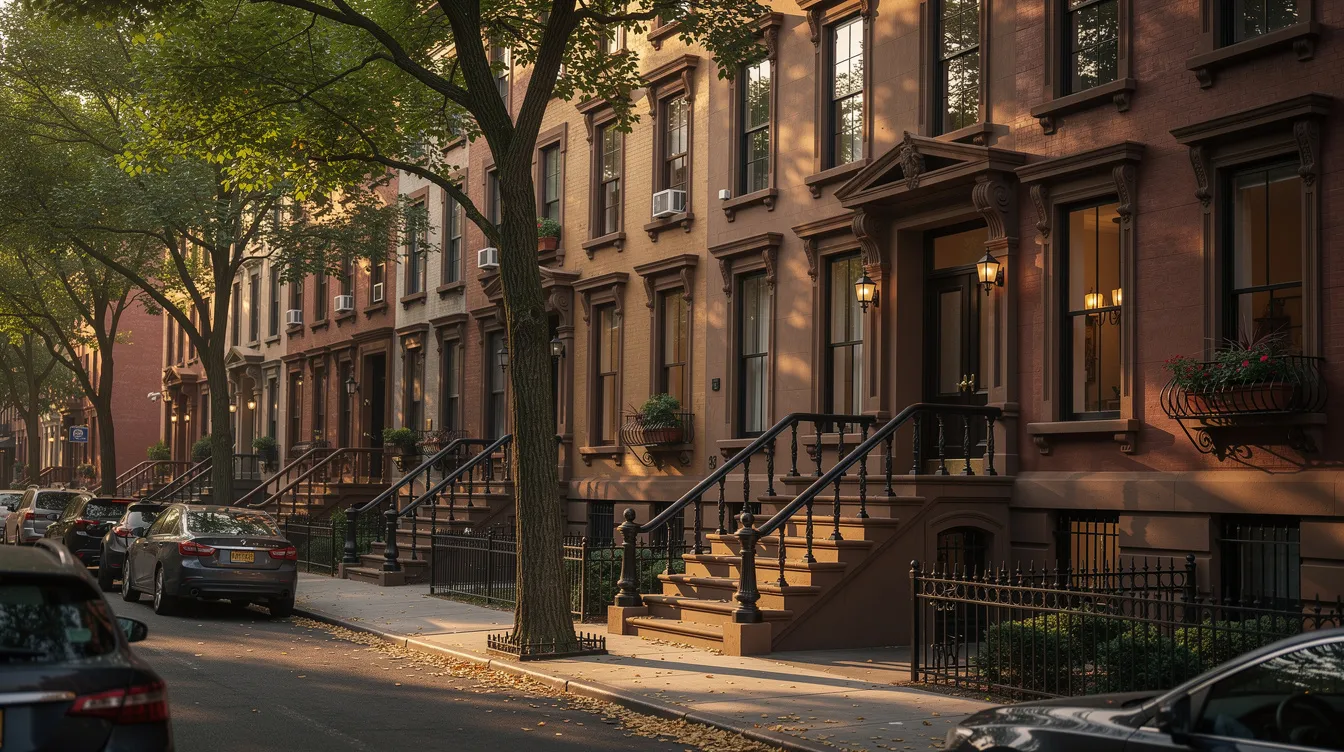
DSCR Loans vs Traditional Mortgages for New York Investors
DSCR loans are designed for investors buying rental properties. Traditional mortgages are designed for owner occupants and wage earners. That difference in purpose shapes everything else:
- Qualification: DSCR loans allow financing based on rental income only. Conventional mortgages require full personal income documentation and debt to income ratio analysis.
- Documentation: no tax returns or W-2s needed for DSCR. Traditional loans require the full stack.
- Speed: DSCR loans allow for faster processing and approvals because there is no income verification bottleneck. Self employed individuals with complex returns often wait months for traditional underwriting.
- Portfolio scaling: DSCR supports owning many investment properties because each stands alone. Conventional loans often cap out at 10 financed properties per borrower.
- Rates: DSCR loans often have higher interest rates than conventional loans, typically by 1% to 2%. That is the trade off for flexibility and speed.
Why do so many New York investors choose DSCR? Because self employed investors, LLC operators, and portfolio landlords with heavy write offs look broke on paper even when they are flush with property income. DSCR cuts through that entirely by focusing on the property's ability to service its own debt.
Traditional mortgages still win in certain scenarios: buying a primary residence, house hacking a 2 to 4 unit with owner occupant rates, or situations where strong W-2 income secures the cheapest possible rate.
New York Market Nuances That Affect DSCR Loans
New York's real estate market has quirks that directly change how DSCR loans perform. If you are coming from another state, these matter:
- High property taxes: counties like Nassau, Suffolk, and Westchester have effective property tax rates of 2.0% to 2.5% annually on property value. High property taxes can negatively impact net operating income calculations by inflating PITIA, which drags down the DSCR ratio. A property that would cash flow in Texas might not hit 1.0 DSCR in Westchester at the same purchase price.
- Rent regulation: under New York's Housing Stability and Tenant Protection Act (HSTPA) of 2019, rent stabilised units face strict caps on rent increases. Lenders require underwriting to legal rents, not hypothetical market rents. That limits current rental income projections and constrains DSCR on regulated stock.
- Downstate vs Upstate: downstate properties (NYC, Long Island, Westchester) typically show thin DSCRs because of high prices and taxes. These are often appreciation focused plays requiring larger down payments. Upstate cities like Buffalo, Rochester, Syracuse, and Albany offer lower purchase prices, lower taxes, and stronger cash flow, yielding higher DSCRs. Certain market conditions can affect the viability of obtaining a DSCR loan in New York, and geography is the biggest variable.
- Minimum loan sizes: some DSCR lenders impose minimum loan amounts of $50,000 to $100,000, which can rule out very cheap upstate properties even if the rent to price ratio is excellent.
- Mortgage recording tax: New York charges a mortgage recording tax on new mortgages, adding meaningfully to closing costs, especially downstate. This is a cost that catches out of state investors off guard.
Prepayment Penalties, Rates, and Loan Structure for DSCR Loans
Pricing on New York DSCR loans is not just about the interest rate. The loan structure and potential prepayment penalties matter enormously for your exit strategy.
- Interest rates: DSCR loan interest rates range from 6% to 8% in 2025 to 2026, depending on credit score, LTV, DSCR ratio, and property type. Strong borrowers (720+ credit, 1.25+ DSCR, 75% LTV) can see rates in the low to mid 6% range. Weaker profiles or cash out refinances push into the 7% to 8% territory. Higher DSCR ratios can secure better loan terms across the board.
- Prepayment penalties: most DSCR programmes include a 3 year or 5 year step down prepayment penalty. If you plan to pay a loan early, say via a BRRRR refinance in 2 to 3 years, those penalties can eat your profits. Some lenders offer no prepay options at a slightly higher rate.
- Loan terms: loan terms for DSCR loans usually span 15 to 30 years. The 30 year fixed is the most common. ARMs (5/1, 7/1) and interest only periods are available, and interest only can improve DSCR temporarily by lowering monthly payments, though total interest cost rises over the life of the loan.
Here is a quick scenario. Two offers on the same deal with a 1.25 DSCR, 720 credit, 75% LTV:
- Offer A: 6.25% interest, 30 year fixed, 5 year prepayment penalty
- Offer B: 6.50% interest, 30 year fixed, no prepayment penalty
If you plan to hold for 2 to 3 years, Offer B likely costs less overall. The 0.25% rate premium is small potatoes compared to a five figure prepayment penalty. Always ask your DSCR lender about prepay terms before locking a term sheet.
Common DSCR Loan Challenges for New York Investors (and How Gap Funded Helps)
Here is the reality many New York investors hit: the DSCR loan approval comes through, the property's cash flow checks out, and then the deal still falls apart. Not because of the loan itself, but because of everything the lender will not cover.
The most common funding gaps for New York real estate investors include:
- Down payment: 20% to 25% of a $1M+ downstate property is $200K to $250K in cash. That is a fair whack.
- Closing costs: mortgage recording tax, attorney fees, title insurance, and appraisal costs in New York can add 3% to 5% on top of the purchase price.
- Rehab and renovation budgets: especially for BRRRR deals where the property needs work before it qualifies for DSCR refinancing.
- Reserves: lenders require 3 to 12 months of PITIA in liquid reserves after closing. For a $7,000 per month PITIA, that is $21,000 to $84,000 sitting in an account.
- Working capital during lease up: vacancy, tenant turnover, and unexpected repairs during stabilisation eat cash quickly.
Gap Funded does not replace the DSCR lender. We stack additional capital on top so you can meet every requirement and close. No equity splits, no liens on the deal property.
Gap Funded Tools That Pair With DSCR Loans in New York
Gap Funded specialises in non dilutive, fast access capital to fill the pieces DSCR lenders will not touch. The order matters because applying out of sequence can knock out later approvals.
- Unsecured personal term loans: quick capital for down payment and closing cost coverage. No collateral required. Works for investors with 650+ credit and stable income or equity elsewhere.
- Business credit card stacking at 0% introductory APR: ideal for smaller rehabs, furnishing short term rentals, and flexible working capital. Zero interest for 12 to 21 months gives breathing room during lease up.
- HELOCs on a primary home or existing investment property: unlock equity you have already built for down payments or rehab budgets on the new deal.
- Business lines of credit and working capital: for investors with 2+ years in business and at least $20K per month revenue, these provide ongoing liquidity for reserves and operational costs.
Trade offs to be honest about: unsecured gap funding avoids liens and equity splits, but terms are shorter and monthly payments higher than a 30 year DSCR loan. Hard money or MCA loans are alternatives, but hard money typically puts a lien on the subject property and MCA costs can be steep. Gap Funded's approach keeps your deal property clean.
Using Gap Funding with DSCR Loans: New York Case Studies
Concrete New York examples show how DSCR plus Gap Funded capital stacking solutions work in practice.
- Downstate deal: A Queens 3 family purchased at $1.1M. The DSCR lender offers 80% LTV ($880K loan). The investor needs roughly $220K for the down payment, plus another $30K for closing costs (including mortgage recording tax) and $40K in reserves. Gap Funded provides an unsecured term loan covering $150K and credit card stacking covering the remaining $50K+ for reserves and closing costs. No equity split, no lien on the Queens property.
- Upstate BRRRR: A Buffalo duplex purchased at $210K with $60K in rehab needed. The investor uses a bridge loan to acquire and renovate. Once rents stabilise at $2,400 per month and the property appraisal comes in at $310K, the investor refinances into a DSCR loan at 75% LTV. Gap Funded credit cards cover rehab draws during renovation and a term loan covers holding costs and the reserve requirement.
- Hudson Valley STR: A cabin near the Catskills purchased at $425K. Projected AirDNA income is $4,800 per month. The DSCR lender underwrites at 75% LTV with 12 months of booking projections. Gap Funded credit card stacking covers $35K in furnishing and launch costs before full season income exists.
The pattern across all three: the real constraint was cash at closing and during stabilisation, not DSCR loan approval itself.

Step by Step: From New York DSCR Pre Approval to Fully Funded ClosingStep by Step: From New York DSCR Pre Approval to Fully Funded Closing
Here is a chronological checklist for New York investors planning to use both a DSCR loan and Gap Funded resources:
- Define your investment strategy and target market (NYC metro vs upstate vs Hudson Valley). Your strategy dictates the right lender, property type, and DSCR expectations.
- Get DSCR quotes based on property type, estimated rent, desired loan structure, and your credit history. Compare at least two or three lenders.
- Calculate the full cash needed to close: down payment, closing costs, potential prepayment penalties exposure, and reserves. Do not underestimate this number.
- Identify the funding gap that primary DSCR financing does not cover. Be specific about the dollar amount.
- Apply with Gap Funded for a soft pull funding review with no impact to your credit. This tells you exactly what capital you can stack.
- Stack approved Gap Funded products with your DSCR loan, coordinate timelines with your lender, attorney, and title company, and close.
Checking Gap Funded options early helps you write stronger offers with confidence about your total capital stack. I reckon the investors who struggle most are the ones who figure out the gap two days before closing.
Is a DSCR Loan Right for Your New York Investment Strategy?
New York DSCR loans are best for real estate investors focused on property income from rental properties, self employed borrowers whose tax returns do not reflect their actual wealth, LLCs, and portfolio builders scaling across multiple investment properties.
A DSCR loan is usually a strong fit when:
- You have stable income from non traditional income sources but your taxable income looks low on paper
- You are targeting a BRRRR refinance after stabilising a property
- You are building a small multifamily portfolio across single family homes and multi unit properties
- You want short term rentals in legally permitted markets with documented booking history
A DSCR loan may not be ideal when:
- You are buying a primary residence (owner occupant programmes will be cheaper)
- The property falls below lender minimum loan sizes common with very cheap upstate stock
- The building is heavily rent stabilised with legal rents well below market
- You qualify for conventional mortgages at lower rates and want to minimise cost
If the deal works but the cash to close does not, that is exactly what we solve. No equity splits, no liens on your deal property, and a soft credit pull that does not ding your score.
Apply for a quick funding review here and find out what capital you can stack alongside your DSCR loan before you make your next offer.
Related Reading
This article is for educational purposes only and isn't financial, legal, tax, or investment advice. Credit and financing outcomes depend on your own situation. Talk to a licensed financial professional before making funding decisions for your business.