
DSCR Loan Nevada: Investor-Friendly Guide to Financing Rental Properties

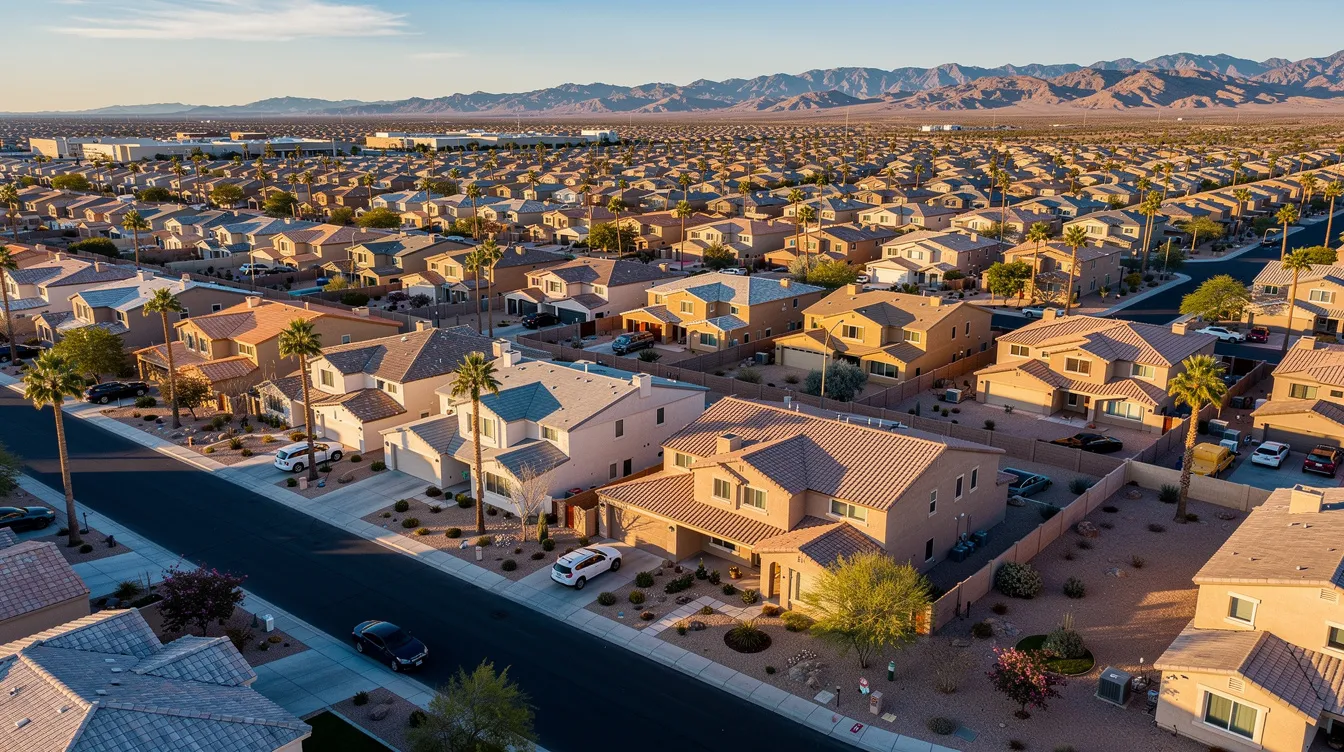
DSCR Loan Nevada: Investor-Friendly Guide to Financing Rental Properties
Most Nevada real estate investors don't struggle to find deals. They struggle to close them. A DSCR loan in Nevada lets you qualify based on the property's rental income rather than your personal tax returns, W-2s, or debt to income ratio. If your returns look lean on paper (thanks to every legal deduction your accountant could find), this is the loan product built for you.
Fast Answers: Is a DSCR Loan in Nevada Right for You?
A debt service coverage ratio loan is a non-QM loan for real estate investors. Instead of proving personal income, you prove the rental property can carry its own weight. The formula is simple: DSCR = gross rental income divided by PITIA (principal, interest, taxes, insurance, and association dues). Most DSCR lenders want a ratio between 1.0 and 1.25 for their best loan terms.
This guide is for:
- Nevada real estate investors buying single family homes, duplexes, or condos in Las Vegas, Reno, Henderson, or Carson City
- BRRRR strategists who need to refinance after rehab into a long term hold
- Vacation rental and short term rental owners who want financing that accounts for STR income
- Out-of-state investors holding Nevada rental properties in an LLC
One thing to get straight early: Gap Funded is not the DSCR lender. We provide unsecured gap funding, business credit card stacking, HELOCs, and business lines of credit so you can cover the down payment, closing costs, rehab, and reserves that DSCR lenders won't finance. No equity splits, no liens on the deal property.
What Is a DSCR Loan, and How Does It Work in Nevada?
A DSCR loan is an investment property mortgage where the lender cares about one thing: can the rent cover the payment? DSCR loans evaluate property income, not personal income for qualification. No personal income verification is required for DSCR loans. No W-2s, no personal income documents, no standard employment check.
The formula in plain English: DSCR equals gross monthly rental income divided by monthly PITIA. PITIA stands for principal interest taxes insurance plus any HOA or association dues. A 1.0 DSCR means rental income covers the mortgage payment exactly. A DSCR greater than 1.0 indicates positive cash flow for the property. Many lenders prefer a DSCR of 1.25 or higher.
Some Nevada programs use net operating income (gross rent minus expenses) instead of gross rent, so confirm how each lender defines the rent number before you apply.
DSCR loans are classified as business purpose loans, exempt from many Regulation Z consumer mortgage protections. That means different disclosures and fewer regulatory guardrails, but more flexible underwriting. The trade-off is real: read your loan documents carefully, especially prepayment and default clauses.
These loans only apply to non-owner-occupied properties. If you live in the property more than roughly 14 days per year or treat it as your primary residence, you're violating the business purpose designation. Lenders take occupancy fraud seriously.
Eligible property types in Nevada include single family homes, 2 to 4 unit multifamily, townhomes, condos (subject to project review), and legally operated vacation rentals. DSCR loans can finance single-family homes, duplexes, and condos. DSCR loans typically range from $100,000 to $3 million, and in Nevada, DSCR loans can finance properties up to $3 million.
Why Real Estate Investors Use DSCR Loans in Nevada
Nevada's investor profile skews heavily toward self-employed business owners, contractors, and portfolio landlords. These are people whose tax returns understate actual cash flow because their accountants are doing their job well. Conventional underwriting penalises that. A DSCR loan sidesteps the problem entirely.
Core benefits of DSCR financing in Nevada:
- Qualification based on the property's rental income rather than personal DTI
- Ability to close in an LLC with a personal guarantee for liability protection (DSCR loans can allow property ownership under an LLC)
- DSCR loans allow financing of unlimited properties in Nevada, unlike conventional loans which limit financing to 10 properties
- More flexible seasoning rules for cash-out refinances, letting you scale faster
DSCR loans work well with BRRRR (buy, rehab, rent, refinance, repeat) because once the property is leased, you refinance based on rental income, not your personal balance sheet. Mid-term rentals serving travel nurses in Reno or tech contractors in Henderson also produce stable monthly rent that satisfies DSCR ratios.
How does this compare to a conventional investment loan? Conventional rates are lower, but you need full personal income documentation, your debt to income ratio must stay under roughly 45%, and rental income gets discounted to 75% of gross rent. DSCR interest rates are typically 0.5% to 1.5% higher than conventional mortgages, but the qualification flexibility more than makes up for it when your tax returns don't tell the full story.
Nevada's rental market benefits from strong population growth, no state income tax, and steady in-migration from California. Las Vegas and Reno have large employment-driven renter pools. Tourism and hospitality create consistent rental demand in southern Nevada, while tech and logistics fuel the Reno-Sparks corridor.

Key DSCR Numbers: How to Calculate DSCR on a Nevada Rental
Every Nevada real estate investor should know how to run DSCR math before writing an offer. Small changes in Clark County taxes or insurance premiums can flip a deal from cashflow positive to negative.
Here's the formula broken down:
| PITIA Component | What It Includes |
|---|---|
| P (Principal) | Monthly loan principal |
| I (Interest) | Monthly interest on the loan amount |
| T (Taxes) | Property taxes (varies by tax district) |
| I (Insurance) | Landlord/DP-3 policy premium |
| A (Association) | HOA or condo dues |
DSCR = Gross Monthly Rent ÷ Monthly PITIA
Concrete example: a 3-bedroom SFR in the Las Vegas area with market rent of $2,350 per month. Estimated PITIA: P&I $1,350, property taxes $200, insurance $100, HOA $0. Total PITIA = $1,650. DSCR = $2,350 ÷ $1,650 = 1.42. That's strong.
Now suppose taxes and insurance rise after purchase. PITIA climbs to $1,900. DSCR drops to $2,350 ÷ $1,900 = 1.24, which is just under the 1.25 target many lenders use for best pricing. Still workable, but your rate and fee tier may shift.
Nevada's effective property tax rate is 0.50% of home value, among the lowest in the U.S. In Clark County, the assessment ratio for residential property is 35% of market value, and combined tax rates run about 2.96% per $100 of assessed value. On a $400,000 home, that works out to roughly $4,148 per year.
Ratios below 1.0 mean the property's rent does not fully cover the monthly payment. Properties with weak cash flow may not qualify under standard DSCR programs. However, some lenders will still lend at 0.75 to 0.99 DSCR with a larger down payment, higher rates, or interest-only loan terms.
I'd recommend stress testing every deal: model rent 5 to 10% lower and PITIA 5 to 10% higher before you put down earnest money on a Nevada property.
Nevada DSCR Loan Requirements in 2026
DSCR loans are non-QM products. There is no single federal standard. Requirements vary by lender and change over time, so always get written program terms before locking in a purchase price.
Common requirement themes for Nevada DSCR loans:
- Minimum DSCR ratio: A common DSCR ratio for lenders is between 1.0 and 1.25. Some programs allow "no-ratio" or sub-1.0 DSCR with restrictions and premium pricing. Griffin Funding advertises no-ratio programs for Nevada.
- Minimum credit score: DSCR loans typically start at a 620 credit score. The minimum credit score for a DSCR loan is 620, though minimum credit scores often range from 620 to 680 depending on the lender. Best pricing kicks in at 700+ or 740+. Down payment requirements can vary based on credit score.
- Down payment: Most DSCR loans require a down payment of 20% to 25%. A 20% down payment is common for DSCR loans in Nevada. Some lenders may allow 15% down for strong borrowers with high credit and DSCR above 1.25.
- Property type and condition: Must be in rentable condition. Major structural or safety issues need to be resolved before closing, or funded separately through rehab capital.
- Cash reserves: 3 to 6 months of mortgage payments may be required post-closing, verified in bank or brokerage accounts.
What most DSCR lenders do NOT require: personal tax returns, W-2 income verification, or traditional personal DTI calculations.
What they still require: an appraisal with a rental schedule showing market rent (or an existing lease), title insurance, landlord insurance proof, entity documents for LLCs (articles of organisation, operating agreement, EIN), and proof of post-closing reserves. Rental income must be supported by documents like appraisal rent schedules or existing leases.
Talk to multiple Nevada DSCR lenders or brokers before committing. Program matrices shift quarter to quarter.
DSCR vs. Conventional Investment Loan in Nevada
Most investors compare DSCR loans against conventional loans backed by Fannie Mae or Freddie Mac. Here's how they stack up:
| Feature | Conventional Investment Loan | Nevada DSCR Loan |
|---|---|---|
| Income docs | Full W-2s, tax returns, personal DTI | None (property income only) |
| Rental income credit | 75% of gross rent | 100% of qualifying rent |
| Property limit | ~10 financed 1-4 unit properties | No cap on financed properties |
| Minimum down payment | Often 15% for strong borrowers | 20% to 25% (15% rare) |
| LLC ownership | Restricted or not allowed | Allowed with personal guarantee |
| Interest rates | Lower | 0.5% to 1.5% higher |
| Prepayment penalty | Rare | Common (step-down structures) |
The honest decision rule: if you qualify easily for conventional financing with clean tax returns, low personal DTI, and fewer than 10 financed properties, conventional is usually cheaper. DSCR financing excels when your returns are "too low on paper," your debt to income is already stretched, you want LLC title, or you've outgrown agency caps.
Gap Funded can be layered on top of either path. Whether you're closing a DSCR loan or a conventional investment loan, we supply the extra capital (down payment, closing costs, rehab, reserves) that the main lender won't cover.
Using DSCR Loans for Nevada Vacation Rentals and Short-Term Rentals
DSCR loans can finance short-term vacation rentals in Nevada, and DSCR loans can be used for short-term vacation rentals across the state. But qualification depends on two things: local law and how the lender underwrites short term rental income.
Three ways Nevada DSCR lenders may underwrite vacation rental income:
- 12-month actual short-term rental receipts from platforms like Airbnb or VRBO
- Market data from approved analytics services (AirDNA or similar)
- Long-term market rent estimate instead of projected short term rental income
Nevada has specific regulations affecting short-term rentals which must be adhered to for income validation. Clark County requires a license for short-term rentals under local law. Unincorporated Clark County, Henderson, North Las Vegas, and the City of Las Vegas each have different short term rental rules, zoning restrictions, and licensing caps.
Here's where this gets real: an unlicensed Airbnb in Las Vegas can't be underwritten using projected STR income. The lender will force a long-term rental underwrite, dropping your qualifying rent from, say, $3,000 per month to $2,100 per month. On a $400,000 purchase with $2,000 PITIA, that takes your DSCR from 1.50 to 1.05. The difference between your best rate tier and barely qualifying.
Confirm licensing, HOA restrictions, and transient occupancy tax obligations before relying on short term rental income for DSCR qualification.
Real Estate Markets in Nevada: Where DSCR Loans Are Most Common
The major Nevada markets for DSCR loans break down by economic driver:
- Las Vegas metro and Clark County: Tourism, hospitality, logistics, and healthcare create steady rental demand. A Las Vegas investment property in the 3-bedroom SFR category might rent for $2,400 to $2,800 per month at a purchase price of $350,000 to $500,000.
- Henderson and North Las Vegas: Lower entry costs than central Las Vegas, solid rent-to-price yields around 5 to 8%, and some STR-friendly zones.
- Reno-Sparks (Washoe County): Tech migration and California in-migration. Prices often higher than Las Vegas; rents similar, so yields compress unless you buy carefully.
- Carson City and smaller markets (Fernley, Elko): Government employment, lower prices, but thinner rental demand and fewer comparable sales for appraisers.
Insurance costs vary by region. Tahoe-adjacent properties in wildfire zones carry higher premiums. Property taxes differ by tax district even within Clark County. HOA dues in master-planned communities can add $100 to $300 per month to your PITIA, which directly reduces your DSCR.
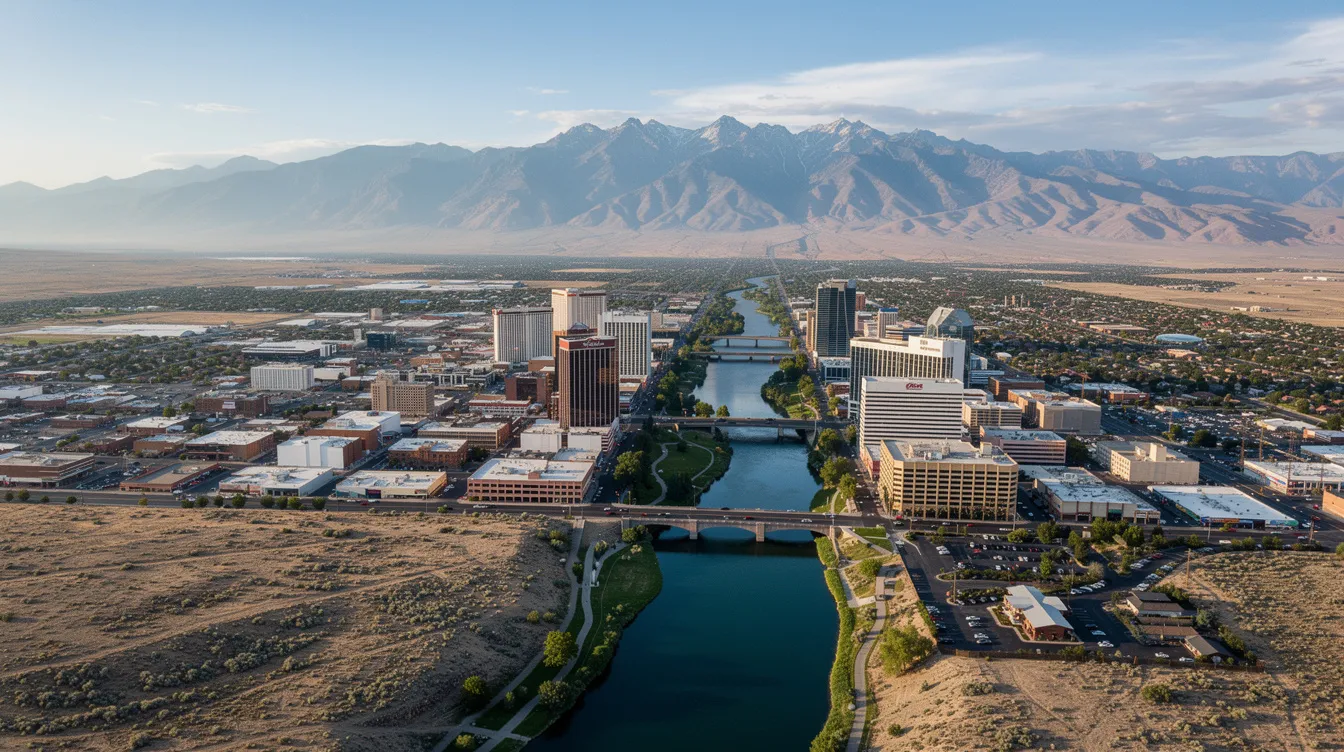
Out-of-state investors should work with Nevada agents and property managers who understand how local appraisers set market rent and what documentation DSCR lenders accept in each jurisdiction.
What Loan Terms Matter Most on a Nevada DSCR Loan?
Don't fixate on the interest rate alone. A Nevada DSCR loan structure is a package deal.
Terms to review before signing:
- Interest rate: Fixed or adjustable. DSCR loans can include varying loan structures such as fixed-rate and adjustable-rate options. Best-tier fixed rates in 2026 start around 6.375% for high credit and low LTV. Weaker profiles push into 7.5 to 8.5%.
- Amortization: 30-year amortisation is standard. Some programs offer interest-only periods (first 5 years) to improve cash flow at the expense of equity build-up.
- Prepayment penalty: Common in DSCR business purpose loans. Typical structures are 5-4-3-2-1 or 3-2-1 step-downs. If you plan to sell or refinance within 3 years, this cost matters.
- Maximum loan to value: Often 75 to 80% on purchase, lower on cash-out refinance.
- Recourse vs non-recourse: Most DSCR loans require a personal guarantee even when the property is held in an LLC. True non-recourse is rare.
Better DSCR ratios, higher credit scores, and larger down payments improve your rate and fee quotes. Gap Funded can help you reach those thresholds by supplying additional capital up front, pushing you into a better pricing tier.
How Much Cash You Really Need Beyond the Down Payment
Many Nevada investors underestimate total cash needed to close and stabilise a rental property. The down payment is only one piece.
Cash needs broken into buckets on a $450,000 Las Vegas purchase:
| Cost Category | Estimated Amount |
|---|---|
| Down payment (20%) | $90,000 |
| Closing costs (~3%) | $13,500 |
| Reserves (6 months PITIA at $2,500) | $15,000 |
| Rehab/furnishing budget | $10,000 |
| Total cash needed | $128,500 |
That's $38,500 beyond just the down payment. And if the lender's minimum DSCR requires a larger down payment (say 25%), you're at $112,500 for the down payment alone.
DSCR lenders typically require 20% to 25% down. They cover only the loan amount. They do not finance the entire capital stack, creating a gap for down payment, rehab, and reserves.
Where Nevada Investors Hit the Funding Gap on DSCR Deals
Even when loan approval comes through on a Nevada DSCR loan, investors regularly fall short on:
- Down payment (especially when a larger down payment is needed to hit the lender's minimum DSCR)
- Closing costs and origination points
- Rehab or turnover budget
- Furnishing a vacation rental (easily $15,000 to $30,000 in the Las Vegas area)
- Cash reserves and working capital for early vacancies
A realistic scenario: you qualify for a 75% LTV DSCR loan on a $400,000 property. The lender covers $300,000. You need $100,000 in down payment alone, plus another $25,000 to $40,000 for closing costs, reserves, and turn costs. That's $125,000 to $140,000 in cash.
Hard money and DSCR lenders won't finance this gap. Their LTV caps and risk limits stop at the loan amount. So investors either walk away from deals, take on equity partners (giving up long-term upside), or try to juggle personal credit cards without a plan.
That's where Gap Funded fits in.
How Gap Funded Closes the DSCR Funding Gap for Nevada Investors
We help Nevada investors bridge the gap between what the DSCR lender covers and what's actually needed to close. The tools, in the order they're typically applied:
- Rapid gap funding (unsecured term loans) for fast lump-sum cash to cover a down payment or rehab costs
- Business credit card stacking at 0% introductory rates for flexible closing costs, furnishings, and light rehab
- HELOCs on a primary residence or existing investment property for large down payments
- Business lines of credit or business term loans for ongoing working capital as the portfolio grows
This order matters. Start with fixed-term, predictable installment debt for the core gap. Then layer in revolving 0% business credit for flexible expenses. Add asset-based or revenue-based options as the portfolio scales.
Gap Funded typically works best for borrowers with FICO scores around 650 to 680 and above, verifiable income or strong co-borrowers, and a clear plan for the DSCR refinance or hold strategy.
We use soft credit pulls to pre-qualify. No impact to your credit just to check options. And we never place liens on the Nevada DSCR property, so the main lender stays in first position without interference.
For more detail on all available tools, visit our gap funding services overview.
Comparing Gap Funding vs. Equity Partners and High-Cost Alternatives
Common ways Nevada investors fill the DSCR gap today:
- Equity partners: You get the capital, but you split the long-term appreciation, rental income, and control. On a property that appreciates $100,000 over five years, a 50/50 split costs you $50,000 in equity you never recover.
- Merchant cash advances or unstructured card usage: Fast but expensive. High interest, compounding fees, and no coordination with DSCR lender timelines.
- Saving slowly: The deal you're looking at today may cost 5 to 10% more in 12 months. Markets don't wait.
Gap Funded's approach is non-dilutive. No equity splits in your rental properties. Structured stacking rather than random credit card applications. One coordinated capital plan that aligns with DSCR lender timelines and conditions.
I'll be straight with you: unsecured gap funding is still debt, not free money. Servicing these obligations depends on realistic rental income, a conservative purchase price, and disciplined cash flow management. If a deal only works with optimistic rent projections and zero vacancy, gap funding won't save it. In some cases, a smaller deal or a full equity partner is the safer path. We'd rather tell you that upfront than watch you overextend.
Case-Style Examples: Nevada DSCR Deals With Gap Funding Support
These are hypothetical illustrations, not promises. Actual loan terms depend on credit, property, and lender approval.
Example 1: Las Vegas long-term rental Purchase price $400,000. DSCR loan at 75% LTV = $300,000 loan amount. Monthly rent $2,400. PITIA $1,920. DSCR = 1.25. Investor uses a Gap Funded unsecured term loan for $40,000 of the $100,000 down payment and business credit card stacking for $12,000 in closing costs and minor rehab. Total out-of-pocket cash reduced from $128,000 to roughly $76,000.
Example 2: Reno duplex with HELOC from out-of-state primary residence Purchase price $480,000. DSCR loan at 80% LTV = $384,000. Combined gross rent on both units: $3,200. PITIA $2,500. DSCR = 1.28. Investor taps a HELOC on their California home for $60,000 to cover the remaining down payment and reserves, landing in a better rate tier than if they'd put less down.
Example 3: Licensed vacation rental near the Strip Purchase price $375,000. DSCR loan at 75% LTV = $281,250. Projected monthly rent (based on 12-month STR receipts) $3,100. PITIA $1,800. DSCR = 1.72. Gap Funded capital covers $22,000 in furnishing and setup costs that the DSCR lender won't finance. Property is legally licensed in unincorporated Clark County with transient occupancy tax registration current.
Risk Management: Stress-Testing Nevada DSCR Properties Before Closing
Run these scenarios before you remove financing and inspection contingencies:
- Rent 5 to 10% lower than your expected monthly rent
- PITIA 5 to 10% higher due to property taxes, insurance increases, or rate adjustments
- 1 to 2 months vacancy per year
- $3,000 to $5,000 per year in maintenance reserves (AC replacement in southern Nevada heat is not optional; it's a matter of when)
A deal with a 1.20 DSCR looks healthy on paper. But add 5% property management, 5% maintenance reserve, and one month vacancy, and your actual cash flow after all expenses can go negative. DSCR is a lender qualification metric, not a profitability guarantee.
Gap Funded capital should be sized so you can comfortably service both the DSCR mortgage and the gap funding payments even under conservative assumptions. If the numbers only work in a best-case scenario, the numbers don't work.
How to Sequence Your Nevada DSCR Loan and Gap Funding Application
Step-by-step process:
- Talk to a Nevada DSCR lender or broker. Understand current DSCR, LTV, and credit requirements. Approval decisions for DSCR loans can be made in 24 to 48 hours with many programs.
- Estimate DSCR on target properties using realistic rental income, current property taxes, insurance quotes, and association dues.
- Identify your capital gap. Compare your available cash against total needed: down payment, closing costs, rehab, reserves.
- Apply with Gap Funded early to lock in gap funding capacity before you write offers. Soft pull only; no credit impact.
- Align approvals. Match DSCR lender pre-approval with Gap Funded approvals, then proceed to offers, inspections, appraisal, and final underwriting.
Applying for gap funding after the appraisal is done and contingencies are about to expire is a recipe for stress and lost earnest money. Get your capital stack sorted first.
Frequently Asked Questions About DSCR Loans in Nevada
What DSCR ratio do I really need for a Nevada rental property? A common DSCR ratio for lenders is between 1.0 and 1.25. Most lenders prefer 1.25 or higher for the best rate and fee pricing. Some programs accept 0.75 to 0.99 with premium pricing and a larger down payment.
Can I use DSCR financing on a property I plan to move into later? No. DSCR loans are for non-owner-occupied investment properties only. Moving in would violate the business purpose designation and could constitute occupancy fraud.
How many rental properties can I finance with DSCR loans in Nevada? Nevada has no caps on the number of properties financed with DSCR loans. Most DSCR loans have no explicit portfolio limit, unlike conventional loans which typically cap at 10 financed 1-4 unit properties.
What minimum credit score do most Nevada DSCR lenders require? The minimum credit score for a DSCR loan is 620. Best pricing starts at 700 or 740+.
Can I close a DSCR loan in my LLC? Yes. Most lenders allow LLC or corporate ownership. You'll still need to personally guarantee the loan in most cases, and the lender will require entity documents (articles of organisation, operating agreement, EIN).
Are prepayment penalties standard on Nevada DSCR loans? Yes. Most DSCR loans carry prepayment penalties, commonly in step-down structures (5-4-3-2-1 or 3-2-1). Read the written program terms carefully before committing.
How fast can DSCR loans close if I also need gap funding? DSCR lenders typically close in 21 to 30 days once underwriting is complete. Gap funding should be secured before you write offers to avoid timeline conflicts.
Does Gap Funded interfere with the DSCR lender's first lien? No. Gap Funded does not place a lien on the DSCR property. Our funding is unsecured or secured against a separate asset you already own, so the DSCR lender's first position is unaffected. No equity sharing, no interference with loan approval.
Do I need a Las Vegas mailing address to get a DSCR loan on a Las Vegas property? No. DSCR lenders care about the property location and its income, not where you live. Out-of-state investors routinely close DSCR loans in Nevada.
Next Steps for Nevada Real Estate Investors Considering DSCR Loans
- DSCR loans in Nevada let rental properties qualify on their own cash flow, but you need to understand DSCR math, local short term rental rules, and Nevada real estate market dynamics to avoid surprises
- DSCR loans focus on property income, not personal income, and there are no limits on the number of properties you can finance
- The real obstacle for most investors is not loan approval; it's the funding gap for down payment, closing costs, rehab, and cash reserves
If you've got a deal in the Las Vegas metro, Reno, Henderson, or anywhere else in Nevada that pencils out on one property or twenty, don't let the capital gap kill it. Apply for a quick, no-obligation funding review and let us know your target purchase price, preferred market, and whether you're planning traditional rentals or vacation rentals. We'll put together a capital stack plan tailored to your specific deal.
Related Reading
This article is for educational purposes only and isn't financial, legal, tax, or investment advice. Credit and financing outcomes depend on your own situation. Talk to a licensed financial professional before making funding decisions for your business.