
DSCR Loan Georgia: Investor Guide to Georgia DSCR Loans & Gap Funding

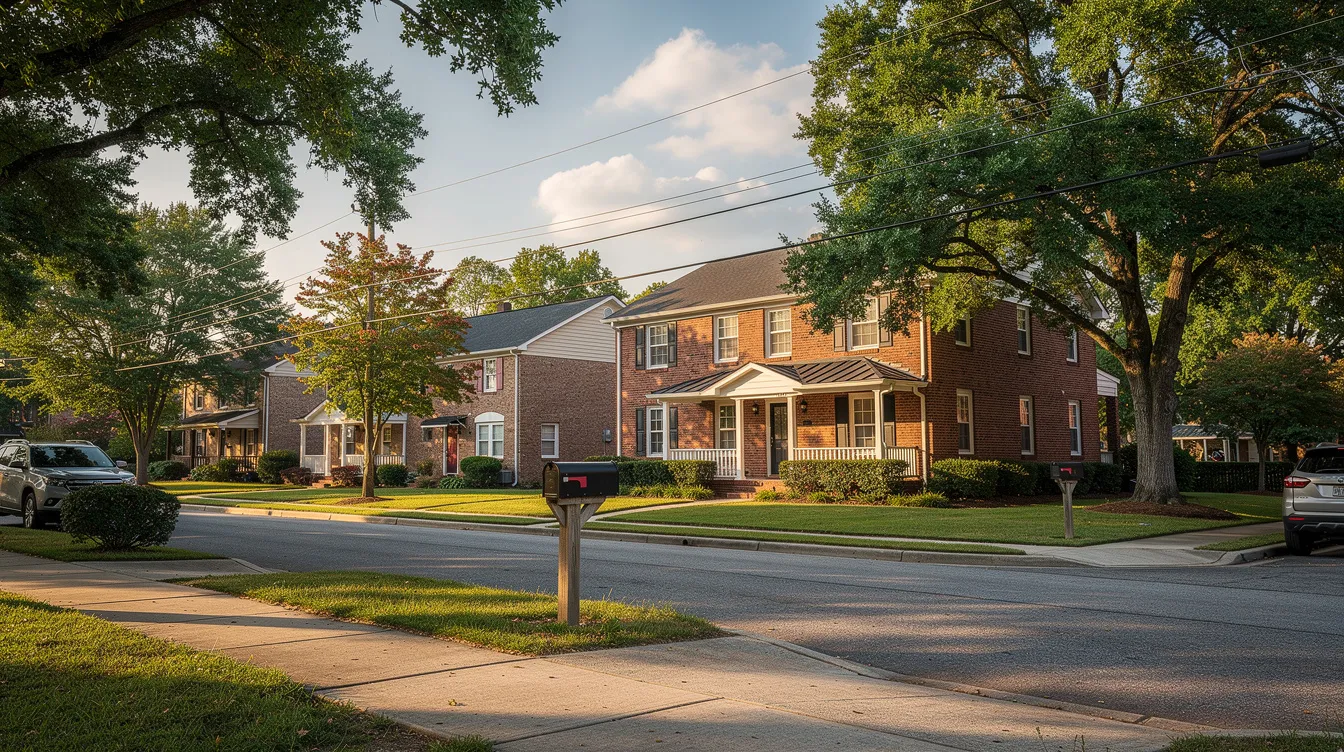
DSCR Loan Georgia: Investor Guide to Georgia DSCR Loans & Gap Funding
Most Georgia real estate investors don't get stuck because they found a bad deal. They get stuck because they ran out of cash before they could close a good one. This guide covers how DSCR loans work in Georgia, what you actually need to qualify, and how to fill the capital gap when your primary lender covers most of the deal but not all of it.
Fast Answer: How Georgia DSCR Loans Work (and When to Use Gap Funding)
A DSCR loan in Georgia is a mortgage for rental properties that qualifies you based on the property's rental income rather than your personal income. No W-2s. No tax returns. No standard debt to income calculations. The lender looks at one core number: can this property's cash flow cover its own loan payments?
DSCR lenders calculate a simple ratio. They take the property's qualifying monthly rent and divide it by the full monthly housing payment, known as PITIA (principal, interest, taxes, insurance, and HOA fees). If the rent covers or exceeds that payment, you're in the conversation. Most Georgia DSCR lenders want a minimum DSCR of 1.0 to 1.25, depending on your credit score, down payment, and the property type.
Here's a quick example. You're buying a $350,000 single family rental in metro Atlanta with 20% down ($70,000). Expected long term rent is $2,400 per month. Your estimated PITIA runs about $1,900. That gives you a DSCR of roughly 1.26, which is solid for most DSCR loan programs. DSCR loan applications typically close in 14 to 30 days, so you can move fast in competitive markets.
But here's the catch. Even when the DSCR and your credit check out, most investors face a funding gap:
- Down payment of 20% to 25% ties up a fair whack of capital
- Closing costs, prepaid items, and earnest money add $8,000 to $15,000 or more
- Rehab, furnishing, or property prep costs can run $10,000 to $50,000+
- Lenders commonly require 3 to 6 months of cash reserves for DSCR loans
That's where we come in. Gap Funded doesn't replace your Georgia DSCR lender. We stack unsecured term loans and 0% business credit cards on top of your primary DSCR loan so you can cover the gap without giving up equity or placing liens on the property.
What Is a DSCR Loan in Georgia?
A Georgia DSCR loan is a non-QM (non-qualified mortgage) designed for non-owner occupied investment properties. The debt service coverage ratio is the centrepiece of underwriting. Instead of traditional income verification, DSCR loans focus on property income, not personal income.
The formula is straightforward: DSCR = Monthly Rent ÷ Monthly PITIA. A DSCR of 1.0 means break even cash flow. A DSCR of 1.25 indicates 25% more income than needed to cover debt payments. Most Georgia DSCR loan programs require a minimum DSCR of at least 1.0, though stronger profiles target 1.20 or above.
These loans skip the employment verification, tax returns, and personal income documentation that conventional mortgages demand. That makes them a natural fit for self employed investors, entrepreneurs with aggressive write-offs, and anyone whose taxable income doesn't reflect their actual financial strength. DSCR loans do not require personal income verification for approval.
Important distinction: these are business purpose loans only. You cannot use a Georgia DSCR loan to finance a primary residence or a second home. They're built for long term rentals, short term rentals, and everything in between, so long as the property is an investment property.
Common property types in Georgia include single family rentals in suburbs like Gwinnett and Cobb counties, small multifamily in Atlanta, condos and townhomes (subject to HOA rules), and short term vacation rentals in Savannah and the North Georgia mountains. Some Georgia lenders allow purchasing properties through an LLC for liability protection.
Gap Funded is not the DSCR lender in this picture. We work alongside your DSCR lender to provide the additional capital so you can actually close.
Georgia DSCR Loan vs. Traditional Investment Mortgage
Both loan types finance rental properties. But they qualify borrowers in fundamentally different ways.
Unlike traditional mortgages, DSCR loans evaluate the property's cash flow potential rather than your borrower's personal income. Traditional investment mortgages require full income verification: tax returns, W-2s, employment history, and a clean debt to income ratio. Unlike conventional loans, DSCR loans allow financing for multiple properties without DTI limitations. Conventional lenders often cap you at 4 to 10 financed properties. DSCR lenders generally don't.
For Georgia real estate investors, this matters. Consider a contractor in Atlanta who takes heavy deductions, or a short term rental host in Savannah whose income fluctuates seasonally. Both might get blocked by conventional mortgages but can qualify through DSCR financing because the property's rental income does the talking.
I'll be fair here. Traditional loans usually offer lower interest rates and sometimes lower down payments. If your W-2 income is strong and you're buying your first or second investment property, conventional loans might be cheaper. But if you're scaling a real estate portfolio, self employed, or writing off aggressively, DSCR loans give you flexibility that conventional mortgages simply can't match.
The tradeoff is that DSCR loans require a down payment of 20% to 25%, and reserves on top of that. When your primary lender needs that much equity, gap funding can bridge what your savings alone cannot.
Current Georgia DSCR Loan Requirements (2024 to 2026 Overview)
Requirements vary by lender, but Georgia DSCR loans share consistent themes across the market.
Credit score: The minimum credit score for a DSCR loan is 620. Better pricing and higher loan to value ratios generally kick in at 700+ and 740+. If you're sitting at 660, you'll qualify, but expect to pay a bit more in rate.
DSCR ratio: A minimum DSCR of 1.0 is typically required in Georgia. Some lenders may accept a DSCR as low as 0.75, but those programmes demand stronger compensating factors like higher down payments, bigger reserves, and excellent credit.
Down payment: Most DSCR loans require a down payment of 20% to 25%. The 15% down option exists, but it's rare and reserved for borrowers with exceptional profiles and low risk deals.
Reserves: Lenders commonly require 3 to 6 months of cash reserves. On larger loans, low DSCR deals, or cash out refinances, expect 6 to 12 months. Applicants must provide two months of bank statements for assets as part of the documentation.
Loan amount: DSCR loans can finance properties from $100,000 to $3 million, covering everything from a $120,000 duplex in Macon to a $1.5 million portfolio in metro Atlanta.
Property requirements: Investment designation, appraised value support, habitable condition, clear title, and adequate insurance. Coastal Georgia rental properties need flood and windstorm coverage, which adds to PITIA.
The application process includes an appraisal and underwriting step. If you meet the lender's profile but come up short on the cash required for closing, that's a situation we handle daily at Gap Funded.
How DSCR Is Calculated for Georgia Rental Properties
The calculation itself takes about ten seconds. Getting the inputs right is where most investors trip up.
DSCR = qualifying monthly rent ÷ monthly PITIA. PITIA includes principal, interest, taxes, insurance, and HOA fees. The qualifying rent comes from either an existing lease, a market rent schedule (Form 1007 or 1025), or, for short term rentals, projected income from platforms like AirDNA. Short term rental income may be estimated using data from platforms like Airbnb.
Here's a Georgia example. You're looking at a single family rental in Macon. Monthly rent is $2,300. Your PITIA breaks down to roughly $1,850 (mortgage principal and interest, property taxes, insurance, no HOA). DSCR = 2,300 ÷ 1,850 = 1.24. That qualifies with most DSCR lenders.
But watch what happens when costs shift. If insurance or property taxes increase by $200 per month, your PITIA climbs to $2,050 and your DSCR drops to 1.12. Still qualifying, but tighter. Georgia property taxes are assessed at 40% of fair market value for most properties, and rates vary by county. Fulton County taxes hit differently than Chatham or Muscogee.
Before going under contract, estimate DSCR quickly using Zillow or Rentometer for rent comps and your lender's current rates for the mortgage calculation. For short term rentals, use AirDNA projections, but know that lenders will often haircut that projected income to account for vacancies and seasonality.

Property Types Eligible for Georgia DSCR Loans
Georgia DSCR loans support a range of property types, but they're almost always limited to investment and business purpose use. No primary residences.
Eligible properties for DSCR loans include single family rentals and two to four unit residential properties. That covers duplexes, triplexes, fourplexes, townhomes, and condos (subject to HOA and warrantability review). Some lenders, like Harpoon Capital, accept up to 9 units. DSCR loans are available for various property types, including multi-units.
Both long term leases and legally permitted short term rentals work. Georgia markets like Atlanta, Savannah, Augusta, Blue Ridge, and Lake Lanier all have active STR demand, but eligibility depends on local regulation, HOA rules, and licensing. Illegal or non-permitted units can derail loan approval fast.
Grey areas include mixed use properties, small commercial sections, and accessory dwelling units. These are evaluated case by case depending on zoning and legal unit count.
You can use DSCR financing to build a portfolio of multiple properties across different Georgia submarkets. There's generally no portfolio cap. But each property's DSCR must stand on its own.
Benefits of Georgia DSCR Loans for Real Estate Investors
In Georgia, DSCR loans are popular due to strong population growth and landlord-friendly laws. There's no state rent control, tenant protections are limited compared to other states, and the rent to price ratio in suburbs and secondary markets often produces healthy DSCR ratios between 1.20 and 1.40.
The biggest advantages for Georgia real estate investors:
- No traditional income verification or employment verification required
- Ability to hold multiple properties without aggregate DTI caps
- LLC ownership allowed for liability protection
- Streamlined underwriting can shorten the loan process to 2 to 4 weeks
- Works for both long term and short term rental strategies
For self employed investors who write off heavily, or entrepreneurs whose tax returns don't reflect actual earning power, DSCR loans remove the single biggest barrier to real estate investments. The lender cares about the property's income, not yours.
Strategic use cases include BRRRR exits (refinancing out of hard money into a DSCR loan), converting flips to long term rentals, and doing cash out refinances on seasoned Georgia rentals to fund new acquisitions. Enhanced cash flow from value add renovations can improve DSCR on refinances.
The catch? Those higher down payment requirements create a "last mile" capital problem. You've got the deal, the credit, and the rental demand. You just need the cash to close. That's the exact gap we fill.
Common Drawbacks and Risks of DSCR Loans in Georgia
DSCR loans solve real problems, but they're not a magic wand. Here's what to watch for.
Interest rates for DSCR loans are typically 0.5% to 1.5% higher than conventional loans. In 2026, that broadly means 7.0% to 8.5% for strong profiles, with weaker deals pushing into the 9% to 10% range. That interest rate premium directly affects property cash flow and the DSCR itself.
Higher equity requirements can strain liquidity. When you're putting down 20% to 25% plus reserves on each deal, scaling gets capital intensive quickly.
Prepayment penalties are common with most DSCR loans. Many programmes in Georgia use 3 to 5 year step down structures. If you plan to sell or refinance early, factor the penalty into your return calculations. You can sometimes buy out the penalty upfront, but that typically increases your rate.
Operational risks are real too. Vacancy, rent softness, unexpected repairs, or rising taxes and insurance can push your DSCR below lender minimums, especially on refinance attempts. Evolving STR ordinances in Atlanta and Savannah add regulatory risk for short term vacation rentals.
My advice: run your numbers conservatively, maintain reserves, and stress test every deal with 10% to 15% lower rents before committing.
Georgia DSCR Loan Requirements in Detail
Beyond the headline numbers, here's what DSCR loan qualification actually looks like in practice.
Borrower level: Minimum credit score of 620 to 660+, no recent major housing events (foreclosure and bankruptcy have seasoning requirements), and a credit profile clean enough to satisfy lender overlays. Most DSCR lenders will still pull credit and review existing debt obligations, even though they skip standard employment verification.
Property level: Minimum property value or loan amount often starts at $100,000 to $150,000. The property must be in habitable condition with no serious safety issues. Confirmed investment use is required. Loan amounts typically range from $100,000 to $3 million.
Documentation: ID, entity documents if borrowing in an LLC, evidence of funds for down payment and reserves, the property's purchase price via purchase contract, and any current leases or rent rolls for refinances. No tax returns or W-2s in most programmes.
Most Georgia DSCR lenders will still ask basic questions about assets and existing liabilities. They want to know you can service the loan, even if they're not calculating a traditional DTI.
For Gap Funded's products, our borrowers usually need at least 650 FICO and enough documented income or revenue to comfortably handle unsecured term loan payments alongside the DSCR mortgage. Setting realistic expectations upfront saves everyone time.
How to Qualify for a DSCR Loan in Georgia
Here's a step by step roadmap from the investor's perspective.
Step 1: Pre-analyse the deal. Estimate market rent using Zillow, Rentometer, or AirDNA. Model your PITIA using current interest rates, county property taxes, and insurance quotes. Compute a rough DSCR. If you're below 1.0, the deal probably doesn't work. If you're at 1.20+, you've got breathing room.
Step 2: Check your credit. Pull your own scores. Resolve collections if possible. Understand that FICO tiers (660 vs. 700 vs. 740) directly affect your interest rate, loan to value options, and favourable loan terms.
Step 3: Confirm your cash position. Tally liquid funds for down payment, closing costs, reserves, and initial rehab or holding costs. Identify any shortfall. Be honest about the number.
Step 4: Choose the right DSCR loan programme. Long term rental vs. short term rental focus, purchase vs. cash out refinance, fixed rate vs. interest only. Match the programme to your Georgia rental strategy and property performance expectations.
Step 5: Package a clean file. Purchase contract, LLC docs, IDs, two months of bank statements for assets, leases or rent rolls on refis, and any STR performance data. A clean file speeds up the loan process significantly.
Step 6: Map your capital stack early. Before earnest money goes hard, know exactly how much gap funding you need. Applying at gapfunded.com/apply lets you explore unsecured term loans and credit card stacking options with a soft pull that doesn't impact your credit.
Improving Your DSCR and Overall Loan Approval Chances
When your DSCR is sitting near 1.0, small adjustments on either side of the equation can make or break the deal.
Income side levers: Target neighbourhoods with strong rental demand and low vacancy. Add legal bedrooms or bathrooms if the numbers justify it. Consider shifting from long term to legal short term rentals where allowed, as STR income can be significantly higher. Even modest value add renovations can push enough rental income to clear the threshold.
Expense side levers: Appeal property tax assessments where justified. Shop insurance aggressively, especially in coastal Georgia where premiums run high. Choose 30 year amortisation over shorter terms to reduce monthly principal and interest. Avoid properties with steep HOA fees unless the rent compensates.
A larger down payment improves DSCR by reducing the monthly mortgage payment, even if it strains cash upfront. This is a solid use case for pairing DSCR financing with unsecured gap funding to cover the additional equity.
Maintain solid personal credit. Better scores unlock higher LTV, lower rates, and more flexible DSCR loan requirements. And always stress test: run your DSCR calculation with rents 10% to 15% lower and expenses slightly higher to make sure the deal holds up.
Best Georgia Markets and Strategies for DSCR Financed Rental Properties
Georgia offers multiple angles for DSCR investors, and each market interacts differently with underwriting.
Atlanta and surrounding metros (Fulton, Cobb, Gwinnett, Clayton): Atlanta is a top market for rental property investment. High demand, strong population growth, and proximity to major employers drive consistent rental demand. DSCR works well here for both long term rentals and legal STRs near job centres and universities. Prices are higher, so deals need to generate sufficient income to clear DSCR thresholds.
Savannah and coastal Georgia: Savannah offers strong demand for both long term and short term rentals. Tourism and port activity create dual demand drivers. But insurance costs along the coast are significant, and STR regulation requires careful attention to local ordinances and HOA rules.
Augusta: Beyond steady military and medical employment, Augusta attracts short term visitors during the Masters Tournament, creating seasonal STR spikes. Year round, it offers lower price points and reliable workforce housing demand.
Columbus, Macon, and Warner Robins: These are emerging markets with growth potential. Georgia's military installations create concentrated rental markets with consistent demand. Entry prices are lower, and DSCR ratios tend to be more favourable.
North Georgia and Lake Lanier: Cabin and lakefront short term rentals perform well during peak seasons, but lenders may require AirDNA projections or actual booking history. Seasonality means your DSCR needs to account for slower months.

Align your strategy with local regulations and base pro formas on realistic rent and occupancy data. The Georgia real estate market rewards investors who do their homework.
The Real Funding Gap: Down Payment, Closing Costs, Rehab, and Reserves
Here's the part nobody talks about enough. DSCR loan approval is only half the battle. The real question is whether you can actually fund the deal.
Consider this scenario: a $400,000 duplex in suburban Savannah. Down payment at 20% is $80,000. Closing costs and prepaid items run $10,000 to $12,000. Initial rehab budget is $25,000. Six months of PITIA reserves at roughly $3,000 per month equals $18,000. Total cash needed: over $130,000. And the DSCR loan itself only required you to bring 20% to 25% equity.
Common gap categories include:
- Down payment funding
- Closing costs and prepaids
- Rehab and turn costs
- Earnest money deposits
- Furnishings for STR properties
- Operating reserves for lease up or seasonality
Many investors I talk to have the credit and the deal quality to get DSCR loan approval. What they don't have is enough liquidity to satisfy every cash requirement without draining personal safety nets. That's precisely what we specialise in at Gap Funded.
How Gap Funded Complements Georgia DSCR Loan Programs
Gap Funded works alongside Georgia DSCR lenders, not in competition. We're a funding intermediary that completes your capital stack for rental properties using non-collateralised tools.
Our main products: unsecured personal term loans for lump sum capital, 0% intro APR business credit card stacking for medium sized expenses, and debt consolidation to clean up existing obligations. None of these place a lien on your investment property. No equity splits. No second mortgages on your Georgia rental.
The typical sequence: secure or pre-qualify for your DSCR loan first, calculate the exact cash shortfall, then use Gap Funded to fill it. We use soft pulls initially where possible, so checking your options doesn't torpedo your credit score before the DSCR lender pulls.
Realistic borrower profile for our products: usually 650+ FICO, responsible existing debt levels, and enough income or revenue to handle additional unsecured payments.
I'll be straight with you. Unsecured gap funding is fast and lien free, but it carries shorter terms and higher payments than the DSCR mortgage itself. The deal still needs to pencil out with those additional monthly obligations factored in. If it doesn't, we'll tell you.
Ready to see what you qualify for? Complete the quick application at gapfunded.com/apply for a personalised funding review alongside your Georgia DSCR loan plans.
Gap Funding Tools That Work Best with Georgia DSCR Loans
Here's a quick overview of which tools fit and why the order matters.
Unsecured personal term loans: Lump sum capital for your down payment, closing costs, or rehab. Fixed repayment terms, no lien on the property. This is usually the first tool we deploy because the cost is lower than alternatives and the amounts are meaningful. Learn more about gap funding.
0% APR business credit card stacking: Stack multiple business cards to create a large interest free credit pool for 9 to 18 months. Ideal for furnishings, light rehab materials, STR setup, and licensing costs in markets like Atlanta and Savannah. Learn more about credit card stacking.
Debt consolidation: If expensive personal or business debt is eating into your monthly cash flow, consolidating into a structured term loan can free up capacity and strengthen future DSCR loan applications. Learn about debt consolidation.
Hard money pairing: Some investors use hard money on heavy rehabs and then refinance into DSCR loans once stabilised. Gap Funded can provide working capital during the bridge period.
We review the entire deal, including DSCR loan terms, projected rents, and rehab scope, to make sure total monthly debt payments stay realistic.
Step by Step: Stacking a Georgia DSCR Loan with Gap FundingStep by Step: Stacking a Georgia DSCR Loan with Gap Funding
Step 1: Identify your target Georgia rental property. Run preliminary DSCR numbers using market rent data and estimated PITIA. Confirm the property can generate income at a DSCR that meets common Georgia DSCR loan requirements.
Step 2: Engage a DSCR lender or broker for pre-approval. Get an estimated maximum loan amount, required minimum DSCR, down payment percentage, and reserve requirements.
Step 3: Build a complete budget. The property's purchase price plus down payment, closing costs, rehab, furnishings (for STR), and desired reserves. Calculate total cash needed versus available funds. Identify the gap.
Step 4: Apply at gapfunded.com/apply to explore unsecured term loans and credit card stacking options. We use soft pulls initially where possible, so you can see what's available without affecting your score.
Step 5: Coordinate timelines. DSCR underwriting, appraisal, and Gap Funded approvals need to align before earnest money goes hard and before the DSCR loan closing date. Communication between all parties keeps things on track.
Step 6: Close on the DSCR loan. Deploy gap funds for down payment, closing costs, and rehab. Stabilise the property, get tenants in place, and start generating the property's rental income. From there, you're positioned for future cash out refinances or portfolio expansion.

Georgia DSCR Loan FAQs
Do DSCR loans truly ignore personal income?
DSCR loans skip traditional personal income documentation like tax returns and W-2s. But lenders still evaluate your credit score, assets, reserves, and sometimes your real estate track record. They want to know you're a capable borrower, even if they're not running a conventional DTI calculation. Think of it as qualifying by property performance rather than pay stubs.
Can I buy multiple properties in one year using DSCR loans in Georgia?
Yes. DSCR loans allow you to hold multiple properties because each property qualifies independently based on its own rental income covers its own debt payments. There's no aggregate DTI limit. But more properties mean more reserve requirements and more scrutiny on your overall profile.
Are bank statement loans similar to DSCR loans?
They're different products solving different problems. Bank statement loans use your actual bank deposits to verify income, typically requiring 12 to 24 months of statements. DSCR loans evaluate the property's income entirely. If your non-rental income is strong but hard to document traditionally, bank statement loans might work. If the property itself generates enough rental income, DSCR financing is usually simpler.
Can gap funding be used for the DSCR down payment?
Yes. Unsecured term loans and credit card stacking can provide the cash needed for your down payment. However, some DSCR lenders have seasoning requirements, meaning funds need to sit in your account for a certain period before closing. Timing and documentation matter, which is why we recommend starting the Gap Funded application early in the process.
Can I hold title in an LLC?
Most DSCR loan programs allow LLC vesting. You'll need your operating agreement, articles of organisation, and the lender will typically require a personal guarantee. Gap Funded works with both individuals and business entities.
How long does the whole process take?
DSCR loan approval and closing typically runs 14 to 30 days for clean deals. STR properties, low DSCR scenarios, or cash out refinances can stretch to 30 to 45 days. Gap Funded's unsecured products can often be arranged within days to two weeks, so we can usually match your DSCR lender's timeline without holding things up.
If you've got the deal, the credit, and the rental numbers, but not quite enough cash to cover the full capital stack, that's literally what we built Gap Funded for. No liens on your property, no equity partners, no corporate waffle.
Start with a quick application at gapfunded.com/apply. Soft pull, no commitment, and you'll know where you stand before your earnest money goes hard.
Related Reading
This article is for educational purposes only and isn't financial, legal, tax, or investment advice. Credit and financing outcomes depend on your own situation. Talk to a licensed financial professional before making funding decisions for your business.