
Business Plan for House Flipping: From Deal Analysis to Gap Funding

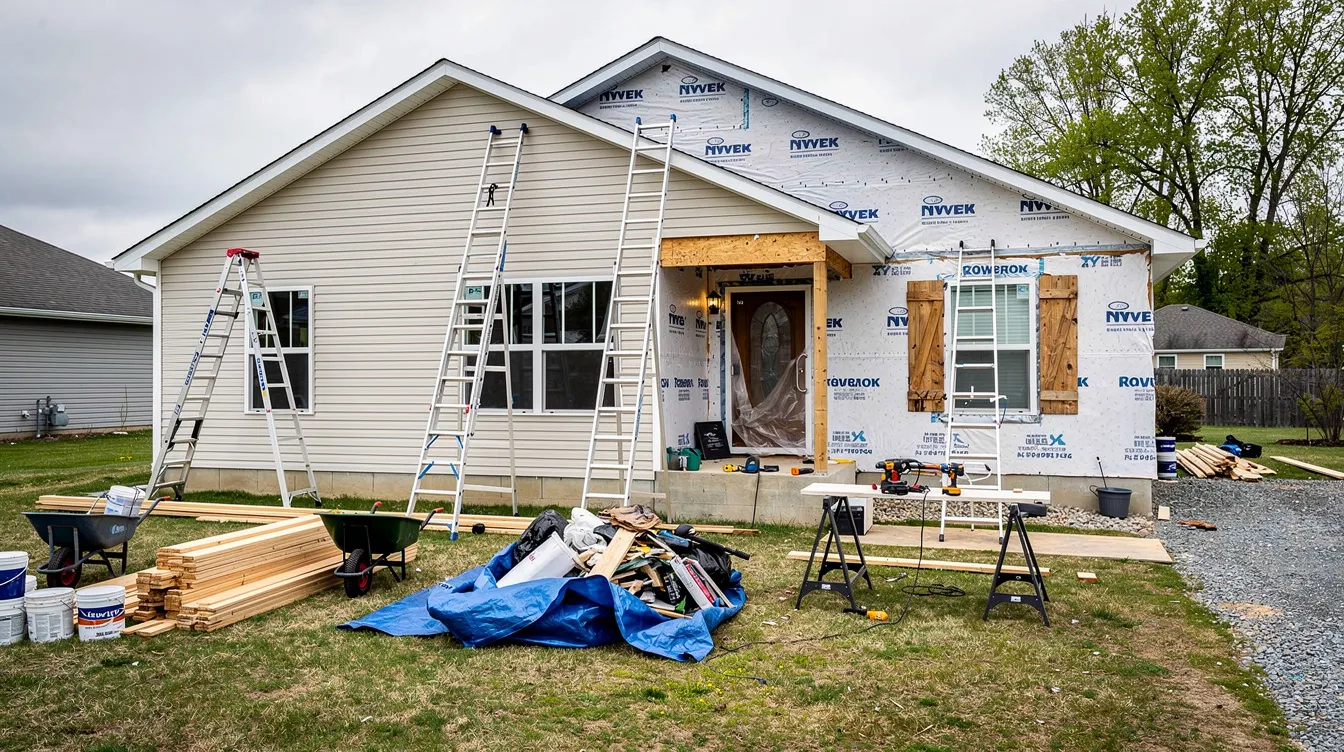
Business Plan for House Flipping: From Deal Analysis to Gap Funding
A house flipping business plan is the document that separates profitable investors from those who lose money on their first deal. In 2026, with higher interest rates, tighter lending standards, and compressed margins, every dollar in your project needs to be accounted for before you sign a purchase contract. This complete guide walks you through a practical business plan structure with concrete numbers, cost breakdowns, and a clear funding strategy so you can flip houses with confidence.
Key Takeaways for Your House Flipping Business Plan
A business plan outlines goals and strategies for house flipping, and it helps secure financing options from lenders, partners, and capital providers. In a market where gross profit per flip dropped to roughly $65,981 in 2025 according to ATTOM's Year-End Home Flipping Report, planning every cost before you commit capital is no longer optional.
- A comprehensive house flipping business plan includes seven core components: executive summary, company description, market analysis, acquisition strategy, operational plan, financial plan, and exit strategies.
- Your profit lives in the buy and the budget. House flipping generated median profits of about $73,500 in 2024, but only for investors who controlled rehab and holding costs.
- Plan all costs before you apply for funding. Map purchase price, rehab budget, holding costs, and selling strategy before committing to any deal.
- Capital needed for flipping often ranges from $30,000 to $50,000 in upfront cash, even when a lender finances most of the project.
- The "funding gap" is the money you need beyond what your primary lender covers: down payment, closing costs, working capital to reach the first rehab draw, and contingency reserves.
- Once you know your gap, you can use a capital stack including Gap Funded solutions to cover these costs so you can keep scaling without draining savings.
The rest of this article walks through each section of a practical house flipping plan with real numbers and timelines.
Understanding the House Flipping Process and Profit Drivers
The house flipping process is straightforward in concept: buy a distressed or undervalued property, renovate it, and resell it within four to six months. In practice, every stage demands precise execution.
- Deal sourcing: Find undervalued properties through MLS, wholesalers, auctions, or off-market campaigns.
- Acquisition: Negotiate, inspect, and close on the right property at the right price.
- Rehab: Manage contractors, coordinate inspections, pull permits, and complete renovations on schedule.
- Staging and listing: Prepare the property complete with finishes that appeal to your target market.
- Sale: List, negotiate offers, and close with the buyer.
- Post-project review: Compare actual costs and profit against your plan.
Profit comes from buying well below the after repair value, tightly controlling renovation costs, and minimizing holding costs. The 70% rule limits purchase price to 70% of ARV minus repairs, though in competitive 2025–2026 markets some investors operate closer to 75–78%.
Novices often underestimate the time required for renovations. Time management is crucial to avoid costly renovation delays because every day a property sits unsold incurs additional holding costs. Investors must coordinate inspections and manage contractors' schedules to keep the timeline on track. Holding costs include interest payments, property taxes, insurance, utilities, HOA dues, and lawn or snow maintenance. These carrying costs can quickly overtake potential profits if the project drags on.
Currently, 63% of house flips are purchased with cash, but over a third now use financing, which means your plan should also address risk from changing interest rates, shifting buyer demand, and contractor delays.
Defining Your House Flipping Business Model and Goals
This section of your business plan describes what kind of flipping business you are building and why it will succeed.
- Business model options: Quick cosmetic flips with surface improvements for faster turnover, heavy rehab or full gut flips with larger spreads, or a hybrid approach with BRRRR rental exits when the housing market softens.
- Target property profile: Define specifics. For example, 1,500–2,400 sq ft single-family homes built 1965–2005 in suburbs with ARVs between $250,000 and $450,000.
- Measurable goals: Set targets for the number of flips and profit per project. House flippers target a profit of 10 to 20 percent of ARV. Year 1 might aim for 2 flips at $35,000–$50,000 net each; by year 3, scale to 4–6 flips annually.
- Include quantifiable revenue and profit goals in your business plan so lenders and business partners can evaluate your projections.
- Roles: Clarify whether you are a solo operator or have partners providing capital or sweat equity. Define your focus (acquisitions, project management, fundraising) and what gets outsourced to local contractors and a real estate agent.
- Mission: State it plainly. For example: revitalizing neglected homes in a specific city, creating safe, modern housing for first time buyers.
Choosing a Business Entity, Structure, and Operations Setup
Formalizing your business entity matters for liability protection, tax efficiency, and credibility with lenders and partners. The executive summary of your plan needs to summarize the business mission and target market, and the company description includes details about legal structure and geographic focus.
- Entity comparison: A single-member LLC works for most new flippers. Multi-member LLCs suit partnerships. An S-Corp election makes sense once profits justify payroll tax savings. A sole proprietorship may suffice for a very first flip but offers no liability shield.
- Setup steps: Form your LLC with the state, obtain an EIN, register with your state tax authority, and open a dedicated business bank account. Separating personal and business finances is critical when applying for funding.
- Licenses and permits: Knowledge of tax and zoning laws is crucial for flippers. Check state contractor rules if self-performing work, secure a local business license, and budget for building permits on structural, electrical, and plumbing work.
- Written agreements: Document profit splits, decision-making authority, and capital contributions with business partners. Use contracts with local contractors that specify scope, price, and change-order policy.
- Insurance: Carry general liability, builder's risk during construction, and consider professional liability if advising other investors.
Market Research and Deal Acquisition Strategy
Your market research directly determines whether you can buy at the right price and hit your projected net profit per flip. Understanding local real estate markets is essential for success, and your business plan should include a competitive analysis of the market.
- Geographic focus: Define specific cities, zip codes, or school districts. Identifying target neighborhoods should focus on areas with high employment and good schools. In 2024, top cities for flipping included Pittsburgh and Baltimore.
- Market analysis: Research should include current housing trends and inventory levels. Success in flipping houses involves using detailed market research and data-driven strategies.
- Competition: Competitive analysis evaluates strengths and weaknesses of local real estate investors, new construction, and move-in-ready resales your buyers will consider.
- Buyer avatar: Define whether your target market is a first-time buyer, move-up family, or downsizing couple. This influences finishes and ARV assumptions.
- Deal sources: MLS with your agent, wholesalers, foreclosure auctions, off-market mail campaigns, driving for dollars, and networking at local REI meetups.
- Written acquisition criteria: Set your maximum purchase price as a percentage of ARV, minimum spread after rehab, minimum target profit, and maximum rehab complexity for your current skill level.
- Due diligence checklist: Scope of work, contractor walkthrough, realistic rehab budget, and updated comps within 0.5–1 mile from the last 90 days.
Detailed Cost Planning: From Purchase to Sale
This section is the core of your business plan. Map every dollar going into and out of a flip. The average purchase price for a flip nationally is around $150,000, though in many suburban markets you will pay more. The average renovation cost for a flipped property is $50,000. Developing a renovation plan is crucial for adding value.
Here is a sample business plan cost breakdown for a $320,000 ARV flip purchased at $210,000:
| Cost Bucket | Line Items | Estimated Cost |
|---|---|---|
| Acquisition | Purchase price, earnest money, inspections, appraisal, lender fees, title, escrow, transfer taxes | $218,000–$225,000 |
| Rehab | Labor from local contractors, materials, permits, dumpsters, design items, 15% contingency | $50,000–$57,500 |
| Holding | Interest on hard money (~6 months at 11%), property taxes, insurance, utilities, yard care | $10,000–$14,000 |
| Selling | Real estate agent commissions (5–6%), staging, photography, seller closing costs | $19,000–$24,000 |
Acquisition costs should factor in purchase price and closing fees. Renovation costs average $50,000 per property. Flippers should not pay more than 70% of a property's after repair value minus repairs.
Projected net profit: $320,000 ARV minus total costs (~$305,000) = approximately $15,000–$25,000, or roughly 5–8% of ARV. To hit 10–20% margins, you need to buy lower or rehab tighter. Median profits from house flipping were $73,500 in 2024 for investors who executed well on both fronts.
Calculating Your Funding Needs and Gap
Your funding needs represent the total capital stack required to complete a project. The funding gap is the portion not covered by your primary lender. Your financial plan must include projected startup costs and income statements.
Consider a $250,000 purchase with $50,000 in rehab and a $360,000 ARV:
- Hard money loan at 85% of purchase ($212,500) plus 100% of rehab ($50,000) = $262,500 financed, capped at ~75% of ARV ($270,000).
- Your gap: 15% down payment ($37,500) + closing costs (~$7,500) + working capital before first draw (~$10,000) + cash reserves (~$5,000) = approximately $60,000.
Scale that to 3 concurrent flips and you need $150,000–$180,000 in working capital. This is where cash flow becomes the scaling bottleneck.
Financial projections should estimate revenue, expenses, and net profit for each project. Differentiate between personal cash, private money from friends or family, and non-dilutive solutions like unsecured term loans, HELOCs, or business credit card stacking from gap funding lenders for real estate investors.
Funding Strategy and Using Gap Funded Capital Stacks
A house flipping business plan must show exactly how each flip will be financed and how you will preserve equity and control.
- Primary financing: Hard money lenders (9.5–14% interest, 6–12 month terms, 1–3 points), DSCR loans for rental exits, bank lines of credit, or private lenders.
- Gap funding: The layer that fills the space between what your primary lender covers and your total funding needs. This includes down payment, closing costs, working capital until first draw, and contingency reserves.
- Gap Funded products: Unsecured term loans, stacking 0% intro business credit cards, HELOCs on existing properties, business lines of credit, and working capital for paying contractors and materials.
- No equity splits: Gap Funded does not take equity in your deals and typically does not place liens on the flip property, so real estate investors keep the full upside.
- Speed: Soft credit pulls and a quick application process let you lock up competitive deals before they disappear.
Experience helps in avoiding costly renovation mistakes, and flippers need renovation skills to save money. But even skilled investors hit a wall when personal savings run dry. This funding strategy lets you scale from 1–2 flips per year to 4–8 without wiping out your cash reserves.
Team, Local Contractors, and House Flipping Operations
Flipping houses is a team sport even when you are the only owner on paper. Your operational plan describes day-to-day workflows including property evaluations.
- Core roles: Acquisitions lead, project manager, bookkeeper, general contractor, key trades (plumber, electrician, HVAC), and a real estate agent for listing.
- Vetting contractors: Check licenses, insurance, references, and walk previous jobs before you hire contractors.
- Project management systems: Use standard scope-of-work templates, weekly progress check-ins, and simple spreadsheets to track budget vs. actual. Flippers should know how to estimate renovation costs accurately.
- Written rehab standards: Pre-select finish packages, paint colors, and hardware choices to streamline decisions and keep renovation plans moving.
- Risk management: Plans should address potential budget overruns and contractor delays. Reliable local contractors and clear systems reduce holding time and protect net profit.
- Scaling operations: After your 4th or 5th flip, consider hiring a dedicated project manager to free you for acquisitions and deal analysis.
Business Goals, Forecasts, and Tracking Net Profit
Your business plan should translate all prior sections into concrete 3–5 year forecasts. A good business plan continuously updates with market changes and project evaluations.
- Yearly goals: Number of flips, average ARV per project, average rehab size, and target profit margin. In recent years, successful flippers have aimed for substantial profit margins of 10–20% of ARV.
- Financial projection: Year-by-year revenue (total sales prices), total project costs, and resulting net profit. Show how volume and efficiency improvements increase returns.
- Align funding needs: Document how much capital stack you need in year 1 vs. year 3 when running multiple flips simultaneously.
- Monthly tracking: Budget vs. actual for every project, actual days on market vs. planned, and final net profit vs. projected.
- Exit strategies: Detail alternative options if the primary plan fails, such as converting to a rental or selling to another investor at a reduced price.
- Conservative assumptions: Use slightly conservative numbers so actual results beat the plan. Investors and business partners expect to see how the flipping business remains sustainable even if margins compress.
Marketing, Sales Exit, and Scaling Your House Flipping Business
Your business plan must address how you will get finished properties sold quickly at top dollar. Create a marketing strategy defining branding, listing strategy, and target buyers for selling properties.
- Marketing: Professional photography, staging, MLS listing, and social media marketing. Consider pre-marketing during rehab to build buyer interest early.
- Sales channels: Listing via your real estate agent, in-house brokerage if licensed, or investor buyers if you occasionally wholesale deals. An acquisition strategy outlines how to find and evaluate profitable property deals on the buy side.
- Days on market: Set a target (e.g., under 30 days) and define your price-reduction strategy if the property does not move at the initial list price.
- Scaling: Improved systems, reliable funding through gap financing, and trustworthy local contractors enable you to move from one flip to a multi-property pipeline. Hard work and focus on quality renovations at every stage drive long-term success in real estate investing.
- 12-month milestones: Complete first flip by a specific date, secure two repeat contractor relationships, obtain a second funding facility, and review the business plan quarterly.
Calculate your capital gap today and apply with Gap Funded to review your funding options before locking up your next deal.
Using the Gap Funded Toolkit for Business Setup and Financial Management
The Gap Funded Toolkit is a comprehensive resource designed to help real estate investors and house flippers efficiently set up and manage their business operations from day one.
- Business entity formation: The toolkit guides you through forming an LLC, which is the most important step for liability protection and tax purposes in any small business or corporation.
- Build business credit: Establish a DUNS number and an Experian Business Profile to build credibility with lenders, vendors, and business partners.
- Manage cash flow with 0% cards: Pay contractor invoices and material costs using 0% interest business credit cards, preserving working capital for down payment and other deal expenses.
- Card management features: Track expiration dates of promotional 0% APR periods across multiple cards, maximize cashback rewards, and accumulate points for flights and accommodation that benefit both your business and family travel.
- Strategic advantage: Using the toolkit streamlines financial operations, reduces financing costs, and provides the operational edge needed to run a successful house flipping business at scale.
A brief overview of investing in real estate through flipping: it demands discipline, accurate cost planning, and the right money behind every deal. Your house flipping plan is only as strong as the funding strategy that supports it. Explore the toolkit at gapfunded.com/tool-kit and make it part of your financing options and strategies for every project in your pipeline.
Related Reading
This article is for educational purposes only and isn't financial, legal, tax, or investment advice. Credit and financing outcomes depend on your own situation. Talk to a licensed financial professional before making funding decisions for your business.