
Business Loans for Buying Property: How to Finance Your Next Commercial Real Estate Purchase

Business Loans for Buying Property: How to Finance Your Next Commercial Real Estate Purchase
Most business owners I talk to aren't short on ambition. They've found the building, run the rent comparisons, and know ownership makes more sense than writing another lease cheque. The part that stops them cold is the capital stack: where does the down payment come from, who covers closing costs, and what happens when the primary lender won't fund 100% of the deal?
Answering Your Main Question: Can You Use a Business Loan to Buy Property?
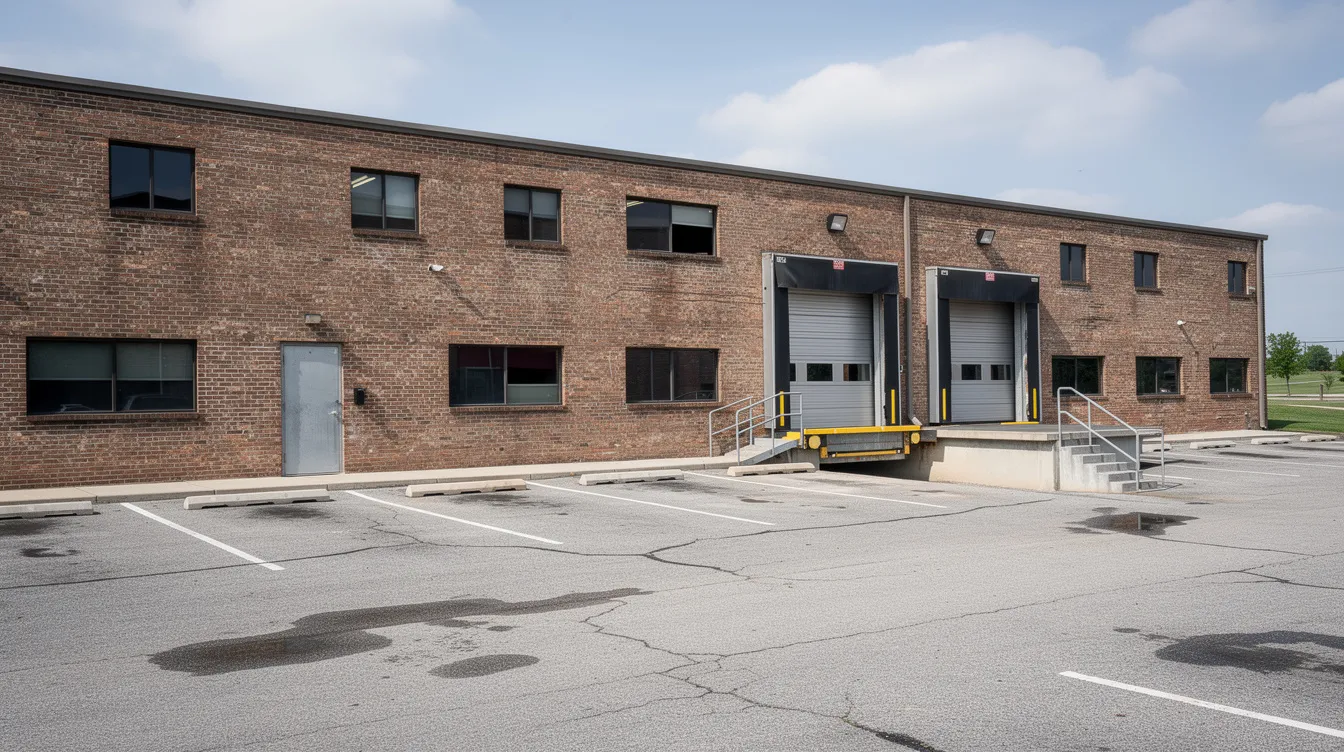
Yes. A business loan can be used to buy commercial property, and lenders do it every day. How they underwrite the deal depends on occupancy type and property use; a manufacturer buying its own warehouse gets different treatment than an investor acquiring a six unit rental building.
The main paths include:
- Traditional commercial mortgages from banks and credit unions
- SBA 7(a) and SBA 504 loans (government backed loans for owner occupants)
- DSCR loans for rental and investment property
- Hard money and bridge loans for speed or rehab heavy deals
- Gap funding solutions like business credit card stacking, unsecured term loans, HELOCs, and business lines of credit layered on top of a primary loan
Commercial loans may include additional requirements such as personal guarantees or collateral. Both personal credit scores and business credit scores factor into approval. Lenders evaluate the business owner alongside the deal itself.
Here's the core problem: loan to value ratios typically range from 70% to 80%, which means the lender is covering most of the purchase but not all of it. The remainder, your down payment, closing costs, rehab budget, and working capital, is the funding gap. That gap is what we help fill at Gap Funded, without taking equity or placing a lien on the deal property.
Contents Table
- Pros and Cons of Buying Commercial Property vs Leasing ; own or keep renting
- What Lenders Look At ; credit, cash flow, collateral
- Types of Business Loans for Buying Property ; overview of all products
- SBA 7(a) and SBA 504 for Commercial Real Estate ; government backed details
- Other Commercial Loan Options: DSCR, Hard Money, Mixed ; investor and rehab tools
- How Much Down Payment Do You Really Need? ; actual numbers by program
- Finding and Quantifying Your Funding Gap ; budgeting the full capital stack
- Using Unsecured Gap Funding to Close the Deal ; term loans, credit stacking
- Leveraging Equity and Revenue: HELOCs and Business Lines ; asset and revenue tools
- Building a Strong Business Plan ; what lenders want on paper
- How Gap Funded Fits Alongside Your Primary Commercial Loan ; the capital stack in action
- When a Business Loan Isn't the Right Tool ; alternatives and honest advice
- Next Steps: Preparing to Apply ; checklist and CTA
Pros and Cons of Buying Commercial Property vs Leasing
Many small business owners wrestle with this one for years. Lenders will ask to see why ownership makes sense inside a detailed business plan, not just that you're fed up with your landlord.
Benefits of owning:
- Predictable mortgage payment versus annual rent escalations
- Full control over the business property: renovate, sublease, expand
- Potential appreciation over time
- Tax advantages through depreciation and mortgage interest deductions
- Ability to rent out unused space for additional income
Drawbacks:
- Larger down payment and closing costs up front
- Ongoing maintenance, insurance, and capital expenditures fall on you
- Reduced flexibility to relocate if business needs change
- Risk of over leveraging if cash flow tightens
- Property values can decline; selling commercial real estate is slower than breaking a lease
Lenders want to see in writing how the purchase supports growth, revenue, and job creation. "I'm tired of paying rent" isn't a business case. A financial projection showing $4,000 monthly savings versus current lease costs, plus rental income from a spare unit, is.
This decision also looks different for an operating business buying its own building versus an investor buying purely income generating rental properties. The underwriting, loan programs, and down payment requirements diverge based on that distinction.
What Lenders Look At: Credit Scores, Cash Flow, and Collateral
Qualifying for a commercial loan is less about how much you love the building and more about measurable risk. Lenders focus on three pillars.
Credit. Lenders require a personal credit score of 680 or higher for traditional loans and SBA products. Some DSCR and portfolio lenders accept scores down to 620, but with higher interest rates and lower leverage. Late payments, high utilisation on revolving accounts, and recent derogatory marks all reduce your options. Business credit scores matter too; lenders may look for a financial history of at least two years for businesses applying for loans.
Cash flow and income. Expect to hand over tax returns for the past two to three years, profit and loss statements, a balance sheet, and bank statements. If the property generates rent, lenders calculate the debt service coverage ratio (DSCR) to see whether the property's income covers the mortgage payment. Prepare 12 to 24 months of business financial statements for lenders before you walk in the door.
Collateral and LTV. Commercial property loans typically require strong financial documentation from borrowers. Loan to value ratios usually land between 65% and 80% depending on property type and credit strength. A property appraisal establishes the value; lenders stress test that number against vacancy, rising expenses, and rate changes. Even with collateral, most financial institutions still require a personal guarantee from the business owner. The OCC's commercial real estate lending handbook outlines these underwriting standards in detail.
Owner occupied commercial property (where your business occupies at least 51% of the space) unlocks SBA lending and softer terms. Pure investment property focused on rental income gets stricter LTV and DSCR thresholds.
Types of Business Loans for Buying Property
"Business loan" is a broad term. Real estate purchases are financed with specific commercial loan products tailored to the property type and business needs. Here's the quick overview before we break each one down.
- Traditional commercial mortgages from banks and credit unions carry 5 to 25 year terms, require 20% to 30% down (conventional mortgages usually require down payments between 20% to 35%), and have strict credit requirements. Some include balloon payments. Conventional commercial mortgages are suitable for both owner occupied and investment properties.
- SBA real estate loans (7(a) and 504) are government backed options for owner occupied commercial real estate, with lower down payments and longer amortisation.
- DSCR loans are built for rental and investment property, underwritten on the property's income rather than your personal tax returns.
- Hard money and bridge loans are short term, asset based solutions funded by private investors or companies, prioritising property value and speed. Bridge loans are used for financing distressed properties or those needing renovation quickly.
- Lines of credit, unsecured term loans, and credit stacking rarely fund 100% of a purchase on their own, but they layer into the capital stack to fill the gap between what the primary lender approves and what you actually need.
Loan terms and conditions differ widely based on the type of financing and lender involved. That matters because the right structure for a fix and flip is the wrong structure for a buy and hold warehouse.

SBA 7(a) and SBA 504 Loans for Commercial Real Estate
SBA loans are the Small Business Administration's main tools for helping small businesses buy or renovate commercial property. They're not fast (expect more documentation and longer timelines), but the terms can be worth the wait.
SBA 7(a): SBA 7(a) loans allow borrowing up to $5 million. Terms run up to 25 years for real estate. Proceeds cover property purchase, working capital, equipment, and even refinancing existing debt. Down payment is often 10% to 20%. The property must be at least 51% owner occupied. The SBA 7(a) loan can be used for commercial real estate, construction, or working capital. Interest rates can be fixed or variable; in 2026, variable rates on 7(a) loans run around Prime plus 1.5% to 3.75% depending on borrower strength. A personal guarantee is typically required for SBA loans. SBA loans require businesses to be for profit and US based.
SBA 504: SBA 504 loans can also be up to $5 million. The structure splits financing three ways: a senior lender covers roughly 50%, a certified development company (CDC) backed by the SBA finances up to 40% of eligible costs, and the borrower puts down the remaining 10% (sometimes more for new construction or special purpose buildings). SBA 504 loans are used mainly for fixed assets like existing buildings, major equipment, and long term improvements. The CDC portion carries a fixed rate, often in the 6% to 7.5% range as of mid 2026.
Eligibility criteria for both programs:
- For profit small business operating in the US
- Job creation or community impact goals (especially for 504)
- Borrowers must occupy at least 51% of existing buildings (60% for new construction)
- SBA loans typically offer longer repayment periods than traditional loans; that's the trade off for the heavier paperwork
USDA B&I loans are guaranteed up to 80% by the USDA and serve as another government backed option, though they're limited to rural areas and specific industries.
Other Commercial Loan Options: DSCR, Hard Money, and Mixed Strategies
These sit alongside or replace SBA and bank loans, especially for investors and self employed borrowers whose tax returns don't reflect their actual earning power.
DSCR loans focus on whether the property's rental income covers the debt. DSCR loans require a rental income ratio of 1.0 or higher to qualify; most lenders in 2026 want 1.20x to 1.35x depending on property type (Essex Capital Markets tracks these thresholds by property class). Interest rates on DSCR loans currently range from about 5.95% to 8.50%. Many investors prefer DSCR loans because they skip the personal income documentation that kills deals for heavy write off borrowers.
Hard money loans are short term, lasting 6 to 24 months, with higher interest rates (often 9% to 14% plus points). Hard money loans are asset based and funded by private investors or companies. They're built for fix and flip, heavy rehab, or situations where speed matters more than cost. The lender cares about the property's after repair value and your exit strategy more than your credit score.
Real estate loans can include terms for both fixed and variable interest rates, dependent on the lender. Where these options fall short: higher interest rates, shorter terms, prepayment penalties, and stricter DSCR thresholds in competitive markets. Bridge loans and hard money loans are short term options for time sensitive purchases, not long term holds.
For mixed use properties where you live in one unit and rent others, some borrowers combine a personal mortgage on the residential portion with a business line of credit or business loan for renovations and working capital on the commercial side.
How Much Down Payment Do You Really Need for a Commercial Property?
The biggest obstacle for many buyers isn't the monthly payment. It's the upfront equity.
- Bank commercial loans: most commercial loans require a down payment of 20% to 30%. Down payment requirements for commercial loans range from 10% to 30% depending on program and risk profile.
- SBA 504 and 7(a): as low as 10% for owner occupied deals with strong credit and established businesses; 15% to 20% for riskier asset types or newer borrowers.
- DSCR and portfolio programs: often 20% to 25% down, sometimes lower if credit, DSCR, and reserves are all strong.
Beyond the down payment, lenders often require cash for closing costs (title, appraisal, environmental reports, loan fees), interest reserves, and repair escrows. On a $1.2 million property, these extras can add another 3% to 5%, or $36,000 to $60,000.
Relying on a primary lender for 100% of funds is rarely realistic. Regulatory and risk based capital rules prevent most banks from lending the full purchase price plus costs. That's where the funding gap enters.
Finding and Quantifying Your Funding Gap
Smart borrowers treat their deal like a full budget, not just a purchase price. Knowing the exact gap is the first step to filling it.
Common gap categories:
- Down payment shortfall
- Closing costs and fees
- Rehab, buildout, or renovation
- Earnest money deposit (EMD) due before lender funding arrives
- Working capital to operate after closing
- Equipment or inventory (if buying a business along with the building)
- Contingency for cost overruns
Example capital stack for a $1.2 million warehouse purchase:
| Line Item | Amount |
|---|---|
| Purchase price | $1,200,000 |
| Primary bank loan (80% LTV) | $960,000 |
| Down payment (20%) | $240,000 |
| Closing costs (3%) | $36,000 |
| Rehab/buildout | $50,000 |
| Reserves (6 months operating) | $50,000 |
| Total project cost | $1,336,000 |
| Funding gap | $376,000 |
Your business plan and pro forma financials should show how this gap, once funded, leads to increased revenue or profitability through ownership savings, rental income, or expanded capacity.
This is where Gap Funded's tools come into play: unsecured term loans, credit card stacking, HELOCs, and business lines of credit, each filling a portion of that $376,000 without requiring equity in the deal.
Using Unsecured Gap Funding to Close the Deal
Unsecured gap funding is capital that is not secured by the commercial property you're buying. No extra liens. No equity splits. It solves the immediate funding gap while keeping your deal structure clean.
Unsecured personal term loans and 0% business credit card stacking can raise $25,000 to $250,000 or more for down payments, closing costs, rehab, EMD, or working capital. These tools are covered in detail on our gap funding and capital stacking pages.
Realistic qualifications: strong personal FICO (usually 650 to 700+), verifiable income, low recent derogatory marks, and manageable current debt levels. Requirements for business funding often include a strong revenue history and collateral, but unsecured tools bypass the collateral piece.
Why the order matters: secure your primary commercial loan commitment first, then stack unsecured funding up to the maximum that keeps your global cash flow healthy. Applying out of sequence can trigger hard pulls that knock out later approvals.
Gap Funded runs soft credit pulls to check your options without impacting your credit score. Execution timelines are built to match real world closing dates. And we never take equity in your deal.
Leveraging Equity and Revenue: HELOCs and Business Lines of Credit
If you already own property or run a business with steady revenue, you may have assets and income streams that can carry part of the gap at a lower cost than unsecured tools.
HELOCs let you tap equity in your primary residence or an existing investment property. The funds cover down payment, rehab, or contingency without touching the new property's capital stack. Check our HELOC page or run numbers with the HELOC calculator to see what you might access.
Revenue based capital like a business line of credit or business term loan works for companies with at least $20,000 per month in revenue and two or more years in business. The requirements to qualify for business funding can include minimum revenue benchmarks; these tools are built for businesses that meet them.
Combining unsecured gap funding, HELOCs, and business lines in the right sequence lets you minimise overall interest cost while still closing on schedule. Unsecured tools handle the fast moving pieces (EMD, closing costs). HELOCs cover larger chunks at lower rates. Business lines backstop working capital.
A candid note on risk: using home equity puts your residence on the line. If interest rates rise or rental income drops, the payments don't shrink. Stress test your cash flow at a rate 2% higher than today's before committing.
Building a Strong Business Plan for Your Commercial Loan Application
A clear, realistic business plan can be the difference between "declined" and "approved." Lenders typically require a solid business plan for loan applications, and many investors I've worked with underestimate how much this document matters.
Must have sections:
- Executive summary covering who you are, what you're buying, and how you'll use it
- Description of the business and industry
- Detailed use of property: square footage, layout, percentage business vs tenant space
- Market analysis showing demand for the location
Financial projections:
- Three to five year income statement projections
- Rent schedule for any leased space
- DSCR calculations showing the property's income covering debt service
- Sensitivity scenarios: what happens if lease up takes six months longer than expected
Showing gap funding in the plan: include distinct line items for unsecured loans, credit card stacking, or HELOC draws, plus a realistic repayment strategy. Lenders appreciate transparency. Hiding your capital sources creates problems at underwriting.
Loan applications may require supporting documents such as tax returns and financial statements. The application process for business loans involves multiple steps and thorough documentation. Prepare all of it before your first meeting with a bank or relationship manager.
How Gap Funded Fits Alongside Your Primary Commercial Loan
Gap Funded is not a bank, SBA lender, or DSCR lender. We're a funding intermediary that stacks additional capital on top of what your primary lender approves, covering the gap between their loan amount and your total project cost.
The step by step process:
- Secure a term sheet or pre approval from your primary lender for the commercial real estate purchase
- Identify the approved loan amount and calculate your total project cost
- Apply through Gap Funded to close the gap with unsecured and asset based tools
- Receive funding, close the deal, keep 100% of the upside
Because Gap Funded focuses on non dilutive debt (no equity splits, no liens on the deal property in most unsecured programs), the business owner keeps full benefit from property appreciation and rental income.
Tools we deploy, in order:
- Debt consolidation (to free up capacity)
- Rapid gap funding (unsecured term loans)
- 0% credit stacking
- HELOC for business use
- Business line of credit
Quick example: an investor purchasing a mixed use property at $900,000 secures a DSCR loan at 80% LTV ($720,000). The $180,000 gap, plus $27,000 in closing costs and $40,000 in rehab, totals $247,000. Using a combination of unsecured term loans ($100,000), credit card stacking at 0% ($80,000), and a HELOC draw ($67,000), the investor closes without bringing a partner or giving up equity.
When a Business Loan Isn't the Right Tool; and What to Do Instead
Not every reader will qualify today. Responsible advice sometimes means saying "not yet."
Common disqualifiers:
- FICO below 620 with recent bankruptcies or foreclosures
- No verifiable income or fewer than two years in business
- An unrealistic business plan that doesn't support repayment
- Minimal reserves and no ability to cover even partial down payment
Alternative steps if you're not ready:
- Spend 6 to 12 months rebuilding credit and consolidating high interest debts (our debt consolidation service is designed for exactly this)
- Build savings through smaller deals or a side business
- Partner with someone who brings equity while you bring the deal and management
If you're a purely passive investor looking for 100% financing with no personal guarantees, mainstream commercial lenders and SBA programs are unlikely to accommodate. Equity partnerships or syndication structures are a more realistic path.
For borderline cases (650 to 680 FICO, stable income, decent reserves), I'd still encourage you to apply for a funding review. You might have more options than you reckon.
Next Steps: Preparing to Apply for Property Financing with Gap Funded
Move from research mode to execution with this checklist.
Documents to gather:
- Recent credit reports (personal and business)
- Last two years of tax returns (business and personal)
- Year to date financials and bank statements
- Purchase contract or letter of intent
- Draft business plan with financial projections
Run rough numbers on your total project cost and funding gap before visiting banks or submitting anything. Grounded conversations close faster than hopeful ones.
Interest rates and repayment terms can vary by lender and loan type, so comparing offers from two or three primary lenders before layering gap funding gives you the best overall cost of capital.
Ready to see what you qualify for? Complete the quick application at gapfunded.com/apply for a soft pull, no obligation funding review that won't impact your credit score.
By combining a solid commercial loan with smart, non dilutive gap funding, you stop losing money to rent and start building long term wealth through commercial real estate ownership. The deal is out there. The gap is just a number. Let's fill it.
Related Reading
This article is for educational purposes only and isn't financial, legal, tax, or investment advice. Credit and financing outcomes depend on your own situation. Talk to a licensed financial professional before making funding decisions for your business.