
BRRRR Loans: How to Finance Every Step of the Buy, Rehab, Rent, Refinance, Repeat Strategy

BRRRR Loans: How to Finance Every Step of the Buy, Rehab, Rent, Refinance, Repeat Strategy
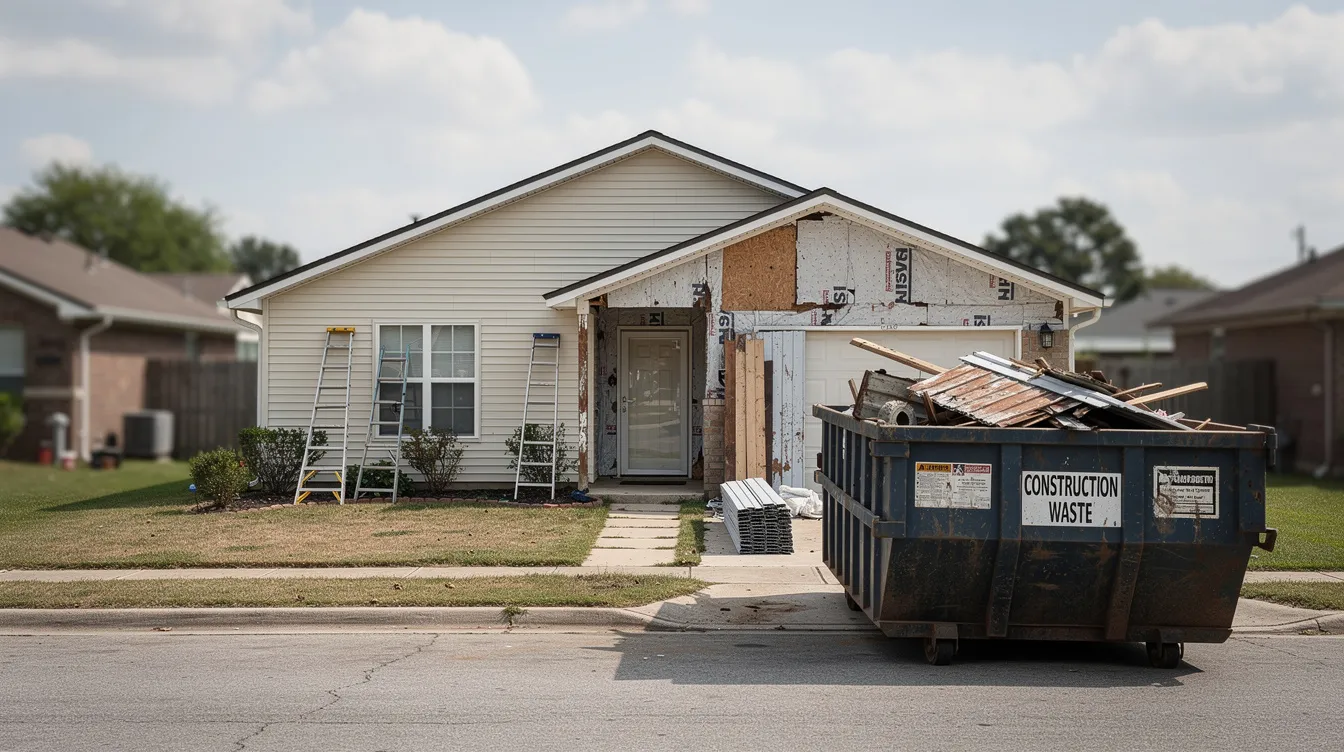
Most real estate investors don't lose BRRRR deals because they picked the wrong property. They lose them because they ran out of cash somewhere between the down payment and the refinance. Here's how to stack the right loans so that doesn't happen to you.
Quick Answer: What Is a BRRRR Loan and How Do You Use It?
There is no single product called a "BRRRR loan." It's a stack of financing tools, each matched to a specific phase of the buy, rehab, rent, refinance, repeat cycle. BRRRR stands for Buy, Rehab, Rent, Refinance, Repeat, and the whole point is that the BRRRR method allows investors to recycle their investment funds rather than saving a fresh pile of cash for every acquisition.
Here's what a typical BRRRR loan stack looks like in 2026: an investor spots a distressed property in Atlanta listed at $165,000 with an after repair value around $240,000. They close with a hard money loan covering 85% of the purchase price, use unsecured gap funding for the down payment and closing costs, draw rehab funds from the lender plus a credit card stack for materials, stabilise the property with a tenant, then refinance into a long term DSCR loan that pays off everything and returns most of their original cash.
The typical financing stack breaks down like this:
- Hard money loan or bridge loans for the purchase and rehab draws
- Gap funding (unsecured term loans, 0% credit card stacking) for down payment, closing costs, rehab contingency, and reserves
- DSCR loan or conventional loan for the cash out refinance into long term financing
- Freed capital plus gap funding tools to repeat the process on the next property
Gap Funded specialises in filling the funding gap: the down payment, closing costs, rehab overages, reserves, and working capital that primary lenders won't touch. No liens on your deal property, no equity splits, soft credit pull to check your options.
Ready to see what you qualify for? Start with a quick funding review at gapfunded.com/apply.
BRRRR Method Basics: How the Strategy Really Works in 2026
Before picking any loan, you need to understand the BRRRR strategy itself.
The BRRRR method is a real estate strategy where you buy a distressed property below market value, rehab it to force appreciation, rent it out to generate income, refinance to pull your initial investment back out, then repeat the whole cycle with the returned capital. The BRRRR method allows for portfolio growth without new down payments every time, which is what separates it from traditional landlording.
Two key differences from other approaches:
- Unlike traditional buy and hold, where you buy one property, slowly pay down the mortgage, and wait years for equity, BRRRR investors build equity fast through renovation and then recycle that cash immediately.
- Unlike fix and flip, where you sell for a lump sum and pay short term capital gains, BRRRR keeps the asset producing passive income via rental properties.
Investors can choose between long term and short term rental strategies. Short term rentals can earn two to three times more than long term rentals, but lenders and DSCR loan requirements differ significantly for each. Many DSCR lenders discount Airbnb income by 20 to 25%, so your numbers need to be solid either way.
With interest rates sitting between 7.25% and 9.5% on DSCR products in 2026 and lender seasoning requirements hardening, choosing the right BRRRR loans and gap funding structure matters more than it did in 2021 when rates were half this.
Step 1 – Buy: Funding the Acquisition With Bridge Loans and Hard MoneyStep 1 – Buy: Funding the Acquisition With Bridge Loans and Hard Money
The Buy step is about speed and access. Most BRRRR properties are distressed, which means conventional loans won't touch them. Here are your realistic options:
- Hard money loan: Hard money loans are short term loans from private lenders, typically 6 to 18 months, interest only, at rates around 9.5% to 12%. They provide fast, flexible financing for real estate investments and allow investors to close deals quickly without traditional financing. Most hard money lenders fund 80 to 90% of purchase price plus rehab draws.
- Bridge loans: Similar structure to hard money, sometimes from larger institutional private lenders, terms up to 24 months.
- Conventional or FHA: Only realistic if the property is already habitable and needs light cosmetic work. Rarely fits a true BRRRR deal.
What lenders want to see: a realistic after repair value (ARV), detailed scope of work, rehab budget and timeline, borrower experience, and typically a FICO of 650 or higher.
Here's the catch. Even with hard money covering 85% of the purchase price, investors typically need 20 to 25% for down payments and closing costs out of pocket. On a $160,000 purchase, that's roughly $24,000 down plus $8,000 in closing costs and points. That $32,000 cash gap is where otherwise good deals die.
Successful BRRRR investors often find properties 20 to 30% below market value. The 70% rule helps investors set a maximum total investment for a property, ensuring profitability: your purchase plus rehab shouldn't exceed 70% of ARV.
This is where gap funding comes in. Unsecured term loans and business credit card stacking can legally sit alongside a third party hard money loan because they don't create a lien on the subject property.
Step 2 – Rehab: Financing Renovations Without Stalling the ProjectStep 2 – Rehab: Financing Renovations Without Stalling the Project
More BRRRR deals fail during rehab than any other phase. The reason is almost always the same: the investor ran the budget too tight and had no contingency.
Typical rehab funding comes from three sources:
- Lender funded draws from the hard money loan (released in stages as work is completed)
- Out of pocket cash or personal savings
- Additional gap funding via unsecured loans, credit lines, or credit card stacking
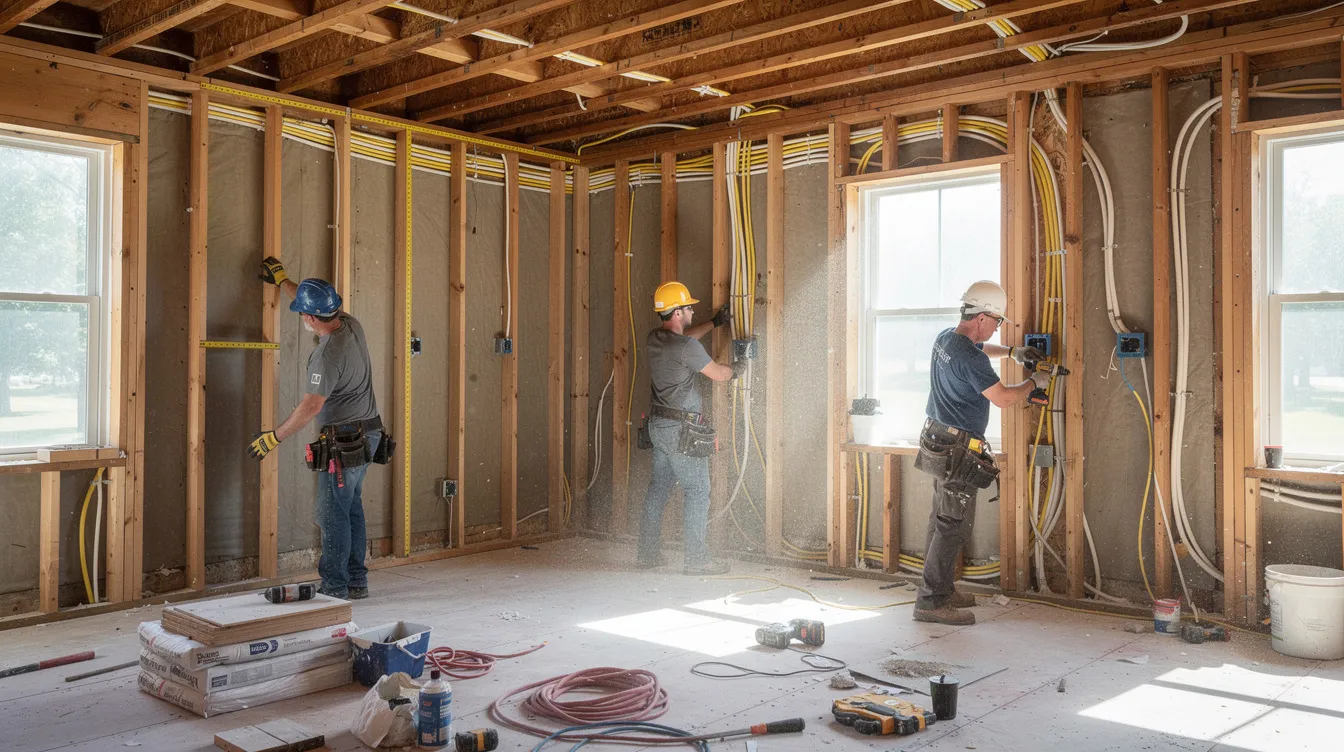
Your rehab should cover everything that affects the appraisal and tenant quality: roof, electrical, plumbing, HVAC, kitchens, bathrooms, flooring, and paint. Renovations can significantly increase a property's rental income potential, and successful renovations lead to appreciation known as after repair value.
But unexpected renovation costs can reduce profit margins in BRRRR investments. Hidden structural issues, permit delays, and contractor overruns are not "if" problems, they're "when" problems. I reckon most first time BRRRR investors underestimate rehab costs by at least 15%.
Keep contingency funding equal to 10 to 20% of your total rehab budget. If you're running a $45,000 rehab on a three bed rental in Columbus, that means having $4,500 to $9,000 in reserve before you start swinging hammers.
Gap Funded can provide that contingency capital through unsecured personal term loans or business lines of credit for investors with 650 to 700+ FICO and verifiable income. If existing debt is eating into your capacity, debt consolidation before you start can free up both cash flow and credit utilisation.
Step 3 – Rent: Proving Income for Future DSCR and BRRRR LoansStep 3 – Rent: Proving Income for Future DSCR and BRRRR Loans
Renting isn't just about collecting monthly rent. It's about creating the income documentation that your refinance lender needs to approve the deal.
For a DSCR loan, lenders look at the property's rental income versus the mortgage payments (Debt Service Coverage Ratio). Most want a DSCR of 1.0 to 1.25 or higher. In simple terms, if your monthly PITI is $1,500, the property needs to generate at least $1,500 to $1,875 in monthly rent to qualify.
How to set realistic rent:
- Pull comparable rentals within a half mile radius
- Use platforms like Rentometer or Zillow rent estimates as a starting point, then verify with a local property manager
- Don't round up. Overestimating rent can torpedo your refinance approval
Investors typically require a tenant lease before refinancing in the BRRRR process. Lenders evaluate rental income and property value together, and most want to see a signed lease plus one to three months of rent receipts. For Airbnb or short term rentals, some DSCR lenders accept occupancy data from platforms like AirDNA, but many still prefer long term leases.
Screening tenants properly (3x rent in gross income, background and credit checks, landlord references) isn't just good practice. Tenant management and property maintenance are crucial to sustaining cash flow in BRRRR, and a bad tenant can wreck your DSCR right before refinance.
Step 4 – Refinance: Converting Equity to Cash With BRRRR LoansStep 4 – Refinance: Converting Equity to Cash With BRRRR Loans
The refinance is where the BRRRR method either works or doesn't. This is the step that returns your initial investment so you can move on to the next deal.
Your main refinance options:
- DSCR loan: Underwrites based on the property's cash flow, not your W2 income. Ideal for self employed investors or anyone scaling a real estate portfolio. Rates in mid 2026 sit around 7.625% to 9.50% for 30 year fixed on standard single family rentals.
- Conventional investment property loan: Lower rates but stricter documentation, DTI requirements, and portfolio caps (usually 10 financed properties max).
- Portfolio loans: From local banks or credit unions, sometimes more flexible on seasoning but with variable terms.
Refinancing is crucial for pulling out equity in the BRRRR method. A cash out refinance replaces your existing mortgage (the hard money or bridge loan) with a new loan based on the current appraised value.
Typical 2026 lender requirements:
- Seasoning period of 6 to 12 months of ownership and/or rental history
- Minimum FICO of 660 to 700+
- Maximum loan to value for cash out of 70 to 75% of appraised value
- DSCR of 1.1 or higher (1.20 to 1.25 for best pricing)
Here's a numeric example: you buy and rehab a property for $200,000 total. New appraisal comes in at $270,000. Your DSCR lender allows 75% LTV, giving you a new mortgage of $202,500. That pays off the hard money, covers your gap funding obligations, and returns most or all of your original cash.
Appraisal risks may occur if the property appraises below expectations after renovations. High interest rates can also negatively impact cash flow after refinancing if rates climb between your purchase and refinance dates. A well timed refinance is key to maintaining investment cycles, and investors typically refinance after 6 to 12 months of rental history.
Gap Funded doesn't replace your DSCR or conventional lender. But we can help you qualify by consolidating debts to improve your credit profile, cleaning up utilisation ratios, or providing reserve capital. Sometimes the difference between approval and rejection is a single credit card balance.
Step 5 – Repeat: Scaling From One BRRRR Deal to a PortfolioStep 5 – Repeat: Scaling From One BRRRR Deal to a Portfolio
The Repeat step is where real estate investing turns into a real estate business.
Seasoned BRRRR investors use data analysis of their own deals (rehab accuracy, lease up timeline, actual vs projected refinance terms) to sharpen every assumption on the next deal. Your second BRRRR deal should be tighter than your first. Your fifth should run like a machine.
Build a repeatable team:
- Agents who specialise in finding properties below market
- Contractors who hit timelines and budgets
- A property manager who handles screening tenants and maintenance
- A reliable gap funding partner so capital is ready before you write offers
As your investment portfolio grows, reserves and working capital become more important than squeezing every last dollar from each refinance. Many investors who start with one property in 2024 can realistically own 5 to 7 rental properties by 2028 using refinances and capital stacking to fund new down payments on each cycle.
Types of BRRRR Loans: Bridge, Hard Money, DSCR and More
"BRRRR loans" is an umbrella term. Here are the actual loan types involved:
- Bridge loans: Short term financing (6 to 24 months) that allows quick closings on investment properties that don't meet conventional lending standards. Commonly interest only with higher rates.
- Hard money loans: Asset based underwriting focused on ARV. Many hard money lenders charge 1 to 3 origination points plus rates of 9.5% to 12%. Fast and flexible, but expensive. Hard money loans often have higher interest rates than conventional loans.
- DSCR loans: Primarily evaluate the property's rental income, not your personal DTI. DSCR loan originations hit roughly $10.7 billion in Q1 2026, making them the dominant product in private lending. Ideal for investors scaling a rental portfolio.
- Conventional loans: Lower interest rates and competitive rates, but strict documentation, property condition requirements, and limits on the number of financed properties.
- Private lenders and JV capital: Can work, but often involve equity splits or profit sharing. If keeping 100% ownership matters to you, non dilutive gap funding is the cleaner path.
Short term loans fund property purchases and renovations. Refinancing replaces short term loans with long term mortgages. Knowing which loan types fit each phase keeps your costs down and your timeline intact.
Where the Funding Gap Happens in a BRRRR Deal (and Why Most Banks Won't Fix It)
Traditional lenders focus on one thing: the main loan. They almost never fund the extras. Here are the typical funding gaps in BRRRR projects:
- Down payment: Even at 85 to 90% LTV, you still owe 10 to 15% of the purchase price in cash
- Closing costs and origination points: Hard money lenders charge 1 to 3 points plus fees, usually due at closing
- Rehab overruns: Lenders fund approved draws only. Change orders and surprises come out of your pocket
- Required reserves: Many DSCR lenders require 3 to 6 months of mortgage payments in liquid reserves
- Earnest money deposit (EMD): Due when the contract is executed, often non refundable
- Working capital during vacancy: Carrying costs between rehab completion and tenant move in
Most banks and hard money lenders prohibit gift funds or undisclosed second liens on the deal property. But unsecured loans and credit card stacking are fair game because they're not secured by the subject property.
Underestimating these gaps leads to stalled projects, missed closings, corners cut during rehab, or being unable to qualify for the refinance. Gap Funded fills exactly these shortfalls with non dilutive, unsecured capital.
How Gap Funded Closes BRRRR Funding Gaps (Tools and Order of Use)
The order you stack funding matters. Applying for the wrong product first can knock out approvals for the next one. Here's how we approach it:
1. Unsecured term loans come first. Fixed repayment over 3 to 7 years, usually the best rates among gap funding tools. These cover down payment, closing costs, or larger rehab shortfalls. Best for borrowers with 680+ FICO and stable income.
2. Credit card stacking layers on top. We arrange 0% introductory APR business credit cards in a strategic sequence that preserves your utilisation ratios. Use these for materials, contractor deposits, permits, and smaller rehab items.
3. Business lines of credit and working capital handle the ongoing needs. Reserves, seasonal vacancies, carrying costs between rent up and refinance. A business line of credit gives you a draw on demand safety net.
4. Asset based options like HELOCs on existing properties. If you've got equity in your residence or other rentals, a HELOC can be a low cost source for down payments and rehab. Gap Funded can help structure this alongside unsecured tools so you're covered on multiple fronts.
The logic behind the order: secure longer term, lower rate funding first, then layer flexible revolving credit as backup. Going the other direction (maxing cards first, then trying for term loans) crushes your utilisation and can tank approvals.
Qualification for most programs targets 650 to 680+ FICO and verifiable income or business revenue. Prequalification uses a soft credit pull, so you can plan your BRRRR deal without hurting your score.
Start your no obligation funding review before writing offers on your next deal.
Sample BRRRR Deal in 2026: Numbers From Buy to Cash Out Refinance
Here's a realistic BRRRR deal walkthrough for a single family property in Indianapolis, started in early 2026.
Buy: Purchase price $165,000 on a distressed property. Estimated ARV of $240,000. Hard money loan at 85% LTV provides $140,250. Cash needed: $24,750 down payment plus $8,000 closing costs and points. Total cash gap: $32,750.
Rehab: Budget of $40,000. Hard money lender funds draws on approved scope. Gap Funded unsecured term loan covers $20,000, and $10,000 comes from 0% credit card stacking for materials and permits. Contingency reserve of $4,000 set aside. Construction timeline: 4 to 5 months. Successful BRRRR projects can take 6 to 12 months to complete from buy to refinance.
Rent: Property rents for $1,950 per month on a long term rental with a signed 12 month lease. After insurance, taxes, maintenance, and a property manager fee, projected DSCR lands at approximately 1.22 against the future DSCR loan payment.
Refinance: After the seasoning period, appraisal comes in at $245,000. DSCR lender approves 75% LTV: new loan of $183,750. This pays off the hard money principal ($140,250 plus accrued interest and fees), retires the gap funding obligations, and returns the investor's cash. Cash out refinance loans allow you to pull out equity and refinancing can provide cash for new investment properties.
Net position: Investor has under $5,000 remaining tied up in the deal. Annual cash flow after all expenses and the new mortgage: roughly $4,800 to $6,000. That freed capital plus Gap Funded tools funds the next BRRRR deal.
Replicate this structure 2 to 3 times per year, and you're looking at 5 to 7 rentals by 2028 generating meaningful passive income.
Pros and Cons of Using BRRRR Loans to Build Wealth
BRRRR loans and leverage can accelerate long term wealth building, but they also magnify mistakes. Here's the honest picture.
Pros:
- Ability to build wealth and scale a real estate portfolio by recycling the same capital. Investors can recycle their original investment using the BRRRR method.
- Force appreciation through renovation, building more equity faster than waiting for property values to rise naturally
- DSCR loans separate portfolio growth from personal income, so you can renovate properties and grow without W2 income limits
- Flexibility to pivot between markets, property types (long term rental vs short term rental), and exit strategies
- Tax advantages of holding long term leases versus flipping (depreciation, 1031 exchanges, lower capital gains rates)
Cons:
- Dependence on strong appraisals and stable rent levels. Property appreciation isn't guaranteed, and cap rate compression can hurt your DSCR.
- Exposure to interest rate risk at refinance. If mortgage rate environments shift, your long term financing costs may land higher than projected.
- Risk of overextending with multiple hard money and unsecured loans across several deals simultaneously
- Operational burden: managing several rehabs, screening tenants across multiple rental properties, and coordinating contractors and a property manager takes real bandwidth
Run conservative data analysis on every BRRRR deal. Stress test your rents by 10% below market, add 15% to rehab costs, and model refinance at current rates plus 50 basis points. Use gap funding as a strategic tool, not a crutch for a deal that only works in a best case scenario.
Is a BRRRR Loan Strategy Right for You? Next Steps With Gap Funded
The BRRRR method work best for investors who are comfortable with rehab and property management, have a FICO of 650 or above, and want to build a scalable rental portfolio rather than flip for quick profit.
Start by evaluating your current capital stack: savings, equity in other investment properties, income stability, and credit profile. Map that against the BRRRR steps above. Then talk to your primary hard money or DSCR lender to understand what they will and won't fund.
The gap between what your lender covers and what the deal actually costs is where we come in. Whether it's a down payment, closing costs, rehab contingency, reserves, or an earnest money deposit, Gap Funded fills the shortfall with unsecured capital and no liens on your deal property.
Check out our full suite of services for BRRRR investors, or go straight to a soft pull funding review at gapfunded.com/apply. No impact to your credit to see your options, and you'll know exactly how much capital you can stack before you write your next offer.
Related Reading
This article is for educational purposes only and isn't financial, legal, tax, or investment advice. Credit and financing outcomes depend on your own situation. Talk to a licensed financial professional before making funding decisions for your business.