
Best Hard Money Lender in 2026: How to Choose (and When to Add Gap Funding)

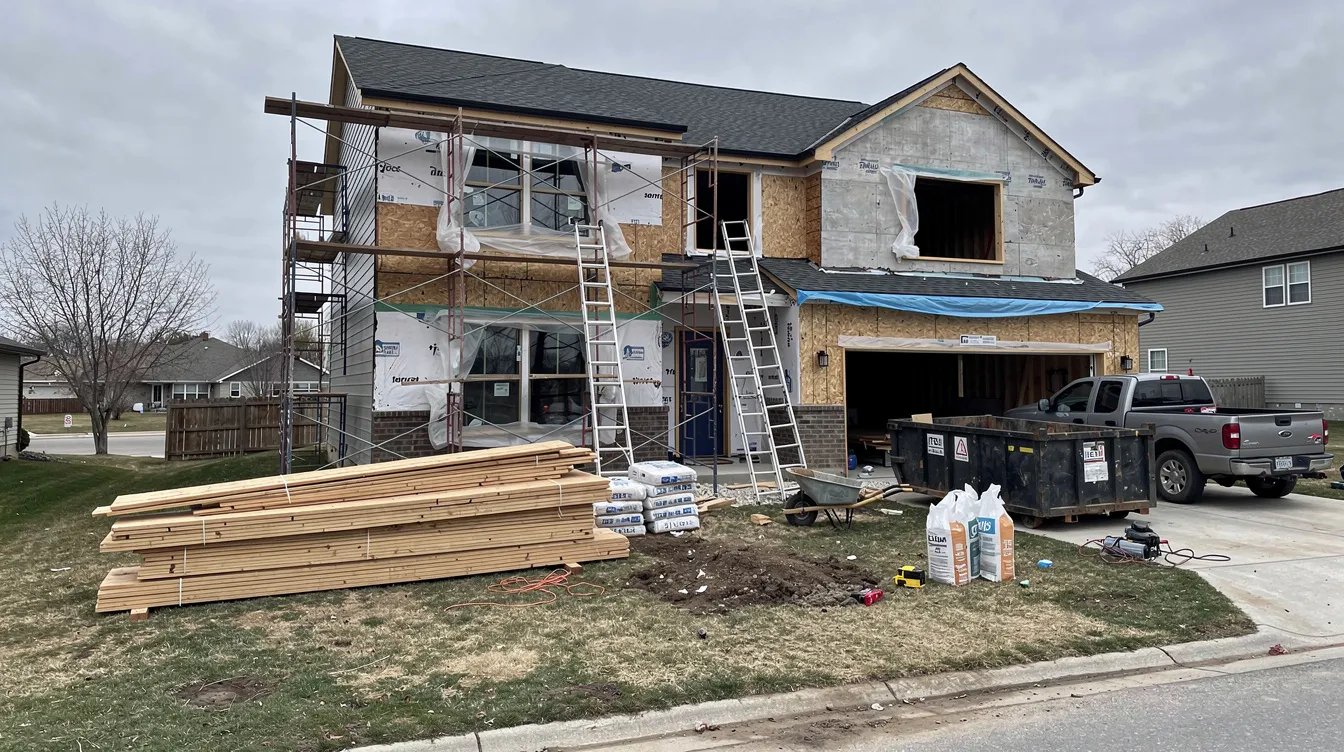
Best Hard Money Lender in 2026: How to Choose (and When to Add Gap Funding)
There is no single best hard money lender. Full stop. The lender that's perfect for a seasoned flipper buying fire damaged duplexes in Atlanta is probably a terrible fit for a first timer picking up a single family rental in rural Ohio. What matters is matching the right lender to your deal, your experience, and your strategy, then making sure you can actually cover the full cost of the project when your lender won't.
Answer First: Who Is the Best Hard Money Lender for Real Estate Investors Right Now?
If you're looking for a name to circle, the honest answer is: it depends on who you are and what you're buying.
In 2025 and 2026, national players like Kiavi, Lima One Capital, and RCN Capital dominate the hard money lending space on scale, product breadth, and brand recognition. Kiavi is fast (some fix and flip closings in five days). Lima One offers a deep product menu across fix and flip, DSCR rentals, ground up construction, and multifamily bridge. RCN Capital handles "messy" deals and unusual property types that others shy away from. But strong local and regional hard money lenders routinely beat all three on speed, flexibility, and understanding of thin or quirky markets. RateRoots' 2026 rankings back this up: national lenders win at consistency, while regional specialists outperform on rate or turnaround in specific states.
Here's the thing most articles won't tell you: even the right hard money lender rarely covers 100% of your total project costs. You'll still need cash for the down payment, closing costs, earnest money deposits, rehab overages, and working capital. That's where Gap Funded comes in, not as a competing lender but as the capital stacking partner that fills the gap between what your hard money lender funds and what you actually need to close.
When is a pure hard money loan enough versus when you also need gap funding?
- Hard money alone works when you have 15% to 25% cash on hand, minimal rehab risk, and a clean exit strategy
- You need gap funding when your own capital is thin, the deal requires more equity than you can comfortably cover, or you want to preserve liquidity across multiple deals
What Is a Hard Money Lender?
A hard money lender is a private individual or company that issues short term, real estate secured loans based on the asset's value rather than your personal financial history. Hard money lenders focus on property value, after repair value (ARV), and your exit strategy instead of combing through two years of tax returns and calculating your debt to income ratio.
Fix and flip loans fund property purchases and renovations. Bridge loans provide short term funding while waiting for a property sale or refinance. Construction loans cover short term costs for building projects. Rescue purchase loans help buyers secure funding if their original financing falls through. Hard money loans can also finance distressed properties needing significant repairs, situations where traditional banks typically refuse to lend.
Here's how the mechanics work in practice:
- The property itself is primary collateral. Approval focuses on property value, not personal credit
- Lenders evaluate based on property value rather than personal income, though most still want to see you won't default on day one
- You'll usually sign a personal guarantee, meaning you're on the hook if things go sideways
- Terms are short, typically 6 to 24 months, because these loans are designed for projects with a clear exit
- Traditional banks won't touch most of these deals because the properties are distressed, the timelines are tight, or the borrower profile doesn't fit conventional financing boxes
Hard Money Loans by the Numbers: What to Expect in 2025–2026
The hard money market in 2026 sits in an interesting spot. Interest rates are higher than traditional bank loans, but the speed and flexibility make hard money loans the only viable option for a huge range of real estate transactions.
Here's what the numbers actually look like right now:
- Hard money loans typically have interest rates from 7% to 15%, with clean, high credit fix and flip deals from national lenders often landing in the 8% to 10% range
- Origination fees for hard money loans usually range from 1% to 4% of the loan amount, paid at closing
- Hard money loans can finance up to 90% of project costs for repeat borrowers with strong credit; first timers typically see 75% to 85%
- Most hard money loans are structured for 12 month terms, though bridge and heavy rehab deals sometimes stretch to 24 months
- Funding speed ranges from 5 to 14 business days depending on lender, borrower experience, and deal complexity
These benchmarks shift based on your FICO score, how many deals you've closed, and whether you're buying in a hot metro or a small town with thin comparable sales data. A borrower with a 720 FICO and ten flips under their belt gets materially better terms than someone closing their first deal with a 650 score.
Typical Interest Rates and Fees for Hard Money Loans
Let's get specific. Hard money loans typically carry interest rates of 8% to 12% for most real estate investors in 2026. Borrowers with elite credit and repeat experience can see floors as low as 7% from lenders like Kiavi, while newer borrowers or riskier collateral can push rates to 13% or beyond.
Why are these rates higher than what banks offer? Speed, mostly. You're also paying for asset based underwriting that doesn't require months of document collection, the willingness to fund distressed properties that banks won't touch, and the short term nature of the hard money loan itself. Hard money lenders typically charge higher interest rates than banks because they're taking on more risk and delivering capital faster.
When you're evaluating a quote, don't just look at the interest rate. Break down the "all in cost" including:
- Origination fees (1 to 4 points, where each point equals 1% of the loan amount)
- Underwriting and document preparation fees
- Appraisal costs (often $600 to $1,500+)
- Inspection fees for rehab draw verification
- Title and legal fees at closing
- Any minimum interest requirements (some lenders require you to pay interest for a minimum number of months regardless of when you exit)
The total cost of capital matters more than the headline rate. A 9% loan with 2 points and modest fees can be cheaper over 9 months than an 8% loan with 4 points and a three month minimum interest charge.
Loan Amounts, Terms, and Funding Speed
Typical hard money loan amounts in 2026 start around $75,000 for small distressed properties and single family homes, scaling up to $3 million to $5 million or more for larger commercial real estate projects and multifamily acquisitions. Ask lenders about their minimum and maximum loan amounts before you get deep into underwriting, because nothing wastes time like discovering your deal doesn't fit their range.
Common term lengths break down like this:
- 6 to 12 months for a standard fix and flip project
- 12 to 24 months for heavy rehab, new construction, or complex bridge loans
- Hard money loans usually have short terms of 12 months or less for most residential deals
Now, funding speed. This is where hard money earns its keep. Hard money loans can close in as little as 5 to 7 days with experienced borrowers, clean title, and a well prepared file. More commonly, hard money loans close in 7 to 14 days. Underwriting typically takes 5 to 10 business days for hard money loans, and lenders that use in house underwriting can expedite loan processing significantly.
Compare that to a bank or conventional loan, which routinely takes 30 to 60 days. In competitive markets, the ability to close in under two weeks is often the difference between winning and losing a deal on a distressed property or at auction. The speed of funds disbursement can impact project success for construction loans especially, where delays mean idle contractors and blown timelines.

Hard Money Lender vs Bank: Which Is Right for Your Deal?
Here's a quick comparison across the four dimensions that actually matter:
Approval criteria: Traditional banks care about W2s, tax returns, debt to income ratio, reserves, and clean properties. Hard money lenders care about property value, ARV, equity in the deal, and your exit plan. Your personal income and credit history matter less, though they're not irrelevant.
Time to close: Conventional loans take 30 to 60+ days. A good hard money lender can get you to the closing table in one to two weeks. In time sensitive opportunities, that speed wins deals.
Property condition tolerance: Banks reject heavy rehab, code violations, and properties without functioning systems. Hard money lenders fund distressed properties, gut rehabs, and oddball asset types that traditional lenders won't consider. They allow access to distressed properties often ignored by banks.
Cost: Hard money has higher interest rates, upfront points, and fees. A traditional loan is cheaper on paper, but if the bank can't fund your deal at all, the comparison is irrelevant.
When does conventional or DSCR financing fit better? If you're buying a stabilised rental property, have strong W2 income, and can wait 45 days to close, a conventional loan or a DSCR loan will save you thousands. But if you're buying a distressed property at auction next Thursday, or the seller needs to close in 10 days, traditional financing simply won't work. Hard money lending is the only realistic path.
Should You Use a Hard Money Loan? Pros and Cons
Hard money is a tool, not a strategy. The strategy is the underlying deal: the fix and flip, the BRRRR, the short term rental conversion. Hard money just gets you in the door fast.
Advantages:
- Speed to close in 7 to 14 days
- Flexible underwriting that focuses on the deal, not your tax returns
- Ability to purchase distressed properties needing significant renovations
- Willingness to fund heavy rehab, unusual property types, and complex value add plays
- Hard money loans typically require minimal documentation compared to traditional lenders
Downsides:
- Higher upfront costs are common with hard money loans, including points and fees
- Interest rates are materially higher than conventional financing
- Short terms create pressure to execute on schedule
- Defaulting on a hard money loan incurs higher costs and fees than a traditional mortgage
- If your project stalls or the market softens, you're paying expensive carry costs on a depreciating timeline
Good fit:
- Fix and flip investors who can execute in 6 to 12 months
- BRRRR strategy where you plan to refinance into a long term rental loan
- Time sensitive acquisitions (auction, probate, distressed seller)
- Bridge financing between sale and purchase
Bad fit:
- Long term holds where you qualify for conventional financing
- Deals with razor thin margins that can't absorb hard money costs
- Borrowers with no exit strategy or unrealistic ARV assumptions
- Properties that need minimal rehab and have no urgency to close
Hedging strategies should be in place for project financing. Build in contingency time, contingency budget, and a backup exit plan before you sign.
When Hard Money Isn't Enough: The Hidden Funding Gap Most Investors Miss
Here's the part that catches even experienced real estate investors off guard. Even the best hard money lender rarely covers 100% of total project costs. The loan covers most of the purchase price and rehab, but you're still on the hook for a fair whack of cash.
Let's run a real 2026 example. Say you're buying a $250,000 fix and flip. Rehab budget is $100,000. ARV is $425,000. Your hard money lender offers 85% of purchase and 100% of rehab financing. That gives you roughly $312,500 in loan proceeds. But your total costs look like this:
- Purchase: $250,000
- Rehab: $100,000
- Closing costs (lender fees, title, appraisal, insurance): ~$12,000
- Holding costs (interest, taxes, utilities during rehab): ~$15,000
- Earnest money deposit: $5,000
- Contingency for overruns: $10,000
Total need: roughly $392,000. Your lender is giving you $312,500. You need about $50,000 to $70,000 in cash to close and execute this deal safely.
Where specifically does the gap show up?
- 10% to 25% down payment on the purchase
- Lender required reserves or prepaid interest
- Earnest money deposit before the loan even funds
- Materials and labour costs before the lender reimburses rehab draws
- Inspection and permit fees
- Contingency for cost overruns and timeline extensions
This is precisely where Gap Funded works alongside your hard money lender. We don't compete with your primary lender. We fill the cash shortfall so you can close, using unsecured term loans, credit card stacking, HELOCs, and other tools that don't put a lien on the deal property and don't require you to give up equity.
How to Choose the Best Hard Money Lender for Your Strategy
Finding a hard money lender is crucial for real estate projects, but finding the right hard money lender is what separates profitable deals from expensive mistakes.
Treat this as a practical checklist:
Transparency: Transparent lenders clearly state their interest rates and fees upfront. If a lender won't give you a fully itemised fee sheet before you commit, walk away. A good lender communicates transparently regarding project delays, draw schedules, and extension terms too.
Speed: If you're in competitive markets buying distressed properties, funding speed matters more than a fraction of a percent on rate. Lenders with in house underwriting close faster.
Asset class experience: A lender who's closed hundreds of fix and flip projects might fumble a ground up construction deal. Match the lender's track record to your deal type.
Exit strategy alignment: If you plan to refinance into a DSCR rental loan after stabilisation, a lender who also offers that product (like Lima One or Kiavi) saves you time and paperwork on the back end. If you're flipping, you need a lender comfortable with your projected ARV and timeline.
Geographic coverage: Evaluate lenders based on their terms and geographic coverage. A national lender might not know your micro market as well as a local one.
Your non negotiables before signing:
- Written terms with every fee disclosed
- Clear draw schedule for rehab funds
- Realistic timelines that match your scope
- Responsive point of contact who answers the phone
The right hard money lender is a strategic partner, not just a chequebook.
Comparing Rates, Points, and Fee Structures
Learning to read a term sheet is a skill that saves you thousands. Here's what to look for:
- Interest rate (fixed or variable, simple or compounding)
- Loan amount relative to purchase price and rehab
- Loan to Value (LTV) and Loan to Cost (LTC) ratios
- Points charged at closing
- Appraisal, legal, and processing fees
- Minimum interest requirements and prepayment penalties
Evaluate both Loan to Value (LTV) and Loan to Cost (LTC) when selecting a lender. A lender offering 90% LTC might sound generous, but if their LTV cap is 70% of ARV, you could end up with less than you expect on a high rehab deal.
Here's a quick numeric comparison. Take a 9 month fix and flip, $300,000 purchase, $120,000 rehab, ARV $480,000:
- Lender A: 80% ARV, 100% rehab LTC, 10% rate, 2 points. You finance ~$384,000. Points cost $7,680. Nine months of interest: ~$28,800. Total cost: ~$36,480
- Lender B: 75% ARV, 90% rehab, 9.5% rate, 3 points. You finance ~$348,000. Points cost $10,440. Nine months of interest: ~$24,795. Total cost: ~$35,235
Lender B has a lower rate but higher points and lower leverage, meaning you bring more cash to closing. The "cheaper" lender on paper might actually cost you more when you factor in the opportunity cost of that extra cash.
Compare at least three to five many hard money lenders on total cost of capital, not just competitive interest rates.
Funding Speed and Process: Why It Matters More Than a 0.5% Rate Difference
The hard money loan process typically follows this sequence:
- Pre qualification: soft approval based on deal summary and borrower profile
- Full application: submit purchase contract, scope of work, contractor bids, and basic financials
- Underwriting: lender evaluates property value, ARV, and borrower capacity
- Third party appraisals or valuation (some lenders use desktop valuations for speed)
- Title work and insurance
- Closing and funding
Seasoned hard money lenders can issue same day soft approvals and fund within 5 to 10 business days if you come prepared. Check if lenders offer in house underwriting for faster approvals, because third party underwriting adds days.
In competitive markets, the ability to close in 7 to 14 days can be worth more than shaving 0.5% off the interest rate. If you lose a $400,000 deal because your lender needed three weeks instead of one, that "savings" cost you the entire profit.
Practical steps to speed up the loan process:
- Have contractor bids and a detailed rehab budget ready before you apply
- Get your exit strategy documented (sale comps, refinance plan, or rental pro forma)
- Keep a clean credit report and basic financial snapshot accessible
- Provide clear photos and property details with your application
Reputation, Experience, and Local Expertise
Check borrower reviews across multiple platforms and ask for references from real estate professionals who've actually closed with the lender. Forum reviews on BiggerPockets and similar sites give you unfiltered feedback that marketing materials won't.
Local lenders typically excel at regional market knowledge and rapid valuations. If you're buying in a thin market with few comparable sales, a local money lender who knows the neighbourhood will produce a more realistic ARV than a national lender relying on automated valuation models.
Red flags to watch for:
- Vague fee disclosures or fees that "appear" just before closing
- Pressure to sign quickly without full term sheets
- Unwillingness to explain draw schedules, default procedures, or extension terms
- No proven track record of closings in your market
The best lender relationship is a long term partnership. Just like how Gap Funded positions itself as a capital partner, not a one off transaction, the right hard money lender should be someone you want to work with deal after deal.
Understanding Your Hard Money Loan Terms (Before You Sign)
Before you sign anything, make sure you understand every term. Here are the critical ones:
- Interest rate type: Is it simple interest or compounding? Simple is standard for most hard money loans, but always confirm
- Loan term: Most are 12 months. What happens if you need an extension? What does it cost?
- Extension options: Many lenders offer 3 to 6 month extensions for a fee (often 0.5 to 1 point). Know this upfront
- Prepayment penalties: Check for prepayment penalties before finalising a hard money loan. Some lenders charge minimum interest regardless of early payoff
- Default interest: If you miss a payment or breach terms, the rate often jumps significantly
- Personal guarantees: Nearly universal in hard money lending. You're personally liable
- Loan to Value (LTV) ratios often range from 65% to 75% for most deals, capping how much you can borrow relative to the property's after repair value
- Loan to Cost (LTC): Controls how much of your total purchase plus rehab the lender will finance
Common hard money loan requirements include a down payment of often 10% to 30% of the purchase price. That cash needs to be sourced and sometimes seasoned, meaning it has to sit in your account for a period before closing.
How to Qualify for a Hard Money Loan in 2026
Qualification is primarily asset based. The central elements are:
- Property condition and location
- Purchase price relative to market value
- Rehab budget with contractor bids and scope of work
- ARV supported by comparable sales
- Clear exit strategy (sell, refinance, or rent)
The application process requires a purchase agreement and project plan. Most many lenders also want property photos, a basic financial snapshot, and potentially a track record of past deals.
Borrower experience plays a big role in the terms you get. Experienced fix and flip investors with a proven track record of exits get higher leverage (up to 90%+ LTC), lower rates, and faster approvals. First timers face tighter terms, more skin in the game, and higher interest rates.
While credit score is less critical than with traditional banks, most reputable hard money lenders still look for FICO scores around 620 to 650 or above. Your credit history and credit report won't be the deciding factor, but they influence pricing. Hard money lenders focus on the property's value, not personal credit, as the primary underwriting criterion.
What Kinds of Properties Can You Finance with Hard Money?
Hard money loans cover a wider range of real estate than most people realise:
- Hard money loans can finance single family homes and multi family units (2 to 4 units and small apartment buildings)
- Commercial real estate projects are eligible for hard money loans, including commercial properties, offices, and retail
- Hard money loans can be used for land purchases and new construction
- Eligible properties include distressed properties needing significant renovations, from gut rehabs to fire damage
- Hard money loans can cover mixed use properties with residential and commercial components
Most hard money lenders will not fund primary residences due to regulatory constraints (Dodd Frank consumer lending rules). They focus exclusively on investment properties.
Some lenders specialise in particular niches. If you're doing short term rentals, find a lender who understands that cash flow model. If you're building ground up, you need a lender experienced with construction draws and permit timelines. Matching your property type and investment strategy to the lender's niche is one of the simplest ways to get better terms and fewer headaches.
The Real Cost of a Hard Money Loan: Beyond Interest Rates
Let's talk real numbers. Hard money loans can have total costs of capital running 12% to 18% annually when you add up interest, points, and all fees. That's significantly higher than conventional loans, but the speed and flexibility are what you're paying for.
Here's a simple example. You take a 12 month hard money loan on a fix and flip:
- Loan amount: $280,000
- Interest rate: 10%
- Points: 2 (= $5,600 at closing)
- Monthly interest: ~$2,333
- You hold for 9 months: $20,997 in interest
- Appraisal, title, inspections, legal: ~$4,000
- Total financing cost: ~$30,597
If rehab runs over budget or you hold longer than planned, costs escalate fast. Projects exceeding loan terms may face costly extensions, often another 0.5 to 1 point plus continued interest. Higher upfront costs are common with hard money loans, so you need to budget for them from day one.
Smart savvy investors underwrite deals assuming conservative ARVs and longer timelines. If your deal only works with a perfect 6 month turnaround and aggressive ARV, the margin of safety is too thin for expensive money loans.
Common Myths About Hard Money Lending, Debunked
Myth 1: "Hard money is only for desperate borrowers." Plenty of savvy investors with excellent credit and plenty of own capital choose hard money strategically. Why? Speed. A real estate deal on a distressed property at auction won't wait for a bank. Many experienced real estate professionals use hard money even when they could qualify for traditional financing because the speed advantage is worth the cost premium.
Myth 2: "Interest rates are always outrageous." Typical interest rates for strong borrowers with clean deals sit in the 7% to 10% range from national lenders in 2026. That's higher than a traditional mortgage, sure, but it's not loan shark territory. The real question is whether the deal's profit margin supports the cost.
Myth 3: "No documentation is needed." Hard money loans require minimal documentation compared to banks, but that doesn't mean zero. You still need a purchase contract, rehab scope, contractor bids, and often a basic credit report. Private lenders want to know you have a viable exit plan, not just that the property has value.
Myth 4: "Hard money is always too risky." Risk comes from bad deals, not from the financing type. A well underwritten fix and flip project with 25% margin and a conservative ARV is a solid deal whether you fund it with cash, a bank loan, or hard money. The risk is in overestimating value, underbudgeting rehab, or having no hedging strategy for delays.
Alternatives and Complements to Hard Money Loans
The best hard money lender isn't always the only funding source in a smart investor's deal structure. Strong real estate investors stack multiple financing options to optimise cost and flexibility.
Key alternatives depending on your goals:
- DSCR loans for stabilised rentals where rental income covers the mortgage payment
- HELOCs for pulling equity out of existing assets to fund down payments or working capital
- Business lines of credit for ongoing operating expenses and smaller gaps
- Unsecured term loans for quick capital without pledging property
- Cash out refinancing on existing investment properties to free up funds for your next real estate project
- Conventional loans for long term holds with strong borrower profiles
Gap Funded is not a substitute for your primary hard money loan on the property. We're the flexible capital stack layer that fills what your hard money lender won't cover: gap funding, debt consolidation, credit card stacking, HELOCs, and more. The primary lender handles the property. We handle the rest.
How Gap Funded Works Alongside Your Hard Money Lender
Gap Funded is a funding intermediary, not a hard money or DSCR lender. We specialise in bridging the shortfall between what your hard money lender finances and your total deal cost.
The main gaps we cover:
- Down payment for hard money loans (the 10% to 25% equity your lender requires)
- Closing costs that the primary lender doesn't roll into the loan
- Rehab draws before reimbursement (materials and labour costs while waiting for the lender's inspection)
- Interest reserves or prepaid interest requirements
- Earnest money deposits to lock up the deal before your loan closes
- Working capital while you stabilise, lease up, or wait for a sale
The typical borrower profile: FICO usually 650+, verifiable income or business revenue, or tappable equity in a home or investment property. Brand new investors can still qualify if their personal credit is solid and the project is backed by a reputable hard money lender.
Key advantages: soft credit pulls for prequalification (no impact to your score to check options), fast execution, no equity splits, and no new liens on the subject property. We don't take a piece of your deal. We just help you close it.
Gap Funding Tools: Unsecured Capital That Complements Hard Money
Unsecured term loans through Gap Funded can quickly raise $25,000 to $300,000 or more for down payment, closing costs, or rehab overages without touching your property equity. These are personal or business term loans with fixed repayment schedules, typically paid off when you sell or refinance the property.
Business credit card stacking at 0% introductory APR is a tactical tool for materials, labour deposits, or short term expenses. If your suppliers accept credit, you can front rehab costs interest free for 12 to 18 months, covering the gap between when you spend and when your lender reimburses draws.
These options can often be approved and funded in days, making them ideal to pair with a fast moving hard money loan closing.
I'll be straight with you on requirements: stronger credit (often 680+ for the best terms) gets you more capital at lower cost. You also need responsible utilisation and a clear payoff plan. If your credit is thin or maxed, these tools may not be available, or the terms won't make sense. We'll tell you that upfront.
Asset-Based Capital: HELOCs, DSCR Loans, and Hard Money Together
An investor can use a HELOC on a primary or investment property to provide the equity piece while the hard money lender finances the majority of purchase and rehab. This is especially powerful for investors sitting on significant equity but limited liquid cash, or those who want to preserve liquidity while expanding their real estate portfolio aggressively.
A common BRRRR style flow looks like this:
- Hard money loan covers acquisition and rehab
- HELOC or unsecured term loan covers the down payment and holding costs
- After rehab, refinance into a DSCR loan or traditional loan based on the property's new value and rental income
- Pay off the hard money loan and the Gap Funded lines from refinance proceeds
- Repeat with the next deal
Gap Funded helps structure these capital stacks pragmatically, matching the right tools to the right deal in the right order. Sequencing matters: applying for the wrong product first can knock out later approvals on other tools.
Revenue-Based Capital: Lines of Credit and MCAs as a Last Resort
Revenue based tools like business lines of credit and merchant cash advances can bridge short term gaps for experienced, cash flowing businesses. If you run a contracting company, property management firm, or any business generating consistent monthly revenue, these tools give you fast access to working capital.
But I reckon they should sit near the bottom of your capital stack. They're generally more expensive than unsecured term loans or credit card stacking, with higher effective interest rates and frequent repayment cycles (sometimes daily or weekly).
When they make sense: you need $30,000 in 48 hours to cover a materials order and your business does $25,000+ per month in revenue. When they don't: you're using them as your primary down payment source on a thin margin deal. We're transparent about this. If a cheaper option fits, we'll tell you to use it.
Realistic Qualification: Who Gap Funded Can Actually Help
Let me set clear expectations:
- Typical clients have 650+ FICO, stable income or business revenue, or meaningful equity in a home or investment property
- Brand new investors can qualify if personal credit is solid and the project is backed by a reputable hard money lender
- Business only funding usually requires at least 2 years in business and $20,000+ per month in revenue. Newer businesses lean on personal credit based solutions
- We run soft credit pulls for prequalification, so you can see your options without any impact to your score
If your credit is below 650, your income is unstable, and you don't have equity to tap, we may not be the right fit yet. I'd rather tell you that now than waste your time.
Putting It Together: Sample Capital Stacks for Common Real Estate Strategies
Here's how the pieces fit for three common strategies:
Scenario 1: Fix and Flip ($250,000 purchase, $80,000 rehab, ARV $400,000)
- Hard money loan covers 85% of purchase + 100% of rehab: ~$292,500
- Gap Funded unsecured term loan covers $37,500 down payment
- 0% credit stacking covers $8,000 in closing costs and inspection fees
- Investor brings $5,000 earnest money deposit (or Gap Funded covers this too)
- Total out of pocket: minimal. Exit via sale, pay off all lines
Scenario 2: BRRRR Rental ($200,000 purchase, $60,000 rehab, ARV $310,000)
- Hard money loan covers 80% ARV: ~$248,000
- HELOC on primary residence covers $20,000 equity gap
- Gap Funded unsecured term covers $10,000 in holding costs and reserves
- After rehab and tenant placement, refinance into DSCR loan at 75% of new value
- DSCR refinance proceeds pay off hard money and Gap Funded lines. Repeat with the next deal
Scenario 3: Short Term Rental Conversion ($180,000 purchase, $40,000 furnishing and light rehab)
- Hard money bridge loan covers purchase: ~$153,000 (85% LTV)
- Gap Funded unsecured term covers $27,000 down payment
- 0% credit stacking covers $15,000 in furnishing and setup costs
- Property generates cash flow within 60 to 90 days. Refinance into DSCR or conventional loan. Pay off bridge and unsecured lines
In every scenario, the order matters. Secure your hard money loan terms first, then use Gap Funded to fill the remaining cash requirement.

Is a Hard Money Loan Right for Your Project Right Now?
Run through this quick self check:
- Project type: Fix and flip, BRRRR, bridge, construction, or commercial property loans? Hard money fits all of these
- Property condition: Distressed, heavy rehab, code issues? Hard money is likely your only option
- Timeline: Need to close in under 3 weeks? Hard money. Can wait 45+ days? Consider conventional or DSCR
- Exit plan: Do you have a clear, documented plan to sell or refinance within 12 months?
- Available cash or credit: Can you cover the gap between what the lender funds and what you need? If not, you need gap funding
Here's the "if this, then that" summary:
- If the property is stabilised and you have W2 income: consider a traditional loan or DSCR loan first
- If you need speed, the property is distressed, or you can't qualify conventionally: hard money lending is ideal
- If you have a deal but not enough cash to cover the down payment or closing costs: hard money plus Gap Funded gap financing
- If your margins are thin and you can't absorb 10% to 12% annual financing costs: the deal might not be worth doing with private money at all
First time investors should start with a smaller project, build in extra contingency capital, and get comfortable with the hard money loan process before scaling up.
How to Get Started: From Hard Money Pre-Approval to Gap Funding in Days
Here's the sequence that works:
- Identify your deal type and strategy: Fix and flip, BRRRR, bridge, rental conversion. Know your numbers before you talk to anyone
- Get soft pre approval or term sheets from one or more hard money lenders: Compare at least three. Focus on total cost of capital, speed, and flexibility. Have your purchase agreement, scope of work, and contractor bids ready
- Apply with Gap Funded to cover the remaining funding gap: Our application is quick, online, and uses a soft credit pull initially. You'll see what you qualify for without any impact to your score
- Lock in both and close: Coordinate timelines between your hard money lender and Gap Funded so capital arrives when you need it
The whole process, from hard money pre approval to Gap Funded funding review, can happen in days, not weeks.
The best hard money lender is the one whose terms fit your deal. The best capital stack is the one that gets you to closing without giving up equity, scrambling for cash, or missing your next real estate project.
If you've got a deal and a gap, apply for a free funding review. Soft pull, no obligation, and we'll tell you straight whether we can help or not.
Related Reading
This article is for educational purposes only and isn't financial, legal, tax, or investment advice. Credit and financing outcomes depend on your own situation. Talk to a licensed financial professional before making funding decisions for your business.