
Asset Based Real Estate Lenders: How They Work and Where Gap Funding Fits

Asset Based Real Estate Lenders: How They Work and Where Gap Funding Fits
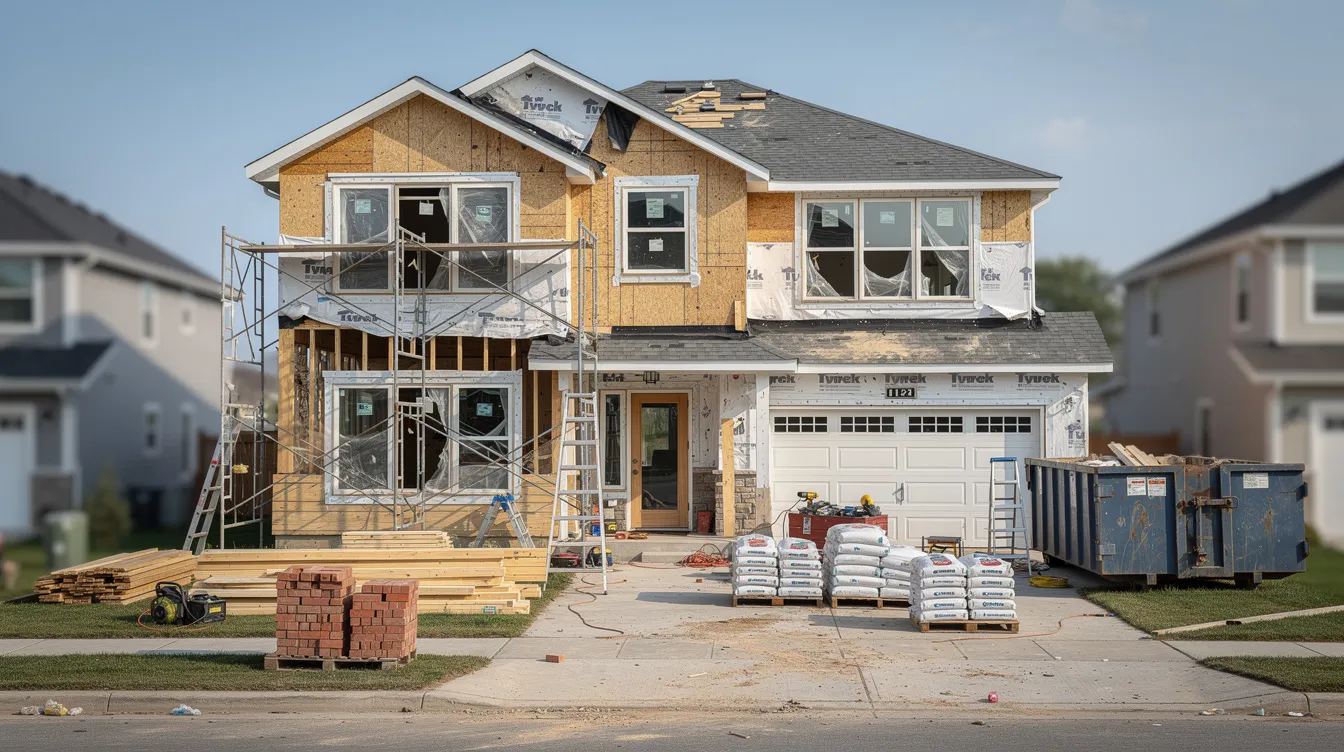
Most real estate investors I talk to don't have an income problem. They have a cash at closing problem. They've found a deal that stacks up, they've got an asset based lender willing to finance the property, and then they realise they're still $40K to $80K short of what they actually need to get the keys.
Asset based real estate lenders underwrite the property's value and cash flow, not your W-2 income or tax returns. That makes them a brilliant fit for investors doing fix and flip, BRRRR, and small commercial deals. But even the best asset based loan rarely covers 100% of total project costs.
That's where we come in. Gap Funded is not your hard money or DSCR lender. We provide unsecured and asset based gap funding (down payments, closing costs, rehab shortfalls, working capital) that stacks on top of your primary loan. No liens on the deal property, no equity splits.
Here's the short version of the problem:
- You find a strong deal and qualify for an asset based loan on the property
- The lender covers 70% to 90% of the cost, not all of it
- You need $30K to $80K in cash you don't have sitting in your accounts right now
- Without that cash, the deal dies or goes to someone else
What Is Asset Based Real Estate Lending?
Asset based lending in real estate means the underwriting centres on the property's collateral value, projected cash flow, and your exit strategy rather than primarily on personal income. An asset based loan is typically a short or medium term mortgage secured by the property itself, sized to a percentage of purchase price or after repair value.
In general business finance, asset based lending unlocks liquidity from business assets. Businesses can borrow against receivables and inventory for cash. Asset based loans typically advance 80 to 90% of receivables' value, and collateral types include accounts receivable and inventory. Companies often use asset based lending for working capital needs, and it improves liquidity without selling assets. Fixed assets are commonly accepted as collateral in ABL, and asset based lending provides flexible financing structures with flexible repayment schedules. No application or annual fees are typically required for these loans. Asset based loans in the corporate space can range from $15 million to $150 million.
But real estate specific asset based lenders are different. Asset based real estate lenders focus on the physical value of properties for financing. The eligible collateral is the property itself, and asset based lending differs from traditional loans by emphasising property value over borrower income. Common products include:
- Interest only bridge loans for acquisitions and value add projects
- Rehab and fix and flip loans with draws tied to renovation milestones
- DSCR rental loans sized on net operating income
- Real estate backed revolving lines of credit for portfolio investors
How Asset Based Real Estate Underwriting Actually Works
When an ABL underwriter evaluates your deal, they're looking at the property's quality, your purchase price versus market value, the rehab scope, stabilised value, market rents, and your exit. Asset based lenders do not always adhere to rigid federal regulations unlike traditional banks, which gives them flexibility but also means they charge more.
Lenders typically assess property condition and market dynamics to evaluate potential risks. Here's how ABL works in practice:
- Preliminary term sheet: based on your purchase price and ARV estimates. The loan to value ratio (LTV) measures the loan amount in relation to the property's appraised value. After repair value (ARV) is an estimate of a property's market value after renovations.
- Appraisal and scope review: the lender orders a BPO or full appraisal, reviews contractor bids, and verifies the rehab budget.
- Cash flow verification: rent comps, operating expenses (taxes, insurance, maintenance), and DSCR analysis. For stabilised rentals, lenders often require DSCR between 1.20x and 1.35x.
- Final sizing: the loan is constrained by whichever formula (LTV, LTC, or percentage of ARV) yields the lowest number.
- Exit strategy confirmation: exit strategies such as selling the property or refinancing are critical for asset based loans.
Asset based lending offers faster approval times compared to traditional bank loans, often completing in days. Expect 10 to 21 days for simple 1 to 4 unit deals, 30 to 60 days for small commercial. Asset based loans typically require fewer documentation hurdles than conventional loans, and many asset based real estate loans provide incremental repair funds in draws after inspections.
For active investors running multiple properties, some lenders establish a borrowing base (a percentage of as-is value across all properties minus senior debt) to support a line of credit for serial acquisitions.
Key Components: The Asset, the Cash Flow, and the Plan
Most asset based real estate lenders evaluate three pillars. Here's what each means for your deal.
The asset: location, property type (SFR, multifamily, retail, industrial), physical condition, as-is value versus ARV, and clean title. You'll need a purchase contract, scope of work, rent roll, photos, and inspection reports. Asset based lending supports specialised real estate strategies such as fix and flips.
The cash flow: current or projected rents minus taxes, insurance, utilities, maintenance, and reserves. Lenders stress test DSCR or coverage of interest only payments. Interest rates for asset based loans commonly range from 8% to 15% or higher, and many asset based loans are structured for short term terms ranging from 6 to 24 months.
The plan: your business strategy and timeline. Fix and flip, BRRRR, long term rental, short term rental, or owner occupied. The lender wants to know how they get repaid.
For example, consider a 4 unit BRRRR purchased for $400K with $80K in rehab, stabilising at $600K ARV with $6,000 per month gross rents. Operating expenses at 40% leave NOI of roughly $3,600 per month. A DSCR lender needing 1.20x coverage would allow annual debt service up to about $36,000. That's how the asset, cash flow, and plan interplay.
Worth noting for your balance sheet: borrowing against assets avoids capital gains taxes from sales. Securities based lending uses investment portfolios as collateral. Home equity lines of credit (HELOC) use home equity as collateral. Even 401(k) loans allow borrowing against retirement savings as collateral. Always consult a tax advisor on the tax implications of any borrowing strategy.
Typical Property Types and Scenarios Asset Based Lenders Fund
Asset based real estate lenders cover a broad range of property types that banks often won't touch. Each asset class has its own guidelines.
- Residential investment: single family rentals, duplexes, 4 to 20 unit multifamily, and portfolio loans for landlords scaling rental income
- Small commercial: mixed use, small office, neighbourhood retail, light industrial and warehouses
- Short term projects: fix and flip, value add renovations, and BRRRR deals where ARV and stabilised rent drive loan sizing
- Owner occupied commercial: buildings where the borrower's business operates, qualified on real estate value and business strength rather than personal tax returns
- Distressed properties: asset based lenders may finance distressed properties, which traditional banks often reject
Common target borrowers for asset based loans include real estate investors and property flippers. Asset based lenders often charge higher interest rates due to increased risk, but the trade off is quick access and flexibility.
Large institutional asset based lenders usually start at $3M to $25M+ facility size. If you're doing deals between $150K and $2M, you'll typically work with private hard money and DSCR lenders instead.
The Hidden Problem: Funding Gaps Asset Based Lenders Don't Cover
Even when an asset based lender approves your deal, they rarely finance 100% of total project costs. Higher down payment requirements are common in asset based lending, often between 20% to 35%. Here's what you'll still need cash for:
- Down payment: when the lender advances only 80 to 90% of purchase plus rehab, or caps at 70 to 75% of ARV
- Closing costs, lender points, and reserves: title, escrow, insurance, interest paid upfront, and origination fees
- Rehab overages and contingency: contractors go over budget more often than not, and lenders stick to approved scope
- Earnest money deposits: needed within days of signing a contract, long before any loan funds
- Working capital: carrying costs, marketing, advisory services, and business overhead while the project stabilises
Concrete example: a $300,000 purchase with $70,000 rehab. Your asset based lender offers 85% LTC, capped at 70% ARV ($500K ARV = $350K cap). The loan comes in around $325,000. You still need roughly $50,000 to $80,000 in cash to close and safely execute.
Interest rates on asset based loans may rise over time, and borrowers risk losing collateral if repayment obligations are unmet. That said, asset based lending can provide quick access to cash for the property portion. The gap portion is what catches people out.
This is exactly where unsecured gap funding, HELOCs, and business credit lines come in to complement your asset based real estate loan.
How Gap Funded Complements Asset Based Real Estate Lenders
Gap Funded does not replace your hard money, DSCR, or institutional asset based loans. We stack additional capital on top so you can close the deal while keeping full equity and ownership. Our tools, in realistic order:
- Debt consolidation to free up credit capacity before applying for new capital
- Unsecured gap funding and personal term loans for down payments, closing costs, and rehab cash
- 0% credit card stacking to cover EMDs, materials, and early contractor draws
- Asset based capital like HELOCs** on primary or investment properties (use the HELOC calculator to estimate your borrowing potential)
- Revenue based tools such as a business line of credit or business term loans once you have 2+ years in business and $20K+ per month revenue
This order matters. Most new investors qualify first for unsecured gap funding and card stacking based on FICO (often 650 to 680+), then graduate into HELOCs and revenue based products as equity and income grow. Applying out of order can knock out later approvals.
We use soft credit pulls for initial options, no liens on the deal property, and no equity splits. Your real estate collateral stays free for your main asset based lender.
Mini case: A 2025 fix and flip. Hard money lender finances 85% of purchase plus 100% of rehab. Gap Funded arranges $55K in unsecured capital across a term loan and 0% credit lines for the remaining down payment, closing costs, and reserves. Investor closes in 12 days, completes rehab, sells at ARV, repays both the senior loan and gap capital. No equity given up, no joint venture required.
If you've got a term sheet or are actively shopping for asset based real estate lenders, start your gap funding review at gapfunded.com/apply.
Comparing Options: Banks, Asset Based Lenders, and Gap Funded
Not all capital is the same. Each source solves a different part of the capital stack.
Conventional banks offer the best pricing and longest terms. But they require tax returns showing high income (which many investors don't have due to write offs), strict DTI ratios, and slow timelines of 30 to 60+ days. Most are member FDIC institutions with rigid federal oversight. For context on scale: JPMorgan Chase finances asset based deals from $25 million to hundreds of millions. Bank of America focuses on corporate ABL deals above $50 million. Wells Fargo's asset based lending spans $10 million to $500 million. Citizens Financial Group specialises in middle market loans from $10 million to $200 million. PNC Bank's asset based lending typically ranges from $5 million to $100 million. Fifth Third Bank focuses on middle market companies with predictable collateral. These institutions are not lending to someone buying a duplex for $250K.
Asset based real estate lenders (hard money, DSCR, bridge) are faster, credit based underwriting is lighter, and they focus on collateral and property cash flow. Trade offs: higher interest rates, advance rates capped at certain levels, and an equity requirement of 10 to 30%.
Gap Funded specialises in the gap portion. Unsecured or secured against a separate asset. Faster approvals, non dilutive, no interference with the primary lender's lien position. Higher effective cost than senior debt, but you keep 100% of your deal's equity and securities.
I reckon the smartest investors blend these tools strategically rather than relying solely on one source. Some investors may get enough capital from a strong HELOC or business line of credit alone, and that's fair dinkum fine. But many still need a dedicated gap funding solution to scale beyond one or two projects at a time without draining their deposits and liquidity.

How to Prepare and Qualify: Practical Steps for Investors
Success with asset based real estate lenders plus Gap Funded depends on preparation. Here's how to set yourself up before the next deal lands.
- Credit profile: aim for FICO 650 to 680+ to access the best unsecured gap funding and qualify with most ABL financing providers. Keep credit utilisation under 30% and minimise recent inquiries before applying.
- Deal package: have your purchase contract, scope of work, contractor bids, rent comps, and basic pro forma ready. Both your ABL lender and Gap Funded want a clear path to repayment. Understanding how to calculate debt service helps you present a credible plan.
- Liquidity and reserves: even when most of the capital stack is borrowed, have 2 to 6 months of carrying costs in reserve. Lenders stress test assuming higher interest rates and possible loss scenarios. Equipment finance, inventory loans, and other business obligations should be factored in.
- Entity and structure: have an LLC ready for real estate ownership. Unsecured funding may still be in your personal name initially, but separation matters for long term goals, intellectual property protection, and clean transactions.
- Timeline planning: submit applications to your primary ABL lender and Gap Funded in parallel. Gap funding can often move in 2 to 7 days once documents are complete. Order the appraisal early, finalise gap funding lines before your closing date, and coordinate so the money is ready when you need it.
The services offered by both asset based lenders and gap funding providers are subject to qualification, so prepare early. The benefit of parallel applications is that neither process holds up the other.
If you've already got approval (or expect one soon) from an asset based real estate lender and you're short on the cash to close, start your gap funding review today. Soft pull, no cost to check your options: gapfunded.com/apply.
Related Reading
This article is for educational purposes only and isn't financial, legal, tax, or investment advice. Credit and financing outcomes depend on your own situation. Talk to a licensed financial professional before making funding decisions for your business.