
Airbnb Investment in 2026: How to Buy, Finance & Scale Short Term Rentals


Airbnb Investment in 2026: How to Buy, Finance & Scale Short Term Rentals
Most Airbnb deals don't die because the property was wrong. They die because the investor ran out of money before the first guest ever checked in. The purchase loan came through, but the down payment, furnishing, permits, and three months of carry costs didn't have a funding source. This guide covers how Airbnb investing actually works in 2026, how to underwrite deals honestly, and how to close the funding gap that kills good projects.
Key takeaways (answer the query fast)
Airbnb investments are short term rental properties listed on platforms like Airbnb and Vrbo to generate rental income that can exceed what traditional rentals produce. In 2026, the model is mature but competitive, and the investors who win are the ones who fund the full deal, not just the mortgage.
- In top U.S. STR markets, well run Airbnb properties can outperform long term rentals by 15 to 30% in gross revenue, but with higher volatility, operating costs, and hands on management.
- Successful Airbnb investing hinges on three things: buying the right property in a high demand market, running accurate revenue and cost underwriting, and having enough capital for down payment, furnishing, and cash reserves.
- The "funding gap" problem is real. Lenders rarely finance 100% of an Airbnb deal. Furniture, rehab, earnest money, and reserves usually come out of pocket. Gap Funded provides fast, non dilutive capital to cover those costs without equity splits.
- This guide is current to October 21, 2026 and written for both first time and experienced Airbnb hosts and real estate investors.
What is Airbnb investing and how does it work?
Airbnb investing means buying or controlling a property and renting it on a short term basis for profit via platforms like Airbnb and Vrbo. Revenue comes from nightly rates and occupancy rather than a 12 month lease. Property owners can block dates for personal use in Airbnb properties, which adds lifestyle flexibility most rental properties can't offer.
Here's a simple hypothetical example. An investor buys a 3 bedroom single family home in Orlando in 2026, finances it with a DSCR loan, furnishes it, and lists on Airbnb at an average daily rate of $250 with 65% occupancy (roughly 19.5 nights per month).
- Gross monthly revenue: $250 × 19.5 nights = ~$4,875. That puts annual revenue around $58,500. Average daily rates for Airbnbs can reach $4,000 to $6,000 monthly in strong markets, and this example lands right in that range.
- Operating costs eat into that fast: cleaning fees per turnover, utilities, internet, platform commissions (around 15%), supplies, insurance, property taxes, and maintenance. Subtract those plus your mortgage, and what's left is cash flow.
- Cash on cash return is calculated by dividing annual cash flow by total cash invested (down payment + closing + furnishing + setup). Overall ROI also includes equity growth, tax savings, and appreciation.
For context, Airbnb hosts earned an average of $14,000 in 2023. The gap between that average and the $58,500 example above comes down to market, property type, and how well the operation runs.
"Airbnb investments" can mean owned properties, rental arbitrage (subleasing on Airbnb is known as rental arbitrage), or co hosting arrangements. This article focuses mainly on owning the investment property.
One thing most investors underestimate: Airbnb investing work is front loaded. Setup, furnishing, permitting, and listing creation all happen before a single dollar comes in. After launch, the work shifts to guest communication, turnovers, and pricing, which can be systemised or outsourced.
Airbnb vs long term rental: profits, risks, and workload
This isn't a "one is better" argument. It's an honest comparison so you can decide whether Airbnb fits your risk tolerance, lifestyle, and financial goals.
Profit potential: In 2025 to 2026 U.S. STR markets, many investors see 10 to 20% cash on cash potential versus 5 to 8% for long term rentals when bought right. Short term rentals can yield 10% or higher returns, and Airbnb investors can earn 15 to 30% more than traditional rentals. But those numbers assume strong execution and conservative underwriting.
Risks unique to Airbnb: Regulatory changes (outright bans, permit caps), rapid demand shifts, market saturation, platform dependence, higher wear and tear, and guest damage. Airbnb income can fluctuate based on seasonality and local events, which makes forecasting trickier. This is a high risk, high reward model compared to traditional rentals.
Workload: Daily guest messaging, dynamic pricing strategies, frequent cleanings, and restocking supplies versus once a year lease renewals and slower tenant turnover with term rentals.
Short term rentals also have the potential for property value growth over time, especially in vacation markets where tourism demand keeps climbing. Mixing STRs with long term rentals in your investment portfolio can smooth out income volatility. A good rule of thumb: if you want more passive income with low involvement, favour long term rentals. If you're willing to operate like a hospitality business for higher upside, Airbnb may fit.
Regulations, zoning, and compliance for short term rentals
Local laws can restrict or prohibit short term rentals, and ignoring them is one of the fastest ways to torch an Airbnb investment. Researching local regulations is critical before investing. Many cities impose strict regulations on short term rentals, and regulations vary significantly by city and state.
Common regulatory categories in 2024 to 2026: outright bans on non owner occupied STRs, primary residence only rules, minimum stay requirements, permit caps, and special STR zoning restrictions.
Real examples: New York City's 2023 to 2024 crackdowns require registration of all short term rentals with compliance hurdles that effectively ban most non primary residence operations. Some cities require permits for short term rentals, while others like Houston remain comparatively friendly with registration and occupancy tax but no strict day limits. Maui, Hawaii limits the number of active short term rentals, capping supply to protect housing stock.
Due diligence checklist:
- City and county STR ordinance search
- State lodging taxes and tourism tax rules
- HOA or condo bylaws (many explicitly ban STRs)
- Landlord permission if doing rental arbitrage
- Zoning laws and overlay districts
Budget for licenses, inspections, and lodging taxes. Set up proper recordkeeping for tax compliance from day one. Violating short term rental regulations can lead to fines of $5,000 or more in some jurisdictions, forced closure, and sunk startup costs. Never underwrite a deal assuming you can fly under the radar.
Choosing the right market and high demand location
Location and local demand dynamics drive Airbnb performance more than property features. Getting the right location wrong makes everything else irrelevant.
Three broad market types:
| Market Type | Examples | Demand Drivers |
|---|---|---|
| Vacation destinations | Orlando, Smoky Mountains, Gulf Coast | Tourism, theme parks, beaches |
| Urban/business hubs | Dallas, Atlanta, Denver | Business travel, events, weekenders |
| Specialty/niche | Ski towns, national park gateways, college towns | Seasonal tourism, specific events |
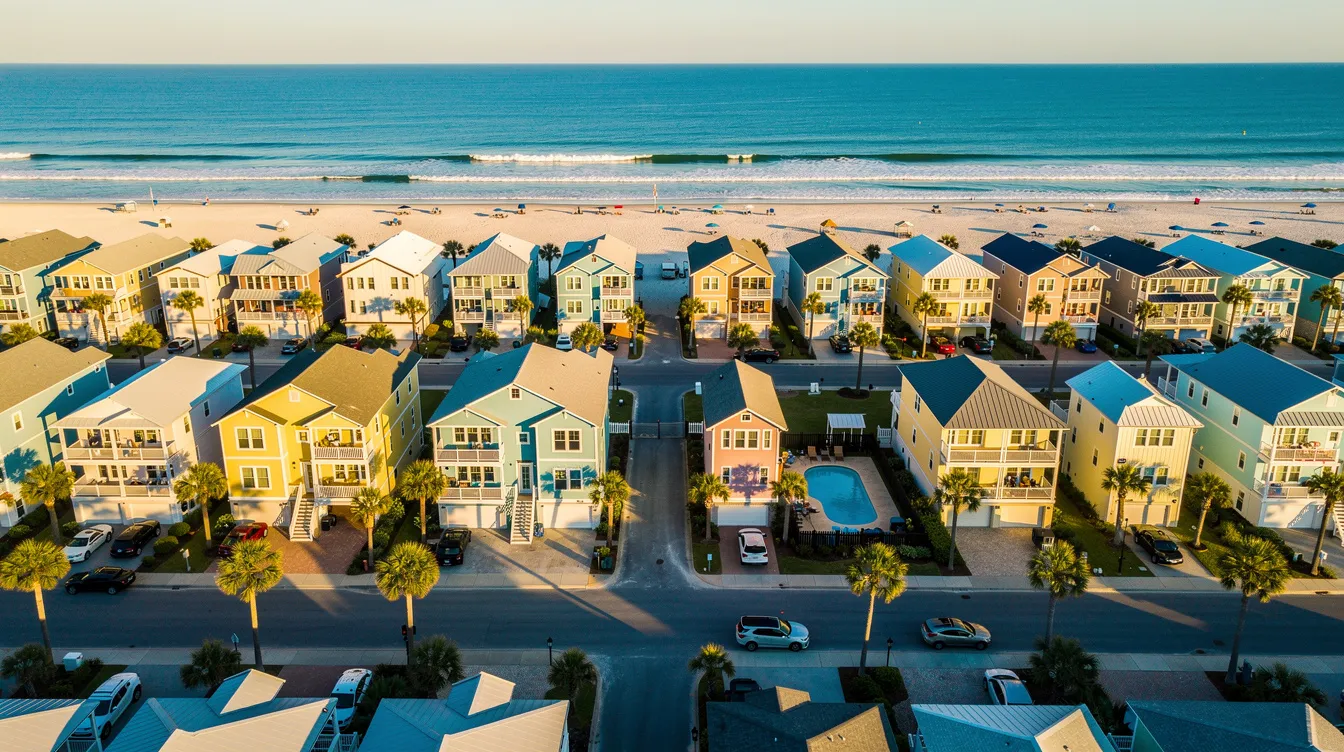
Top Airbnb markets include Los Angeles, Nashville, and Austin. Top performing markets can deliver revenue potential exceeding $30,000 per year, with some clearing $50,000 or more. According to AirDNA data, Orlando has roughly 40,000 active listings with annual revenue averaging about $48,900 per listing.
How to identify high demand: Review occupancy rates, ADR, RevPAR (ADR × occupancy rate), seasonality swings, and supply growth using data tools. Look for markets with balanced STR regulations, diversified demand drivers, and moderate supply growth to avoid future oversaturation.
At the neighbourhood level, prioritise proximity to attractions, walkability, parking availability, perceived safety, and low party or noise risk. And always test revenue assumptions with conservative demand estimates and comparable listings, not just best case numbers from the top 10% of Vrbo listings or Airbnb comps.
Picking the best property type and layout for Airbnb
Property type, size, and layout directly influence nightly rates, occupancy rates, and operating complexity. Getting the right property means matching the asset to both your market and your budget.
Common property types compared:
- Single family homes: More space, privacy, outdoor areas. Higher furnishing and maintenance costs. Best for families.
- Condos/townhomes: Lower maintenance, sometimes shared amenities. But HOA zoning restrictions may ban STRs entirely. Verify before you buy.
- Unique stays (cabins, tiny homes, ADUs): Novelty boosts ADR but permitting hurdles can be steep.
- Small multifamily (2 to 4 units): Diversifies income across units under one roof.
Different Airbnb guests want different things. Families want 3 to 4 bedrooms near theme parks. Digital nomads want fast Wi Fi, a desk, and quiet. Business travellers want location and parking. Successful Airbnb listings often highlight amenities like fast Wi Fi and parking because those drive bookings.
Bedroom count matters. In vacation markets, a higher bedroom count commands significantly higher ADR. In urban markets, 1 to 2 bedroom condos can perform well if location is right. But larger homes carry higher cleaning fees, more maintenance, and steeper furnishing costs.
Higher end amenities (hot tubs, pools, outdoor kitchens) can boost revenue potential but increase furnishing costs and required reserves. Match property type to both your budget and risk appetite.
Underwriting the deal: analysing returns on an Airbnb property
Before you tour a single property, you should be comfortable running numbers on paper. Investors should conduct thorough financial projections for Airbnb properties, and property analysis is where most investors find out whether a deal actually works.
Data you need: projected ADR, expected occupancy, seasonal variation, cleaning fees per turnover, platform commissions, utilities, internet, lawn care, pest control, supplies, insurance, property taxes, and property management fees if outsourced.
Building a pro forma (hypothetical example):
| Line Item | Annual Amount |
|---|---|
| Purchase price | $450,000 |
| Down payment (25%) | $112,500 |
| Loan amount (7% interest, 30 year) | $337,500 |
| ADR × 65% occupancy × 365 days | $59,250 gross revenue |
| Platform/booking fees (15%) | ($8,888) |
| Operating expenses (cleaning, utilities, taxes, insurance, supplies, ~35% of gross) | ($20,738) |
| Net operating income | $29,624 |
| Annual debt service | ($28,230) |
| Annual cash flow | $1,394 |
Total cash invested: $112,500 down + $5,000 closing + $15,000 furnishing = $132,500. Cash on cash return: roughly 1.1%. That's tight. This shows how marginal many deals are without optimising ADR, occupancy, or cost structure.
Key metrics to know: cash on cash return, cap rate (NOI / price), debt service coverage ratio, break even occupancy, and payback period on furnishing. Investors should analyse occupancy rates to set competitive pricing and run data driven decisions.
Stress testing is essential: Investors may face occupancy rates as low as 50% for Airbnbs. Run downside scenarios with 10 to 20% lower occupancy or ADR and see whether the property still covers mortgage and operating costs. Set realistic expectations before you sign anything.
Upfront and ongoing costs: what most new Airbnb hosts miss
Airbnb investing has two cost phases: one time launch costs and recurring monthly expenses. Underestimating launch costs is the most common failure point, and high operating costs are associated with Airbnb property management at every stage.
Typical upfront costs:
- Down payment: 15 to 25% for an investment property
- Closing costs: 2 to 5% of purchase price
- Furnishing: beds, sofas, linens, kitchenware, décor ($12,000 to $25,000 for a mid tier 3 bed home in 2026)
- Smart locks, cameras, safety equipment
- Professional photography
- Permits, licensing, initial deep clean
- Software setup (pricing tools, channel managers, messaging)
Ongoing costs: mortgage payments, utilities, high speed internet and streaming, cleaning and laundry per turnover, consumable supplies, lawn or snow service, HOA fees, STR insurance, property management (10 to 25% of gross if outsourced), software subscriptions, and local lodging taxes.
Reserves matter: Keep 3 to 6 months of total expenses plus an annual maintenance budget for appliances, HVAC, and periodic refreshes of linens and furniture. STRs eat through soft goods faster than you'd expect.
This is where many investors hit a wall. Traditional lenders fund the purchase but rarely the furnishings, rehab, or reserves. That funding gap is the difference between closing a deal and watching it fall apart.
How to finance an Airbnb investment property in 2026
Several primary financing options exist for buying an Airbnb property, and each has tradeoffs. Airbnb investors often face stricter lending requirements than buyers of traditional rental properties.
- Conventional and second home loans: Lower interest rates but stricter DTI, income documentation, and occupancy requirements. Hard to qualify if the property is clearly an investment.
- DSCR loans: Popular for short term rentals because they qualify based on property cash flow rather than W2 income. Typical DSCR thresholds run 1.0 to 1.25, with FICO minimums often 660 or higher. Interest rates in 2026 sit in the 6 to 7% range for good borrowers.
- Hard money loans: Short term options for heavy rehab or fast closings, usually with higher rates and fees. Often refinanced into DSCR or long term financing after stabilisation.
- Seller financing: Airbnb investors can use seller financing to reduce upfront costs in certain deals, though these are less common and depend on motivated sellers.
Most purchase lenders only fund a portion of total project costs. Down payments, closing costs, rehab, furniture, and reserves are left to the investor. That's where gap funding becomes critical.
I always recommend consulting a financial advisor or experienced mortgage broker to understand how Airbnb income will be treated for qualification.
Closing the funding gap: how Gap Funded helps Airbnb investors
Here's the core problem: even solid deals die because buyers can't cover 20 to 25% down, furnishing, rehab, earnest money deposits, or carry costs during the ramp up period. Gap funding can help investors cover startup costs for short term rental properties, and that's exactly what we built Gap Funded to do.
Gap Funded is a specialised funding intermediary that stacks non dilutive capital sources to cover what primary lenders won't. No equity splits, no liens on the subject investment property in many cases. Here's how capital stacking works for Airbnb investors, and the order matters because applying out of sequence can knock out later approvals.
1. Unsecured gap funding first: Personal term loans through rapid gap funding, then stacked 0% business credit cards via credit card stacking for large but flexible purchases like furnishings, launch marketing, and operating reserves. These don't require collateral and keep your property equity intact.
2. Asset based capital: If you own a home or another investment property with equity, a HELOC can fund down payments or rehabs at comparatively low cost. Use our HELOC calculator to see what you might access.
3. Revenue based capital: For established operators with at least 2 years in business and $20,000 or more per month in revenue, business lines of credit and business term loans can cover working capital and expansion costs.
Realistic qualification: Most Gap Funded clients have 650+ FICO, verifiable income or business revenue, and can document their real estate strategy. Initial reviews use soft credit pulls, so there's no impact to your credit just to check options.
Responsible leverage matters: Don't over borrow. Model your gap funding payments into the underwriting. If you later want to simplify or reduce monthly payments, debt consolidation options exist to combine obligations.
Ready to map out a capital stack for your next Airbnb property? Start a no obligation funding review here.

Launching your first Airbnb: setup, pricing, and operations
You've closed, you've funded the furnishing, and now you need to go from empty house to five star listing. Here's the roadmap from closing to first guest check ins.
Launch checklist:
- Final repairs, smoke detectors, CO detectors, fire extinguishers, egress plans
- Interior design and furnishing (cleanliness and presentation significantly impact guest bookings)
- Professional photography with keyword rich titles and descriptions
- Automated messaging templates for guest communication
- Smart locks and self check in setup
Pricing strategy: Start with competitive but slightly lower nightly rates to build reviews. Once you've banked 10 to 20 positive reviews, gradually raise to your target ADR. Dynamic pricing can help maximise income from Airbnb rentals, and algorithmic pricing tools adjust for seasonality, local events, and competition without you touching it daily.
Operations systems: Cleaner scheduling, inventory checklists, response time goals (under 15 minutes during waking hours), and clear house rules. You don't need to live near the property. Hiring a local co host or property manager works, though co host agreements typically share 10 to 25% of gross booking revenue.
If you want more passive income from your Airbnb, build a small team (cleaners, handyman, virtual assistant) rather than trying to do everything yourself.
Advanced strategies: scaling, arbitrage, co hosting, and diversification
Once the first Airbnb is stabilised and profitable, most investors start thinking about scale. Several models exist, each with different capital requirements.
Scaling via BRRRR: Buy, rehab, rent as STR, refinance, repeat. As your investment portfolio grows, improved equity positions and demonstrated STR income can qualify you for more favourable DSCR or conventional loans on the next property.
Rental arbitrage: Rental arbitrage allows investing without property ownership. You lease a property long term with landlord approval and re list on Airbnb. Pros: no huge down payment. Cons: lease liability, less control, regulatory risk, slimmer margins, and the landlord can simply not renew.
Co hosting: Co hosting involves managing an Airbnb for a property owner in exchange for a share of revenue. It builds experience, reputation, and capital to eventually buy your own investment property.
Indirect exposure: Short term rental REITs allow investment without property management, offering exposure to STR markets without the operational work. You can also buy shares in Airbnb itself. Airbnb stock trades on NASDAQ under the ticker ABNB. Airbnb continues to grow platform wide, with Q1 2026 showing nights booked up 9% year over year according to their shareholder letter. These options suit investors seeking diversification, but discuss them with a financial advisor to see how they fit your portfolio.
Risk management when scaling: Diversify across markets and property types to reduce exposure to regulatory changes in any one city. Build larger reserves. Regularly review debt structure for refinance or consolidation opportunities.
When to talk to a financial advisor and next steps
STRs blend real estate, hospitality, and tax considerations. Once you move beyond a single property, professional advice stops being optional.
When to consult a financial advisor or tax professional:
- Planning to own multiple Airbnb properties
- Using retirement funds or complex entity structures (LLCs, partnerships)
- Balancing STR income with other investments in your portfolio
- Wanting to understand tax deductions and tax advantages like depreciation and cost segregation (investors can leverage write offs for rental expenses in Airbnb properties)
Questions to ask: How is Airbnb income taxed in your jurisdiction? How might depreciation accelerate deductions? Should you prioritise debt payoff or acquiring additional rental properties? What happens if zoning laws change in your market?
Bring a sample pro forma that includes any gap funding payments so the advisor can stress test your plan against rate hikes, occupancy drops, or new regulations. I'm not a CPA or financial advisor, I reckon most investors find that the right professional pays for themselves many times over.
If you're ready to pursue an Airbnb property and need capital for the down payment, rehab, furnishing, or reserves, start a no obligation funding review with Gap Funded. Soft credit pull, no commitment, and we'll map the investment and the funding strategy at the same time.
Related Reading
This article is for educational purposes only and isn't financial, legal, tax, or investment advice. Credit and financing outcomes depend on your own situation. Talk to a licensed financial professional before making funding decisions for your business.