
What Is the 90 Day Flip Rule in Real Estate? FHA Flipping Rules Explained

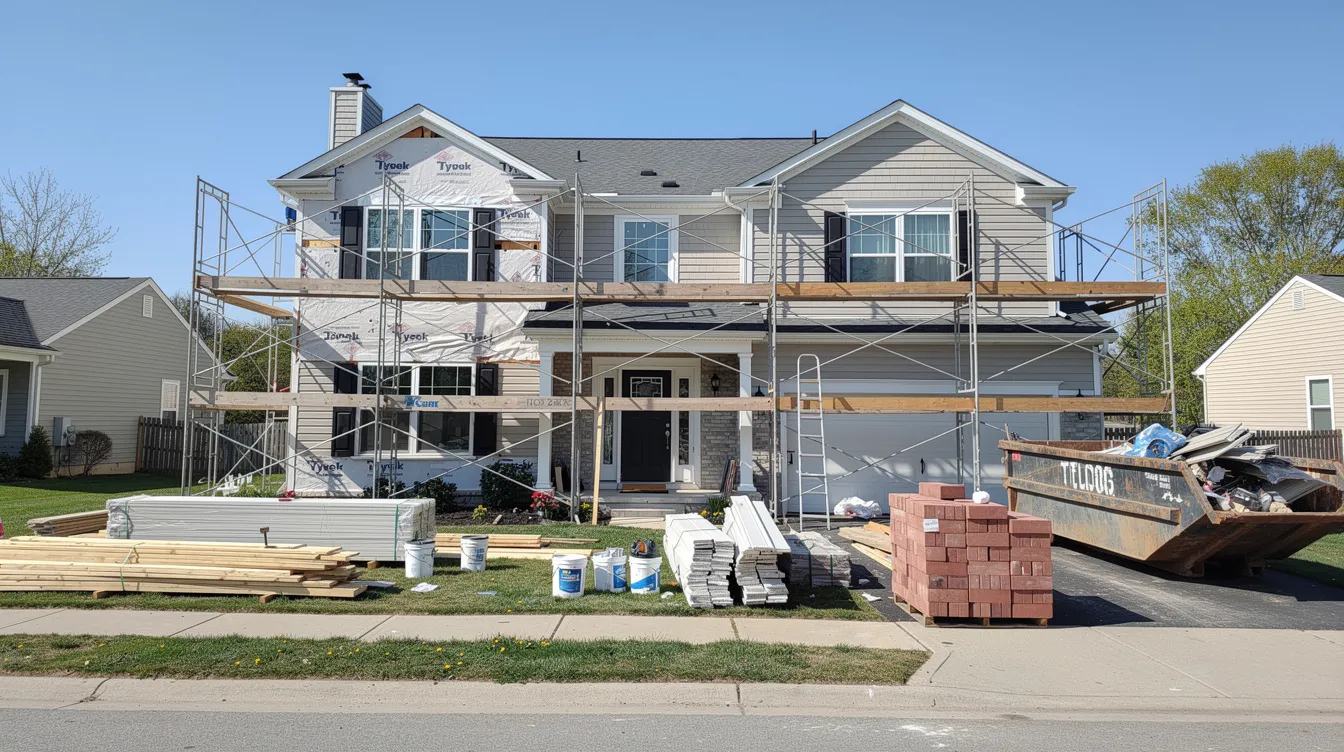
Most investors find out about the 90 day flip rule the hard way: they finish a rehab in six weeks, list the property, get an offer from an FHA buyer, and then the lender kills the deal. This guide is for real estate investors, agents, and buyers who want to understand how the FHA 90 day flip rule affects their transactions. Understanding this rule is crucial to avoid failed deals and unexpected delays when working with FHA buyers. Here is what the rule actually says, why it exists, and how to plan around it.
Quick Answer: What Is the 90 Day Flip Rule?
The 90 day flip rule is an FHA regulation that prohibits FHA financing on any property where the seller has owned it for 90 days or fewer. The 90 day countdown starts when the seller's deed is recorded. FHA buyers cannot purchase properties flipped within that window, full stop.
This rule applies strictly to properties financed using FHA loans, not other financing types. It is primarily a restriction on the use of FHA insured financing, not on property flipping itself. Properties must be owned for over 90 days before FHA financing can be used.
Who gets hit hardest:
- House flippers who renovate and resell within 30 to 60 days
- First time and lower income buyers who rely on an FHA loan
- Realtors trying to time listings for FHA qualified buyers
Quick example: an investor buys a property and the deed is recorded on January 5. The earliest date an FHA buyer can execute a purchase contract is April 6 (day 91). A contract signed on April 5 means the deal is dead.
Conventional loans have no strict flipping rules like FHA loans, and cash purchases bypass all loan restrictions entirely. The rest of this article unpacks the full FHA flipping rules, exceptions, and strategies to work around the 90 day window.
What Are FHA Flipping Rules and How Do They Work?
FHA flipping rules are Federal Housing Administration guidelines that limit how soon a flipped home can be resold to a buyer using an FHA loan. FHA loans are commonly used by first time homebuyers and those with lower credit scores because they offer down payments as low as 3.5% and more flexible credit standards. That means many flips in entry level price bands end up subject to these rules.
Here is how the timeline works:
- The day count runs from the date the seller's deed is recorded (the seller's acquisition date) to the date the buyer signs the purchase contract
- Closings can happen after day 90. What is restricted is going under contract before day 91
The core rules break into three timeframes:
- 0 to 90 days: No FHA loan allowed. The FHA 90 day flipping rule prohibits sales within this period
- 91 to 180 days: FHA financing is permitted, but resales between 91 and 180 days may require additional documentation. If the resale price is 100% or more above the seller's purchase price, FHA requires a second independent appraiser and detailed contractor invoices
- 181+ days: Standard FHA guidelines apply without flip specific overlays, though a lender can still add their own conditions
Date based example: investor closes on a distressed property on March 1 (deed recorded). The earliest binding contract date for an FHA buyer is May 31 (day 92), not April 15.
This is different from the "seasoning" rules some conventional and DSCR lenders use. Those are lender specific overlays, not federal regulation.
FHA 90 Day Flipping Rule: Details, 91 to 180 Day Rules, and Exceptions
This section breaks down the FHA 90 day flip rule after day 90, plus the exceptions that matter for investors.
The FHA 90 day resale restriction bars FHA insured loans on single family properties resold within 90 days of the seller's acquisition. This applies whether the flip is purely cosmetic (paint, flooring) or a full gut renovation. Improvement level does not shorten the wait.
In the 91 to 180 day window, the FHA mandates extra scrutiny for properties resold at a price significantly above the purchase price. The resale price threshold is typically a 100% increase from the original purchase price. The FHA requires documentation for resale prices significantly higher than original purchase prices, including permits, invoices, and a second appraisal by an independent appraiser.
Once ownership exceeds 181 days, the strict flipping overlays are usually gone. Lenders can still apply their own overlays in rapidly appreciating markets.
Key exceptions to the rule:
- Sales by government entities (HUD, other government agencies, Fannie Mae REO) are exempt from FHA flipping rules
- Non profit resales for affordable housing bypass FHA flipping restrictions
- Inherited properties are not subject to FHA flipping rules. Transactions involving inherited properties may be exempt from the 90 day rule
- Properties in designated disaster areas where HUD has issued temporary waivers
One more thing: when people say "90 day flip rule" they almost always mean the FHA 90 day rule. Some private lenders have their own 90 day guidelines, but those are contract based, not regulatory. FHA flipping rules were reinstated on December 31, 2014 after a temporary waiver that had been in place since 2010.
Why the FHA 90 Day Rule Exists and How It Affects Investors
The rule exists to prevent appraisal fraud and protect vulnerable buyers. In the late 1990s and early 2000s, fraud rings were buying distressed homes, doing minimal or no work, and reselling within days at hugely inflated values. The 90 day flip rule was put in place due to these unscrupulous practices, and the rule aims to reduce the risk of overpaying for hastily renovated properties. It is enforced to minimise risks to the FHA insurance fund and prevent inflated property values from quick resales.
Modern tools like the automated valuation model, online MLS history, and digital photos have improved transparency since then. There is ongoing industry discussion about whether the strict 90 day standard is still necessary, but for now the rule stands.
For legitimate investors, the impact is real. Holders of properties must factor in additional costs during the enforced holding period. On a $300,000 ARV flip financed with hard money at 12% and 2 points, adding 60 days of extra holding can easily add $4,000 to $7,000 in carrying costs. Some investors avoid deals in FHA heavy price bands ($150,000 to $450,000 in many Midwestern and Southern markets) because they cannot exit quickly to an FHA buyer pool. Others try to time acquisitions so rehab plus listing aligns with the 90 day calendar, which gets risky if contractors or permits are delayed.
Common workarounds include targeting conventional or cash buyers, selling to another investor using DSCR or portfolio financing, or using seller financing where appropriate. But all of those limit your buyer pool or your profit margin.
Financing a Flipped Home: FHA Loans vs. Alternatives
Buyers of a flipped home often assume FHA is the easier option. It can be, but the 90 day flip rule can block that path entirely. Both buyers and investors need to understand what else is out there.
- FHA loans: Low down payment (3.5%), minimum FICO around 580 to 600, stricter property conditions and appraisals, bound by FHA flipping rules
- Conventional loans: No universal day flip rule. Higher credit requirements (620+), slightly higher down payments, but better suited for buying a very recently flipped home
- VA loans: VA loans offer no flipping restrictions for eligible veterans, though lenders may still flag huge price jumps for extra appraisal review
- DSCR and hard money lenders: No FHA style restrictions, but higher interest rates and short terms. Many DSCR lenders impose seasoning for cash out refinances
- Cash purchases: Completely unaffected by the rule
The real problem for most investors? They have a good deal and a clear ARV but lack the gap funding needed for down payments, closing costs, rehab, and extra holding time caused by the FHA 90 day flip rule. Gap funding bridges shortfalls between primary lenders and total deal costs, and understanding how institutional gap funding works for real estate projects helps investors structure deals that stay viable despite the 90 day rule.
How Gap Funded Helps Investors Navigate the FHA 90 Day Flip Rule
The FHA 90 day flipping rule does not usually kill a fix and flip deal. But it does stretch timelines and create a funding gap that savings alone often cannot cover.
The specific gaps this rule creates or magnifies:
- Down payment and closing costs to secure hard money or conventional investor loans
- Rehab costs: contractor draws, permits, materials, contingency reserves
- Extra holding costs (interest, taxes, insurance, utilities) while you wait until day 91+ to sell to an FHA buyer at full retail
Here is how Gap Funded's tools close those gaps, and the order matters because applying out of sequence can knock out later approvals:
- Rapid Gap Funding (unsecured term loans): Used first to quickly generate upfront capital for down payments, earnest money deposits, or reserves. Typically suitable for borrowers with FICO scores around 650+ and verifiable income, and often a more accessible alternative to traditional private gap funding requirements for real estate investors
- 0% credit stacking: Used next to spread smaller rehab and carrying expenses across multiple business credit cards at introductory 0% interest. Covers materials, smaller contractor invoices, and utilities during the forced wait while allowing investors to maximize rewards with 0% credit card stacking strategies
- HELOCs and business lines of credit: HELOCs can be used for financing investment properties. For investors with equity in a home or investment property, these act as a reusable capital pool for larger renovations and multiple flips, similar to the flexible HELOC loans real estate investors use to unlock home equity
To be fair about alternatives: hard money and DSCR lenders are great primary financing options but rarely fund 100% of the deal. They often require 10 to 20% down and proof of reserves. Private gator lending or equity partners may provide capital but can demand large equity splits or control over the deal, even when using modern Gator Lending strategies for real estate investors. Gap Funded focuses on non dilutive capital: no equity splits, no liens on the flip property, and soft credit pulls to check options without harming your FICO.
Quick scenario: An investor in 2025 buys a distressed property for $150,000 in a market where FHA buyers dominate. They expect a $260,000 ARV after a six week rehab but must hold until day 91 for their likely buyer. Gap Funded could provide $40,000 to $60,000 in unsecured term loans and stacked credit cards to cover down payment, rehab, and two extra months of holding, while a separate hard money loan handles primary acquisition and rehab funding.
Realistic qualification: FICO scores 650+, stable income or business revenue, clean recent credit history. Funding decisions and capital access are designed to move fast enough to meet wholesale deals, auction purchases, and tight contract deadlines.
If you are planning a flip, a BRRRR project, or a short term rental and the 90 day rule is making your numbers tighter than they need to be, complete a quick, no obligation application at gapfunded.com/apply. If you are a broker or wholesaler who wants to build a recurring relationship or refer clients, check out the partner programme at gapfunded.com/partners.
Related Reading
This article is for educational purposes only and isn't financial, legal, tax, or investment advice. Credit and financing outcomes depend on your own situation. Talk to a licensed financial professional before making funding decisions for your business.