
Strategies to Pay Off Your Mortgage Using a HELOC (Without Blowing Up Your Cash Flow)


Most homeowners sit on a pile of home equity and assume the only way to deal with their mortgage is to keep making the same payments for the next 20 or 30 years. That's not true. But the alternative that keeps popping up online, using a HELOC to pay off your mortgage, is not the free lunch some YouTube gurus make it sound like either.
Let me walk you through when this strategy actually works, when it'll blow up in your face, and how to structure it so your cash flow stays intact.
Quick Answer: When Does It Make Sense to Use a HELOC to Pay Off a Mortgage?
Short version: using a HELOC to pay off a mortgage only makes financial sense when the HELOC rate is meaningfully lower than your existing mortgage rate and you can repay aggressively within the draw period. If both of those boxes aren't ticked, you're just swapping one form of mortgage debt for another, except now it has a variable interest rate that can climb on you.
Using a HELOC to pay off a mortgage does not eliminate the debt but replaces it with a different loan secured by your home equity. The strategy can lead to faster debt elimination if managed correctly, but "managed correctly" is doing a lot of heavy lifting in that sentence. In late 2026, with the prime rate sitting around 7.00% and average HELOC rates hovering near 6.8% to 7.3%, this tactic is usually most effective for relatively small remaining balances (say, under $150,000) that you can clear in 3 to 7 years.
The key risks are variable HELOC interest, payment shock when the draw period ends, and foreclosure risk if things go sideways. We'll unpack all of those below. At Gap Funded, we help real estate investors and business owners figure out whether tapping home equity is the right move or whether other funding tools make more sense.
HELOC Basics: How a Home Equity Line of Credit Works
A home equity line of credit is a revolving line secured by your home equity. Unlike a home equity loan, which hands you a lump sum at a fixed rate, a HELOC lets you draw funds as needed up to your credit limit, repay, and draw again.
Here's the typical structure:
- Draw period (usually 5 to 10 years): you can borrow and repay HELOC funds repeatedly. During the draw period, payments may be interest only payments, which keeps your monthly payments low but doesn't chip away at principal.
- Repayment period (10 to 20 years): after the draw period, both principal and interest payments are due. The loan enters full amortisation mode and your available credit stops revolving.
HELOC interest rates are usually variable, tied to an index like the U.S. prime rate (published daily in sources like the Wall Street Journal) plus a lender margin. That means your HELOC interest can change monthly, which directly affects managing cash flow. HELOC interest is often calculated on the average daily balance, so the faster you pay down that HELOC balance, the less interest you pay.
Lenders typically evaluate a borrower's credit score and debt to income ratio when you apply. Minimum FICO is often 650 to 680 or higher, with stable income and sufficient equity. Traditional mortgages usually feature fixed interest rates while HELOCs often have variable rates, so you're trading predictable payments for flexibility.
Investors and small business owners often use HELOCs for renovations, down payments, working capital, or debt consolidation beyond just mortgage payoff.
Step 1: Calculate Your Home Equity and EligibilityStep 1: Calculate Your Home Equity and Eligibility
The strategy starts with knowing exactly how much home equity you have and how much of it a lender is willing to let you borrow.
Estimate your home's appraised current market value using recent comparable sales (3 to 6 months old) or a professional appraisal if you're applying for a large line. Then plug into the formula:
Home equity = current value minus remaining mortgage balance (and any other liens)
HELOC lenders usually cap total borrowing at a combined loan to value (CLTV) of 80% to 90%. Homeowners need at least 15% to 20% equity to qualify for a HELOC.
Concrete example: home value is $500,000, mortgage balance is $300,000, lender allows up to 85% CLTV. Maximum total debt: $425,000. Subtract the $300,000 first mortgage and your HELOC credit limit tops out at roughly $125,000. That's not enough to pay off the entire mortgage, but it's a solid chunk for an acceleration strategy.
Investment property HELOCs typically have more conservative limits (often 60% to 75% CLTV) and slightly higher HELOC rates, but they can still be used in payoff or acceleration strategies if the numbers work.
Step 2: Compare HELOC Rate vs Mortgage Rate (and the Fed Effect)Step 2: Compare HELOC Rate vs Mortgage Rate (and the Fed Effect)
The math only works if your effective HELOC rate, after closing fees and annual fees, is meaningfully lower than your existing mortgage rate. Or if you're paying down principal so much faster that you save money on future interest even at a similar rate.
Here's the current reality: on September 16, 2026, the Federal Reserve raised its benchmark rate to 3.75% to 4.00%, pushing the prime rate to about 7.00%. As of late September, average HELOC APR sits around 6.821%, while 30 year fixed mortgage rates average roughly 6.65% to 6.75%.
Borrowers should compare interest rates and terms between their current mortgage and a potential HELOC before making any moves. Two quick scenarios:
| Scenario | Fixed Rate Mortgage | HELOC Rate | Rate Advantage? |
|---|---|---|---|
| Current 30yr at 7.5% | 7.50% | ~7.0% (prime + 0%) | Marginal, works only with aggressive payoff |
| Legacy mortgage at 8.25% | 8.25% | ~7.0% | Clear savings, especially over 5 to 7 years |
Using a HELOC can save on interest if rates are lower than the original mortgage. But you also need to account for closing costs, appraisal fees, and any prepayment penalties on the existing mortgage. HELOC interest may not be tax deductible if funds are used only to pay off a mortgage, so check with a tax advisor before assuming you'll get a write off. A tax professional can clarify whether your situation qualifies.
Use tools like our HELOC calculator to stress test different rate scenarios before committing.
Step 3: Structuring a HELOC Mortgage Payoff or "Acceleration" StrategyStep 3: Structuring a HELOC Mortgage Payoff or "Acceleration" Strategy
There are two main approaches here, and which one fits depends on your principal balance, loan amount, and risk tolerance.
Approach 1: Full payoff. Open a HELOC large enough to cover the entire remaining mortgage balance. Draw that amount, pay off the first mortgage in one hit, then direct all free cash flow toward crushing the HELOC during the draw period. Using a HELOC this way can lower monthly payments compared to a mortgage during the interest only phase, but you're now fully exposed to variable interest rates.
Approach 2: Cycle and crush (acceleration). Get a smaller HELOC. Make a large lump sum extra principal payment toward your mortgage using HELOC funds. Then throw every spare dollar at repaying the HELOC balance. Once the line is paid down and available credit rebuilds, repeat the cycle. This keeps your current mortgage intact as a safety net while accelerating mortgage payoff through repeated principal payments.
The acceleration method works best as a short term tool. You're not replacing a low rate fixed rate mortgage; you're using the HELOC to make extra principal payments that chew through the principal balance faster.
Build a month by month cash flow plan showing exactly how much surplus you can commit to HELOC repayment after taxes, insurance, and living expenses. If you can't show a clear path to paying it off, the strategy doesn't make financial sense.
HELOCs can also provide liquidity and flexibility, allowing access to funds during emergencies, which is useful for real estate investors juggling multiple projects.

Step 4: Managing Cash Flow During the Draw Period and Repayment PeriodStep 4: Managing Cash Flow During the Draw Period and Repayment Period
Managing cash flow is the make or break factor when using a HELOC to pay off a mortgage early. A critical factor in using a HELOC is disciplined cash flow management to prevent increasing the debt balance.
A HELOC allows for interest only payments during the draw period. That can temporarily improve your monthly cash flow compared with the old mortgage payment. But here's where many homeowners get comfortable and stop making extra principal payments. That's the trap. Treat the HELOC like a short term, high priority debt. Pay more than the minimum every single month unless you're in a brief, planned cash crunch.
The payment shock risk is real: when the draw period ends and the loan enters full amortisation, you'll face higher monthly payments that can jump sharply. If your HELOC balance is still large at that point, you could be looking at payments that make your old mortgage look cheap.
I'd suggest creating a "HELOC sinking fund," basically a reserve equal to 3 to 6 months of payments to buffer against rate hikes and income volatility. This is especially important for self employed investors dealing with vacancy risk or rehab delays.
At Gap Funded, we help investors combine a HELOC with other tools like 0% business credit card stacking and personal loans to stabilise cash flow when a large rehab or business launch puts pressure on monthly obligations. Personal loans and term loans can cover short term gaps without adding variable rate exposure.
Risks of Paying Off a Mortgage with a HELOC
This strategy increases financial leverage. It can backfire. Let's be honest about the risks.
- Variable rate risk: HELOC rates tied to prime can jump multiple percentage points over a few years. If interest rates rise, your payments become unpredictable and potentially higher than the original mortgage. HELOCs typically have variable interest rates that can increase at any time.
- Equity and credit line risk: if home values drop, HELOC lenders can freeze or reduce your line, undermining cycle strategies that assume ongoing access to HELOC funds. A declining credit score can trigger the same result.
- Foreclosure risk: failure to repay a HELOC can lead to foreclosure risk. Both the first mortgage and a HELOC are secured by the property. Missed HELOC payments can cost you your home, even if the original mortgage was already paid off.
- Behavioural risk: access to a revolving line is tempting. Don't use it for lifestyle spending or speculative bets. This article is about disciplined mortgage payoff and real estate or business investment, not buying a boat.
Stress test your plan with at least a 2 to 3 percentage point increase in HELOC rate and a temporary income drop. If you can't still meet obligations under those conditions, reconsider.
Alternatives: Extra Principal Payments, Recasting, Refinance, and Home Equity Loans
A HELOC is just one tool. Simpler, lower risk financing options may fit many homeowners better.
- Extra principal payments: making extra principal payments reduces mortgage principal directly. It leaves your fixed rate intact, shortens the payoff term, and carries zero additional risk. Simplest option by far.
- Mortgage recasting: mortgage recasting can lower payments after a large principal payment. You make a lump sum payment, then the mortgage lender recasts to produce lower monthly payments without changing the rate or repayment terms. Not all lenders offer this.
- Refinancing: refinancing can change mortgage rates or repayment terms. But in late 2026 with mortgage rates elevated, refinancing out of a low rate loan doesn't make sense. Only useful if you're sitting on a higher rate you locked in years ago.
- Home equity loan: home equity loans provide a lump sum for mortgage payoff at a fixed rate. You get predictable payments and no draw period surprises, but you lose the flexibility of a revolving line.
- Bridge loans: bridge loans can be alternatives for purchasing new homes while selling your current one, but they're a different tool for a different problem.
If you're carrying higher interest debt beyond your mortgage, using home equity for debt consolidation might save you more than focusing solely on the first mortgage. Sometimes killing credit card debt at 22% delivers more value than shaving 1% off your mortgage rate.
Real Estate Investors and Business Owners: Using HELOCs as Part of a Bigger Funding Stack
For Gap Funded's core audience, the question isn't just "should I pay off my mortgage early?" It's "how do I turn home equity into more deals or revenue safely?"
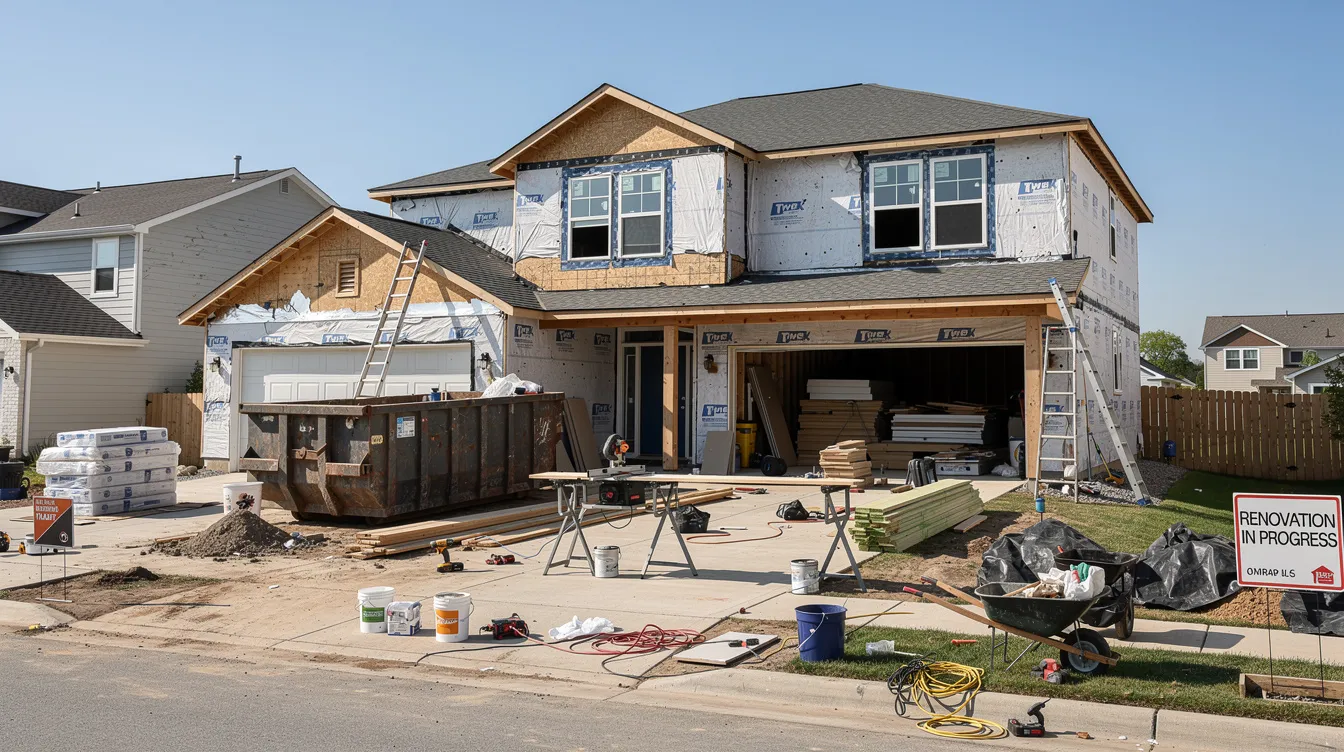
Real estate investors often use HELOCs for fix and flip projects and short term rentals. Common scenario: an investor with $200,000 in home equity on their primary residence pulls a $100,000 HELOC to pay down the existing mortgage (freeing up monthly cash flow) and reserves the remaining capacity for down payments and light rehabs on a BRRRR or short term rental deal.
At Gap Funded, we help close the funding gap in a stack that might include a HELOC for equity, 0% business credit card stacking for materials and soft costs, and unsecured term loans or business lines of credit for reserves and working capital. The typical "gap items" we cover: down payments, earnest money deposits, closing costs, rehab draws, inventory, equipment, and contingency reserves that primary lenders won't fund.
Most Gap Funded clients who succeed with this strategy have a FICO of 650 or higher, verifiable income or strong project numbers, and at least some home equity or personal credit capacity. Home improvements and renovations funded by HELOC borrowing can also increase property value, which feeds back into more equity.
When a HELOC Strategy Might Be a Good Fit (And When It's Not)
Think of this as a decision checklist.
Green lights:
- Relatively small remaining mortgage balance (under ~$150,000)
- High, stable income with a strong emergency fund
- Credit score 680+ and substantial home equity
- A clear 3 to 7 year payoff plan for the HELOC
- Mortgage rate well above current HELOC rates (7.5%+)
Red flags:
- High consumer debt loads or thin savings
- Unstable income (brand new business with no reserves, vacancy risk)
- A very low fixed rate mortgage (3% to 4%) compared with current HELOC rates
- Lack of budget discipline or no month by month repayment plan
- Hoping to use HELOC funds for home improvements and mortgage payoff simultaneously without enough equity
Turning low cost, long term mortgage debt into shorter term, variable HELOC debt is a form of leverage. Use it the way a smart investor uses leverage: deliberately, with a plan, and with reserves. Many homeowners who mainly want lower monthly payments and predictability are better served by recasting, refinancing, or making extra principal payments rather than replacing the loan.
I'd encourage consulting a fee only financial planner or mortgage professional to validate your plan, especially when your primary residence is on the line. I'm not a financial advisor, and your financial goals deserve proper professional input.
How Gap Funded Helps You Use a HELOC Safely and Close Your Funding Gap
Gap Funded is a capital stacking and gap funding partner for investors and entrepreneurs. We're not a bank, not a hard money lender, and we don't take equity splits or put liens on your deal property.
We help clients weigh whether using a HELOC to pay off or reduce a mortgage makes sense, or whether reserving that home equity for income producing opportunities is smarter. Sometimes the answer is "pay off the mortgage faster." Sometimes it's "keep the cheap debt and deploy equity into a deal that returns 15% to 20%."
We typically sequence tools in this order: first, tap lower cost options like 0% business credit cards for short term expenses. Then supplement with personal term loans or business lines of credit. Only then layer in a HELOC when it genuinely improves overall cash flow and risk profile. Sequencing matters because applying out of order can knock out later approvals.
No equity splits. Soft credit pulls for initial review, so no impact to your score. Fast execution so you can move on deals.
Want to see how other investors have balanced mortgage debt, HELOCs, and deal funding? Check out real world examples on our results page.
If you're sitting on home equity and wondering whether it should go toward killing your mortgage faster or funding your next deal, we can help you figure that out. No obligation, no hard sell. Just a clear picture of what fits.
Complete a quick funding application and strategy review here →
Related Reading
This article is for educational purposes only and isn't financial, legal, tax, or investment advice. Credit and financing outcomes depend on your own situation. Talk to a licensed financial professional before making funding decisions for your business.