
Nationwide Hard Money Lenders: How to Get Fast Funding And Cover the Gap

Nationwide Hard Money Lenders: How to Get Fast Funding And Cover the Gap
Most real estate investors hit the same wall. You find a deal, run your numbers, maybe even get a term sheet from a hard money lender, and then realise you're still short $25,000 to $50,000 in cash to actually close. The hard money loan covers most of the deal. But "most" isn't "all." This guide breaks down how nationwide hard money lenders work, what they actually fund, where the gap shows up, and how to fill it without giving up equity or slowing down your timeline.
Nationwide Hard Money Loans: What They Are And When To Use Them
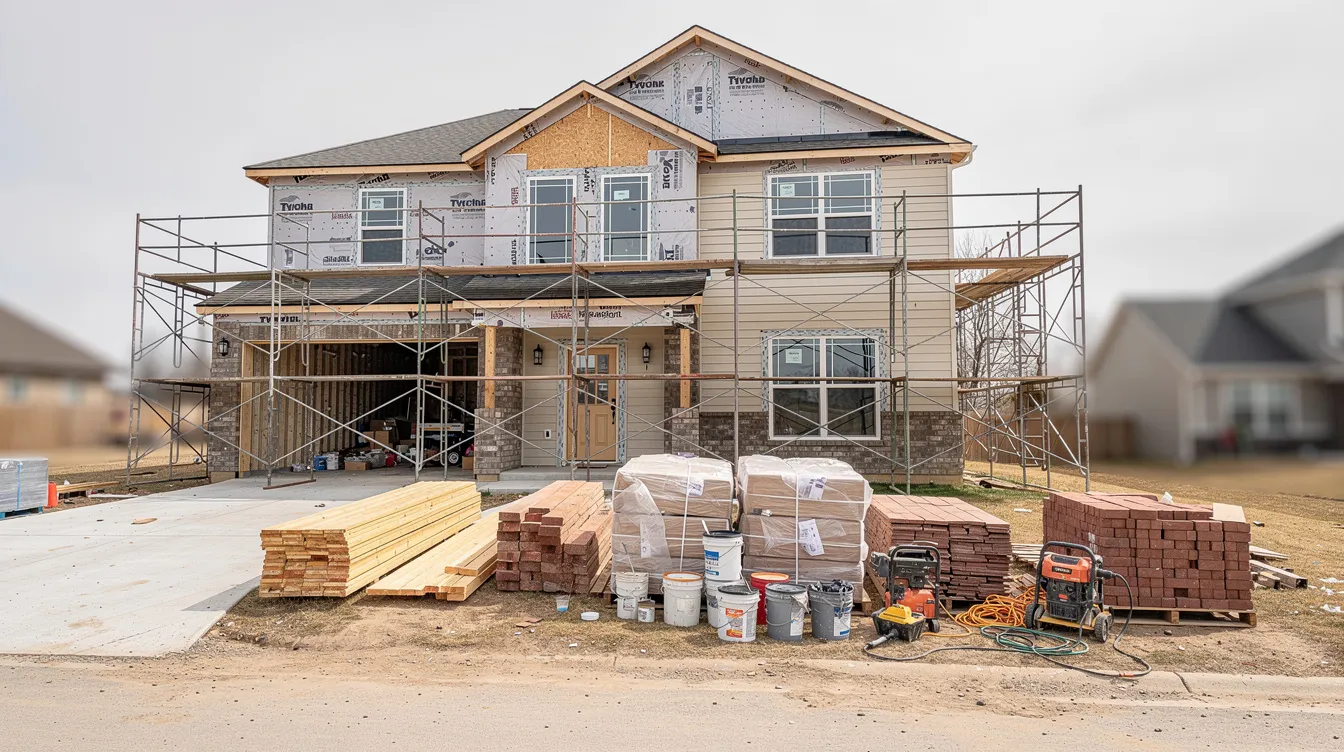
A hard money loan is a short term, asset based loan secured by an investment property rather than your income or credit history. Loan durations typically span from 6 to 36 months, as they are intended for temporary financing. These loans are often utilised by real estate investors, flippers, and developers who need rapid financing for fix and flip deals, bridge loans, rental properties, or ground up construction.
Nationwide hard money lenders are specialised private companies or investment funds that provide short term, asset based real estate loans. They differ from purely local lenders in a few key ways:
- They operate across 40+ states (sometimes all 50), offering standardised loan programs with more predictable rates, closing speed, and documentation requirements
- They tend to have deeper capital reserves, which means smoother rehab draw schedules and fewer surprises mid project
- They must navigate state specific licensing requirements and regulations governing real estate lending, so they vary in their geographic coverage and state specific restrictions
Hard money loans typically close in 7 to 10 days. Many nationwide lenders advertise five to seven days when documents, appraisal, and title are squared away. Transactions usually close within 5 to 14 days, compared to traditional bank mortgages that close in 30 to 90 days. That speed makes them ideal for auctions, distressed properties, and competitive offers where a seller won't wait around for your bank to finish reviewing tax returns.
Key characteristics worth knowing:
- Hard money loans are for investment properties only. No owner occupied homes
- Eligible property types include single family, multi family, and commercial. Hard money loans can also finance mixed use properties
- Loan to value ratios for hard money loans are generally capped at 75% of after repair value, though loans can cover up to 90% of purchase and rehab costs for experienced investors
- Hard money loans can fund up to 100% of renovation costs in many programs
- No minimum FICO score is required for hard money loans, because hard money lenders focus on property value, not borrower credit
- Interest only payments with a balloon at maturity
How Nationwide Hard Money Lenders Work vs Banks
A traditional bank loan takes 30 to 45 days to close on a good day. Banks demand full income documentation, strict debt to income ratios, extensive credit history review, and your firstborn's school records (I'm joking about the last one, but only barely). Hard money lending flips this model. Hard money loans can be funded in 7 to 10 business days, and some hard money lenders can approve loans in 24 hours.
"Asset based" means the underwriting is weighted toward:
- The purchase price relative to current market value
- The projected after repair value (ARV) and your rehab budget
- Your exit strategy (flip, refinance, rent)
- Your experience as an investor (secondary, but still matters)
Hard money loans are secured by the property's value, not credit history. Borrowers can receive funding without income verification in many cases. Hard money loans often require less documentation than traditional loans. That said, the trade off is higher interest rates and shorter terms.
Here is how they compare side by side:
| Feature | Traditional Bank Loan | Hard Money Loan |
|---|---|---|
| Closing time | 30 to 45+ days | 5 to 14 days |
| Underwriting focus | Income, DTI, FICO, tax returns | Property value, ARV, exit strategy |
| Loan term | 15 to 30 years, amortising | 6 to 24 months, interest only + balloon |
| Interest rates | 4% to 7% | 8% to 15% |
| Documentation | Extensive | Minimal to moderate |
Hard money loans are often structured as interest only payments with a lump sum balloon payment at the end. For example, an investor in Texas might use a nationwide hard money lender for a $300,000 fix and flip. They pay interest only monthly for 9 months at 11%, sell for ARV of $420,000, repay principal, and keep the profit. Hard money loans can be beneficial for quick transactions, especially when conventional financing is unavailable or too slow.
Key Hard Money Loan Programs (Fix and Flip, Bridge, Ground Up & Rentals)
Nationwide hard money lenders usually offer multiple distinct loan programs, not just one generic product. They calibrate pricing, leverage, and documentation based on the deal type.
- Fix and flip loans: Short term (6 to 12 months), designed for distressed or value add residential properties. Lenders fund purchase plus rehab. Hard money loans can fund up to 90% of purchase and rehab costs, with ARV caps usually at 70% to 75%. Hard money loans are often used for fix and flip projects, and this is the bread and butter of the industry
- Bridge loans: Used for transitional situations like buying before selling, or holding while you arrange a DSCR or bank refinance. Terms run 12 to 24 months, rates similar or slightly lower depending on risk, and leverage often 60% to 75% of current value
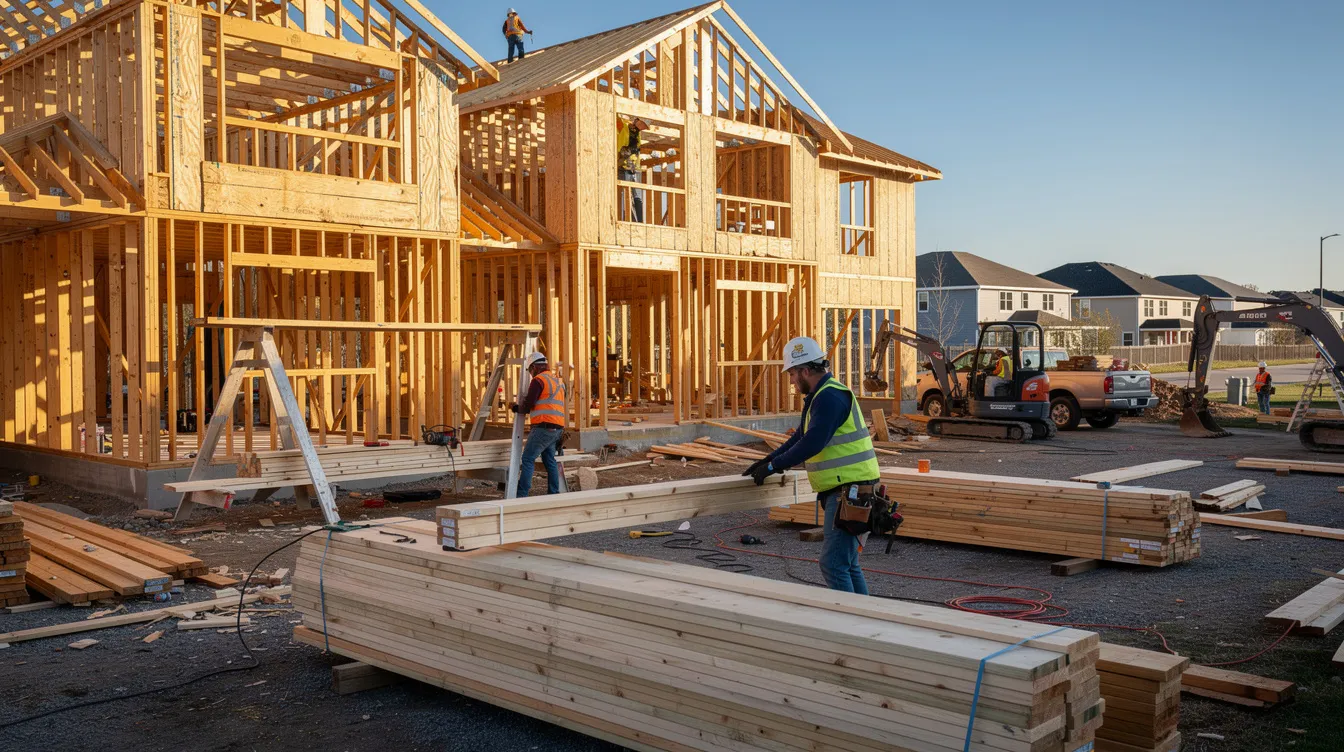
- Ground up construction: Much more scrutiny here. Lenders require detailed budgets, permits, an experienced general contractor, and phased draws. Leverage is typically expressed as loan to cost (LTC) rather than LTV, maxing out around 70% to 75%. Some lenders focus exclusively on residential investment properties while others may offer commercial financing for larger builds
- Rental loans and long term rental loans: Some nationwide hard money lenders offer DSCR style programs as exit strategies after rehab. These carry 20 to 30 year terms, rates around 6% to 8%, and qualification based on the property's rental income rather than personal income. Think of these as the "what comes after" the hard money loan
Typical Hard Money Loan Requirements With Nationwide Lenders
While hard money is more flexible than a traditional mortgage, nationwide hard money lenders still have clear hard money loan requirements. Don't mistake "flexible" for "anything goes."
Property requirements:
- Non owner occupied residential properties (single family homes, 1 to 4 units)
- Some lenders also fund small multi family, mixed use, or commercial properties
- Property type matters: condition must allow rehab, and bare land typically gets lower leverage
Borrower profile:
- Credit scores of 620 to 680+ get the best terms, though no minimum FICO is technically required for many lenders
- Borrowers must demonstrate a viable exit strategy before funds are disbursed
- Borrowers are often required to show liquidity reserves or proof of funds when seeking hard money loans
- Borrowers must provide a substantial down payment typically ranging from 20% to 40% at closing
- Documented real estate investing track record helps considerably
Experience tiers:
- First time investors (0 to 2 completed deals) face stricter leverage caps, higher rates, and more points
- Experienced investors (5+ deals) unlock better LTV and ARV caps, lower rates, and faster processing. A seasoned investor with 10+ flips under their belt will get very different pricing than someone on deal number one
Documentation checklist:
- Purchase contract
- Rehab scope and budget with estimates
- Property photos or inspection reports
- LLC documentation if using a business entity
- Sometimes tax returns or bank statements, even though the loan is asset based
Borrowers can receive funding in as little as 2 to 3 weeks from initial application to closing in most cases.
Interest Rates, Fees, And True Cost of Hard Money
Hard money interest rates are higher than bank loans. That's the deal you make for speed, flexibility, and fewer hoops. If someone tells you otherwise, they're selling something. Budget for all costs, not just the headline rate.
Interest rates for hard money loans range from 7% to 18%, with commonly used rates falling between 8% to 15% per annum. HMDA data from 2025 showed a median note rate of 9.99% across roughly 68,319 short term investor loans. Non bank lenders (which make up about 84% of this market) had a median around 10.25%.
Here is what makes up your true cost:
- Origination fee: 1 to 4 points (1 point = 1% of the loan amount). This is an upfront fee, paid at closing
- Processing and underwriting fees: Vary by lender, sometimes bundled into points
- Appraisal or BPO (Broker Price Opinion): Typically $400 to $1,500
- Lenders may charge various fees, including appraisal, inspection, and legal fees, affecting overall borrowing costs
- Extension fees: If your project runs past the original loan term, expect to pay for extra time
- Prepayment penalties: Less common but do exist with some lenders
- Monthly payments: Interest only, calculated on drawn balance or total commitment depending on the lender
Hard money lenders charge higher fees compared to conventional loans due to elevated risks. But here is the thing most people miss: closing in 7 days at 11% can still be cheaper than missing a deal entirely while waiting 45 days for a bank at 6.5%. The exit strategy is crucial for hard money loans, particularly if renovation timelines extend beyond expectations.
Where the Funding Gap Appears With Nationwide Hard Money Lenders
This is the part most articles about hard money skip, and it's the part that matters most to your bank account. Even after you're approved by a nationwide hard money lender, they rarely fund 100% of total project costs. The "funding gap" is real, and it catches investors off guard constantly.
The most common gaps include:
- Down payment: If the lender funds 80% to 90% of purchase price, you still need 10% to 20% in cash. On a $300,000 property, that is $30,000 to $60,000 out of pocket
- Closing costs: Title insurance, escrow, lender upfront fees, transfer taxes. Easily $5,000 to $15,000
- Rehab cost overruns: The lender approved $60,000 in rehab costs but the project runs $8,000 over. That is on you
- Earnest money deposit (EMD): Often 1% to 3% of purchase price, due when you sign the contract, before the lender has even started underwriting
- Carrying costs: Monthly payments, property insurance, utilities, and taxes during the hold period
Concrete example: You're buying a $250,000 property with $60,000 in rehab. Your nationwide hard money lender covers 90% of purchase ($225,000) and 100% of rehab ($60,000). You still need $25,000 for the purchase gap, plus roughly $5,000 to $10,000 in closing costs, plus $5,000 to $10,000 in reserves. Total gap: $35,000 to $45,000. That's real money most investors don't have sitting idle, especially if they're scaling across multiple deals.
This gap blocks newer investors and those growing quickly, even when the deal itself is solid and the lender has already said yes.

How Gap Funded Complements Nationwide Hard Money Lenders
Gap Funded is not a hard money lender. We don't compete with your primary lender. We're a capital stacking partner that works alongside whatever hard money lender you choose, filling the shortfall they leave behind.
Our gap funding solutions cover the items your hard money lender won't: down payments, closing costs, rehab reserves, EMD, and working capital during the project.
Here is what sets Gap Funded apart from other capital partners:
- No equity splits. We don't ask for ownership in your deal
- No liens on the deal property. Our funding is unsecured or secured against a separate asset you already own
- Soft credit pulls initially, so checking your options has no impact to your credit profile
- Speed that matches hard money closing timelines
- Works with any hard money lender, any state, any deal type
Typical borrower profile: FICO of 650+, verifiable income or strong stated income, and investors doing fix and flip, BRRRR, short term rentals, or ground up deals. If your credit score is below 650, we'll be upfront about what is and isn't possible.
The Capital Stack: Hard Money First, Gap Funding Second
The "capital stack" is every layer of financing you use to complete a deal. The order matters more than most investors realise, and getting it wrong can knock out your later approvals. For a deeper look at this concept, check out our guide on capital stacking strategies.
Step 1: Secure primary financing. A nationwide hard money lender or DSCR lender funds the bulk, typically 70% to 90% of purchase plus rehab. This is your first lien position and the foundation of the stack.
Step 2: Fill the gap with unsecured tools. Gap Funded supplies the remaining 10% to 30% plus soft costs using personal term loans, 0% introductory business credit card stacking, HELOCs, or business lines of credit.
Why this order?
- Primary lenders want to see your "skin in the game" as cash or clean capital, not subordinate liens
- Unsecured gap funding doesn't interfere with the primary lender's collateral claim on the property
- Using equity partners or other lien based capital can complicate title and dilute your profits
Example capital stacks:
| Component | Percentage | Source |
|---|---|---|
| Hard money loan | 80% | Nationwide lender |
| Gap funding | 15% | Gap Funded unsecured tools |
| Investor cash | 5% | Personal reserves |
Or for a more aggressive stack with an experienced investor: 85% hard money, 10% Gap Funded, 5% EMD and reserves from savings.
Qualification realities: FICO of 650 to 700+, clean recent credit history (no recent delinquencies), and manageable existing debt will open access to larger unsecured limits.
Funding Tools Gap Funded Uses To Close the Gap
Gap Funded uses multiple complementary tools rather than a single product. Which ones you use depends on your credit profile, existing debt, income, and what the deal needs.
- Debt consolidation: Before stacking new capital, we often start here. Reducing existing monthly obligations frees up capacity for new approvals and improves your debt to income ratio. This step is about sequencing, and it matters more than most people think
- Rapid gap funding (unsecured personal term loans): Multi year amortising loans used for down payments, rehab buffers, or reserves. No property lien required. These are the workhorse of our gap funding toolkit
- 0% credit card stacking: Multiple newly issued business credit cards with introductory 0% APR periods, structured specifically for real estate investors and new business owners. Great for seasoning cash or covering short term capital needs
- HELOC on existing property: When you have equity in a home or investment property, a HELOC can provide flexible, lower cost capital. Best for investors who already own real estate
- Business line of credit and [business term loans](http://gapfunded.com/business-term-loans):** For established businesses with 2+ years operating history and $20,000+ per month in revenue. Revenue based options that scale with your business
The sequence matters. Applying for these tools out of order can reduce your approval amounts or knock out later products entirely. That's why we build a customised funding plan before you submit a single application.
Real World Scenarios: Pairing Nationwide Hard Money With Gap Funding
Theory is fine. Numbers are better. Here is how real capital stacks come together.
Scenario 1: Fix and flip in Atlanta (2025) Purchase price: $300,000. Rehab costs: $70,000. A nationwide hard money lender funds 85% of purchase ($255,000) and 100% of rehab ($70,000). The investor still needs roughly $45,000 for the down payment, plus $10,000 to $15,000 for closing costs and contingency. Gap Funded supplies $60,000 through unsecured personal term loans. Investor brings about $5,000 in cash. Total loan amounts covered. Project completes in 7 months, property sells for $430,000.
Scenario 2: BRRRR duplex in Indianapolis (early 2026) A nationwide hard money lender covers 80% of purchase plus rehab. The investor uses Gap Funded credit card stacking at 0% to season cash for the down payment over 60 to 90 days. After rehab and tenant stabilisation over 9 to 12 months, the investor refinances into a DSCR loan and pays off both the hard money and the credit cards. Clean exit, no equity given up.
Scenario 3: Ground up construction in a secondary Florida market A builder with limited liquidity secures construction hard money at 75% LTC. Early costs like permits, site prep, and materials need funding before the first draw. Gap Funded provides a business line of credit and unsecured term loan to cover those early expenses and bridge the gap until draw reimbursements kick in.
Scenario 4: Short term rental near a major tourist market A rental loan finances 75% to 80% LTV on the purchase. Gap Funded supplies capital for furniture, design, permit and licensing costs, initial marketing, and reserves until the short term rental becomes cash flow positive. The investor keeps 100% of the property's equity.
Choosing the Best Hard Money Lender For Your Strategy
The best hard money lenders for your deal depend on your project type, experience, leverage needs, and where you're investing. There is no single "best" lender for everyone.
When comparing nationwide hard money lenders, focus on:
- Closing time: Some top lenders deliver. Easy Street Capital can fund loans in as little as 48 hours. HouseMax Funding closes loans in 10 days or less. Kiavi claims to close loans in as little as 10 days
- Max loan and leverage: RCN Capital offers loan amounts up to $10 million for investment property. Lima One Capital (sometimes listed as Capital Lima One Capital in directories) lends up to 90% of purchase and rehab costs
- Geographic coverage: Sherman Bridge Lending offers loans in over 15 states. Others like Park Place Finance and Easy Street Capital cover broader territories. Nationwide hard money lenders vary in their geographic coverage and state specific restrictions
- Loan programs offered: Fix and flip loans, bridge loans, rental loans, ground up construction. Make sure the lender has a program that matches your strategy
- Repayment terms and flexible terms: Look at extension options, prepayment penalties, and how rehab draws are handled
Compare total project cost of capital across multiple lenders, not just the advertised rate. And I reckon the most important thing is whether the lender actually performs. Plenty of lenders advertise competitive rates and fast funding but take three weeks to close and nickel and dime you with fees along the way.
Because Gap Funded is lender agnostic, you can pair our capital stack solutions with whichever hard money lender fits your deal. Local, regional, or nationwide. Your call.
Risk Management: Avoiding Common Hard Money Pitfalls
The speed and flexibility of hard money can backfire if you mismanage timelines, budgets, or your exit strategy. I've seen plenty of investors get excited about fast funding and skip the boring planning work. Don't be that person.
Key factors to watch:
- Don't overestimate ARV. Use conservative comps, not the one outlier sale on the street. A property appraisal based on wishful thinking will cost you
- Don't underestimate rehab costs. Add 10% to 15% as contingency. Always. Materials get more expensive, contractors find surprises behind walls, and timelines slip
- Don't assume refinance is guaranteed. DSCR loan rates and requirements change. If your BRRRR exit depends on refinancing at a specific rate, model a worst case where rates are 1% to 2% higher
- Don't push leverage to the max without reserves. It's better to accept slightly lower LTV and keep a cash cushion than to fund every last dollar and have nothing left when the unexpected happens
- Be cautious stacking high interest debt. Combining hard money at 11% with expensive gap capital from multiple providers can spiral. Debt consolidation before you stack new capital is often the smartest first move
Using Gap Funded for contingency and reserves, not just the bare minimum down payment, reduces the risk of default or forced sale. Real estate investment opportunities are only profitable if you can actually see them through to the finish line.
How To Apply With Gap Funded (Next Steps)
You can check your gap funding loan options in minutes with no impact to credit, whether you've already got a hard money term sheet or you're still shopping for a lender.
Here is the application process:
- Gather your basics: estimated credit score, income, current debts, and deal details (purchase price, rehab budget, location)
- Complete the quick online application at gapfunded.com/apply
- Schedule a funding review with our team. We typically respond same day or within 24 business hours
- We build a sequenced funding plan that aligns with your hard money lender's closing dates
For brokers, wholesalers, and hard money lenders who want a reliable gap funding partner for your clients, head to gapfunded.com/partners.
If you've got the deal and the hard money approval but not the cash to close the gap, that's exactly what we built Gap Funded for. No equity splits. No liens on your deal. Just the capital you need to secure financing and get to the closing table. Apply and see your options today.
Related Reading
This article is for educational purposes only and isn't financial, legal, tax, or investment advice. Credit and financing outcomes depend on your own situation. Talk to a licensed financial professional before making funding decisions for your business.