
National Hard Money Lender: How to Fund Deals Anywhere in the U.S. (and Cover the Gap)

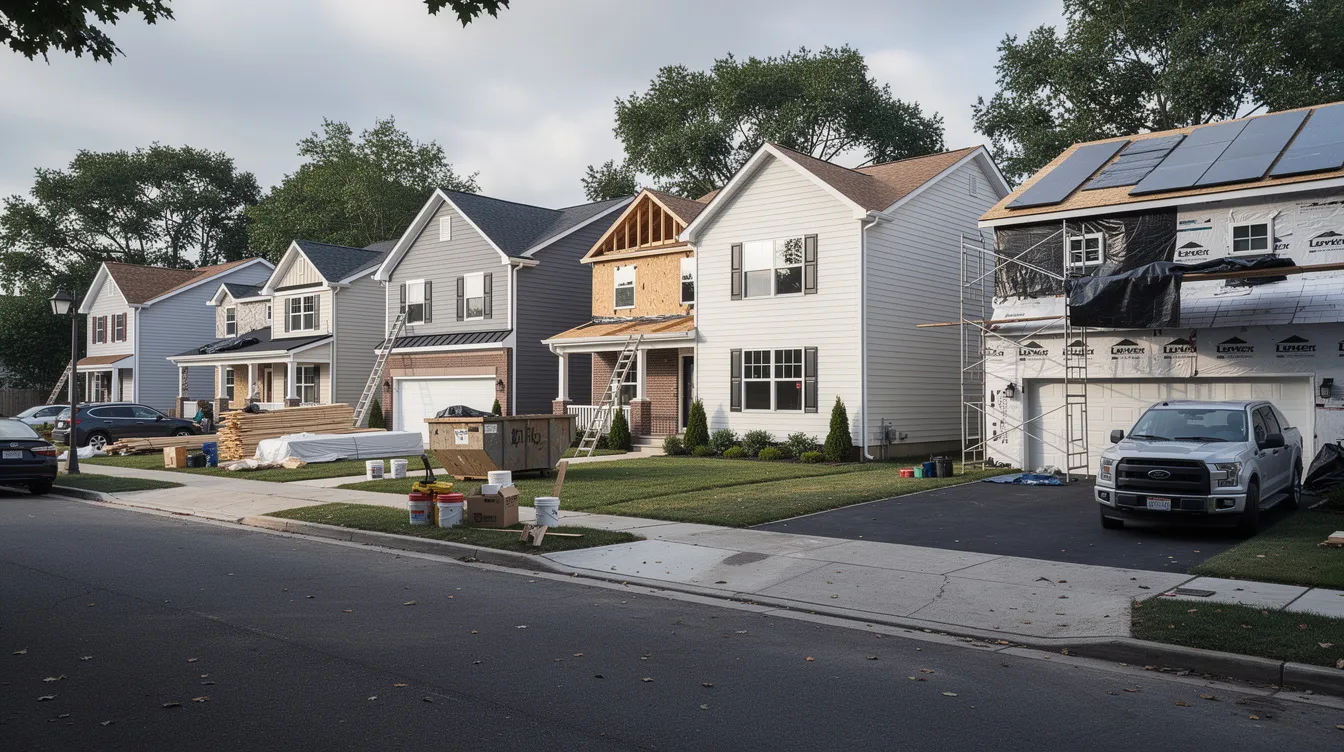
National Hard Money Lender: How to Fund Deals Anywhere in the U.S. (and Cover the Gap)
Why Real Estate Investors Look for a National Hard Money Lender
You found a deal in Phoenix. Then another in Atlanta. Maybe a third in Columbus. Each one pencils out beautifully on a spreadsheet, but now you need three different lenders in three different states, each with their own quirks, paperwork, and timelines. That gets old fast.
A national hard money lender solves that headache. These are firms licensed to originate asset based lending across dozens of states, using standardised underwriting, consistent loan programs, and established draw systems so you can deploy capital in multiple markets without rebuilding relationships from scratch every time. National hard money lenders provide asset based real estate loans across multiple states, which is exactly why they've become the go to for real estate investors scaling beyond their backyard.
Hard money lending fits squarely into real estate investment strategies like fix and flip, BRRRR, short term rentals, and ground up construction. In hot markets like Phoenix (strong ARV potential), Atlanta (deep rental demand), and Columbus (low entry price with healthy rehab spreads), a single national platform can serve all three. Hard money loans are ideal for time sensitive real estate transactions where speed makes all the difference.
But here's the part most people gloss over: even the best hard money lenders rarely cover 100% of the total project cost. There's always a funding gap. Down payment, closing costs, rehab overages, holding reserves, earnest money deposits. That gap can reach 30% to 40% of the purchase price before you've swung a hammer.
That's where Gap Funded comes in. We're a nationwide capital stack partner that works alongside hard money lenders to close that gap. No equity splits. No liens on the deal property. Just unsecured and asset based tools designed to get real estate investors across the finish line.
This article covers how hard money financing works nationally, how to choose the right lender, where the common funding gaps show up, and how Gap Funded fills them with the right tools in the right order.
What Is Hard Money Lending on a National Scale?
Hard money lending is asset based financing secured by real estate. Hard money loans focus on the property's value, not credit scores or mountains of tax returns. The lender cares most about the purchase price, the rehab budget, and the after repair value. Your personal income matters less than whether the deal makes mathematical sense.
What separates a national hard money lender from a local shop:
- State licensing at scale. They maintain lending licences across many states, from IA KS KY LA through to MD MA MI and WA WV WI, with compliance teams that understand each jurisdiction's usury caps, closing rules, and lien laws.
- Standardised loan programs. Instead of custom one offs, they build repeatable product buckets: fix and flip, bridge, rental, construction. Each has set LTV caps, draw schedules, and underwriting templates.
- Consistent underwriting process. Whether you're buying in Jacksonville or Indianapolis, the approval process follows the same steps, which means faster scaling for repeat investors.
- Tech driven platforms. National hard money lenders can utilise tech driven platforms to streamline the underwriting process, from application intake to draw management.
A concrete example: the same national lender might offer a 12 month fix and flip loan in Florida at 10.5% interest only and a 30 year DSCR rental loan in Indiana at 7.5% fixed. Two completely different loan programs under one roof.
Traditional banks don't touch most of these deals. They require extensive documentation, months of processing, and won't fund distressed properties. National private lenders fill that void with speed and flexibility. Local hard money shops do too, but they're limited to one market, which means starting over every time you cross a state line.
Key Loan Types Offered by National Hard Money Lenders
Not all hard money is the same. Here are the main loan programs you'll find from a national platform:
Fix and flip loans. Niche loan products offered by hard money lenders include fix and flip loans, which provide short term interest only financing (typically 6 to 18 months) for purchase plus rehab, underwritten against ARV. These are the bread and butter for many investors. The average gross profit for fix and flip investments in New York is $97,000, which shows why these deals attract capital. Markets like Cleveland, Jacksonville, and Texas see heavy volume.
Bridge loans. Niche loan products also include bridge loans, which provide quick access to capital for time sensitive opportunities. These run 6 to 24 months and cover the gap between purchase and permanent financing, often used when properties need light repositioning or lease up before qualifying for long term financing.
Rental and DSCR loans. These are long term (usually 30 year fixed or ARM) loans underwritten primarily on the property's rental income. DSCR loans focus on rental income rather than personal financials, making them ideal for buy and hold investors building a rental portfolio. New York's rental rates increased by 9% year over year in 2023, and home values in New York rose by 5.4% year over year, both factors that strengthen DSCR underwriting in strong markets.
Construction loans. These fund land plus vertical build for ground up construction projects, typically with interest only options during construction and a clear exit strategy to sale or DSCR refinance.
Transactional and EMD financing. Some investors pair hard money with transactional lending or earnest money deposit loans to control deals quickly. Hudson Valley saw a 12% increase in homebuyer interest in 2023, and 68 million tourists visited NYC in 2023, boosting short term rental demand. Markets like these reward investors who can move fast.
For a fuller picture of how these loan types sit in the overall capital stack, check out our hard money overview.
How National Hard Money Lenders Underwrite Deals
The underwriting process for hard money is refreshingly different from a conventional loan. No one is asking for three years of tax returns and a letter explaining that $47 deposit in March.
Here's what national lenders actually focus on:
- Collateral first. The property's value drives everything. Lenders assess the property's after repair value during approval, pulling local comps and running ARV models. Hard money loans are secured by the property's value.
- LTV and LTC structures. Many hard money lenders offer LTV ratios up to 70% to 80% of ARV. A common structure: 85% of purchase price plus up to 100% of rehab costs in draws, but capped at 70% of ARV. Investors can borrow up to 80% of the property's after repair value in stronger programs.
- Borrower requirements. Minimum FICO is often 620 to 660 for the cleanest programs. Basic liquidity, some real estate investing experience (or partnering with an experienced GC), and a viable exit strategy. A business entity is typically required to secure loans from national hard money lenders. A solid business plan increases your chances of loan approval.
- The application process requires a purchase contract and appraisal. Documentation includes renovation plans if applicable, scope of work, and budget breakdowns.
- Speed. Hard money loans can close within days, unlike traditional loans. Typical closing runs 7 to 21 days, with well prepared deals sometimes funding faster.
Even when a lender advertises "up to 90% LTC," investors still need real cash or gap funding for the remaining 10% to 20% plus closing costs and reserves. That's the maths many investors miss until they're staring at a "cash to close" figure.
Pros and Cons of Using a National Hard Money Lender
Advantages:
- Consistent loan terms across multiple states, so you're not relearning a new lender's playbook every deal
- Larger loan limits for bigger fix and flip projects, multi family properties, or ground up construction
- Established servicing and draw systems with predictable timelines
- Ability to scale from one flip to a rental portfolio or multi state strategy without rebuilding lender relationships
- Hard money loans offer higher loan to value ratios than traditional loans, giving investors more initial leverage
Trade offs:
- More rigid guidelines than some local private lenders. Strict leverage limits, standardised rehab budgets, and capped credit score minimums leave less room for creative structuring
- Most national lenders still won't fund 100% of total project cost. You'll need own funds, partners, or a gap funding solution
- Interest rates for hard money loans range from 7% to 15%, and higher interest rates can significantly increase overall borrowing costs on longer holds
- Short loan terms increase the risk of foreclosure if delays occur. The typical loan term for hard money is short term lasting from 6 to 36 months
- A decrease in property value can jeopardise your investment, especially in cooling markets
- National teams may feel less hands on than a single local decision maker, particularly on unconventional properties
Common Funding Gaps: Where National Hard Money Lenders Stop
The "funding gap" is everything you need to close and complete the deal that the hard money lender doesn't cover. It's often bigger than people expect.
- Down payment. Hard money loans often require a down payment of 10% to 20% of purchase price. Some programs push that to 25% to 30% for riskier assets or new investors.
- Closing costs. Origination fees (2 to 5 points), title insurance, appraisal ($400 to $1,200), recording fees, attorney fees, inspections. These can add 3% to 7% of the loan amount. Watch for hidden fees buried in fine print.
- Rehab shortfalls and change orders. Cost overruns on labour and materials that exceed original budgets, especially in 2024 to 2026 inflationary environments. National lenders offer financing for distressed or uninhabitable properties needing heavy renovation, but the budget still has limits.
- Holding costs and reserves. Taxes, utilities, interest payments, and lender required reserves. These aren't financed in the loan.
- Working capital. Marketing, staging, travel, business overhead. None of that appears in a rehab budget.
- Earnest money deposits. Cash needed within 24 to 72 hours to control a contract, typically 1% to 3% of purchase price, well before the formal approval process wraps up.
On a $200,000 purchase with hard money at 80% LTV, the total gap can exceed $65,000 when you stack all these line items together.

Choosing the Best Hard Money Lender for Multi State Investing
Finding the right lender takes more than Googling "largest hard money lenders." Here's a practical checklist:
- Coverage. Confirm the money lender is licensed and active in every state you target. Some advertise "nationwide" but only support investment properties in certain states. Check whether they cover your asset class: 1 to 4 units, small multifamily, mixed use.
- Loan terms. Compare interest rates, origination fees, maximum LTV and LTC, rehab draw schedules, prepayment penalties, and extension policies across several national lenders. Competitive rates matter, but so do flexible terms on extensions if your project timeline slips.
- Loan type fit. Verify they support your core strategy. Fix and flip loans, BRRRR into DSCR, short term rentals, or ground up construction, in the markets you target. Not every lender does every loan type in every state.
- Approval process. Evaluate speed. Hard money loans can often be funded within a few days for straightforward deals. Look for conditional approvals within 48 hours, soft credit pulls at pre approval, and minimal documentation burden.
- Reputation. Talk to individual investors and local operators. A knowledgeable lender who closes on time and funds draws reliably is worth more than one with the lowest rate who ghost their borrowers mid project. Choosing a lender with local expertise is essential for success, even within a national platform.
- Coordination with gap funding. Confirm they permit secondary unsecured financing alongside their first lien position. Not all do, and your capital stack needs to be compliant with their guidelines.
National Hard Money Lender vs Local Private Lenders
This isn't a cage match. Both have their place.
National lenders bring scale, standardised underwriting, broader loan programs, and the ability to serve investors across multiple cities. If you're doing cookie cutter flips or building a rental portfolio across three states, a national platform makes life simpler.
Local private lenders and private money lenders shine on flexibility. A direct hard money lender in Indianapolis might fund an odd mixed use property that a national underwriter would decline. Private investors with local knowledge can sometimes move faster on quirky deals. Local lenders can sometimes close within 3 to 5 days based on personal relationships, while well established national lenders consistently hit 7 to 14 days.
Hard money loans can often be funded within a few days regardless of lender type, but the key difference is how they handle exceptions.
The honest truth: regardless of whether you pick a national or local lender, you still face the same funding gaps. Down payment, closing costs, rehab float, reserves. The lender type changes; the maths doesn't.
Gap Funded's role is national. We sit alongside both local and national lenders as a separate gap capital provider, accessible online. No matter who your primary lender is, we fill what they don't cover.
How Gap Funded Complements National Hard Money Lenders
Gap Funded does not replace your primary hard money lender. We wouldn't want to. What we do is provide unsecured and asset based funding to cover the stuff they leave on the table: down payment, rehab overages, closing costs, and working capital.
Here's what that looks like:
- Real estate investors and small business owners with FICO typically 650 and above and verifiable income or revenue are best positioned to qualify
- No lien on the deal property. Your hard money lender stays in first position; we don't compete with them
- No equity splits. You keep 100% ownership of your real estate deals
- Soft credit pulls let you see your options without impacting your score
- Investors can close more deals simultaneously, reduce personal cash exposure per project, and move faster when national lenders approve only part of the capital stack
Browse the full menu of tools we pair with hard money, or go straight to the application for a no obligation funding review.
Unsecured Gap Funding: Term Loans and Credit Card Stacking
Unsecured tools go first in the stack for a reason: they fund fast, they don't touch the subject property, and they don't interfere with the hard money lender's lien position.
Personal and business term loans are the workhorse. Used for down payments, earnest money deposits, and light rehab costs. These are unsecured, can close in days, and give you flexible use of proceeds. Many investors use them to secure funding before the hard money lender even completes their entire process. More detail on how these work is here.
Business credit card stacking is the second tool. This involves obtaining multiple 0% introductory APR business credit cards to create $50K to $150K or more of working capital for materials, contractors, marketing, and staging. It sounds unconventional until you realise 0% interest for 12 to 18 months beats paying 11% on a hard money draw you don't need. Learn more about credit card stacking.
Typical borrower profile: 650 to 700 or higher FICO, solid personal credit history, stable income, and responsible financial history. Soft pulls let you check approvals before committing.
These unsecured tools align perfectly with fix and flip and BRRRR strategies because they're quick, flexible, and designed for short term capital needs.
Asset Based Capital: HELOCs, DSCR Loans, and Hard Money
Once you move past unsecured tools, asset based capital provides larger, often cheaper funding tied to property you already own.
A HELOC on a primary residence or investment property gives you a reusable line of credit for down payments and rehab across multiple deals. If you've got equity sitting idle, this is one of the most cost effective ways to fund gap capital. Use our HELOC calculator to see what you might qualify for.
DSCR loans serve as the long term exit strategy from hard money for rental property holds. After you stabilise a property and get tenants in place, you refinance from the short term hard money loan into a 30 year DSCR loan based on long term rental income, not your personal income or tax returns. DSCR rates typically run 7% to 9%, a fair whack cheaper than the 9% to 13% you're paying on hard money.
The lifecycle looks like this: hard money for acquisition and rehab, unsecured gap funding to close the deal, then DSCR or HELOC based solutions as part of the exit strategy. Each tool has a job, and sequencing matters because applying out of order can knock out later approvals.
Realistic expectations: DSCR and HELOC products require stable credit, verifiable income or rental performance, and sufficient property equity. These aren't day one tools for new investors with no track record.
Revenue Based Capital for Real Estate Focused Businesses
If you run a contracting business, property management company, or any revenue producing operation alongside your investing, you've got another set of tools available.
- Merchant cash advance and business lines of credit are underwritten on business revenue rather than personal collateral. No lien on the subject property.
- Business term loans can cover payroll, materials, and marketing during active fix and flip or construction projects.
Ideal profile: at least 2 years in business and $20K or more monthly revenue for most revenue based capital programs, plus responsible cash flow management to handle daily or weekly payments where applicable.
These aren't stand alone solutions. Treat them as part of your overall capital plan. Private loans and revenue based tools work best when mapped out alongside your hard money and unsecured stack during a funding review call.
Building a Complete Capital Stack for Fix and Flip and BRRRR Deals
Let me walk through the numbers on a real deal structure.
Fix and flip example:
- Purchase price: $200,000
- Rehab budget: $60,000
- ARV: $320,000
- Hard money loan: 70% of ARV = $224,000 (covers purchase plus partial rehab)
- Total project cost: $260,000 plus closing costs, holding costs, reserves
- Funding gap: roughly $36,000 in purchase and rehab overage, plus $7,000 to $10,000 in closing costs, $10,000 to $15,000 in first rehab draw float, plus holding costs
That's potentially $65,000 or more the hard money lender doesn't touch. Unsecured term loans handle the down payment and earnest money deposit. Credit card stacking covers materials and contractor payments during the rehab draw float. The hard money loan covers the majority of purchase and construction costs.
BRRRR example:
- Acquire with hard money at 75% ARV
- Rehab funded by draws plus gap capital from unsecured tools
- Lease the property and stabilise cash flow
- Refinance into a DSCR loan based on rental income
- Recycle capital into the next deal
Planning your exit strategy upfront (sell, refi, or portfolio hold) determines which Gap Funded tools fit best. Flip loans need short term unsecured capital. Rental holds need HELOC or DSCR exits.
All funding is debt based. No equity splits. No giving away ownership in your real estate investing deals. That's non negotiable for us.

Risk Management, Exit Strategy, and When Not to Use Hard Money
I'd be doing you a disservice if I didn't say this plainly: not every deal is a fit for hard money lending, and not every investor should be stacking additional leverage on top of it.
Scenarios where hard money may not be ideal:
- Thin profit margins where even a small cost overrun wipes out your return
- Unstable local markets where property value could drop mid project
- Investors without a realistic rehab plan, experienced contractors, or a clear exit strategy. A solid exit strategy is crucial for hard money loan success.
- Many investors underestimate timelines, rehab costs, or market shifts. Over leveraging with both hard money and gap funding amplifies that risk.
Conservative ARV estimates, contingency budgets (10% to 15% of rehab at minimum), and backup exit strategies (convert to long term rental instead of selling) are your safety nets. Experienced investors know this. New investors need to hear it.
If existing high interest obligations are choking your cash flow before you even start a new project, consider debt consolidation first. Cleaning up your financial position before stacking new capital is almost always the smarter move.
I'd rather you submit a deal, walk through the numbers with us, and decide it's not the right time than watch you over extend into a project that doesn't pencil out.
How to Start: Approval Process with Gap Funded
Here's what happens when you're ready to pair a national hard money lender with Gap Funded:
- Apply online at gapfunded.com/apply. Basic personal information, credit profile, deal details, and your existing lender terms if you've already got a hard money commitment.
- Soft credit pull. We check your options for gap funding, unsecured term loans, credit card stacking, HELOCs, or revenue based capital without impacting your scores.
- Funding review call. We design the capital stack, figure out which tools fit in which order, and coordinate with your primary hard money lender on timeline.
- Fund and close. You get the capital you need to cover the gap, close the deal, and get to work.
Both new investors flipping their first house and experienced investors managing portfolios of rental properties, fix and flip projects, or short term rentals are welcome. If you've got a deal and a primary lender but not quite enough capital to close, that's literally what we built this for.
In 2025, there were roughly 68,319 short term business purpose investor loans totalling nearly $34 billion nationwide. That's a lot of deals. And I reckon a good portion of those investors could have closed faster, cleaner, or on better terms if they'd mapped out the full capital stack before signing the dotted line.
Submit your deal at gapfunded.com/apply and let's see what we can put together. No obligation, no hard pull, no pressure. Just numbers on a screen so you can make a smart decision.
Related Reading
This article is for educational purposes only and isn't financial, legal, tax, or investment advice. Credit and financing outcomes depend on your own situation. Talk to a licensed financial professional before making funding decisions for your business.