
Massachusetts Hard Money Lenders: Fast Capital, Real Numbers and How Gap Funding Fills the Missing Piece

Massachusetts Hard Money Lenders: Fast Capital, Real Numbers and How Gap Funding Fills the Missing Piece
Most Massachusetts real estate investors have the same problem: they can find the deal, they can get approved for hard money, and they still can't close because the lender won't cover everything. This guide breaks down how hard money lending works in this state, what it actually costs in 2026, and how to fill the gap without giving up equity or slowing down your timeline.
Fast Answer: What Massachusetts Hard Money Lenders Actually Do (And When You Should Use Them)
Hard money lending in Massachusetts is short term financing secured by real estate, built for speed and flexibility across Greater Boston, Worcester, Springfield, Cape Cod and the Islands. These are asset based financing solutions provided by private companies or individual investors who care more about the property value and your business plan than your W-2 or credit score.
The main use cases: bridge loans for fast acquisitions or maturing debt, fix and flip projects on everything from Milton colonials to Dorchester three-deckers, ground-up new construction, condo conversion deals, and any real estate transaction where traditional lenders simply can't move fast enough. Hard money loans can close in as little as three days, providing fast access to capital for real estate investments, and they allow for quick funding in competitive real estate markets where a bank's 45 day timeline means losing the deal.
Compared to banks, you'll pay higher rates and points. In return, you get looser underwriting, asset based decisions, and written term sheets in roughly 24 hours with closings in 3 to 10 days for experienced borrowers with clean title.
Even when a hard money lender steps up, most investors still face a funding gap for down payment, closing costs, rehab overages, and working capital. That's where Gap Funded comes in.
How Hard Money Lending Works in Massachusetts
The loan process in Massachusetts follows a predictable flow. You submit an application with the purchase contract, rehab scope, budget, and your experience. The lender orders a Broker Price Opinion or appraisal, verifies title, and underwrites based on the property's as-is value and after repair value (ARV). As part of the loan process, lenders often require detailed contractor estimates and renovation plans. Then you get a term sheet, close with a local attorney or title company, and start drawing rehab funds against inspections.
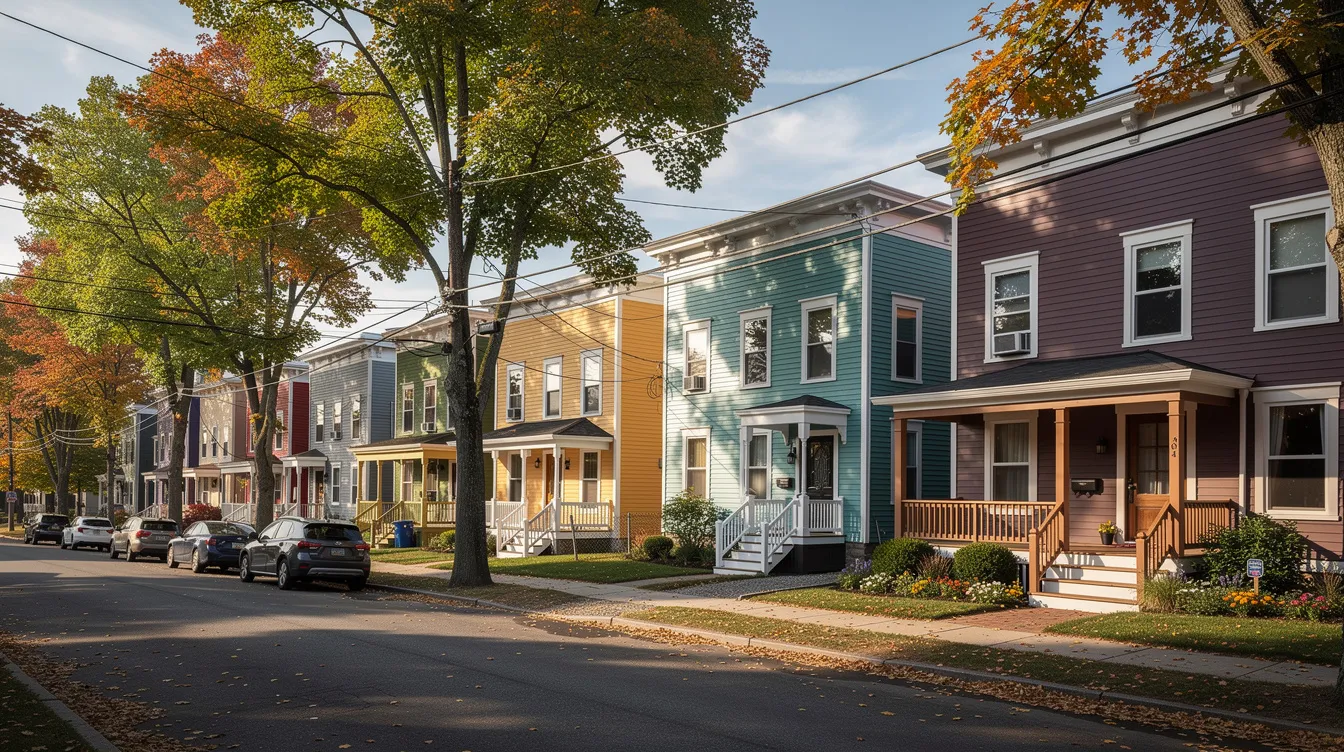
Typical collateral in this state includes single family homes in suburbs like Milton and Stoneham, three-deckers in Dorchester and Roxbury, mixed use buildings in Norwood and Somerville, and small apartment buildings across Greater Boston.
Hard money lenders typically evaluate the property's current condition and its projected ARV. A property under contract at $400,000 with an ARV of $550,000 gets underwritten on the higher number for maximum loan sizing, not just the purchase price. Approval for hard money loans relies heavily on the underlying value of the real estate.
Loan structure basics:
- Interest only payments, balloon at maturity
- Terms of 6 to 24 months (most fix flip deals run 6 to 12)
- No prepayment penalty after a short minimum hold (often 3 to 6 months)
- Construction draws released at milestones after inspections
Borrowers usually need to demonstrate real estate experience for better terms. Lenders also want a realistic budget, a clear scope of work, and a credible exit strategy. Hard money loans are not designed to be held indefinitely and should have a credible repayment plan before closing, whether that's a sale or a refinance into a DSCR or conventional loan.
Current Massachusetts Hard Money Rates, LTVs and Real Market Data
These numbers come from actual closed deals in Massachusetts, not theoretical marketing ranges.
As of Q3 2026, the average interest rate for Massachusetts hard money loans is 9.91% across roughly 294 short term investment loans statewide, with an average loan amount of $931,251. Average loan amounts for hard money loans can exceed $1 million in stronger Boston submarkets. In Q1 2026, statewide averages sat closer to 10.93% interest with around 1.1% points as an origination fee, showing how pricing shifts with rate environment and lender risk appetite.
The average loan to value ratio for hard money loans is 65%, though individual direct lenders often quote 70% to 75% for strong borrowers and clean deals. Hard money loan interest rates range from 8% to 18% depending on deal complexity, borrower experience, and location.
Product type breakdown:
- Fix and flip: 9% to 13% interest, 65% to 75% LTV (of ARV), 6 to 12 month terms
- Bridge loans: 9% to 12% interest, up to 75% of as-is value, 6 to 12 months
- Construction: 10% to 13% interest, 50% to 70% LTC, 12 to 24 months
Costs vary by submarket. Prime Boston market deals with experienced borrowers often see rates of 9.5% to 11.5%, while Worcester and Springfield deals run 11% to 13.5% for equivalent risk because of thinner comp data and lower liquidity.
Core Products from Massachusetts Hard Money Lenders
Every lender brands things differently, but most offerings fall into a few buckets worth understanding.
Bridge loans provide short term capital for urgent acquisitions: buying before you sell, covering maturing debt, or executing a partner buyout. Bridge loans can close in as few as three days with the right documentation. A direct lender like Loan Goat, for example, quotes bridge rates from 9% to 13% with closings in 3 to 14 days.
Fix and flip loans fund property acquisition and renovations together. Rehab budgets get released through construction draws at milestones: initial materials at closing, then framing, rough mechanicals, finishes, and final punch list. Hard money loans are ideal for fix and flip projects in competitive markets where speed and certainty beat price.
Construction loans finance ground-up building projects and major rehabs like teardowns and spec builds. LTVs start lower on raw land (around 50%) and rise to 60% to 70% once you're permitted and vertical. Terms typically run 12 to 24 months with interest reserves built in.
Bridge to rental loans suit investors running a BRRRR strategy: acquire, rehab, lease up, then refinance into a DSCR rental loan. Hard money lenders can fund deals in as little as 5 to 15 business days for the acquisition piece, and the take-out happens once the rental property is stabilised.
Hard money loans are often used for quick property flips, but they serve every stage of real estate investment from acquisition through stabilisation.
Greater Boston vs. the Rest of Massachusetts: How Location Shapes Hard Money
The Boston market is its own animal. Competition is fierce, bidding wars are common, and closings happen fast. Hard money is the go-to for urban infill, historic row houses in East Boston, and mixed use redevelopments in Somerville. Deals here run larger (average loan sizes well north of $800,000), and lenders want sharp ARV comps, especially in rapidly gentrifying neighbourhoods. Hard money loans can cover urgent repairs and renovations on these properties, but lead paint abatement and historic district permitting add cost and complexity that lenders price in.
Worcester and Springfield are different. Purchase prices are lower, fix and flip opportunity is growing, and a three-decker conversion might pencil at $300,000 purchase with $75,000 in rehab. Some lenders are more conservative on ARV assumptions here because comp data is thinner.
Cape Cod and the Islands attract investors focused on short term rentals and vacation homes. Lenders underwrite based on seasonal occupancy and STR income projections. Construction costs run higher due to transportation, and off-season sales cycles are slower.
The Berkshires present a niche play: boutique inns, lifestyle properties, and mixed use buildings catering to tourism. Fewer national money lenders operate here, so local or regional lending relationships matter.

Deal Structures, Draws and How "Up to 100% of Purchase" Actually Works
Marketing claims of "up to 100% financing" in Massachusetts are real, but conditional. Here's the maths.
If a property's as-is value supports a 70% LTV and the investor negotiated a below-market purchase price, the lender may fund the entire purchase price while still staying within its 70% cap on value. That's not 100% financing on your total project cost; it's 100% of the purchase price only, with the lender protected by equity in the deal.
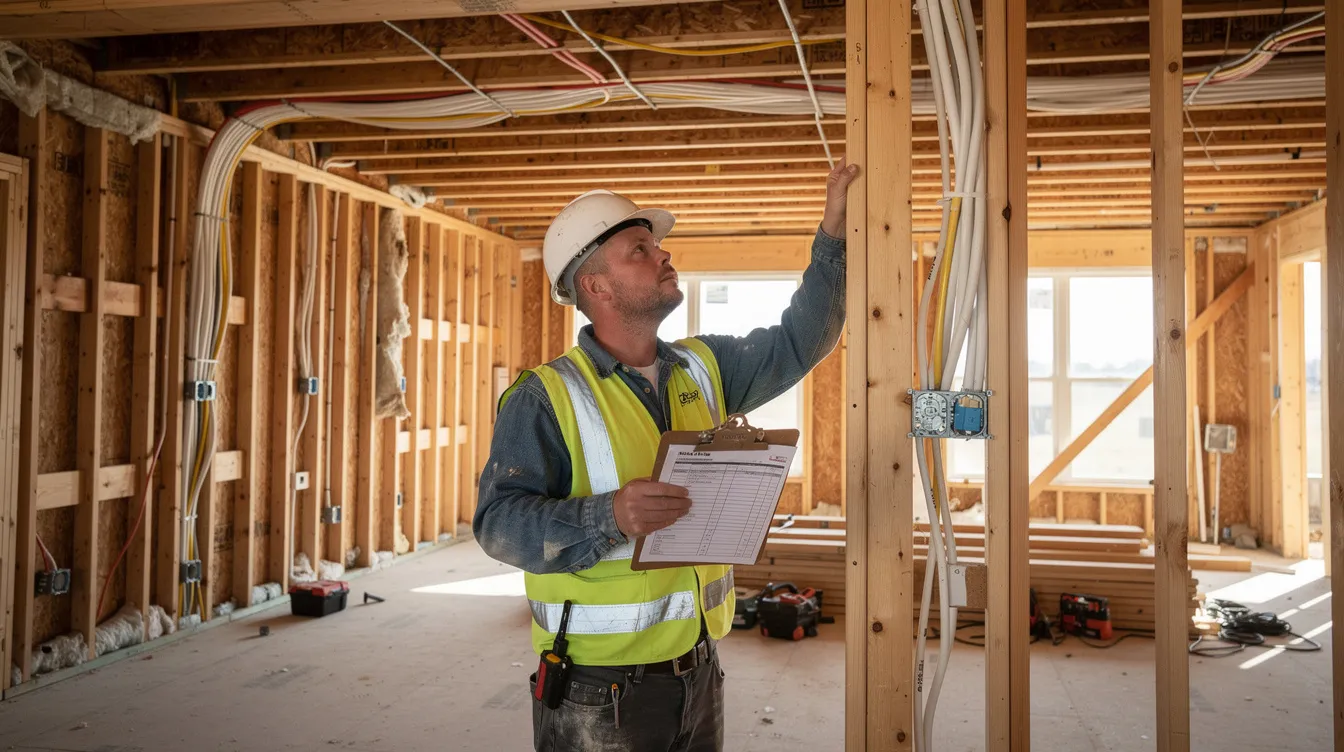
Construction draws work in stages. After the initial draw at closing (covering acquisition and sometimes early materials), the lender sends an inspector before releasing each subsequent draw: framing, rough MEP, finishes, and final walk. Draw timing and inspection fees vary by lender, but expect 2 to 5 draws on a typical rehab.
Borrowers typically need to provide a substantial down payment of 10% to 35%, depending on experience and deal strength. Hard money lenders often finance properties that need major repairs or renovations, but they still want skin in the game.
A concrete example: a Milton single family with a purchase price of $450,000 and an ARV of $700,000. At 70% of ARV, the maximum loan is $490,000. That covers the purchase, but the $150,000 rehab, closing costs, points (roughly $10,000), and 6 months of carrying costs (about $30,000) leave the investor needing $50,000 to $70,000 in cash. Hard money loans typically have interest rates from 8% to 15%; on a $490,000 loan at 10%, monthly interest alone runs about $4,100.
The Real Funding Gap: What Hard Money Lenders Don't Cover
Even the best hard money lender in Massachusetts rarely funds 100% of all costs. The gap between what you're approved for and what you actually need to close and finish the project is where deals die.
Common gaps include:
- Down payment between the loan amount and the purchase price
- Closing costs, points, and legal fees (borrowers using hard money loans may face higher fees and origination points compared to traditional loans)
- Rehab overages from unexpected structural issues, lead paint abatement, or permitting delays
- Earnest money deposits
- Carrying costs: taxes, insurance, utilities, and interest during the hold
- Reserves required by DSCR or conventional lenders at take-out
Some investors turn to equity partners or gator lending style arrangements that eat 30% to 50% of the profit on a deal. That solves the capital problem but destroys returns.
Gap Funded exists to bridge these gaps without taking equity or placing liens on the investment property securing the main hard money loan. We use unsecured gap funding, credit stacking, and other tools that sit outside the hard money lender's collateral structure entirely.
Picture this: you have a strong approval from a direct lender in Boston for a $595,000 loan on an $850,000 ARV deal, but you still need $40,000 for closing costs, points, and reserves. That's a solvable problem.
How Gap Funded Complements Massachusetts Hard Money Lenders (Without Competing With Them)
I want to be clear: we do not replace hard money lenders. We stack capital around them so Massachusetts real estate investors can actually close more deals.
The tools we use, in the order that matters for approval sequencing:
- Unsecured term loans: fast cash injection for down payment, closing costs, or working capital. No lien on the deal property.
- Business credit card stacking at 0% promotional rates: covers materials, finishes, marketing costs, and carrying expenses during the hold period.
- Business lines of credit: flexible draws for ongoing project expenses and soft costs.
- HELOCs on existing property: asset based, often cheaper than unsecured options, useful for repeat investors with equity in a home or rental property.
That order matters because each application creates an inquiry, and applying out of sequence can knock out approvals on later tools.
Realistic qualifications: typical clients have a 650 or higher credit score, verifiable income or business revenue, and enough capacity to handle payments without overleveraging. Having a hard money lender's term sheet in hand strengthens the case because it shows the deal is real and the exit is defined.
I'll be candid about the trade off. Our unsecured capital is usually cheaper and more flexible than giving up equity to a partner, but it's still real debt with real payments. It must be matched to a solid exit plan. If the deal is thin, stacking more debt on top of hard money is the wrong move. Apply here to see what you qualify for before committing.
Matching the Right Tool to the Right Massachusetts Deal
This section is about figuring out which combination of hard money plus Gap Funded capital fits your specific project.
Fix and flip in Greater Boston: pair a local hard money lender (acquisition plus rehab via draws) with Gap Funded unsecured gap funding or 0% stacked cards for the down payment shortfall, finishes, and staging costs until sale. Example: a $525,000 Stoneham condo needing $60,000 in gap capital for closing costs and rehab overage.
Bridge loans for fast acquisitions: a bridge loan from a direct lender plus a personal term loan covers the equity piece and carrying costs until you sell or refinance the current property. This works well for buy-before-you-sell scenarios.
Ground-up construction or condo conversion: hard money lenders fund draws while Gap Funded covers architect fees, permitting, soft costs, and contingencies that private lending rarely includes. A spec build in Norwood with $35,000 in pre-construction soft costs is a textbook use case.
BRRRR and DSCR take-outs: use a Massachusetts hard money loan for rehab and lease-up, then refinance into a DSCR loan while our gap funding covers reserves, appraisal fees, and any shortfalls at closing.
Sequencing matters: secure the hard money term sheet first, then stack Gap Funded capital around it.
Pros, Cons and Alternatives: Being Honest About Hard Money in Massachusetts
Hard money is a powerful tool, not a magic wand. Weigh it honestly.
Pros: speed (days, not months), flexible underwriting, asset based approvals, and the ability to close on distressed or unconventional investment properties that banks won't touch. Hard money lenders often approve loans based on property value, not credit.
Cons: higher interest rates (8% to 15% or more), origination fee costs of 1 to 3 points, shorter terms that pressure you to execute quickly, and the real risk of losing the property to foreclosure if the exit fails. On a $500,000 loan held 12 months, total financing costs run $55,000 to $80,000.
Alternatives: HELOCs and cash out refis on existing homes, DSCR loans for stabilised rental property, SBA loans for investors with established companies. These options offer lower rates but move slowly, require stricter appraisals, and often can't handle the speed of a competitive Boston market deal.
Massachusetts regulators oversee mortgage lenders and require compliance with specific rules and disclosures. The state has consumer protection laws that limit hard money loans to mainly business and investment properties, meaning non-owner-occupied commercial properties are exempt from usury caps under MGL chapter 107 § 3.
Sometimes the best move is to pass on a thin deal rather than pile on both hard money and gap funding. Disciplined underwriting protects your business more than aggressive lending ever will.
How to Qualify Faster: What Massachusetts Hard Money Lenders and Gap Funded Both Want to See
There's meaningful overlap in what makes your file easy to approve.
For hard money lenders: a clean, itemised rehab budget, realistic ARV comps (especially in fast changing Boston neighbourhoods and Greater Boston), a short bio of prior projects showing a proven track record, and a clear exit strategy. Public records on zoning, permits, and municipal compliance should be ready to go.
For Gap Funded: 650 or higher credit score, verifiable income or business revenue, reasonable existing debt profile, and a written plan showing how new credit will be repaid from the project or business cash flow.
Assemble a "Massachusetts deal package" including: purchase contract, scope of work with contractor estimates, property photos, municipal records, and rent rolls for income properties. This focus on preparation builds client satisfaction and repeat business with both your hard money lender and your gap funding team.
Having both the hard money lender's term sheet and Gap Funded pre-approval in place lets you write offers confidently and show proof of funds within hours, not days. Your lending partner and your capital stack should be lined up before the next deal hits your inbox.
Start the soft pull, no obligation review at gapfunded.com/apply before your next offer.
Getting Started: Step by Step Path to Funding Your Next Massachusetts Deal
Here's the roadmap from deal idea to funded closing in Massachusetts.
Step 1: Clarify the deal and strategy. Fix and flip, bridge to sell, BRRRR, short term rental, or ground-up construction. Write down the exit and timeline in months.
Step 2: Talk to at least one local Massachusetts hard money lender or direct lender to get indicative loan terms based on property type, location, and your lending experience. Top hard money lenders in the state include operations like Boston Trust Corp (loans from $100,000 to $5,000,000), Sherman Bridge (same day approvals for qualified borrowers), and Cardinal Capital Group (funded over $450 million in loans in 2024). Each company runs its own balance sheet differently, so comparing competitive rates and loan terms across other lenders is worth the effort.
Step 3: Identify your funding gap. Calculate total project cost (purchase plus rehab plus closing plus carry plus reserves) minus the hard money lender's maximum loan amount to find the true cash you must bring to close.
Step 4: Apply with Gap Funded at gapfunded.com/apply for a soft pull, no obligation review of unsecured gap funding, credit card stacking, and other capital tools. No equity splits, no liens on the deal property.
Step 5: Assemble your documents and timeline with both your hard money team and Gap Funded aligned, then move to contract, inspection, appraisal or BPO, and closing.
In a market where good deals disappear in days, combining the right Massachusetts hard money lender with a smart gap funding strategy is often the difference between watching deals and closing them. I reckon that's worth a five minute application.
Related Reading
This article is for educational purposes only and isn't financial, legal, tax, or investment advice. Credit and financing outcomes depend on your own situation. Talk to a licensed financial professional before making funding decisions for your business.