
Loan on Investment Property: Types, Requirements & How Gap Funding Fills the Financing Shortfall

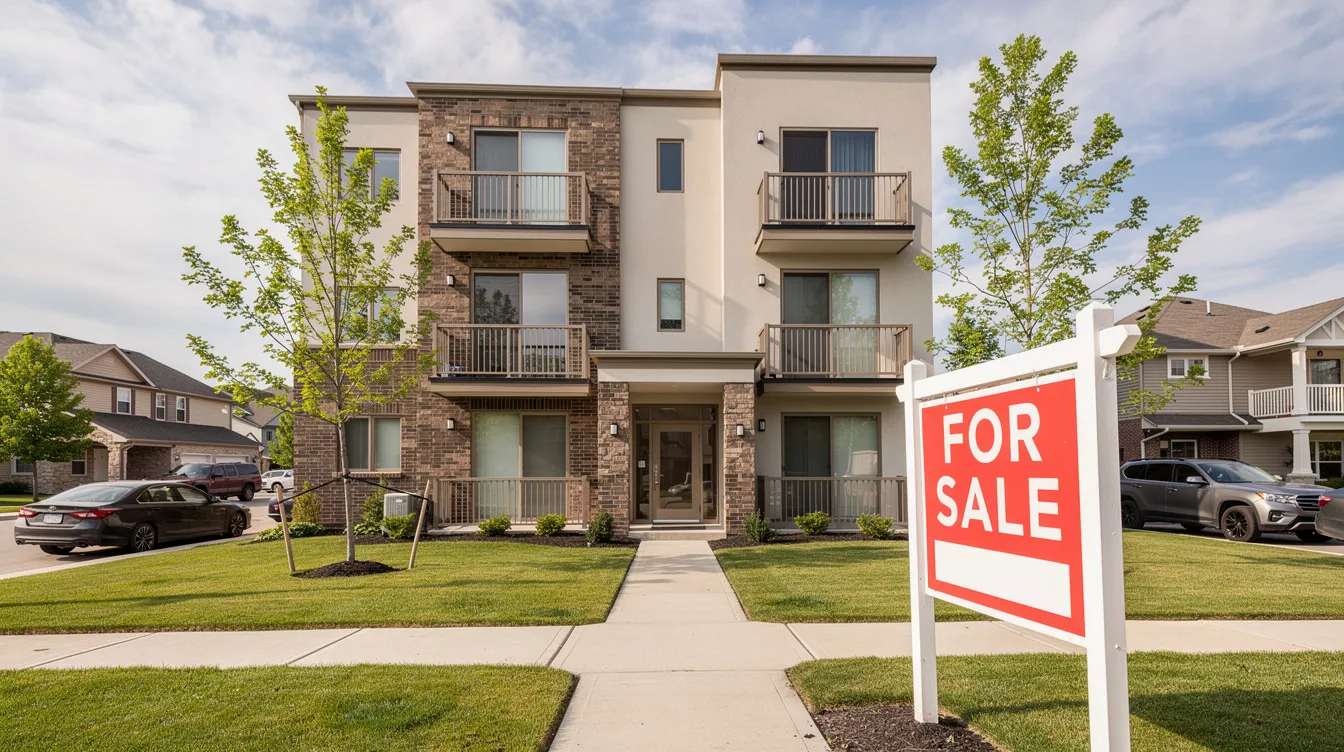
Most real estate investors hit the same wall: the primary lender approves the deal but doesn't fund all of it. Understanding the full landscape of investment property loan options - and knowing exactly how to cover the shortfall - is what separates investors who close deals from those who watch them slip away.
This guide is designed for real estate investors who want to understand their financing options and learn how to overcome common funding shortfalls that can prevent deals from closing. Whether you are a first-time investor or an experienced landlord scaling your portfolio, understanding loan options and gap funding is crucial for successful investing. Without a clear strategy for bridging the financing gap, even the best deals can fall through at the last minute.
This guide breaks down every major loan type, the real requirements lenders enforce in 2025–2026, and the specific gaps that stall deals before the closing table.
Quick Answer: How to Get a Loan on an Investment Property Fast
In 2024–2026, most real estate investors finance rental properties, fix-and-flips, and short-term rentals by combining a primary lender with supplemental capital. Common loan options for financing investment properties include conventional mortgages and DSCR loans, along with hard money, bridge, and commercial products depending on the strategy. Investment property loans typically require a 20% down payment, though the exact figure varies by loan type and property.
The reality is that even after securing a primary mortgage loan, investors are often short on cash for the down payment, closing costs, rehab draws, and reserves. That's where gap funding enters the picture.
Here are the core steps, in order:
- Define your strategy - long-term rental property, fix-and-flip, BRRRR, or short term rental.
- Check your credit score and debt to income ratio to understand which loan programs you qualify for.
- Estimate your loan to value based on purchase price and property value.
- Pick the right loan type: conventional loans, DSCR loans, hard money loan, or commercial loan.
- Plan how to cover the gap between what the lender funds and the total deal cost.
Gap Funded does not replace first-position lenders. Instead, we stack unsecured term loans, 0% business credit cards, HELOCs on investment property, and business lines of credit to close funding gaps - without equity splits or liens on your deal property.
- Realistic qualification: 650+ FICO, verifiable income or strong rental cash flow, responsible existing debt levels. Apply for a same-day funding review at gapfunded.com/apply.
What Is an Investment Property Loan?
An investment property loan is any financing used to acquire, renovate, or refinance real estate that is not used as a primary residence.
- These loans cover long-term rental properties, short-term rentals (Airbnb/VRBO), fix-and-flip projects, and small multifamily buildings of one to four units.
- Short-term rental properties can be financed with investment property loans, including specialized DSCR and portfolio products.
- Compared to owner-occupied traditional mortgages, investment property loans carry higher interest rates, require a larger down payment (often 15–25% for a single unit and more for 2–4 units), and demand stricter cash reserves.
- The approval criteria for investment property loans are stricter than for loans on primary residences because lenders view non-owner-occupied real estate as higher-risk collateral.
- Many investment property loans are underwritten based on expected cash flow or the debt service coverage ratio, not just borrower income.
- Properties can be held in personal name or a limited liability company. Holding title in an LLC often pushes borrowers toward commercial loan or DSCR structures rather than agency-backed mortgages.
- Example: A 3-bedroom rental purchased in 2025 with a 20-year conventional loan at a fixed rate of 6.75% versus a 12-month hard money loan in 2026 at 11% interest only for a fix-and-flip - same asset class, completely different financing process.
Key Types of Loans for Investment Properties
The term "investment property loan" is an umbrella covering several distinct loan programs. Each one is designed for a different strategy, timeline, and borrower profile. Here's how they break down:
- Conventional loans (Fannie Mae/Freddie Mac) - the default for small landlords financing one to four units with full documentation.
- DSCR loans - qualify based on the property's rental income rather than your W-2 or tax returns.
- Fix and flip loans and construction loans - short-term, project-based financing for renovations or ground-up builds.
- Commercial loans - designed for 5+ unit multifamily, mixed-use, or retail spaces where property-level income drives underwriting.
- Portfolio loans and bridge loans - flexible products kept by local banks or private lenders, not sold to secondary markets.
- Conventional and DSCR products favor long-term rental properties and buy-and-hold strategies. Hard money and bridge loans favor short-term "buy-renovate-sell" plays.
- Gap Funded is not a hard money or DSCR lender. We work alongside these first-position lenders to provide down payment, rehab, and reserve gap funding.
Conventional Loans for Rental Properties
For many small landlords buying their first or second rental, conventional loans remain the starting point. They offer long terms, predictable payments, and the lowest rates available for investment real estate.
- Conventional loans can finance one- to four-unit investment properties with 15-, 20-, or 30-year amortizations and full income documentation.
- Conventional loans typically require credit scores of 680+ and down payments of 15% to 25%, with a minimum credit score of 620 technically possible but rarely competitive.
- Lenders expect 2–6 months of cash reserves covering principal and interest payments, taxes, homeowners insurance, and any association dues.
- Rental income from existing leases or appraiser rent schedules can help qualify, though lenders usually apply a 25% vacancy factor and fold the net figure into the debt to income ratio.
- Pros: long amortization periods, predictable monthly mortgage payments, potentially lower interest rates than DSCR or hard money loans, and mortgage insurance can sometimes be avoided with 20%+ down.
- Cons: strict documentation, Fannie/Freddie caps on the number of financed properties (often 10), and more scrutiny of recent credit card balances or personal loans used toward the down payment. Lenders typically flag any large, unexplained deposits.
DSCR Loans: Qualifying on Rental Income Instead of Your Paycheck
DSCR loans exploded in popularity from 2020 onward as investors scaling a real estate portfolio found that their tax returns - loaded with depreciation and write-offs - no longer reflected their actual earning power. These loans solved that problem by shifting underwriting to the property itself.
- The debt service coverage ratio is calculated by dividing the property's gross rental income (less vacancy and management) by the total mortgage payment - principal, interest, taxes, insurance, and HOA. A DSCR of 1.25 means the property earns 25% more than its debt service.
- Many lenders want a DSCR of at least 1.0 for approval, but standard pricing usually kicks in at 1.20 or above. Below 1.0, options shrink and rates climb.
- DSCR loans are considered non-qualified mortgages, meaning they sit outside Fannie/Freddie guidelines. They do not require traditional income verification documents like W-2s or tax returns.
- A DSCR loan is suitable for property investors building portfolios, especially those with complex tax situations or multiple entities.
- DSCR loans use rental income for underwriting instead of personal income, making them ideal for self-employed investors or those with passive income streams.
- Short-term rental loans can have a minimum credit score of 660, though 700+ unlocks better terms. Rates in 2026 range from roughly 6.5% to 7.75% depending on credit, equity, and DSCR strength.
- Most DSCR products allow title in an LLC, may carry prepayment penalties, and often have loan terms of 30 years with fixed rate or adjustable rate mortgages options.
- Gap Funded partners with DSCR lenders by supplying gap funding for down payments, closing costs, rehab, and reserves when the DSCR loan alone doesn't cover everything the deal requires.
Commercial Loans for Bigger or LLC-Held Properties
Once investors outgrow the 1–4 unit residential lending box - or start acquiring mixed-use buildings and retail spaces - commercial loans become the path forward.
- Commercial multifamily financing is typically for properties with five or more residential units. Commercial mortgages are suited for multi-family complexes and evaluate property income potential rather than personal W-2 income.
- Underwriting centers on global cash flow, property-level DSCR (usually 1.15–1.25 minimum), sponsor experience, a credible business plan, and collateral strength.
- Compared to residential products, commercial loans have shorter terms - commonly 5, 7, or 10 years with 20–30 year amortization - plus higher closing costs and more detailed due diligence including environmental reports and tenant lease audits.
- Common maximum loan to value ratios run 70–75% for purchases and 65–70% for a cash out refinance, meaning investors need substantial equity. Rates typically land between 7% and 9%+ depending on property type and location.
- Commercial lenders expect significant cash reserves (often 6–12 months of debt service) and may require a personal guarantee from the sponsor.
- Gap Funded helps sponsors raise the remaining equity, closing costs, and contingency funds through unsecured term loans and stacked business credit lines - without recording liens on the deal property.
Short-Term Funding: Fix-and-Flip, Bridge & Construction Loans
When the strategy is to buy, renovate, and sell (or refinance into permanent financing), short-term loan products are purpose-built for the job.
- Fix-and-flip loans are short-term financing options. These loans typically last from six to 24 months. Lenders evaluate acquisition price and renovation budget for these loans, and borrowers must sell or refinance before the loan term ends. Fix-and-flip loans can cover up to 90% of the loan-to-cost ratio, though most cap at 65–70% of after-repair value. For state-specific details, see our guides on fix-and-flip loans in Texas and California.
- Hard money loans feature fast closings but significantly higher interest rates - often 10–14% with 1–3 origination points. They're useful when speed matters more than cost.
- Bridge loans serve as temporary financing between purchase and long-term takeout, such as a conventional or DSCR refinance. They're especially useful when timing is tight or the property doesn't yet qualify for permanent financing. Learn how they compare to equity-based options in our bridge loans vs. HELOCs breakdown.
- Construction loans fund ground-up builds or major renovations. Funds are drawn in stages, subject to inspections and budget tracking.
- Lender requirements for all three: borrower experience, a detailed scope of work, after-repair value estimates, and a robust exit strategy.
- Gap Funded frequently fills gaps in these projects - covering earnest money deposits, rehab overruns, and working capital while draws are delayed. If you're building a business plan for house flipping, factor in supplemental capital from the start.
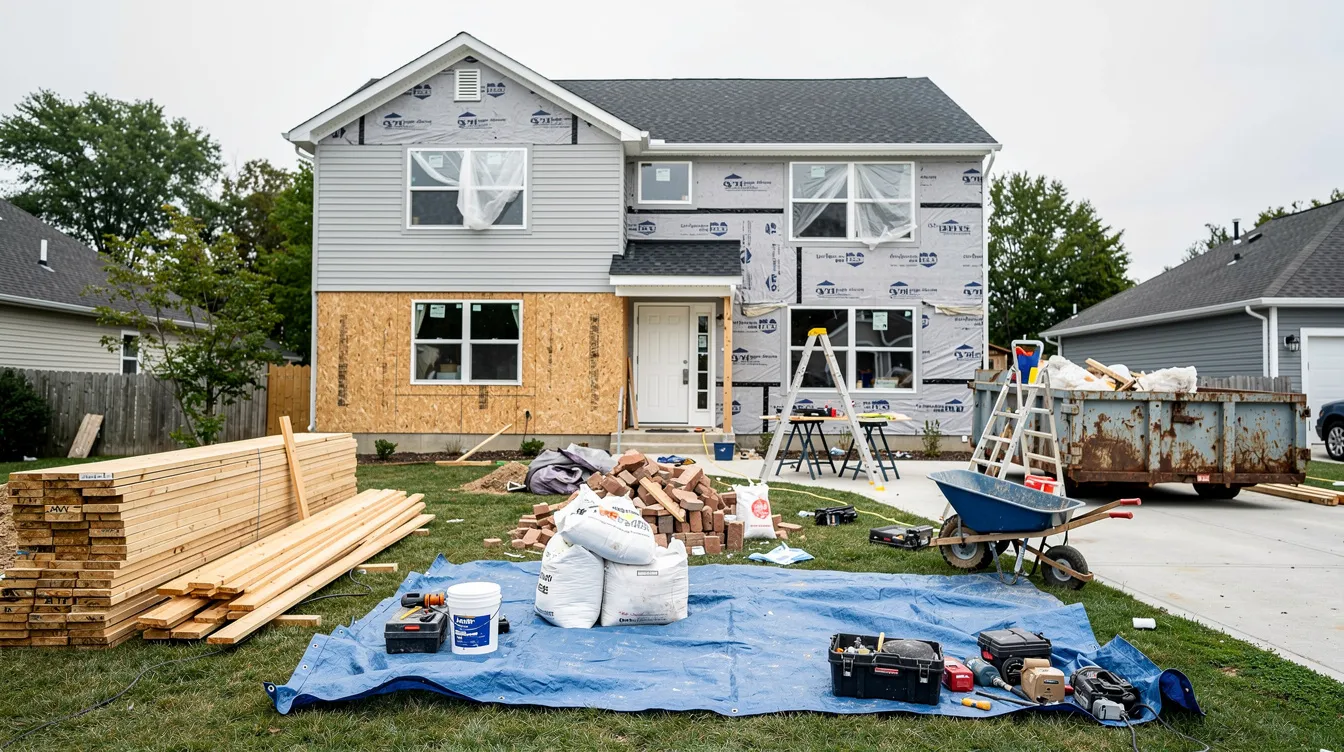
Using Home Equity and Cash-Out Options to Fund Investment Deals
Many investors in 2024–2026 are tapping equity in properties they already own to accelerate real estate portfolio growth. It's one of the most accessible sources of capital - if you qualify.
- A cash out refinance on a primary residence or existing rental property replaces your primary mortgage with a larger one, giving you a one time lump sum of the difference. Cash-out refinancing allows investors to access home equity for new purchases, and investors can use cash-out refinancing for short-term rental renovations. Texas offers popular tourist destinations for short-term rental investments, making this a common strategy there.
- Home equity loans provide a lump sum secured by home equity. You can use home equity loans to purchase investment properties. Home equity loans typically have fixed interest rates, making your monthly payment predictable. Home equity loans can be used for renovations on the secured property as well. However, higher interest rates may apply for home equity loans on investment properties compared to owner-occupied homes.
- A home equity line of credit (HELOC) works as a revolving line you draw from as needed, with interest only payments during the draw period. Loan to value limits on HELOCs usually cap combined borrowing at 80–85% of property value.
- Lenders look closely at combined loan to value, credit score, and debt to income ratio when approving any equity-based product.
- Trade-offs include resetting your mortgage term via a new mortgage payment schedule, potential higher rates on investment property equity, and possible prepayment penalties on existing loans.
- When a cash-out refi or HELOC is unavailable or too slow, Gap Funded's unsecured term loans and 0% introductory business credit card stacking serve as alternatives that don't require a lien on your property.
Investment Property Loan Requirements: What Lenders Look For
Understanding the specific investment property loan requirements before you apply saves time and prevents surprises at the closing table.
- Credit: lenders typically require higher credit scores for investment properties than owner-occupied homes. Most lenders want a minimum of 660–700+ for DSCR and commercial products, and 680+ for conventional. A credit history with consistent on-time payments matters more than a single score number.
- Income and DTI: many lenders expect total monthly debt obligations to remain around 43% to 45% of gross monthly income. A total debt-to-income ratio under 45% is ideal for qualifying for investment loans. DSCR products shift the focus to property-level cash flow instead.
- Down payment and LTV: loan to value standards vary - 75–80% LTV for long-term rentals (meaning 20–25% down), lower for cash-out refis and certain commercial loans. A larger down payment improves pricing and approval odds across every loan type.
- Reserves: cash reserves of 2 to 6 months of mortgage payments are often required by lenders for investment properties. Lenders expect proof of cash reserves to cover mortgage payments during vacancies. Commercial deals often demand 6–12 months.
- The cash flow of the property is a vital consideration for investment property financing. Lenders assess rent projections, occupancy expectations, and appraised property value before issuing loan approval.
- Property-related criteria include condition, property type, and whether the asset meets the lender's minimum standards for habitability or income generation.
- Gap Funded can help otherwise qualified borrowers overcome the "cash on hand" hurdle by providing gap funding that doesn't put a lien on the subject property and requires no credit approval impact just to check options.
How Investment Property Loans Differ from Homebuying Loans
Obtaining a loan for an investment property requires stronger credit and larger down payments compared to primary residences. Here are the key structural differences:
- Interest rates on investment property loans often run 0.5–2.0 percentage points higher than comparable primary residence mortgages. According to St. Louis Fed data, median LTV for investment property borrowers sits around 75% versus 91% for primary homebuyers.
- Term structure differs significantly. Many investment loans are shorter or interest only - bridge loans, DSCR IO periods, construction loans - versus the traditional 30-year amortizing home loan with fully predictable interest payments.
- Documentation shifts toward rental income, DSCR, property performance, and investor experience rather than just personal W-2 income. Mortgage preapproval for investment deals often requires a rent schedule or lease roll on top of standard financials.
- Prepayment penalties and points are far more common on DSCR loans and commercial loans than on owner-occupied mortgages. A real estate agent experienced in investment transactions can help navigate these terms.
- Consider the house-hack scenario: an investor lives in one unit of a 4-plex (up to four units) with an owner-occupied loan while renting out the other three units. This qualifies for primary residence rates and lower down payments. A pure investment purchase of that same 4-plex - without occupancy - requires a larger down payment, higher rates, and often more reserves. The loan purpose changes everything.
Common Costs, Risks and Fine Print: Rates, Fees, and Prepayment Penalties
Small details buried in loan documents can wipe out project profitability. Treat the fine print like a line item in your deal analysis.
- Key cost components: interest rate, origination fees (often 1–3 points), underwriting and processing fees, appraisal and inspection fees, title insurance, and closing costs that can total 2–4% of purchase price.
- Prepayment penalties on some DSCR loans and commercial loans can be structured as yield maintenance, step-down schedules (e.g., 5-4-3-2-1), or flat percentages. These directly affect your ability to refinance or sell early.
- Interest only periods on bridge loans and some DSCR products can improve initial cash flow, but when rates reset or balloon payments come due during the repayment period, the jump in monthly payment can be severe. Annual percentage rate disclosures don't always make this obvious.
- Stress-test every deal for higher rates, longer vacancies, and rehab delays. If the mortgage payment becomes unmanageable under conservative assumptions, you risk losing the property.
- Jumbo loans for high-value investment properties carry additional rate premiums and stricter reserve requirements.
- Before signing, confirm whether your loan allows secondary financing. Coordinate with Gap Funded early so gap strategies align with lender requirements - some hard money lenders restrict subordinate debt, while others welcome it. Consult a tax professional or seek tax advice on how interest deductions apply across layered financing structures.

Where the Funding Gap Appears in Real Deals - and How Gap Funded Closes It
Even with a strong primary lender in place, real estate investors routinely face a cash shortfall. The most common gap points are the down payment, closing costs, rehab budget overruns, earnest money deposits, and working capital during lease-up or vacancy periods. Portfolio loans are more flexible due to being kept by local banks instead of sold to secondary markets, but they still rarely cover 100% of deal costs.
Here's where the gaps show up in practice:
- DSCR rental purchase (2025): Lender covers 75–80% LTV on a $300,000 property, leaving $60,000–$75,000 in down payment plus closing costs and 6–12 months of reserves. An investor with $30,000 liquid is still $40,000+ short.
- Fix-and-flip or BRRRR: Even when a hard money lender covers 90% of purchase and full rehab, you're still responsible for the earnest money deposit, initial rehab draws before reimbursements, holding costs, and cost overruns when materials or labor spike mid-project. On a $250,000 total project cost, these gaps commonly reach $20,000–$35,000.
- Texas multifamily example: Total project cost $400,000. Senior debt funds 70% LTC ($280,000). The investor needs $120,000 - but only has $60,000. Gap funding covers $60,000, making the deal possible.
Gap Funded uses a hierarchy of tools, and the order matters:
- Unsecured personal term loans first - lowest cost, fastest deployment (24–72 hours), no lien on the deal property.
- Stacked 0% introductory business credit cards - for smaller, time-sensitive expenses like materials and deposits.
- Business lines of credit and, when appropriate, HELOCs on investment property - for larger shortfalls where existing equity is available.
Realistic qualification: typical minimum credit scores around 650–680, responsible existing debt levels, and verifiable income or strong business revenue improve approval odds. Funding amounts range from $20,000 to $120,000 depending on your profile.
If you already have - or are about to get - a mortgage preapproval from a primary lender, visit gapfunded.com/apply for a same-day funding review. Soft credit pull only; no impact to your credit just to see what's available.
Working With Lenders, Real Estate Agents and Gap Funded as a Team
Financing an investment property is a team sport. The primary lender, your real estate agent, and your gap funding partner each play a distinct role - and coordination between them determines whether you close on time.
- A knowledgeable real estate agent can structure offers and contingencies that align with your loan timelines, appraisal requirements, and any lender-specific conditions around property type or condition.
- Coordinate with your primary lender (conventional, DSCR, or commercial) early. Most lenders want to understand the source of down payment funds and reserves - bringing Gap Funded into the conversation upfront avoids surprises at underwriting.
- Share term sheets, construction budgets, and projected DSCR figures with all parties. Schedule closing dates that allow enough time for both the main loan and gap funding to be fully in place.
- Bring Gap Funded into the conversation before signing a purchase contract so we can pre-underwrite your gap funding and lock in terms. This prevents last-minute scrambles that kill deals.
- Investors can apply online through a soft credit pull at gapfunded.com/apply - no obligation and no impact to credit, just a clear picture of your available options before you commit to a deal.
Every investment property deal has a gap between what the lender funds and what the deal actually costs. The question isn't whether the gap exists - it's whether you have a plan to close it before it closes you out.
Related Reading
This article is for educational purposes only and isn't financial, legal, tax, or investment advice. Credit and financing outcomes depend on your own situation. Talk to a licensed financial professional before making funding decisions for your business.