
How Much Does It Cost To Flip A House? (Real Numbers, Cost Breakdown & Funding Options)

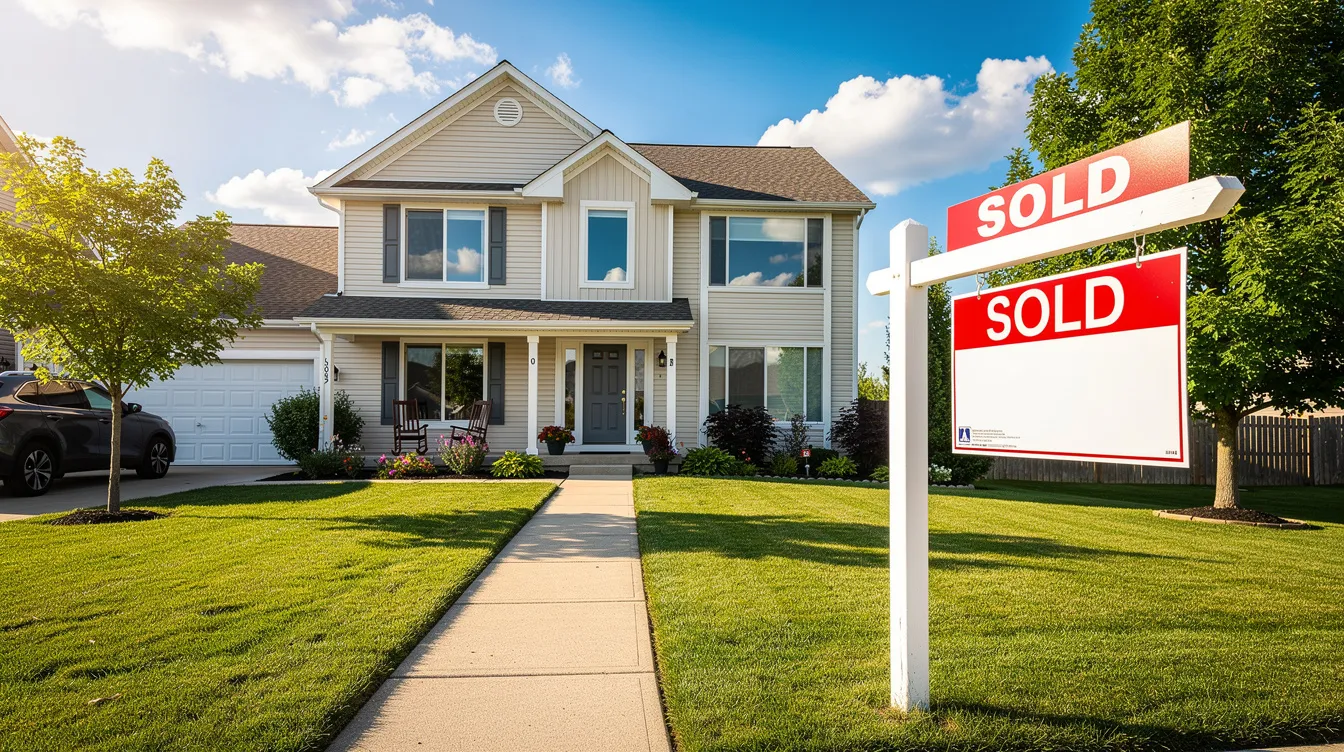
Most people start researching house flipping after watching someone on YouTube turn a wreck into a $60,000 payday. Then they Google the actual costs and go quiet for a while. This guide is for the ones who come back.
I'm going to walk you through exactly how much it costs to flip a house right now, break down every cost category with real numbers, and show you how real estate investors actually fund these deals when they don't have a spare $250,000 sitting in a bank account.
Quick Answer: Typical Cost To Flip A House In 2024–2026
Flipping a house typically costs $70,000 to $110,000 above the purchase price when you add up renovation, holding costs, financing, and selling expenses. For a standard single family home in an average cost U.S. market, total project cost (including purchase price) usually lands somewhere between $180,000 and $350,000 depending on your local market, the condition of the property, and how much renovation it needs.
Here's a simple example to ground you: buy a distressed property for $190,000, put $45,000 into rehab, spend roughly $20,000 on closing costs, holding costs, and selling expenses, and your total outlay is about $255,000. If the after repair value is $320,000, you're looking at roughly $65,000 in gross profit before taxes.
For context, investors saw an average return of 47.8% in 2018, when the average gross flipping profit was $69,500. Those days are gone. The average gross profit on home flips was around 27.5% in 2023, and ATTOM's 2025 data shows gross ROI has slipped further to 25.5%. Margins are tighter, which means understanding all the costs matters more than ever.
The five main cost buckets: purchase price, renovation costs, holding costs, transaction costs (buying and selling), and financing costs. The rest of this guide breaks each one down and shows how you can fund a flip even if you don't have all the cash upfront.
What Is House Flipping And How Profit Is Really Calculated?
House flipping means buying a property below market value, renovating it, and selling it quickly for profit. It's an active form of real estate investing, closer to running a small business than earning passive income from a rental property. Tight timelines, moving parts, and a full time job's worth of coordination.
The profit formula is straightforward:
Profit = Resale Price – (Purchase Price + Rehab Costs + Holding Costs + Closing & Selling Costs + Financing Costs)
Every dollar you underestimate in any of those categories comes directly out of your profit on the flipped house. That formula is why successful house flipping requires a detailed budget that includes acquisition and financing costs from day one.
New flippers often underestimate total project cost by 10% to 25%. That's the difference between a $40,000 profit and breaking even. Systematic budgeting isn't optional if you want to avoid common mistakes.
Core Cost Components Of A Typical House Flip
A typical house flip involves five major cost categories:
- Purchase price (often 60% to 75% of your total capital outlay)
- Renovation costs (typically 15% to 25%)
- Holding costs (5% to 10%)
- Buying and selling transaction costs (6% to 10%)
- Financing and interest (3% to 8%)
Flipping costs often exceed 20% to 33% of the home's after repair value once you total up everything outside the purchase price. Smart house flippers build their deal analysis around these buckets, then layer in contingency and profit targets. Most flippers aim for a minimum 10% to 20% net profit on ARV.
Different real estate markets skew where the money goes. In the Midwest, purchase price might eat a smaller share while renovation stays proportional. In coastal California or New York, purchase price dominates and LA's construction costs are higher than many other markets, pushing rehab budgets up too.
The following sections break each cost line with concrete numbers, then cover funding options including gap funding.
Purchase Price: The Foundation Of Your Flip Budget
The purchase price is the single biggest driver of profit in flipping houses. Overpaying for a property can severely impact profit margins, and it's the number one mistake new investors make. You can't renovate your way out of a bad buy.
Flippers often use the 70% rule to determine maximum purchase price. The formula: Maximum Offer = 70% of ARV minus Estimated Repair Cost.
Walk through it: if the ARV is $350,000 and repairs will run $60,000, the 70% rule gives you a max purchase of about $185,000. That cushion is what protects your profit after holding, financing, and selling costs.
You need to analyse the after repair value before purchasing. Real estate agents, comparable sales from the MLS, and investor focused platforms all help estimate ARV accurately. Getting this number wrong is where most flippers get hurt.
Market conditions matter too. Houston's median home value is $161,300, and home values in Houston have appreciated at just 0.42% annually over ten years. Compare that to a high demand coastal market where values move faster. Your local market dictates what good deals look like.
In hot markets during 2024 to 2026, many experienced investors accept tighter margins than the textbook 70% rule allows. If you're just starting to flip, stay conservative. The right property at the right price is worth waiting for.
Renovation And Rehab Costs: What Investors Actually Spend
Renovation costs can vary widely based on the scope of work. Cosmetic updates like paint, flooring, and fixtures might run $20,000 to $40,000. A moderate rehab covering kitchen, bathrooms, and system upgrades typically falls between $40,000 and $80,000. Heavy or full gut rehabs start at $80,000 and climb past $150,000.
According to industry data, renovation budgets usually range from $50,000 to $80,000 for a standard mid scope project. Here's a sample rehab budget for a 1,600 sq ft three bed, two bath house in an average cost market:
- Kitchen remodel (no layout change): $15,000 to $30,000
- Bathroom remodel (two baths): $16,000 to $30,000
- Roof replacement: $8,000 to $15,000
- HVAC replacement: $6,000 to $12,000
- Flooring (whole house): $7,000 to $14,000
- Paint interior and exterior (a fresh coat makes a big difference): $4,000 to $8,000
- Electrical and plumbing updates: $5,000 to $12,000
- Exterior and landscaping: $3,000 to $8,000
- Permits and inspections: $1,000 to $4,000
Permits are required for work that affects structure, electrical, plumbing, or HVAC. Ignoring local building codes is a fast track to fines and delays.
Unexpected renovation costs can erode profits significantly. Structural problems, old wiring, and code required upgrades can easily add 10% to 25% to your rehab budget. Create a detailed scope of work to avoid scope creep. It is recommended to set aside a contingency fund of 10% to 20% for hidden issues.
Getting multiple quotes from experienced contractors is essential. The average renovation costs can inflate your budget significantly if you rely on a single bid, and investors should budget for unexpected costs like plumbing issues that don't show up until demo day.
Holding Costs: The Silent Profit Killers
Holding costs are the ongoing monthly expenses you pay while you own the flip. They include property taxes, property insurance, utilities, lawn care, HOA dues if applicable, and loan interest charges that accumulate during the holding period of a house flip.
Here's a typical monthly holding cost example:
- Loan interest: $400 to $800
- Property taxes: $250 to $400
- Insurance: $100 to $200
- Utilities: $100 to $200
- Maintenance and lawn: $75 to $150
That's roughly $925 to $1,750 per month. Over a six month flip, you're looking at $5,500 to $10,500. Stretch that to ten months and it climbs to $9,250 to $17,500. The difference can turn a profitable deal into a thin one.
Flippers often face delays and budget overruns during renovations. Contractor no shows, permit backlogs, weather, supply chain hiccups. Every extra month adds holding costs and eats directly into your profit.
I always recommend new house flippers model two scenarios before buying: a best case four to six month flip and a slower eight to ten month timeline. If the deal still works at the slower pace, you've got breathing room. If it only works with perfect execution, think twice.
Financing Costs: Hard Money Loans, Interest And Points
Most people don't pay all cash to flip houses. They combine hard money loans, private lenders, and their own capital to finance deals. Investors can use private money lenders to finance flips without personal savings, though it comes at a cost.
Hard money loans provide faster approval than traditional mortgages, which is why they're the default tool for real estate flipping. Hard money lenders focus on property value, not borrower credit. Typical terms in 2024 to 2026: 10% to 13% annualised interest, origination points of 1.5 to 3% of the loan amount, and six to twelve month terms.
Here's a quick example. A $250,000 hard money loan at 12% interest with 2 points upfront:
- Origination fee (2 points): $5,000 due at closing
- Monthly interest (interest only): approximately $2,500
- Six months of interest: $15,000
- Nine months of interest: $22,500
Total financing cost over six months: roughly $20,000. Over nine months: $27,500. That's a meaningful chunk of your profit if the flip takes longer than planned.
Real estate investors sometimes stack financing sources. A first position hard money loan handles the bulk, then additional funds for down payment and rehab come from savings, partners, or gap funding providers. Underestimating financing costs (interest, points, fees) can shrink profit more than you'd expect, especially if the project drags past a year. Anything taking more than a year to complete is eating into returns at an alarming rate, and even less than a year can feel long when interest is ticking daily.
Closing, Selling And Realtor Costs
Both buying and selling the flipped house come with transaction costs that many new flippers gloss over. Final selling costs can significantly reduce profit margins when flipping houses if you haven't planned for them.
On the purchase side: purchase closing costs are around 2% to 5% of the purchase price. That includes title insurance, attorney fees where applicable, recording fees, and lender related charges.
On the sale side: agent commissions generally range from 5% to 6% of the final resale price. Since the 2024 NAR settlement, listing and buyer agent fees are negotiated separately, but the combined total still commonly hits 5% to 5.5% in most markets. Seller closing costs (title, transfer taxes, recording) add another 1% to 3%.
Example: you sell a flipped house for $350,000. At 5.5% combined commission, that's $19,250 to real estate agents alone. Add $5,000 to $8,000 in seller closing costs and you're at roughly $24,000 to $27,000 leaving your pocket before you've counted anything else.
A few more factors on the selling side worth noting: staging a home can increase offers by 1% to 5%, and the median dollar value spent on staging is around $600. That's a strong return for a modest outlay. Pricing at the lower end of your comp range can spark bidding wars among many buyers, and effective marketing strategies increase a home's exposure to potential buyers at open houses.
Build these transaction costs into your initial deal analysis. "Profit" is what's left after all of these expenses are paid.
All-In Example: Full Budget For A Realistic House Flip
Let's put it all together. Here's a realistic case study for a single family house flip in a mid cost U.S. market.
The deal: bought March 2025, renovated over five months, listed August 2025, sold January 2026 (ten months total hold).
- Purchase price: $200,000
- Rehab budget: $60,000
- Holding costs (10 months at $1,200/month): $12,000
- Hard money interest and points (10 months): $22,000
- Purchase closing costs: $5,000
- Seller closing costs and commissions (5.5% on $320,000): $17,600
- Total project cost: $316,600
- Resale price (ARV): $320,000
- Net profit before taxes: $3,400
That's a 1% margin. Tight enough to make your stomach turn.
Now change two assumptions. If rehab runs 10% over budget (add $6,000), you're underwater. If you'd sold in month seven instead of ten, you save roughly $3,600 in holding and interest, pushing profit to about $7,000. Still thin, but survivable.
The gross profit on typical home flips was around 27.5% earlier this year. But gross profit is the number before you subtract rehab, financing, holding, and transaction costs. The real number, net profit, is where the truth lives. This example reinforces that serious real estate flipping is a numbers driven business, not a TV style guesswork game. Every deal needs a solid business plan.

Personal Cash Requirements Vs. Total Project Cost
There's an important distinction between "total cost to flip a house" and "how much of your own money you actually need." They're rarely the same number.
A typical capital stack might look like this: hard money loan covering 85% of purchase and 100% of rehab (drawn in stages), plus your own cash for down payment, closing costs, rehab overages, and reserves.
Example: project costs $250,000 total. Hard money covers $190,000 (purchase and rehab draws). Your personal cash requirement: $40,000 to $70,000 for down payment, closing costs, contingency, and working capital to cover holding costs while the rehab is underway, including cash intensive items like earnest money deposit financing on competitive deals.
Many investors and house flippers are constrained not by total project cost but by the gap between what primary lenders cover and what the deal actually costs. Understanding gap funding in real estate and how it plugs these shortfalls is critical. Common funding gaps include down payment, closing costs, renovation draws before lender reimbursement, earnest money deposits, and working capital.
If you've been told you need $60,000 cash to close a deal and you've got $25,000, you don't necessarily need an equity partner. You might just need to bridge that $35,000 gap by funding a fix and flip with little or no money out of pocket using the right capital stack.
How Your Financial Situation Impacts Flip Costs And Funding Options
Your financial situation directly affects what financing you can access and what it costs. Here's how credit score ranges play out:
- 650 to 679 FICO: qualifies for most hard money loans and some unsecured term loans. Rates and points will be at the higher end. Credit card stacking is possible but approval amounts may be modest, so being strategic with 0% credit card stacking for investors matters.
- 680 to 719 FICO: opens up better hard money terms, solid unsecured loan options, and meaningful business credit card approvals at 0% introductory rates.
- 720+ FICO: lower interest rates on nearly everything. Higher approval limits. Best candidates for stacking multiple funding tools to cover larger gaps.
Even with the same project cost, a borrower with strong credit and verifiable income may pay thousands less in interest and points than someone with borderline qualifications. Lenders and gap funding providers also look at debt to income ratios, existing obligations, and sometimes reserves.
At Gap Funded, we typically work with borrowers at 650+ FICO and focus on stacking tools that don't require equity splits or liens on the flip property. If you're considering debt consolidation before applying, that can improve your ratios and open more doors.
Common Hidden Costs And Budgeting Mistakes For House Flippers
Underestimating or forgetting certain costs is what turns an expected $40,000 profit into a $5,000 cheque. Here are the ones that catch other investors off guard most often:
- Permit fees and re inspection costs
- Change orders from contractors mid project
- Utility deposits and reconnection fees
- Dumpster and debris removal ($2,000 to $5,000 per project)
- Staging costs (worth it, but still a line item)
- Price reductions before sale if the property sits
- Inspection repair requests from potential buyers
- Last minute lender fees or extension charges
Many flippers overlook hidden costs such as vacant property insurance and utility costs. Flipping houses involves significant financial risks due to market volatility, and a market crash can leave flippers unable to sell properties at their expected ARV.
Timing mistakes hurt too. Listing in December instead of May, ignoring seasonal slowdowns, or assuming contractors will hit every deadline. Thorough research into market trends and your local market's selling season can make a big difference.
One more thing most flippers forget: paying themselves. If you're putting in 20 to 30 hours a week for six months, that's real time. Decide upfront whether you want to factor an "owner pay" line item into your cost of flipping homes, especially if this isn't just a side project alongside a full time job.
Build a 10% to 20% contingency fund into both rehab and total project budget. Stress test every deal to confirm it still works if costs climb or ARV comes in lower than expected. That's how you avoid common mistakes and keep your investment goals on track.
Funding The Gap: How Gap Funded Helps Cover Flip Costs
Here's the reality: lenders rarely cover 100% of purchase price plus rehab plus closing plus reserves. Gap funding helps cover shortfalls between primary lender financing and total costs. Institutional gap funding solutions for real estate investors are exactly the space we operate in at Gap Funded.
We specialise in non dilutive gap funding for real estate investors, contractors, and house flippers. No equity in your flip. No lien on the deal property. We fill the gap between what your hard money or DSCR lender covers and what you actually need to close and complete the project.
The tools we use, in this specific order (and the order matters):
- Unsecured personal term loans are usually the first move when credit and income support it. Fast lump sum cash for down payments, closing costs, or earnest money deposits.
- 0% credit card stacking for 6 to 21 months covers rehab draws, materials purchases, and working capital during the holding period. Here's how credit card stacking works.
- Business lines of credit or HELOCs (including a HELOC on investment property and broader HELOC loans for real estate investors) provide ongoing liquidity for investors running multiple flips or BRRRR projects.
The sequencing matters because applying out of order can disqualify you from later approvals. We walk you through it.
Quick example: an investor secures a hard money loan covering 85% of purchase and rehab. They use Gap Funded to cover the remaining 15% down payment plus $15,000 in rehab and holding costs. The flip moves forward without a capital partner or equity split. They keep 100% of the upside and pay interest instead of giving away profit.
Typical qualification: 650+ FICO, verifiable income or business revenue. We do a soft credit pull that has no impact on your score just to see what you qualify for.
Ready to find out how much capital you can stack for your next flip? Apply here. It takes about two minutes.
Comparing Gap Funding To Other Ways To Finance Flips
House flippers weigh several financing approaches. Here's a candid comparison of investment strategies:
- Equity partners: you give up 30% to 50% of profit (sometimes more) in exchange for their capital. Good for investors with weak credit who can't qualify for debt based funding, but it permanently reduces the profit of every house flip. If you're doing this repeatedly, you're building someone else's wealth alongside yours.
- Traditional bank loans: lower interest rates but slow approval, strict qualification, and often unavailable for distressed properties. Banks generally don't want to touch a house that needs $60,000 in work.
- More hard money: your primary lender might increase their loan amount, but hard money lenders rarely solve the full cash gap. They still want you to bring skin in the game.
- Merchant cash advances (MCAs): fast capital but typically very high effective costs and daily repayment schedules. Generally not appropriate for a six to nine month holding period. I reckon most flippers who go this route wish they hadn't, and many are better served by deal specific options like Gator Lending for real estate investors.
Gap Funded focuses on speed, soft pulls for initial review, and building a capital stack tailored to your financial situation and flip strategy. It's not a one size fits all loan. It's a layered approach using the tools that genuinely fit your deal and credit profile. If you want to explore all the options, the application takes two minutes and costs you nothing.

When Does Flipping Houses Make Sense For You?
Before you start flipping houses, ask yourself a few honest questions:
- Can I handle the financial risk if ARV comes in 5% to 10% lower than expected due to market fluctuations?
- Do I have renovation experience, or am I willing to partner with someone who does?
- Is my financial backing strong enough to survive a deal that takes longer or costs more than planned?
- Am I treating this as a data driven business or hoping for a lucky break?
- Have I identified investment opportunities in my local market where the numbers actually work?
If you're earlier in your investing career, consider starting with a smaller cosmetic flip or partnering with an experienced contractor to learn the hands on rehab side. Even a fresh coat of paint and new flooring on the right property can yield a higher value sale when the numbers are tight.
Treat house flipping as a business. Run numbers conservatively, focus on a realistic budget, and line up financing (including gap funding) before making offers. If you're serious about building a flipping or BRRRR pipeline, consider establishing longer term funding relationships with business lines of credit and recurring credit stacking strategies.
Ready to make informed decisions about your next flip? Apply at gapfunded.com/apply to see how much capital you can access. Soft credit pull, no impact to your score, and you'll know where you stand before you make your next offer.
Related Reading
This article is for educational purposes only and isn't financial, legal, tax, or investment advice. Credit and financing outcomes depend on your own situation. Talk to a licensed financial professional before making funding decisions for your business.