
Houston Hard Money Lender: How Investors Really Fund Deals in 2026

Houston Hard Money Lender: How Investors Really Fund Deals in 2026
Most Houston investors don't struggle to find a hard money lender. They struggle to cover everything the lender won't fund. Here's how the numbers actually work in 2026 and where the real capital gaps show up.
Fast Answer: How Houston Hard Money Loans Work Right Now
A Houston hard money lender provides short term, property backed loans for non-owner occupied investment properties. These are not traditional mortgage products. Hard money loans are used for flipping houses, financing the purchase of rental properties, funding property rehabilitation projects, and buying commercial real estate. They can also help investors facing foreclosure refinance debts on existing holdings.
The loan is often evaluated based on the After Repair Value (ARV) of the property, not just what it's worth today. In Texas, interest rates for hard money loans typically range from 9% to 12%, though the broader national average sits between 8% and 15%. Houston hard money loans average a 9.84% interest rate as of Q3 2026. Hard money loans usually have terms lasting from 6 to 24 months and close within a week in many cases.
The trade off is straightforward: you pay more in interest and fees than a traditional mortgage, but you get speed (often 5 to 10 business days) and flexibility. Hard money lenders prioritise property value over credit scores. The catch? Even with strong financing, you still need cash for down payment, closing costs, and rehab outlay. That's where Gap Funded comes in, but I'll get to that.
Houston Hard Money Lending Basics (Non-Owner Occupied Only)
Hard money lending in Houston means short term loans secured by investment real estate across Harris County and surrounding areas like Fort Bend, Montgomery, and Brazoria counties. Here's what separates it from bank financing:
- Traditional banks underwrite the borrower: W-2 income, tax returns, debt to income ratios. Hard money lenders underwrite the deal: purchase price, rehab budget, ARV, and exit strategy.
- Most hard money lenders in Houston do not finance owner occupied homes. Consumer lending regulations make that a different game entirely. These loans target flips, rentals, and small commercial deals.
- A private money lender can mean an individual investor lending personal funds. A hard money lender is typically a licensed company or fund. Houston investors use the terms interchangeably, but the distinction matters when you're comparing loan documents and protections.
- Property types financed include single family rentals, small multifamily (2 to 10 units), townhomes, condos, and small commercial properties (office, retail, warehouse) across the Houston area and suburbs like Katy, The Woodlands, and Pasadena.
Current Texas Hard Money Loan Numbers: Interest Rates, Terms, and Volume
Third party data from Q3 2026 shows Texas hard money loans had an average interest rate of 9.96% on loans under three years. Houston came in slightly below that at 9.84%, while San Antonio sat just above 10%. Average interest rates for hard money loans range from 8% to 15% depending on risk, borrower experience, and property condition.
Lenders typically charge an average origination fee of 3.0% points. Loan to value ratios for hard money loans average 71% in Texas, which means investors must bring roughly 29% of the deal cost in equity or cash, plus closing and rehab. Average loan amounts for Texas hard money loans were $612,266 in Q3 2026.
Quarterly Texas loan volume runs into the billions across thousands of short term loans. This isn't a fringe product. Hard money is a mainstream tool for real estate investors across the state. For Houston investors, that volume means plenty of active money lenders in Houston competing for your deal, but competition for good properties remains fierce, and the need for reliable gap funding hasn't gone anywhere.
When Does a Houston Real Estate Deal Need a Hard Money Lender?
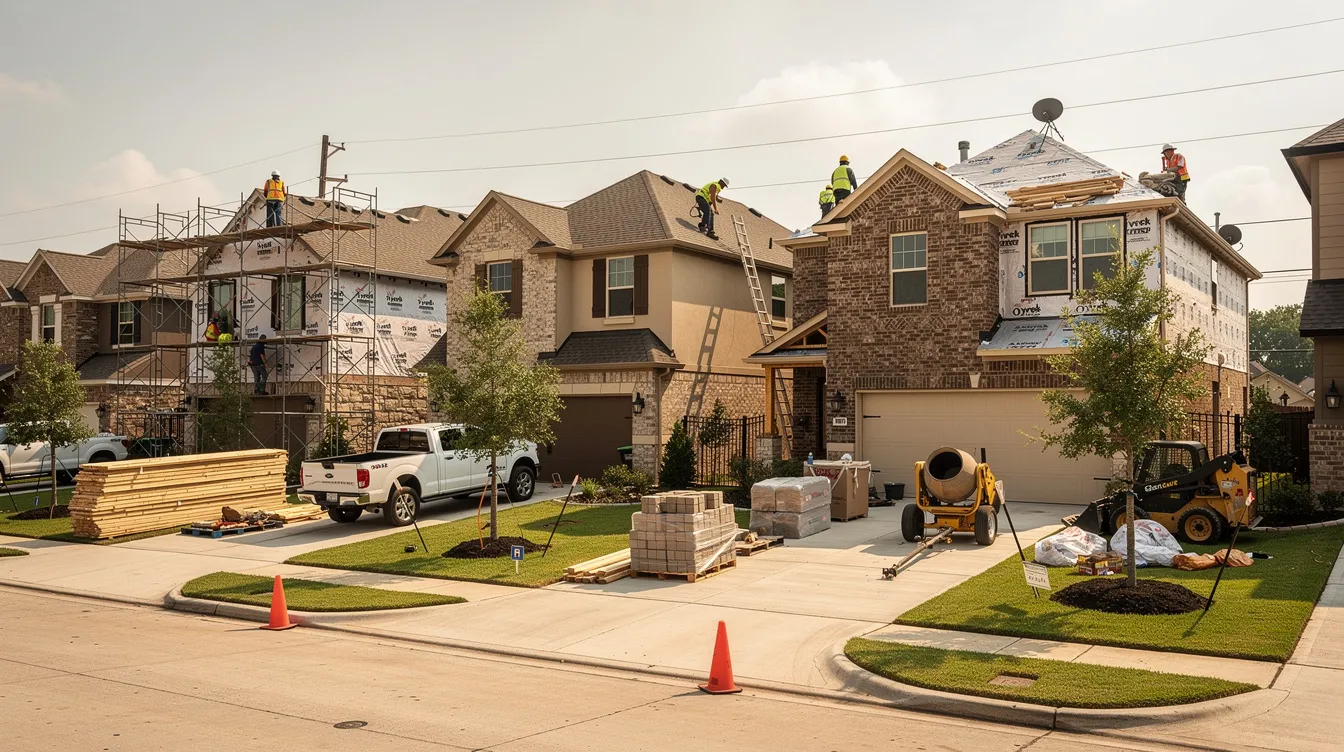
Hard money loans are ideal for short term real estate investments where speed or property condition rules out traditional loans. Concrete scenarios in Houston:
- A wholesale deal in Spring Branch, EaDo, or Third Ward where the seller demands a 7 to 10 day close. No bank is hitting that timeline. Hard money loans close in as little as 7 days with clean title.
- A property needing foundation, roof, or HVAC work that makes it ineligible for conventional financing at purchase. Funding from hard money lenders is typically faster than traditional banks for exactly this reason.
- Bridge situations: rolling 1031 proceeds between projects or acquiring a property before a longer term DSCR or conventional loan is ready.
- Borrowers with strong equity but imperfect credit histories (a bankruptcy three or more years old, inconsistent tax returns) where banks hesitate but a hard money lender will still consider the property and the plan.
- Even when the lender covers most of the purchase and rehab, the investor almost always needs additional capital. That gap is where deals fall apart.
How to Compare Houston Hard Money Lenders (Beyond Just Interest Rates)
Picking a lender based on the lowest advertised rate is like picking a contractor based on the cheapest quote. You need the full picture:
- Build a shortlist of 3 to 5 direct hard money lenders in Houston. Get written terms from each, dated and specific. Compare interest rates, origination points, maximum LTV, minimum and maximum loan amounts, and which property types they finance (land, multifamily, or only single family).
- Look at what's easy to miss: extension fees if rehab runs long, minimum interest requirements (many lenders require at least three months of interest even if you repay early), and early payoff penalties that may exist in hard money loan agreements.
- A draw schedule for funds can affect project timelines in rehab projects. Ask how draws are handled: inspections, photos, receipts, holdback percentages, and turnaround time between request and disbursement.
- Successful hard money lenders understand neighbourhood nuances and market dynamics. Local expertise is crucial; lenders with Houston-specific appraiser panels and familiarity with submarkets like Cypress vs. Baytown will underwrite faster and more accurately.
- Proper documentation and transparency about fees are non-negotiable. Treat missing details as red flags, not assumptions. If a lender can't put it in writing, move on.
Key Questions to Ask Any Houston Hard Money Lender
- What percentage of purchase price and rehab costs does the loan actually cover, and do you lend on ARV or as-is value? Tidal Loans, for example, offers up to 70% ARV; Noble Mortgage offers hard money loans from $50,000 to $1.5 million.
- Do you require a minimum cash down payment (10% to 20%) regardless of deal strength?
- What is the maximum loan term, and what are extension fees? Catalyst Funding provides loans with terms of 6 to 12 months; others stretch to 18 or 24.
- Do you lend on owner occupied homes? (Most do not.) What about short term rentals or Airbnb properties in Houston city limits?
- A reliable lender should be able to fund projects within a specified deadline. How quickly can you realistically close with clean title? Five to seven business days after appraisal and underwriting is a fair benchmark.
Qualifying for Houston Hard Money: Property, Borrower, and Exit Plan
Qualification centres on three pillars: the property itself, the borrower's profile, and a clear exit strategy. Hard money loans usually have shorter repayment periods compared to traditional loans, so all three need to line up.
For the property: non-owner occupied, first lien position, clear title, and a realistic ARV backed by Houston comparables from the past 3 to 6 months. Avoid overpaying in hot zip codes where comps may lag.
For the borrower: many Houston hard money lenders work with credit scores in the mid 500s if the deal is strong. Better credit (650+) earns competitive rates, lower points, and smoother underwriting. Individuals must have verifiable income or significant collateral to secure hard money loans. Hard money loans typically require higher experience levels to qualify for better terms, though first time investors can still qualify with a well structured deal.
Your exit plan (flip, BRRRR into a DSCR loan, refinance, or sell) must align with the loan term and projected market conditions in Houston and any cross market investments like San Antonio. Stress test every deal: what if the sale price comes in 5% to 10% lower, rehab takes two extra months, or holding costs spike? If the numbers still work, you've got a deal worth doing.
What to Prepare Before You Contact a Money Lender in Houston
- Property address, purchase contract, estimated closing date, photos, and a line item rehab budget.
- ARV assumptions backed by at least 3 comparable sales in the same Houston submarket within the last 3 to 6 months, adjusted for condition and square footage.
- Your capital stack plan: how much cash you have, how much you expect from the hard money lender, and how much gap funding you need.
- A draft exit plan with a timeline: flip by month X, refinance into a 30 year DSCR loan, convert to short term rental, or sell and 1031 into another Texas property.
The Hidden Funding Gap: What Hard Money Lenders in Houston Do NOT Cover
Even the best hard money loan leaves a gap. Interest rates for hard money loans are often higher than conventional mortgages, and the equity requirement means you're putting up real cash.
The typical funding gap includes: down payment (often 10% to 30% of purchase), closing costs, lender points, appraisal, title policy, insurance, holding costs during rehab, and contingency for cost overruns. Many Houston investors underestimate the cash needed to carry a property through rehab and marketing, especially when delays hit.
Real world example: a $300,000 flip in Houston with 70% LTV hard money covers $210,000. Add $50,000 in rehab, and the borrower still needs roughly $90,000 in down payment plus $10,000 or more for closing costs, initial materials before draws, and reserves. That's $100,000+ out of pocket, even though the loan covers most of the purchase.
Deals die at this stage. Not because the investor can't qualify for hard money, but because they can't stack the rest of the capital.
How Gap Funded Helps Houston Investors Stack Capital Around Hard Money
We're not a hard money lender. We don't compete with your Houston lender. We fill the gap between what they fund and what you actually need to close and complete the project.
We help cover the pieces hard money won't: down payments, closing costs, initial rehab expenses before draws, earnest money deposits, and working capital. Our tools, in the order that matters for most Houston investors:
- Unsecured gap funding through personal term loans.
- Credit card stacking at 0% intro APR for interest free capital during the project hold period.
- Unsecured gap funding lines for flexible working capital.
For investors with equity in a primary residence or existing investment properties in Texas, we can also explore HELOC based strategies. You can learn more about pairing these with hard money loans for real estate investing on our resource page.
We never take a lien on the deal property. We don't take equity in your flip or rental. No equity splits, no dilution. Just fast, non-dilutive capital that complements your existing loan.
Typical Gap Funding Stack for a Houston Fix and Flip Deal
- Property: $250,000 purchase in Independence Heights. Rehab: $60,000. ARV: $400,000.
- Hard money loan at 70% LTV on ARV covers roughly $280,000, leaving a $30,000 to $40,000 gap plus closing costs and early rehab.
- An investor with a 680 FICO might use stacked 0% business credit cards plus an unsecured term loan through Gap Funded to cover down payment, closing costs, and materials before the first draw.
- Qualifying typically requires a 650+ FICO, verifiable income, and reasonable existing debt. We run a soft credit pull when you explore options, so there's no impact to your credit just to check.
- Start the process at gapfunded.com/apply for a fast, no obligation funding review.
Beyond Flips: Using Hard Money and Gap Funding for BRRRR, Rentals, and Short Term Rentals
The BRRRR path works like this: acquire a distressed property with a short term hard money loan, rehab it, place a tenant, stabilise rental income, then refinance into a 30 year DSCR loan. The hard money loan is bridge financing until the property qualifies for long term hold. They are flexible and negotiable compared to traditional loans, which makes that bridge possible.
Gap Funded supports BRRRR investors with earnest money deposit financing, down payment funding, and working capital during rehab. Hard money loans provide quick access to cash for investors on the acquisition side; we cover the rest.
Short term rentals and Airbnb properties in Houston, Galveston, or San Antonio carry extra risk: regulatory requirements, seasonality, permitting, and insurance. You need larger reserve buffers. Gap funding can cover furnishing costs, extra holding time, or reserves if bookings lag early.
Other Capital Tools Houston Investors Consider (Pros and Cons vs. Hard Money)
A second mortgage or HELOC on your primary residence or an existing rental property offers lower interest rates than hard money, but processing is slower and your available equity is the ceiling. Good for planning ahead; not great when you need to close in a week.
A business line of credit or business term loan works well for experienced investors or contractors with consistent revenue (typically two or more years in business and at least $20,000 per month). Lower cost than hard money for working capital, but requires history and documentation.
A merchant cash advance is fast but expensive. Use it for working capital gaps, not as primary deal financing for an investment property.
For pure real estate acquisition and rehab in the Houston area, a solid hard money lender paired with a tailored Gap Funded capital stack typically offers more flexibility than forcing a single product to cover all your financing needs.
Next Steps: Match Your Houston Deal to the Right Hard Money Lender and Fill the Gap
- Outline your next deal: property details, rehab scope, target ARV, and exit plan (flip, BRRRR, rental, or short term rental) before you start shopping lenders.
- Build a Houston hard money shortlist. Compare written terms line by line. Confirm eligibility for non-owner occupied investment properties only.
- Once you've identified your primary hard money loan structure, map the gap: down payment, closing costs, rehab timing, and reserves.
- Visit gapfunded.com/apply to see personalised gap funding options for your Houston or broader Texas deal. No equity splits, no lien on the deal property, and no impact to your credit just to check. Your specific situation determines the structure; we'll map it out with you.
Related Reading
This article is for educational purposes only and isn't financial, legal, tax, or investment advice. Credit and financing outcomes depend on your own situation. Talk to a licensed financial professional before making funding decisions for your business.