
House Flipping in Texas: How to Flip Houses in Dallas, Fort Worth, Houston & San Antonio (and Actually Fund the Deals)

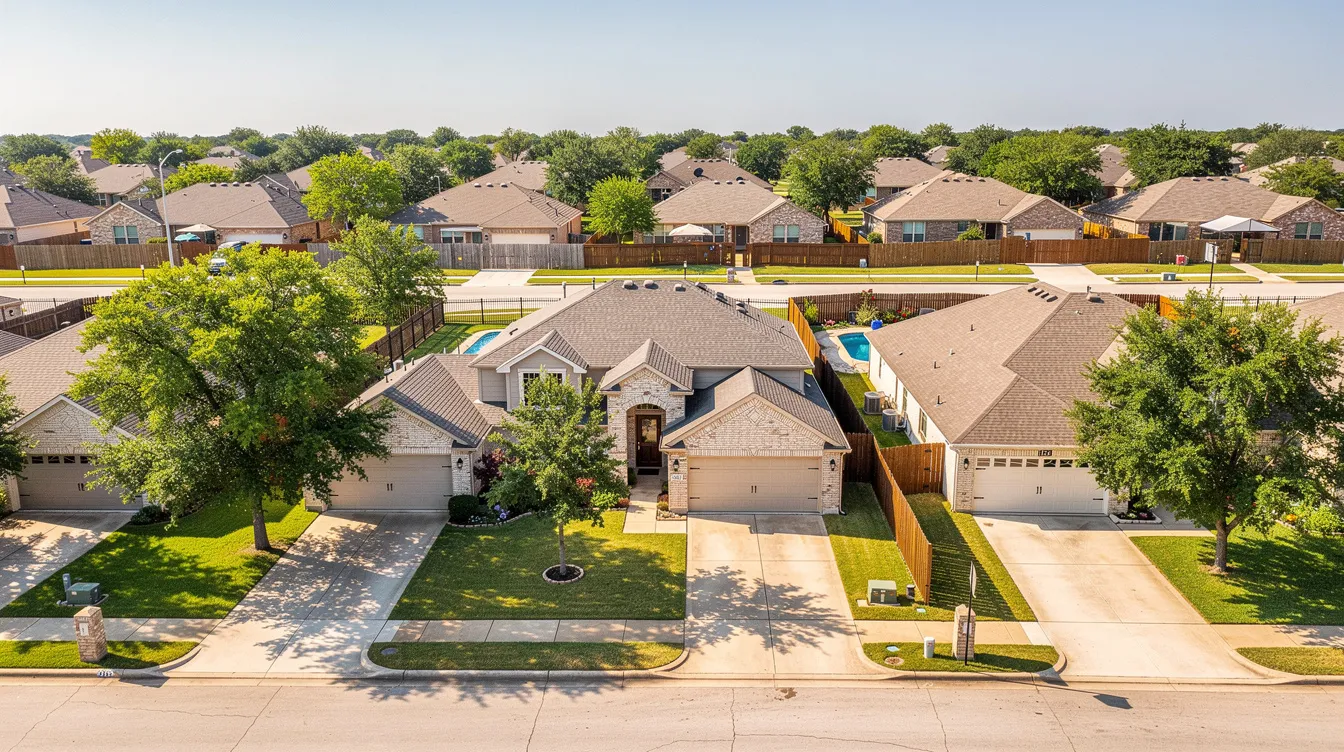
Texas keeps pulling people in. The Dallas/Fort Worth Metroplex has nearly 8 million residents, Houston's population grew by 11.02% over the last decade, and San Antonio isn't far behind. That growth means housing demand, and housing demand means opportunities for investors who know how to buy low and sell high. House flipping is a real estate investment strategy that works particularly well here because home prices are still well below coastal state levels. Houston's median home value sits at $161,300, making it one of the more accessible metros in the country for flippers putting together their first deal.
This guide covers three things: picking the right Texas market, running accurate numbers, and solving the funding gap that kills promising deals before they ever close.
How House Flipping Works in Texas
At its core, investors purchase distressed or outdated properties to sell for a profit after renovating them. The typical timeline runs about 4 to 8 months from purchase to sale. Here is how it breaks down:
- Sourcing a deal: 2 to 8 weeks
- Closing the purchase: 2 to 4 weeks
- Renovation: 4 to 16 weeks depending on scope
- Listing, selling, and closing again: 4 to 10 weeks
Renovations for flipping should focus on high ROI areas like kitchens and bathrooms. A quick San Antonio example: a 1960s 3 bed in the Jefferson area bought at $190,000 with a $40,000 rehab (full kitchen, two bathrooms, roof, HVAC, paint, flooring) could reach an ARV of $300,000. After all costs, profit before taxes lands around $30,000 to $40,000.
Texas has some of the highest property tax rates in the nation, which directly affects holding costs during rehab. Proper budgeting must include holding costs during the renovation period, and those costs vary by county. Permitting and regulations for renovations vary by Texas municipality too. Navigating local permitting processes can prevent costly project delays, especially across Harris, Bexar, and Tarrant counties where inspection requirements differ significantly.
The 70% rule helps determine maximum purchase price for flips: pay no more than 70% of ARV minus rehab costs. In hotter Dallas infill areas, some stretch to 75%. In slower Houston suburbs, tighten to 65%. Accurate calculations of purchase, renovation, and selling costs are crucial for profitability. Also worth noting: FHA guidelines restrict financing for properties resold within 90 days of purchase, so plan your exit timeline accordingly.
Choosing the Right Texas Market to Flip Houses
Real estate in Texas is heavily localized and requires specific market knowledge. Buying homes in rapidly growing markets increases profit potential for flippers, but each city has a different personality.
Dallas and Fort Worth offer larger ARVs and faster appreciation in certain submarkets. Lake Highlands' median sale price rose to $489,000 by 2022, while Oak Cliff's median home price was $267,500 in December 2022. Fort Worth is a slightly more affordable alternative. Polytechnic Heights' median sale price increased from under $100,000 to $260,000, a sign of investor activity and neighbourhood transformation.
Houston is the volume play. Diverse economy across energy, healthcare, and logistics. Lower entry points compared to Dallas make it attractive for value focused flippers who want to scale. The population growth across the metro keeps demand steady.
San Antonio suits first time flippers. Strong military and healthcare employment, median home prices below Dallas and Austin, and reliable demand from entry level buyers. Lower financial stress on your first deal makes a real difference to your quality of life while you learn the business.
Gap Funded works with investors across all of these metros. Whether you are flipping in Houston's East End, Fort Worth's Poly, or San Antonio's West Side, the funding options I will cover later apply.
Neighbourhood Level Due Diligence
Investors must conduct market analysis to target profitable flipping opportunities. Here is the data checklist I reckon matters most:
Median price by ZIP code: Target sub $300k ARV areas for starter flips. Avoid ultra luxury unless you have the experience and contractor network to match.
Appreciation trends: Use local appraisal district data and MLS records over the past 5 to 10 years. Flat or declining values are a sign to walk away.
Days on market: The average number of days on market in Houston is critical for calculating holding costs. Aim for pockets where renovated homes sell within 30 to 45 days. Anything above 60 starts eating your profit.
Jobs and income: Houston's unemployment rate is currently 6.1% and the average salary in Houston is $64,025. Rising household income and low unemployment in Dallas, Fort Worth, and San Antonio support sustainable price growth.
Rent vs ownership: Strong rents and low home ownership rates can make a market good for BRRRR or rental exits. Understanding exit strategies is essential for a successful house flip.
Build a simple buy box: price range, bed and bath count, year built, school district minimums. This stops you from chasing every listed property and wasting time on deals outside your category.
Finding Profitable Properties to Flip in Texas
Wholesalers are a fast path to below market properties in Dallas, Fort Worth, Houston, and San Antonio. Texas regulations generally allow assignable contracts for wholesaling, with typical assignment fees running $3,000 to $15,000 per deal.
MLS through an investor friendly agent: filter for DOM over 60, price reductions, and cosmetic fixer keywords to find deals that other buyers have overlooked.
Foreclosures and auctions: houses in foreclosure often sell for less than market value. County courthouse auctions in Harris, Bexar, Dallas, and Tarrant counties can yield steep discounts, but watch for limited inspections and cash heavy competition.
Off market strategies: direct mail to absentee owners, driving for dollars in older neighbourhoods like Oak Cliff or South San Antonio, and skip tracing distressed properties.
House flippers should build a reliable contractor team to ensure quality work. Networking at REI meetups in Houston and DFW is one of the best ways to find reliable people and hear about pocket deals in your area.

Running the Numbers: ARV, Rehab Costs, and Potential ROI
Calculate ARV using 3 to 5 comparable sales within half a mile, similar square footage and age, closed in the last 3 to 6 months. Never use listed but unsold comps.
Per square foot rehab costs in 2026 Texas markets typically break down as:
| Rehab Scope | Cost Per Sq Ft |
|---|---|
| Cosmetic | $10 to $20 |
| Moderate | $25 to $40 |
| Heavy or gut | $50 to $80 |
Foundation issues are common risks in Texas due to expansive clay soils, and foundation repairs can significantly increase renovation costs in Texas. The potential for unexpected repair costs is a key risk in house flipping, so always add a 10% to 20% contingency.
Fort Worth example: buy at $210,000, spend $45,000 on moderate rehab, holding costs over 6 months around $13,000, closing and selling costs roughly $25,000. Total all in: about $293,000. Sell at ARV of $330,000. Net profit near $37,000 to $40,000 before income taxes. Maintaining detailed records is important for managing finances and disclosures across every deal.
Successful house flipping requires careful renovation management. Every dollar of scope creep eats directly into your profit, and there is nobody else to absorb it.
Funding Your Texas House Flips: Hard Money, Funding Gaps & How Gap Funded Helps
Here is the belief I hear constantly: "If I just find a great deal, the money will magically appear." It doesn't. Most Texas flippers get stuck on the gap between what their hard money lenders cover and what they actually need to close.
Hard money loans are popular for house flipping. A typical structure covers 80% to 90% of purchase and 100% of rehab, capped at around 70% of ARV. Private lenders offer faster funding than traditional banks, but that still leaves you short on down payment, closing costs, earnest money deposits, and holding capital.
Gap funding bridges shortfalls in financing for deals. Gap Funded sits behind your primary lender with non dilutive capital: no equity splits, no liens on the deal property, and a soft credit pull that does not impact your score just to see options.
The tools, in the order that matters for approval sequencing:
Unsecured personal term loans work for strong credit borrowers (typically FICO 650 or above) needing a lump sum fast for down payment and rehab. This is the most common starting point.
Zero percent business credit card stacking gives you flexible capital for rehab materials, holding costs, and bridging cash flow during the renovation period without paying interest for 12 to 18 months.
Investors can use HELOCs for funding renovations. If you have equity in a primary residence or investment property, HELOC loans for real estate investors can cover reserves and contingency without touching the deal property.
Real example: a San Antonio investor gets approved for a hard money loan at 85% LTC but is short $45,000 for down payment, closing costs, and first two months of carrying costs. We bridge that with a $35,000 term loan plus $20,000 in zero percent business credit limits. No equity partner needed, no profit split.
Compare that to gator lending or equity partners. They can fund a deal, fair enough, but they typically require profit splits or tight control over the project. Gap Funded provides gator lending style private funding options but also provides the money without taking a share of your upside.
Advanced Strategies: BRRRR, Short Term Rentals, and Scaling
The BRRRR strategy works well in rental heavy Texas markets like San Antonio and Houston. If a flip does not sell quickly, pivoting to a rental exit keeps your capital working instead of sitting idle.
Short term rentals near downtown San Antonio, Houston Medical Center, or Dallas entertainment districts can boost cash flow as an alternative exit, though they come with added regulatory and operational complexity.
For experienced investors with 2 plus years in business and at least $20,000 per month in revenue, business lines of credit from Gap Funded can help scale from 1 to 2 flips per year to 5 to 10 or more. Debt consolidation can also clean up high interest personal cards or MCAs, improving your DTI and increasing approval odds with primary lenders on your next deal.
Think like a business owner: track deal statistics, build a small team (agent, GC, bookkeeper), and use non dilutive funding instead of endlessly giving away equity to money partners.
Your Next Steps to Start Flipping Homes in Texas
House flipping in Texas is accessible but capital intensive. Here is the action plan:
- Pick a metro (Dallas, Fort Worth, Houston, or San Antonio) based on your capital and risk tolerance
- Define your neighbourhood buy box using the due diligence checklist above
- Attend two local REI meetups to learn submarket nuances
- Analyse 25 recent closed sales in your target area for realistic ARV baselines
- Contact at least one primary lender and compare what they cover versus what they leave out
- Complete a gap funding application to see what non dilutive capital is available
Promising deals in Texas die at the down payment or rehab budget stage every week. That is exactly the problem we built Gap Funded to solve. Personal term loans, zero percent credit card stacking, HELOC based options, business lines of credit, and debt consolidation, each one fits a different place in the capital stack depending on where you are in your investing journey.
Head to gapfunded.com/apply for a quick, no obligation funding review. Soft pull, no impact to your credit, and you will know exactly how much gap capital you can access for your next Texas flip.
Related Reading
This article is for educational purposes only and isn't financial, legal, tax, or investment advice. Credit and financing outcomes depend on your own situation. Talk to a licensed financial professional before making funding decisions for your business.