
HELOCs For Investment Properties: How Real Estate Investors Can Safely Tap Equity

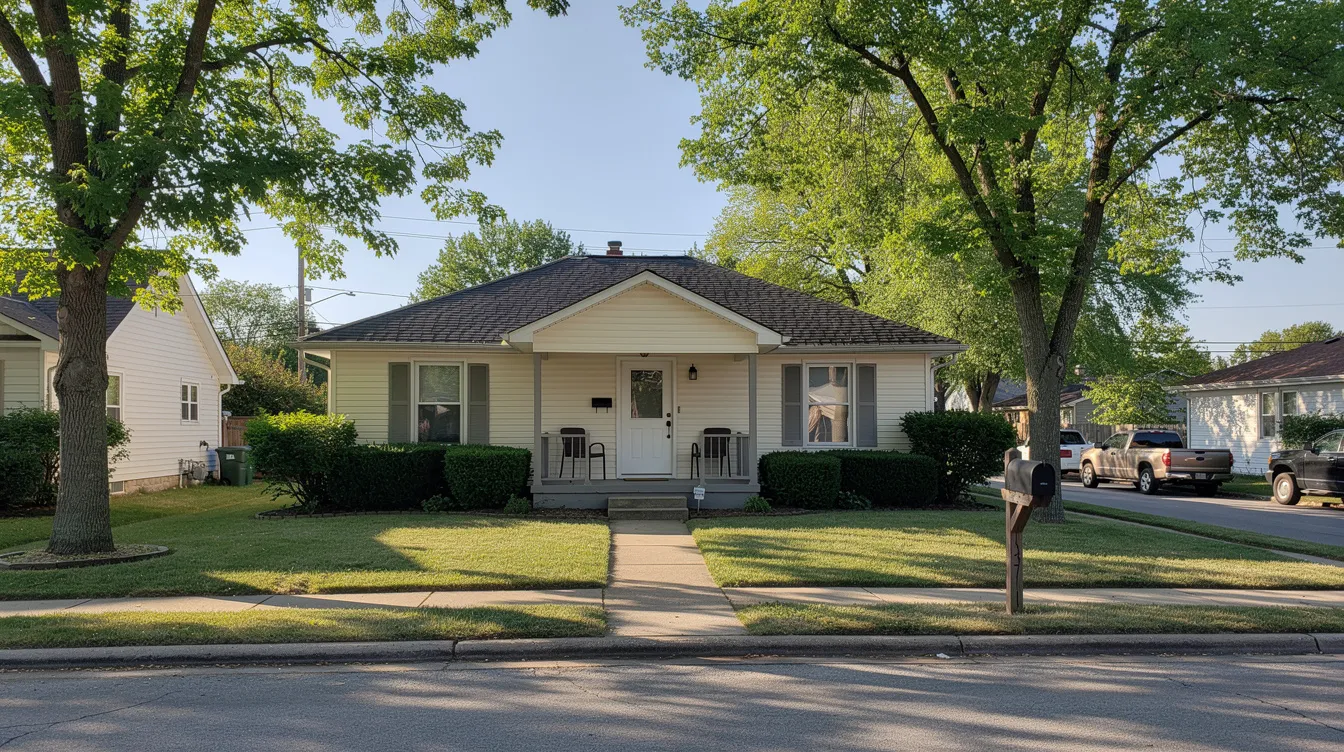
HELOCs For Investment Properties: How Real Estate Investors Can Safely Tap Equity
Are HELOCs On Investment Properties Worth It For Real Estate Investors?
You own a rental property. Maybe two. The tenants are paying, the mortgage is ticking down, and equity is quietly stacking up inside those walls. Naturally, you start wondering: can I pull some of that equity out and put it to work on the next deal?
That is exactly what a HELOC on an investment property is designed to do. A home equity line of credit lets you borrow against the existing equity in your rental property, giving you a revolving line of capital you can draw from as needed. Real estate investors use these lines for everything from funding a down payment on a new property, to covering rehab costs in a BRRRR strategy, to bridging short term gaps in a fix and flip timeline.
The big question most investors have is straightforward: "I've got equity in my rentals. Can I use a HELOC to scale my portfolio without wrecking my cash flow?" The short answer is yes, sometimes, with caveats. The longer answer involves understanding how the draw period works, what interest only payments actually look like, how the repayment period shifts your obligations, and where lenders set the credit limit based on your combined loan to value ratio.
This article covers the mechanics, current qualification standards (loan to value, higher credit score thresholds, debt to income requirements), real risks, and practical alternatives. I also cover where Gap Funded helps real estate investors stack HELOCs with other tools like 0% business credit cards and unsecured term loans to cover down payments, rehab, and working capital without equity splits. Soft pull, no obligation to see what you qualify for at gapfunded.com/apply.
What Is A HELOC And How Does It Work On Rental Properties?
A home equity line of credit, or HELOC, is a revolving credit line secured by the equity in real property. Think of it like a credit card backed by your house instead of a bank's faith in your FICO. You get a credit limit, you draw funds as you need them, and you pay interest only on what you have drawn.
The typical structure has two phases. During the draw period (often 5 to 15 years depending on the lender and property type), you can access funds freely and make interest only payments. Once the draw period ends, you enter the repayment period (usually 10 to 20 years), where you start paying both principal and interest, and you can no longer borrow from the line.
Most HELOCs have variable interest rates tied to the prime rate. Your lender adds a margin on top of prime based on your risk profile. In mid 2026, with the prime rate sitting around 6.75%, strong borrowers are seeing full rates of roughly 7.7% to 9.5% on investment property HELOCs.
Here is how the maths works on a rental property. Say you own a rental worth $400,000 with an existing first mortgage balance of $220,000. If the lender caps combined loan to value at 75%, your total allowable debt is $300,000. Subtract what you owe and the available investment property HELOC line is $80,000. With a 70% cap, that drops to $60,000.
What Counts As An Investment Property Versus A Second Home Or Primary Residence?
Lenders care deeply about occupancy because it drives default risk, allowed LTV, and the interest rate they charge. An investment property for lending purposes is a non owner occupied property held primarily to generate income or appreciation. Think single family rentals, townhomes, condos, and small multifamily buildings (1 to 4 units).
If you live in one unit of a duplex or fourplex, that is generally classified as your primary residence, not an investment property, even if the other units are rented out. A vacation home or second home that you use occasionally but do not rent consistently usually falls under its own category with separate underwriting rules.
Common examples that qualify as investment properties: long term rental property, a short term rental (Airbnb), a BRRRR portfolio property, and small multifamily held in your name or, in some cases, an LLC.
Can You Get A HELOC On An Investment Property Today?
Yes. But finding one takes more legwork than walking into your local bank branch.
Many large retail lenders have pulled back from offering HELOCs on non owner occupied properties. The investors who successfully get one are typically working with regional banks, portfolio lenders, certain credit union programmes, and specialised real estate lenders who understand rental property underwriting. Mortgage brokers can be helpful for tracking down which lenders currently offer investment property HELOCs in your state.
Availability parameters are fairly consistent across lenders that do offer them: 1 to 4 unit residential, minimum property value thresholds, stable and documented rental income, and no major deferred maintenance. Properties mid rehab or sitting vacant generally will not qualify.
Worth noting: a primary residence HELOC can often be used for real estate investing purposes (funding a down payment, covering rehab costs). These are far easier to qualify for, but they put your own home at risk as collateral. That is a trade off only you can evaluate.
Why HELOCs On Rental Properties Are Harder To Qualify For
Here is the lender's logic. When money gets tight, people almost always protect the roof over their head before they protect a rental property. Lenders know this. That higher risk of default on non owner occupied property is the single biggest reason investment property HELOCs come with tougher standards.
That higher risk shows up everywhere in the underwriting:
- Stricter debt to income ratio limits, often requiring DTI below 43% to 50%
- Higher credit score minimums (680 to 720+ for competitive pricing)
- Lower combined loan to value caps (typically 70% to 75%, versus 85% to 90% for primary homes)
- Longer cash reserve requirements (6 to 12 months of mortgage payments, HELOC payments, property tax, and property insurance)
Lenders also require documented rental income and signed leases, landlord history, and proof that the rental property has been stabilised with minimal vacancies. If you are mid renovation or have a spotty tenancy record, expect pushback.
Investment property HELOCs often have stricter approval processes overall, and real estate investors with multiple mortgages face even more detailed underwriting around global cash flow and portfolio leverage. Lenders scrutinise debt to income ratios carefully when you already carry several mortgage payments.
Key Qualification Requirements For Investment Property HELOCs
This is the checklist version. If you are thinking about applying, run through these before you pick up the phone.
Credit profile:
- HELOCs on investment properties typically require a 700+ credit score for decent pricing. Some lenders start at 680 with compensating factors (strong reserves, low LTV), but a higher credit score reduces the margin your lender adds above prime.
Equity and LTV:
- Investment property HELOCs typically allow up to 70% LTV. Some lenders stretch to 75% or rarely 80% for exceptionally strong borrowers. You can borrow up to 70% of your investment property's equity in most standard programmes.
Debt to income and global cash flow:
- Lenders look at your total DTI across all obligations, counting only 75% to 80% of gross rental income to allow for vacancy and operating costs. Keeping DTI below 43% to 45% is the safe target for most lenders.
Reserves:
- Borrowers need to maintain a substantial reserve to cover personal and property expenses. Expect requirements of 6 to 12 months of combined mortgage, HELOC, insurance, and property tax payments held as cash reserves.
Documentation:
- Two years of business tax returns and personal returns
- Current mortgage statements on all financed properties
- Signed leases and rent rolls
- Proof of property insurance
- Possibly LLC operating agreements if held in entity
Appraisal:
- Most lenders require a full, in person appraisal. Appraisal fees for HELOCs can range from $500 to $1,100 depending on property type and location.
How HELOC Terms Differ Between Primary Homes And Investment Properties
If you have ever had a home equity line on your primary residence, the investment property version will feel like the same product wearing a heavier price tag. Here is a side by side comparison:
| Metric | Primary Residence HELOC | Investment Property HELOC |
|---|---|---|
| CLTV cap | 85% to 90% | 70% to 75% (rarely 80%) |
| Credit score for best pricing | 650 to 680 | 700 to 740+ |
| Typical rate premium | Base | +1% to 2% above primary rates |
| Reserve requirements | 0 to 3 months | 6 to 12 months |
| Lender availability | Widely available | Fewer lenders offer investment property HELOCs |
Investment property HELOC rates are usually 1% to 2% higher than primary rates. On fees, expect potentially higher origination costs, a full appraisal rather than an automated valuation, and sometimes minimum draw requirements. An early termination fee of $395 if closed within two years is common across several lenders.
Both structures typically have an interest only draw period followed by a principal plus interest repayment period. But investment property HELOCs may have shorter draw windows, tighter repayment covenants, or additional cash flow requirements layered in. Primary residence HELOCs can allow up to 80% LTV, giving you meaningfully more borrowing power on the same property value.
Strategic Uses Of A HELOC For Real Estate Investors
Here is how experienced investors actually use HELOC funds in 2026, not textbook theory.
Renovations for value add: HELOCs can fund renovations to increase property value. Use the line to upgrade kitchens, add bedrooms, or improve finishes. A $40,000 rehab that lifts monthly rent by $600 pays for itself inside six years, and the equity gain is often immediate. HELOCs provide funding for renovations in real estate investment strategies such as BRRRR.
Down payment on a new property: Investors can use HELOCs to cover down payments for conventional investment property loans. If your next rental needs 20% to 25% down, a HELOC on an existing property or your primary residence can cover part or all of that plus closing costs.
Bridge financing and working capital: HELOCs allow access to funds for unexpected expenses. They also serve as bridge capital while waiting for long term financing, covering earnest money deposits, carrying costs, or rehab draws between closing and stabilisation.
Debt consolidation: HELOCs can consolidate higher interest investment debt. If you are carrying expensive short term loans, business credit balances, or hard money notes from previous projects, a lower rate equity line of credit can centralise those obligations. Investors also use HELOCs for cash purchases to compete in faster moving markets.
HELOCs provide flexible capital for project cash flow, which is what makes them attractive in a portfolio strategy.

A note on tax deductions: Tax deductibility of HELOC interest depends on how the borrowed funds are utilised. Interest on a HELOC secured by an investment property is generally deductible on Schedule E if used for investment purposes. Interest tracing rules determine HELOC interest deductibility, so if you use HELOC funds for personal expenses, that interest becomes nondeductible. Talk to a tax professional about your specific situation.
Pros Of Using A HELOC On An Investment Property
Why do so many real estate investors consider a HELOC part of their capital stack?
Flexible, revolving access: Unlike a home equity loan that gives you a lump sum upfront, a HELOC is a revolving line. You draw funds when deals arise and only pay interest on what you have used. HELOCs provide flexibility in repayment and capital availability for multiple investment opportunities.
Interest only payments during draw: During the draw period, you make interest only payments, which reduces initial costs and keeps cash flow manageable during lease up or renovation periods when full amortisation would be painful.
Preserve your existing mortgage: A HELOC lets you keep your existing first mortgage in place. If that first lien is at a low fixed interest rate from a few years ago, you avoid replacing it with a higher rate cash out refinance. You only pay the premium on the incremental dollars.
Competitive rates versus unsecured options: Even with the risk premium, a HELOC's variable rate is typically cheaper than most personal loans, unsecured loans, or credit card balances. When used for investment purposes, the mortgage interest may be tax deductible.
The rental income should ideally cover standard expenses and HELOC payments. If it does, you are effectively using tenant cash flow to fund your next deal.
Cons And Risks Of Investment Property HELOCs
Leverage cuts both ways, and overleveraging is one of the most common causes of failure in real estate investing. Here is what can go wrong.
Variable rate risk and payment shock: HELOC payments can increase unpredictably in a rising interest rate environment. When the draw period ends and you shift from interest only to principal plus interest, monthly payments can jump sharply. On a $75,000 balance at 8.5%, interest only payments run about $531 per month. Once amortisation kicks in over 20 years, that jumps to roughly $651. If rates climb another point or two, the hit is larger.
Collateral risk: The HELOC is secured debt. Defaulting can lead to foreclosure on the rental property. If you used your primary residence to secure the line, that collateral risk extends to your home.
Over leverage: Using a HELOC can create over leverage risks in investment properties, especially if you are stacking variable rate debt on top of other adjustable rate mortgages without adequate buffer.
Impact on future financing: HELOC balances and required monthly payments increase your debt to income ratio, which can make qualifying for the next traditional mortgage or DSCR loan harder.
Exit strategy: Not having a clear exit strategy for a HELOC can lead to financial risks during the repayment period. Know how you will pay it down before you draw.
Careful evaluation of liquidity and cash reserves is essential when using a HELOC. If a few bad months of vacancy or unexpected repairs coincide with a rate increase, you need reserves to absorb the hit.
Comparing HELOCs To Other Ways To Tap Home Equity For Investing
Investors should compare multiple structures based on rates, risk, and timeline before committing.
Cash out refinance: A cash out refinance replaces your existing mortgage with a new, larger loan and hands you the difference. Pros include a fixed rate and a single payment. The con is that you lose your current low rate first mortgage, and full closing costs apply. If your existing first mortgage is at 4% and a new one is at 7%, you are paying that premium on the entire balance, not just the incremental draw.
Home equity loan on a rental property: This is a fixed rate second mortgage delivered as a lump sum with structured amortisation. It works well when your project cost is known upfront and you want predictable payments. But you pay interest on the full amount from day one, and there is no revolving credit line to reuse.
HELOC on primary residence for investing: Usually cheaper (lower annual percentage rate, higher CLTV), easier to obtain, and more widely available. But you are pledging your primary residence as collateral. If a deal goes sideways, your home is at risk.
Gap Funded does not replace HELOCs. We complement or substitute them when lenders will not write a HELOC on certain rental properties, or when investors need additional unsecured capital to cover the pieces a HELOC cannot reach.
How Using HELOC Funds Affects Your Overall Real Estate Capital Stack
Your capital stack is simply the layers of money that fund a deal. For most small and mid sized investors, it breaks down to: senior debt (first mortgage or DSCR loan), gap or mezzanine capital (second liens, HELOCs, unsecured funding), and your own equity (cash, sweat, or retained earnings).
An investment property HELOC usually sits as second lien debt behind your existing mortgage. That means if things go bad, the first lien holder gets paid before the HELOC lender.
Using HELOC funds for a down payment layers leverage on top of leverage. This magnifies returns when deals work and magnifies losses when they do not. A classic BRRRR example: you use a HELOC for acquisition plus rehab on a rental, stabilise it, get it appraised at a higher value, then refinance into a long term DSCR loan and pay off the HELOC. Capital recycled, line open for the next property.

Gap Funded specialises in filling the gap between what primary lenders finance and total project costs, often pairing with or replacing a HELOC when the numbers do not quite work with secured equity alone.
Where HELOCs Fall Short For Investors And Where The Funding Gap Appears
Even a well structured HELOC rarely covers everything. Here is where investors consistently hit walls:
- Down payment shortfalls: CLTV caps of 70% to 75% mean your available HELOC line is smaller than you expected
- Closing costs: Origination fee, appraisal, title insurance, and transfer taxes eat into your available capital
- Rehab overruns: The kitchen reno that was $18,000 is now $27,000 because of supply chain surprises
- Earnest money deposits: Needed fast, before the HELOC paperwork is even close to done
- Working capital during lease up: Carrying costs stack up while the rental property sits vacant
- Contingency reserves: Lenders for your next loan require reserves you have already deployed
Many investors come up 10% to 30% short on total capital needs, especially when scaling across multiple properties. HELOCs become unavailable or suboptimal when the rental is newly purchased (minimal home equity), when the investor's credit history sits below 680, or when DTI is already stretched from existing mortgage payments.
That gap is exactly where tools outside the traditional mortgage world become useful.
How Gap Funded Complements Or Replaces HELOCs For Real Estate Investors
This is the practical part, not a pitch. If you are structuring deals, you need to know what actually fills the holes.
Gap Funded acts as a funding intermediary for real estate investors, arranging unsecured personal term loans, stacked 0% business credit cards, and other gap funding solutions rather than acting as a traditional mortgage lender. We never take a lien on the deal property.
These tools cover the pieces a HELOC often cannot: down payment top ups, closing costs, rehab budgets, furnishings for a rental property, and operating reserves. If you have already maxed out a HELOC's available line or your lender will not write one on a particular property, gap funding fills the remainder.
Realistic qualification: typically 650+ FICO, verifiable income or a strong personal credit file. Pre qualification is via soft pull, so checking your options does not ding your credit. For investors carrying high interest balances from previous deals, debt consolidation can free up cash flow before or after using a HELOC. And credit card stacking at 0% introductory rates can provide interest free capital for 12 to 21 months.
The Order Of Funding: When To Use A HELOC Vs. Gap Funding Tools
Sequencing matters. Apply for the wrong product first and you can knock out approvals for others later. Here is the order I reckon works best.
Step 1: Senior financing. Secure your main traditional mortgage or DSCR loan first. This is the cheapest capital, longest term, and largest chunk of the deal. Lock this in before anything else.
Step 2: Equity and HELOC capital. Use personal cash, partner equity, and any available HELOC funds on your primary residence or rental properties to cover as much of the required equity and rehab budget as is prudent. Do not overextend any single property's equity.
Step 3: Gap funding. Use unsecured term loans and stacked 0% business credit cards to cover the remaining funding gap, including the down payment shortfall, closing costs, rehab, and carrying costs. Be realistic about repayment timelines: refinance or sale within 6 to 24 months should be the plan.
This order matters because senior debt sets the framework, secured collateral based funds come second, and flexible unsecured capital comes last so that overall leverage and monthly payments stay manageable. Applying for gap funding tools before your mortgage is in place can create unnecessary credit inquiries that spook the primary lender.
Practical Example: Using Equity And Gap Funding To Acquire A New Rental Property
Let me walk through a concrete scenario.
The deal: A single family rental property, purchase price $320,000. You need 20% down ($64,000), plus closing costs and light rehab totalling $26,000. Total capital required beyond the mortgage: $90,000.
The capital stack:
| Source | Amount | Monthly cost |
|---|---|---|
| Conventional mortgage (80% LTV) | $256,000 | ~$1,700 (P&I at 7%) |
| HELOC on primary residence | $40,000 | ~$283 (interest only at 8.5%) |
| Personal savings | $20,000 | $0 |
| Gap Funded (unsecured term loan + credit stacking) | $30,000 | ~$350 to $500 combined |
| Total project capital | $346,000 | ~$2,333 to $2,483 |
If the property rents for $2,800 per month and you budget $400 for property tax, property insurance, and maintenance, your net after expenses is roughly $2,400 to cover mortgage payments, HELOC, and gap funding costs. Tight, but workable with reserves.
Once the rental property is stabilised, appraised higher after renovations, and generating consistent rental income, you refinance into a DSCR loan, pay down the unsecured balances first (highest cost capital), and recycle your HELOC capacity for the next deal. That is the BRRRR engine running on a blended capital stack.
When Investors Should Be Cautious Or Avoid HELOCs On Investment Properties
This section is intentionally conservative. I would rather you skip a deal than blow up your portfolio.
Red flags for pausing:
- Thin cash reserves (less than 6 months of total obligations)
- Unstable employment or rental income
- Already carrying heavy variable rate debt across multiple properties
- No clear exit plan for how the HELOC gets repaid
Do not stack too much variable rate debt on a single property without adequate buffer. If the prime rate moves up and your tenants move out in the same quarter, you need reserves to absorb both hits.
New investors without a proven track record should consider starting with more conservative financing, larger cash down payments, and less leverage, before layering HELOCs and advanced capital stack strategies. I am not a CPA or financial advisor, so consult a tax professional and a real estate savvy advisor about entity structure, risk management, and how to borrow money responsibly before pledging multiple properties as collateral.
How To Decide If An Investment Property HELOC Fits Your Real Estate Strategy
Before you apply, ask yourself these questions:
- Do I have sufficient existing equity in my property's equity position after accounting for 70% to 75% CLTV limits?
- Can my rentals comfortably support interest only and future principal payments even during vacancy?
- How will adding this line affect my ability to qualify for the next traditional mortgage or DSCR loan?
- What is my exit strategy: refinance, sale, or paydown from cash flow?
Model both best case and worst case scenarios using your actual numbers, not just lender projections. What happens if vacancy runs three months longer than expected? What if the variable interest rate jumps a full point?
For many real estate investors, the optimal approach is a blend: senior loan plus some HELOC exposure plus targeted gap funding, rather than relying on any single product. Portfolio lenders, credit approval from a credit union, and unsecured gap capital each have a role depending on the deal.
If you want to see how a HELOC plus gap funding for real estate investors could work together on your next deal, start with a quick soft pull application at gapfunded.com/apply. No equity splits, no liens on the deal property for unsecured products, and fast turnaround when an investment opportunity lands in your lap.
The best capital stack is not the one with the most products. It is the one where every piece has a job, a cost you can stomach, and a clear way out.
Related Reading
This article is for educational purposes only and isn't financial, legal, tax, or investment advice. Credit and financing outcomes depend on your own situation. Talk to a licensed financial professional before making funding decisions for your business.