
HELOC Texas: How Home Equity Lines of Credit Really Work (and How Gap Funded Helps You Use Them Strategically)

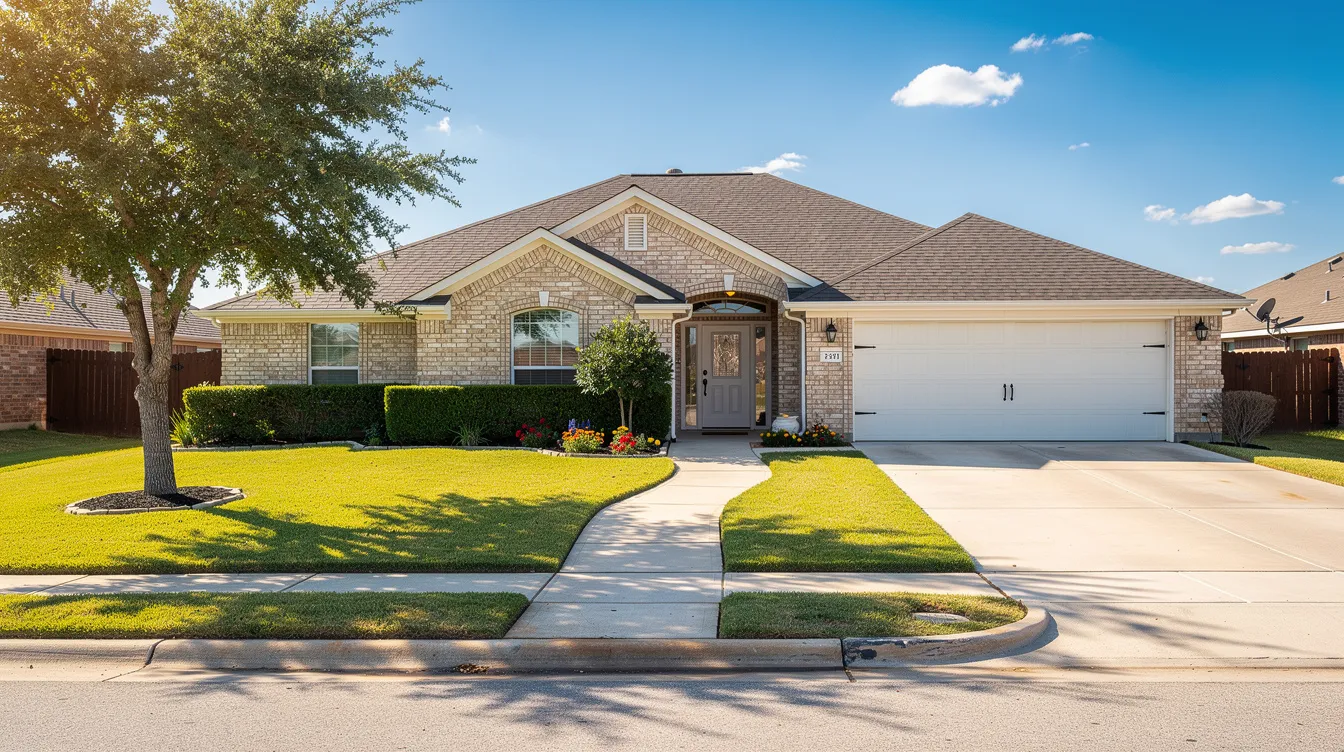
HELOC Texas: How Home Equity Lines of Credit Really Work (and How Gap Funded Helps You Use Them Strategically)
Texas homeowners sit on a fair whack of home equity right now, but actually pulling it out is a different story. The state has some of the strictest home equity lending rules in the country, and if you don't understand them before you apply, you'll waste time, money, or both. This guide breaks down exactly how a Texas HELOC works, what the law allows (and doesn't), and how to stack additional funding when your equity line of credit alone isn't enough to close the deal.
Quick Answer: How a Texas HELOC Works and When It Makes Sense
A Home Equity Line of Credit is a revolving line of credit secured by your primary residence. Under the Texas Constitution, Article XVI, Section 50, combined liens on your homestead (first mortgage plus any home equity line) cannot exceed 80% of your home's fair market value. That 80% cap is law, not a lender guideline.
HELOCs in Texas typically have a 10 year draw period where you can borrow funds up to your credit limit and make interest only payments. After that, you enter a repayment period (often 10 to 20 years) where you pay principal and interest in regular monthly payments. HELOCs allow flexible access to funds over time, making them useful for phased projects, unexpected expenses, or recurring capital needs. A Home Equity Line of Credit is secured by home equity, so the stakes are real.
This page is for Texas homeowners, especially real estate investors and small business owners, who want to access equity responsibly for home improvements, debt consolidation, working capital, or investing without running afoul of Texas law.
When to choose which tool:
- HELOC: Phased rehab, BRRRR projects, recurring needs, educational costs, or major expenses where you want flexible access rather than a one time lump sum
- Home equity loan: Known one time expense, fixed rate preference, predictable monthly payments
- Cash out refinance: Full mortgage restructuring when your current rate is close to market anyway
At Gap Funded, we help stack funding (HELOC plus unsecured term loans plus 0% business credit cards plus business lines of credit) to close financing gaps like down payments, closing costs, rehab budgets, and working capital.
Texas Legal Framework for HELOCs and Home Equity Lending
Texas has some of the strictest home equity rules in the US, and they're baked into the Texas Constitution itself, not just lender policy. Texas has unique strict regulations for home equity lending under the Texas Constitution. Every HELOC, home equity loan, or cash out refinance on your homestead must comply with Article XVI, Section 50(a)(6). That section spells out homestead protections: the loan must be voluntary, both owner and spouse must consent, and foreclosure requires a court order (judicial foreclosure only).
Key statewide rules every borrower needs to know:
- 80% combined LTV cap: Texas limits HELOCs to 80% loan to value ratio. Your existing first mortgage plus HELOC credit limit cannot exceed 80% of your home's appraised value at origination.
- One home equity loan or HELOC per homestead at a time: Borrowers can only have one HELOC at a time in Texas.
- One transaction per 12 months: You can't close a new home equity loan or line within 12 months of the last one on the same property.
- 12 day notice: Texas requires lenders to provide disclosures and observe a 12 day cooling off period before closing a HELOC. This "Notice Concerning Extension of Credit" must be delivered at least 12 days before closing.
These rules apply only to your owner occupied primary residence. Investment property, rentals, Airbnbs, and second homes don't qualify. Investors with other restrictions on those properties need separate loan products.
Texas HELOCs are non recourse loans, protecting personal assets in case of default. The lender's remedy is limited to the home itself, and foreclosure requires a court order. That's strong protection, but it also means lenders are strict about compliance.
Real world example: A Dallas homeowner has a home value of $500,000 and a current mortgage balance of $300,000. The maximum total secured debt is $500,000 times 80%, which equals $400,000. That leaves a maximum loan amount of $100,000 for a HELOC or home equity loan.
Types of Texas Home Equity Loans: HELOC vs. Home Equity Loan vs. Cash out Refinance
In Texas, "home equity loan" is an umbrella term covering several products. Each has a different structure and fits different financial goals.
A lump sum home equity loan is typically a separate loan at a fixed rate with fixed monthly payments, secured as a second lien. It's a solid pick for debt consolidation or a known one time expense because payment amounts don't change across the loan term.
A HELOC is a revolving line with a credit limit, variable rate (typically tied to Prime), a draw period of interest only payments, and a repayment period of amortised principal and interest. HELOCs typically have lower closing costs than cash out refinancing, making them cheaper to establish.
A cash out refinance replaces your existing mortgage with a new loan at a (usually) larger amount, giving you a lump sum at closing. Cash out refinancing provides a lump sum at closing. The upside is a single payment structure. The downside is resetting your loan term, potentially bigger closing costs, and losing a lower interest rate from your original home loan if you locked in during 2020 or 2021.
| Feature | HELOC | Home Equity Loan | Cash Out Refinance |
|---|---|---|---|
| Rate type | Variable rate | Fixed rate | Fixed or variable |
| Disbursement | Draw as needed | One time lump sum | Lump sum at closing |
| Best for | Phased rehab, working capital | Single large expense | Full mortgage restructuring |
| Closing costs | Lower | Moderate | Higher |
Gap Funded often pairs a Texas HELOC with unsecured gap funding tools to cover items the equity line can't or shouldn't handle.
Key Texas HELOC Rules and Limits You Must Know
Texas requires several special provisions that differ from most other states.
80% combined LTV cap: The sum of your existing first mortgage, any outstanding balance on a home equity loan, and your full HELOC credit limit cannot exceed 80% of market value at origination. Example: $600,000 appraised value times 80% equals $480,000 maximum amount of total secured debt. If your mortgage balance is $380,000, the maximum loan for a HELOC is $100,000.
2% fee cap: Closing costs for Texas HELOCs are capped at 2% of the loan principal according to state law. Excluded from the cap: third party appraisals, surveys, title insurance premiums, and bona fide discount points. Borrowers may incur certain closing costs including title insurance outside that 2% limit.
$4,000 minimum advance: Minimum draws on Texas HELOCs are typically set at $4,000. Lenders cannot issue credit or debit cards or unsolicited checks tied to the credit line.
Payment structure: During the draw period, payments must cover at least accrued interest. During the repayment period, payments must be substantially equal instalments of principal and interest. No balloon payments allowed. HELOCs often have no prepayment penalties for early repayment.
Other protections: Texas requires physical closings at specified locations (lender's office, an attorney's office, or title company), unlike some states that offer remote options. No acceleration solely because your home value dropped. Three business day rescission period after closing.
Texas HELOC Rates and How Pricing Really Works
HELOC interest rates are typically variable, tied to the Prime Rate. Most lenders price as Prime plus a margin (anywhere from 0.25% to 2.00%), with the margin determined by several factors: credit history, combined LTV, and occupancy status. The annual percentage rate you actually pay depends on where Prime sits and your lender's margin.
As of late 2026, average Texas HELOC rates sit around 7.10% to 7.25% for typical borrowers. The best heloc rates go to borrowers with strong credit and low combined LTV. Compared to unsecured debt (credit cards at 15% to 25%), a HELOC offers a significantly lower interest rate, making it attractive for debt consolidation when used carefully.
Some lenders offer a fixed rate conversion option on part or all of the outstanding balance, which helps if you're worried about rate rises.
Quick example: On a $100,000 HELOC at Prime plus 1.00%, with Prime at 8.50%, your starting rate is 9.50%. Interest only during draw on the fully drawn amount runs roughly $792 per month. That's real money, so plan your available funds carefully.
Use the Gap Funded HELOC Calculator to estimate your potential credit line size and approximate payment ranges. Results are estimates, not offers.

Qualification Requirements for a HELOC in Texas
Beyond constitutional rules, most lenders have their own underwriting criteria that drive credit approval and pricing.
- Equity: You need enough equity so that total liens stay at or under 80% of your home's appraised value. Calculate how much equity you have: appraised value minus all liens.
- Credit score: Minimum credit score for Texas HELOCs is typically 620. Expect better heloc rates at 680 plus, and the best pricing at 720 plus. A clean credit report helps. Gap Funded's ideal client profile starts around 650 plus.
- DTI: Lenders evaluate debt to income as if the HELOC is fully drawn at the fully indexed rate. Most target total DTI below 43% to 45%.
- Documentation: Recent pay stubs, W2s or tax returns, mortgage statements showing your current mortgage balance, property tax and insurance info, and bank statements.
- Property: Must be owner occupied primary residence. Not rentals, not manufactured homes (unless permanently affixed), not second homes. A loan officer can confirm eligibility for your specific situation.
If your property is an investment property, you'll need different tools. Talk to a home equity specialist or look at DSCR loans and investment property cash out options outside homestead rules.
Smart Uses of a Texas HELOC: Homeowners, Investors, and Business Owners
Borrowing against home equity can expose the home to foreclosure risk if payments are not made. Use your HELOC for productive investments, not lifestyle spending.
Home improvements: HELOC funds can be used for home improvements like kitchen remodels, roof replacements, or energy upgrades. HELOCs are suitable for ongoing home improvement projects because you draw funds as needed. Interest on HELOCs may be tax deductible if used for home improvements, though you should consult a tax advisor for your specific situation.
Debt consolidation: Using a HELOC for debt consolidation can lower interest costs by replacing high rate credit card balances with a lower rate equity line. Fair warning: if you run those cards back up, you've doubled your debt.
Real estate investing: Investors use a HELOC on their Texas primary residence to fund down payments, earnest money, or rehab on an investment property when doing fix and flip or BRRRR strategies.
Business owners: A HELOC can provide working capital, equipment financing, or marketing budget while you build business credit. HELOCs can also cover educational costs more cost effectively than unsecured loans, and finance major purchases and unexpected expenses.
Example: A Houston homeowner with a $450,000 home and $260,000 mortgage has a maximum amount of $360,000 in total liens (80% cap). That leaves up to $100,000 for a HELOC. They draw $50,000 for renovations and $30,000 for debt consolidation. At 8.00% interest, the interest only payment on $80,000 drawn is about $533 per month during the draw period.
The Funding Gap: Where a Texas HELOC Helps and Where It's Not Enough
Even with a maximum loan from a HELOC, many investors and business owners still come up short. The funding gap includes down payments, closing costs, rehab overages, earnest money deposits, contingency reserves, and working capital between draws.
The limitations of relying solely on a HELOC are real: one HELOC at a time, one transaction per 12 months, primary residence only, variable heloc rates, and all your risk concentrated in your homestead. If your mortgage balance already eats most of the 80% cap, your loan proceeds from a HELOC may be modest.
That's where stacking additional tools makes sense: unsecured personal term loans, business lines of credit, and 0% introductory APR business credit card stacking can cover items a HELOC shouldn't or can't fully cover. At Gap Funded, we don't replace your bank or credit union. We fill the gaps between what your primary lender funds and what your deal actually costs, without equity splits or putting liens on your investment property.
How Gap Funded Complements Texas HELOCs and Cash Out Refinancing
Here's how a Texas homeowner investor might stack capital: use the HELOC for the large, predictable portion (rehab budget), then layer Gap Funded tools for everything else.
Tool 1: Unsecured personal term loans. Fixed rate, predictable pay schedule, no lien on the homestead or deal property. Used for down payments, closing costs, or rehab portions. Typical FICO expectation: 650 plus.
Tool 2: 0% business credit card stacking. Multiple high limit business cards opened strategically to create $50,000 to $150,000 plus of interest free purchasing power for 9 to 18 months. Ideal for materials, contractors, and working capital. Learn more about credit card stacking.
Tool 3: Business lines of credit. Revolving credit separate from your homestead that replenishes after flips or rental cash out events.
Why this order matters: Use the HELOC for the most secured, stable portion of your capital stack. Then layer unsecured tools for flexible, shorter term needs. Applying out of order can knock out later approvals. Soft credit pulls for initial options mean no impact to your score.

Step by Step: From Texas HELOC Idea to Fully Funded Deal with Gap FundedStep by Step: From Texas HELOC Idea to Fully Funded Deal with Gap Funded
Here's a realistic journey for a San Antonio homeowner investor.
Step 1: Evaluate your home equity. Use the HELOC Calculator to estimate your potential credit line based on home value and current mortgage balance. Confirm the 80% cap.
Step 2: Decide whether a HELOC, traditional home equity loan, or cash out refinance fits best based on your existing mortgage rate, project scope, and whether you need flexible access or a fixed rate with a separate loan structure.
Step 3: Apply with a Texas compliant lender. Expect the 12 day Notice Concerning Extension of Credit. Closing must happen at a lender's office, attorney, or title company.
Step 4: While the HELOC is in underwriting, submit a quick application with Gap Funded for a funding review covering unsecured term loans, business lines of credit, and 0% credit stacking.
Step 5: Allocate capital. For a $250,000 flip with $60,000 rehab: assign $60,000 from HELOC to rehab draws, use Gap Funded tools for the $25,000 down payment, $8,000 in closing costs, and $10,000 contingency.
Step 6: Execute, exit (sale or refinance), and pay down the most expensive balances first. Consider rolling short term tools into permanent financing via DSCR or rental refinancing as appropriate.
Is a Texas HELOC Right for You? Next Steps with Gap Funded
A HELOC makes strategic sense if you're a W2 homeowner with solid equity, a credit score of 660 plus, and a plan, whether that's your first flip, a BRRRR deal, or business startup capital. It's also a fit for experienced investors who want a flexible backup credit secured against their homestead.
It's not ideal if you have minimal equity, unstable income, or genuine discomfort putting your primary residence on the line. In those cases, I'd reckon you're better off starting with unsecured tools first.
If you've got equity, a deal, and a funding gap, we can map out the full stack. Visit gapfunded.com/apply to see what you qualify for. Soft pull, no equity split, no lien on your deal property, and no impact to credit for initial options. Let's get you funded.
Related Reading
This article is for educational purposes only and isn't financial, legal, tax, or investment advice. Credit and financing outcomes depend on your own situation. Talk to a licensed financial professional before making funding decisions for your business.