
HELOC Rates for Investment Property in 2026: How Investors Actually Use Them

HELOC Rates for Investment Property in 2026: How Investors Actually Use Them
Most investors already know a HELOC exists. The tricky part is figuring out what one actually costs on a rental property, whether you can even qualify, and what to do when the line alone doesn't cover the full deal. Let's sort through it.
Fast Answer: Typical HELOC Rates for Investment Properties Right Now
If you're hunting for heloc rates for investment property in mid 2026, here's the short version: most lenders are pricing these lines at Prime + 0.50% to Prime + 2.00%, which currently lands somewhere between about 7.25% and 9.50% APR for well qualified borrowers. The national average HELOC interest rate sits at approximately 7.29%, but that figure skews heavily toward primary residences. Investment property HELOC rates generally range between 8.5% and 10.0+% once the lender's risk margin kicks in.
Investment properties typically carry higher costs and tighter underwriting standards than primary residences. Expect rates roughly 1.0% to 2.0% higher than what you'd get on a home equity line secured by your own house. The combined loan to value cap is tighter too, usually maxing out at 70% to 75% of the property's appraised value.
Here's a quick example. If the prime rate is 6.75% (where it sat as of late 2025), a bank or credit union might price your equity line of credit at Prime + 0.75% = 7.50% APR under ideal conditions: strong credit, low combined loan to value, clean file. Push toward borderline territory and you're looking at Prime + 2.00% or more.
HELOC rates are variable and based on the prime rate, with a margin added to determine your actual rate. Some lenders let you convert part of the line to a fixed rate for payment stability, which is worth asking about.
At Gap Funded, we help investors stack a HELOC with other forms of funding, like 0% business credit cards and unsecured term loans, to cover down payment, closing costs, rehab, and working capital without equity splits.
How a HELOC on an Investment Property Actually Works
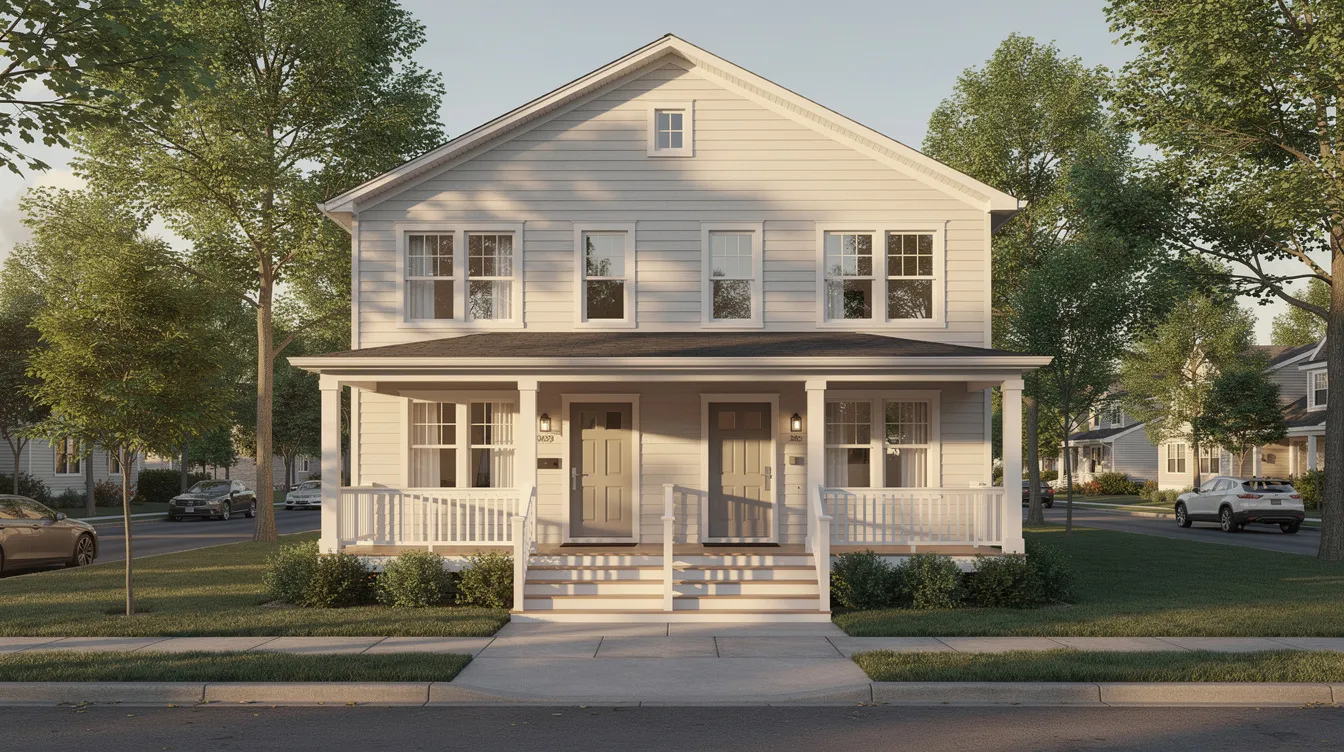
A home equity line of credit on an investment property is a revolving line secured by the equity in your rental or flip property, not your primary residence. Think of it like a credit card backed by real estate: you draw what you need, pay interest on what you use, and the credit limit resets as you repay.
The structure breaks into two phases. During the draw period (often 10 to 15 years, with many lenders offering a 15 year draw period), you can access funds and typically make interest only payments. After that, you enter repayment (another 10 to 15 years) where you're paying principal plus interest, and the monthly payment jumps accordingly.
Home equity here means appraised value minus your current mortgage balance. Lenders then apply their combined loan to value cap. Investment property HELOCs typically cap borrowing at 70% to 75% of the property's appraised value, allowing you to borrow up to 70% of property equity.
HELOC vs home equity loan: a HELOC is a revolving line with convenient access via checks, online banking, or a mobile banking app. A home equity loan is a one time, fixed rate loan with amortising payments and a lump sum at closing. Different tools for different jobs.
Example scenario: You own a 1 to 4 family rental worth $400,000 with a $220,000 first mortgage. At 70% combined loan to value, total allowed debt is $280,000. Subtract your current mortgage and the maximum line amount is $60,000. If the lender goes to 75%, that climbs to $80,000.
What Drives HELOC Rates for Investment Property (And Why They're Higher)
Lenders price investment property HELOCs higher than primary home equity lines because of added risk: tenant turnover, vacancy, property damage, and the fact that most lenders offer fewer investment property HELOCs means the ones who do tend to charge more for the privilege.
Key rate drivers include:
- Wall Street Journal prime rate as the base index. Everything starts here.
- Margin added for risk. Prime + 0.75% for strong borrowers with heaps of equity; Prime + 2.00%+ for borderline files. A margin is added to the prime rate to determine your actual HELOC rate, and HELOC rates can change monthly based on market conditions.
- Credit score tiers. Most lenders want 720+ for the best pricing. Scores in the 680 to 700 range still get approved but with higher margins and tighter loan to value limits.
- Debt to income ratio and liquidity. Rental income often only counts at 75% to 80% of gross.
How combined loan to value affects pricing: a lower ratio (60% to 65%) earns the best interest rate. Pushing toward 70% to 75% increases the margin because the lender's cushion shrinks.
Lender type matters too. A local bank or credit union may offer more favourable margins than a national lender. Some advertise "no closing costs" but bake the cost into a slightly higher rate. And some institutions let you convert part of your line to a fixed interest rate, locking in payment certainty on larger draws through a fixed rate loan option.
Typical Terms and Structures on Investment Property HELOCs
Many investors underestimate the complexity of investment HELOC terms beyond just the annual percentage rate. Here's what to watch for.
| Feature | Typical Range |
|---|---|
| Draw period | 10 to 15 years |
| Repayment period | 10 to 20 years |
| Interest during draw | Interest only payments (minimum monthly payment often $50+) |
| Variable APR range | HELOCs can have variable interest rates from 3.99% (minimum APR / floor rate) to 18% (maximum APR) |
| Line size | Lines of credit can range from $20,000 to $200,000 |
| Minimum loan / draw | You can apply for a HELOC with a minimum of $10,000 |
| CLTV cap | Up to 70% (sometimes 75%) |
On lien position: most investors use a second lien position equity line of credit behind an existing DSCR or conventional loan. If there's no existing mortgage, some lenders will do a first lien position HELOC.
Fees and conditions to watch: application fees, appraisal fees (ranging from $500 to $1,100), annual fees, and a possible early termination fee (often around $500 if closed within 36 months). Some lenders offer an automatic payment discount of 0.25% for paying from a linked savings account.
Current Rate Examples and How to Compare Offers
Compare at least two to three concrete offers before committing. Headline APR alone doesn't tell the full story.
Three illustrative rate examples for 2026:
- Example 1: Investment property HELOC at Prime + 0.75% (Prime 7.00% = 7.75% APR) with 70% combined loan to value and no closing costs, but a $10,000 initial draw required in the first 30 days.
- Example 2: HELOC at Prime + 1.00% with combined loan to value up to 70%, $200,000 maximum line, and the option to convert up to three fixed rate advances during the draw period.
- Example 3: Promotional line starting as low as 7.25% APR with lender paid closing costs, but a higher margin after the introductory rate period ends and a potential annual fee.
When evaluating variable rate vs fixed rate options, think about how long you plan to carry a balance. If it's more than two to three years, a fixed rate advance can protect you from future rate increases. If your exit strategy is a quick flip, the variable rate probably saves you money.
Check for fees: application fees, annual fees, prepayment penalties, and whether closing costs are rolled into the rate or covered by the lender. Use HELOC calculators on lender sites to model how your monthly payment might change monthly and what extra principal payments could save you.

Pros and Cons of Using a HELOC for Investment Property Deals
A HELOC is a powerful yet double edged tool for real estate investing. Here's the honest breakdown.
Pros:
- Typically lower interest rate than unsecured personal term loans or business credit cards once intro periods end
- Interest only payments during the draw period preserve cash flow during rehab or lease up
- Flexible, revolving access: reuse the same revolving line for multiple deals, covering down payment and closing costs without reapplying each time
- Tax treatment allows interest on an investment property HELOC to be generally 100% tax deductible if used for investment purposes (talk to your tax advisor, not me)
Cons:
- Variable rate risk: if prime rate increases, your interest payments get meaningfully more expensive
- Property at risk: the investment property (or primary home, if that's the collateral) is credit secured against the line; default can lead to foreclosure
- Lower combined loan to value limits and stricter credit approval standards vs a primary residence HELOC, especially for newer investors
- Some investors over leverage, layering HELOCs, DSCR loans, and cards without a clear repayment strategy
A HELOC should be part of a broader capital stack and risk plan, not your only tool.
Common Uses: Down Payment, Closing Costs, Rehab, and Working Capital
Most investors don't use a HELOC to buy 100% of a deal. They use it to fill funding gaps in their capital stack. Using a HELOC allows for rapid property acquisition and the flexibility of borrowing, while securing one on an investment property offers liquidity that's hard to replicate with other forms of financing.
Specific use cases:
- Down payment: pulling 10% to 25% from a home equity line to pair with a primary mortgage or DSCR loan
- Closing costs: covering lender fees, escrows, title and property insurance, and recording fees when liquidity is tight
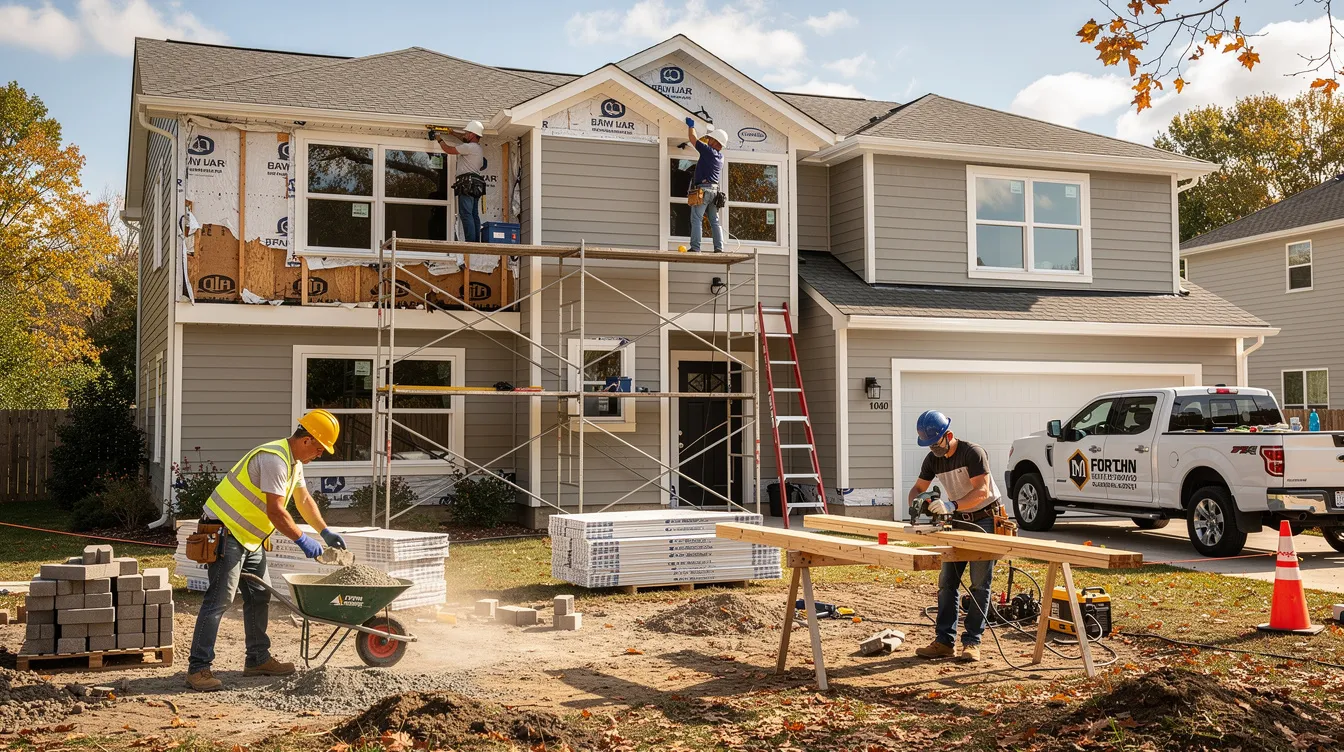
- Rehab and value add: funding home renovations and home improvements on BRRRR, fix and flip, or short term rental projects alongside a hard money first lien
- Working capital: bridging seasonal cash flow, vacancy, or carrying costs (utilities, taxes, insurance) to handle unexpected expenses while stabilising an asset
HELOCs can be used for renovations or to consolidate debt across multiple projects. The flexible access and draw/repayment structure makes them attractive for investors running multiple projects or needing convenient access to cash for quick earnest money deposits. Many investors strategically draw, complete a project, then refinance into long term debt or sell to pay the line back down.
Qualifying for an Investment Property HELOC: Requirements and Reality
Investment property HELOC underwriting is tighter than for a primary home equity loan. Stricter qualification thresholds apply, including higher credit scores and cash reserves. Here's what most lenders look for:
- Credit score: many banks and credit unions look for 680+ FICO for credit approval, with best pricing at 720 to 740+. Your credit history matters more here than on primary residences.
- Sufficient home equity: enough home value so that after all liens, your combined loan to value stays under 70% to 75%. You need more equity than you think.
- Income and DTI: proof of income (W2, self employed docs, or rental income) and total debt to income within guidelines. HELOC applications require income verification and mortgage statements.
- Property type: usually 1 to 4 family homes or condos. Some lenders exclude commercial, mixed use, or non warrantable condos.
Lenders often require proof of six to twelve months of cash reserves for investment property HELOC qualification, especially for multi property investors.
On timing: processing times for HELOCs take 30 to 40 days on average, though you can access funds in as little as 14 days with some lenders. Have your documents established prior to applying: tax returns, leases, operating statements, proof of insurance, and a simple personal financial statement with your schedule of real estate owned.
Where HELOCs Fall Short for Investors and Where Gap Funding Comes In
Even with a great HELOC, many deals still face a funding gap. The maximum home equity line might not fully cover everything. Fewer lenders offer HELOCs on investment properties compared to primary residences, which limits your loan options further.
Typical gaps include:
- Large down payment requirements on DSCR or bank loans (20% to 30%)
- High up front closing costs on fix and flip and construction loans
- Rehab budgets that exceed HELOC limits or combined loan to value caps
- Earnest money deposits and quick turn opportunities where a property must be locked up before a HELOC or bank draw is ready
This is where Gap Funded comes in. We specialise in layering non dilutive capital on top of your existing bank financing and home equity to fully fund deals without equity splits or putting new liens on the subject property.
Tools we use alongside or instead of HELOCs:
- Unsecured personal term loans for fast lump sum capital
- Business credit card stacking at 0% intro APR to fund down payments, closing costs, smaller rehab segments, and working capital
- Business lines of credit and working capital solutions for ongoing expenses as projects scale
Realistic qualification: many of our best options serve borrowers with FICO scores typically 650+ and verifiable income. We perform a soft credit pull first, so checking your options with Gap Funded does not impact your credit. You can also explore HELOC options through our network if you have equity in a home or investment property.
Building a Smart Capital Stack: HELOC + Gap Funding Tools
Sophisticated investors rarely rely on a single funding source. They design a capital stack in a deliberate order, and that order matters.
Recommended sequence:
- Step 1: Use a primary DSCR, conventional, or hard money first mortgage for the bulk of the purchase.
- Step 2: Layer in a HELOC on a primary residence or existing investment property to cover part of the down payment and rehab.
- Step 3: Use Gap Funded solutions (0% business credit card stacking, unsecured loans, business lines of credit) to close the remaining shortfall for closing costs, EMD, reserves, and contingency.
Why this order? First lien loans and HELOCs offer the lowest long term cost but may not move fast enough or go high enough in combined loan to value. Unsecured tools are more flexible and faster but carry higher nominal rates, making them best for shorter holding periods or to bridge into a refinance.
BRRRR example: Purchase a $400,000 property financed 80% by a DSCR lender ($320,000). Cover $50,000 of the remaining $80,000 from a new home equity line on an existing property. Use Gap Funded's 0% card stack for the remaining $30,000 covering closing costs, rehab, and working capital. After stabilisation, refinance into long term debt, paying off the HELOC loan and unsecured balances.
I'd reckon a simple spreadsheet tracking each funding source's rate, draw timing, and exit strategy is worth its weight in gold. Know exactly how and when each dollar gets repaid.
How to Decide if an Investment HELOC Makes Sense for You
The right answer depends on your credit profile, equity position, and deal strategy. Ask yourself:
- Do I have enough home equity to stay at or below 70% to 75% combined loan to value and still reach my line amount goals?
- Can my cash flow support interest only HELOC payments plus any unsecured term loan or business credit card balances?
- Am I comfortable with variable rate risk, or do I need fixed rate stability on at least part of the loan offer?
- Will I use this line for multiple deals, or is this a one time project better served by a fixed rate home equity loan?
If you lack equity, unsecured options and 0% business credit card stacking may be a better starting point. If you want fixed payments and a lump sum, a home equity loan with a fixed interest rate could be preferable to a line of credit HELOC. And if the housing market shifts, having your account opening on a line you can draw from gives you flexibility that a fixed loan doesn't.
At Gap Funded, we review your credit, equity, and deal pipeline, then recommend a mix of HELOC, term loans, business lines, or cards that fits your risk tolerance and goals.
Next Steps: Check Your Options with Gap Funded
You don't have to solve your entire capital stack alone.
Gap Funded runs a fast, no obligation funding review using a soft credit pull to map out: potential HELOC options if you have home equity, how much 0% business credit card stacking and unsecured term loan capacity you may qualify for, and a practical plan to cover your down payment, closing costs, rehab, working capital, and contingencies.
No equity splits. No new liens on the deal property. Transparent loan details so you keep the full upside from your investments.
Start a quick application at gapfunded.com/apply to see your available funding options and rates. Most of our tools work for borrowers with FICO scores 650+ and verifiable income or business revenue.
Before you apply, gather the basics: your credit estimate, current mortgage balances, estimated property values, and upcoming project budgets. It speeds everything up, and mate, time is usually the one thing investors don't have enough of.
Related Reading
This article is for educational purposes only and isn't financial, legal, tax, or investment advice. Credit and financing outcomes depend on your own situation. Talk to a licensed financial professional before making funding decisions for your business.