
HELOC Rate Calculator: Estimate Your Home Equity Line Costs and Payments


Most investors I talk to have a rough idea of what their property is worth and what they still owe on it. What they don't have is a clear picture of what tapping that equity will actually cost them each month, over five years, or if rates climb. That's the gap a HELOC rate calculator fills, and it's the first step before you commit a single dollar.
1. Quick Overview: What a HELOC Rate Calculator Does (Answer Fast)
A Home Equity Line of Credit (HELOC) rate calculator estimates your monthly payment, total interest cost, and how much equity you can tap from a property you already own. It takes roughly 60 seconds to use and saves you from guessing whether a deal pencils out or blows up your cash flow.
Here's the short version of what you're working with. A HELOC is a revolving credit line secured by home equity. Unlike a home equity loan that hands you a lump sum with a fixed rate, a HELOC lets you draw funds as you need them during a draw period (typically 5 to 10 years) and pay them back over a longer repayment term. HELOC rates are typically variable and tied to an underlying index, most commonly the U.S. Prime Rate, plus a margin your lender sets based on your credit profile and property type.
Gap Funded's HELOC Rate Calculator is built specifically for real estate investors and new business owners who want to see, before they apply, how different rates and draw amounts change their payment. Not a generic widget. A planning tool.
What You Plug In
Here are the standard inputs:
| Input Field | Example Value |
|---|---|
| Current home value (appraised) | $450,000 |
| Existing mortgage balance | $275,000 |
| Desired line or loan amount | $75,000 |
| Estimated interest rate (APR) | 8.50% |
| Draw period | 10 years |
| Repayment term | 20 years |
What You Get Back
The calculator results show you:
- Your estimated maximum equity line of credit based on how much equity you have and the lender's allowed LTV ratio
- Your estimated monthly payment at the chosen rate, split between the interest only payments phase and the fully amortising repayment phase
- Total interest over the life of the line
- A rate sensitivity illustration showing how a 1% to 2% increase changes your payment size
A few important caveats. The information provided by any calculator is for illustrative purposes only and is not a loan offer. Most lenders cap total borrowing at 80% to 85% of a home's appraised value, and HELOC borrowing limits depend on your home's appraised value. You can typically borrow 75% to 90% of your home equity, but the realistic range depends on credit profile and property type. Investment properties usually land at the lower end of that range.
HELOCs usually have a draw period where you can borrow funds and may pay interest only. Expected draw periods for HELOCs typically range from 5 to 10 years. After the draw period ends, you enter repayment, where both principal and interest are due. A HELOC uses your home as collateral, which means there's a real risk of foreclosure if you don't repay. That's not a footnote. It's something you need to factor into every scenario.
At Gap Funded, we use this calculator as a planning tool to structure gap funding strategies that may combine a home equity line with unsecured term loans or 0% business credit card stacking when the HELOC alone doesn't cover the full deal.
2. How to Use a HELOC Rate Calculator Step by Step
This section walks you through each field in the calculator and shows how it translates into borrowing power, monthly payment, and long term cost. If you can do basic arithmetic (or at least trust a calculator to do it for you), you'll be fine.
Figuring Out How Much Equity You Have
The formula is dead simple:
Home Equity = Appraised Home Value – Total Mortgage Balances
Say your home appraises at $500,000 and you still owe $320,000 on your mortgage. That gives you $180,000 in home equity. That's not the same as what you can borrow, but it's the starting point.
You may qualify for a HELOC based on outstanding home loans and how much room sits between what you owe and what the property is worth.
How Lenders Size Your Line
Lenders use loan to value (LTV) and combined loan to value (CLTV) ratios to determine how large your equity line of credit can be. HELOC amounts can vary based on loan to value ratios, so this is where the maths matters.
Here's the logic. If a lender allows up to 85% CLTV on a primary residence:
- Max total secured debt = 0.85 × $500,000 = $425,000
- Subtract your $320,000 mortgage = $105,000 potential HELOC
For a smaller property, a $250,000 home can yield a $100,000 HELOC if the LTV and credit profile support it.
For investment properties, the ceiling is usually lower. According to 2025 HMDA data, the median CLTV for investment property HELOCs was about 63.6%, and only roughly 5.4% of investment property lines exceeded 80% CLTV. Compare that with primary residences, where lenders commonly allow up to 85% to 90%.

Each Calculator Input Explained
Here's what each field does and why it matters:
- Home value: Use the current or recent appraised value, not your purchase price. Home loan information and appraised value drive the maximum line. If you bought at $300,000 five years ago and the property now appraises at $400,000, that appreciation is real equity you can access.
- Existing mortgage balance(s): Include your first mortgage plus any other liens. The calculator subtracts this from the allowed CLTV to estimate your available credit line.
- Desired HELOC or home equity loan amount: This is the loan amount you actually want: $50,000 for rehab, $75,000 for a down payment, $30,000 for working capital. Plug in what you need, not just what you can get.
- Interest rate: For a HELOC, enter the starting variable APR. For a home equity loan, enter the fixed rate. Lenders commonly offer introductory rates that may increase after a promotional period, so make sure you're modelling the ongoing rate, not just the teaser.
- Draw period and repayment term: Common structures are 10 year draw plus 20 year repayment, or 5 year draw plus 15 year repayment. HELOCs have a draw period of up to 10 years, and you can access a HELOC for an initial 10 years without reapplying.
Reading Your Calculator Results
This is where people either get comfortable or start sweating. Pay attention to:
Monthly payment across phases. During the draw period, most HELOCs allow interest only payments. On a $100,000 draw at 9% APR, that's $100,000 × (0.09 ÷ 12) = $750 per month. Your minimum monthly payment covers interest only, and the principal balance stays the same unless you pay extra.
When the repayment period kicks in, that payment jumps because you're now repaying principal plus interest. Payments can jump significantly when transitioning from a draw period to a repayment period. On that same $100,000 at 9% amortised over 20 years, your monthly payment rises to roughly $900. That's a $150 per month increase you need to plan for.
Rate sensitivity. HELOC calculators allow for sensitivity analysis by testing different interest rate scenarios. A 1% rate increase from 8.50% to 9.50% on a $75,000 line pushes your estimated monthly payment from the high $500s into the low $600s range. Over the life of the loan, that change adds up to thousands in additional interest.
A lower credit score usually results in higher interest rates and borrowing costs, so if your FICO is closer to 650 than 750, model the higher end of the rate range in the calculator.
Total interest cost. The calculator shows projected interest over the full life of the line. The cost structure for borrowing against a HELOC includes potential fees and closing costs on top of this, so the total expense is typically more than the interest figure alone.
HELOC Calculator vs Home Equity Loan Calculator
These are different tools for different products:
| Feature | HELOC | Home Equity Loan |
|---|---|---|
| How funds are received | Revolving draws as needed | Lump sum upfront |
| Rate type | Variable (usually) | Fixed |
| Draw flexibility | Yes, up to credit limit | No, one time disbursement |
| Typical max LTV | Up to 90% of equity | Up to 80% of equity |
| Best for | Phased expenses, ongoing needs | Single large expense |
| Payment during draw | Interest only payments | Fixed principal + interest |
HELOCs function like credit cards for home expenses, where you draw, repay, and redraw within your limit. A HELOAN provides a lump sum paid back in fixed installments. A typical HELOC allows borrowing up to 90% of home equity, while a HELOAN typically allows borrowing up to 80%.
Calculators can help compare HELOC against alternatives like home equity loans or cash out refinances, so run both scenarios if you're deciding between the two. HELOC calculators help plan for home projects or debt consolidation just as effectively as they do for investment deals.
A Note on Property Type and Credit
Primary residences usually get the best terms. Investment property HELOCs carry slightly higher rates (median ~8.5% versus ~7.5% for owner occupied in 2025) and lower allowed LTVs. If you're planning to use a HELOC on a rental, read our guide on how to use a HELOC on investment property for the full picture.
Typical minimum FICO to qualify for a HELOC sits around 650 for primary residences and 700 to 720 for investment properties, per most lenders we work with. Bankrate's research backs this up.
Once you've reviewed your calculator results, gather basic loan information (income documentation, property details, recent credit profile) and you can submit a no obligation funding review with Gap Funded at gapfunded.com/apply.
3. Using HELOC Rate Calculators Strategically for Real Estate and Business Funding
Running a calculator is easy. Using the results to build a funding strategy that actually closes a deal? That's where most people need a plan.
This section is for investors and business owners who want to move past "how much can I borrow" and start figuring out how a HELOC fits into the full capital stack.
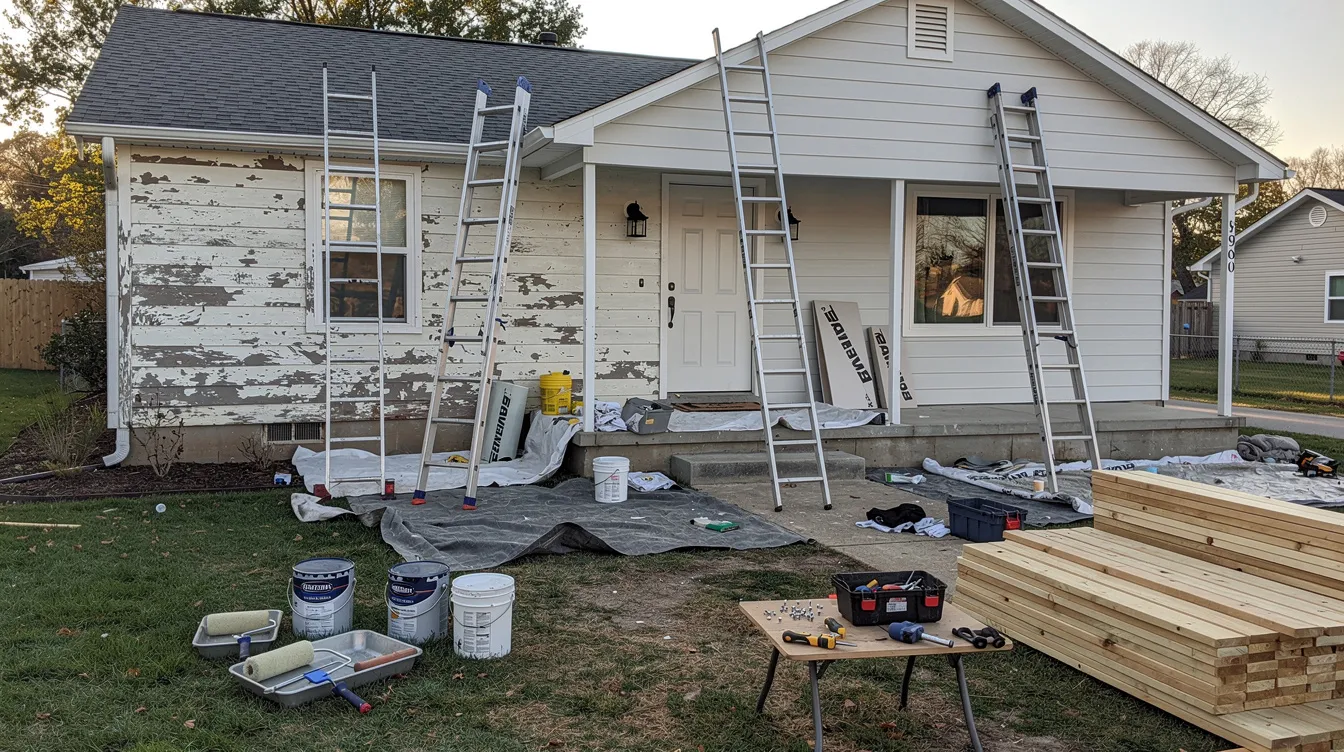
A HELOC as a Flexible Gap Funding Tool
Tapping home equity via a home equity line can provide cash for down payments, rehab, earnest money deposits, or short term working capital. Because it's revolving, you draw what you need and only pay interest on what you've used.
Here's a specific example. A fix and flip investor has $150,000 in equity in their primary residence. They're buying a $320,000 property with a hard money loan covering 80% of the purchase price ($256,000). They still need roughly $90,000 for the 20% down payment, closing costs, and initial rehab before draws from the hard money lender start flowing. A $90,000 HELOC at 8.50% means interest only payments of about $638 per month during the draw period. If the flip takes six months, that's roughly $3,825 in interest cost to bridge the gap. Not free money, but a lot cheaper than a 15% hard money second lien or a 24% credit card balance.
Common Funding Gaps Where HELOCs Help
The deals I see come through our pipeline almost always have the same shortfalls:
- Down payment shortfalls on investment properties when primary lenders only finance 70% to 80% of the purchase price
- Rehab and renovations for BRRRR and short term rental projects that exceed what the main loan covers (home improvements are one of the most common uses of a HELOC, and interest on HELOCs for home improvements may be tax deductible, though you should consult a tax professional on your specific situation)
- Business working capital for new ventures not yet 2 years old or generating $20k per month in revenue, where traditional business lines of credit aren't available
- Unexpected expenses during a project: foundation issues, permit delays, holding costs that run longer than planned. You can access HELOC funds for unexpected emergencies without reapplying for a new loan
HELOCs can also help consolidate debt into one loan. If you're carrying $45,000 in credit card balances at 24% APR, rolling that into a debt consolidation plan using a 10 or 15 year home equity loan at 8% to 9% can save you a fair whack in interest and reduce your monthly payment significantly. The calculator lets you see the difference in seconds.
How Gap Funded Stacks Funding Tools Around the HELOC
Here's where sequencing matters, and I reckon this is the part most people skip.
At Gap Funded, we structure capital stacks in a specific order:
- Debt consolidation first to lower your debt to income ratio and free up borrowing capacity
- Rapid gap funding (unsecured term loans) for quick capital that doesn't touch your property
- 0% credit stacking via business credit cards at 0% intro APR for flexible working capital
- HELOC or home equity loan for larger, lower cost secured capital
- Business line of credit for ongoing operational needs
Why this order? Starting with debt consolidation and unsecured options first preserves your equity position and means you don't over commit your home as collateral before you know what the full deal requires. The equity line of credit or home equity loan slot comes in when you need a larger sum at a lower rate than unsecured products can offer. And the 0% credit stacking fills the gaps for short term or contingency funds where you don't want to pay interest at all during the intro period.
If you apply out of order, you can knock out approvals for later tools. That's not a scare tactic. It's how underwriting works.
Use the Calculator to Stress Test Your Deal
I always tell people: run the numbers at the rate you expect and then run them again at 1% to 2% higher. If the deal only works at today's rate, it's not a deal. It's a gamble.
Use the HELOC calculator to:
- Model conservative rent or resale assumptions against your monthly payment obligations
- Stress test what happens if rates increase during the draw period (remember, HELOC rates are variable)
- Compare the total cost of different loan amounts and repayment terms
- See what happens to your payment when the draw period ends and full amortisation begins
For the data points that matter: if you're looking at an investment property HELOC, plan on roughly 8.5% to 9.5% APR with a CLTV cap around 75% to 80%. Owner occupied lines tend to land closer to 7% to 8%. The margin over Prime for investment property HELOCs typically sits between 0.50% and 2.00%.
Comparing Your Options Fairly
Here's how the main options stack up for this audience:
| Factor | HELOC | Home Equity Loan | Unsecured Term Loan | 0% Credit Stacking |
|---|---|---|---|---|
| Rate type | Variable | Fixed | Fixed | 0% intro, then variable |
| Typical APR range | 7% to 9.5% | 7% to 10% | 8% to 15% | 0% for 12 to 21 months |
| Collateral required | Home | Home | None | None |
| Best for | Phased draws, flex needs | Lump sum, one time costs | Quick capital, no property risk | Short term working capital |
| Risk to home | Yes | Yes | No | No |
| Max borrowing | Up to 90% of equity | Up to 80% of equity | Based on income/credit | Based on credit profile |
HELOCs are ideal for ongoing or phased expenses like rehab draws or rolling inventory purchases. Home equity loans fit single, defined needs like an acquisition or large equipment purchase. Unsecured options don't put the home at risk but often have higher rates or lower limits.
For more on how these compare in specific deal structures, check out our guide on bridge loans vs HELOCs or read about second lien loans if you're considering layering debt on the subject property.
The product you choose depends on the deal, the timeline, and your risk tolerance. Use the calculator plus realistic deal assumptions to determine which mix is appropriate.
Resources to Explore
- Gap Funded's HELOC page for more on using home equity safely in an investment context
- HELOC Rate Calculator to run rate and payment scenarios before committing to a specific loan amount or draw plan
- All Gap Funded services for a full overview of how we structure capital stacks

Start With the Numbers, Then Build the Plan
A HELOC rate calculator gives you the estimate. It shows you the monthly payment, the total interest, and the rate risk before you've signed anything. That's the whole point: make informed decisions with real data points, not gut feelings.
But the calculator is step one. The real value comes from building a complete capital stack plan around those numbers, using the right tools in the right order, with realistic assumptions and honest stress testing.
If you've run the numbers and the deal looks solid, or if you're not sure how to fill the gap between what your primary lender covers and what you actually need, we can help.
Apply for a soft pull, no obligation funding review at gapfunded.com/apply. No equity splits. No lien on the deal property. Just a clear look at your options.
Related Reading
This article is for educational purposes only and isn't financial, legal, tax, or investment advice. Credit and financing outcomes depend on your own situation. Talk to a licensed financial professional before making funding decisions for your business.