
HELOC Introductory Rate: How to Use Short-Term Savings for Long-Term Investing Power


HELOC Introductory Rate: How to Use Short-Term Savings for Long-Term Investing Power
A low introductory rate on a home equity line of credit can shave thousands off your cost of capital during the first months of a project. But the intro period ends, and your deal might not. Here's how to evaluate these offers honestly, stack them into a full funding plan, and protect yourself when the rate resets.
What Is a HELOC Introductory Rate?
A HELOC (home equity line of credit) is a revolving equity line of credit secured by your home. Unlike a lump-sum home equity loan with a fixed interest rate and set monthly payment, a HELOC lets you draw, repay, and redraw funds up to a credit limit during a draw period.
An introductory rate for a home equity line of credit is a temporarily discounted interest rate—a below-market annual percentage rate offered for a limited window before the line converts to its standard variable rate.
- Most standard HELOCs have variable rates tied to an index. The standard variable rate is typically calculated by adding a margin to an index like the U.S. Prime Rate.
- After the introductory period ends, the interest rate adjusts to that standard variable rate (e.g., Prime + 0.50%–2.50%).
- Disclosures about the length of the introductory period and the post-introductory rate must be included in the credit agreement.
- A common example: an introductory rate of 1.99% APR that lasts for 6 months, after which the standard rate becomes 7.00% APR.
The core trade-off is simple: significant savings during the introductory period versus potentially higher, unpredictable payments afterward.
Typical HELOC Introductory Rate Structures You'll See
Promo structures vary based on lender type, your credit qualifications, and loan amounts. Here are the most common setups you'll encounter:
- 6-month fixed intro APR (1.99%–4.99%): Fidelity Bank, for example, offers a 2.99% APR for 6 months on lines of $75,000+ with credit scores of 740+. Alliant offers a fixed introductory rate of 4.99% APR for 6 months. After the introductory period, rates can be as low as 7.24% APR.
- 12-month fixed intro APR (2.49%–5.49%): QNB offers a 12-month fixed intro at 4.50% APR, then variable based on prime rate plus margin.
- Tiered promos by credit score and loan to value: Borrowers with higher FICO scores and lower combined LTV ratios get the deepest discounts. A 740+ score at 75% CLTV will almost always beat a 680 score at 85% CLTV.
- Closing cost waivers with clawbacks: Many credit union and bank offers waive closing costs if you keep the equity line open for 24–36 months. Close early, and you reimburse those costs—often $500–$2,500.
Introductory rates may require a minimum initial draw amount to qualify. Some lenders may charge higher fees that offset the low introductory rate. And introductory rates are subject to change without notice, so lock in terms when you're ready.
Don't confuse a HELOC with a temporary fixed rate period with a true fixed rate home equity loan—the HELOC reverts to a variable APR after the promo, while a home equity loan stays fixed for its entire term.
How HELOC Intro Rates Are Set: Key Factors That Drive Your Offer
Lenders price both the introductory rate and the go-forward variable rate using several factors:
- Credit score: Tiers matter. A 720+ FICO unlocks the best promos. Below 680, you may get a shorter intro, a higher promotional rate, or no intro offer at all.
- Combined loan to value (CLTV): Staying under 80% CLTV generally earns the lowest margins. Push above 85–90%, and expect higher post-intro APR or disqualification from the promo entirely.
- Occupancy and lien position: Owner occupied primary residences get the best pricing. Investment properties and second liens face wider margins and fewer promotional options.
- Income and credit history: Verifiable income, clean housing payment history, and adequate reserves strengthen your application for credit approval.
When market rates rise, the variable interest rate on a HELOC can also rise—since it follows the prime rate, which moves with Federal Reserve decisions.
Mini scenario: A borrower with FICO 720 and 75% CLTV might lock a 6-month intro at 3.0%, then revert to Prime + 0.75% (~7.75% variable APR). A borrower with FICO 660 and 88% CLTV might get a 5.50% intro for 6 months, then revert to Prime + 2.00% (~9.00%). The gap between those two profiles adds up fast across a 12-month project.
HELOC Introductory Rate vs. Standard HELOC vs. Home Equity Loan
These three products overlap, but they serve different purposes:
- HELOC with intro rate: Variable after the promo. Best for short-term projects where you plan to repay or refinance within 6–18 months—think BRRRR rehabs, bridge loan alternatives, or swing loan scenarios.
- Standard HELOC (no teaser): Same flexible access to a credit line, but your rate is Prime + margin from day one. No payment shock when a promo expires. Simpler to model.
- Fixed rate home equity loan: Lump sum, fixed term, predictable payment. Better when you need a fixed interest rate for 5–20 years, such as a long-term buy-and-hold rehab or major home renovations.
Key structural facts about HELOCs:
- HELOCs typically have a 10-year draw period—the time frame during which borrowing occurs without principal payments.
- During the draw period, payments can be interest-only.
- After the draw period, a repayment period of 20 years follows, and principal repayment begins after the draw period ends.
- Some lenders let you lock in a fixed interest rate on a portion of your HELOC balance, carving a mini fixed rate loan inside your line of credit HELOC. This helps manage risk if you expect to carry a balance beyond the promo window.
Costs Beyond the Intro Rate: Fees, Closing Costs, and Fine Print
The introductory rate is only what gets you in the door. Here's what else to budget for:
- Application fees, appraisal, title insurance, recording: Total closing costs in 2026 typically run $500–$2,500 depending on property type and loan amounts.
- Annual fee: Some lenders waive the annual fee for year one but charge $50–$75+ thereafter. Watch for inactivity fees on unused lines of credit.
- "No closing cost" recapture clauses: Lenders may claw back $100–$6,500 in waived costs if you close the equity line of credit within 24–36 months.
- Property insurance and flood insurance: Required on all secured lines. Non-owner-occupied or investment properties face higher costs and other restrictions.
- Tax implications: Tax deductions for HELOC interest are available only if certain conditions are met—generally, the funds must be used for qualifying home improvements on the property securing the loan. Using HELOC funds for general debt consolidation usually doesn't qualify. Confirm with a tax advisor.
- Maximum APR caps: Lifetime caps typically range from 18%–24%. Know your minimum APR floor, too—it limits how much you benefit if the prime rate drops.
Don't judge an offer on the intro rate alone. Calculate your all-in cost over your realistic holding period, including post-promo variable APR, fees, and potential clawback penalties.
Using HELOC Intro Rates Strategically for Real Estate Investors
If you're an investor or small business owner, a low introductory fixed rate can act as cheap short-term capital for:
- Down payment on an investment property
- Rehab costs and unexpected expenses mid-project
- Earnest money deposits
- Short-term working capital while a property stabilizes or a new business launches
A HELOC allows borrowing up to 100% of available equity (though most lenders cap at 85–90% CLTV). You can access HELOC funds digitally 24/7 for convenient access, and you can pay more than the minimum monthly payment to accelerate payoff. HELOC funds can also be used for home improvements, debt consolidation, large purchases, and emergency expenses.
Case study: An investor in early 2026 secures a HELOC at 2.99% intro for 6 months to fund a $40,000 rehab. If the property sells or refinances within the promo window, total interest cost is roughly $600. But if the project drags to month 12 and the rate resets to 8.00%, interest for months 7–12 jumps to ~$1,600—nearly tripling the total interest bill to $2,200.
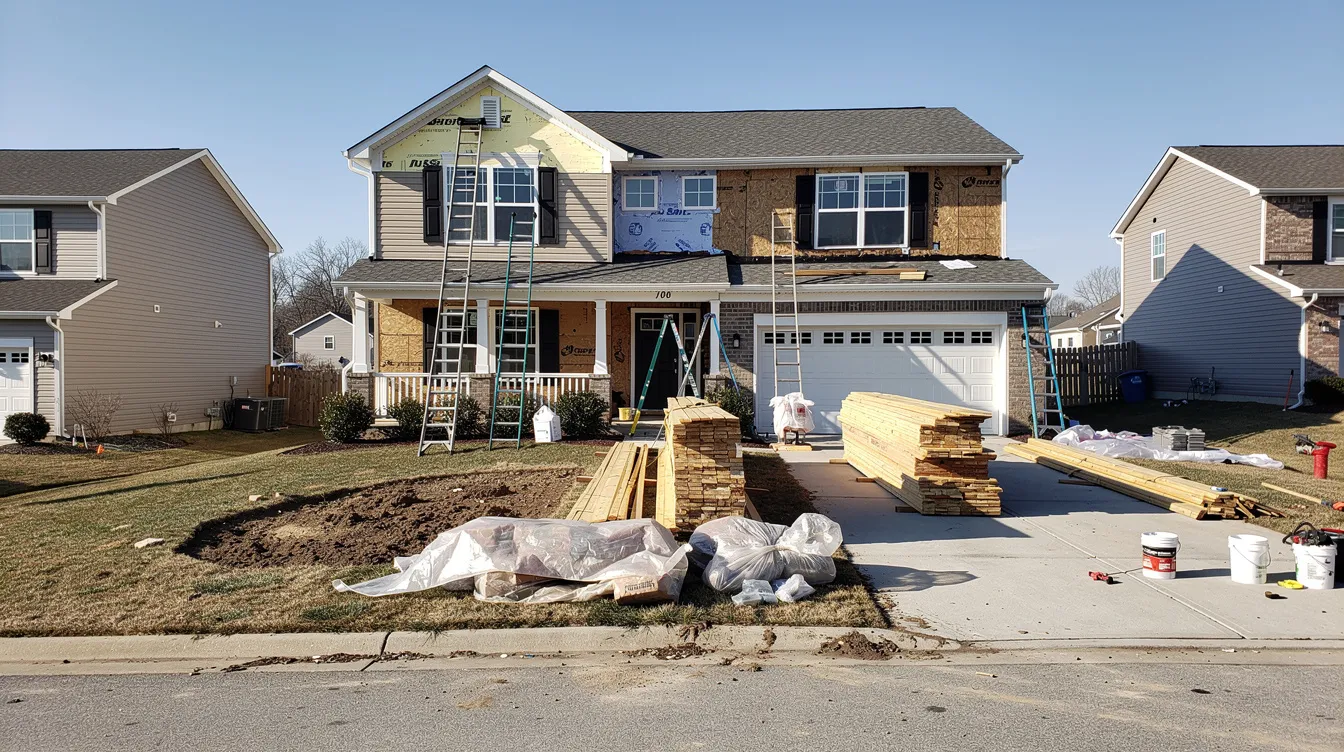
The lesson: match your exit strategy to your introductory period. If your timeline is uncertain, model the worst-case post-promo rate before committing.
Where the Funding Gap Really Is: HELOCs Don't Cover Everything
Even with a competitive HELOC introductory rate and solid home value, funding gaps appear constantly:
- Down payment shortfall: Your lender requires 20–25% down plus six months of reserves, but your maximum line only covers 60% of that need.
- Appraisal surprises: The home's appraised value comes in low, pushing CLTV higher and shrinking your available equity or disqualifying the promo rate.
- Rehab overruns: Budgets increase mid-project, and your credit limit is already tapped.
- Credit line freezes: Lenders can freeze or reduce a borrower's credit line if property values drop, leaving you mid-deal without capital.
- Business working capital: Inventory, marketing, or payroll for a new venture can't always be covered by a single equity line.
The belief that "a great HELOC intro rate will solve my whole funding problem" is common—and wrong. Your HELOC is powerful, but it's usually one piece of the capital stack, not the whole thing.
How Gap Funded Complements Your HELOC: Closing the Gap in Your Capital Stack
Gap Funded is a funding intermediary that layers multiple tools around your HELOC so you can close deals without equity splits or liens on your project property. The ideal sequence:
- First, use your HELOC on a primary residence or investment property for the lowest-cost capital during the intro period.
- Second, stack 0% business credit cards and unsecured term loans through credit card stacking to cover remaining down payment, closing costs, rehab draws, or working capital.
- Third, refinance or sell once the project stabilizes, paying off higher-cost pieces first.
This approach lets you align your financial goals with realistic project timelines. Typical qualifications: 650+ FICO, verifiable income or business revenue, and sufficient home equity or capacity for new credit lines.
Use the HELOC calculator to estimate your potential equity line, then map gaps against your deal's total cost. For a full overview of how gap funding services work, including debt consolidation options, visit our services page.
Gap Funded doesn't issue the HELOC—it makes your HELOC work harder by filling what it can't cover.
Comparing Banks, Credit Unions, and Gap Funded for HELOC Strategy
| Feature | Banks | Credit Unions | Gap Funded |
|---|---|---|---|
| HELOC intro rate | Moderate (4%–6%) | Often aggressive (2%–5%) | Does not issue HELOCs |
| Digital banking / online banking | Strong | Varies (membership eligibility required; if not a member, must join) | N/A |
| Closing cost waivers | Common with clawback | Common with clawback | N/A |
| Covers funding gaps beyond HELOC | No | No | Yes—unsecured loans, 0% cards, business lines |
| Equity splits or project liens | N/A | N/A | None |
Banks and credit unions excel at issuing low-cost HELOCs with convenient way to access funds via checks, online transfers, or account opening bonuses. But they stop at one product tied to one property's equity.
Gap Funded's focus is arranging complementary capital—so your single home equity line stretches across multiple projects without hard-money pricing. For investors doing several deals simultaneously, this distinction matters. Explore the full gap funding services lineup to see what fits.
Risk Management: Protecting Your Home While Using a HELOC for Investing
Your home is collateral. That fact deserves respect.
- Payment risk: Falling behind on HELOC payments can put a borrower's home at risk of foreclosure. Minimum payments during the draw period may be interest-only, but principal repayment begins after the draw period ends—and those payments jump significantly.
- Rate shock: Stress-test every deal assuming the variable rate climbs 2–3 percentage points above today's prime rate. If your project can't survive an 9%–10% APR, reconsider the sizing.
- Over-leveraging: Avoid maxing out lines of credit across multiple speculative projects. Keep reserves equal to at least six months of carry costs on any property tied to your HELOC.
- Diversify your stack: Using unsecured tools keeps some risk away from your primary residence. If a rehab project fails, you don't lose the roof over your head—you restructure unsecured debt instead.
Cautionary example: You plan a 6-month flip, draw $50,000 at a 3.5% intro rate. Permit delays push the project to 14 months. Post-promo, your rate is 8.5%. Interest cost goes from a projected $875 to roughly $3,400—cutting deeply into a margin you budgeted at $15,000.

Next Steps: Decide if a HELOC Intro Rate Fits Your Plan and Build Your Funding Stack
Before you apply for any HELOC, answer three questions:
- Is the introductory period aligned with your project timeline? If your rehab or business launch takes 12 months and the promo lasts 6, model both phases.
- How much of your total home equity should you realistically tap? Staying under 80% CLTV protects you from rate penalties and keeps future borrowing options open. Estimate your potential line with a HELOC calculator and compare it to your deal's total cost.
- What gaps remain? Down payment shortfalls, closing costs, rehab overruns, and working capital needs rarely disappear because you secured a good intro rate. Identify them now, not mid-project.
A HELOC introductory rate is one of the cheapest tools in your capital stack—but it's rarely the only tool you need. Map your funding needs, fill the gaps before you're scrambling, and build a plan that survives rate resets and project delays.
Ready to see what you qualify for? Apply for a personalized funding review—soft credit pull, no equity splits, fast execution.
Related Reading
This article is for educational purposes only and isn't financial, legal, tax, or investment advice. Credit and financing outcomes depend on your own situation. Talk to a licensed financial professional before making funding decisions for your business.